

Fast Delivery
Quick, reliable shipping to any location.

Free & easy returns
Return this item by mail or in store within 90 days for a full refund.
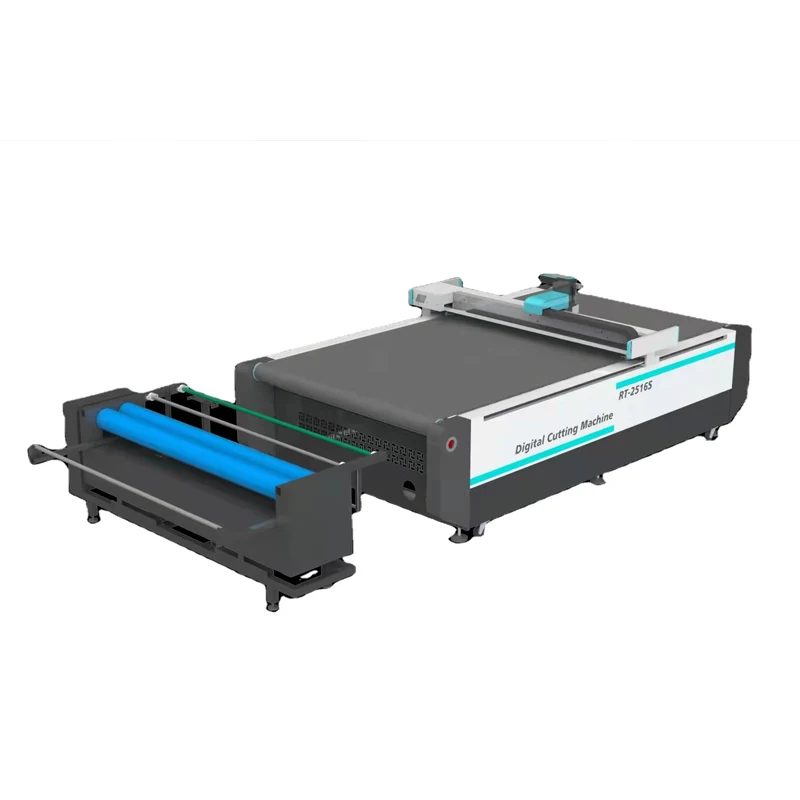
Specified tool head and table per material — the RT-D2516/RT-S2516 is configured after sample cutting on the buyer’s actual fabric, leather or composite, not shipped as a generic flatbed.
Technical Specifications
| Parameter | Value |
|---|---|
| Model | RT-D2516/RT-S2516 |
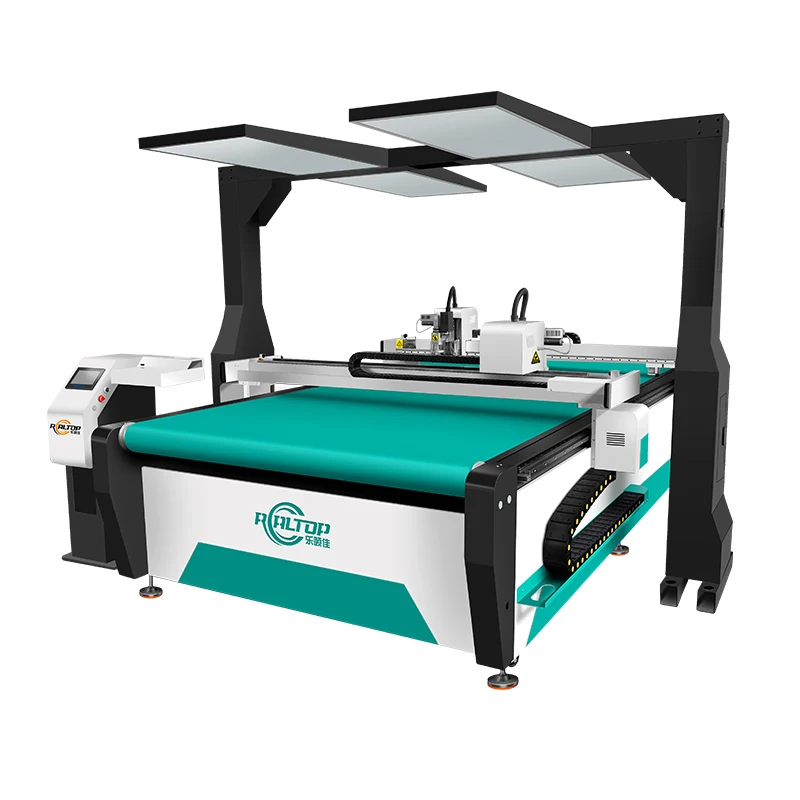
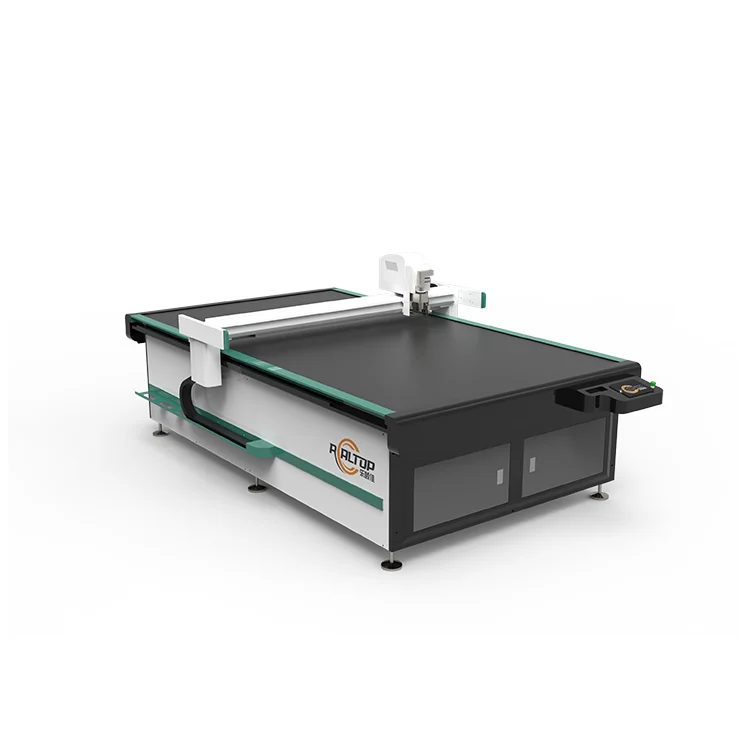
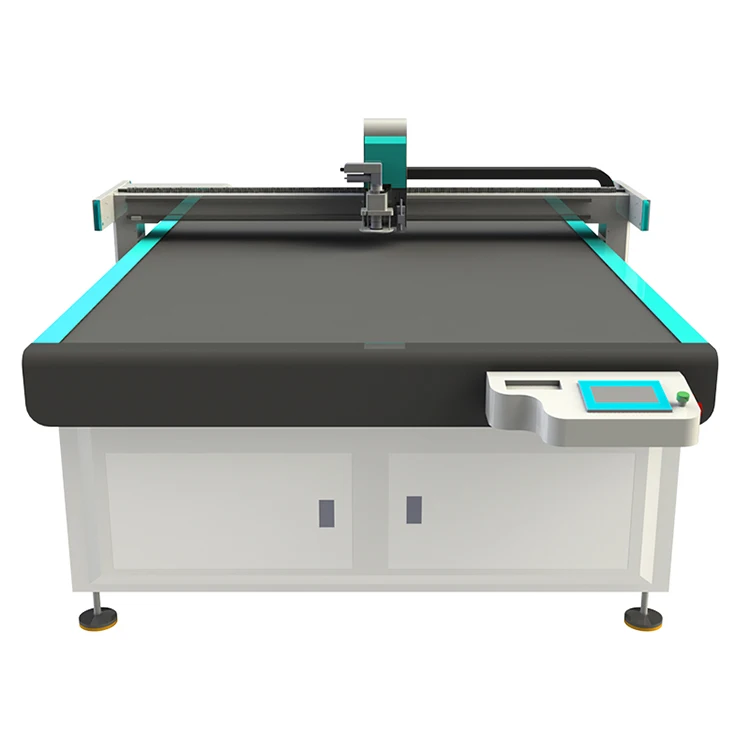
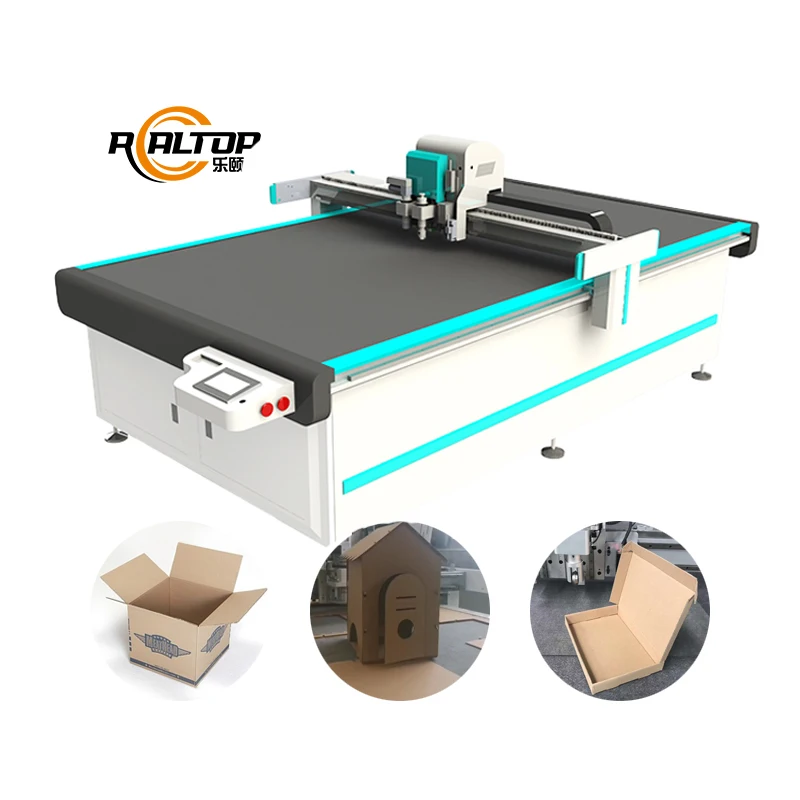
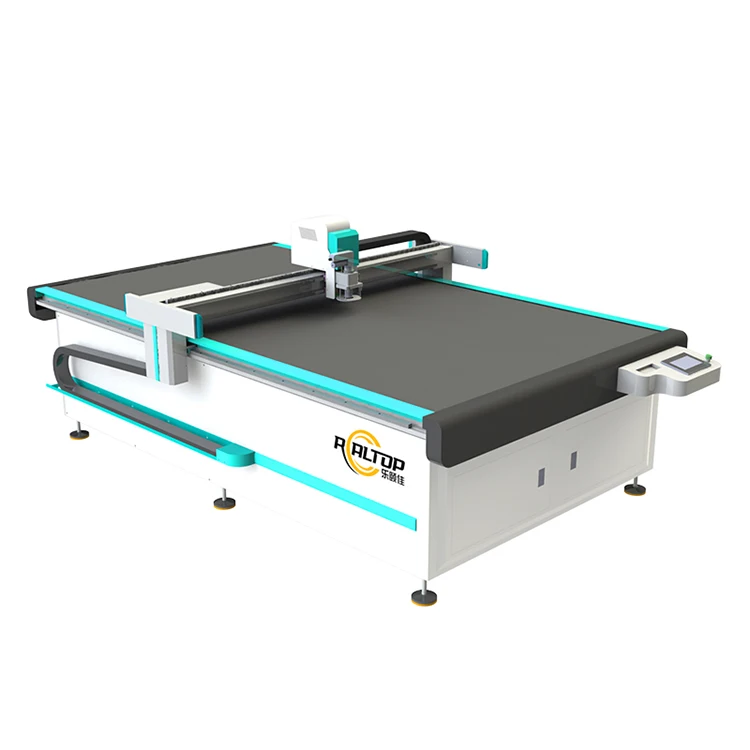
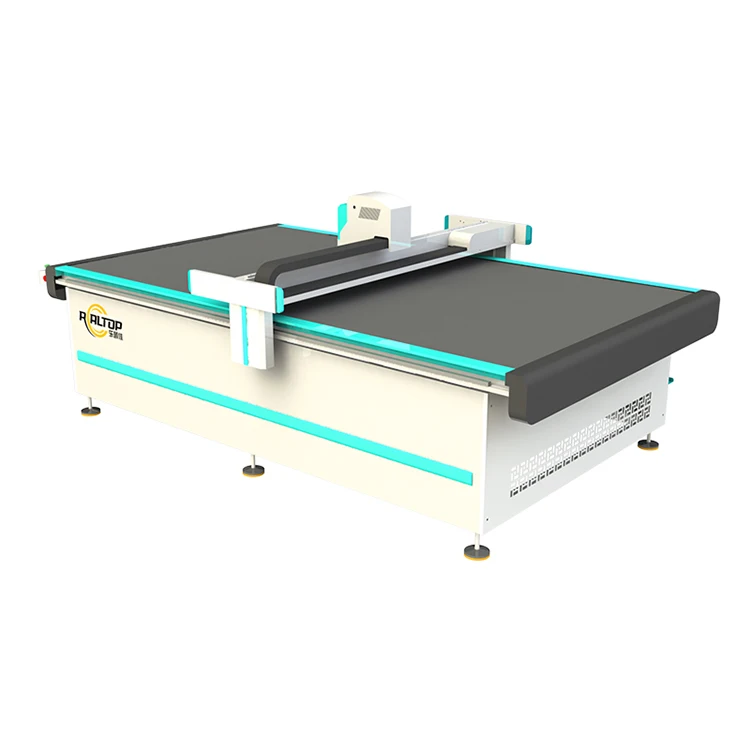
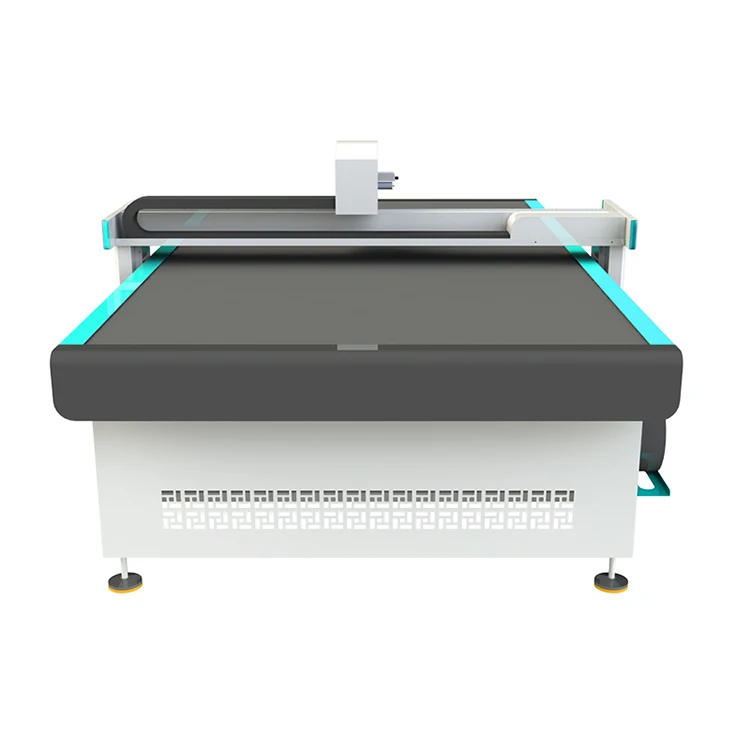
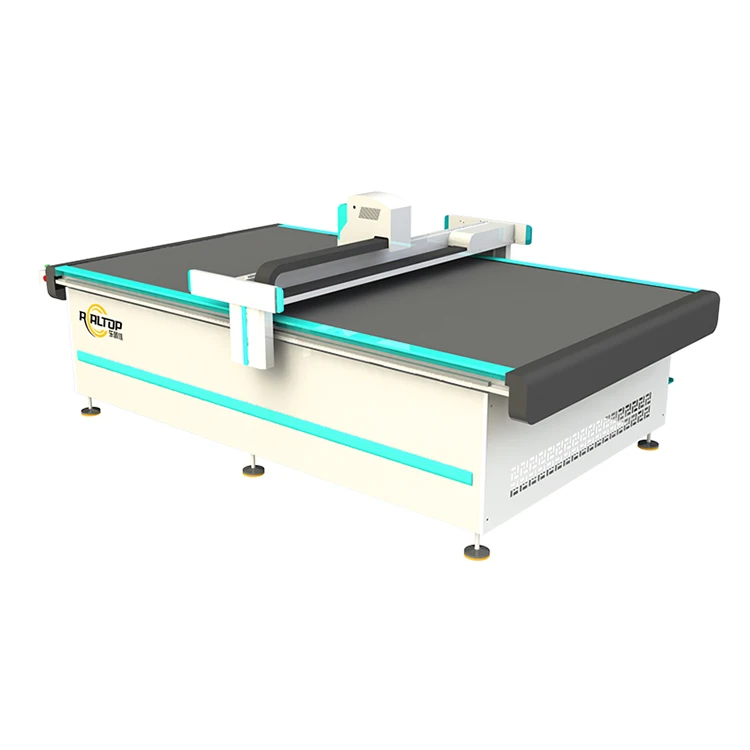
| Product Type | CNC Digital Flatbed Oscillating Knife Cutting Machine |
| Working Area | 1600 × 2500 mm |
| Overall Dimensions (L×W×H) | 3450 × 2300 × 1250 mm |
| Rated Power | 9 kW |
| Vacuum Pump | 7.5 kW |
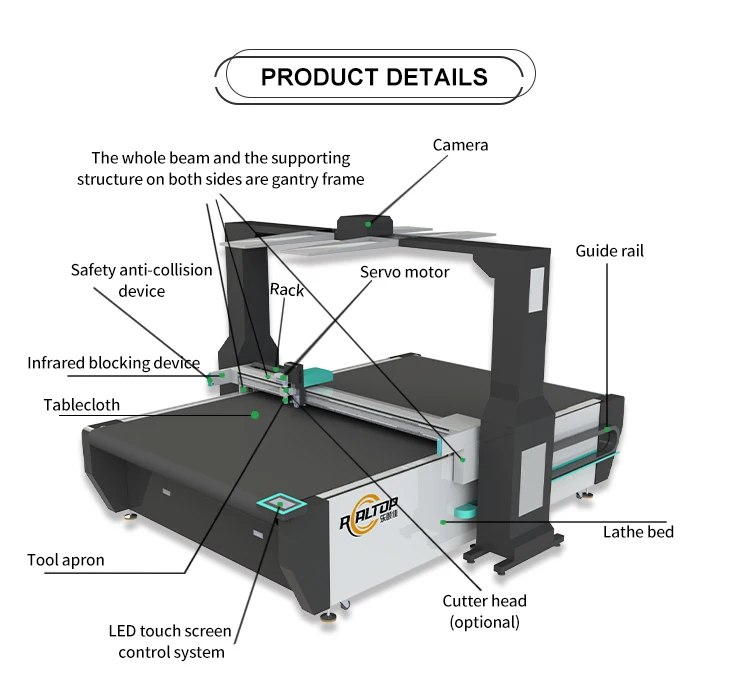
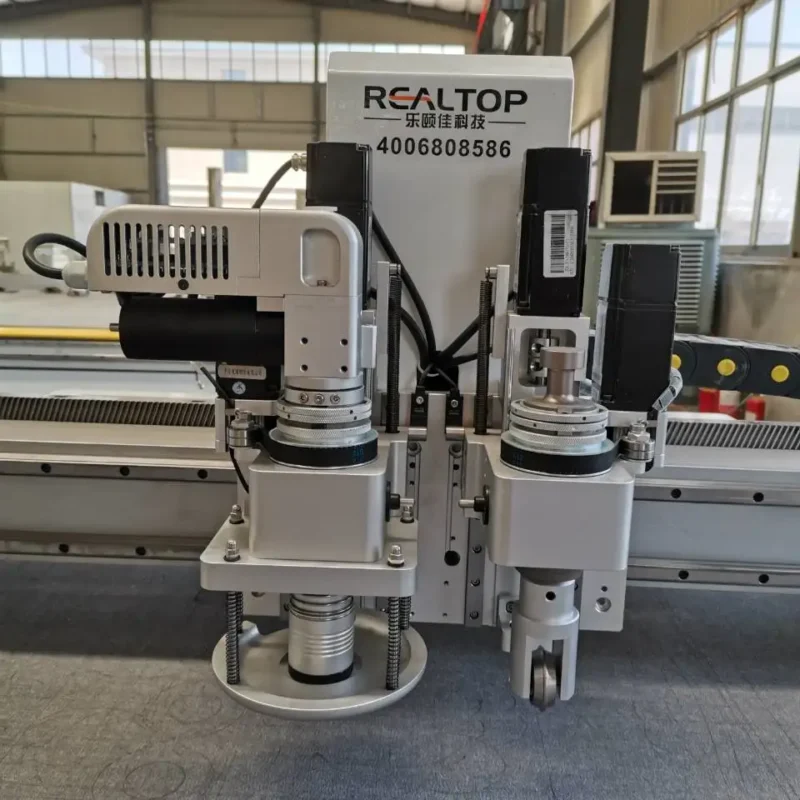
| Tool Head | Swiss imported oscillating knife — full cutting, half cutting, cursor location |
| Modular Tool Holder | Compatible with round knife, marking pen, auto feeder |
| Cutting Thickness | ≤50 mm (varies by material density and layer count) |
| Translational Velocity | 800–1200 mm/s |
| Repeated Accuracy | ≤0.1 mm |
| Transmission System | Digital servo motor, Taiwan Hiwin linear guide, rack and pinion, synchronous belt, ball screw |
| Servo Motor | Delta or Panasonic servo motor (configuration dependent) |
| Conveyor Belt | Germany imported conveyor belt |
| Table Surface | High-density felt |
| Safety Device | Infrared sensors |
| Instruction System | HP-GL compatible format |
| Voltage | 380V ± 10% |
| Machine Frame | Overall welding process, imported milling machine processing |
| Control Electrical Box | Fixed on fuselage with high-flexibility cables |
| Standards | CE declaration where applicable |
Application Suitability
| Application | Material or Output |
|---|---|
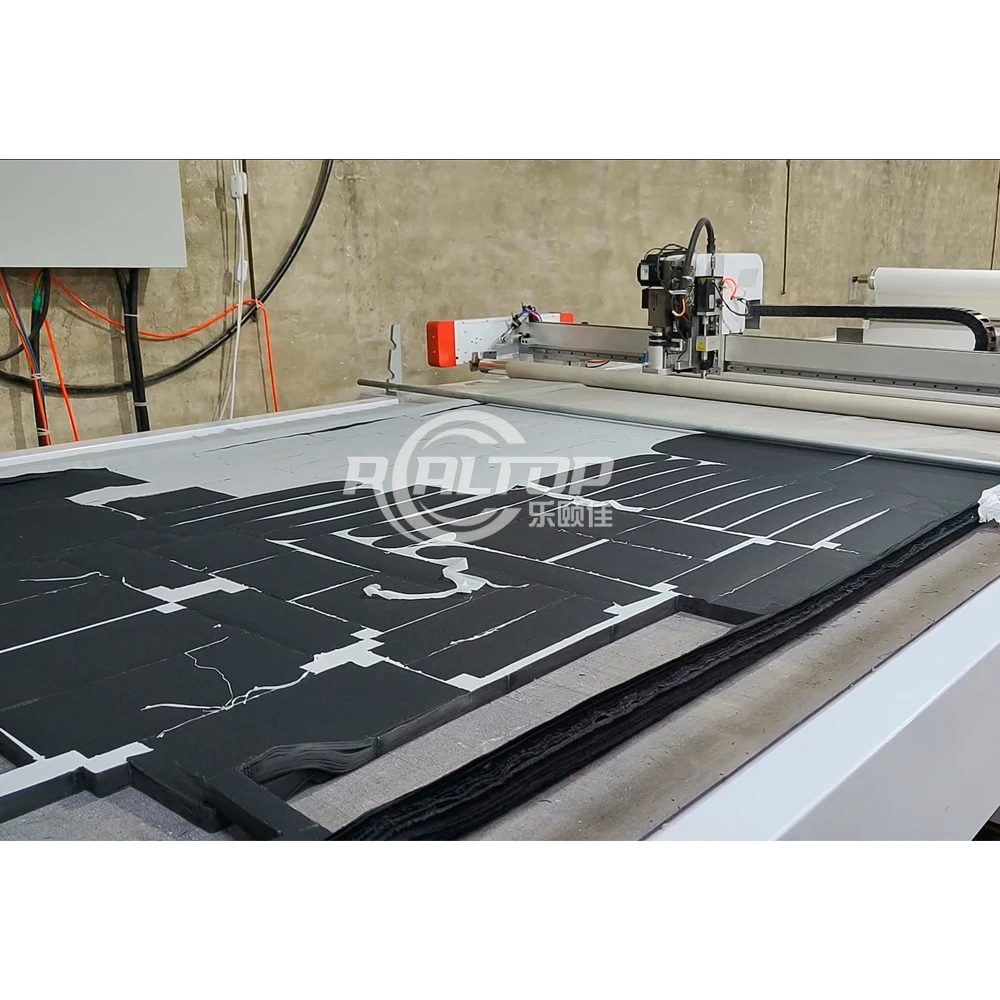
| Garment and textile pattern cutting | Woven fabric, knit fabric, technical textile, multi-layer layup |
| Leather goods and footwear | Natural leather, PU synthetic, sponge composite leather |
| Automotive interior trimming | PVC, sponge composite leather, flexible composite sheets |
| Gasket and seal production | Rubber, silicon, soft glass, non-metallic gasket stock |
| Packaging and carton sampling | Corrugated board, folding carton, greyboard |
| Signage and display | Vinyl, flexible banner, foam board, PVC sheet |
Why Specifying Only Working Area Fails the Material Test
A 2516-format CNC oscillating knife cutting machine manufacturer quote based solely on table size ignores the variable that actually determines output quality — the relationship between material density, tool head selection and vacuum hold-down. The machine must be matched to the material, not the floor space.
I have watched buyers receive a machine that cuts standard EVA foam cleanly at the factory trial, only to find it tears through high-density composite material on their own shop floor. The oscillating frequency and blade geometry that work on a 2 mm felt layup will crush a 15 mm sponge composite leather stack or leave ragged edges on reinforced PVC. When the tool head and vacuum zoning are not confirmed against the actual production material, two weeks of parameter tuning is the optimistic outcome. [NEED_CITE: common oscillating knife cutting failures on composite materials]
Where the 2516 Format Sits in the Full Range
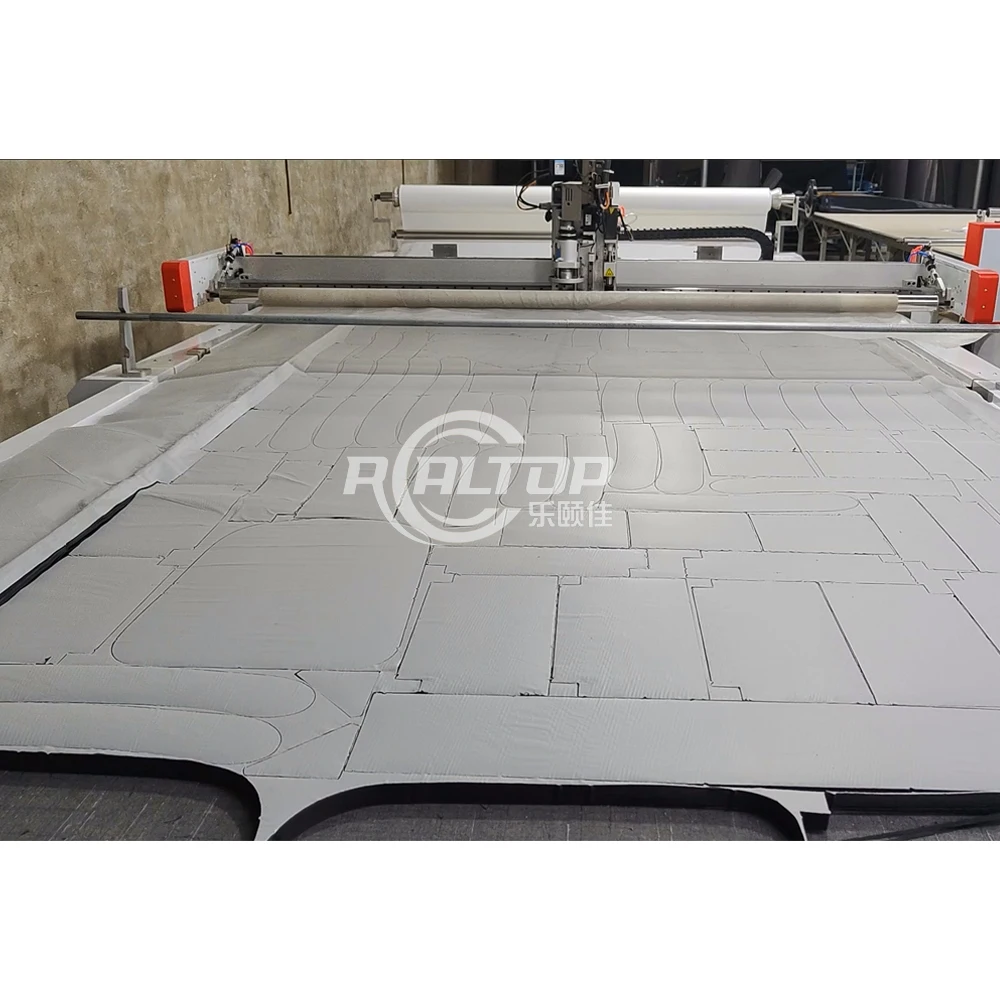
The 1600 × 2500 mm working area places this platform between compact sample-making tables and large-format roll-fed production systems. For garment and footwear shops cutting nested marker layouts from standard-width fabric rolls, this CNC digital flatbed cutting machine for sale covers a full lay-up width without requiring material rotation. Signage producers cutting vinyl and foam board for mid-size display panels find the same format sufficient for most panel sizes. Buyers whose daily volume justifies continuous roll-fed feeding can step up to a conveyor-equipped variant of the same footprint, while those cutting oversized automotive headliner panels would need to move to a wider machine family entirely.
Knife Method Versus Laser for Flexible Materials
Within the broader REALTOP catalogue, oscillating knife and CO2 laser serve different production realities. An oscillating knife cuts fabric and leather without thermal edge sealing, which matters when the downstream process involves sewing or bonding — a heat-sealed edge will not accept adhesive or thread the same way a clean blade cut does. For gasket and rubber work where edge sealing is actually desirable, a laser method may be more appropriate. The CNC oscillating knife cutting machine manufacturer approach is to confirm the material and the downstream process before recommending one method over the other, rather than pushing a single technology across every application. [NEED_CITE: thermal versus mechanical edge finish on flexible materials]
What the Spec Sheet Numbers Mean on the Shop Floor
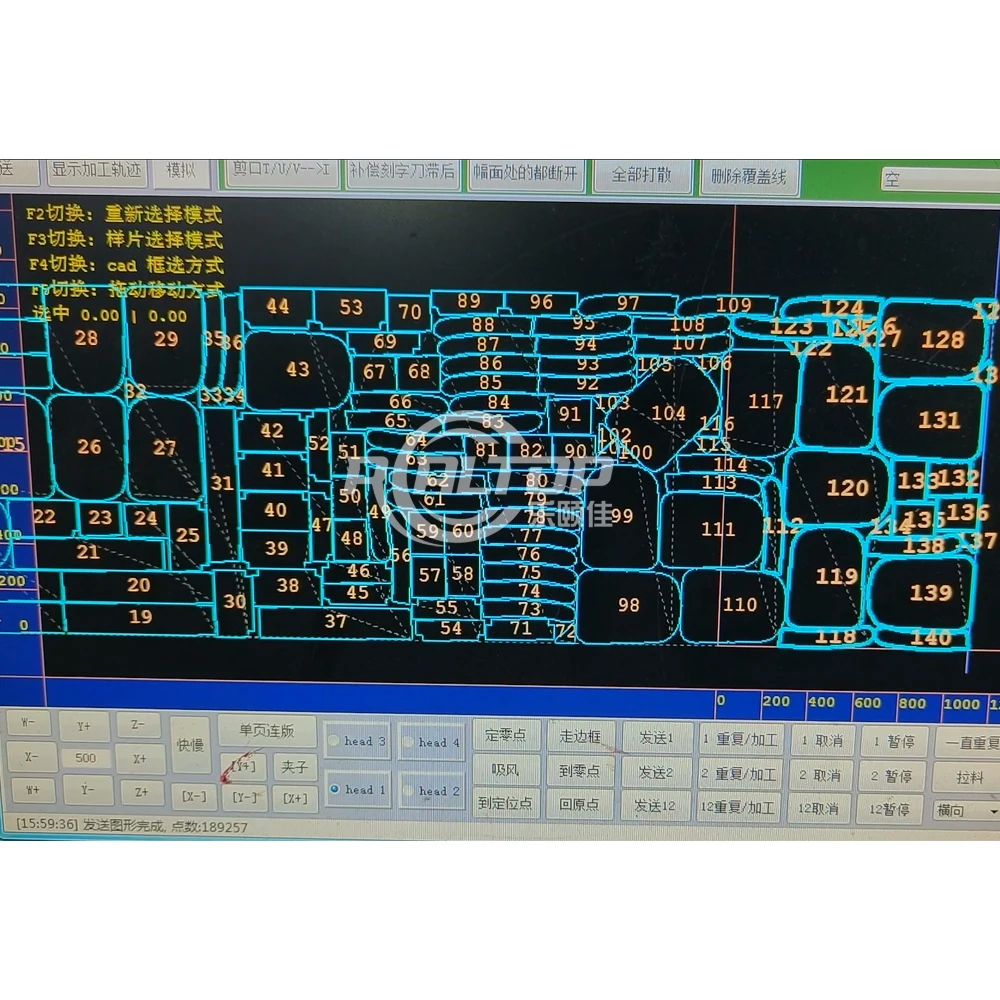
The ≤50 mm cutting thickness claim is measured under ideal conditions with a specific blade profile and material hardness — a dense 40 mm rubber gasket stock will challenge that limit far sooner than a 40 mm foam sheet. The rack and pinion transmission paired with Taiwan Hiwin linear guides provides the rigidity needed to hold ≤0.1 mm repeated accuracy across the full 2500 mm travel length, which matters when nesting tightly spaced pattern pieces where even a 0.5 mm drift causes misalignment. The 7.5 kW vacuum pump paired with a high-density felt table surface must generate enough suction through the porous felt to hold small fabric pieces flat during high-speed directional changes at up to 1200 mm/s. When small parts lift during cutting, the cause is usually insufficient vacuum zoning rather than inadequate pump capacity. The HP-GL compatible instruction system covers the file formats most common in garment and signage workflows, though buyers using proprietary nesting software should confirm export compatibility before order.
The Cost of Choosing the Wrong Tool Head
Selecting a drag knife for a material that requires oscillating action produces crushed edges on foam and composite leather, because the blade drags rather than cuts through the material stack. A round knife handles single-ply fabric efficiently but cannot perform half-cutting or kiss-cutting operations needed for sticker and gasket production. When the tool head decision is made from a catalogue rather than a sample cut, the buyer discovers the limitation only after the machine is installed. [NEED_CITE: tool head selection errors in oscillating knife cutting applications]
Why Source This Configuration Here
In-house design covers both knife and laser cutting technologies, so a buyer evaluating the RT-D2516/RT-S2516 can compare methods against the same material on the same visit. Tool head and table configuration are specified per material and production volume — not selected from a fixed menu. CCD camera positioning is available for printed contour work when the application requires it. Software compatibility is confirmed against the buyer’s existing file format and nesting workflow before the order is finalized. Voltage, plug type and control panel language are documented to match the destination facility. Sample cutting on the buyer’s own material is conducted before commitment, not after delivery.
Documentation & Verification
- Machine specification sheet confirming working area, tool head and vacuum configuration for your material type
- Sample cutting report run on your actual fabric or composite before order confirmation
- Electrical schematic and voltage confirmation matching 380V ± 10% to your facility supply
- Software licence and HP-GL file format compatibility note for your nesting workflow
- Factory test record documenting cutting accuracy and edge quality on your specified material
- Packing photographs showing crating and container loading condition before dispatch
Installation, Commissioning & Support
- Floor space of at least 3450 × 2300 mm required with clearance for the control electrical box on the fuselage side
- Dedicated 380V ± 10% circuit with capacity for the combined 9 kW machine and 7.5 kW vacuum pump draw
- Overall welding frame ships as a single unit — no structural assembly required at destination
- First-run commissioning includes servo tuning and vacuum zoning adjustment for your specific material thickness
- Operator training covers tool head changeover between oscillating knife, round knife and marking pen modules
- Spare parts list includes Swiss knife blades, felt table surface material and high-flexibility cable sets
What to Share Before Requesting a Quote
To match the right configuration, we need the specific material type, maximum thickness and whether you cut from rolls or sheets. Share your existing nesting software name and file format so we can confirm HP-GL compatibility or identify any conversion requirements. Let us know your facility voltage and frequency, and whether you need the control interface in a language other than standard options. If you can send a sample of your production material, we will run a cutting test and share the results before any commitment.
Frequently Asked Questions
Q: How do I decide between oscillating knife and laser for my fabric cutting application?
A: Oscillating knife produces a clean mechanical cut with no thermal edge sealing, which is necessary when the cut pieces will be sewn or bonded downstream. Laser cuts and seals edges simultaneously, which suits synthetic textiles where fraying is a concern. The decision depends on your material composition and the next production step, not just cutting speed.
Q: When should I choose the 2516 format over a larger working area?
A: The 1600 × 2500 mm table handles standard fabric roll widths and most signage panels. Step up to a larger format when your material sheet size exceeds 2500 mm in length, or when cutting oversized automotive interior panels. For high-volume roll-fed fabric production, a conveyor-equipped 2516 variant may outperform a larger fixed table.
Q: What is the difference between single-head and multi-head configurations?
A: A single oscillating knife head suits mixed-material workshops that change tool heads between jobs. Multi-head setups carry multiple tools simultaneously, reducing changeover time for production runs that alternate between full cutting, half cutting and marking. The choice depends on how often your daily schedule switches between tool functions.
Q: Does the vacuum table hold small pattern pieces securely at high speed?
A: The high-density felt table surface paired with the 7.5 kW vacuum pump provides strong hold-down across the full working area. However, very small pieces near the table edges may require specific vacuum zoning to prevent lifting during directional changes. We confirm vacuum zoning adequacy during the sample cutting test on your actual nesting layout.
Q: Can I use my existing nesting software with this machine?
A: The HP-GL compatible instruction system covers most common nesting and CAD workflows in garment, signage and gasket production. If you use proprietary nesting software, we confirm file export compatibility before order. The software licence and format compatibility note is included in the documentation package so your production team can verify integration on arrival.
Specified tool head and table per material — the RT-D2516/RT-S2516 is configured after sample cutting on the buyer’s actual fabric, leather or composite, not shipped as a generic flatbed.
Technical Specifications
| Parameter | Value |
|---|---|
| Model | RT-D2516/RT-S2516 |
| Product Type | CNC Digital Flatbed Oscillating Knife Cutting Machine |
| Working Area | 1600 × 2500 mm |
| Overall Dimensions (L×W×H) | 3450 × 2300 × 1250 mm |
| Rated Power | 9 kW |
| Vacuum Pump | 7.5 kW |
| Tool Head | Swiss imported oscillating knife — full cutting, half cutting, cursor location |
| Modular Tool Holder | Compatible with round knife, marking pen, auto feeder |
| Cutting Thickness | ≤50 mm (varies by material density and layer count) |
| Translational Velocity | 800–1200 mm/s |
| Repeated Accuracy | ≤0.1 mm |
| Transmission System | Digital servo motor, Taiwan Hiwin linear guide, rack and pinion, synchronous belt, ball screw |
| Servo Motor | Delta or Panasonic servo motor (configuration dependent) |
| Conveyor Belt | Germany imported conveyor belt |
| Table Surface | High-density felt |
| Safety Device | Infrared sensors |
| Instruction System | HP-GL compatible format |
| Voltage | 380V ± 10% |
| Machine Frame | Overall welding process, imported milling machine processing |
| Control Electrical Box | Fixed on fuselage with high-flexibility cables |
| Standards | CE declaration where applicable |
Application Suitability
| Application | Material or Output |
|---|---|
| Garment and textile pattern cutting | Woven fabric, knit fabric, technical textile, multi-layer layup |
| Leather goods and footwear | Natural leather, PU synthetic, sponge composite leather |
| Automotive interior trimming | PVC, sponge composite leather, flexible composite sheets |
| Gasket and seal production | Rubber, silicon, soft glass, non-metallic gasket stock |
| Packaging and carton sampling | Corrugated board, folding carton, greyboard |
| Signage and display | Vinyl, flexible banner, foam board, PVC sheet |
Why Specifying Only Working Area Fails the Material Test
A 2516-format CNC oscillating knife cutting machine manufacturer quote based solely on table size ignores the variable that actually determines output quality — the relationship between material density, tool head selection and vacuum hold-down. The machine must be matched to the material, not the floor space.
I have watched buyers receive a machine that cuts standard EVA foam cleanly at the factory trial, only to find it tears through high-density composite material on their own shop floor. The oscillating frequency and blade geometry that work on a 2 mm felt layup will crush a 15 mm sponge composite leather stack or leave ragged edges on reinforced PVC. When the tool head and vacuum zoning are not confirmed against the actual production material, two weeks of parameter tuning is the optimistic outcome. [NEED_CITE: common oscillating knife cutting failures on composite materials]
Where the 2516 Format Sits in the Full Range
The 1600 × 2500 mm working area places this platform between compact sample-making tables and large-format roll-fed production systems. For garment and footwear shops cutting nested marker layouts from standard-width fabric rolls, this CNC digital flatbed cutting machine for sale covers a full lay-up width without requiring material rotation. Signage producers cutting vinyl and foam board for mid-size display panels find the same format sufficient for most panel sizes. Buyers whose daily volume justifies continuous roll-fed feeding can step up to a conveyor-equipped variant of the same footprint, while those cutting oversized automotive headliner panels would need to move to a wider machine family entirely.
Knife Method Versus Laser for Flexible Materials
Within the broader REALTOP catalogue, oscillating knife and CO2 laser serve different production realities. An oscillating knife cuts fabric and leather without thermal edge sealing, which matters when the downstream process involves sewing or bonding — a heat-sealed edge will not accept adhesive or thread the same way a clean blade cut does. For gasket and rubber work where edge sealing is actually desirable, a laser method may be more appropriate. The CNC oscillating knife cutting machine manufacturer approach is to confirm the material and the downstream process before recommending one method over the other, rather than pushing a single technology across every application. [NEED_CITE: thermal versus mechanical edge finish on flexible materials]
What the Spec Sheet Numbers Mean on the Shop Floor
The ≤50 mm cutting thickness claim is measured under ideal conditions with a specific blade profile and material hardness — a dense 40 mm rubber gasket stock will challenge that limit far sooner than a 40 mm foam sheet. The rack and pinion transmission paired with Taiwan Hiwin linear guides provides the rigidity needed to hold ≤0.1 mm repeated accuracy across the full 2500 mm travel length, which matters when nesting tightly spaced pattern pieces where even a 0.5 mm drift causes misalignment. The 7.5 kW vacuum pump paired with a high-density felt table surface must generate enough suction through the porous felt to hold small fabric pieces flat during high-speed directional changes at up to 1200 mm/s. When small parts lift during cutting, the cause is usually insufficient vacuum zoning rather than inadequate pump capacity. The HP-GL compatible instruction system covers the file formats most common in garment and signage workflows, though buyers using proprietary nesting software should confirm export compatibility before order.
The Cost of Choosing the Wrong Tool Head
Selecting a drag knife for a material that requires oscillating action produces crushed edges on foam and composite leather, because the blade drags rather than cuts through the material stack. A round knife handles single-ply fabric efficiently but cannot perform half-cutting or kiss-cutting operations needed for sticker and gasket production. When the tool head decision is made from a catalogue rather than a sample cut, the buyer discovers the limitation only after the machine is installed. [NEED_CITE: tool head selection errors in oscillating knife cutting applications]
Why Source This Configuration Here
In-house design covers both knife and laser cutting technologies, so a buyer evaluating the RT-D2516/RT-S2516 can compare methods against the same material on the same visit. Tool head and table configuration are specified per material and production volume — not selected from a fixed menu. CCD camera positioning is available for printed contour work when the application requires it. Software compatibility is confirmed against the buyer’s existing file format and nesting workflow before the order is finalized. Voltage, plug type and control panel language are documented to match the destination facility. Sample cutting on the buyer’s own material is conducted before commitment, not after delivery.
Documentation & Verification
- Machine specification sheet confirming working area, tool head and vacuum configuration for your material type
- Sample cutting report run on your actual fabric or composite before order confirmation
- Electrical schematic and voltage confirmation matching 380V ± 10% to your facility supply
- Software licence and HP-GL file format compatibility note for your nesting workflow
- Factory test record documenting cutting accuracy and edge quality on your specified material
- Packing photographs showing crating and container loading condition before dispatch
Installation, Commissioning & Support
- Floor space of at least 3450 × 2300 mm required with clearance for the control electrical box on the fuselage side
- Dedicated 380V ± 10% circuit with capacity for the combined 9 kW machine and 7.5 kW vacuum pump draw
- Overall welding frame ships as a single unit — no structural assembly required at destination
- First-run commissioning includes servo tuning and vacuum zoning adjustment for your specific material thickness
- Operator training covers tool head changeover between oscillating knife, round knife and marking pen modules
- Spare parts list includes Swiss knife blades, felt table surface material and high-flexibility cable sets
What to Share Before Requesting a Quote
To match the right configuration, we need the specific material type, maximum thickness and whether you cut from rolls or sheets. Share your existing nesting software name and file format so we can confirm HP-GL compatibility or identify any conversion requirements. Let us know your facility voltage and frequency, and whether you need the control interface in a language other than standard options. If you can send a sample of your production material, we will run a cutting test and share the results before any commitment.
Frequently Asked Questions
Q: How do I decide between oscillating knife and laser for my fabric cutting application?
A: Oscillating knife produces a clean mechanical cut with no thermal edge sealing, which is necessary when the cut pieces will be sewn or bonded downstream. Laser cuts and seals edges simultaneously, which suits synthetic textiles where fraying is a concern. The decision depends on your material composition and the next production step, not just cutting speed.
Q: When should I choose the 2516 format over a larger working area?
A: The 1600 × 2500 mm table handles standard fabric roll widths and most signage panels. Step up to a larger format when your material sheet size exceeds 2500 mm in length, or when cutting oversized automotive interior panels. For high-volume roll-fed fabric production, a conveyor-equipped 2516 variant may outperform a larger fixed table.
Q: What is the difference between single-head and multi-head configurations?
A: A single oscillating knife head suits mixed-material workshops that change tool heads between jobs. Multi-head setups carry multiple tools simultaneously, reducing changeover time for production runs that alternate between full cutting, half cutting and marking. The choice depends on how often your daily schedule switches between tool functions.
Q: Does the vacuum table hold small pattern pieces securely at high speed?
A: The high-density felt table surface paired with the 7.5 kW vacuum pump provides strong hold-down across the full working area. However, very small pieces near the table edges may require specific vacuum zoning to prevent lifting during directional changes. We confirm vacuum zoning adequacy during the sample cutting test on your actual nesting layout.
Q: Can I use my existing nesting software with this machine?
A: The HP-GL compatible instruction system covers most common nesting and CAD workflows in garment, signage and gasket production. If you use proprietary nesting software, we confirm file export compatibility before order. The software licence and format compatibility note is included in the documentation package so your production team can verify integration on arrival.
商品评价
There are no reviews yet.