

Fast Delivery
Quick, reliable shipping to any location.

Free & easy returns
Return this item by mail or in store within 90 days for a full refund.
Complete cutting range — In-house design and production covering both knife and laser technologies lets buyers match the cutting method to the material rather than force one approach across every job.
Technical Specifications
| Parameter | Value |
|---|---|
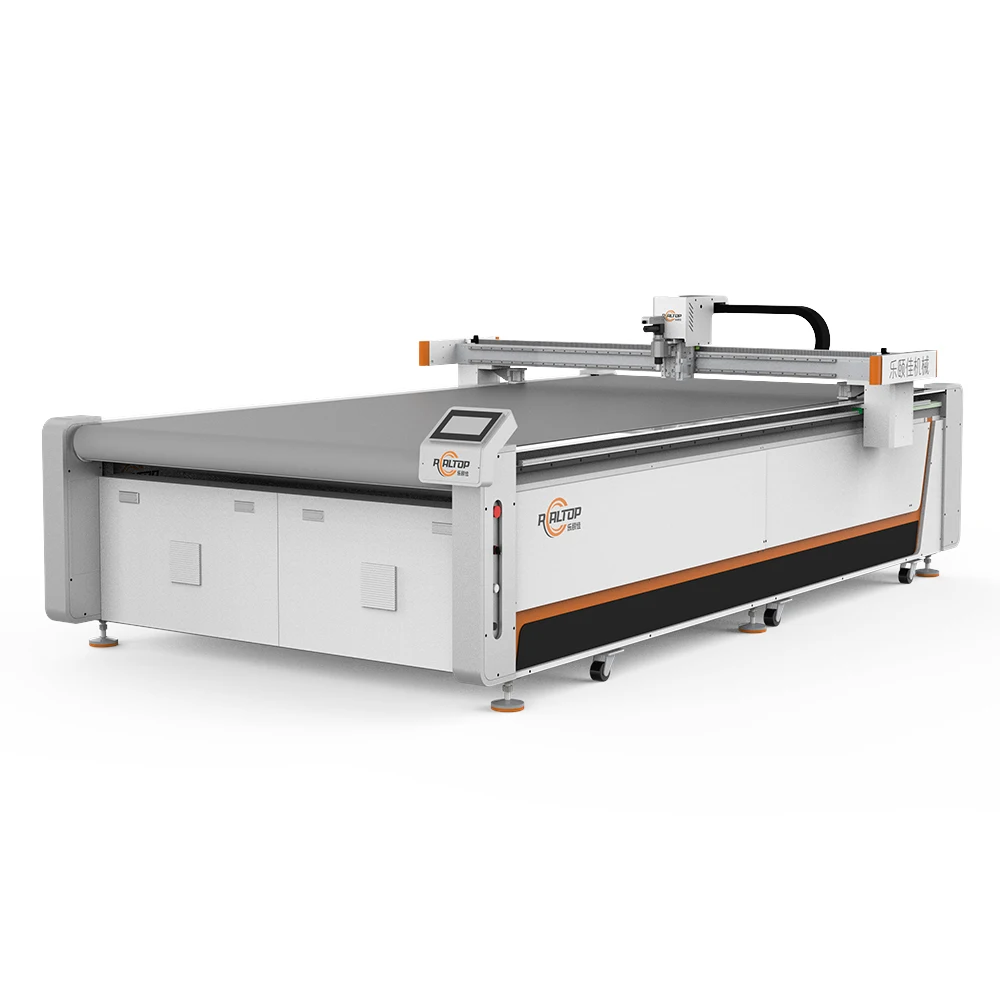
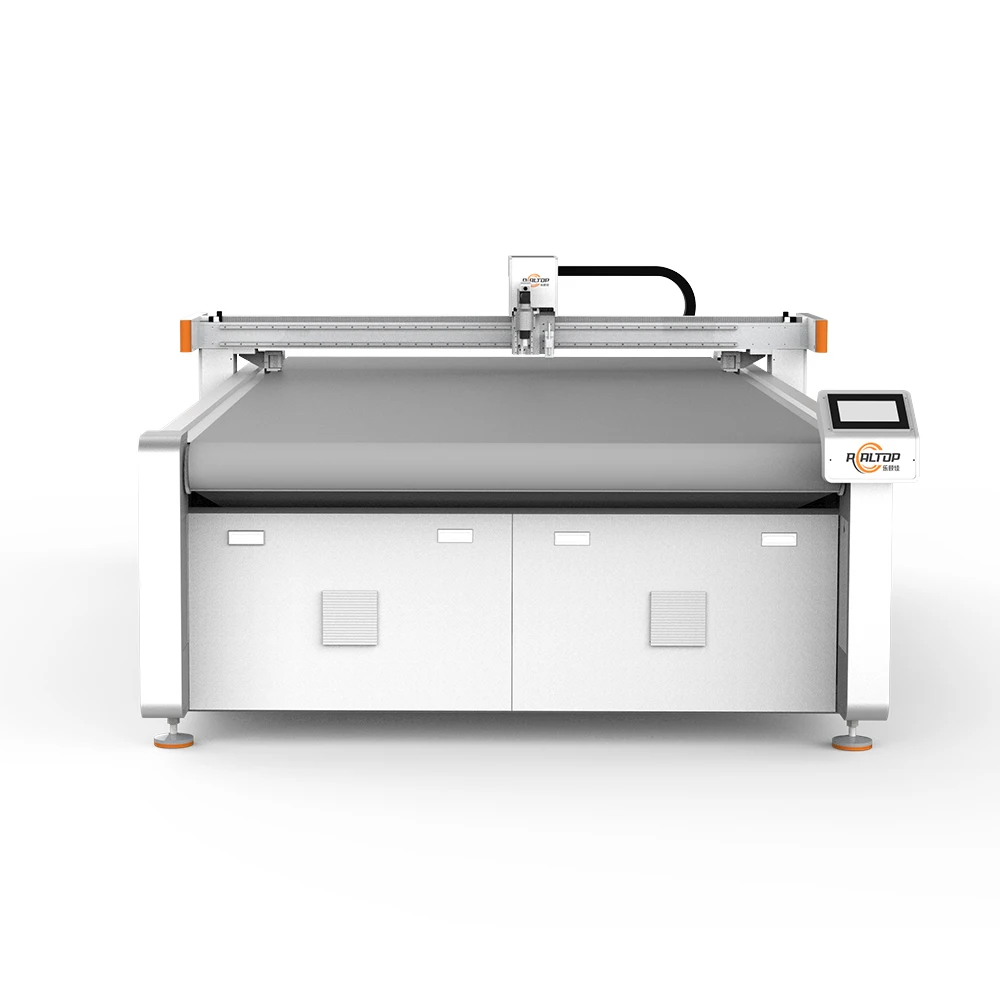
| Product Type | CNC Oscillating Knife Cutting Machine |
| Working Area | 1600×2500 mm |
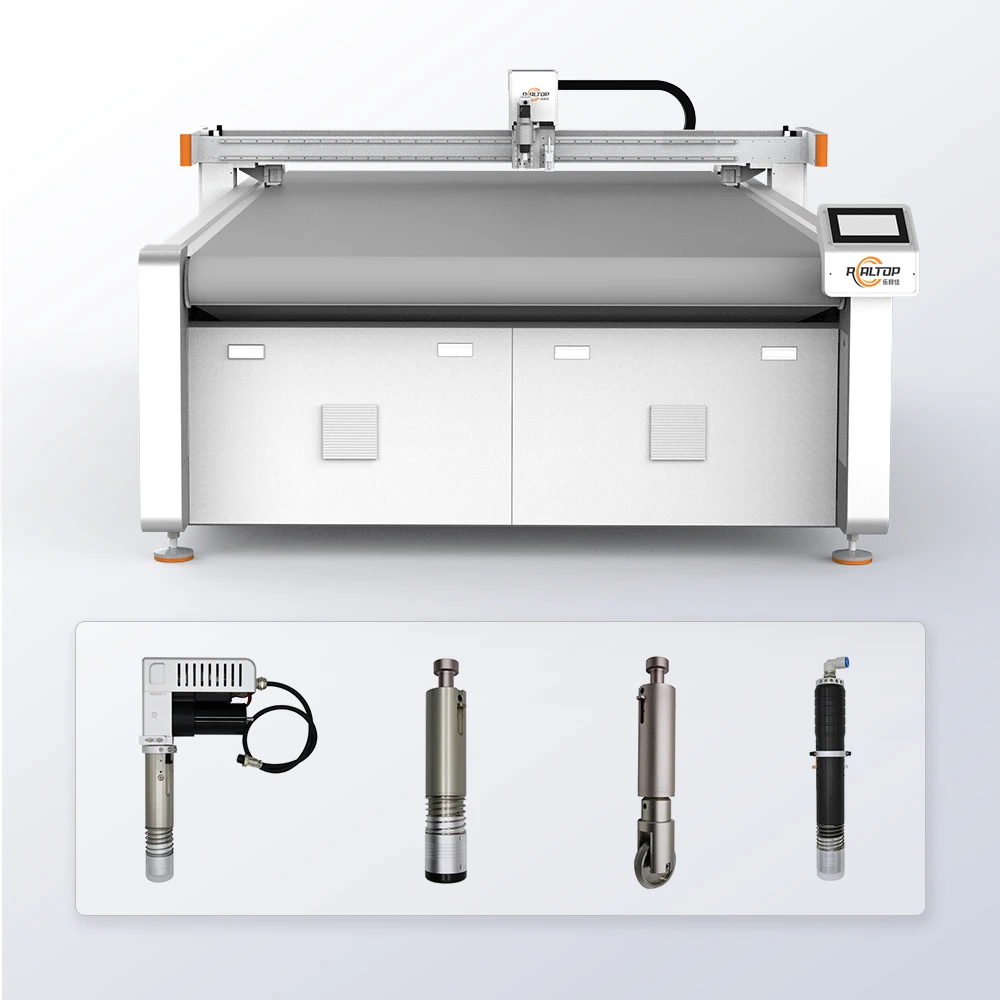
| Tool Head Options | Oscillating knife, Driven rotary knife, Creasing wheel, Kiss cutting tool, Pneumatic knife, Milling tool, V groove knife |
| Cutting Speed | 0–2000 mm/s |
| Cutting Thickness | ≤30 mm |
| Cutting Accuracy | ±0.1 mm |
| Vacuum Pump | 9 kW |
| Vacuum Table | Aluminum bellows vacuum table |
| Voltage Options | 110V, 220V, 380V |
| Profile Formats | PLT, DXF, AI, PDF |
| Control System | PLC control panel with optional display languages |
| Servo Motors | Multiple options including Panasonic, Delta, Dorna (source value — verify against manufacturer catalog) |
| Safety Devices | Infrared sensor device and emergency stop device |
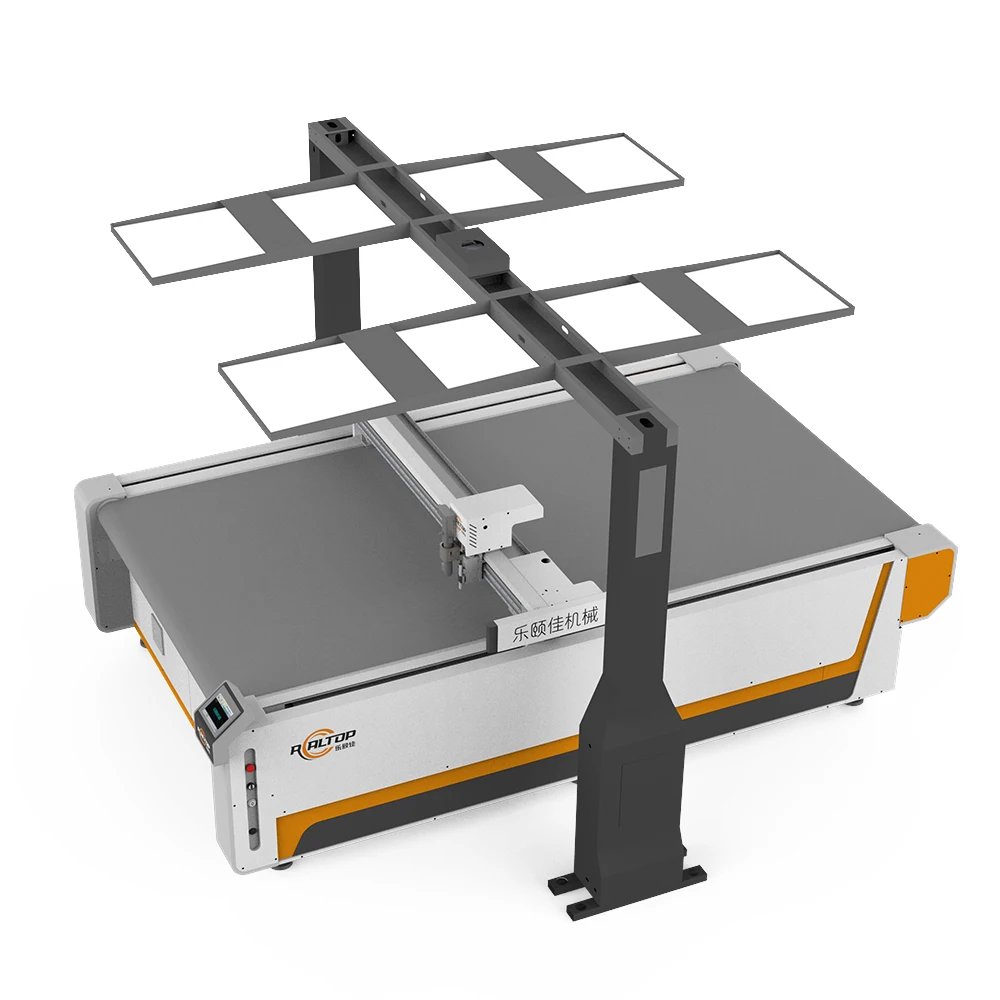
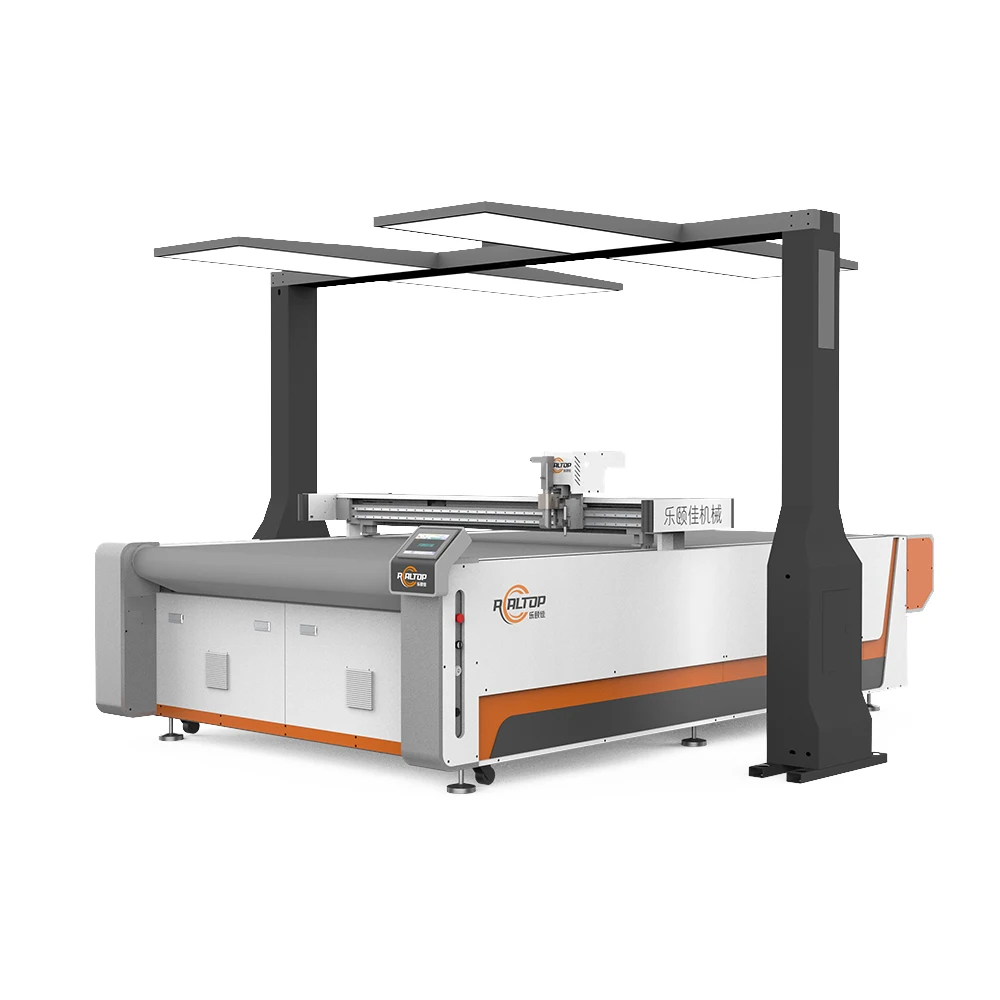
| Machine Size | 3300×2100×1350 mm |
| Language Options | English, Russian, Italian, Chinese; special languages customizable |
| Certification | CE |
Application Suitability
| Application | Material or Output |
|---|---|
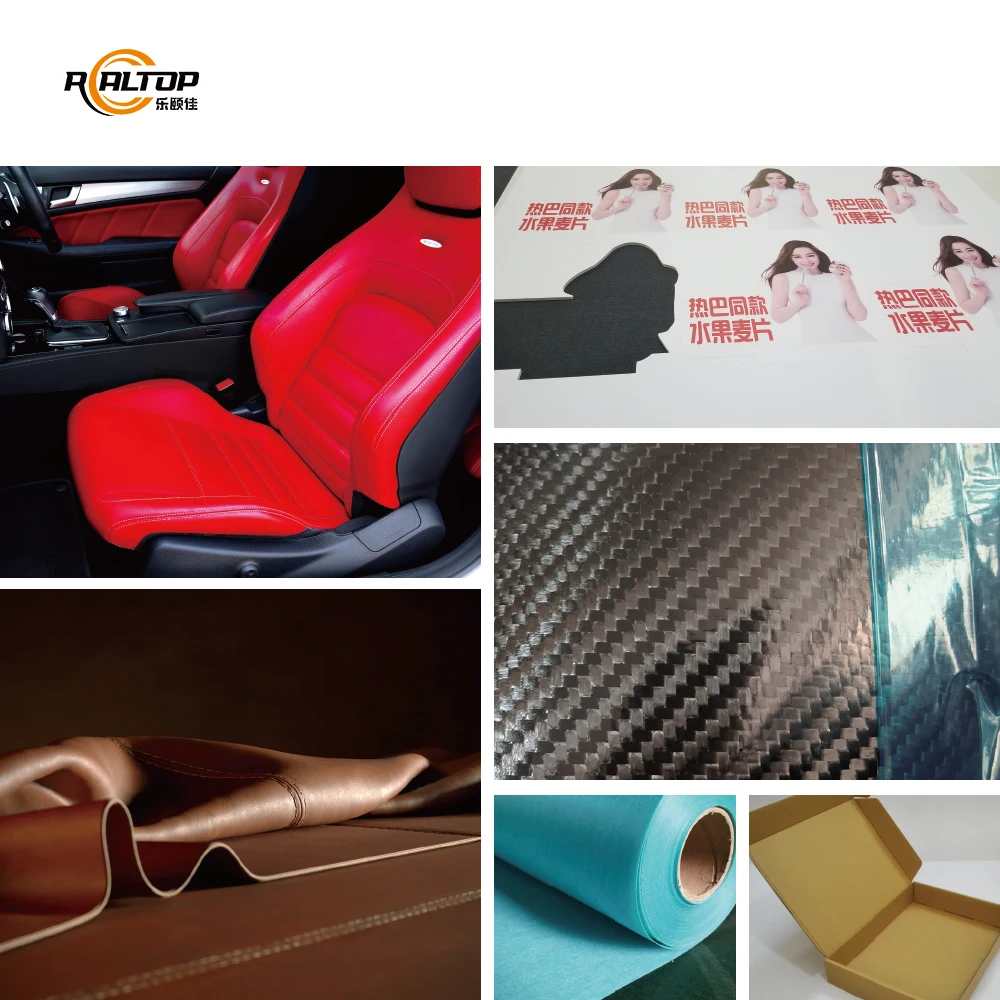
| Automotive floor mats | Leather-EVA composite, tufted fabric with rubber backing |
| Seat covers and cushions | Genuine leather, PU leather, multi-layer foam |
| Steering wheel covers | Natural and synthetic leather wraps |
| Dashboard mats and carpets | Non-woven fabric, needle-punch textile |
| Blinds fabric layer cutting | Multi-layer woven and blackout fabrics |
| Footwear components | Leather uppers, synthetic linings, insole board |
| Bags and clothing | Genuine and PU leather, technical textiles |
| Carton and packaging samples | Corrugated board, folding carton |
Why Working Area Alone Is Not Enough When Choosing a CNC Oscillating Knife Cutting Machine Manufacturer
Specifying a flatbed cutter by table size without confirming material thickness and tool head compatibility is the most common mistake in this equipment class.
A 1600×2500 mm bed looks generous on paper, but if the leather-EVA composite used for automotive floor mats exceeds the knife stroke, the blade will drag and leave ragged edges across the entire sheet. I have watched a production run of car mats get scrapped because the oscillating frequency could not penetrate the fiber reinforcement layer hidden inside the material stack. Buyers who focus only on working area end up discovering the real problem during their first production week [NEED_CITE: material thickness versus cutting method mismatch in flatbed digital cutters].
Knife Versus Laser — Matching the Method to the Leather Type
When evaluating cutting equipment for leather, the decision between an oscillating knife and a CO2 laser depends on the material structure and the edge requirement. Genuine leather with natural grain variation often cuts cleaner with an oscillating knife because the blade severs fibers mechanically without thermal distortion. Synthetic PU leather used in automotive interiors, on the other hand, can benefit from laser sealing of the cut edge to prevent fraying during upholstery assembly. Having access to both technologies under one CNC oscillating knife cutting machine manufacturer means buyers can test each method on their actual material before committing to a configuration.
Tool Head Interchangeability Across Production Jobs
A single flatbed platform configured with interchangeable tool heads covers a wider range of jobs than a machine locked to one cutting method. The oscillating knife handles thick leather-EVA stacks for floor mats, while the driven rotary knife slices through thinner PU and textile layers at higher travel speed. The creasing wheel scores folding carton without cutting through, and the kiss cutting tool removes vinyl decals from release liner without damaging the backing. Switching between these tools on the same aluminum bellows vacuum table lets a production floor handle mixed orders without moving material between machines [NEED_CITE: tool head changeover practices on CNC flatbed cutting tables].
How Core Parameters Translate to Daily Output
The 9 kW vacuum pump paired with the aluminum bellows table maintains consistent hold-down across the full 1600×2500 mm surface, which matters when cutting small leather pieces for steering wheel covers where even slight lift causes dimensional drift. The cutting accuracy of ±0.1 mm keeps nested parts within tolerance for automotive interior assembly where stitch holes must align across multiple panels. File format compatibility with PLT, DXF, AI, and PDF means nesting software can import directly from the design department without an intermediate conversion step that introduces errors. The PLC control panel with selectable display languages reduces operator confusion on multilingual production floors where shift workers may share the same workstation.
The Hidden Cost of Skipping Material-Specific Testing
Choosing a tool head based on a generic sample rather than the buyer’s actual material leads to compounding losses. A pneumatic knife may cut standard PVC cleanly, but when the same blade meets a fiber-reinforced composite used in automotive mats, the edge tears and the entire sheet is rejected. Vacuum table zoning that works for large seat cover panels may leave small gasket pieces lifting during the cut, producing scrap that only shows up at the sewing station. Software that cannot read the buyer’s existing nesting files forces a manual redraw of every pattern, adding hours before the first cut even starts [NEED_CITE: material-specific sample testing protocols for CNC cutting equipment].
What This CNC Oscillating Knife Cutting Machine Manufacturer Brings to the Table
In-house design and production spanning both oscillating knife and laser platforms means the cutting method is selected based on material behavior, not limited by a single product line. Tool head and table configuration are specified per material type and production volume rather than offered as a fixed package. CCD camera positioning is available for printed contour work where registration marks must be tracked at production speed. Software compatibility with the buyer’s file formats is confirmed before the order enters production, not discovered as a problem at installation. Voltage, plug type, and control language are customized to the destination market so the machine runs on arrival without a transformer or a language barrier.
Documentation & Verification
- Machine specification sheet covering both knife and laser families for cross-method comparison
- Sample cutting report on your leather or composite material with edge quality photographs
- Electrical schematic and voltage confirmation matched to destination market frequency
- Software licence and file format compatibility note for PLT, DXF, AI, PDF workflows
- Tool head and table configuration list tied to your specific material stack
- Factory test record on your material thickness range before dispatch
Installation, Commissioning & Support
- Floor space planning accounting for the 3300×2100 mm machine footprint plus material loading clearance
- Dedicated electrical circuit sized for the 9 kW vacuum pump plus servo motor draw at your local voltage
- Assembly and leveling of the aluminum bellows vacuum table on-site to maintain ±0.1 mm cutting accuracy
- First-run parameter tuning using your leather or composite material to set oscillating frequency and knife depth
- Operator training on the PLC control panel in your selected display language covering tool changeover and nesting import
- Spare parts list covering blades, vacuum seals, and tool head wear items with reorder part numbers
Before You Request a Quote
To narrow down the right configuration, share the material type and maximum thickness you plan to cut, along with typical sheet dimensions and daily volume targets. Confirm your local voltage and frequency so the electrical system is built to match. If your design team works in a specific CAD format or nesting software, provide a sample file so compatibility is verified before the machine enters production.
Frequently Asked Questions
Q: How do I decide between an oscillating knife and a laser for my leather products?
A: The choice depends on material structure and edge requirement. Genuine leather with natural grain typically cuts cleaner with a mechanical oscillating knife, while synthetic PU leather may benefit from the sealed edge a CO2 laser provides. Sample cutting on your actual material with both methods is the most reliable way to compare edge quality and cycle time before committing to one configuration.
Q: Can I change tool heads on the same machine for different jobs?
A: Yes. The platform supports interchangeable tool heads including oscillating knife, driven rotary knife, creasing wheel, kiss cutting, pneumatic knife, milling, and V-groove tools. Switching between them on the same aluminum bellows vacuum table allows a single machine to handle leather, fabric, carton, and composite materials across different production orders without relocating the workpiece.
Q: What happens if the voltage at my facility does not match the machine?
A: Voltage is confirmed before production and the electrical system is built to match your local supply, whether 110V, 220V, or 380V. The electrical schematic is included in the documentation package so your maintenance team can verify wiring on arrival. If frequency or plug type differs from the standard offering, customization is arranged before shipment.
Q: How is software compatibility confirmed before I place an order?
A: You provide a sample file in your working format — PLT, DXF, AI, or PDF — and the engineering team runs it through the control software to verify import, nesting, and cutting path generation. A compatibility note is included in the documentation so there are no surprises when your design files reach the machine on the production floor.
Q: Do you test the machine on my specific material before shipping?
A: Yes. A sample cutting test on your actual leather, composite, or fabric material is conducted before the machine leaves the factory. The sample cutting report documents edge quality, cutting speed, and tool head settings so you know the configuration works for your production requirements, not just for a generic test substrate.
Complete cutting range — In-house design and production covering both knife and laser technologies lets buyers match the cutting method to the material rather than force one approach across every job.
Technical Specifications
| Parameter | Value |
|---|---|
| Product Type | CNC Oscillating Knife Cutting Machine |
| Working Area | 1600×2500 mm |
| Tool Head Options | Oscillating knife, Driven rotary knife, Creasing wheel, Kiss cutting tool, Pneumatic knife, Milling tool, V groove knife |
| Cutting Speed | 0–2000 mm/s |
| Cutting Thickness | ≤30 mm |
| Cutting Accuracy | ±0.1 mm |
| Vacuum Pump | 9 kW |
| Vacuum Table | Aluminum bellows vacuum table |
| Voltage Options | 110V, 220V, 380V |
| Profile Formats | PLT, DXF, AI, PDF |
| Control System | PLC control panel with optional display languages |
| Servo Motors | Multiple options including Panasonic, Delta, Dorna (source value — verify against manufacturer catalog) |
| Safety Devices | Infrared sensor device and emergency stop device |
| Machine Size | 3300×2100×1350 mm |
| Language Options | English, Russian, Italian, Chinese; special languages customizable |
| Certification | CE |
Application Suitability
| Application | Material or Output |
|---|---|
| Automotive floor mats | Leather-EVA composite, tufted fabric with rubber backing |
| Seat covers and cushions | Genuine leather, PU leather, multi-layer foam |
| Steering wheel covers | Natural and synthetic leather wraps |
| Dashboard mats and carpets | Non-woven fabric, needle-punch textile |
| Blinds fabric layer cutting | Multi-layer woven and blackout fabrics |
| Footwear components | Leather uppers, synthetic linings, insole board |
| Bags and clothing | Genuine and PU leather, technical textiles |
| Carton and packaging samples | Corrugated board, folding carton |
Why Working Area Alone Is Not Enough When Choosing a CNC Oscillating Knife Cutting Machine Manufacturer
Specifying a flatbed cutter by table size without confirming material thickness and tool head compatibility is the most common mistake in this equipment class.
A 1600×2500 mm bed looks generous on paper, but if the leather-EVA composite used for automotive floor mats exceeds the knife stroke, the blade will drag and leave ragged edges across the entire sheet. I have watched a production run of car mats get scrapped because the oscillating frequency could not penetrate the fiber reinforcement layer hidden inside the material stack. Buyers who focus only on working area end up discovering the real problem during their first production week [NEED_CITE: material thickness versus cutting method mismatch in flatbed digital cutters].
Knife Versus Laser — Matching the Method to the Leather Type
When evaluating cutting equipment for leather, the decision between an oscillating knife and a CO2 laser depends on the material structure and the edge requirement. Genuine leather with natural grain variation often cuts cleaner with an oscillating knife because the blade severs fibers mechanically without thermal distortion. Synthetic PU leather used in automotive interiors, on the other hand, can benefit from laser sealing of the cut edge to prevent fraying during upholstery assembly. Having access to both technologies under one CNC oscillating knife cutting machine manufacturer means buyers can test each method on their actual material before committing to a configuration.
Tool Head Interchangeability Across Production Jobs
A single flatbed platform configured with interchangeable tool heads covers a wider range of jobs than a machine locked to one cutting method. The oscillating knife handles thick leather-EVA stacks for floor mats, while the driven rotary knife slices through thinner PU and textile layers at higher travel speed. The creasing wheel scores folding carton without cutting through, and the kiss cutting tool removes vinyl decals from release liner without damaging the backing. Switching between these tools on the same aluminum bellows vacuum table lets a production floor handle mixed orders without moving material between machines [NEED_CITE: tool head changeover practices on CNC flatbed cutting tables].
How Core Parameters Translate to Daily Output
The 9 kW vacuum pump paired with the aluminum bellows table maintains consistent hold-down across the full 1600×2500 mm surface, which matters when cutting small leather pieces for steering wheel covers where even slight lift causes dimensional drift. The cutting accuracy of ±0.1 mm keeps nested parts within tolerance for automotive interior assembly where stitch holes must align across multiple panels. File format compatibility with PLT, DXF, AI, and PDF means nesting software can import directly from the design department without an intermediate conversion step that introduces errors. The PLC control panel with selectable display languages reduces operator confusion on multilingual production floors where shift workers may share the same workstation.
The Hidden Cost of Skipping Material-Specific Testing
Choosing a tool head based on a generic sample rather than the buyer’s actual material leads to compounding losses. A pneumatic knife may cut standard PVC cleanly, but when the same blade meets a fiber-reinforced composite used in automotive mats, the edge tears and the entire sheet is rejected. Vacuum table zoning that works for large seat cover panels may leave small gasket pieces lifting during the cut, producing scrap that only shows up at the sewing station. Software that cannot read the buyer’s existing nesting files forces a manual redraw of every pattern, adding hours before the first cut even starts [NEED_CITE: material-specific sample testing protocols for CNC cutting equipment].
What This CNC Oscillating Knife Cutting Machine Manufacturer Brings to the Table
In-house design and production spanning both oscillating knife and laser platforms means the cutting method is selected based on material behavior, not limited by a single product line. Tool head and table configuration are specified per material type and production volume rather than offered as a fixed package. CCD camera positioning is available for printed contour work where registration marks must be tracked at production speed. Software compatibility with the buyer’s file formats is confirmed before the order enters production, not discovered as a problem at installation. Voltage, plug type, and control language are customized to the destination market so the machine runs on arrival without a transformer or a language barrier.
Documentation & Verification
- Machine specification sheet covering both knife and laser families for cross-method comparison
- Sample cutting report on your leather or composite material with edge quality photographs
- Electrical schematic and voltage confirmation matched to destination market frequency
- Software licence and file format compatibility note for PLT, DXF, AI, PDF workflows
- Tool head and table configuration list tied to your specific material stack
- Factory test record on your material thickness range before dispatch
Installation, Commissioning & Support
- Floor space planning accounting for the 3300×2100 mm machine footprint plus material loading clearance
- Dedicated electrical circuit sized for the 9 kW vacuum pump plus servo motor draw at your local voltage
- Assembly and leveling of the aluminum bellows vacuum table on-site to maintain ±0.1 mm cutting accuracy
- First-run parameter tuning using your leather or composite material to set oscillating frequency and knife depth
- Operator training on the PLC control panel in your selected display language covering tool changeover and nesting import
- Spare parts list covering blades, vacuum seals, and tool head wear items with reorder part numbers
Before You Request a Quote
To narrow down the right configuration, share the material type and maximum thickness you plan to cut, along with typical sheet dimensions and daily volume targets. Confirm your local voltage and frequency so the electrical system is built to match. If your design team works in a specific CAD format or nesting software, provide a sample file so compatibility is verified before the machine enters production.
Frequently Asked Questions
Q: How do I decide between an oscillating knife and a laser for my leather products?
A: The choice depends on material structure and edge requirement. Genuine leather with natural grain typically cuts cleaner with a mechanical oscillating knife, while synthetic PU leather may benefit from the sealed edge a CO2 laser provides. Sample cutting on your actual material with both methods is the most reliable way to compare edge quality and cycle time before committing to one configuration.
Q: Can I change tool heads on the same machine for different jobs?
A: Yes. The platform supports interchangeable tool heads including oscillating knife, driven rotary knife, creasing wheel, kiss cutting, pneumatic knife, milling, and V-groove tools. Switching between them on the same aluminum bellows vacuum table allows a single machine to handle leather, fabric, carton, and composite materials across different production orders without relocating the workpiece.
Q: What happens if the voltage at my facility does not match the machine?
A: Voltage is confirmed before production and the electrical system is built to match your local supply, whether 110V, 220V, or 380V. The electrical schematic is included in the documentation package so your maintenance team can verify wiring on arrival. If frequency or plug type differs from the standard offering, customization is arranged before shipment.
Q: How is software compatibility confirmed before I place an order?
A: You provide a sample file in your working format — PLT, DXF, AI, or PDF — and the engineering team runs it through the control software to verify import, nesting, and cutting path generation. A compatibility note is included in the documentation so there are no surprises when your design files reach the machine on the production floor.
Q: Do you test the machine on my specific material before shipping?
A: Yes. A sample cutting test on your actual leather, composite, or fabric material is conducted before the machine leaves the factory. The sample cutting report documents edge quality, cutting speed, and tool head settings so you know the configuration works for your production requirements, not just for a generic test substrate.










商品评价
There are no reviews yet.