

Fast Delivery
Quick, reliable shipping to any location.

Free & easy returns
Return this item by mail or in store within 90 days for a full refund.
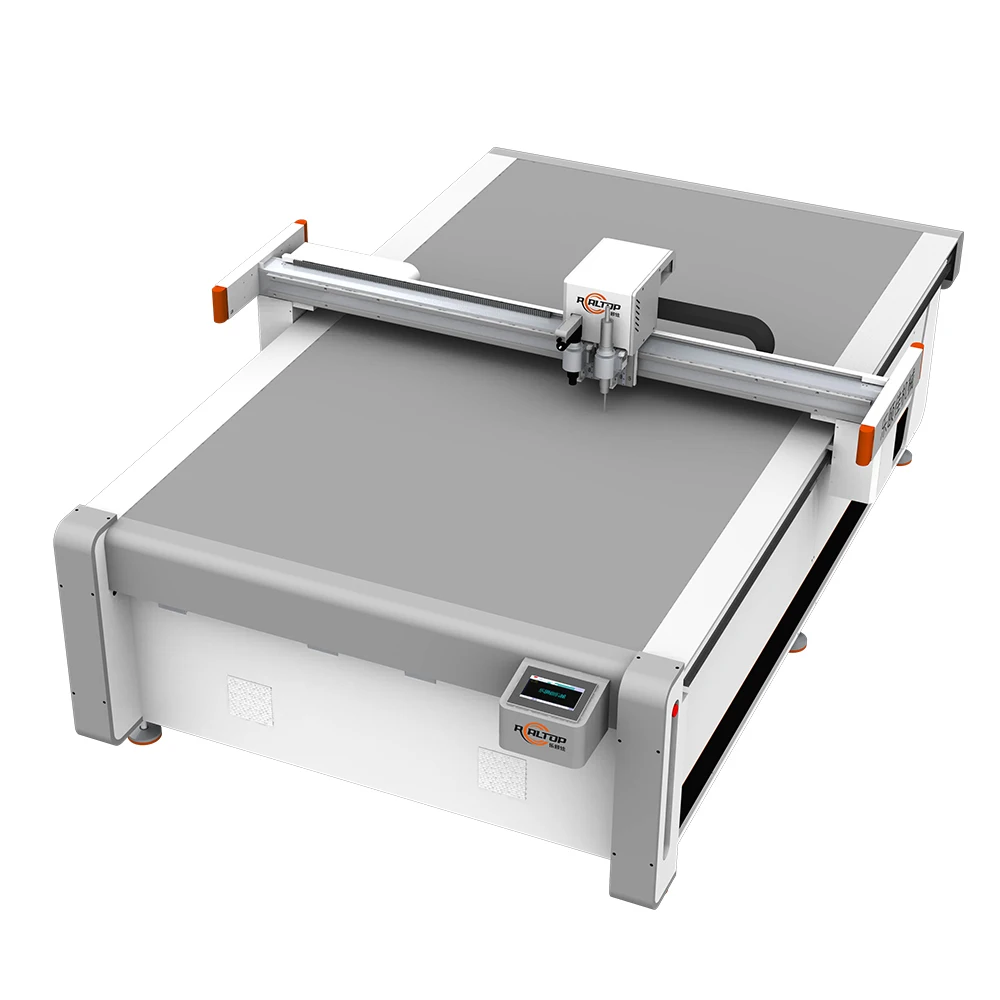
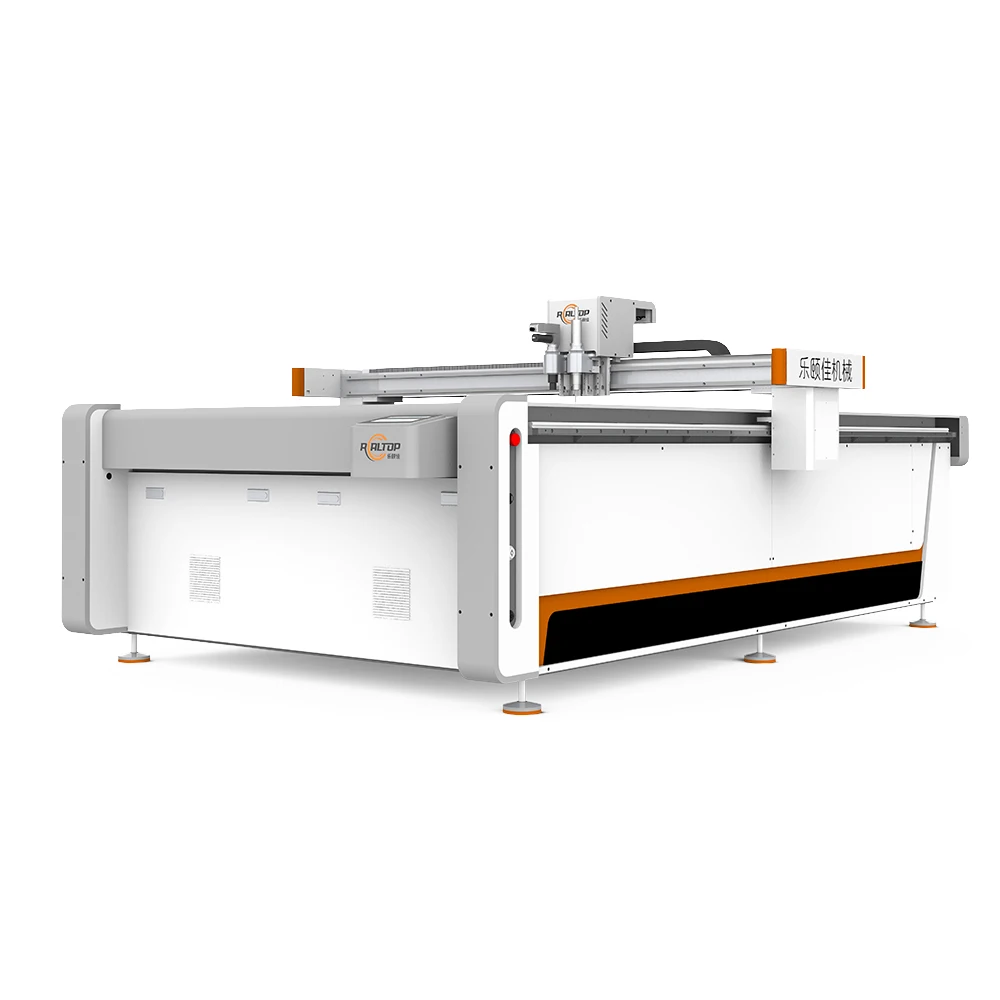
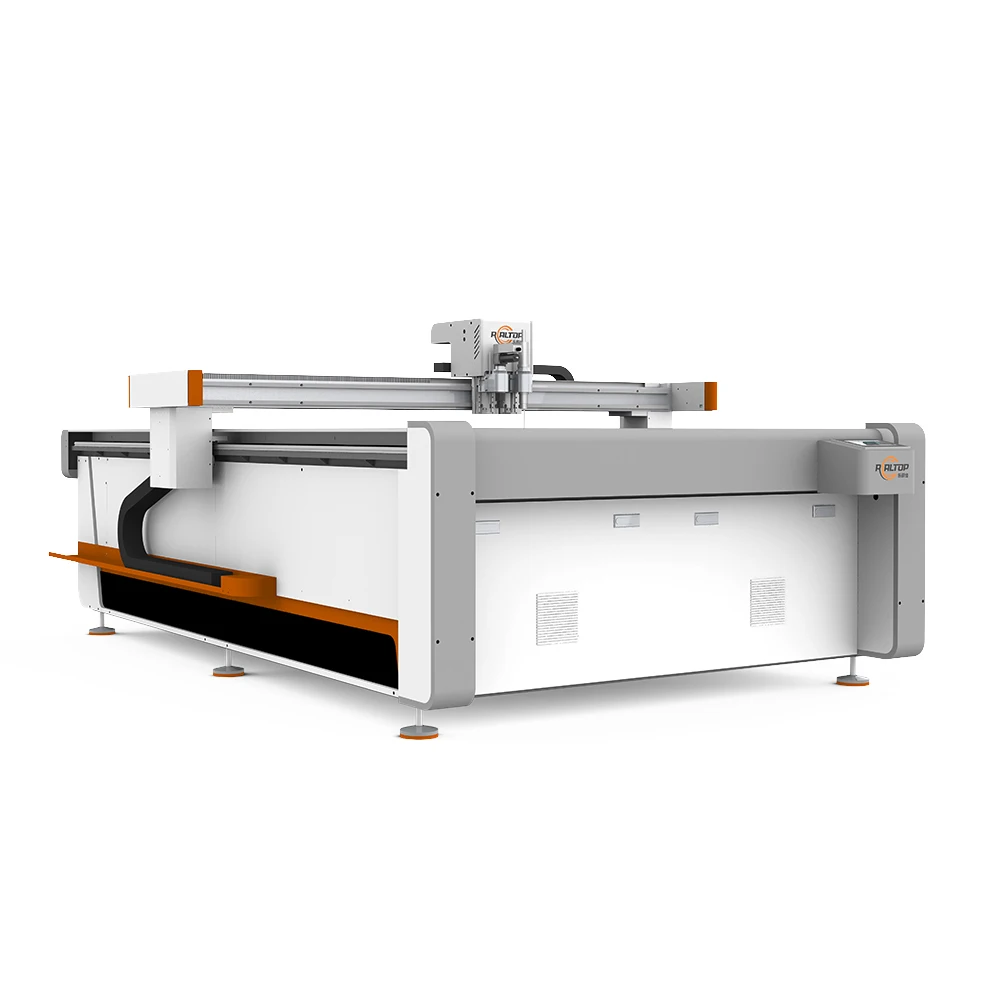
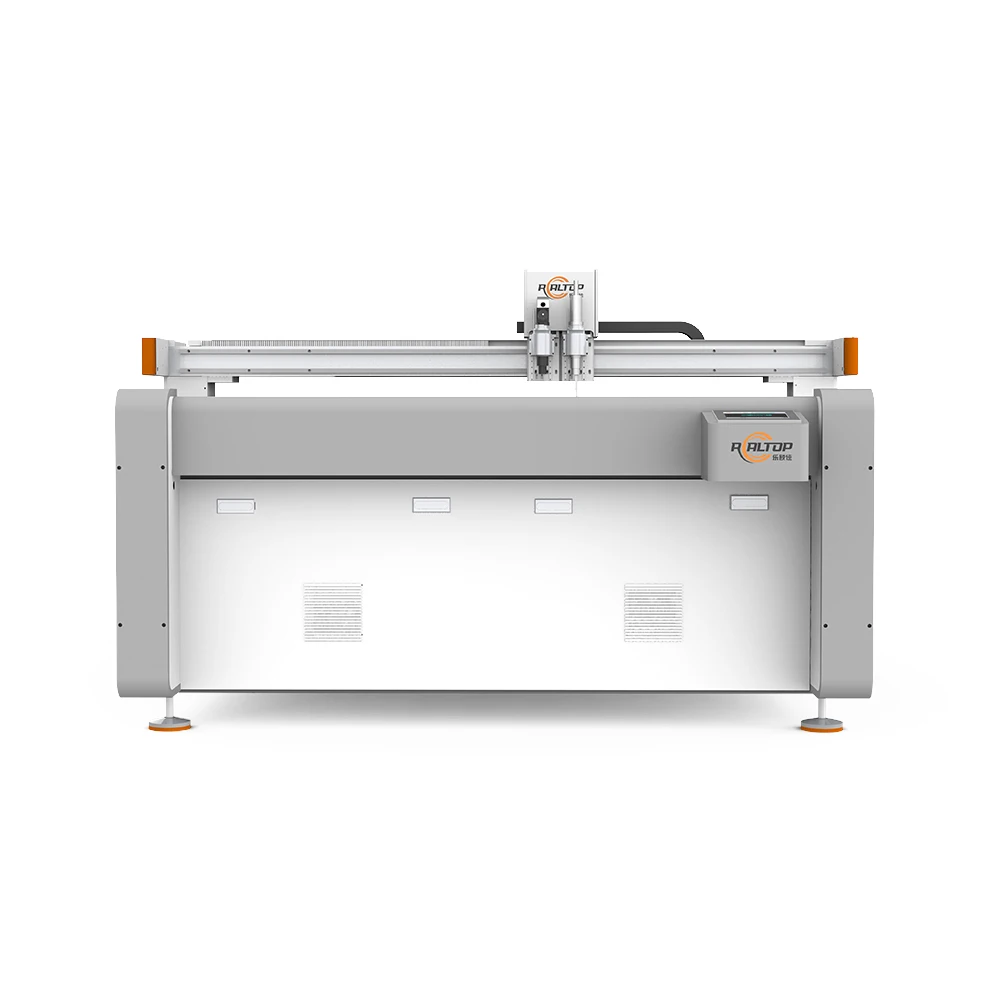
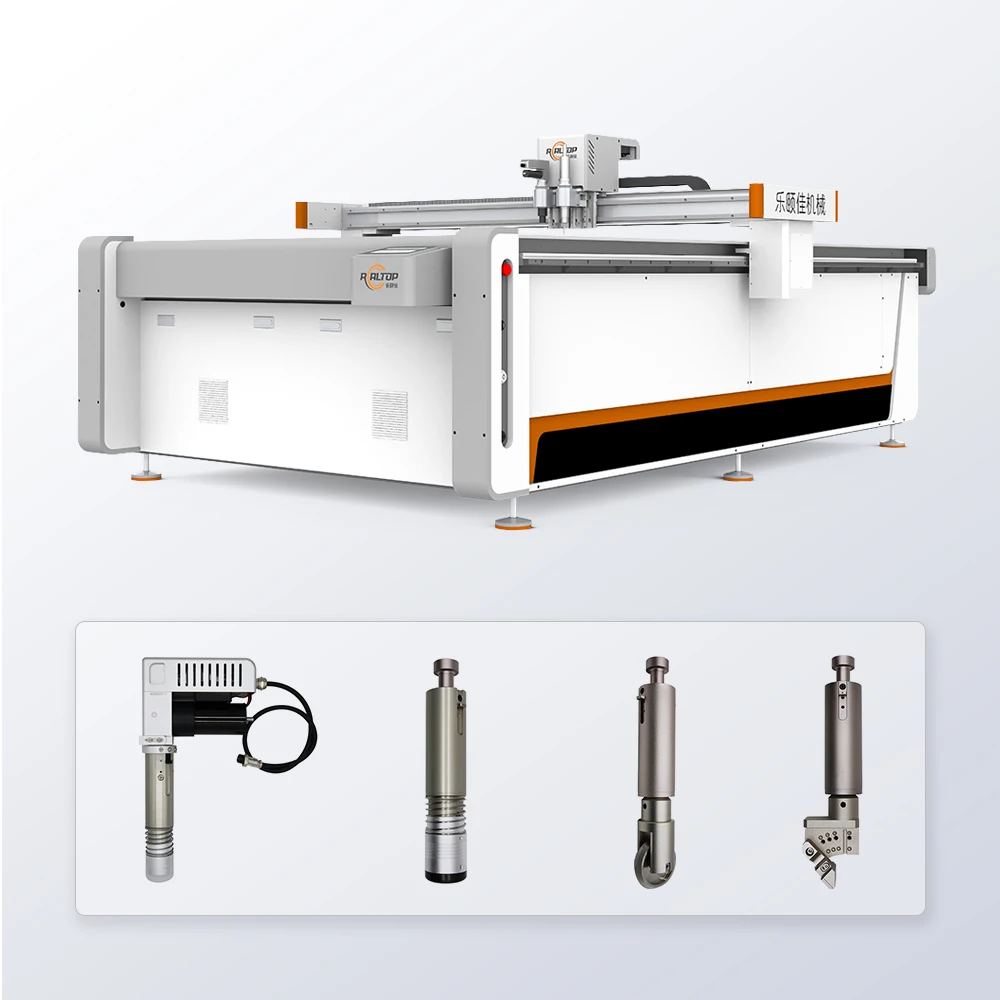
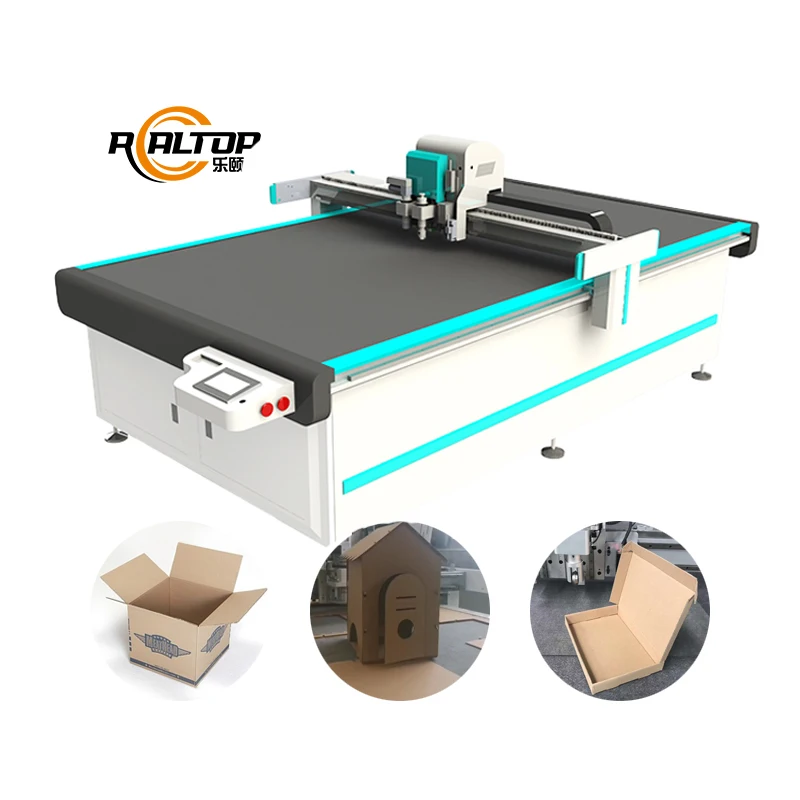
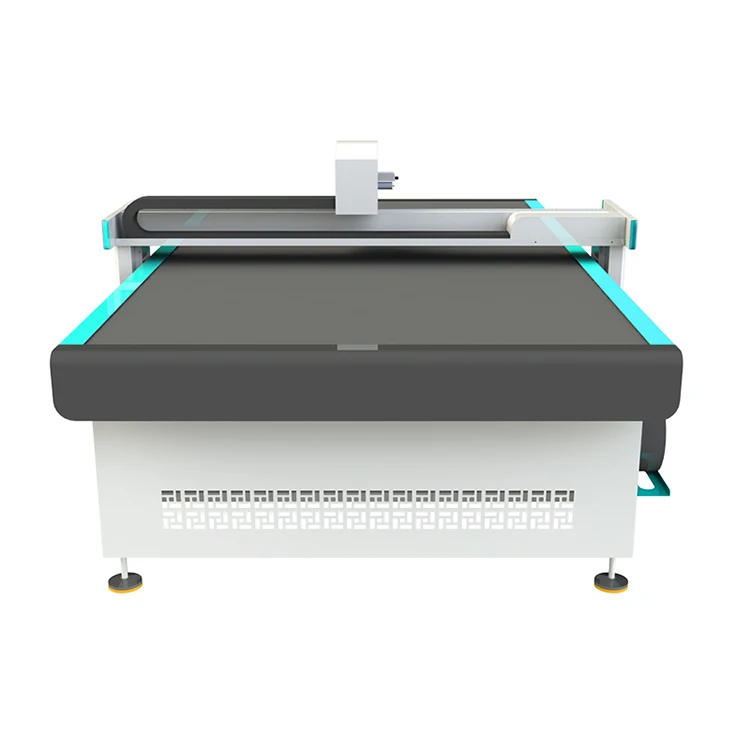
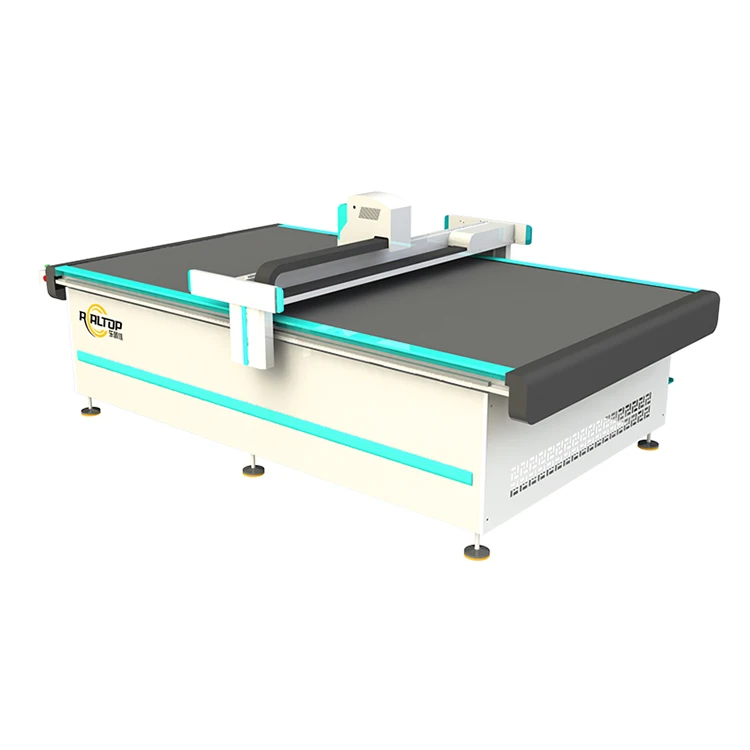
Tool Head and Table Configuration — we specify oscillating knife, drag knife, creasing wheel, and vacuum zoning per material before order, so a packaging or honeycomb board producer cuts clean edges without forcing one method across all jobs.
Technical Specifications
| Parameter | Value |
|---|---|
| Model | RT-D2516 / RT-S2516 |
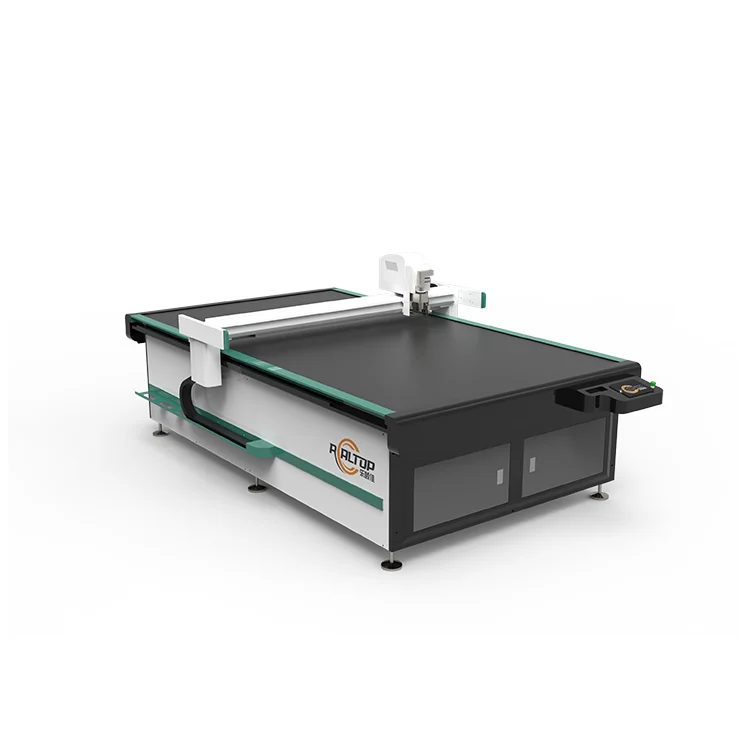
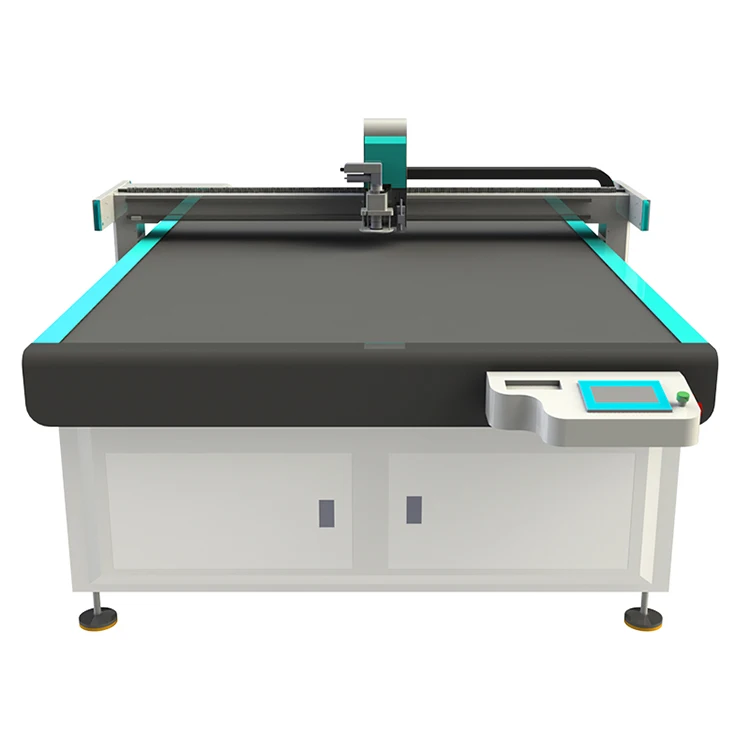
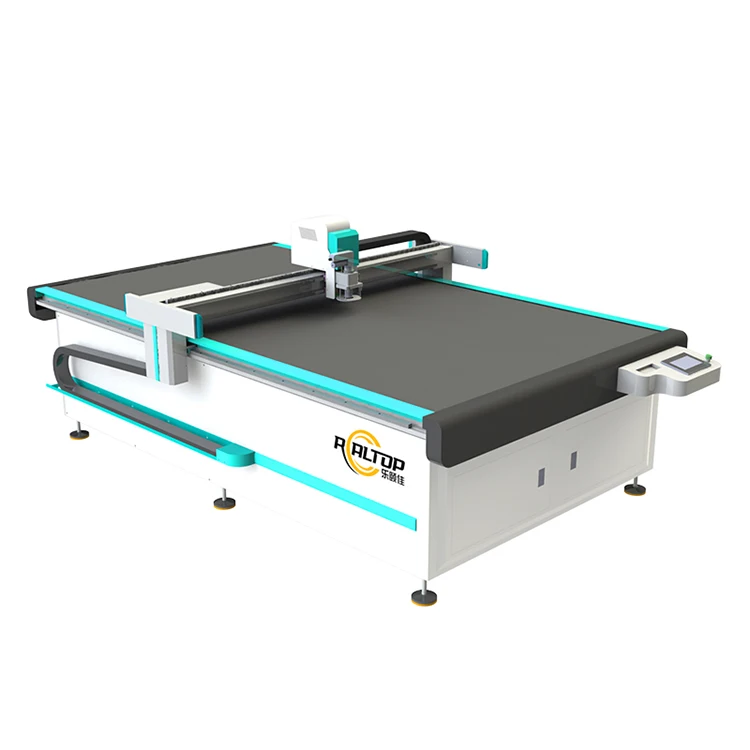
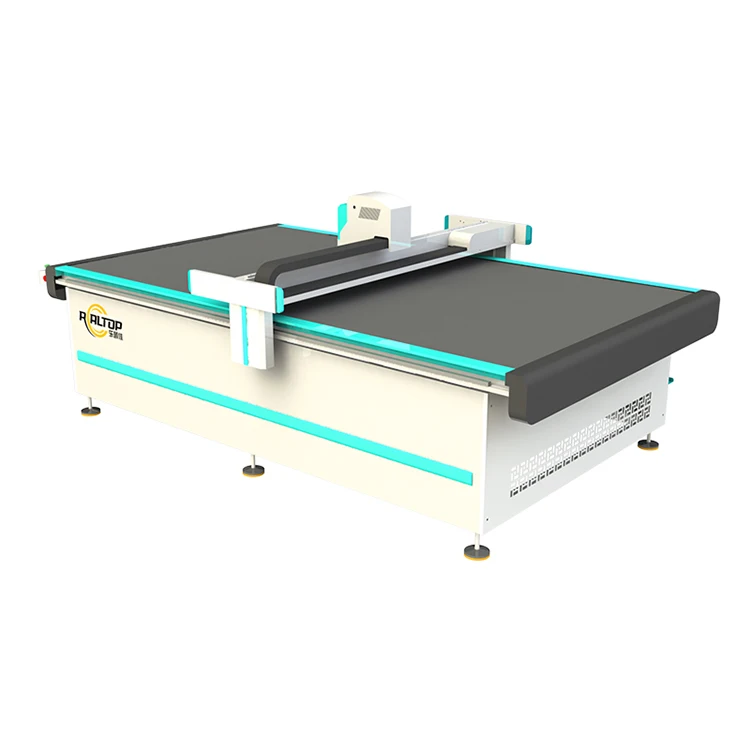
| Product Type | CNC Digital Plotter Cutting Machine |
| Working Area | 1600 × 2500 mm |
| Machine Size | 3450 × 2300 × 1250 mm |
| Rated Power | 9 kW |
| Voltage | 380V ±10% |
| Transmission System | Digital servo motor, linear guide, synchronous belt, ball screw |
| Servo Motor Options | Delta (Taiwan) or Panasonic (Japan) |
| Vacuum Table | Magnesium-aluminum alloy with PVDF coating, anodic and hard oxidation treatment |
| Vacuum Pump | 7.5 kW, aviation aluminum shell with built-in silencer sponge |
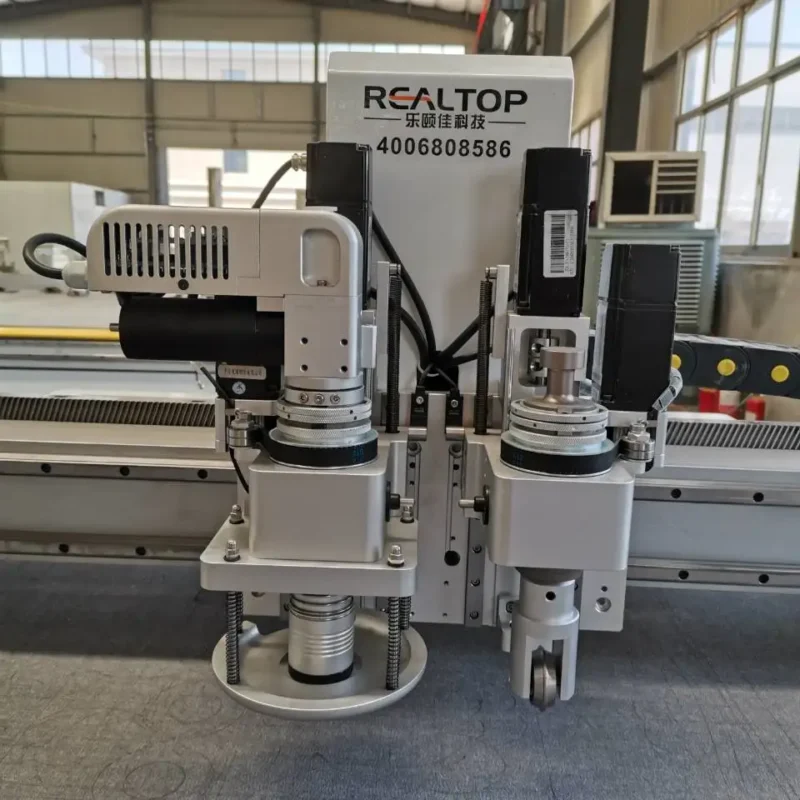
| Tool Head Options | Oscillating knife, pneumatic knife, high-power vibrating knife, circular knife, V-cutting knife, drag knife, creasing wheel, dotted line knife, punching tool, brush |
| Swiss Knife Functions | Vibration full cutting, vibration half cutting, cursor location |
| Visual Positioning | Small CCD camera mark point, panoramic camera recognition, projection positioning |
| Cutting Speed | 200–800 mm/s (basis not stated in source) |
| Translational Velocity | 800–2000 mm/s |
| Repeated Accuracy | ≤0.1 mm |
| File Format Support | PLT, DXF, AI (HP-GL compatible) |
| Control Panel | Touch screen, multi-language support |
| Table Options | Flat working table, auto feeding table |
| Conveyor Belt | Germany imported |
| Linear Guide | Taiwan Hiwin rail |
| Safety Devices | Infrared sensor stop, anti-collision beam sensors, emergency stop with in-situ resume |
| Frame | Thick-walled seamless steel, high-temperature tempering, CNC machining center finished |
Application Suitability
| Application | Material or Output |
|---|---|
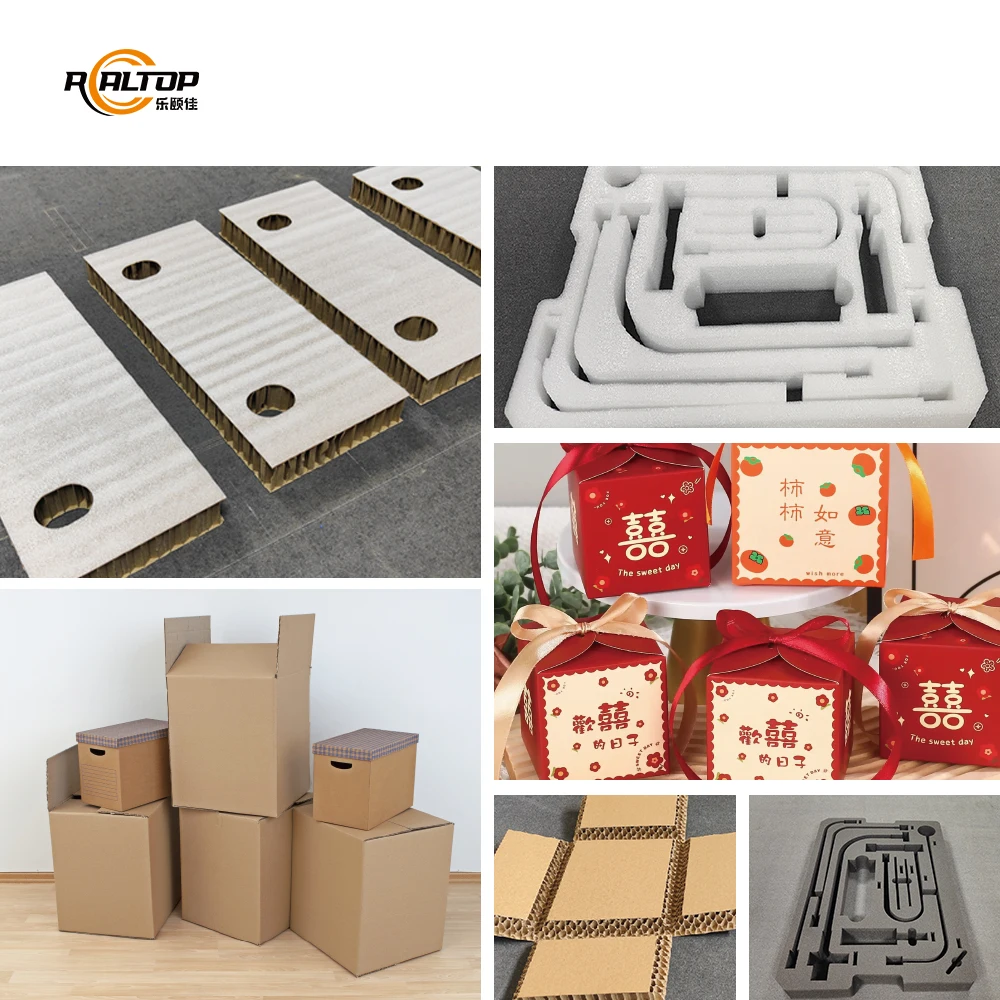
| Honeycomb board cutting | Honeycomb cardboard and PP honeycomb panels for protective packaging |
| Carton sample making | Corrugated board with creasing wheel and V-cut slotting |
| Packaging prototype runs | Short-run die-line samples on varied board densities |
| Signage and display | Foam board, PVC sheet, and composite display panels |
| Flexible material cutting | Leather, fabric, non-woven, and PU/EVA/XPE foam sheets |
| Gasket and sealing | Rubber, silicone, and composite sealing pad stock |
What a Working Area Figure Hides About Honeycomb Board Cutting
A machine chosen on table size alone often stalls when the board density exceeds the knife stroke or the vacuum zoning fails to hold small offcuts.
I watched a buyer receive a flatbed unit rated for 1600×2500 mm, then spend two weeks discovering the oscillating knife could not penetrate double-wall honeycomb at full depth. The seller had quoted working area but never asked about flute profile or board caliper. With honeycomb and corrugated stock, the real constraint is tool head travel combined with vacuum pull-down force across the zone where the part sits. [NEED_CITE: vacuum holding force requirements for porous board materials] A CNC digital plotter cutting machine manufacturer who skips the material conversation will deliver a table that works for one job and fails on the next.
Tool Head Selection Across Packaging and Composite Stock
The carriage on the RT-D2516/RT-S2516 accepts up to ten tool types, from oscillating knife for thick honeycomb to creasing wheel for corrugated fold lines. A packaging sample maker switching between E-flute and B-flute board changes the knife amplitude and the creasing wheel pressure rather than swapping machines. This is how a single CNC digital plotter cutting machine manufacturer keeps one platform viable across carton prototypes, foam inserts, and flexible gasket sheets.
Visual Positioning for Printed Contour Work
When packaging stock arrives pre-printed with registration marks, the small CCD camera or panoramic recognition system locates each mark and adjusts the cut path in real time. Misalignment from sheet stretch or printer drift is corrected before the knife engages. The panoramic option suits large-format display panels where marks fall outside a single camera field. [NEED_CITE: CCD registration accuracy on stretched packaging substrates]
Reading the Specs That Actually Matter on the Floor
The 9 kW rated power covers the servo drives, vacuum pump, and spindle together; confirm your shop circuit can sustain this draw under continuous load. The Taiwan Hiwin linear guide and ball screw drive deliver ≤0.1 mm repeated accuracy, which keeps V-cut slots aligned with creasing lines on multi-panel carton layouts. The magnesium-aluminum vacuum table with PVDF coating resists adhesive residue from sticker and film stock, reducing table cleaning downtime between jobs. Servo motor choice between Delta and Panasonic affects response tuning on high-speed contour cuts, worth confirming if your file library contains tight-radius curves.
The Cost of Skipping Configuration Verification
Buyers who confirm working area but skip tool head specification often receive a drag knife where an oscillating knife is needed, producing crushed foam cores or ragged honeycomb edges. Vacuum table zoning sized for full-sheet holding leaves small packaging parts lifting during high-speed passes, ruining the cut and wasting material. Voltage confirmed after production rather than before shipment has held machines at customs or forced on-site transformer swaps that idle a line for weeks. [NEED_CITE: electrical mismatch delays in industrial equipment commissioning]
Why Source This Platform Here
In-house design covers both knife tooling and table engineering, so the tool head recommendation ties directly to the vacuum zoning plan rather than arriving as separate catalog choices. Sample cutting on the buyer’s own honeycomb or corrugated stock happens before the order is finalized, showing edge quality and crease clarity on the actual material. Electrical schematics and voltage confirmation are signed off by three parties before the machine leaves the factory, eliminating the on-site transformer mismatch I dealt with on a Middle East installation. Software file format compatibility is tested against the buyer’s existing nesting workflow so PLT, DXF, or AI files import without conversion errors.
Documentation & Verification
- Machine specification sheet listing every tool head and table option selected for your material range
- Electrical schematic with voltage and plug type confirmed by three-party sign-off before dispatch
- Sample cutting report on your honeycomb or corrugated stock showing edge and crease results
- Software license and file format compatibility note covering PLT, DXF, and AI import verification
- Factory test record documenting repeated accuracy and vacuum pull-down performance at rated power
Installation, Commissioning & Support
- Floor space allocation for 3450×2300 mm footprint plus operator clearance and material staging area
- Dedicated 380V ±10% circuit rated for 9 kW continuous draw with confirmed plug type
- Vacuum pump placement with exhaust routing for the 7.5 kW silencer-equipped unit
- First-run parameter tuning for oscillating knife amplitude and creasing wheel pressure on your board stock
- Control panel language set and touch screen calibration before operator handover
- Spare knife blades, creasing wheels, and vacuum table seal strip included in the initial parts kit
Before You Send the Inquiry
Share the board type, flute profile or honeycomb cell size, and maximum caliper you plan to cut, along with your daily sheet volume. Confirm your facility voltage and frequency, and tell us which nesting software you currently run so we verify file import before quotation. If you need sample cuts on your own stock, send a few sheets and we return a cutting report with the proposal.
Frequently Asked Questions
Q: How do I choose between oscillating knife, drag knife, and creasing wheel for packaging board?
A: Oscillating knife suits honeycomb and thick corrugated where clean through-cuts matter. Drag knife handles thin sticker and film layers. Creasing wheel produces fold lines on carton stock without cutting through. Your material mix determines which tools share the carriage, and we confirm the combination on your sample stock before finalizing the build.
Q: What is the real cutting thickness on honeycomb versus composite materials?
A: The platform handles up to 100 mm depending on material density and knife stroke configuration. Honeycomb cardboard cuts at higher thickness than dense composite panels because cell structure offers less resistance. We test your specific board on our sample table and report the achievable depth before you commit to an order.
Q: Which CCD system fits printed packaging contour cutting?
A: Small CCD mark-point positioning works when registration marks fall within a predictable zone on each sheet. Panoramic recognition covers large-format display panels where marks may shift across the full table area. Your print layout and sheet size determine which option prevents misalignment during production runs.
Q: What file formats does the nesting software accept from my existing design workflow?
A: The system imports PLT, DXF, and AI files through an HP-GL compatible instruction set. We test your actual design files on our software before shipment to confirm that layers, cut lines, and crease paths translate without manual re-drawing or format conversion workarounds.
Tool Head and Table Configuration — we specify oscillating knife, drag knife, creasing wheel, and vacuum zoning per material before order, so a packaging or honeycomb board producer cuts clean edges without forcing one method across all jobs.
Technical Specifications
| Parameter | Value |
|---|---|
| Model | RT-D2516 / RT-S2516 |
| Product Type | CNC Digital Plotter Cutting Machine |
| Working Area | 1600 × 2500 mm |
| Machine Size | 3450 × 2300 × 1250 mm |
| Rated Power | 9 kW |
| Voltage | 380V ±10% |
| Transmission System | Digital servo motor, linear guide, synchronous belt, ball screw |
| Servo Motor Options | Delta (Taiwan) or Panasonic (Japan) |
| Vacuum Table | Magnesium-aluminum alloy with PVDF coating, anodic and hard oxidation treatment |
| Vacuum Pump | 7.5 kW, aviation aluminum shell with built-in silencer sponge |
| Tool Head Options | Oscillating knife, pneumatic knife, high-power vibrating knife, circular knife, V-cutting knife, drag knife, creasing wheel, dotted line knife, punching tool, brush |
| Swiss Knife Functions | Vibration full cutting, vibration half cutting, cursor location |
| Visual Positioning | Small CCD camera mark point, panoramic camera recognition, projection positioning |
| Cutting Speed | 200–800 mm/s (basis not stated in source) |
| Translational Velocity | 800–2000 mm/s |
| Repeated Accuracy | ≤0.1 mm |
| File Format Support | PLT, DXF, AI (HP-GL compatible) |
| Control Panel | Touch screen, multi-language support |
| Table Options | Flat working table, auto feeding table |
| Conveyor Belt | Germany imported |
| Linear Guide | Taiwan Hiwin rail |
| Safety Devices | Infrared sensor stop, anti-collision beam sensors, emergency stop with in-situ resume |
| Frame | Thick-walled seamless steel, high-temperature tempering, CNC machining center finished |
Application Suitability
| Application | Material or Output |
|---|---|
| Honeycomb board cutting | Honeycomb cardboard and PP honeycomb panels for protective packaging |
| Carton sample making | Corrugated board with creasing wheel and V-cut slotting |
| Packaging prototype runs | Short-run die-line samples on varied board densities |
| Signage and display | Foam board, PVC sheet, and composite display panels |
| Flexible material cutting | Leather, fabric, non-woven, and PU/EVA/XPE foam sheets |
| Gasket and sealing | Rubber, silicone, and composite sealing pad stock |
What a Working Area Figure Hides About Honeycomb Board Cutting
A machine chosen on table size alone often stalls when the board density exceeds the knife stroke or the vacuum zoning fails to hold small offcuts.
I watched a buyer receive a flatbed unit rated for 1600×2500 mm, then spend two weeks discovering the oscillating knife could not penetrate double-wall honeycomb at full depth. The seller had quoted working area but never asked about flute profile or board caliper. With honeycomb and corrugated stock, the real constraint is tool head travel combined with vacuum pull-down force across the zone where the part sits. [NEED_CITE: vacuum holding force requirements for porous board materials] A CNC digital plotter cutting machine manufacturer who skips the material conversation will deliver a table that works for one job and fails on the next.
Tool Head Selection Across Packaging and Composite Stock
The carriage on the RT-D2516/RT-S2516 accepts up to ten tool types, from oscillating knife for thick honeycomb to creasing wheel for corrugated fold lines. A packaging sample maker switching between E-flute and B-flute board changes the knife amplitude and the creasing wheel pressure rather than swapping machines. This is how a single CNC digital plotter cutting machine manufacturer keeps one platform viable across carton prototypes, foam inserts, and flexible gasket sheets.
Visual Positioning for Printed Contour Work
When packaging stock arrives pre-printed with registration marks, the small CCD camera or panoramic recognition system locates each mark and adjusts the cut path in real time. Misalignment from sheet stretch or printer drift is corrected before the knife engages. The panoramic option suits large-format display panels where marks fall outside a single camera field. [NEED_CITE: CCD registration accuracy on stretched packaging substrates]
Reading the Specs That Actually Matter on the Floor
The 9 kW rated power covers the servo drives, vacuum pump, and spindle together; confirm your shop circuit can sustain this draw under continuous load. The Taiwan Hiwin linear guide and ball screw drive deliver ≤0.1 mm repeated accuracy, which keeps V-cut slots aligned with creasing lines on multi-panel carton layouts. The magnesium-aluminum vacuum table with PVDF coating resists adhesive residue from sticker and film stock, reducing table cleaning downtime between jobs. Servo motor choice between Delta and Panasonic affects response tuning on high-speed contour cuts, worth confirming if your file library contains tight-radius curves.
The Cost of Skipping Configuration Verification
Buyers who confirm working area but skip tool head specification often receive a drag knife where an oscillating knife is needed, producing crushed foam cores or ragged honeycomb edges. Vacuum table zoning sized for full-sheet holding leaves small packaging parts lifting during high-speed passes, ruining the cut and wasting material. Voltage confirmed after production rather than before shipment has held machines at customs or forced on-site transformer swaps that idle a line for weeks. [NEED_CITE: electrical mismatch delays in industrial equipment commissioning]
Why Source This Platform Here
In-house design covers both knife tooling and table engineering, so the tool head recommendation ties directly to the vacuum zoning plan rather than arriving as separate catalog choices. Sample cutting on the buyer’s own honeycomb or corrugated stock happens before the order is finalized, showing edge quality and crease clarity on the actual material. Electrical schematics and voltage confirmation are signed off by three parties before the machine leaves the factory, eliminating the on-site transformer mismatch I dealt with on a Middle East installation. Software file format compatibility is tested against the buyer’s existing nesting workflow so PLT, DXF, or AI files import without conversion errors.
Documentation & Verification
- Machine specification sheet listing every tool head and table option selected for your material range
- Electrical schematic with voltage and plug type confirmed by three-party sign-off before dispatch
- Sample cutting report on your honeycomb or corrugated stock showing edge and crease results
- Software license and file format compatibility note covering PLT, DXF, and AI import verification
- Factory test record documenting repeated accuracy and vacuum pull-down performance at rated power
Installation, Commissioning & Support
- Floor space allocation for 3450×2300 mm footprint plus operator clearance and material staging area
- Dedicated 380V ±10% circuit rated for 9 kW continuous draw with confirmed plug type
- Vacuum pump placement with exhaust routing for the 7.5 kW silencer-equipped unit
- First-run parameter tuning for oscillating knife amplitude and creasing wheel pressure on your board stock
- Control panel language set and touch screen calibration before operator handover
- Spare knife blades, creasing wheels, and vacuum table seal strip included in the initial parts kit
Before You Send the Inquiry
Share the board type, flute profile or honeycomb cell size, and maximum caliper you plan to cut, along with your daily sheet volume. Confirm your facility voltage and frequency, and tell us which nesting software you currently run so we verify file import before quotation. If you need sample cuts on your own stock, send a few sheets and we return a cutting report with the proposal.
Frequently Asked Questions
Q: How do I choose between oscillating knife, drag knife, and creasing wheel for packaging board?
A: Oscillating knife suits honeycomb and thick corrugated where clean through-cuts matter. Drag knife handles thin sticker and film layers. Creasing wheel produces fold lines on carton stock without cutting through. Your material mix determines which tools share the carriage, and we confirm the combination on your sample stock before finalizing the build.
Q: What is the real cutting thickness on honeycomb versus composite materials?
A: The platform handles up to 100 mm depending on material density and knife stroke configuration. Honeycomb cardboard cuts at higher thickness than dense composite panels because cell structure offers less resistance. We test your specific board on our sample table and report the achievable depth before you commit to an order.
Q: Which CCD system fits printed packaging contour cutting?
A: Small CCD mark-point positioning works when registration marks fall within a predictable zone on each sheet. Panoramic recognition covers large-format display panels where marks may shift across the full table area. Your print layout and sheet size determine which option prevents misalignment during production runs.
Q: What file formats does the nesting software accept from my existing design workflow?
A: The system imports PLT, DXF, and AI files through an HP-GL compatible instruction set. We test your actual design files on our software before shipment to confirm that layers, cut lines, and crease paths translate without manual re-drawing or format conversion workarounds.
商品评价
There are no reviews yet.