

Fast Delivery
Quick, reliable shipping to any location.

Free & easy returns
Return this item by mail or in store within 90 days for a full refund.
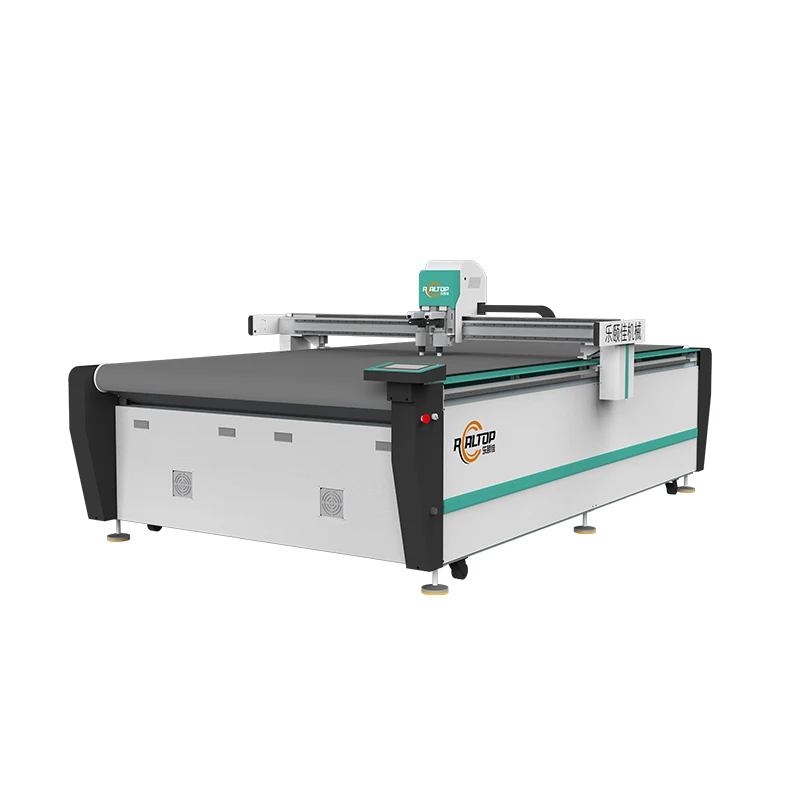
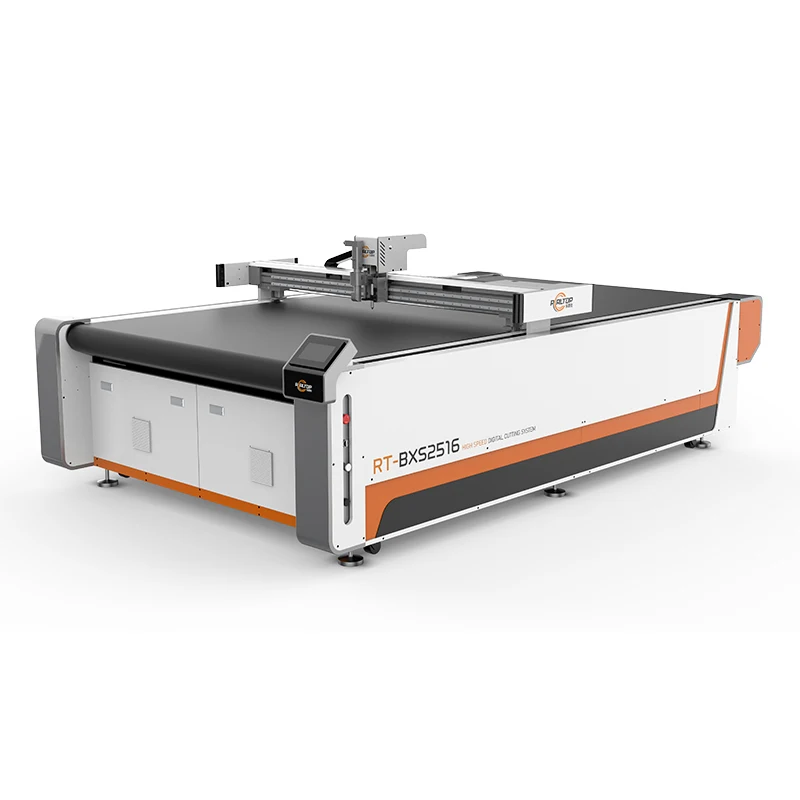
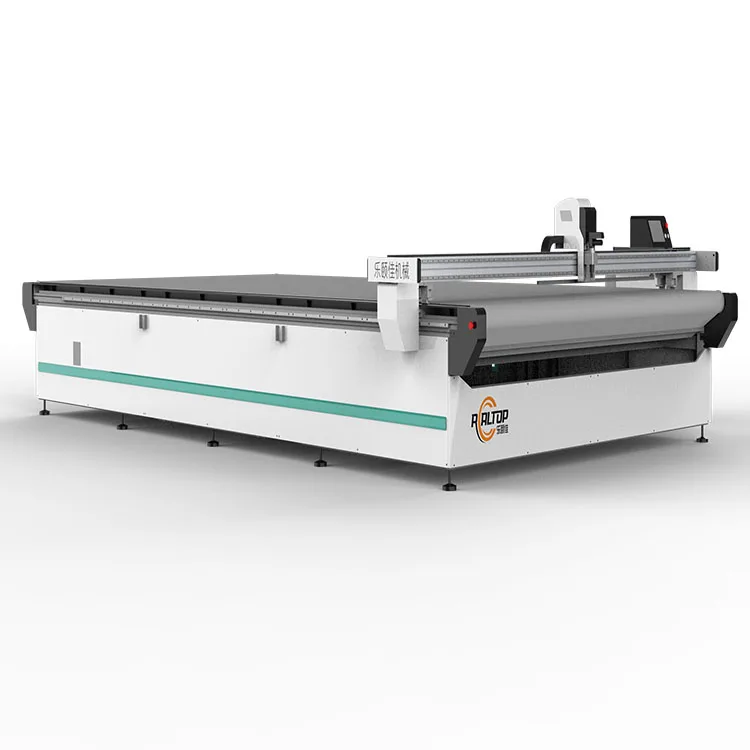
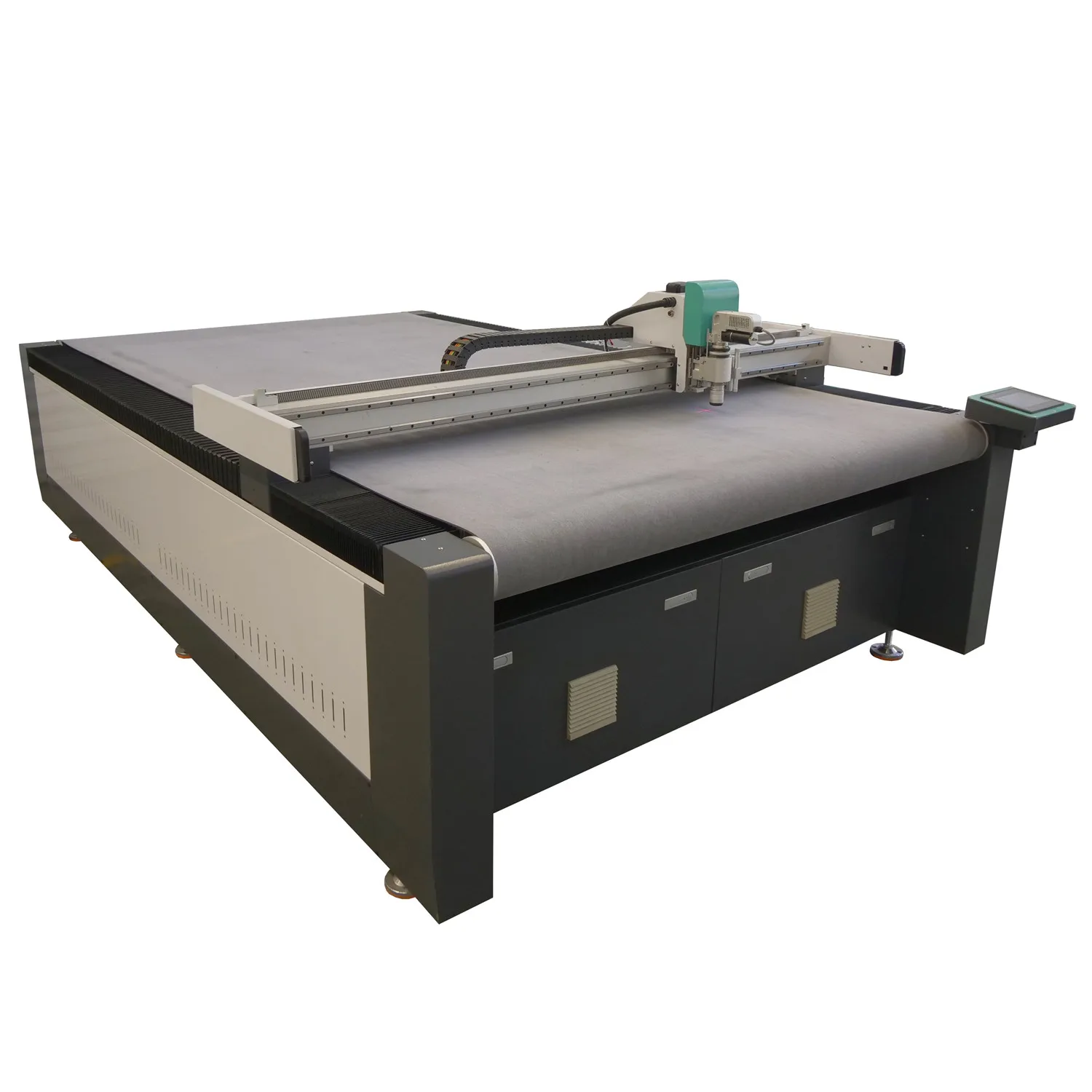
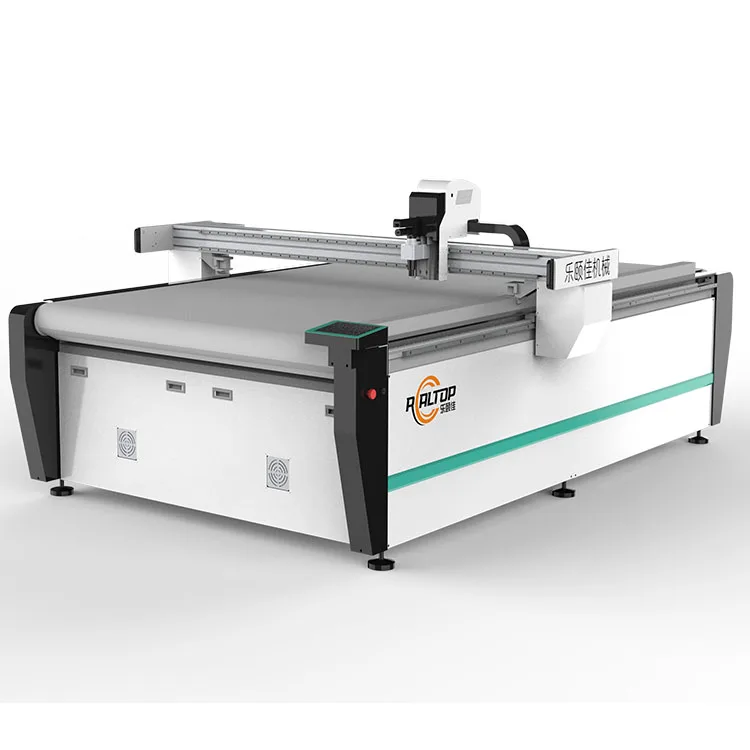
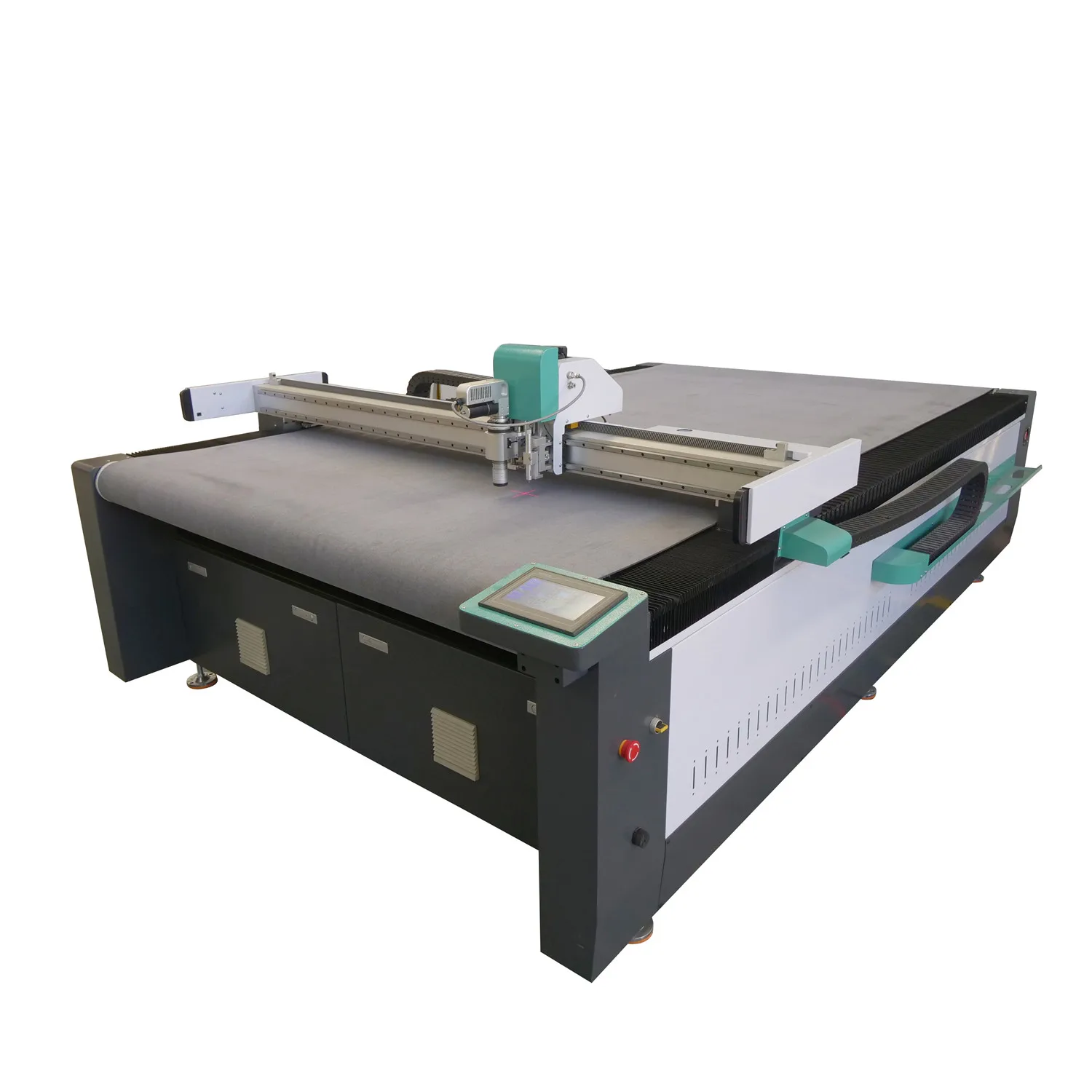
Configurable Tool Head and Table Range — Every RT-D2516/RT-S2516 leaves the factory with its oscillating knife, drag knife, vacuum zoning and feeding system matched to the buyer’s confirmed material stack rather than a default catalogue build.
Technical Specifications
| Parameter | Value |
|---|---|
| Model | RT-D2516/RT-S2516 |
| Product Type | CNC Oscillating Knife Cutting Machine |
| Working Area | 1600 × 2500 mm |
| Machine Size | 3450 × 2300 × 1250 mm |
| Rated Power | 9 kW |
| Vacuum Pump | 7.5 kW |
| Table Type | Flat working table or auto-feeding conveyor |
| Translational Velocity | 800–2000 mm/s |
| Repeated Accuracy | ≤0.1 mm |
| Servo Motor | Delta (optional Panasonic) |
| Rail | Taiwan Hiwin linear guide |
| Conveyor Belt | Germany imported (auto-feeding configuration) |
| Multifunctional Head | Swiss imported knife with vibration full cutting, half cutting and cursor location |
| Tool Head Options | Oscillating knife, pneumatic knife, high-power vibrating knife, circular knife, V-cutting knife, drag knife, creasing wheel, dotted line knife, punching, brush |
| Visual Positioning | Small CCD mark point, panoramic camera recognition, projection positioning |
| Instruction System | HP-GL compatible format |
| Software | Auto typesetting; supports PLT, DXF, AI formats |
| Control Panel | Touch screen, multiple languages (English, Russian, Italian, Chinese; others customizable) |
| Voltage | 380V ±10% |
| Safety Device | Infrared sensors |
| Warranty | One year |
Application Suitability
| Application | Material or Output |
|---|---|
| Garment and footwear production | Single-ply and multi-layer fabric, clothing cloth, shoe material, non-woven fabric |
| Automotive interior trimming | Leather, composite materials, PU, EVA, XPE, sponge |
| Soft home furnishings | Sofa fabric, carpet, fur, textile |
| Packaging and sample making | Corrugated cardboard, plastic box, sticker, film |
| Graphic advertising and printing | Vinyl, PVC, PP, PE board substrates |
| Sealing and gasket fabrication | Rubber, PTFE, ETFE, gasket material |
| Sports and outdoor products | Foam board, fiberglass, composite laminates |
Why Material Thickness Changes the Whole Machine Conversation
A CNC Oscillating Knife Cutting Machine specified only by working area often fails the moment the real production material hits the table. The blade must match the laminate stack, not just the top layer. I have watched buyers commit to a configuration after cutting a single fabric swatch successfully, only to discover their actual composite material — fabric bonded to foam with an adhesive interlayer — demanded a completely different knife amplitude and vacuum hold-down strategy. The cutting head that handled the sample cleanly could not penetrate the adhesive layer at production speed, leaving ragged delamination across every piece [NEED_CITE: oscillating knife cutting parameters for multi-layer composite materials]. When the thickness or the number of layers shifts, the tool head selection, oscillation frequency and table vacuum zoning all need re-evaluation before the purchase order is signed.
Matching the Knife Type to the Actual Material Stack
The RT-D2516/RT-S2516 supports a broad tool head range — oscillating knife, pneumatic knife, high-power vibrating knife, circular knife, drag knife, creasing wheel and punching tools — because no single blade geometry handles every flexible material. A CNC Oscillating Knife Cutting Machine cutting woven garment fabric needs a different oscillation profile than one slicing through 20 mm EVA foam for automotive floor mats. The Swiss imported multifunctional head provides vibration full cutting and half cutting, allowing the operator to switch between through-cutting a single ply and kiss-cutting a sticker layer without changing the physical tool.
Vacuum Zoning and Small Part Stability
The 7.5 kW vacuum pump paired with a zoned flat table or auto-feeding conveyor addresses one of the most common failures in digital cutting: small parts lifting off the table mid-cut. When the cutting head travels at translational velocities up to 2000 mm/s, any unclamped edge will flutter and produce an inaccurate contour. Properly segmented vacuum zones allow the operator to activate only the section under the current workpiece, maintaining hold-down force on small gaskets or pattern pieces that would otherwise drift [NEED_CITE: vacuum table zoning principles for CNC flatbed cutting]. The auto-feeding configuration adds continuous material advance for high-volume fabric cutting, reducing the manual repositioning cycle between sheets.
Reading the Specifications Against Your Production Reality
The 1600 × 2500 mm working area accommodates standard textile rolls and large leather hides, but the real decision sits in the transmission system. Delta servo motors (with Panasonic as an option) driving Taiwan Hiwin linear guides deliver the ≤0.1 mm repeated accuracy that nested garment patterns demand — a cumulative positioning error beyond that threshold produces mismatched seams downstream. The 9 kW rated power covers the oscillating knife drive, vacuum pump and conveyor simultaneously, though buyers should confirm their workshop supply matches the 380V ±10% requirement before ordering. The HP-GL compatible instruction system and PLT/DXF/AI software support mean most existing design files import without conversion, a point worth verifying with a sample file before the machine ships.
The Cost of Skipping the Sample Cut
Every pain point I have documented in fabric and composite cutting traces back to one skipped step: failing to test the buyer’s actual production material on the configured machine. A drag knife that produces clean edges on single-layer cotton will crush multi-layer sponge. A vacuum zone calibrated for full-sheet leather leaves insufficient hold-down for nested small parts. CCD contour recognition that tracks printed marks at low speed may lose registration at full production velocity [NEED_CITE: CCD camera tracking limitations at high translational speeds]. These failures do not appear in a brochure comparison — they surface on the factory floor, weeks after installation, when the return window has closed.
Why Buyers Source This Configuration Here
REALTOP designs and builds both knife and laser cutting systems in-house, which means a buyer evaluating fabric cutting can compare oscillating knife against CO2 laser on the same material without being pushed toward whichever technology a single-technology vendor happens to sell. The tool head and table configuration for the RT-D2516/RT-S2516 is specified per material and production volume rather than shipped as a default package. CCD camera positioning, projection positioning and panoramic recognition are available options confirmed against the buyer’s print registration requirements. Voltage, control language and plug type are locked in before production starts, and sample cutting on the buyer’s own material is standard procedure — not an upsell.
Documentation & Verification
- Machine specification sheet confirming selected tool head and table type for your material
- Electrical schematic with voltage and frequency matched to your workshop supply
- Sample cutting report on your own fabric or composite material before order confirmation
- Software licence and file format compatibility note for PLT, DXF and AI workflows
- Factory test record documenting repeated accuracy and cutting edge quality at rated speed
- Operation and maintenance manual in your selected control language
Installation, Commissioning & Support
- Floor space planning around the 3450 × 2300 × 1250 mm machine footprint plus material infeed clearance
- Dedicated 380V ±10% circuit sized for the combined 9 kW machine and 7.5 kW vacuum pump load
- Assembly and levelling of the flat table or auto-feeding conveyor on site with Hiwin rail alignment check
- First-run parameter tuning: oscillation amplitude, vacuum zone mapping and servo calibration for your material
- Touch screen language set and operator training on PLT/DXF/AI file import and auto typesetting workflow
- Spare parts list covering Swiss knife blades, conveyor belt segments and infrared sensor units
What to Prepare Before Requesting a Quote
Send the actual material you will cut in production — including every layer if you run composites — along with the maximum sheet size and your target daily volume. Specify your workshop voltage and frequency, the control language your operators need, and whether your workflow uses PLT, DXF or AI files. If your work involves printed contours, include a sample printed sheet so CCD or panoramic camera recognition can be tested against your actual registration marks before the CNC Oscillating Knife Cutting Machine configuration is finalized.
Frequently Asked Questions
Q: How do I choose between oscillating knife and laser cutting for my fabric?
A: Oscillating knife cutting avoids the sealed edge and thermal discoloration that a CO2 laser produces on synthetic textiles. For natural fabrics and multi-layer garment stacks, the knife method preserves the material hand and avoids fusing layers together. The choice depends on your specific fabric composition, edge finish requirement and whether downstream sewing demands an unsealed edge.
Q: Should I select the flat table or the auto-feeding conveyor?
A: The flat table suits thicker materials like leather, gasket and foam board where manual placement and vacuum hold-down provide sufficient stability. The auto-feeding conveyor with the Germany imported belt is designed for high-volume single-ply or multi-ply fabric cutting where continuous roll advance reduces the loading cycle between sheets.
Q: Which tool head do I need for my specific material?
A: Woven and knitted fabrics typically use the oscillating knife, while corrugated cardboard and plastic box materials benefit from the drag knife or creasing wheel. Foam and sponge require the high-power vibrating knife to compress and shear cleanly. The correct head is confirmed during sample cutting on your own material before the order is finalized.
Q: Can the voltage and control language be customized for my market?
A: The standard configuration runs on 380V ±10%, and the touch screen supports English, Russian, Italian and Chinese with special languages available on request. Voltage and plug type are confirmed against your local supply standard before production begins, and the control panel language is set to match your operator team.
Q: Where does this machine fit within the full cutting equipment range?
A: The RT-D2516/RT-S2516 sits in the oscillating knife category for flexible and semi-rigid materials including fabric, leather, foam and composites. Buyers cutting rigid sheet metal would look at fiber laser systems, while acrylic and wood engraving falls under CO2 laser machines. The full catalogue covers all three methods from one manufacturer.
Configurable Tool Head and Table Range — Every RT-D2516/RT-S2516 leaves the factory with its oscillating knife, drag knife, vacuum zoning and feeding system matched to the buyer’s confirmed material stack rather than a default catalogue build.
Technical Specifications
| Parameter | Value |
|---|---|
| Model | RT-D2516/RT-S2516 |
| Product Type | CNC Oscillating Knife Cutting Machine |
| Working Area | 1600 × 2500 mm |
| Machine Size | 3450 × 2300 × 1250 mm |
| Rated Power | 9 kW |
| Vacuum Pump | 7.5 kW |
| Table Type | Flat working table or auto-feeding conveyor |
| Translational Velocity | 800–2000 mm/s |
| Repeated Accuracy | ≤0.1 mm |
| Servo Motor | Delta (optional Panasonic) |
| Rail | Taiwan Hiwin linear guide |
| Conveyor Belt | Germany imported (auto-feeding configuration) |
| Multifunctional Head | Swiss imported knife with vibration full cutting, half cutting and cursor location |
| Tool Head Options | Oscillating knife, pneumatic knife, high-power vibrating knife, circular knife, V-cutting knife, drag knife, creasing wheel, dotted line knife, punching, brush |
| Visual Positioning | Small CCD mark point, panoramic camera recognition, projection positioning |
| Instruction System | HP-GL compatible format |
| Software | Auto typesetting; supports PLT, DXF, AI formats |
| Control Panel | Touch screen, multiple languages (English, Russian, Italian, Chinese; others customizable) |
| Voltage | 380V ±10% |
| Safety Device | Infrared sensors |
| Warranty | One year |
Application Suitability
| Application | Material or Output |
|---|---|
| Garment and footwear production | Single-ply and multi-layer fabric, clothing cloth, shoe material, non-woven fabric |
| Automotive interior trimming | Leather, composite materials, PU, EVA, XPE, sponge |
| Soft home furnishings | Sofa fabric, carpet, fur, textile |
| Packaging and sample making | Corrugated cardboard, plastic box, sticker, film |
| Graphic advertising and printing | Vinyl, PVC, PP, PE board substrates |
| Sealing and gasket fabrication | Rubber, PTFE, ETFE, gasket material |
| Sports and outdoor products | Foam board, fiberglass, composite laminates |
Why Material Thickness Changes the Whole Machine Conversation
A CNC Oscillating Knife Cutting Machine specified only by working area often fails the moment the real production material hits the table. The blade must match the laminate stack, not just the top layer. I have watched buyers commit to a configuration after cutting a single fabric swatch successfully, only to discover their actual composite material — fabric bonded to foam with an adhesive interlayer — demanded a completely different knife amplitude and vacuum hold-down strategy. The cutting head that handled the sample cleanly could not penetrate the adhesive layer at production speed, leaving ragged delamination across every piece [NEED_CITE: oscillating knife cutting parameters for multi-layer composite materials]. When the thickness or the number of layers shifts, the tool head selection, oscillation frequency and table vacuum zoning all need re-evaluation before the purchase order is signed.
Matching the Knife Type to the Actual Material Stack
The RT-D2516/RT-S2516 supports a broad tool head range — oscillating knife, pneumatic knife, high-power vibrating knife, circular knife, drag knife, creasing wheel and punching tools — because no single blade geometry handles every flexible material. A CNC Oscillating Knife Cutting Machine cutting woven garment fabric needs a different oscillation profile than one slicing through 20 mm EVA foam for automotive floor mats. The Swiss imported multifunctional head provides vibration full cutting and half cutting, allowing the operator to switch between through-cutting a single ply and kiss-cutting a sticker layer without changing the physical tool.
Vacuum Zoning and Small Part Stability
The 7.5 kW vacuum pump paired with a zoned flat table or auto-feeding conveyor addresses one of the most common failures in digital cutting: small parts lifting off the table mid-cut. When the cutting head travels at translational velocities up to 2000 mm/s, any unclamped edge will flutter and produce an inaccurate contour. Properly segmented vacuum zones allow the operator to activate only the section under the current workpiece, maintaining hold-down force on small gaskets or pattern pieces that would otherwise drift [NEED_CITE: vacuum table zoning principles for CNC flatbed cutting]. The auto-feeding configuration adds continuous material advance for high-volume fabric cutting, reducing the manual repositioning cycle between sheets.
Reading the Specifications Against Your Production Reality
The 1600 × 2500 mm working area accommodates standard textile rolls and large leather hides, but the real decision sits in the transmission system. Delta servo motors (with Panasonic as an option) driving Taiwan Hiwin linear guides deliver the ≤0.1 mm repeated accuracy that nested garment patterns demand — a cumulative positioning error beyond that threshold produces mismatched seams downstream. The 9 kW rated power covers the oscillating knife drive, vacuum pump and conveyor simultaneously, though buyers should confirm their workshop supply matches the 380V ±10% requirement before ordering. The HP-GL compatible instruction system and PLT/DXF/AI software support mean most existing design files import without conversion, a point worth verifying with a sample file before the machine ships.
The Cost of Skipping the Sample Cut
Every pain point I have documented in fabric and composite cutting traces back to one skipped step: failing to test the buyer’s actual production material on the configured machine. A drag knife that produces clean edges on single-layer cotton will crush multi-layer sponge. A vacuum zone calibrated for full-sheet leather leaves insufficient hold-down for nested small parts. CCD contour recognition that tracks printed marks at low speed may lose registration at full production velocity [NEED_CITE: CCD camera tracking limitations at high translational speeds]. These failures do not appear in a brochure comparison — they surface on the factory floor, weeks after installation, when the return window has closed.
Why Buyers Source This Configuration Here
REALTOP designs and builds both knife and laser cutting systems in-house, which means a buyer evaluating fabric cutting can compare oscillating knife against CO2 laser on the same material without being pushed toward whichever technology a single-technology vendor happens to sell. The tool head and table configuration for the RT-D2516/RT-S2516 is specified per material and production volume rather than shipped as a default package. CCD camera positioning, projection positioning and panoramic recognition are available options confirmed against the buyer’s print registration requirements. Voltage, control language and plug type are locked in before production starts, and sample cutting on the buyer’s own material is standard procedure — not an upsell.
Documentation & Verification
- Machine specification sheet confirming selected tool head and table type for your material
- Electrical schematic with voltage and frequency matched to your workshop supply
- Sample cutting report on your own fabric or composite material before order confirmation
- Software licence and file format compatibility note for PLT, DXF and AI workflows
- Factory test record documenting repeated accuracy and cutting edge quality at rated speed
- Operation and maintenance manual in your selected control language
Installation, Commissioning & Support
- Floor space planning around the 3450 × 2300 × 1250 mm machine footprint plus material infeed clearance
- Dedicated 380V ±10% circuit sized for the combined 9 kW machine and 7.5 kW vacuum pump load
- Assembly and levelling of the flat table or auto-feeding conveyor on site with Hiwin rail alignment check
- First-run parameter tuning: oscillation amplitude, vacuum zone mapping and servo calibration for your material
- Touch screen language set and operator training on PLT/DXF/AI file import and auto typesetting workflow
- Spare parts list covering Swiss knife blades, conveyor belt segments and infrared sensor units
What to Prepare Before Requesting a Quote
Send the actual material you will cut in production — including every layer if you run composites — along with the maximum sheet size and your target daily volume. Specify your workshop voltage and frequency, the control language your operators need, and whether your workflow uses PLT, DXF or AI files. If your work involves printed contours, include a sample printed sheet so CCD or panoramic camera recognition can be tested against your actual registration marks before the CNC Oscillating Knife Cutting Machine configuration is finalized.
Frequently Asked Questions
Q: How do I choose between oscillating knife and laser cutting for my fabric?
A: Oscillating knife cutting avoids the sealed edge and thermal discoloration that a CO2 laser produces on synthetic textiles. For natural fabrics and multi-layer garment stacks, the knife method preserves the material hand and avoids fusing layers together. The choice depends on your specific fabric composition, edge finish requirement and whether downstream sewing demands an unsealed edge.
Q: Should I select the flat table or the auto-feeding conveyor?
A: The flat table suits thicker materials like leather, gasket and foam board where manual placement and vacuum hold-down provide sufficient stability. The auto-feeding conveyor with the Germany imported belt is designed for high-volume single-ply or multi-ply fabric cutting where continuous roll advance reduces the loading cycle between sheets.
Q: Which tool head do I need for my specific material?
A: Woven and knitted fabrics typically use the oscillating knife, while corrugated cardboard and plastic box materials benefit from the drag knife or creasing wheel. Foam and sponge require the high-power vibrating knife to compress and shear cleanly. The correct head is confirmed during sample cutting on your own material before the order is finalized.
Q: Can the voltage and control language be customized for my market?
A: The standard configuration runs on 380V ±10%, and the touch screen supports English, Russian, Italian and Chinese with special languages available on request. Voltage and plug type are confirmed against your local supply standard before production begins, and the control panel language is set to match your operator team.
Q: Where does this machine fit within the full cutting equipment range?
A: The RT-D2516/RT-S2516 sits in the oscillating knife category for flexible and semi-rigid materials including fabric, leather, foam and composites. Buyers cutting rigid sheet metal would look at fiber laser systems, while acrylic and wood engraving falls under CO2 laser machines. The full catalogue covers all three methods from one manufacturer.










商品评价
There are no reviews yet.