




Fast Delivery
Quick, reliable shipping to any location.

Free & easy returns
Return this item by mail or in store within 90 days for a full refund.
In-house knife and laser design — A single source covers both cutting methods, letting you match the technology to the material rather than forcing one process across every application.
Technical Specifications
| Parameter | Value |
|---|---|
| Model | RT-D2516 / RT-S2516 |
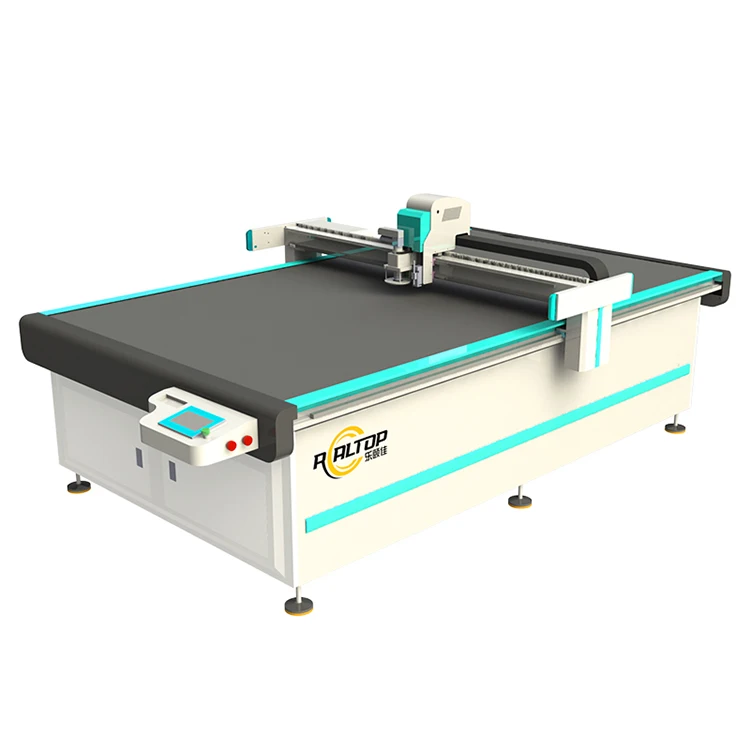
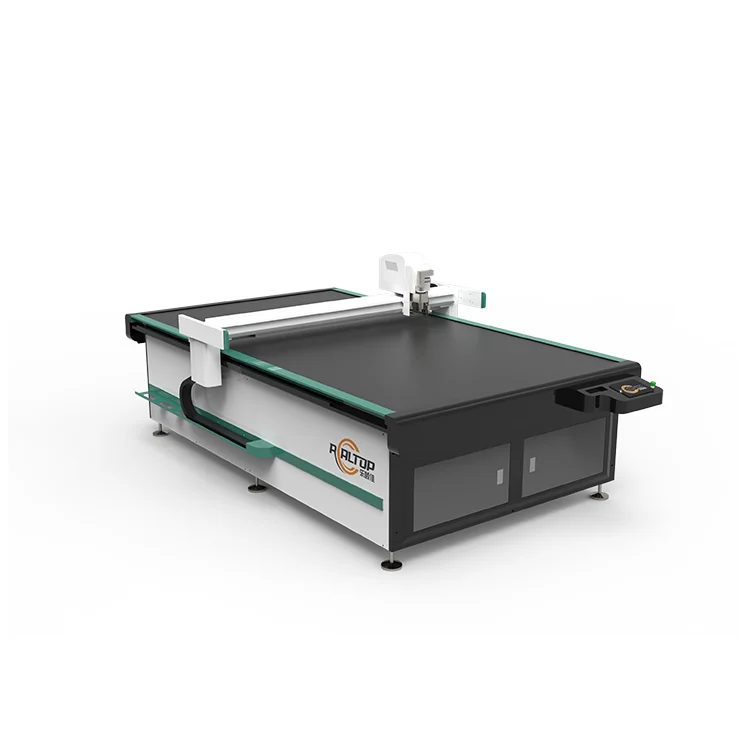
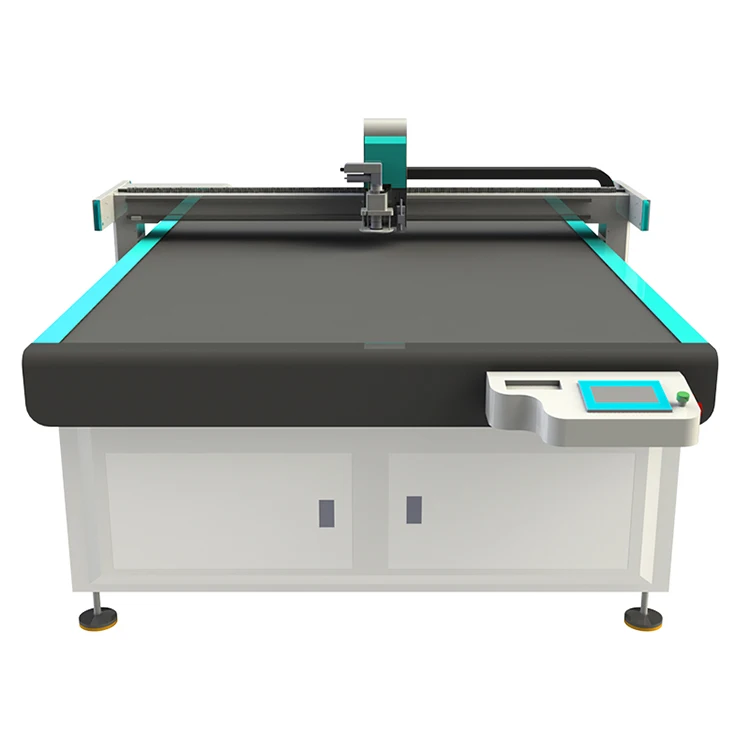
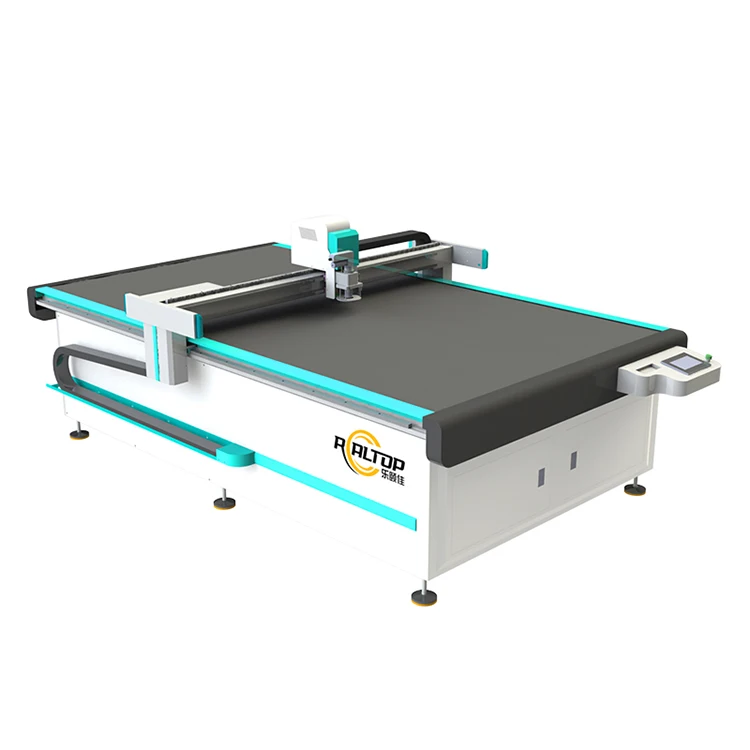
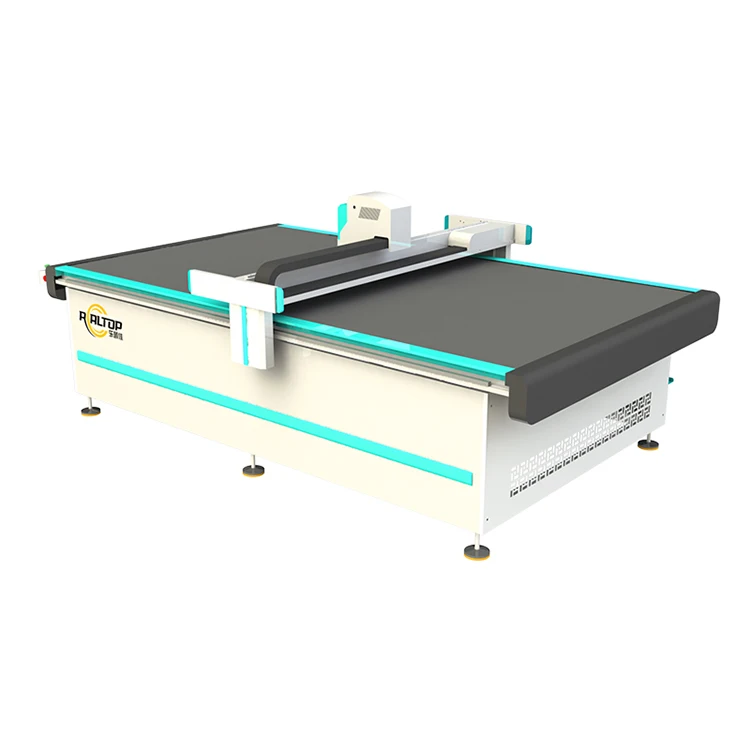
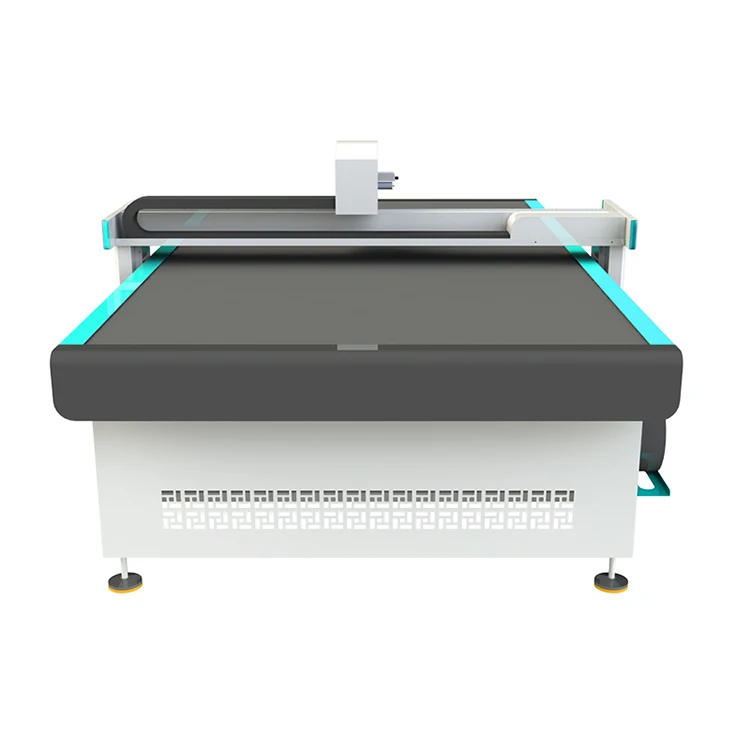
| Product Type | CNC Oscillating Knife Cutting Machine |
| Working Area | 1600 × 2500 mm |
| Machine Dimensions | 3450 × 2300 × 1250 mm |
| Rated Power | 9 kW |
| Voltage | 380V ± 10% |
| Table Type | Magnesium-aluminum alloy vacuum adsorption table with fluorocarbon PVDF powder spraying and hard oxidation |
| Translational Velocity | 800–1200 mm/s |
| Repeated Accuracy | ≤ 0.1 mm |
| Cutting Thickness Range | 20–80 mm (basis not stated in source — confirm block format, material and thickness) |
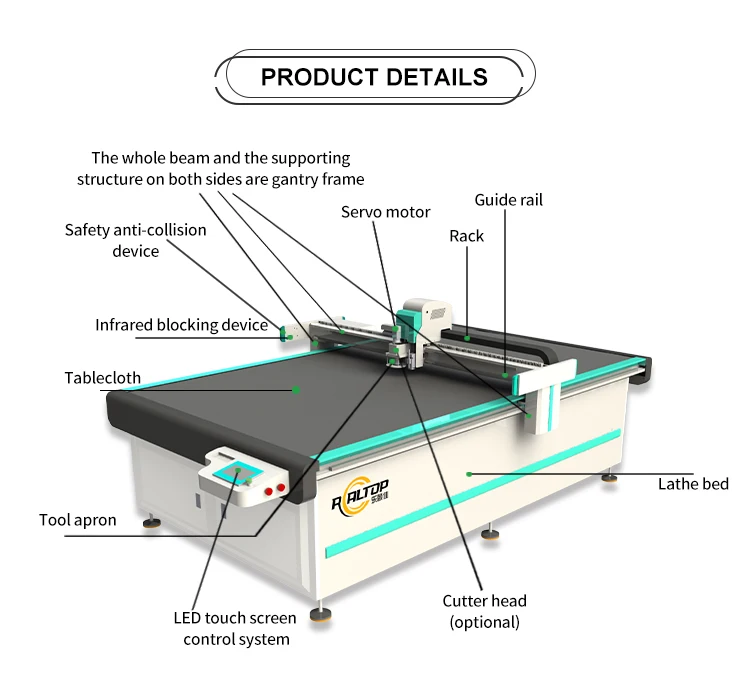
| Transmission System | Digital servo motor, linear guide, synchronous belt, ball screw |
| Servo Motor | Delta or Panasonic (optional), IP67 waterproof |
| Vacuum Pump | 7.5 kW, integrated aviation aluminum shell with built-in silencer sponge |
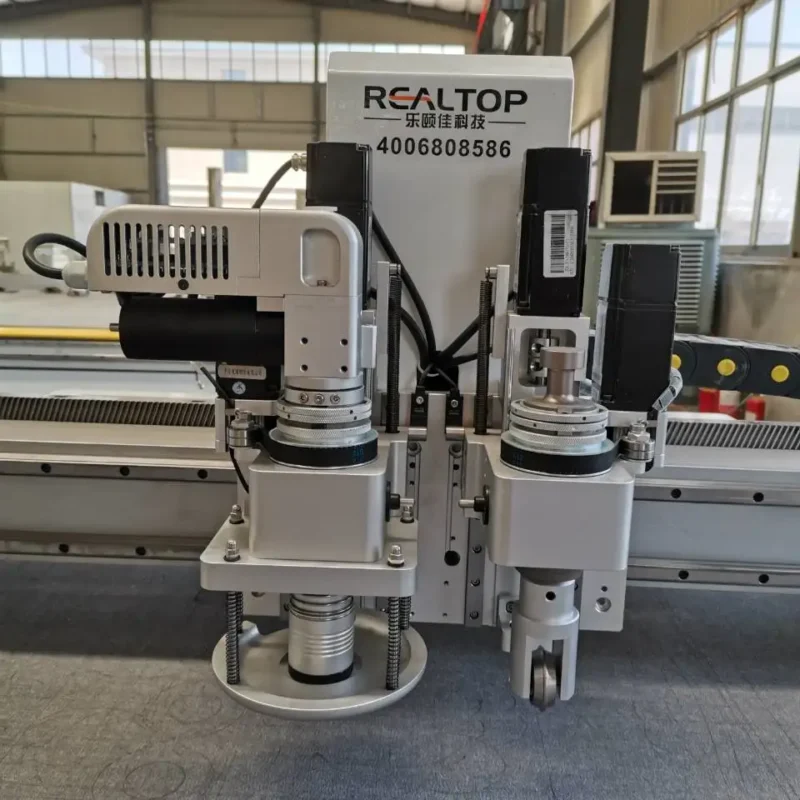
| Multifunctional Tool Head | Swiss imported knife with vibration full cutting, half cutting, and cursor location; options include oscillating knife, pneumatic knife, high-power vibrating knife, circular knife, V-cutting knife, drag knife, creasing wheel, dotted line knife, punching, brush |
| Visual Positioning Options | Small CCD camera mark point positioning, panoramic camera recognition, projection positioning |
| Frame Construction | Welded thick-walled seamless steel structure, high-temperature tempering, CNC machining center finished |
| Instruction System | HP-GL compatible format |
| Software | Professional carton design software, HP-GL compatible |
| Control Language | English, Russian, Italian, Chinese (special languages customizable) |
| Safety Devices | Infrared sensors, anti-collision on both sides of beam, emergency stop button |
| Warranty | One year free warranty |
Application Suitability
| Application | Material or Output |
|---|---|
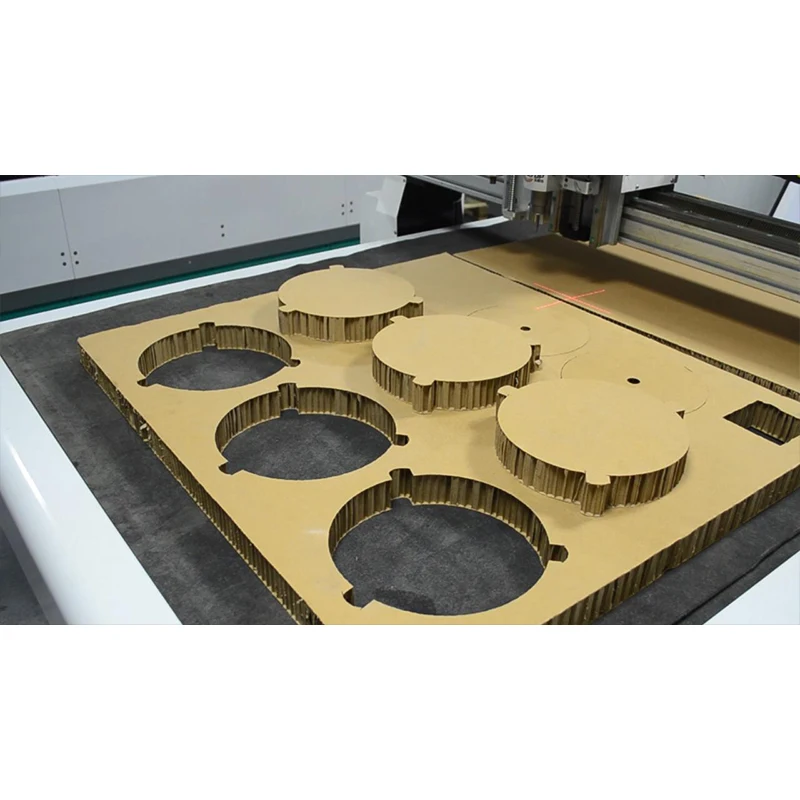
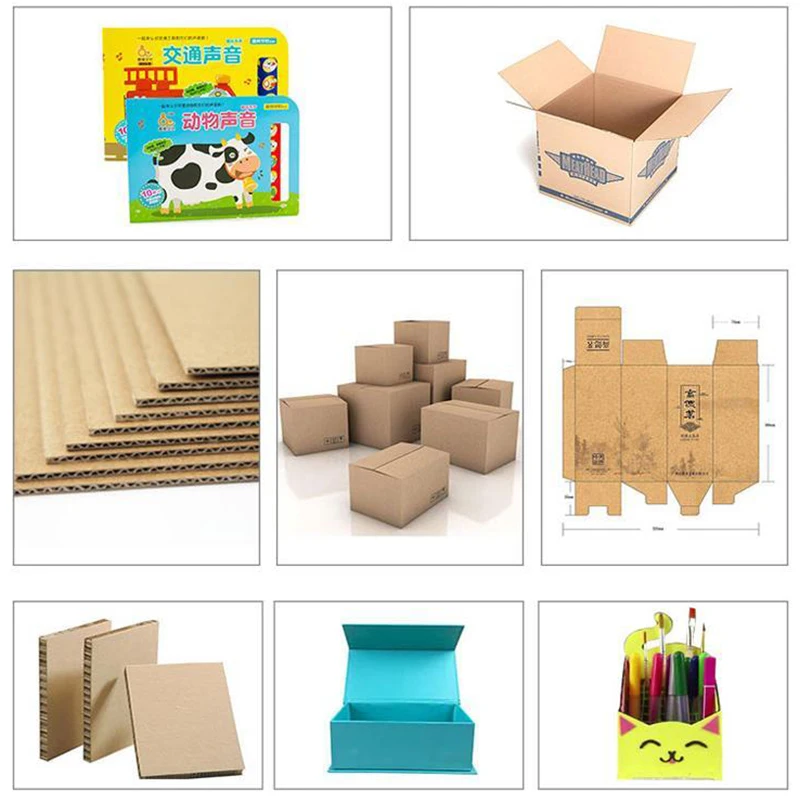
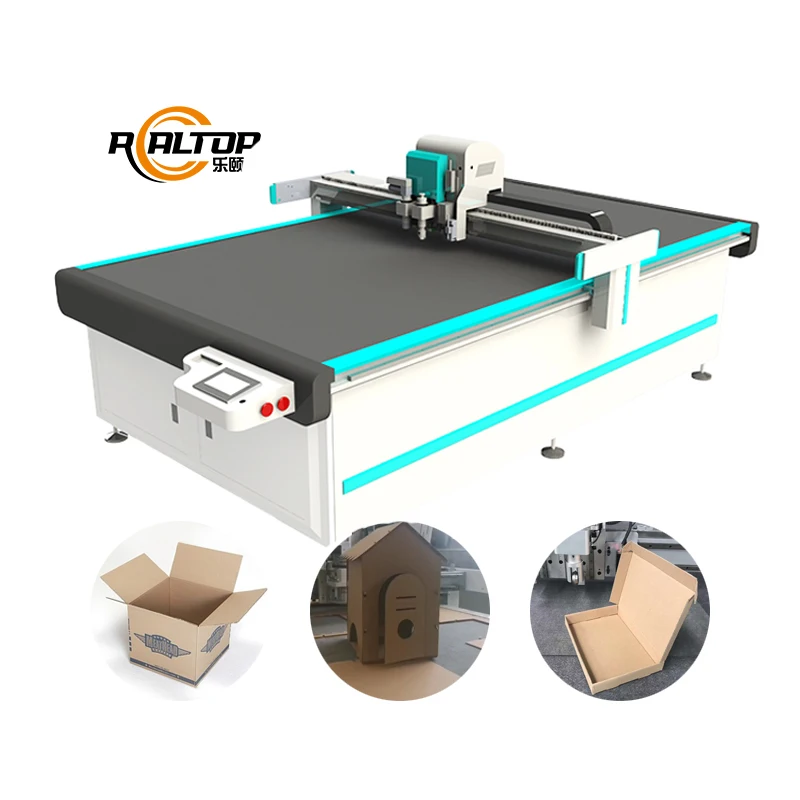
| Carton and packaging sample making | Corrugated cardboard, folding carton stock, plastic box materials |
| Garment and footwear production | Leather, fabric, textile, shoe material, non-woven fabric |
| Soft home furnishings | Sponge composite leather, carpet, PU, EVA, XPE |
| Automotive interior components | Gasket material, composite panels, carpet, floor mats |
| Advertising and signage | PVC, soft glass, sticker, film, foam board |
| Sealing and industrial gaskets | Rubber, PTFE, ETFE, PP, PE, gasket material |
Why the Cutting Thickness Claim Needs a Material Attached
Every thickness figure is only meaningful when paired with the specific material and tool head used.
Buyers often compare machines by the maximum cutting depth on the spec sheet, then discover that the same machine struggles when switching from soft foam to dense rubber. The issue is not the motor — it is the relationship between material density, tool geometry, and oscillation frequency. A CNC oscillating knife cutting machine for sale may advertise 80 mm depth, but that number could refer to low-density foam, not the multi-layer composite you plan to run all day [NEED_CITE: material density and tool pressure relationship in digital cutting]. Without a sample cutting report on your exact material, thickness claims remain a reference point, not a guarantee.
Matching the Tool Head to Your Material Stack
The multi-tool head system on the RT-D2516 and RT-S2516 covers oscillating knife, drag knife, creasing wheel, V-cut, circular knife, and punching. Each tool head addresses a different material behavior — the oscillating knife handles thick, layered materials where a straight drag knife would deflect, while the creasing wheel scores carton stock without cutting through. Choosing the wrong tool for the job produces ragged edges on leather or crushed foam cores. The CNC oscillating knife cutting machine for sale here lets you specify the tool head per material rather than relying on a single blade for every job.
Vacuum Table Flatness and the Suction Problem Nobody Mentions
The magnesium-aluminum alloy vacuum table undergoes fluorocarbon PVDF powder spraying and hard oxidation, which maintains surface flatness across the full 1600 × 2500 mm working area. Flatness directly affects suction uniformity — a warped table leaves pockets where small parts lift during high-speed cutting, especially at the 800–1200 mm/s translational velocity range. The 7.5 kW vacuum pump with its integrated aviation aluminum shell and silencer sponge pulls consistent suction without the noise levels typical of open-frame pump setups [NEED_CITE: vacuum adsorption flatness tolerance in CNC flatbed cutting].
Reading the Spec Sheet Like a Production Engineer
The Delta or Panasonic servo motors with IP67 waterproof protection matter because cutting environments generate dust and debris from materials like fiberglass and corrugated board — unprotected motors degrade faster in these conditions. The welded thick-walled seamless steel frame, treated with high-temperature tempering and finished on a CNC machining center, controls the long-term geometric accuracy that the ≤ 0.1 mm repeated precision figure depends on. A frame that warps under thermal cycling loses that accuracy within months. The HP-GL compatible instruction system and professional carton design software determine whether your existing design files open directly or require conversion work before every production run.
The Hidden Cost of Specifying by Working Area Alone
When buyers select a machine based solely on table size, they often discover that the vacuum zoning cannot hold small parts, the tool head pressure falls short on dense materials, or the software does not import their nesting files. Each of these mismatches surfaces only after the machine arrives and production begins — meaning downtime, material waste, and urgent tooling orders. A machine that covers your sheet size but cannot process your material at production speed is effectively a bottleneck, not a solution [NEED_CITE: CNC digital cutting machine specification mismatch consequences].
Why Sourcing from a Single Technology Source Matters
The RT-D2516 / RT-S2516 comes from a manufacturer that designs both knife and laser cutting systems in-house, which means the recommendation between cutting methods is based on your material, not on which machine needs to move off the floor. Tool head and table configurations are specified per material type and production volume before the order is placed. CCD camera positioning options are available for printed contour work, and the sample cutting process uses your own material so you see edge quality before commitment. Voltage, plug type, and control language are confirmed to match your target market before shipment.
Documentation & Verification
- Machine specification sheet listing the exact tool head and table configuration matched to your material
- Electrical schematic with voltage and frequency confirmation for your facility
- Sample cutting report produced on your supplied material before order finalization
- Factory test record documenting cutting accuracy and tool performance prior to dispatch
- Software licence and HP-GL file format compatibility note for your design workflow
- Spare parts list covering blades, creasing wheels, and vacuum table consumables
Installation, Commissioning & Support
- Requires a dedicated 380V ± 10% circuit to support the 9 kW rated power draw without voltage drop
- Machine footprint of 3450 × 2300 mm needs clearance on all sides for beam access and material loading
- Vacuum pump placement and exhaust routing planned before installation to manage the 7.5 kW pump output
- First-run calibration covers servo tuning, vacuum zoning setup, and tool head offset registration
- Operator training addresses tool head changeover, software nesting import, and HP-GL file preparation
- Scheduled maintenance covers blade replacement cycles, linear guide lubrication, and vacuum pump filter service
What We Need to Size Your Configuration
Share your primary material type, typical thickness range, and maximum sheet dimensions so we can recommend the correct tool head and vacuum zoning layout. Confirm your facility voltage, frequency, and preferred control language to ensure the electrical and interface specifications match your local requirements. If you have existing design files or nesting software, send a sample file so we can verify compatibility before the order is finalized.
Frequently Asked Questions
Q: How do I choose between oscillating knife, drag knife, and creasing wheel for my material?
A: The choice depends on material density, thickness, and edge requirements. Oscillating knives handle thick and layered materials like foam and corrugated board where a drag knife would deflect. Creasing wheels score carton stock without cutting through for folding. We run sample cuts on your actual material to determine the correct tool head and cutting parameters before you commit to a configuration.
Q: What working area sizes and vacuum table zoning options are available?
A: The RT-D2516 and RT-S2516 offer a 1600 × 2500 mm working area with a magnesium-aluminum alloy vacuum table. Zoning can be configured to match your typical part sizes, ensuring small components stay fixed during high-speed cutting. The PVDF hard-oxidation finish maintains surface flatness for uniform suction across the full table area.
Q: Does the CCD camera track printed marks at production speed?
A: Visual positioning options include small CCD camera mark point positioning, panoramic camera recognition, and projection positioning. The suitable option depends on your mark type, print contrast, and cutting speed requirements. We test contour recognition on your printed material to confirm reliable tracking before finalizing the camera configuration.
Q: Will this machine accept my existing design and nesting files?
A: The system supports HP-GL compatible formats and includes professional carton design software. Before the order, we verify that your current file formats and nesting workflow import correctly. If your files use a different standard, we confirm compatibility or identify any conversion steps needed so your production workflow continues without interruption.
Q: How does knife cutting compare to laser cutting for flexible materials?
A: Knife cutting produces clean mechanical edges on fabric, leather, foam, and gasket materials without the heat-affected zone that laser cutting creates. Laser cutting seals edges on synthetics and handles intricate contours on thinner materials. The manufacturer builds both systems, so the recommendation depends on your specific material behavior, edge quality requirements, and production volume.
In-house knife and laser design — A single source covers both cutting methods, letting you match the technology to the material rather than forcing one process across every application.
Technical Specifications
| Parameter | Value |
|---|---|
| Model | RT-D2516 / RT-S2516 |
| Product Type | CNC Oscillating Knife Cutting Machine |
| Working Area | 1600 × 2500 mm |
| Machine Dimensions | 3450 × 2300 × 1250 mm |
| Rated Power | 9 kW |
| Voltage | 380V ± 10% |
| Table Type | Magnesium-aluminum alloy vacuum adsorption table with fluorocarbon PVDF powder spraying and hard oxidation |
| Translational Velocity | 800–1200 mm/s |
| Repeated Accuracy | ≤ 0.1 mm |
| Cutting Thickness Range | 20–80 mm (basis not stated in source — confirm block format, material and thickness) |
| Transmission System | Digital servo motor, linear guide, synchronous belt, ball screw |
| Servo Motor | Delta or Panasonic (optional), IP67 waterproof |
| Vacuum Pump | 7.5 kW, integrated aviation aluminum shell with built-in silencer sponge |
| Multifunctional Tool Head | Swiss imported knife with vibration full cutting, half cutting, and cursor location; options include oscillating knife, pneumatic knife, high-power vibrating knife, circular knife, V-cutting knife, drag knife, creasing wheel, dotted line knife, punching, brush |
| Visual Positioning Options | Small CCD camera mark point positioning, panoramic camera recognition, projection positioning |
| Frame Construction | Welded thick-walled seamless steel structure, high-temperature tempering, CNC machining center finished |
| Instruction System | HP-GL compatible format |
| Software | Professional carton design software, HP-GL compatible |
| Control Language | English, Russian, Italian, Chinese (special languages customizable) |
| Safety Devices | Infrared sensors, anti-collision on both sides of beam, emergency stop button |
| Warranty | One year free warranty |
Application Suitability
| Application | Material or Output |
|---|---|
| Carton and packaging sample making | Corrugated cardboard, folding carton stock, plastic box materials |
| Garment and footwear production | Leather, fabric, textile, shoe material, non-woven fabric |
| Soft home furnishings | Sponge composite leather, carpet, PU, EVA, XPE |
| Automotive interior components | Gasket material, composite panels, carpet, floor mats |
| Advertising and signage | PVC, soft glass, sticker, film, foam board |
| Sealing and industrial gaskets | Rubber, PTFE, ETFE, PP, PE, gasket material |
Why the Cutting Thickness Claim Needs a Material Attached
Every thickness figure is only meaningful when paired with the specific material and tool head used.
Buyers often compare machines by the maximum cutting depth on the spec sheet, then discover that the same machine struggles when switching from soft foam to dense rubber. The issue is not the motor — it is the relationship between material density, tool geometry, and oscillation frequency. A CNC oscillating knife cutting machine for sale may advertise 80 mm depth, but that number could refer to low-density foam, not the multi-layer composite you plan to run all day [NEED_CITE: material density and tool pressure relationship in digital cutting]. Without a sample cutting report on your exact material, thickness claims remain a reference point, not a guarantee.
Matching the Tool Head to Your Material Stack
The multi-tool head system on the RT-D2516 and RT-S2516 covers oscillating knife, drag knife, creasing wheel, V-cut, circular knife, and punching. Each tool head addresses a different material behavior — the oscillating knife handles thick, layered materials where a straight drag knife would deflect, while the creasing wheel scores carton stock without cutting through. Choosing the wrong tool for the job produces ragged edges on leather or crushed foam cores. The CNC oscillating knife cutting machine for sale here lets you specify the tool head per material rather than relying on a single blade for every job.
Vacuum Table Flatness and the Suction Problem Nobody Mentions
The magnesium-aluminum alloy vacuum table undergoes fluorocarbon PVDF powder spraying and hard oxidation, which maintains surface flatness across the full 1600 × 2500 mm working area. Flatness directly affects suction uniformity — a warped table leaves pockets where small parts lift during high-speed cutting, especially at the 800–1200 mm/s translational velocity range. The 7.5 kW vacuum pump with its integrated aviation aluminum shell and silencer sponge pulls consistent suction without the noise levels typical of open-frame pump setups [NEED_CITE: vacuum adsorption flatness tolerance in CNC flatbed cutting].
Reading the Spec Sheet Like a Production Engineer
The Delta or Panasonic servo motors with IP67 waterproof protection matter because cutting environments generate dust and debris from materials like fiberglass and corrugated board — unprotected motors degrade faster in these conditions. The welded thick-walled seamless steel frame, treated with high-temperature tempering and finished on a CNC machining center, controls the long-term geometric accuracy that the ≤ 0.1 mm repeated precision figure depends on. A frame that warps under thermal cycling loses that accuracy within months. The HP-GL compatible instruction system and professional carton design software determine whether your existing design files open directly or require conversion work before every production run.
The Hidden Cost of Specifying by Working Area Alone
When buyers select a machine based solely on table size, they often discover that the vacuum zoning cannot hold small parts, the tool head pressure falls short on dense materials, or the software does not import their nesting files. Each of these mismatches surfaces only after the machine arrives and production begins — meaning downtime, material waste, and urgent tooling orders. A machine that covers your sheet size but cannot process your material at production speed is effectively a bottleneck, not a solution [NEED_CITE: CNC digital cutting machine specification mismatch consequences].
Why Sourcing from a Single Technology Source Matters
The RT-D2516 / RT-S2516 comes from a manufacturer that designs both knife and laser cutting systems in-house, which means the recommendation between cutting methods is based on your material, not on which machine needs to move off the floor. Tool head and table configurations are specified per material type and production volume before the order is placed. CCD camera positioning options are available for printed contour work, and the sample cutting process uses your own material so you see edge quality before commitment. Voltage, plug type, and control language are confirmed to match your target market before shipment.
Documentation & Verification
- Machine specification sheet listing the exact tool head and table configuration matched to your material
- Electrical schematic with voltage and frequency confirmation for your facility
- Sample cutting report produced on your supplied material before order finalization
- Factory test record documenting cutting accuracy and tool performance prior to dispatch
- Software licence and HP-GL file format compatibility note for your design workflow
- Spare parts list covering blades, creasing wheels, and vacuum table consumables
Installation, Commissioning & Support
- Requires a dedicated 380V ± 10% circuit to support the 9 kW rated power draw without voltage drop
- Machine footprint of 3450 × 2300 mm needs clearance on all sides for beam access and material loading
- Vacuum pump placement and exhaust routing planned before installation to manage the 7.5 kW pump output
- First-run calibration covers servo tuning, vacuum zoning setup, and tool head offset registration
- Operator training addresses tool head changeover, software nesting import, and HP-GL file preparation
- Scheduled maintenance covers blade replacement cycles, linear guide lubrication, and vacuum pump filter service
What We Need to Size Your Configuration
Share your primary material type, typical thickness range, and maximum sheet dimensions so we can recommend the correct tool head and vacuum zoning layout. Confirm your facility voltage, frequency, and preferred control language to ensure the electrical and interface specifications match your local requirements. If you have existing design files or nesting software, send a sample file so we can verify compatibility before the order is finalized.
Frequently Asked Questions
Q: How do I choose between oscillating knife, drag knife, and creasing wheel for my material?
A: The choice depends on material density, thickness, and edge requirements. Oscillating knives handle thick and layered materials like foam and corrugated board where a drag knife would deflect. Creasing wheels score carton stock without cutting through for folding. We run sample cuts on your actual material to determine the correct tool head and cutting parameters before you commit to a configuration.
Q: What working area sizes and vacuum table zoning options are available?
A: The RT-D2516 and RT-S2516 offer a 1600 × 2500 mm working area with a magnesium-aluminum alloy vacuum table. Zoning can be configured to match your typical part sizes, ensuring small components stay fixed during high-speed cutting. The PVDF hard-oxidation finish maintains surface flatness for uniform suction across the full table area.
Q: Does the CCD camera track printed marks at production speed?
A: Visual positioning options include small CCD camera mark point positioning, panoramic camera recognition, and projection positioning. The suitable option depends on your mark type, print contrast, and cutting speed requirements. We test contour recognition on your printed material to confirm reliable tracking before finalizing the camera configuration.
Q: Will this machine accept my existing design and nesting files?
A: The system supports HP-GL compatible formats and includes professional carton design software. Before the order, we verify that your current file formats and nesting workflow import correctly. If your files use a different standard, we confirm compatibility or identify any conversion steps needed so your production workflow continues without interruption.
Q: How does knife cutting compare to laser cutting for flexible materials?
A: Knife cutting produces clean mechanical edges on fabric, leather, foam, and gasket materials without the heat-affected zone that laser cutting creates. Laser cutting seals edges on synthetics and handles intricate contours on thinner materials. The manufacturer builds both systems, so the recommendation depends on your specific material behavior, edge quality requirements, and production volume.
商品评价
There are no reviews yet.