

Fast Delivery
Quick, reliable shipping to any location.

Free & easy returns
Return this item by mail or in store within 90 days for a full refund.
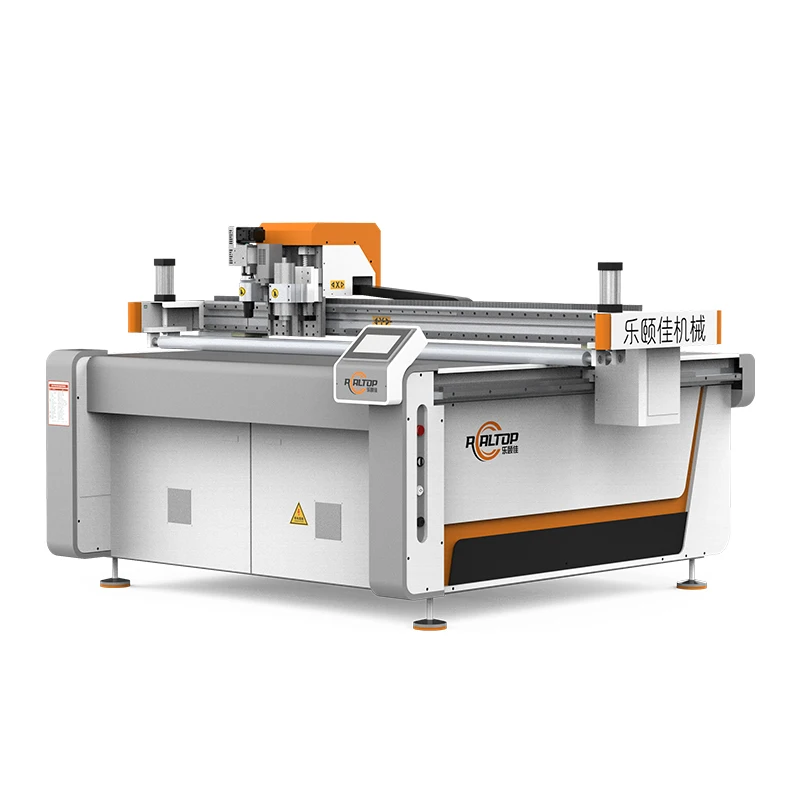
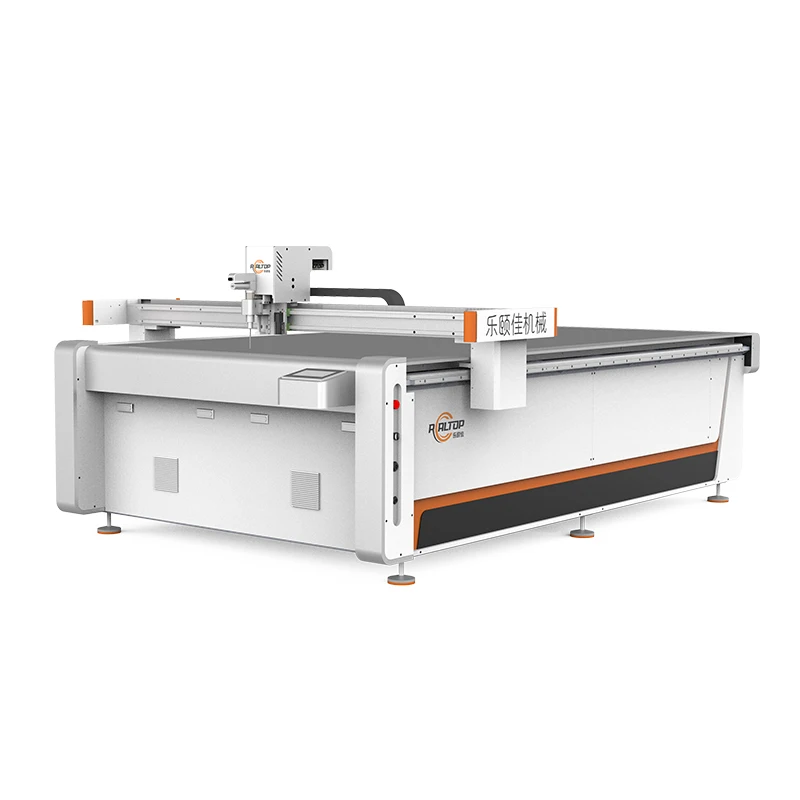
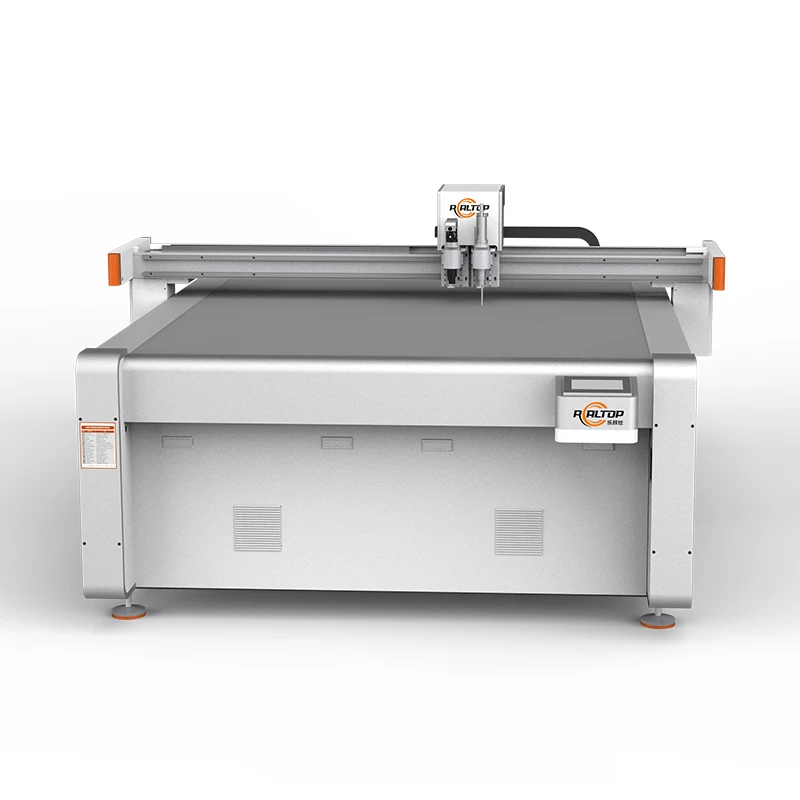
Specification-first engineering — In-house design covering both knife and laser technologies means the RT-D2516/RT-S2516 is configured around your material behavior, not forced into a generic cutting envelope.
Technical Specifications
| Parameter | Value |
|---|---|
| Model | RT-D2516/RT-S2516 |
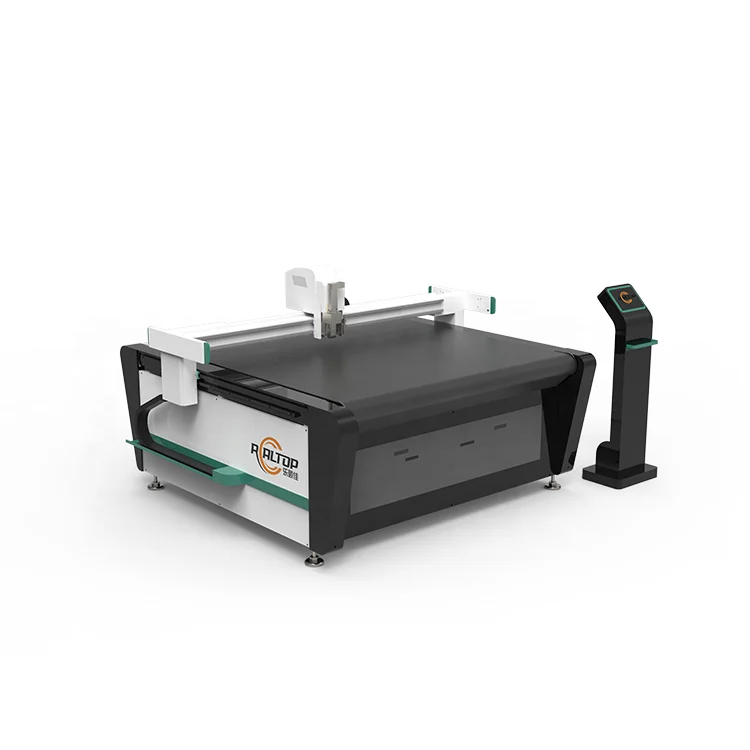
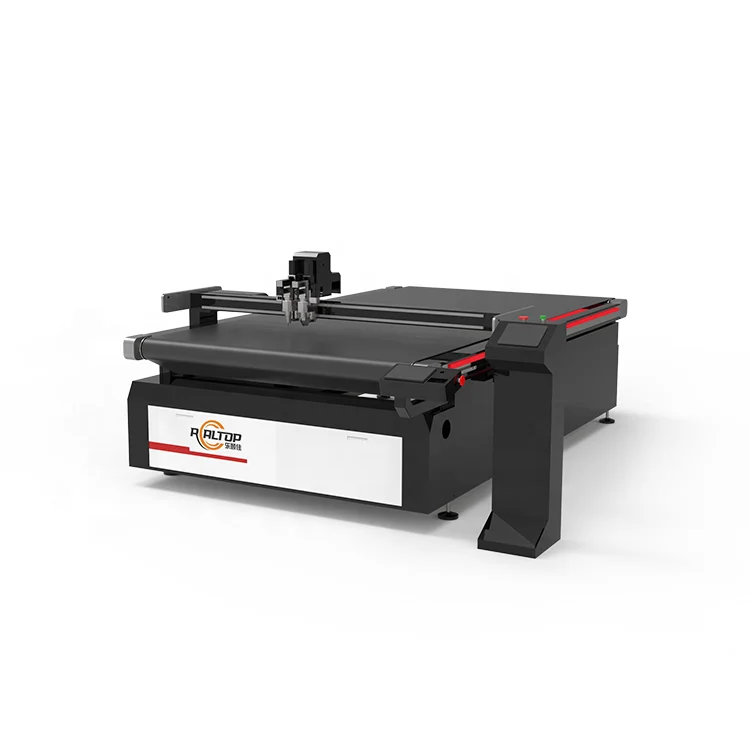
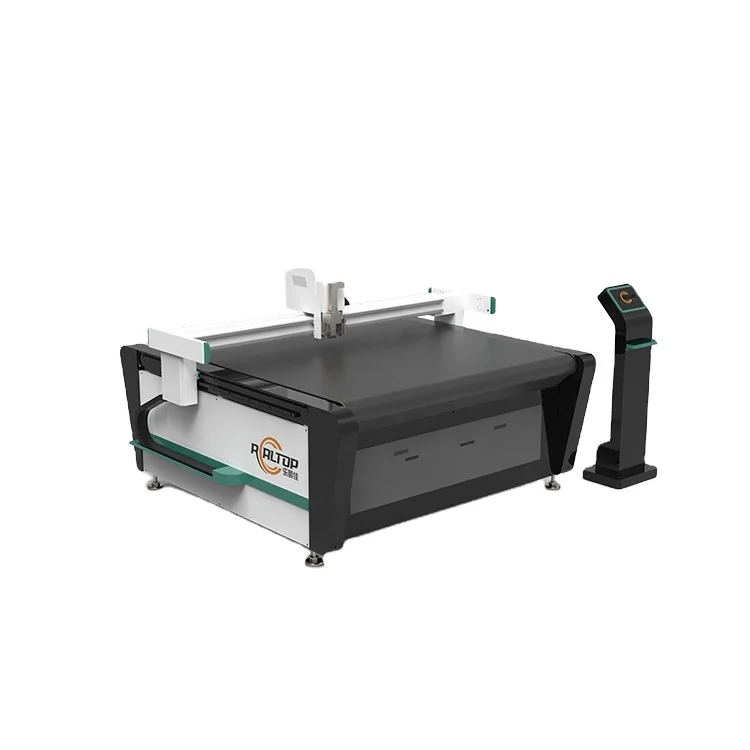
| Product Type | CNC Oscillating Knife Cutting Machine |
| Working Area | 1600×2500 mm |
| Machine Size | 3450×2300×1250 mm |
| Rated Power | 9 kW |
| Vacuum Pump | 7.5 kW |
| Working Table | Flat working table with auto feeding |
| Tool Head | Swiss imported knife with vibration full cutting, half cutting and cursor location |
| Translational Velocity | 800–1200 mm/s |
| Cutting Thickness | 200–800 mm/s (basis not stated in source — confirm block format / material / thickness) |
| Repeated Accuracy | ≤0.1 mm |
| Transmission System | Digital servo motor, linear guide, synchronous belt, imported ball screw |
| Servo Motor | Japanese Yaskawa |
| Guide Rail | Taiwan Hiwin |
| Conveyor Belt | Germany imported |
| Instruction System | HP-GL compatible format |
| Voltage | 380V±10% |
| Safety Device | Infrared sensors |
| Assembly State | Complete machine |
| Certification | CE |
Application Suitability
| Application | Material or Output |
|---|---|
| Garment and footwear production | Fabric, leather, sponge composite leather |
| Automotive interior and gasket fabrication | Composite materials, rubber, silicon |
| Signage and flexible display manufacturing | PVC, soft glass, vinyl |
| Packaging sample making | Corrugated board, flexible laminates |
| Industrial textile conversion | Multi-layer fabric, technical textiles |
Why the Material Test Must Come Before the Purchase Order
A cutting machine specified on working area alone will fail the moment your material behaves differently from the showroom sample.
I spent years on the assembly floor before moving into technical sales, and the pattern is always the same: a buyer sees a machine run smoothly on standard cotton, signs off on the RT-D2516/RT-S2516, and then ships a roll of bonded composite that dulls the blade within hours. The oscillating knife cutting machine manufacturer you choose should insist on testing your exact material before any configuration is locked in. Thickness, density, fiber direction, and adhesive layers all change how the Swiss imported knife engages — and no catalog spec captures that without a physical cut [NEED_CITE: material hardness variation across composite textile grades].
Knife Versus Laser: Matching the Process to the Fabric
Not every textile responds well to thermal cutting. Synthetic fabrics with coated surfaces can seal cleanly under a laser beam, but natural fibers and multi-layer composites often char or delaminate at the edge. The RT-D2516/RT-S2516 uses a Swiss imported oscillating knife that slices through sponge composite leather, rubber, and layered fabric without heat distortion. Full cutting and half cutting modes let the operator switch between through-cuts and kiss-cuts on the same nest, which matters when a single garment panel requires both perimeter cuts and internal score lines.
How Auto Feeding Changes the Daily Output Equation
Manual lay-up between cuts creates dead time that no spindle speed can recover. The German imported conveyor belt on this CNC oscillating knife cutting machine feeds material continuously across the 1600×2500 mm flat table, so the knife head can move from one nest to the next without waiting for an operator to reposition the roll. For high-volume fabric producers running multi-layer lays, this auto feeding loop turns what would be batch-and-stop workflow into a sustained run. The Yaskawa digital servo motor maintains belt tracking accuracy within the repeated accuracy tolerance of ≤0.1 mm, keeping the feed registration aligned with the cutting path over long production shifts [NEED_CITE: servo-driven conveyor registration in continuous textile cutting].
Reading the Specs That Actually Affect Cut Quality
The 9 kW rated power covers the servo drives, vacuum pump load, and oscillating knife mot*in linear guide and imported ball screw combination determines how precisely the knife follows tight contours in leather or dense foam; any play in the rail translates directly to edge deviation on curved pattern pieces. The HP-GL compatible instruction system matters when your nesting software outputs vector paths in that format, avoiding an extra conversion step that could shift registration marks. And the 7.5 kW vacuum pump must hold multi-layer fabric flat across the entire 1600×2500 mm table — if vacuum zoning is insufficient for small parts, material lift during high-speed passes produces miscuts that only show up after the nest is cleared.
What Happens When the Tool Head Is Wrong for the Material
A drag knife works on thin vinyl but crushes foam and leaves ragged edges on sponge composite leather. An oscillating knife set to the wrong frequency vibrates through the top layer but tears the adhesive bond underneath. Buyers who skip the material test often discover this mid-production, when blade wear spikes and the cutting edge degrades every few hundred pieces instead of lasting the expected run [NEED_CITE: oscillating frequency mismatch effects on bonded textile layers]. The consequence is not just scrap — it is the downtime spent swapping blades and re-nesting jobs that should have run straight through.
Why Buyers Specify This CNC Oscillating Knife Cutting Machine Manufacturer
Realtop designs and builds both knife and laser cutting systems in-house, so the RT-D2516/RT-S2516 configuration is chosen based on what your material actually requires rather than pushing one technology across every application. The Swiss imported tool head, German conveyor belt, and Japanese Yaskawa servo are specified per production volume and material type, not swapped for cost-reduction alternatives after the order is placed. Software compatibility with your existing HP-GL nesting workflow is confirmed before production begins. Voltage, control language, and plug configuration are locked in at the quotation stage, not discovered at commissioning. Every machine ships with a sample cutting report run on the buyer’s own material, so you see edge quality and cycle data before the crate leaves Jinan.
Documentation & Verification
- Machine specification sheet matching the RT-D2516/RT-S2516 as-built configuration
- Electrical schematic confirming 380V±10% wiring and servo circuit layout
- Tool head and table configuration list for your specified material range
- Sample cutting report on your fabric or composite before dispatch
- Software licence and HP-GL file format compatibility note
- Spare parts list covering Swiss knife blades and conveyor belt sections
Installation, Commissioning & Support
- Floor space planning for the 3450×2300×1250 mm machine footprint with conveyor clearance
- Dedicated 380V±10% circuit with sufficient capacity for 9 kW rated load plus 7.5 kW vacuum pump
- Complete machine assembly state requiring utility connection and belt tensioning only
- First-run parameter setting for oscillating knife frequency matched to your material density
- Operator training on HP-GL file import, nest layout, and auto feeding loop management
- Scheduled blade replacement and Hiwin guide rail lubrication intervals documented
What to Include in Your Inquiry
Send the specific material type, thickness range, and maximum sheet or roll width you run daily. Note your local voltage and frequency standard, preferred control language, and whether your nesting software outputs HP-GL or requires a different format. If your production involves bonded or composite layers, include a sample roll so the cutting test reflects actual conditions.
Frequently Asked Questions
Q: How do I decide between oscillating knife and laser for my textile?
A: Natural fibers, bonded composites, and foam generally cut cleaner with an oscillating knife because there is no thermal edge effect. Coated synthetics and single-layer acrylic-backed fabrics may suit laser sealing. The correct choice depends on your specific material stack, which is why we run a cutting test on your sample before recommending the RT-D2516/RT-S2516 configuration.
Q: Can the machine handle small pattern pieces without material lift?
A: Small parts require sufficient vacuum hold-down across the zone where they sit. The 7.5 kW vacuum pump and flat working table on the RT-D2516/RT-S2516 provide broad suction coverage, but vacuum zoning configuration must match your typical nest layout. We confirm zone mapping during the specification stage based on your pattern files.
Q: Will my existing nesting software work with this machine?
A: The instruction system accepts HP-GL compatible format, which covers many mainstream nesting platforms. If your software outputs a different vector format, we verify file import compatibility and provide a software licence and format note before the order is finalized, so there are no surprises at commissioning.
Q: What determines the right working area size for my operation?
A: Your maximum fabric roll width and typical nest length set the minimum table size. The 1600×2500 mm area on the RT-D2516/RT-S2516 accommodates standard textile rolls and allows multi-piece nesting for garment panels. If your production uses wider rolls or longer lays, a larger format table is available in the range.
Q: How is blade life managed on composite and foam materials?
A: Denser composites and adhesive-bonded foams increase blade wear compared to single-layer woven fabrics. The Swiss imported oscillating knife on this machine is designed for controlled wear, but actual blade life depends on your material composition. We document expected blade consumption during the sample cutting test so you can plan spare inventory accurately.
Specification-first engineering — In-house design covering both knife and laser technologies means the RT-D2516/RT-S2516 is configured around your material behavior, not forced into a generic cutting envelope.
Technical Specifications
| Parameter | Value |
|---|---|
| Model | RT-D2516/RT-S2516 |
| Product Type | CNC Oscillating Knife Cutting Machine |
| Working Area | 1600×2500 mm |
| Machine Size | 3450×2300×1250 mm |
| Rated Power | 9 kW |
| Vacuum Pump | 7.5 kW |
| Working Table | Flat working table with auto feeding |
| Tool Head | Swiss imported knife with vibration full cutting, half cutting and cursor location |
| Translational Velocity | 800–1200 mm/s |
| Cutting Thickness | 200–800 mm/s (basis not stated in source — confirm block format / material / thickness) |
| Repeated Accuracy | ≤0.1 mm |
| Transmission System | Digital servo motor, linear guide, synchronous belt, imported ball screw |
| Servo Motor | Japanese Yaskawa |
| Guide Rail | Taiwan Hiwin |
| Conveyor Belt | Germany imported |
| Instruction System | HP-GL compatible format |
| Voltage | 380V±10% |
| Safety Device | Infrared sensors |
| Assembly State | Complete machine |
| Certification | CE |
Application Suitability
| Application | Material or Output |
|---|---|
| Garment and footwear production | Fabric, leather, sponge composite leather |
| Automotive interior and gasket fabrication | Composite materials, rubber, silicon |
| Signage and flexible display manufacturing | PVC, soft glass, vinyl |
| Packaging sample making | Corrugated board, flexible laminates |
| Industrial textile conversion | Multi-layer fabric, technical textiles |
Why the Material Test Must Come Before the Purchase Order
A cutting machine specified on working area alone will fail the moment your material behaves differently from the showroom sample.
I spent years on the assembly floor before moving into technical sales, and the pattern is always the same: a buyer sees a machine run smoothly on standard cotton, signs off on the RT-D2516/RT-S2516, and then ships a roll of bonded composite that dulls the blade within hours. The oscillating knife cutting machine manufacturer you choose should insist on testing your exact material before any configuration is locked in. Thickness, density, fiber direction, and adhesive layers all change how the Swiss imported knife engages — and no catalog spec captures that without a physical cut [NEED_CITE: material hardness variation across composite textile grades].
Knife Versus Laser: Matching the Process to the Fabric
Not every textile responds well to thermal cutting. Synthetic fabrics with coated surfaces can seal cleanly under a laser beam, but natural fibers and multi-layer composites often char or delaminate at the edge. The RT-D2516/RT-S2516 uses a Swiss imported oscillating knife that slices through sponge composite leather, rubber, and layered fabric without heat distortion. Full cutting and half cutting modes let the operator switch between through-cuts and kiss-cuts on the same nest, which matters when a single garment panel requires both perimeter cuts and internal score lines.
How Auto Feeding Changes the Daily Output Equation
Manual lay-up between cuts creates dead time that no spindle speed can recover. The German imported conveyor belt on this CNC oscillating knife cutting machine feeds material continuously across the 1600×2500 mm flat table, so the knife head can move from one nest to the next without waiting for an operator to reposition the roll. For high-volume fabric producers running multi-layer lays, this auto feeding loop turns what would be batch-and-stop workflow into a sustained run. The Yaskawa digital servo motor maintains belt tracking accuracy within the repeated accuracy tolerance of ≤0.1 mm, keeping the feed registration aligned with the cutting path over long production shifts [NEED_CITE: servo-driven conveyor registration in continuous textile cutting].
Reading the Specs That Actually Affect Cut Quality
The 9 kW rated power covers the servo drives, vacuum pump load, and oscillating knife mot*in linear guide and imported ball screw combination determines how precisely the knife follows tight contours in leather or dense foam; any play in the rail translates directly to edge deviation on curved pattern pieces. The HP-GL compatible instruction system matters when your nesting software outputs vector paths in that format, avoiding an extra conversion step that could shift registration marks. And the 7.5 kW vacuum pump must hold multi-layer fabric flat across the entire 1600×2500 mm table — if vacuum zoning is insufficient for small parts, material lift during high-speed passes produces miscuts that only show up after the nest is cleared.
What Happens When the Tool Head Is Wrong for the Material
A drag knife works on thin vinyl but crushes foam and leaves ragged edges on sponge composite leather. An oscillating knife set to the wrong frequency vibrates through the top layer but tears the adhesive bond underneath. Buyers who skip the material test often discover this mid-production, when blade wear spikes and the cutting edge degrades every few hundred pieces instead of lasting the expected run [NEED_CITE: oscillating frequency mismatch effects on bonded textile layers]. The consequence is not just scrap — it is the downtime spent swapping blades and re-nesting jobs that should have run straight through.
Why Buyers Specify This CNC Oscillating Knife Cutting Machine Manufacturer
Realtop designs and builds both knife and laser cutting systems in-house, so the RT-D2516/RT-S2516 configuration is chosen based on what your material actually requires rather than pushing one technology across every application. The Swiss imported tool head, German conveyor belt, and Japanese Yaskawa servo are specified per production volume and material type, not swapped for cost-reduction alternatives after the order is placed. Software compatibility with your existing HP-GL nesting workflow is confirmed before production begins. Voltage, control language, and plug configuration are locked in at the quotation stage, not discovered at commissioning. Every machine ships with a sample cutting report run on the buyer’s own material, so you see edge quality and cycle data before the crate leaves Jinan.
Documentation & Verification
- Machine specification sheet matching the RT-D2516/RT-S2516 as-built configuration
- Electrical schematic confirming 380V±10% wiring and servo circuit layout
- Tool head and table configuration list for your specified material range
- Sample cutting report on your fabric or composite before dispatch
- Software licence and HP-GL file format compatibility note
- Spare parts list covering Swiss knife blades and conveyor belt sections
Installation, Commissioning & Support
- Floor space planning for the 3450×2300×1250 mm machine footprint with conveyor clearance
- Dedicated 380V±10% circuit with sufficient capacity for 9 kW rated load plus 7.5 kW vacuum pump
- Complete machine assembly state requiring utility connection and belt tensioning only
- First-run parameter setting for oscillating knife frequency matched to your material density
- Operator training on HP-GL file import, nest layout, and auto feeding loop management
- Scheduled blade replacement and Hiwin guide rail lubrication intervals documented
What to Include in Your Inquiry
Send the specific material type, thickness range, and maximum sheet or roll width you run daily. Note your local voltage and frequency standard, preferred control language, and whether your nesting software outputs HP-GL or requires a different format. If your production involves bonded or composite layers, include a sample roll so the cutting test reflects actual conditions.
Frequently Asked Questions
Q: How do I decide between oscillating knife and laser for my textile?
A: Natural fibers, bonded composites, and foam generally cut cleaner with an oscillating knife because there is no thermal edge effect. Coated synthetics and single-layer acrylic-backed fabrics may suit laser sealing. The correct choice depends on your specific material stack, which is why we run a cutting test on your sample before recommending the RT-D2516/RT-S2516 configuration.
Q: Can the machine handle small pattern pieces without material lift?
A: Small parts require sufficient vacuum hold-down across the zone where they sit. The 7.5 kW vacuum pump and flat working table on the RT-D2516/RT-S2516 provide broad suction coverage, but vacuum zoning configuration must match your typical nest layout. We confirm zone mapping during the specification stage based on your pattern files.
Q: Will my existing nesting software work with this machine?
A: The instruction system accepts HP-GL compatible format, which covers many mainstream nesting platforms. If your software outputs a different vector format, we verify file import compatibility and provide a software licence and format note before the order is finalized, so there are no surprises at commissioning.
Q: What determines the right working area size for my operation?
A: Your maximum fabric roll width and typical nest length set the minimum table size. The 1600×2500 mm area on the RT-D2516/RT-S2516 accommodates standard textile rolls and allows multi-piece nesting for garment panels. If your production uses wider rolls or longer lays, a larger format table is available in the range.
Q: How is blade life managed on composite and foam materials?
A: Denser composites and adhesive-bonded foams increase blade wear compared to single-layer woven fabrics. The Swiss imported oscillating knife on this machine is designed for controlled wear, but actual blade life depends on your material composition. We document expected blade consumption during the sample cutting test so you can plan spare inventory accurately.










商品评价
There are no reviews yet.