


Fast Delivery
Quick, reliable shipping to any location.

Free & easy returns
Return this item by mail or in store within 90 days for a full refund.
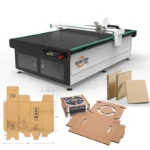
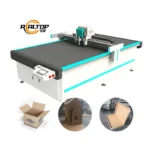
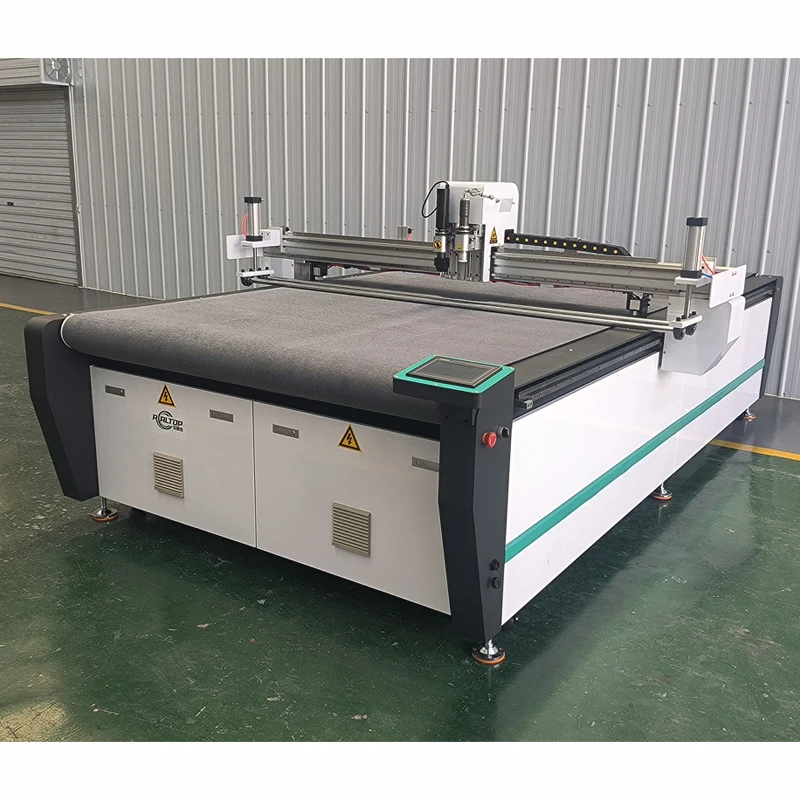
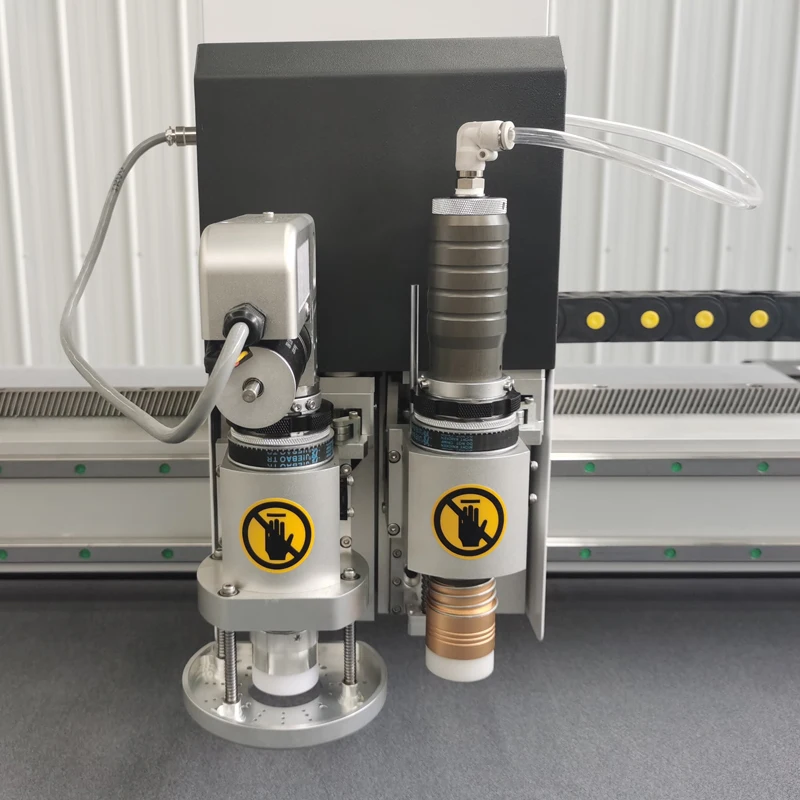
Cutting Method Matched to Material — the RT-D2516/RT-S2516 platform supports oscillating knife, drag knife, and optional CCD positioning so leather and composite processors select the tool head that their actual stock demands rather than forcing one setup across every job.
Technical Specifications
| Parameter | Value |
|---|---|
| Product Type | CNC Oscillating Knife Cutting Machine |
| Model | RT-D2516 / RT-S2516 |
| Working Area | 1600 × 2500 mm |
| Machine Size (Overall Dimensions) | 3450 × 2300 × 1250 mm |
| Rated Power | 9 kW |
| Vacuum Pump | 7.5 kW |
| Cutting Thickness | 20–80 mm depending on material type and density (basis not stated in source) |
| Maximum Cutting Thickness | ≤100 mm varies with material (basis not stated in source) |
| Translational Velocity | 800–1200 mm/s |
| Repeated Accuracy | ≤0.1 mm |
| Transmission System | Digital servo motor, linear guide, synchronous belt, ball screw |
| Servo Motor | Delta servo motor and drivers |
| Guide Rail | Taiwan Hiwin linear square rail |
| Vacuum Table | Aluminum alloy vacuum adsorption |
| Conveyor Belt | Germany imported felt belt, wear-resistant anti-pull composite fiber (tensile strength +35%) |
| Multifunctional Head | Swiss imported knife with vibration full cutting, vibration half cutting, cursor location |
| Safety Device | Infrared sensors |
| CCD / Vision System | Panoramic camera recognition, small CCD mark point positioning, projection positioning (optional) |
| Auto Feeding | Yes, automatic pulling and receiving |
| Instruction System | HP-GL compatible format |
| Voltage | 380V ±10% |
| Software & File Formats | HP-GL compatible; pattern cutting software for carton, car foot pad, seat sleeve, clothing fabric; language customizable |
| Frame Structure | Hard steel frame with reinforced beam structure |
| Fixed Model | Flat working table |
Application Suitability
| Application | Material or Output |
|---|---|
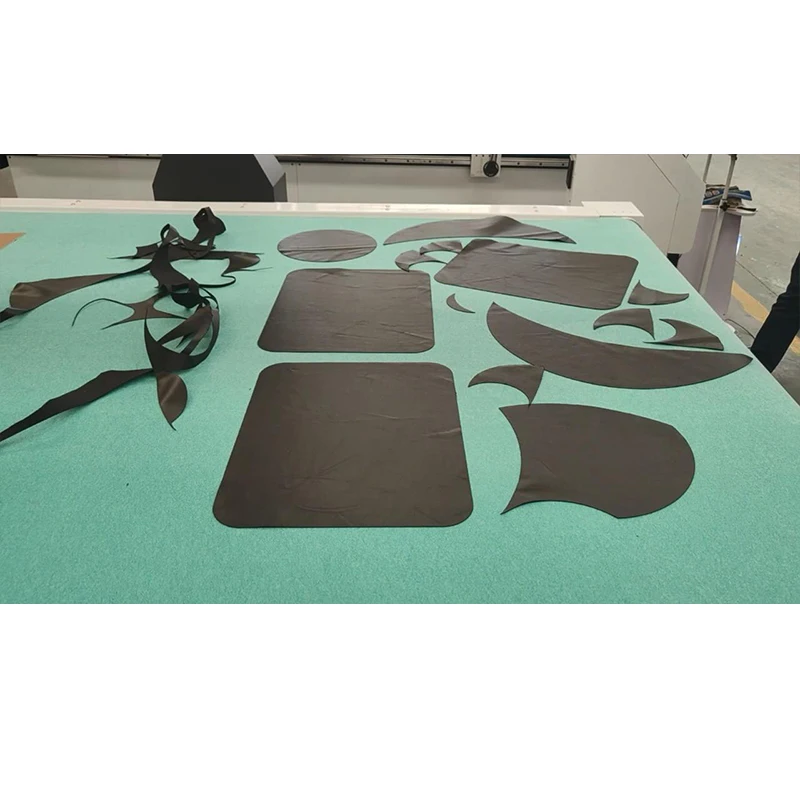
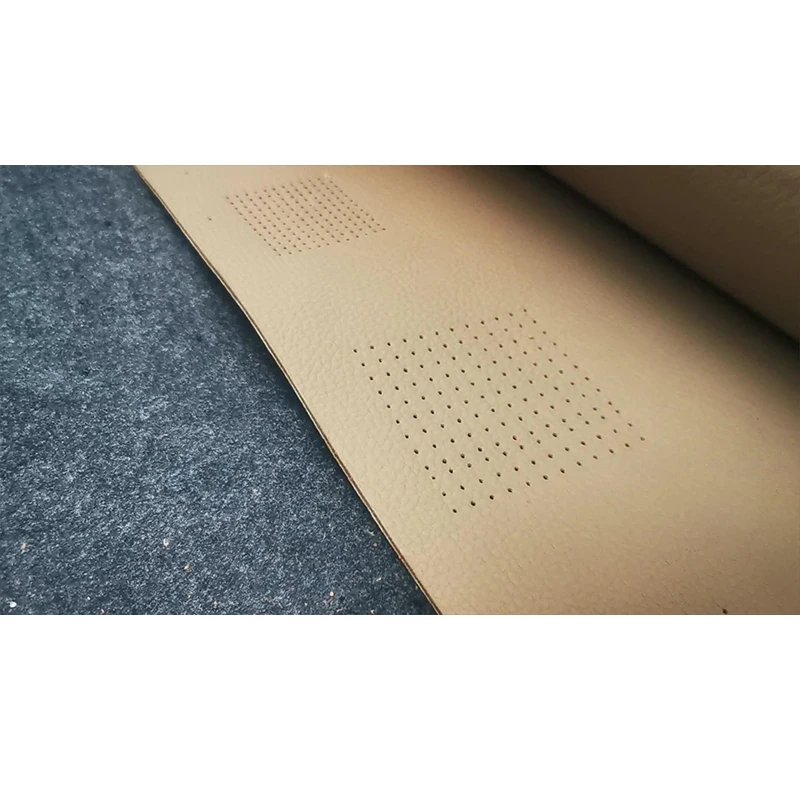
| Footwear and leather goods production | Natural leather, PU leather, synthetic uppers, shoe lining, insole board |
| Garment and textile cutting | Clothing fabric, non-woven fabric, felt, woven composite panels |
| Automotive interior trimming | Car foot pads, seat sleeves, trunk liners, headliner fabric |
| Gasket and sealing fabrication | Rubber, silicon, PTFE, ETFE, cork composite sheets |
| Packaging and carton sample making | Corrugated board, card stock, folding carton prototypes |
| Foam and sponge processing | EVA, XPE, PU foam, sponge composite leather, soft cushioning layers |
| Advertising and signage finishing | PVC soft sheets, sticker films, flexible print media |
Why Specified Cutting Depth Can Mislead Buyers in Leather Workshops
The thickness rating on a spec sheet means nothing without the material name and density next to it.
When a shoe factory in the Levant region bought a flatbed cutter rated for 80 mm, the team assumed that figure covered their dense multi-layer leather sole stacks. The machine stalled on the third layer because the oscillation frequency could not shear through the fibrous grain at that combined density [NEED_CITE: oscillating knife cutting force versus leather density and layer count]. Sellers often quote the deepest cut achieved on the softest foam in their showroom, not the material the buyer actually runs eight hours a day. That gap between brochure depth and real production depth is where machines earn the label "waste iron" on the factory floor. The cutting thickness figures for this CNC oscillating knife cutting machine manufacturer platform are listed with the material-dependent caveat for exactly this reason — because leather, foam, and gasket stock behave completely differently under the same blade stroke.
Swiss Knife Head Architecture and What It Solves on the Cutting Bed
The Swiss imported oscillating knife head on the RT-D2516/RT-S2516 delivers full cutting, half cutting, and cursor location in a single tool station. Full cutting shears through the entire material stack for pattern outlines, while half cutting scores the surface for fold lines on carton samples or crease marks on leather panels. Cursor location lets the machine register fiducial marks without engaging the blade, so the CNC oscillating knife cutting machine manufacturer can configure one head for multi-step jobs without a manual tool change mid-cycle. This matters when a footwear workshop cuts uppers and insoles from the same hide and needs scored fold lines alongside full perimeter cuts.
Vision Positioning Options for Printed Contour Work
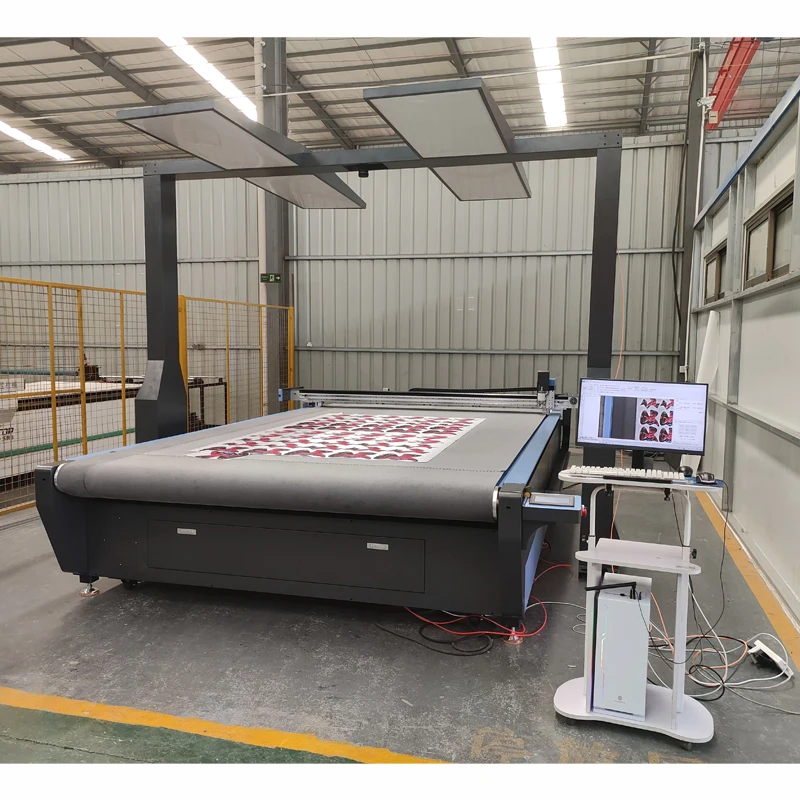
Three vision configurations are available: panoramic camera recognition for large-format printed textile rolls, small CCD camera mark point positioning for discrete fiducial dots on pre-printed leather panels, and projection positioning for manual alignment verification. The panoramic option suits garment producers running sublimated fabric where the camera must track registration marks across the full 1600 × 2500 mm bed at production speed [NEED_CITE: CCD camera contour tracking accuracy at varying conveyor speeds]. The small CCD option handles jobs where only a few printed marks exist on each piece. Projection positioning overlays the cut path onto the material so the operator can visually confirm alignment before the blade engages — useful for expensive full-grain leather hides where a misplaced cut ruins a costly sheet.
Breaking Down the Numbers That Actually Matter on the Shop Floor
The 7.5 kW vacuum pump paired with the aluminum alloy vacuum table is the first spec worth scrutinizing for small-part cutting. Footwear factories cutting dozens of small upper pieces from one hide need strong localized suction; without adequate zoning on the table, lightweight cut pieces lift during the final passes and the blade drags them across the felt belt, ruining edge quality. The Taiwan Hiwin linear square rail and Delta servo motor combination delivers ≤0.1 mm repeatability, which is the tolerance band where shoe pattern pieces must land to match the stitching templates downstream. The 800–1200 mm/s translational velocity governs how fast the head moves between cuts, not through the cut — actual cutting speed through leather depends on thickness and oscillation frequency. The hard steel frame with reinforced beam structure resists deflection across the 2500 mm span; a lighter frame would introduce positional drift at the bed extremes, especially visible when cutting long automotive seat sleeve panels. The Germany imported felt belt with anti-pull composite fiber construction handles the repeated vacuum cycling without stretching or fraying at the edges over months of continuous operation.
What Happens When the Wrong Configuration Ships
A distributor once ordered a batch of flatbed cutters for Middle Eastern shoe factories without specifying the tool head per material. The machines arrived with drag knife heads configured for vinyl signage work, and the buyers immediately attempted to cut 4 mm PU leather sole material [NEED_CITE: drag knife versus oscillating knife edge quality on dense leather]. The drag knife tore through the surface but left ragged fibers on the cut face, forcing every piece through a secondary trimming station. The vacuum table was specified as a single-zone unit, so small insole pieces lifted during cutting and jammed the knife holder. None of these failures appeared in the machine’s core mechanics — they were all configuration mismatches that a five-minute material sample test would have caught before the order was finalized. That is why this CNC oscillating knife cutting machine manufacturer insists on sample cutting reports before any configuration sheet goes to production.
Why Procurement Teams Source This Platform
In-house design covers both knife and laser cutting technologies on one platform, so a buyer processing leather uppers alongside acrylic templates can match the cutting method to each material without buying two separate machine brands. Tool head and table configuration are specified per material type and daily volume rather than offered as a single default package, which prevents the over-specification waste that inflates landed cost for simple carton sample work. CCD camera positioning options are confirmed against the buyer’s actual print registration mark size and spacing before the vision system is built into the gantry. Software file format compatibility is verified during the inquiry stage — HP-GL files, DXF imports, and nesting workflows are tested with the buyer’s existing design software before the control language is finalized. Sample cutting on the buyer’s own material stock runs before commitment, producing a documented report on edge quality, cutting depth, and cycle time that both parties sign off on before production begins.
Documentation & Verification
- Machine specification sheet listing every configured parameter against your material type and thickness
- Electrical schematic with voltage and plug type confirmed for your facility before dispatch
- Tool head and table configuration list matched to your documented production materials
- Sample cutting report on your supplied leather, foam, or gasket stock with edge photographs
- Operation and maintenance manual in your specified control language with software licence details
- Spare parts list with part numbers for the Swiss knife head, felt belt, and vacuum pump consumables
Installation, Commissioning & Support
- Floor space allocation must accommodate 3450 × 2300 mm machine footprint plus operator clearance on three sides
- Dedicated 380V ±10% circuit with appropriate breaker rating for combined 9 kW machine and 7.5 kW vacuum pump load
- Machine ships as a single flatbed unit with gantry pre-mounted; rigging equipment required for offloading
- First-run commissioning includes vacuum zoning calibration, blade depth setting, and CCD registration mark training
- Operator training covers HP-GL file import, nesting software workflow, and tool head changeover procedures
- Wear parts inventory should include replacement oscillating blades, felt belt sections, and vacuum seal strips
Starting Your Cutting Line Evaluation
Send your actual material samples — the specific leather grade, foam density, or composite laminate you run daily — along with typical sheet dimensions and target daily piece count. Specify your local voltage and frequency, preferred control panel language, and the design software your pattern makers currently use so the file format pipeline is validated before the quotation stage. If your production involves printed contour cutting, include sample printed sheets with your standard registration mark size and spacing so the correct CCD configuration is selected from the outset.
Frequently Asked Questions
Q: How do I decide between oscillating knife and laser cutting for my material mix?
A: Oscillating knife suits leather, foam, gasket, and composite materials where a clean sheared edge is required without heat-affected zones. Laser cutting handles acrylic, wood, and textile edge-sealing applications where thermal fusion prevents fraying. If your workshop processes both categories, the platform supports both methods so each job routes to the appropriate tool rather than forcing one process across incompatible materials.
Q: Which tool head configuration matches my specific leather thickness and edge requirement?
A: The Swiss imported knife head supports vibration full cutting for complete perimeter cuts and vibration half cutting for scored crease lines. Your material sample is tested before order confirmation to verify which oscillation frequency and blade profile produces the required edge quality at your target thickness, and the results are documented in the sample cutting report you receive.
Q: What CCD positioning options handle printed contour recognition at production speed?
A: Three options exist: panoramic camera recognition for full-bed printed fabric tracking, small CCD mark point positioning for discrete fiducial dots, and projection positioning for visual alignment verification. The correct choice depends on your mark size, spacing, and whether your material runs as continuous roll stock or individual sheets, which is evaluated during the inquiry stage with your actual printed samples.
Q: How are voltage, language, and software adapted for different export markets?
A: Voltage is confirmed at 380V ±10% or adapted to your local supply specification, with plug type and electrical schematic matched to your facility standard. Control panel language options include English, Russian, Italian, Chinese, and others. Software file format compatibility with your existing HP-GL or DXF design workflow is tested before shipment to prevent import failures on the first production day.
Q: What catalogue breadth is available for distributors evaluating multiple industry segments?
A: The full range covers CNC oscillating knife cutting machines for fabric, leather, foam, and gasket work alongside CO2 and fiber laser cutting systems for non-metal and sheet metal processing. Each machine family is configurable by working area, tool head, and vacuum table specification, allowing distributors to match equipment packages to the specific industries in their territory without forcing a single default configuration across all customer segments.










商品评价
There are no reviews yet.