



Fast Delivery
Quick, reliable shipping to any location.

Free & easy returns
Return this item by mail or in store within 90 days for a full refund.
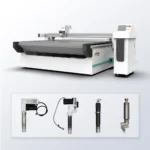
Configurable tool head systems — oscillating, drag, circular, pneumatic and V-cutting heads available across the RT-D2516/RT-S2516 lineup, so the knife method matches the fabric weight rather than forcing one blade type through every textile.
Technical Specifications
| Parameter | Value |
|---|---|
| Model | RT-D2516/RT-S2516 |
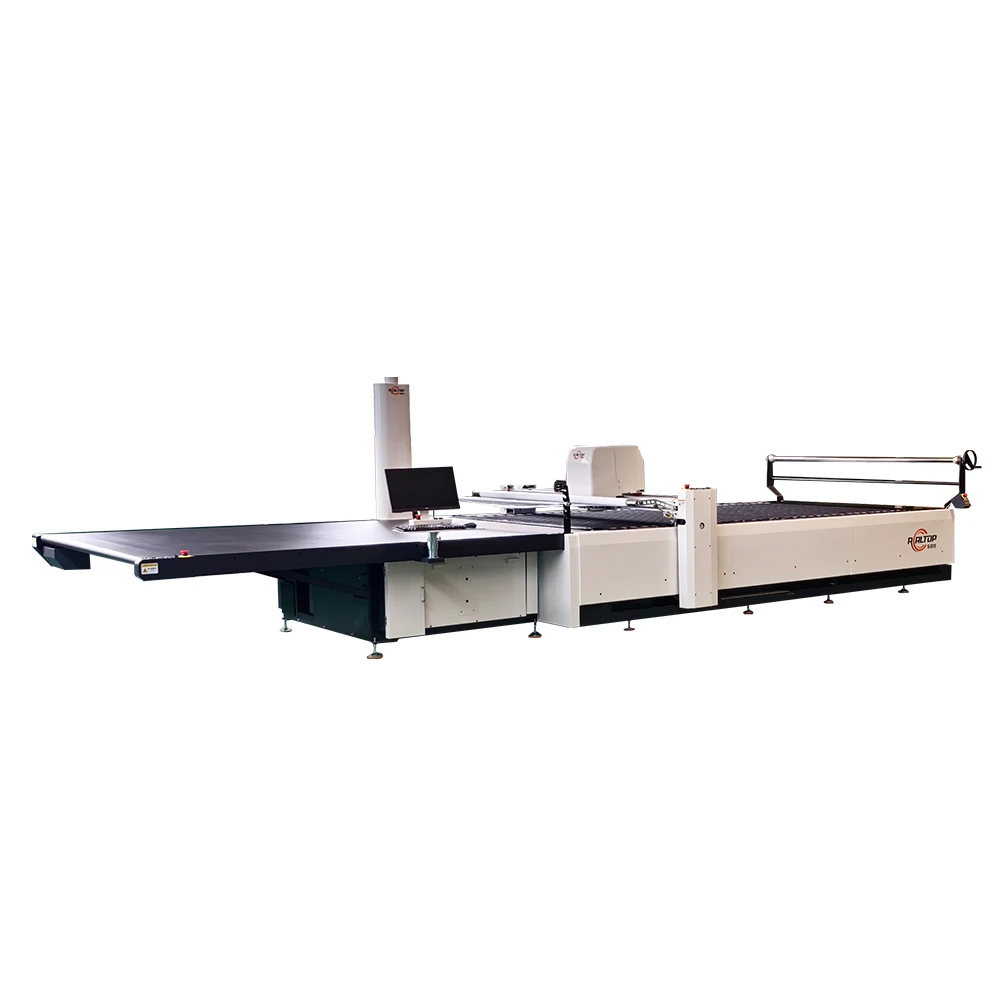
| Product Type | CNC Oscillating Knife Cutting Machine |
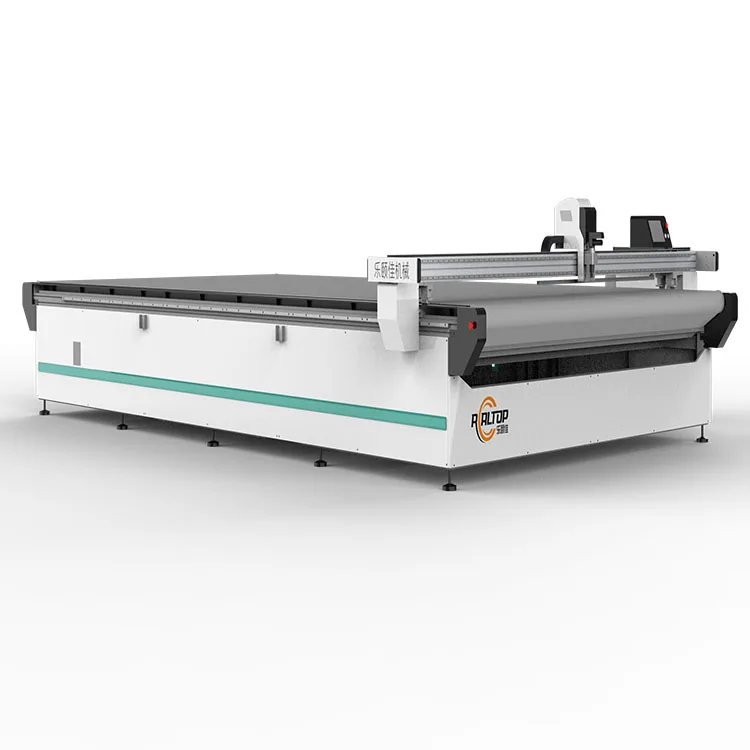
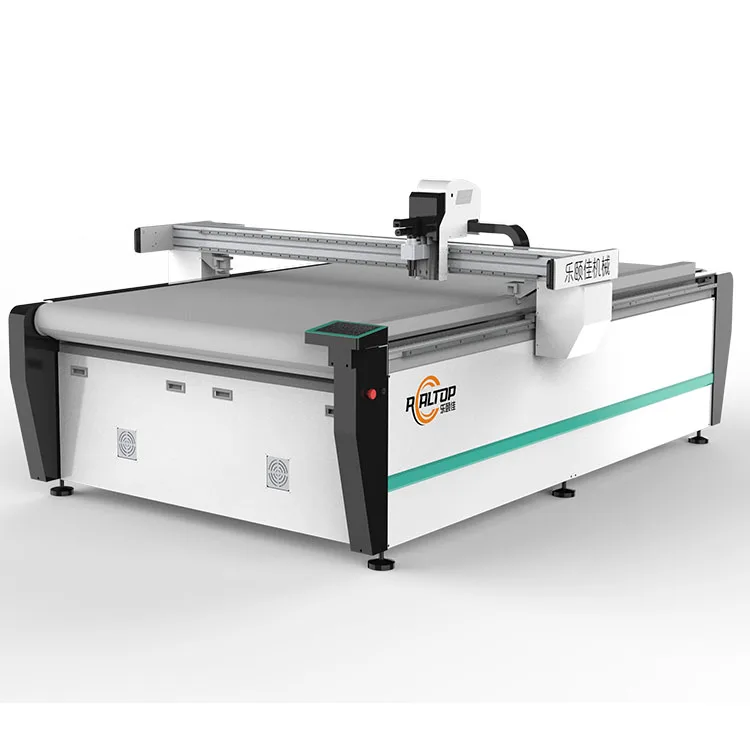
| Working Area | 1600×2500mm |
| Overall Dimensions (L×W×H) | 3450×2300×1250mm |
| Rated Power | 9kW |
| Voltage | 380V±10% (frequency 50/60Hz to be confirmed) |
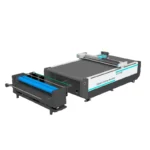
| Table Type | Flat working table / Auto feeding table (conveyor) |
| Cutting Speed | 200–800mm/s (according to different cutting materials) |
| Cutting Thickness | ≤100mm (basis not stated in source) |
| Repeatability | ≤0.1mm |
| Translational Velocity | 800–2000mm/s |
| Servo Motor | Delta (Taiwan) or Panasonic (Japan) |
| Transmission System | Digital servo motor, linear guide, synchronous belt, ball screw |
| Vacuum Pump | 7.5kW |
| Vacuum Table | Magnesium-aluminum alloy, PVDF powder spraying, integrated box adsorption (split box supported) |
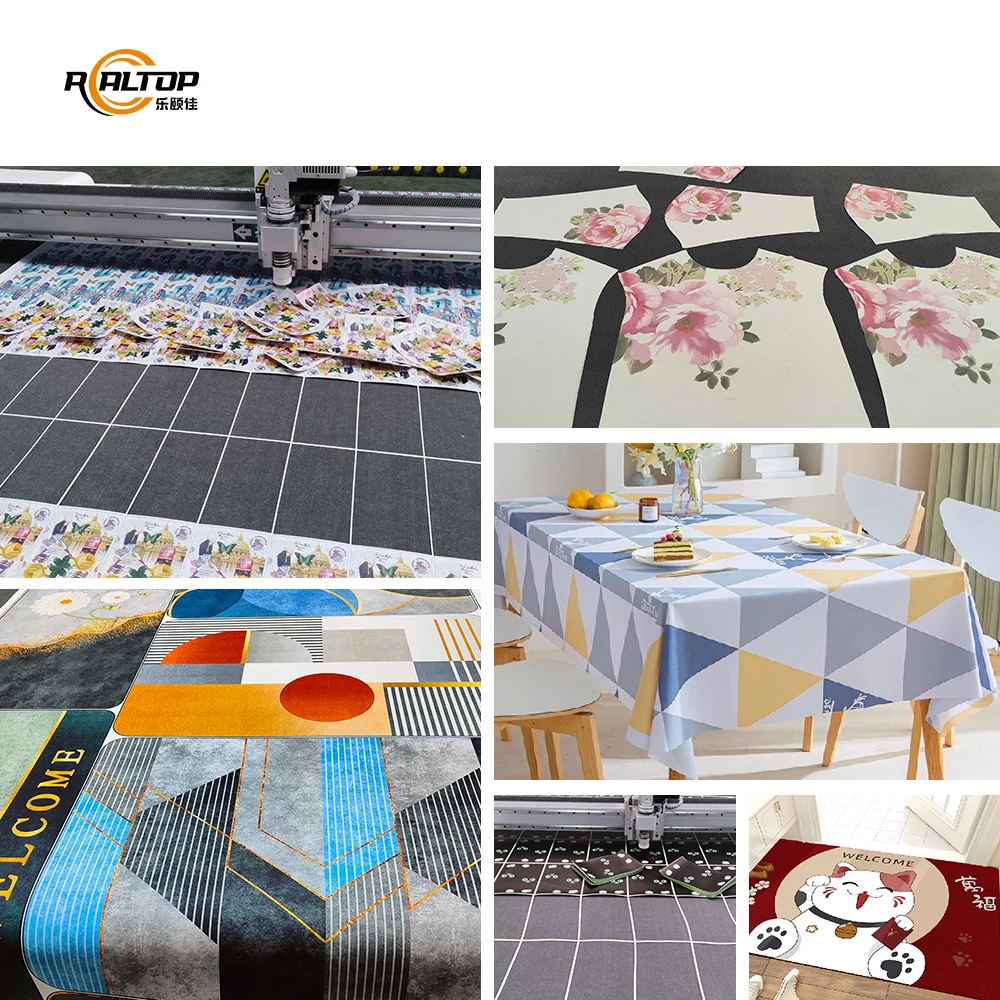
| Visual Positioning | Small CCD camera mark point, panoramic camera, projection positioning |
| Multifunctional Head Options | Oscillating knife, pneumatic knife, high-power vibrating knife, circular knife, V-cutting knife, drag knife, creasing wheel, dotted line knife, punching, brush |
| Instruction System | HP-GL compatible format |
| Software File Formats | PLT, DXF, AI |
| Control Panel | Touch screen, multiple language supported (English, Russian, Italian, Chinese; special languages customizable) |
| Safety Devices | Infrared induction blocking, anti-collision sensors, emergency stop with in-situ resume |
| Nesting Software | Automatic typesetting/nesting |
Application Suitability
| Application | Material or Output |
|---|---|
| Apparel and garment production | Woven cotton, knit jersey, denim, lining, interlining |
| Footwear and luggage manufacturing | Leather, PU, EVA, shoe upper textiles |
| Automotive interior fabrication | Synthetic leather, headliner fabric, foam composites |
| Soft home furnishings | Upholstery fabric, curtain textile, carpet |
| Sports and outdoor goods | Neoprene, technical textile, XPE, PVC composite |
| Packaging and graphic printing | Corrugated cardboard, sticker, film, banner vinyl |
Why Blade Frequency Matters More Than Working Area When Choosing a CNC Knife Cutting Machine Manufacturer
Specifying by bed size alone leaves the most critical variable — tool head and frequency — to chance, and that is where ragged edges and crushed fibers begin.
I have watched a Vietnamese garment factory accept a sample cut on plain cotton, then run a bulk order of stretch knit with the same oscillating frequency. The knife dragged through the elastane blend, fraying every edge and scrapping an entire roll. The machine was not faulty; the tool head simply did not match the textile. A reliable CNC knife cutting machine manufacturer asks for the production fabric before quoting, not after [NEED_CITE: textile cutting edge quality versus oscillation frequency].
Flat Table versus Conveyor Feed for Textile Workflows
Batch cutting of layered plies on a flat vacuum table holds the stack flat across the full 1600×2500mm area. When daily volume shifts to continuous roll goods — fleece, sportswear knit, non-woven interlining — the auto-feeding conveyor variant pulls material forward incrementally, letting the CNC knife cutting machine manufacturer configure nesting across the roll width without manual repositioning. Selecting between these two table types at the order stage avoids costly line re-arrangement later.
Tool Head Selection Across the Fabric Weight Spectrum
The RT-D2516/RT-S2516 accepts a full multifunctional head lineup: Swiss-imported oscillating blade for mid-weight woven and knit, circular knife for single-ply high-speed runs, high-power vibrating knife for dense foam or multi-layer sponge, and drag knife for thin film or sticker contour work. Each head mounts onto the same gantry, so a garment factory cutting both shell fabric and fusible interlining can switch tools within a single nest [NEED_CITE: oscillating versus circular knife edge quality on knit textiles].
Vacuum Zoning, CCD Positioning and Software Compatibility
The magnesium-aluminum vacuum table uses PVDF-coated split-box zones, so small pattern pieces hold flat even when surrounding areas are open. For printed contour cutting, three vision systems are available — small CCD mark point, panoramic camera, and projection alignment — each suited to different registration mark densities. The nesting software imports PLT, DXF and AI files natively, and HP-GL compatibility ensures older pattern libraries remain usable without re-digitizing.
The Cost of Skipping the Fabric Sample Test
When buyers commit on working area and price without sending bulk fabric, the wrong oscillation amplitude or blade angle can crush foam backing on automotive headliners, delaminate PU-coated textile, or leave micro-burrs on gasket material that fail sealing tests. These defects surface only during production, after shipping, tooling and operator training costs are already sunk [NEED_CITE: material delamination during high-speed digital knife cutting].
Why Buyers Evaluate This Lineup Before Narrowing to One Configuration
- In-house design covers both knife and laser cutting, so a buyer comparing textile methods can test both on the same fabric before committing.
- Tool head and table configuration are specified per material, not offered as a single default package.
- CCD camera positioning is validated at production speed with the buyer’s own printed registration marks.
- Voltage, control language and software file format are confirmed at quotation stage, not discovered during commissioning.
- Sample cutting reports on the buyer’s bulk fabric document edge quality, cutting speed and achievable thickness before the order is placed [NEED_CITE: factory acceptance testing standards for CNC cutting equipment].
Documentation & Verification
- Machine specification sheet listing every selected tool head, table type and servo motor brand.
- Electrical schematic with confirmed voltage, frequency and plug type for the destination market.
- Sample cutting report on buyer’s own fabric, documenting edge finish, speed and thickness achieved.
- Software licence file with PLT/DXF/AI compatibility note and nesting licence terms.
- Factory test record showing repeatability measurement across the full 1600×2500mm travel.
- Spare parts list identifying consumable blades, vacuum pump filters and belt tension intervals.
Installation, Commissioning & Support
- The 3450×2300×1250mm footprint requires a level concrete floor with clearance for the 7.5kW vacuum pump exhaust.
- A dedicated 380V±10% three-phase circuit with confirmed 50 or 60Hz frequency must be in place before delivery.
- Machine ships fully assembled; rigging plan must account for the 1600×2500mm bed width through facility doors.
- First power-on includes servo calibration, vacuum zone mapping and CCD registration mark training on buyer’s material.
- Touch-screen control language set to English, Russian, Italian, Chinese or a custom language agreed at order.
- Spare oscillating blades, circular knife discs and vacuum filters included in the initial shipment package.
What to Include in Your Enquiry
Send the exact fabric type, weight per square meter, and maximum lay-up thickness you intend to cut daily. Confirm your local voltage and frequency, the control panel language your operators require, and whether your existing pattern files are in PLT, DXF or AI format. If your workflow involves printed contour work, include a sample with the registration marks you currently use so the CCD system can be validated before shipment.
Frequently Asked Questions
Q: Oscillating knife, drag knife or circular knife — which suits my textile?
A: Oscillating knife handles mid-weight woven and knit stacks with a vibrating blade that prevents fabric shifting. Drag knife suits thin film, sticker and single-ply vinyl contour cutting where edge sealing is not required. Circular knife delivers the fastest single-ply cuts on light woven fabric but cannot manage thick foam or multi-layer stacks. Send your production material for a sample cut to confirm which head matches.
Q: Flat table or auto-feeding conveyor — which fits my volume?
A: Flat table suits batch cutting of layered plies, pattern sampling and short runs where the operator loads each stack manually. The auto-feeding conveyor variant pulls roll goods forward automatically, nesting patterns across the full 1600×2500mm width for continuous production of fleece, sportswear knit or non-woven interlining. Your daily roll count and operator headcount determine the right choice.
Q: Which CCD positioning option matches printed contour cutting?
A: Small CCD mark point positioning reads discrete registration marks placed at panel corners, suitable for cut-and-sew panels with predictable mark locations. Panoramic camera recognition captures the entire printed area in one pass, ideal for sublimated sportswear where contours vary panel to panel. Projection positioning overlays the cut path visually for manual alignment checks before the knife engages.
Q: How does vacuum table zoning prevent small parts from lifting?
A: The integrated box adsorption platform divides the magnesium-aluminum table into selectable zones. When cutting small pattern pieces, only the active zone draws vacuum, concentrating hold-down force where material remains. This prevents edge lift on narrow strips and small gasket profiles that would otherwise float on a single full-table vacuum field during high-speed passes.
Q: Can I import my existing pattern files without re-digitizing?
A: The nesting software reads PLT, DXF and AI files directly and supports HP-GL compatible instruction format. Before order confirmation, your existing pattern files are test-imported and a sample nest is generated to verify kerf compensation, grain direction markers and piece labeling. Any format incompatibility is resolved before the machine enters production.










商品评价
There are no reviews yet.