

Fast Delivery
Quick, reliable shipping to any location.

Free & easy returns
Return this item by mail or in store within 90 days for a full refund.
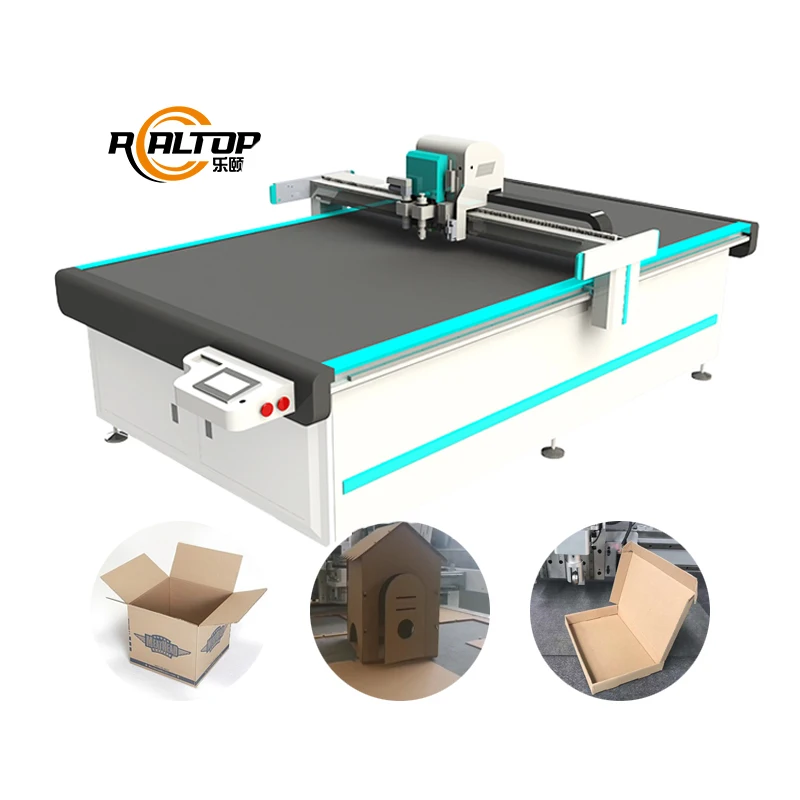
Configuration Mapped to Material — Every oscillating knife and vacuum zone is specified against the buyer’s actual board grade and daily volume, not just the working envelope.
Technical Specifications
| Parameter | Value |
|---|---|
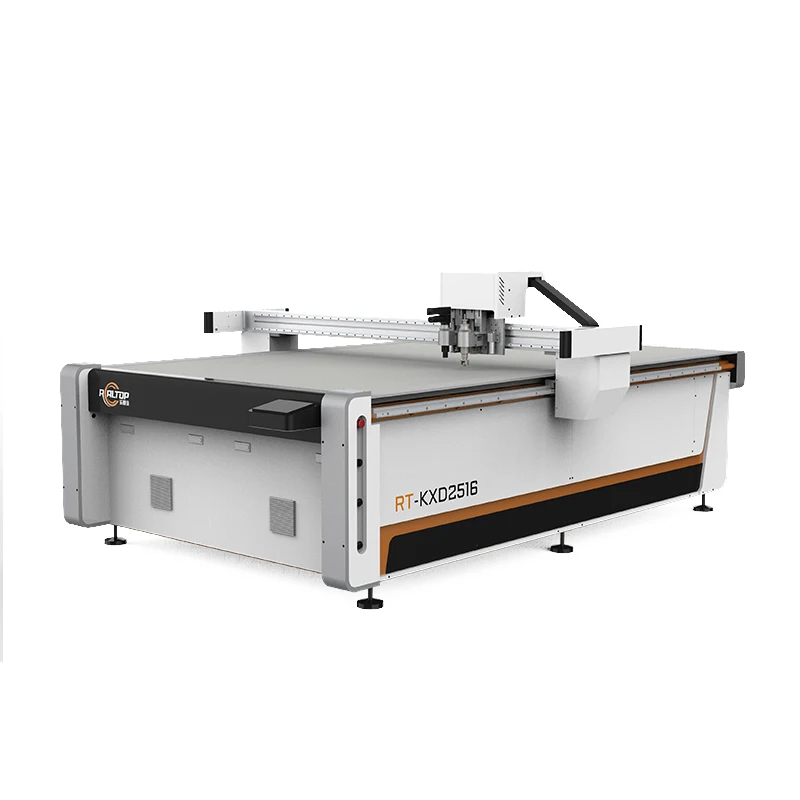
| Model | RT-D2516/RT-S2516 |
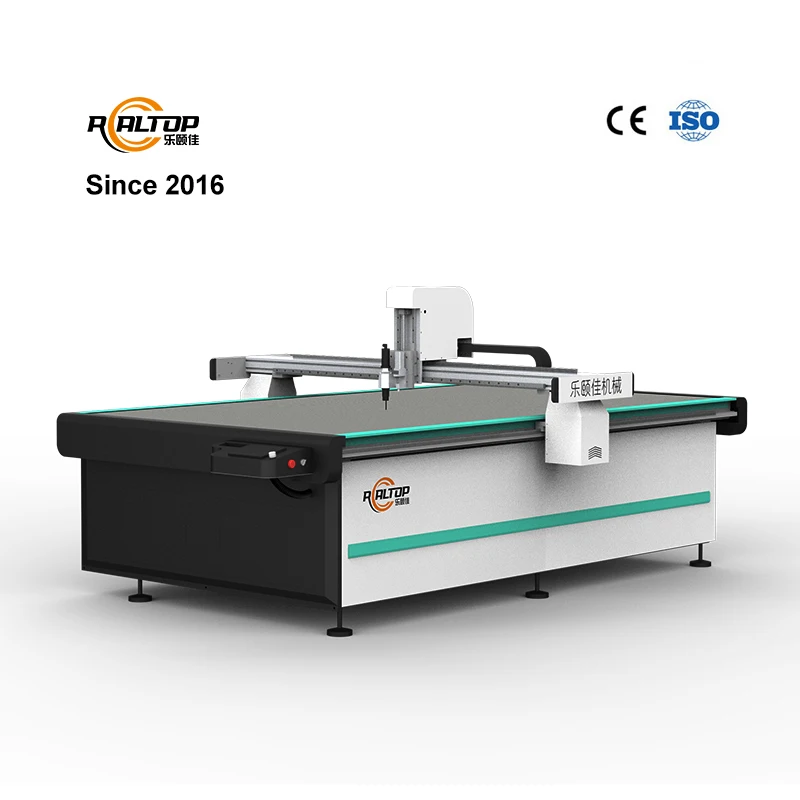
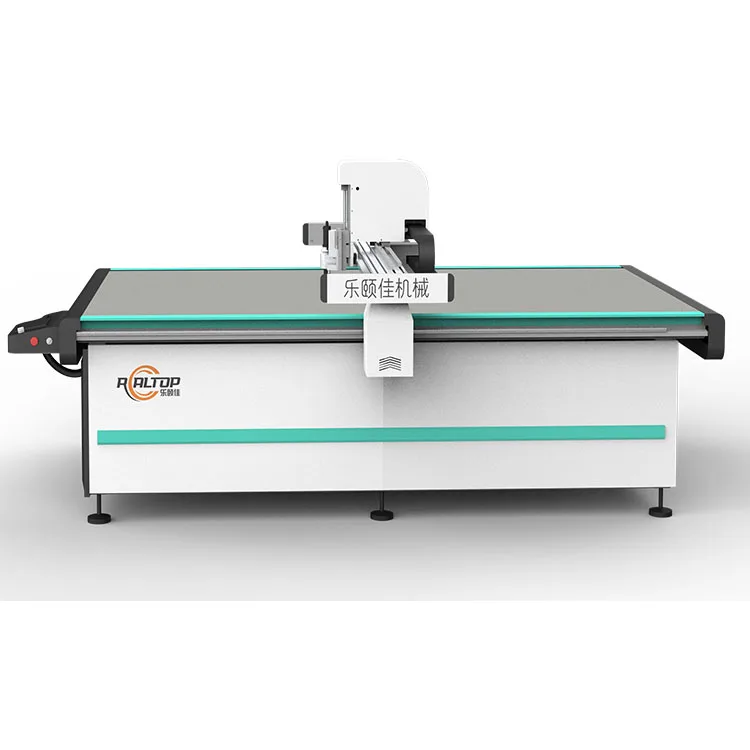
| Product Type | CNC Flatbed Oscillating Knife Cutting Machine |
| Working Area | 1600 × 2500 mm |
| Overall Dimensions | 3450 × 2300 × 1250 mm |
| Rated Power | 9 kW |
| Voltage | 380V ±10% (frequency and plug type to be confirmed per destination) |
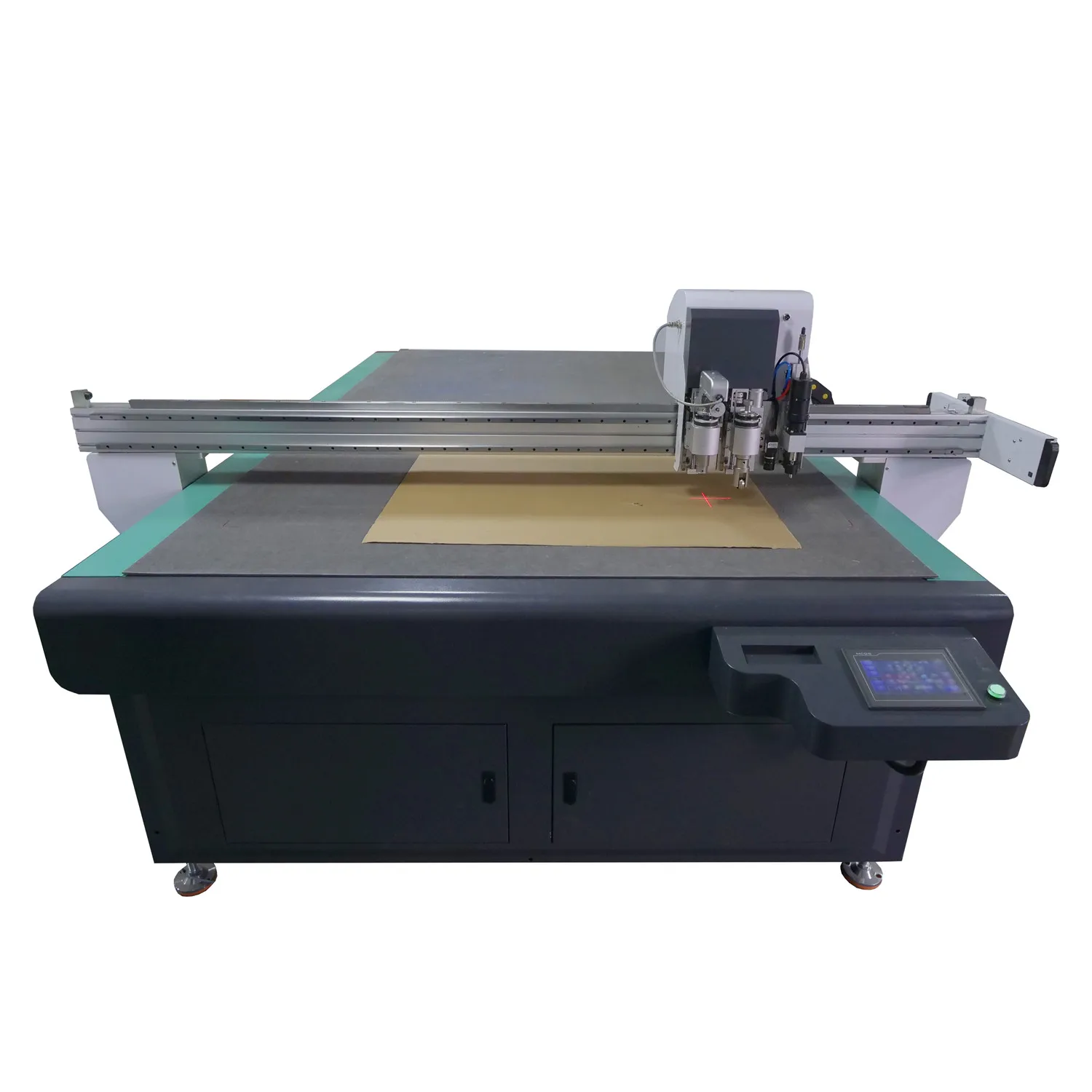
| Table Type | Aluminum alloy honeycomb vacuum adsorption platform |
| Vacuum Pump | 7.5 kW |
| Tool Head | Swiss imported oscillating knife (vibration full cutting, half cutting, cursor location) |
| Translational Velocity | 800–2000 mm/s |
| Cutting Speed | 200–800 mm/s (according to different cutting materials) |
| Cutting Thickness | Up to 100 mm (varies with material density and composition) |
| Repeated Accuracy | ≤0.1 mm |
| Transmission System | Digital servo motor, linear guide, synchronous belt, ball screw (Taiwan Hiwin rail) |
| Servo Motor | Delta servo motor and driver |
| Safety Device | Infrared sensors and emergency stop |
| Instruction System | HP-GL compatible format |
| Software | Professional carton nested software (multiple format file imports, language customization) |
| Auto Feeding | Equipped |
Application Suitability
| Application | Material or Output |
|---|---|
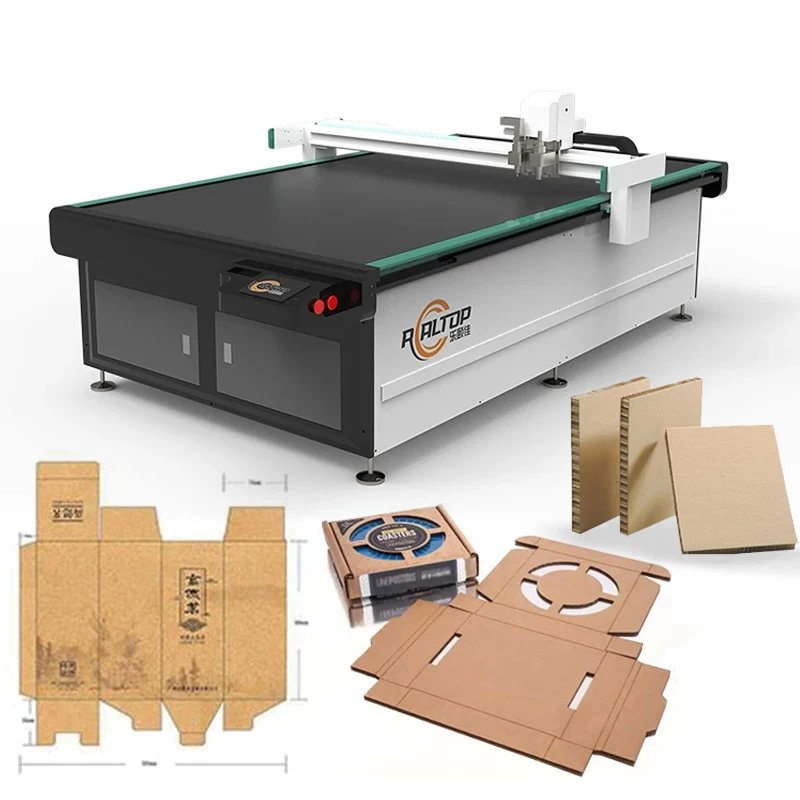
| Packaging and carton sample making | Corrugated board, grey board, white card stock, honeycomb paperboard |
| Sticker and label contour cutting | Self-adhesive vinyl, reflective film, printed label stock |
| Billboard and signage production | Foam board, PVC sheet, corrugated plastic |
| Business card and tag cutting | Coated paper, laminated card stock |
| Creasing and indentation | Single and double-wall corrugated, folding carton board |
| Flexible material processing | Leather, sponge composite, PVC, soft glass, silicon, rubber |
Why the Voltage Question Should Come Before the Price on Any CNC Flatbed Cutting Machine Manufacturer Shortlist
A machine that cannot connect to the local grid is a crate of steel, not a production asset.
Buyers often finalize the working area and tool head first, leaving electrical compatibility as a shipping detail. When a CNC digital cutting table for sale arrives at a facility wired for 480V 60Hz while the spindle and vacuum pump were built for 380V 50Hz, the result is weeks of downtime waiting for a step-down transformer. [NEED_CITE: voltage and frequency standards by export market]. I have watched European and North American plants delay commissioning simply because the frequency mismatch caused the servo drives to fault on startup. Confirming the exact supply profile at the buyer’s facility before the order is locked prevents these silent blockers.
Matching the Tool Head to the Board Grade
The Swiss imported oscillating knife head on the RT-D2516/RT-S2516 handles full cutting, half cutting, and cursor location in one pass. This matters when a packaging sample maker switches between dense grey board and thin corrugated fluting throughout the same shift. A drag knife might drag and tear on thicker stock, while a pure laser would seal edges that need to fold cleanly along a crease line. The CNC flatbed cutting machine manufacturer catalogue positions this oscillating head for materials where edge integrity and fold quality are non-negotiable.
Vacuum Zoning and Small Part Hold-Down
The aluminum alloy honeycomb platform paired with a 7.5 kW vacuum pump provides the suction needed for full-sheet board. However, once nesting software lays out dozens of small carton blanks, the remaining surface area of each piece shrinks. If the vacuum table lacks independent zoning, those small offcuts can lift during the final cut, producing a ragged edge or deflecting the blade. [NEED_CITE: vacuum table zoning principles for flatbed digital cutters]. Buyers cutting mixed sizes should verify the zone configuration matches their typical nesting layout before the machine is built.
Reading the Specs That Actually Govern Output
The translational velocity of 800–2000 mm/s describes rapid moves between cut points, not the cutting speed itself. The actual cutting speed of 200–800 mm/s depends on material density, flute profile, and knife wear. The Taiwan Hiwin linear guide and Delta servo combination keeps the carriage stable at the upper end of that range, reducing edge chatter on multi-wall corrugated. Repeated accuracy of ≤0.1 mm ensures that crease lines land consistently across a long production run, which is critical when folded cartons must close without gapping on automated packing lines. The HP-GL instruction system and professional carton nesting software accept standard packaging file formats, avoiding the cost of re-drawing artwork.
The Hidden Cost of Choosing Configuration by Price Alone
When buyers push for the lowest quote, they often receive a single-zone vacuum table and an undersized pump. In production, that means the operator must manually tape down sheet edges and babysit small parts, wiping out any throughput advantage the rapid traverse speed promised. Blade consumption also climbs because the material shifts microscopically under the knife. [NEED_CITE: flatbed cutting consumable wear related to material fixation]. I have seen plants replace oscillating blades far more often than necessary, blaming the tool rather than the hold-down method.
Why Buyers Survey the Full Range Here
An in-house design team covers both oscillating knife and laser cutting, so a buyer can match the method to the material rather than forcing one technology across every substrate. Configuration options span working area sizes, tool head combinations, and conveyor feed systems, allowing a packaging converter to spec exactly what their volume demands. Sample cutting runs on the buyer’s own board stock verify edge quality and crease definition before the order is finalized. Software compatibility and control language are confirmed against the buyer’s existing workflow and operator base. Voltage, plug type, and electrical schematics are locked in at the quotation stage, not left to the packing department.
Documentation & Verification
- Machine specification sheet listing working area, tool head options, and confirmed voltage
- Electrical schematic with frequency and plug type matched to destination market
- Sample cutting report on buyer’s own paper board and corrugated stock
- Factory test record showing repeated accuracy and creasing alignment before dispatch
- Software licence with file format compatibility note for existing nesting workflow
- Packing photographs documenting crated dimensions and forklift entry points
Installation, Commissioning & Support
- Floor space of 3450 × 2300 mm plus clearance for auto feeding conveyor and operator access
- Dedicated 380V ±10% circuit rated for 9 kW machine load plus 7.5 kW vacuum pump
- Fully assembled dispatch where site door width and ceiling height permit entry
- First-run parameter tuning on buyer’s actual board grade to set oscillation frequency and depth
- Operator training on carton nesting software, including custom language interface
- Spare oscillating knife blades and drag knife holders included for initial production period
What to Send With Your Next Inquiry
Share the specific board grades you run, including flute profile and GSM, along with the maximum sheet size and typical nesting layout. Provide your facility voltage, frequency, and plug standard so the electrical package is matched at the quotation stage. Note the control language your operators prefer and whether your existing design software exports in HP-GL or another format.
Frequently Asked Questions
Q: How do I decide between an oscillating knife and a laser for my packaging materials?
A: Oscillating knife cutting suits corrugated board, grey board, and folding carton where clean, unsealed edges are required for folding. Laser cutting is chosen for synthetic labels, textiles, or acrylics where edge sealing prevents fraying. The full equipment range lets buyers match the cutting method to each material instead of forcing one technology across the entire product mix.
Q: What working area sizes and tool head options are available?
A: The range covers compact to large-format flatbed tables, with the RT-D2516/RT-S2516 providing a 1600 × 2500 mm working area. Tool heads include oscillating knife, drag knife, creasing wheel, and pen, allowing a single machine to handle cutting, creasing, and marking across different packaging substrates in one production cycle.
Q: How are voltage and control language confirmed before shipment?
A: The buyer’s facility voltage, frequency, and plug type are verified during the quotation stage and recorded in the electrical schematic. Control language options include English, Russian, Italian, Chinese, and others, with custom languages available on request to match the operator base at the destination plant.
Q: Can I receive sample cutting on my own materials before committing?
A: Yes. Buyers send their own paper board, corrugated stock, or label material for a test run. A sample cutting report is then provided, documenting edge quality, cutting depth, and creasing accuracy on the exact substrate that will be processed in daily production.
Q: Which file formats does the nesting software accept?
A: The professional carton nesting software is HP-GL compatible and imports multiple standard packaging file formats. A file format compatibility note is supplied with the quotation, confirming that the software integrates with the buyer’s existing design and nesting workflow without requiring additional conversion steps.
Configuration Mapped to Material — Every oscillating knife and vacuum zone is specified against the buyer’s actual board grade and daily volume, not just the working envelope.
Technical Specifications
| Parameter | Value |
|---|---|
| Model | RT-D2516/RT-S2516 |
| Product Type | CNC Flatbed Oscillating Knife Cutting Machine |
| Working Area | 1600 × 2500 mm |
| Overall Dimensions | 3450 × 2300 × 1250 mm |
| Rated Power | 9 kW |
| Voltage | 380V ±10% (frequency and plug type to be confirmed per destination) |
| Table Type | Aluminum alloy honeycomb vacuum adsorption platform |
| Vacuum Pump | 7.5 kW |
| Tool Head | Swiss imported oscillating knife (vibration full cutting, half cutting, cursor location) |
| Translational Velocity | 800–2000 mm/s |
| Cutting Speed | 200–800 mm/s (according to different cutting materials) |
| Cutting Thickness | Up to 100 mm (varies with material density and composition) |
| Repeated Accuracy | ≤0.1 mm |
| Transmission System | Digital servo motor, linear guide, synchronous belt, ball screw (Taiwan Hiwin rail) |
| Servo Motor | Delta servo motor and driver |
| Safety Device | Infrared sensors and emergency stop |
| Instruction System | HP-GL compatible format |
| Software | Professional carton nested software (multiple format file imports, language customization) |
| Auto Feeding | Equipped |
Application Suitability
| Application | Material or Output |
|---|---|
| Packaging and carton sample making | Corrugated board, grey board, white card stock, honeycomb paperboard |
| Sticker and label contour cutting | Self-adhesive vinyl, reflective film, printed label stock |
| Billboard and signage production | Foam board, PVC sheet, corrugated plastic |
| Business card and tag cutting | Coated paper, laminated card stock |
| Creasing and indentation | Single and double-wall corrugated, folding carton board |
| Flexible material processing | Leather, sponge composite, PVC, soft glass, silicon, rubber |
Why the Voltage Question Should Come Before the Price on Any CNC Flatbed Cutting Machine Manufacturer Shortlist
A machine that cannot connect to the local grid is a crate of steel, not a production asset.
Buyers often finalize the working area and tool head first, leaving electrical compatibility as a shipping detail. When a CNC digital cutting table for sale arrives at a facility wired for 480V 60Hz while the spindle and vacuum pump were built for 380V 50Hz, the result is weeks of downtime waiting for a step-down transformer. [NEED_CITE: voltage and frequency standards by export market]. I have watched European and North American plants delay commissioning simply because the frequency mismatch caused the servo drives to fault on startup. Confirming the exact supply profile at the buyer’s facility before the order is locked prevents these silent blockers.
Matching the Tool Head to the Board Grade
The Swiss imported oscillating knife head on the RT-D2516/RT-S2516 handles full cutting, half cutting, and cursor location in one pass. This matters when a packaging sample maker switches between dense grey board and thin corrugated fluting throughout the same shift. A drag knife might drag and tear on thicker stock, while a pure laser would seal edges that need to fold cleanly along a crease line. The CNC flatbed cutting machine manufacturer catalogue positions this oscillating head for materials where edge integrity and fold quality are non-negotiable.
Vacuum Zoning and Small Part Hold-Down
The aluminum alloy honeycomb platform paired with a 7.5 kW vacuum pump provides the suction needed for full-sheet board. However, once nesting software lays out dozens of small carton blanks, the remaining surface area of each piece shrinks. If the vacuum table lacks independent zoning, those small offcuts can lift during the final cut, producing a ragged edge or deflecting the blade. [NEED_CITE: vacuum table zoning principles for flatbed digital cutters]. Buyers cutting mixed sizes should verify the zone configuration matches their typical nesting layout before the machine is built.
Reading the Specs That Actually Govern Output
The translational velocity of 800–2000 mm/s describes rapid moves between cut points, not the cutting speed itself. The actual cutting speed of 200–800 mm/s depends on material density, flute profile, and knife wear. The Taiwan Hiwin linear guide and Delta servo combination keeps the carriage stable at the upper end of that range, reducing edge chatter on multi-wall corrugated. Repeated accuracy of ≤0.1 mm ensures that crease lines land consistently across a long production run, which is critical when folded cartons must close without gapping on automated packing lines. The HP-GL instruction system and professional carton nesting software accept standard packaging file formats, avoiding the cost of re-drawing artwork.
The Hidden Cost of Choosing Configuration by Price Alone
When buyers push for the lowest quote, they often receive a single-zone vacuum table and an undersized pump. In production, that means the operator must manually tape down sheet edges and babysit small parts, wiping out any throughput advantage the rapid traverse speed promised. Blade consumption also climbs because the material shifts microscopically under the knife. [NEED_CITE: flatbed cutting consumable wear related to material fixation]. I have seen plants replace oscillating blades far more often than necessary, blaming the tool rather than the hold-down method.
Why Buyers Survey the Full Range Here
An in-house design team covers both oscillating knife and laser cutting, so a buyer can match the method to the material rather than forcing one technology across every substrate. Configuration options span working area sizes, tool head combinations, and conveyor feed systems, allowing a packaging converter to spec exactly what their volume demands. Sample cutting runs on the buyer’s own board stock verify edge quality and crease definition before the order is finalized. Software compatibility and control language are confirmed against the buyer’s existing workflow and operator base. Voltage, plug type, and electrical schematics are locked in at the quotation stage, not left to the packing department.
Documentation & Verification
- Machine specification sheet listing working area, tool head options, and confirmed voltage
- Electrical schematic with frequency and plug type matched to destination market
- Sample cutting report on buyer’s own paper board and corrugated stock
- Factory test record showing repeated accuracy and creasing alignment before dispatch
- Software licence with file format compatibility note for existing nesting workflow
- Packing photographs documenting crated dimensions and forklift entry points
Installation, Commissioning & Support
- Floor space of 3450 × 2300 mm plus clearance for auto feeding conveyor and operator access
- Dedicated 380V ±10% circuit rated for 9 kW machine load plus 7.5 kW vacuum pump
- Fully assembled dispatch where site door width and ceiling height permit entry
- First-run parameter tuning on buyer’s actual board grade to set oscillation frequency and depth
- Operator training on carton nesting software, including custom language interface
- Spare oscillating knife blades and drag knife holders included for initial production period
What to Send With Your Next Inquiry
Share the specific board grades you run, including flute profile and GSM, along with the maximum sheet size and typical nesting layout. Provide your facility voltage, frequency, and plug standard so the electrical package is matched at the quotation stage. Note the control language your operators prefer and whether your existing design software exports in HP-GL or another format.
Frequently Asked Questions
Q: How do I decide between an oscillating knife and a laser for my packaging materials?
A: Oscillating knife cutting suits corrugated board, grey board, and folding carton where clean, unsealed edges are required for folding. Laser cutting is chosen for synthetic labels, textiles, or acrylics where edge sealing prevents fraying. The full equipment range lets buyers match the cutting method to each material instead of forcing one technology across the entire product mix.
Q: What working area sizes and tool head options are available?
A: The range covers compact to large-format flatbed tables, with the RT-D2516/RT-S2516 providing a 1600 × 2500 mm working area. Tool heads include oscillating knife, drag knife, creasing wheel, and pen, allowing a single machine to handle cutting, creasing, and marking across different packaging substrates in one production cycle.
Q: How are voltage and control language confirmed before shipment?
A: The buyer’s facility voltage, frequency, and plug type are verified during the quotation stage and recorded in the electrical schematic. Control language options include English, Russian, Italian, Chinese, and others, with custom languages available on request to match the operator base at the destination plant.
Q: Can I receive sample cutting on my own materials before committing?
A: Yes. Buyers send their own paper board, corrugated stock, or label material for a test run. A sample cutting report is then provided, documenting edge quality, cutting depth, and creasing accuracy on the exact substrate that will be processed in daily production.
Q: Which file formats does the nesting software accept?
A: The professional carton nesting software is HP-GL compatible and imports multiple standard packaging file formats. A file format compatibility note is supplied with the quotation, confirming that the software integrates with the buyer’s existing design and nesting workflow without requiring additional conversion steps.










商品评价
There are no reviews yet.