





Fast Delivery
Quick, reliable shipping to any location.

Free & easy returns
Return this item by mail or in store within 90 days for a full refund.
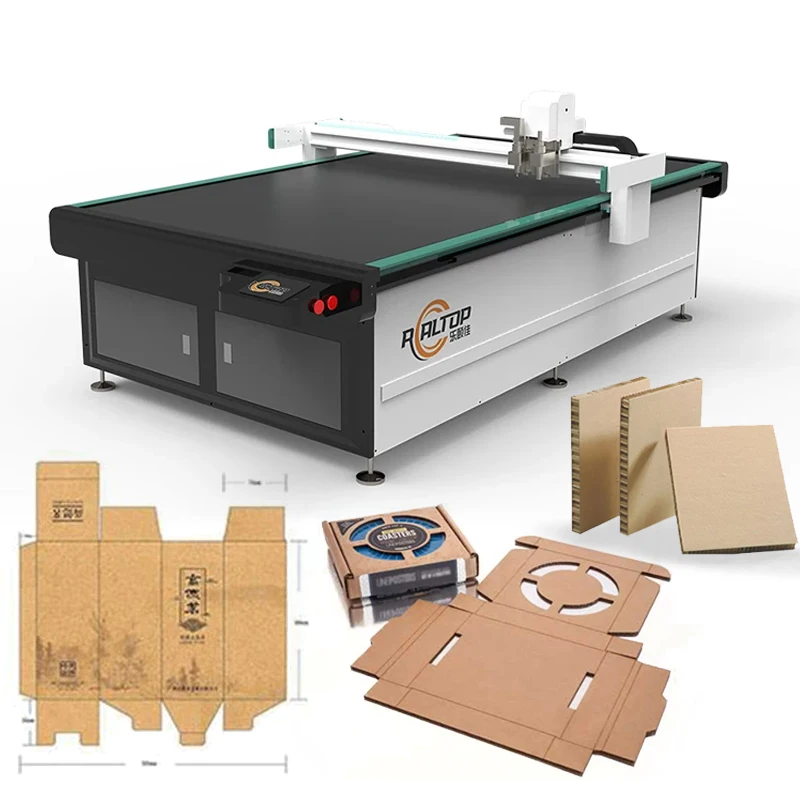
Material-driven configuration — every RT–R2513 / RT-D2516 / RT-S2516 is specified from your actual stock thickness, sheet format and daily throughput before a tool head is selected.
Technical Specifications
| Parameter | Value |
|---|---|
| Product Type | CNC Flatbed Digital Cutting Machine |
| Model | RT–R2513 / RT-D2516 / RT-S2516 |
| Working Area | 2500×1300 mm (RT–R2513) / 1600×2500 mm (RT-D2516 / RT-S2516) |
| Machine Size | 3550×1910×1400 mm (RT–R2513) / 3450×2300×1250 mm (RT-D2516 / RT-S2516) |
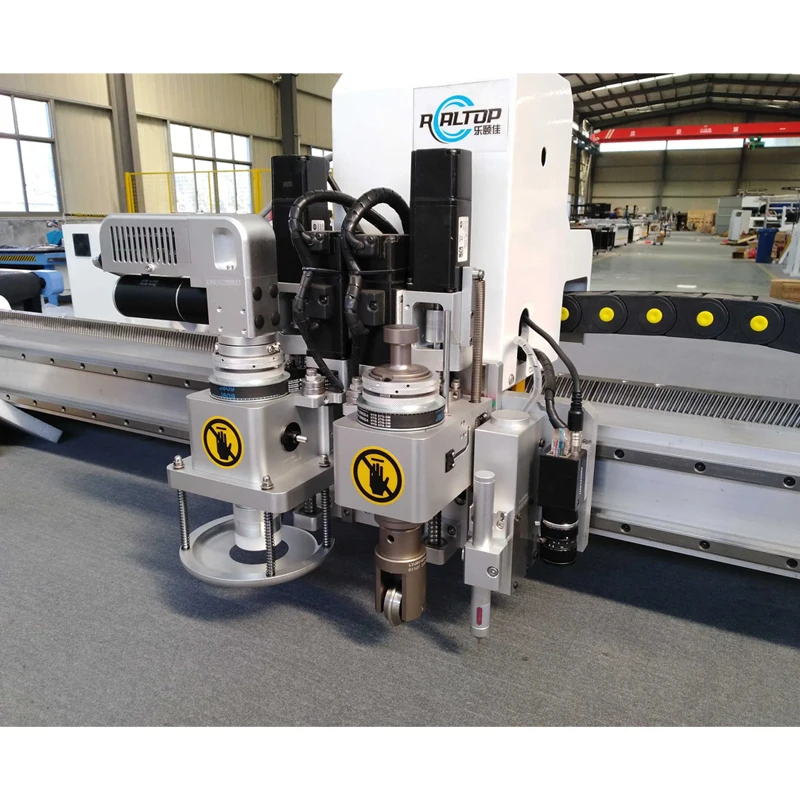
| Cutting Tools | Oscillating knife, Creasing tool, Kiss-Cut Knife Tool, Round punch |
| Cutting Thickness | ≤18mm (basis not stated in source) |
| Fixing Method | Vacuum system with aluminum alloy honeycomb table |
| Vacuum Pump | 7.5 kW |
| Rated Power | 9 kW |
| Voltage | 380V |
| Servo System | Dongling servo / Taiwan Delta Servo Motors and Drivers |
| Guide Rail | Imported straight-line square guide (Taiwan Hiwin rail) |
| Repeated Accuracy | <0.05mm |
| Profile Format | DXF, OLT, PDF, AI |
| Transmission Method | Ethernet port |
| Safety Device | Infrared sensors, emergency stop |
| Control Language | Customizable (English, Russian, Italian, Chinese) |
Application Suitability
| Application | Material or Output |
|---|---|
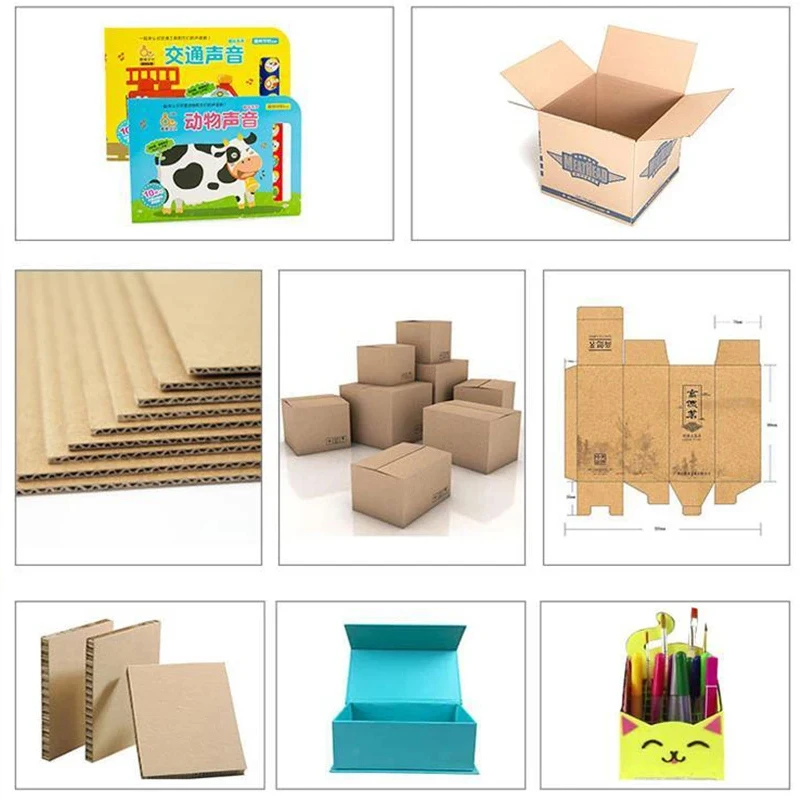
| Packaging carton sample making | Corrugated board, cardboard, PP paper |
| Sticker and label production | Vinyl, stickers, labels, self-adhesive film |
| Leather goods manufacturing | Leather, synthetic materials, textiles |
| Billboard and business card cutting | Paper, coated board, composite sheets |
What "Working Area Alone" Leaves Out When Sourcing a CNC Knife Cutting Machine Manufacturer
A cutting table specified only by bed size will fail the moment your material thickness or composition changes.
Many buyers focus entirely on whether the machine can fit their largest sheet, overlooking the relationship between tool head selection, vacuum zoning and the actual material being processed. A standard oscillating knife might handle 3mm corrugated board cleanly, but the same blade on 15mm foam or dense gasket material will produce crushed edges and require constant replacement. The CNC Knife Cutting Machine manufacturer you work with should be asking about your specific stock before quoting a configuration [NEED_CITE: material-specific tooling requirements for digital flatbed cutters].
Tool Head Selection Dictates Edge Quality More Than Machine Size
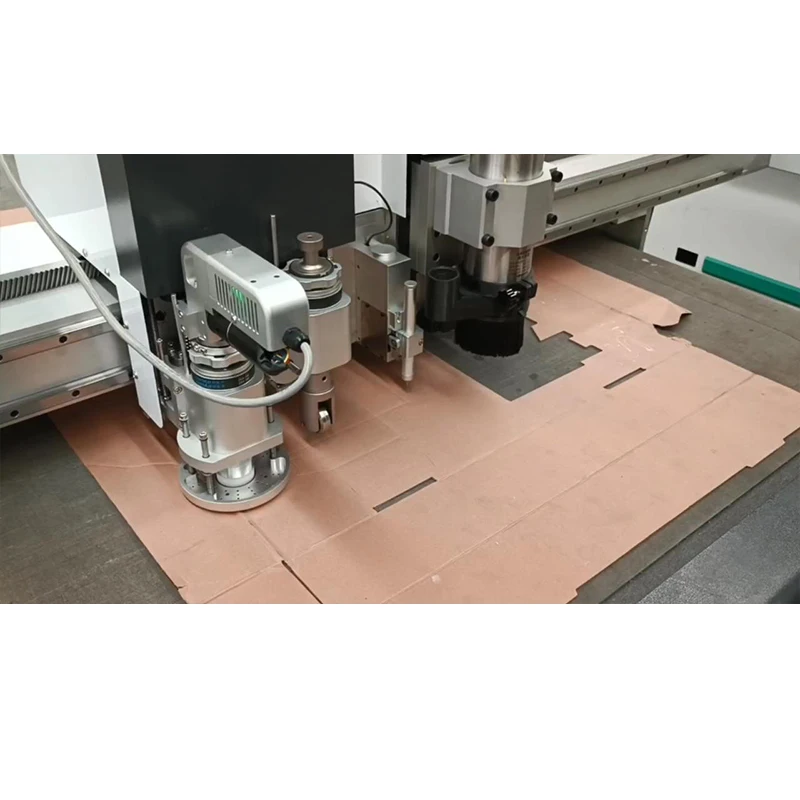
The difference between a clean cut and a ragged edge often comes down to whether the right tool head was matched to the material. This CNC Flatbed Digital Cutting Machine offers oscillating knife, creasing tool, kiss-cut knife and round punch options, each designed for different material behaviors. Oscillating knives work through thicker stocks by vibrating at high frequency, while drag knives suit thinner vinyl and sticker applications where speed matters more than depth penetration.
Vacuum Table Zoning Prevents Small Part Lift at Production Speed
Holding a full 2500×1300mm sheet down is relatively straightforward, but once you start cutting small labels or intricate carton components, material lift becomes a real problem. The aluminum alloy honeycomb vacuum table on the RT–R2513 / RT-D2516 / RT-S2516 series uses zoning to concentrate suction where your nested parts actually sit. Without proper zoning, small cardboard pieces or leather patches will lift mid-cut, damaging the blade and ruining the sheet [NEED_CITE: vacuum hold-down principles for flatbed digital cutting].
Understanding the Specs That Actually Matter on the Shop Floor
The 7.5 kW vacuum pump paired with the honeycomb table structure ensures consistent hold-down across the entire working area, which directly affects cutting accuracy on thinner materials like stickers and labels. Repeated accuracy of <0.05mm means nested parts stay within tolerance even during long production runs. The Taiwan Hiwin rail and Delta servo motor combination provides the motion precision needed for intricate carton creasing patterns. Ethernet transmission allows direct file transfer from your design software without intermediate USB drives, reducing workflow friction.
The Hidden Cost of Wrong Configuration Choices
When a buyer selects a machine based on working area without considering their material range, they often end up purchasing additional tool heads later or dealing with excessive blade wear. A machine configured for thin paper and stickers will struggle with 12mm foam, requiring the buyer to either limit their product range or invest in a second machine. Voltage mismatches between the 380V system and local supply can delay commissioning by weeks while transformers are sourced. Software incompatibility with existing DXF or AI workflows forces manual file conversion, slowing the entire production process [NEED_CITE: common commissioning delays in industrial CNC equipment].
Why This CNC Knife Cutting Machine Manufacturer Works for Your Application
In-house design and production covering both knife and laser technologies means the cutting method is matched to your material rather than forced into one approach. Tool head and table configuration are specified per your material type and production volume, not guessed from a catalog. CCD camera positioning is available for printed contour work where registration marks need tracking at production speed. Software compatibility with DXF, AI, PDF formats is confirmed before order placement. Voltage, control language and plug type customization happens during specification, not discovered at delivery. Sample cutting on your own material validates edge quality and cutting depth before you commit to the purchase.
Documentation & Verification
- Machine specification sheet with confirmed tool head and table configuration for your material
- Electrical schematic showing 380V system layout and servo motor wiring
- Factory test record on your actual material thickness range before dispatch
- Software licence and file format compatibility note for DXF, OLT, PDF, AI
- Operation and maintenance manual in your selected control language
- Spare parts list including oscillating blade specifications and replacement intervals
Installation, Commissioning & Support
- Foundation must support 3450×2300mm footprint for RT-D2516 / RT-S2516 models with level floor
- Dedicated 380V circuit required for 9 kW rated power plus 7.5 kW vacuum pump
- Machine arrives partially assembled; table leveling and servo calibration done on-site
- First-run parameter setting includes vacuum zoning adjustment for your specific sheet sizes
- Operator training covers tool head changes, blade replacement and nesting software workflow
- Initial spare parts package includes 10 pieces of oscillating blades for immediate production
What Information Speeds Up Your Quotation
Providing your material type, thickness range and typical sheet dimensions allows proper tool head and working area selection. Your daily volume target helps determine whether single-head or multi-head configuration makes sense. Local voltage and frequency specifications prevent electrical mismatches at commissioning. If you have existing nesting software or specific file formats in your workflow, confirming compatibility upfront avoids delays. Sample cutting on your actual material is available before final order commitment.
Frequently Asked Questions
Q: How do I choose between oscillating knife and creasing tool for carton work?
A: Oscillating knives cut through corrugated board and cardboard up to the machine’s thickness capacity, while creasing tools score fold lines without penetrating the material. Most carton sample making requires both operations in sequence, so the RT–R2513 / RT-D2516 / RT-S2516 series can be configured with multiple tool heads to handle cutting and creasing in one setup.
Q: What cutting thickness can the machine actually handle versus quoted specifications?
A: The specifications state ≤18mm cutting thickness, but this value depends heavily on material density and composition. Corrugated board cuts cleanly at greater depths than dense foam or leather. Sample cutting on your actual material before purchase confirms whether the machine meets your specific thickness requirements without edge crushing or excessive blade wear.
Q: How does vacuum table zoning work for small label and sticker cutting?
A: The aluminum alloy honeycomb vacuum table divides into zones that can be activated independently based on where your nested parts sit. This concentrates suction on smaller sheet areas, preventing material lift during high-speed cutting of labels, stickers and business cards where full-table vacuum would be inefficient.
Q: Can the machine track printed registration marks for contour cutting?
A: CCD camera positioning is available as a configuration option for printed contour recognition. This allows the system to detect registration marks on pre-printed materials and adjust cutting paths automatically, which is essential for sticker and label production where print-to-cut registration must be maintained at production speed.
Q: What file formats does the software accept from existing design workflows?
A: The system accepts DXF, OLT, PDF and AI profile formats, covering most common vector design and CAD outputs. File format compatibility is confirmed during the specification phase to ensure your existing nesting workflow integrates without manual conversion steps or additional software purchases.
Material-driven configuration — every RT–R2513 / RT-D2516 / RT-S2516 is specified from your actual stock thickness, sheet format and daily throughput before a tool head is selected.
Technical Specifications
| Parameter | Value |
|---|---|
| Product Type | CNC Flatbed Digital Cutting Machine |
| Model | RT–R2513 / RT-D2516 / RT-S2516 |
| Working Area | 2500×1300 mm (RT–R2513) / 1600×2500 mm (RT-D2516 / RT-S2516) |
| Machine Size | 3550×1910×1400 mm (RT–R2513) / 3450×2300×1250 mm (RT-D2516 / RT-S2516) |
| Cutting Tools | Oscillating knife, Creasing tool, Kiss-Cut Knife Tool, Round punch |
| Cutting Thickness | ≤18mm (basis not stated in source) |
| Fixing Method | Vacuum system with aluminum alloy honeycomb table |
| Vacuum Pump | 7.5 kW |
| Rated Power | 9 kW |
| Voltage | 380V |
| Servo System | Dongling servo / Taiwan Delta Servo Motors and Drivers |
| Guide Rail | Imported straight-line square guide (Taiwan Hiwin rail) |
| Repeated Accuracy | <0.05mm |
| Profile Format | DXF, OLT, PDF, AI |
| Transmission Method | Ethernet port |
| Safety Device | Infrared sensors, emergency stop |
| Control Language | Customizable (English, Russian, Italian, Chinese) |
Application Suitability
| Application | Material or Output |
|---|---|
| Packaging carton sample making | Corrugated board, cardboard, PP paper |
| Sticker and label production | Vinyl, stickers, labels, self-adhesive film |
| Leather goods manufacturing | Leather, synthetic materials, textiles |
| Billboard and business card cutting | Paper, coated board, composite sheets |
What "Working Area Alone" Leaves Out When Sourcing a CNC Knife Cutting Machine Manufacturer
A cutting table specified only by bed size will fail the moment your material thickness or composition changes.
Many buyers focus entirely on whether the machine can fit their largest sheet, overlooking the relationship between tool head selection, vacuum zoning and the actual material being processed. A standard oscillating knife might handle 3mm corrugated board cleanly, but the same blade on 15mm foam or dense gasket material will produce crushed edges and require constant replacement. The CNC Knife Cutting Machine manufacturer you work with should be asking about your specific stock before quoting a configuration [NEED_CITE: material-specific tooling requirements for digital flatbed cutters].
Tool Head Selection Dictates Edge Quality More Than Machine Size
The difference between a clean cut and a ragged edge often comes down to whether the right tool head was matched to the material. This CNC Flatbed Digital Cutting Machine offers oscillating knife, creasing tool, kiss-cut knife and round punch options, each designed for different material behaviors. Oscillating knives work through thicker stocks by vibrating at high frequency, while drag knives suit thinner vinyl and sticker applications where speed matters more than depth penetration.
Vacuum Table Zoning Prevents Small Part Lift at Production Speed
Holding a full 2500×1300mm sheet down is relatively straightforward, but once you start cutting small labels or intricate carton components, material lift becomes a real problem. The aluminum alloy honeycomb vacuum table on the RT–R2513 / RT-D2516 / RT-S2516 series uses zoning to concentrate suction where your nested parts actually sit. Without proper zoning, small cardboard pieces or leather patches will lift mid-cut, damaging the blade and ruining the sheet [NEED_CITE: vacuum hold-down principles for flatbed digital cutting].
Understanding the Specs That Actually Matter on the Shop Floor
The 7.5 kW vacuum pump paired with the honeycomb table structure ensures consistent hold-down across the entire working area, which directly affects cutting accuracy on thinner materials like stickers and labels. Repeated accuracy of <0.05mm means nested parts stay within tolerance even during long production runs. The Taiwan Hiwin rail and Delta servo motor combination provides the motion precision needed for intricate carton creasing patterns. Ethernet transmission allows direct file transfer from your design software without intermediate USB drives, reducing workflow friction.
The Hidden Cost of Wrong Configuration Choices
When a buyer selects a machine based on working area without considering their material range, they often end up purchasing additional tool heads later or dealing with excessive blade wear. A machine configured for thin paper and stickers will struggle with 12mm foam, requiring the buyer to either limit their product range or invest in a second machine. Voltage mismatches between the 380V system and local supply can delay commissioning by weeks while transformers are sourced. Software incompatibility with existing DXF or AI workflows forces manual file conversion, slowing the entire production process [NEED_CITE: common commissioning delays in industrial CNC equipment].
Why This CNC Knife Cutting Machine Manufacturer Works for Your Application
In-house design and production covering both knife and laser technologies means the cutting method is matched to your material rather than forced into one approach. Tool head and table configuration are specified per your material type and production volume, not guessed from a catalog. CCD camera positioning is available for printed contour work where registration marks need tracking at production speed. Software compatibility with DXF, AI, PDF formats is confirmed before order placement. Voltage, control language and plug type customization happens during specification, not discovered at delivery. Sample cutting on your own material validates edge quality and cutting depth before you commit to the purchase.
Documentation & Verification
- Machine specification sheet with confirmed tool head and table configuration for your material
- Electrical schematic showing 380V system layout and servo motor wiring
- Factory test record on your actual material thickness range before dispatch
- Software licence and file format compatibility note for DXF, OLT, PDF, AI
- Operation and maintenance manual in your selected control language
- Spare parts list including oscillating blade specifications and replacement intervals
Installation, Commissioning & Support
- Foundation must support 3450×2300mm footprint for RT-D2516 / RT-S2516 models with level floor
- Dedicated 380V circuit required for 9 kW rated power plus 7.5 kW vacuum pump
- Machine arrives partially assembled; table leveling and servo calibration done on-site
- First-run parameter setting includes vacuum zoning adjustment for your specific sheet sizes
- Operator training covers tool head changes, blade replacement and nesting software workflow
- Initial spare parts package includes 10 pieces of oscillating blades for immediate production
What Information Speeds Up Your Quotation
Providing your material type, thickness range and typical sheet dimensions allows proper tool head and working area selection. Your daily volume target helps determine whether single-head or multi-head configuration makes sense. Local voltage and frequency specifications prevent electrical mismatches at commissioning. If you have existing nesting software or specific file formats in your workflow, confirming compatibility upfront avoids delays. Sample cutting on your actual material is available before final order commitment.
Frequently Asked Questions
Q: How do I choose between oscillating knife and creasing tool for carton work?
A: Oscillating knives cut through corrugated board and cardboard up to the machine’s thickness capacity, while creasing tools score fold lines without penetrating the material. Most carton sample making requires both operations in sequence, so the RT–R2513 / RT-D2516 / RT-S2516 series can be configured with multiple tool heads to handle cutting and creasing in one setup.
Q: What cutting thickness can the machine actually handle versus quoted specifications?
A: The specifications state ≤18mm cutting thickness, but this value depends heavily on material density and composition. Corrugated board cuts cleanly at greater depths than dense foam or leather. Sample cutting on your actual material before purchase confirms whether the machine meets your specific thickness requirements without edge crushing or excessive blade wear.
Q: How does vacuum table zoning work for small label and sticker cutting?
A: The aluminum alloy honeycomb vacuum table divides into zones that can be activated independently based on where your nested parts sit. This concentrates suction on smaller sheet areas, preventing material lift during high-speed cutting of labels, stickers and business cards where full-table vacuum would be inefficient.
Q: Can the machine track printed registration marks for contour cutting?
A: CCD camera positioning is available as a configuration option for printed contour recognition. This allows the system to detect registration marks on pre-printed materials and adjust cutting paths automatically, which is essential for sticker and label production where print-to-cut registration must be maintained at production speed.
Q: What file formats does the software accept from existing design workflows?
A: The system accepts DXF, OLT, PDF and AI profile formats, covering most common vector design and CAD outputs. File format compatibility is confirmed during the specification phase to ensure your existing nesting workflow integrates without manual conversion steps or additional software purchases.










商品评价
There are no reviews yet.