

Fast Delivery
Quick, reliable shipping to any location.

Free & easy returns
Return this item by mail or in store within 90 days for a full refund.
Swiss Knife and Table Match — Tool head and vacuum table specified per material and part size, verified by sample cutting on the buyer’s own stock before order confirmation.
Technical Specifications
| Parameter | Value |
|---|---|
| Model | RT-D2516/RT-S2516 |
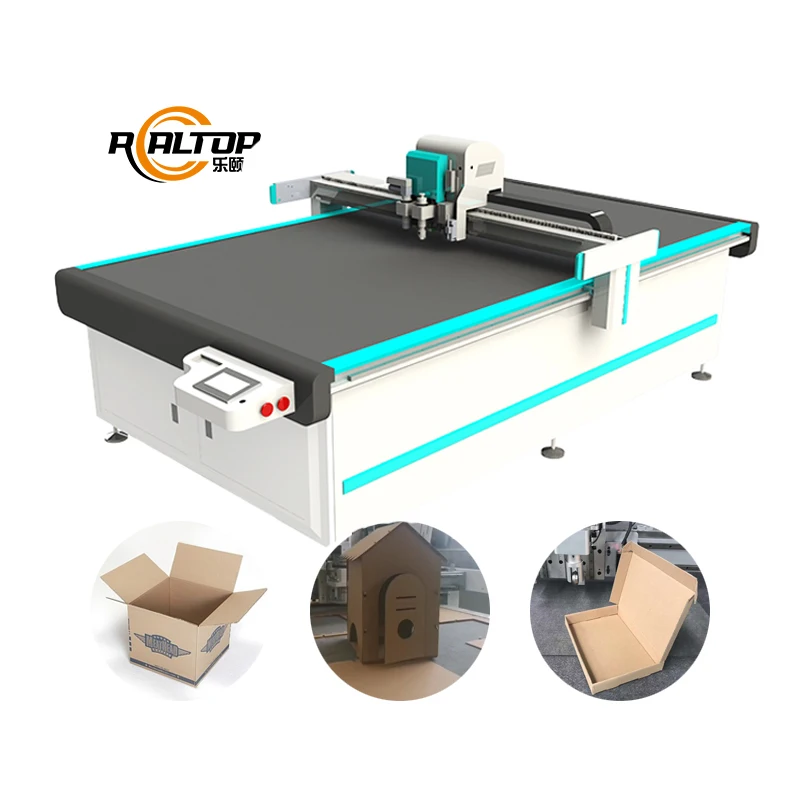
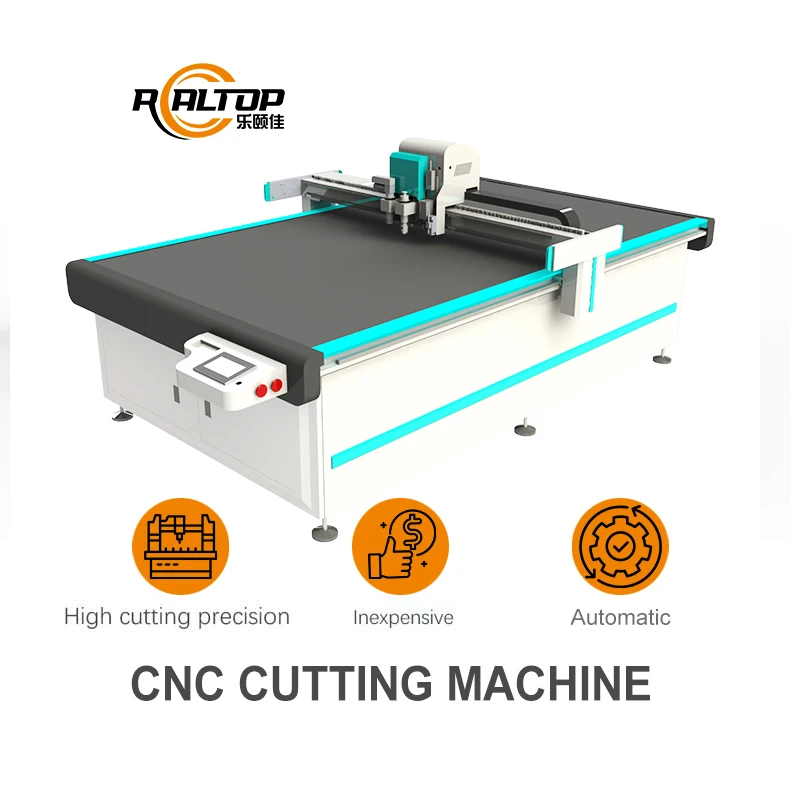
| Product Type | CNC Digital Flatbed Cutter |
| Working Area | 1600×2500 mm |
| Machine Size | 3450×2300×1250 mm |
| Rated Power | 9 kW |
| Working Table | Flat working table with vacuum adsorption |
| Tool Head | Swiss imported knife with vibration full cutting, vibration half cutting and cursor location function |
| Safety Device | Infrared sensors |
| Translational Velocity | 800–1200 mm/s |
| Cutting Speed | 200–800 mm/s (according to different cutting materials) |
| Cutting Thickness | Up to 100 mm (varies with the material) |
| Repeated Accuracy | ≤0.1 mm |
| Transmission System | Digital servo motor, linear guide, synchronous belt, ball screw |
| Servo Motor | Delta servo motor |
| Rail | Taiwan Hiwin rail |
| Vacuum Pump | 7.5 kW |
| Instruction System | HP-GL compatible format |
| Voltage | 380V±10% |
| Standards | CE declaration where applicable |
Application Suitability
| Application | Material or Output |
|---|---|
| Carton and packaging sample making | Corrugated board, grey board, honeycomb cardboard for box prototyping and short-run production |
| Sticker and label contour cutting | Self-adhesive vinyl, paper stickers, reflective sheeting for signage and product identification |
| Advertising and display fabrication | PVC foam board, acrylic sheet, corrugated plastic for billboards, business cards and tags |
| Flexible material processing | Leather, sponge composite leather, PVC, soft glass, silicon, rubber for garment and consumer goods |
| Express and food packaging | Foldable carton stock, snack food packaging, high-end gift box packaging |
Why Specifying Thickness Alone Leaves You With a Machine That Cannot Cut Your Board
A cutting thickness rating only holds true for the material grade used to establish it — your actual stock must be tested on the machine before commitment.
When a packaging producer specifies a machine based on a published thickness figure, the assumption is that the same tool head, blade angle and vacuum hold-down will perform identically across every board grade and coating the shop runs. In reality, a high-density coated carton stock demands a different oscillation frequency, blade profile and vacuum zoning than a standard single-wall corrugated sheet. A CNC Knife Cutting Machine manufacturer that quotes on working area and maximum thickness without requesting sample material often discovers the mismatch during installation, when ragged edges and incomplete cuts force weeks of rework. [NEED_CITE: material thickness versus tooling selection for digital flatbed cutting]
Matching Knife Configuration to Your Board Grade
The RT-D2516 and RT-S2516 carry a Swiss imported knife head supporting vibration full cutting, half cutting and cursor location. This multifunction head covers the range from creasing and scoring on corrugated carton to full-depth through-cutting on leather and PVC. The oscillation frequency and blade geometry determine whether the knife slices cleanly through a coated board surface or tears the top ply, leaving fibers that compromise fold quality on finished cartons. A CNC Knife Cutting Machine manufacturer offering a single tool head across every material forces the buyer to compromise on edge finish or accept frequent blade changes during a shift.
Vacuum Hold-Down Across the Working Envelope
The 1600×2500 mm flat working table is paired with a 7.5 kW vacuum pump to secure material during high-speed traverses reaching 800 mm/s. Vacuum zoning determines whether a small sticker sheet stays flat at the table edges or lifts into the blade path, causing mis-cuts and scrapped material. Producers running nested layouts of small carton samples need zone control that maintains suction across isolated areas, not just the center of the table. [NEED_CITE: vacuum table zoning requirements for small-part digital cutting]
Reading the Specs That Actually Matter in Production
The Delta servo motor driving the transmission system provides closed-loop positioning at a repeated accuracy of ≤0.1 mm, which directly affects contour following on printed sticker outlines and die-line registration on packaging samples. Taiwan Hiwin linear rails maintain this positioning over continuous production runs, preventing cumulative drift that would show up as mismatched fold lines on a carton blank. The HP-GL compatible instruction system accepts standard nesting and layout files, but buyers must verify that their existing CAD software exports a format the machine reads without manual geometry repair — a file conversion issue caught after delivery becomes a production delay. The 9 kW rated power covers the combined draw of the servo system, vacuum pump and oscillating head motor, and should be checked against available workshop circuitry before installation.
The Cost of Discovering Configuration Gaps After Shipment
A buyer who specifies a flatbed cutter on working area and headline thickness, without confirming vacuum zoning for their typical part geometry, often encounters material lift during the first production run. Small nesting pieces near the table perimeter lose suction, shift under the blade and produce scrap that cannot be reworked. Similarly, an instruction system that does not natively import the buyer’s file format forces operators into a manual conversion step that introduces geometry errors and slows throughput from the very first shift. These configuration gaps are not machine defects — they are specification omissions that could have been resolved during the sample cutting stage. [NEED_CITE: common configuration mismatches in CNC digital cutting procurement]
Why This Range Holds Up in a Working Shop
In-house design and production covering knife cutting technology means the tool head and table configuration are matched to the material at the quotation stage, not left to the buyer to sort out after delivery. Sample cutting on the buyer’s own material — whether that is a high-density coated carton board or a sponge composite leather — confirms cutting depth, edge quality and cycle time before the machine is built. Voltage, plug type and control language are documented and confirmed before shipment, so the machine connects to the workshop supply without an adapter chain that introduces voltage drop under load. The CNC Knife Cutting Machine manufacturer provides machine specification sheets and electrical schematics that the buyer’s maintenance team can reference during installation and long-term servicing. Software compatibility is verified against the buyer’s nesting workflow and file format library, preventing the post-delivery discovery that an existing CAD package cannot export usable geometry.
Documentation & Verification
- Machine specification sheet listing tool head and vacuum table configuration per your material and part size
- Sample cutting report on your actual board grade or flexible stock, documenting edge quality and achievable cutting depth
- Electrical schematic and voltage confirmation matched to your local 380V±10% supply and plug standard
- Software licence and file format compatibility note covering your existing nesting and CAD workflow
- CE declaration documentation where applicable to your import market
- Factory test record showing repeated accuracy verification before dispatch
Installation, Commissioning & Support
- Floor space of at least 4000×3000 mm required to accommodate the 3450×2300 mm machine footprint and material loading clearance
- Dedicated 380V±10% circuit with adequate rating for the 9 kW machine load plus the 7.5 kW vacuum pump
- Machine shipped in assembled state; final leveling and vacuum table calibration performed on-site after positioning
- First-run commissioning includes servo tuning, tool head calibration and cutting parameter setup on your supplied material samples
- Operator training covers HP-GL file import, nesting layout, tool head changeover and vacuum zone selection for different part geometries
- Spare parts list includes replacement blades, vacuum seals and Hiwin rail carriages with recommended reorder intervals
What We Need to Quote Your Configuration
Send the full range of materials you plan to run, including the thickest board grade and any coated or laminated stocks, along with typical sheet dimensions and the smallest part size in your nesting layouts. Confirm your local voltage, frequency and plug standard, the CAD and nesting software currently in use, and whether printed contour recognition is required for any of your product lines. With this information, a tool head and vacuum table configuration can be specified and sample cutting arranged before the quotation is issued.
Frequently Asked Questions
Q: How do I choose the right knife configuration when comparing models across this range?
A: The choice depends on your dominant material and part geometry. Oscillating knives suit corrugated board and foam where a vertical cutting action produces a clean edge, while drag knives handle thin vinyl and sticker stock at higher traverse speeds. Sample cutting on your actual material confirms which configuration delivers the edge quality your product requires before you commit to a specific model.
Q: How is cutting thickness verified against my specific board grade?
A: Published thickness figures are based on a reference material and do not transfer directly to every board grade you may run. The only reliable verification is sample cutting using your actual stock — including any coatings, laminations or density variations — which confirms the achievable depth, edge finish and number of passes required before a machine is specified.
Q: What vacuum table zoning options are available for cutting small parts?
A: Vacuum zoning determines whether small nesting pieces stay secured at the table edges or lift during cutting. The table configuration is matched to your typical part size range and layout density, ensuring adequate suction across the zones where your smallest parts are positioned during production runs.
Q: Which software file formats does the instruction system accept?
A: The system supports HP-GL compatible format, but compatibility with your specific CAD and nesting software must be confirmed before order. Providing a sample file from your current workflow allows us to verify that geometry imports correctly without manual repair or conversion that could introduce cutting errors.
Q: How does contour recognition perform at production speed on printed materials?
A: Contour positioning accuracy depends on print registration quality, mark contrast and the speed at which the system must locate and align to fiducial marks. If your workflow includes printed sticker or packaging contour cutting, sample testing at intended production speeds confirms whether the system tracks your print marks reliably without pausing for manual correction.
Swiss Knife and Table Match — Tool head and vacuum table specified per material and part size, verified by sample cutting on the buyer’s own stock before order confirmation.
Technical Specifications
| Parameter | Value |
|---|---|
| Model | RT-D2516/RT-S2516 |
| Product Type | CNC Digital Flatbed Cutter |
| Working Area | 1600×2500 mm |
| Machine Size | 3450×2300×1250 mm |
| Rated Power | 9 kW |
| Working Table | Flat working table with vacuum adsorption |
| Tool Head | Swiss imported knife with vibration full cutting, vibration half cutting and cursor location function |
| Safety Device | Infrared sensors |
| Translational Velocity | 800–1200 mm/s |
| Cutting Speed | 200–800 mm/s (according to different cutting materials) |
| Cutting Thickness | Up to 100 mm (varies with the material) |
| Repeated Accuracy | ≤0.1 mm |
| Transmission System | Digital servo motor, linear guide, synchronous belt, ball screw |
| Servo Motor | Delta servo motor |
| Rail | Taiwan Hiwin rail |
| Vacuum Pump | 7.5 kW |
| Instruction System | HP-GL compatible format |
| Voltage | 380V±10% |
| Standards | CE declaration where applicable |
Application Suitability
| Application | Material or Output |
|---|---|
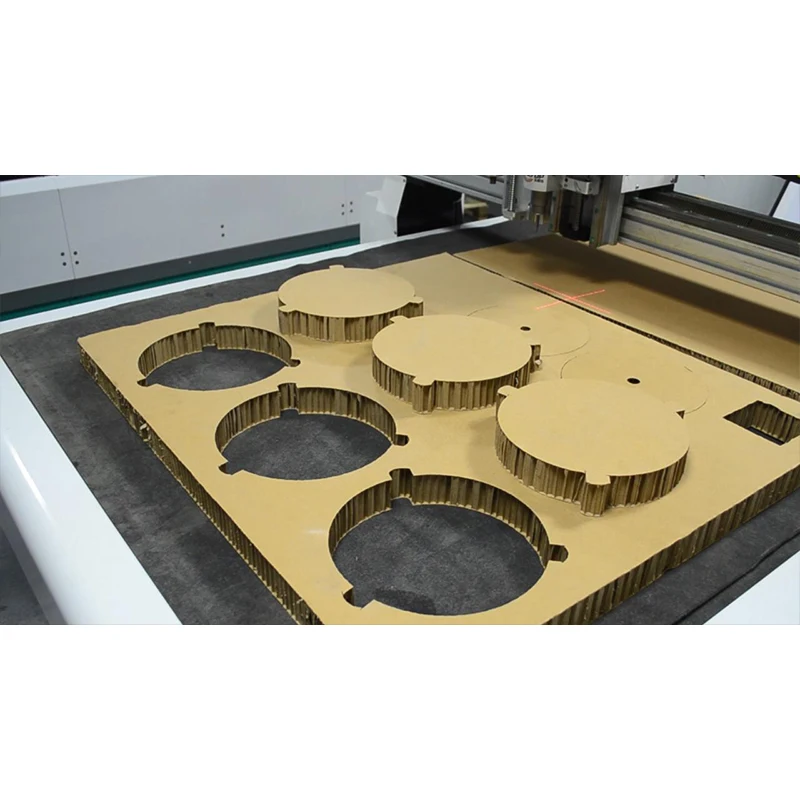
| Carton and packaging sample making | Corrugated board, grey board, honeycomb cardboard for box prototyping and short-run production |
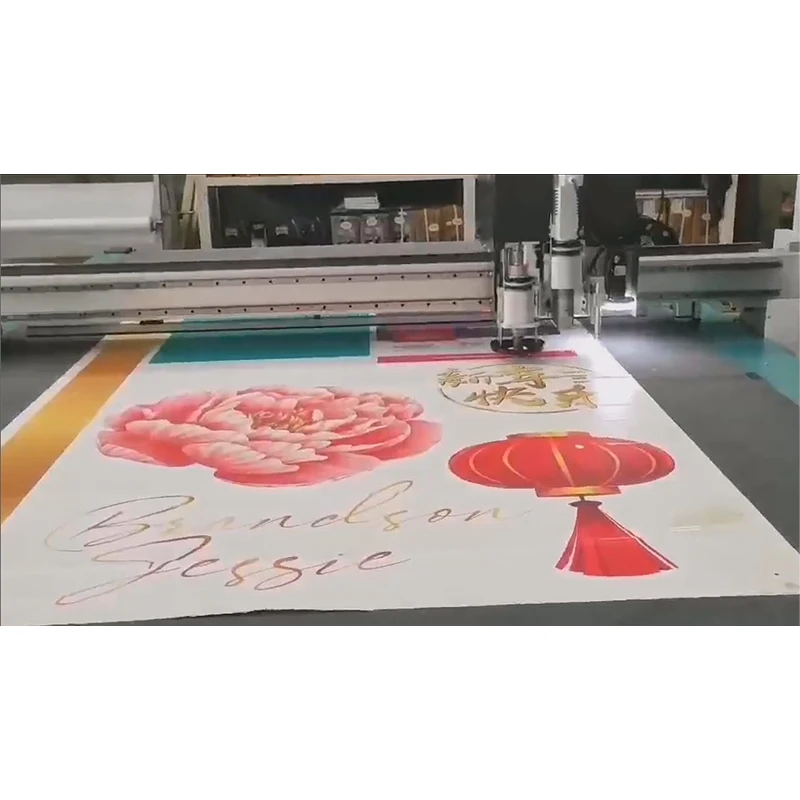
| Sticker and label contour cutting | Self-adhesive vinyl, paper stickers, reflective sheeting for signage and product identification |
| Advertising and display fabrication | PVC foam board, acrylic sheet, corrugated plastic for billboards, business cards and tags |
| Flexible material processing | Leather, sponge composite leather, PVC, soft glass, silicon, rubber for garment and consumer goods |
| Express and food packaging | Foldable carton stock, snack food packaging, high-end gift box packaging |
Why Specifying Thickness Alone Leaves You With a Machine That Cannot Cut Your Board
A cutting thickness rating only holds true for the material grade used to establish it — your actual stock must be tested on the machine before commitment.
When a packaging producer specifies a machine based on a published thickness figure, the assumption is that the same tool head, blade angle and vacuum hold-down will perform identically across every board grade and coating the shop runs. In reality, a high-density coated carton stock demands a different oscillation frequency, blade profile and vacuum zoning than a standard single-wall corrugated sheet. A CNC Knife Cutting Machine manufacturer that quotes on working area and maximum thickness without requesting sample material often discovers the mismatch during installation, when ragged edges and incomplete cuts force weeks of rework. [NEED_CITE: material thickness versus tooling selection for digital flatbed cutting]
Matching Knife Configuration to Your Board Grade
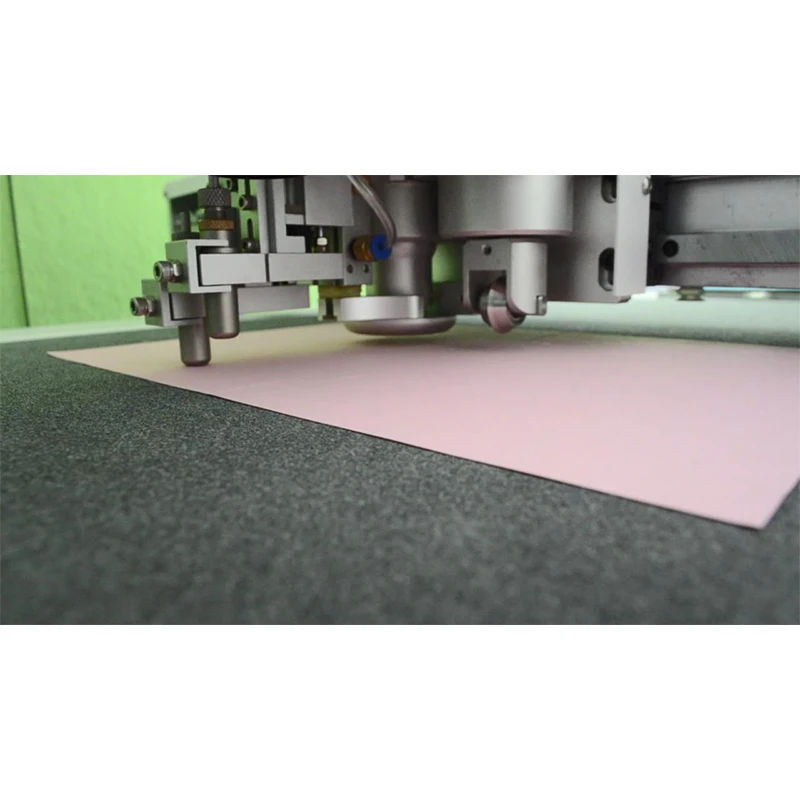
The RT-D2516 and RT-S2516 carry a Swiss imported knife head supporting vibration full cutting, half cutting and cursor location. This multifunction head covers the range from creasing and scoring on corrugated carton to full-depth through-cutting on leather and PVC. The oscillation frequency and blade geometry determine whether the knife slices cleanly through a coated board surface or tears the top ply, leaving fibers that compromise fold quality on finished cartons. A CNC Knife Cutting Machine manufacturer offering a single tool head across every material forces the buyer to compromise on edge finish or accept frequent blade changes during a shift.
Vacuum Hold-Down Across the Working Envelope
The 1600×2500 mm flat working table is paired with a 7.5 kW vacuum pump to secure material during high-speed traverses reaching 800 mm/s. Vacuum zoning determines whether a small sticker sheet stays flat at the table edges or lifts into the blade path, causing mis-cuts and scrapped material. Producers running nested layouts of small carton samples need zone control that maintains suction across isolated areas, not just the center of the table. [NEED_CITE: vacuum table zoning requirements for small-part digital cutting]
Reading the Specs That Actually Matter in Production
The Delta servo motor driving the transmission system provides closed-loop positioning at a repeated accuracy of ≤0.1 mm, which directly affects contour following on printed sticker outlines and die-line registration on packaging samples. Taiwan Hiwin linear rails maintain this positioning over continuous production runs, preventing cumulative drift that would show up as mismatched fold lines on a carton blank. The HP-GL compatible instruction system accepts standard nesting and layout files, but buyers must verify that their existing CAD software exports a format the machine reads without manual geometry repair — a file conversion issue caught after delivery becomes a production delay. The 9 kW rated power covers the combined draw of the servo system, vacuum pump and oscillating head motor, and should be checked against available workshop circuitry before installation.
The Cost of Discovering Configuration Gaps After Shipment
A buyer who specifies a flatbed cutter on working area and headline thickness, without confirming vacuum zoning for their typical part geometry, often encounters material lift during the first production run. Small nesting pieces near the table perimeter lose suction, shift under the blade and produce scrap that cannot be reworked. Similarly, an instruction system that does not natively import the buyer’s file format forces operators into a manual conversion step that introduces geometry errors and slows throughput from the very first shift. These configuration gaps are not machine defects — they are specification omissions that could have been resolved during the sample cutting stage. [NEED_CITE: common configuration mismatches in CNC digital cutting procurement]
Why This Range Holds Up in a Working Shop
In-house design and production covering knife cutting technology means the tool head and table configuration are matched to the material at the quotation stage, not left to the buyer to sort out after delivery. Sample cutting on the buyer’s own material — whether that is a high-density coated carton board or a sponge composite leather — confirms cutting depth, edge quality and cycle time before the machine is built. Voltage, plug type and control language are documented and confirmed before shipment, so the machine connects to the workshop supply without an adapter chain that introduces voltage drop under load. The CNC Knife Cutting Machine manufacturer provides machine specification sheets and electrical schematics that the buyer’s maintenance team can reference during installation and long-term servicing. Software compatibility is verified against the buyer’s nesting workflow and file format library, preventing the post-delivery discovery that an existing CAD package cannot export usable geometry.
Documentation & Verification
- Machine specification sheet listing tool head and vacuum table configuration per your material and part size
- Sample cutting report on your actual board grade or flexible stock, documenting edge quality and achievable cutting depth
- Electrical schematic and voltage confirmation matched to your local 380V±10% supply and plug standard
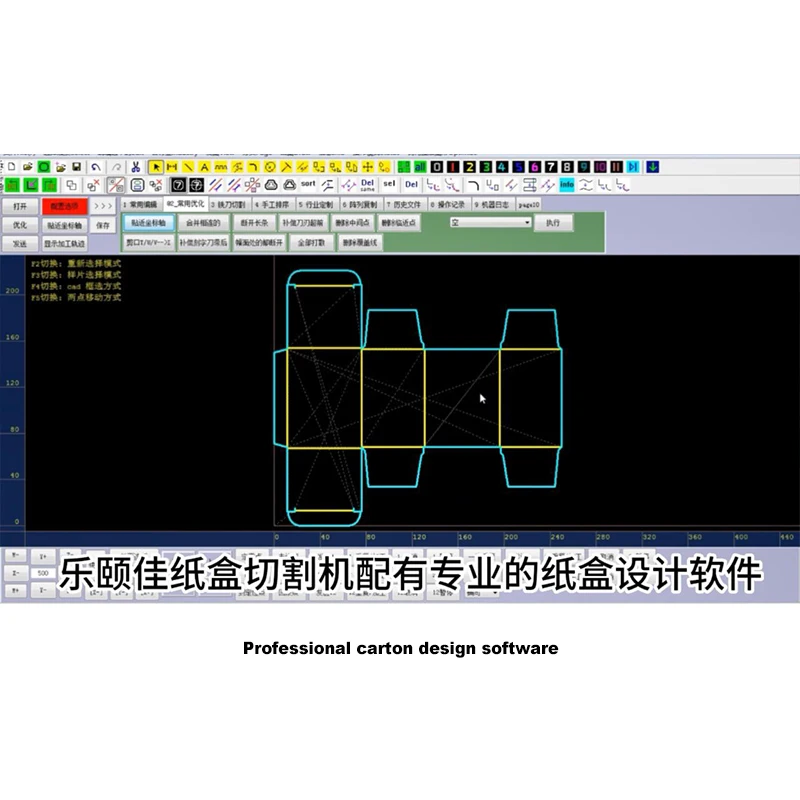
- Software licence and file format compatibility note covering your existing nesting and CAD workflow
- CE declaration documentation where applicable to your import market
- Factory test record showing repeated accuracy verification before dispatch
Installation, Commissioning & Support
- Floor space of at least 4000×3000 mm required to accommodate the 3450×2300 mm machine footprint and material loading clearance
- Dedicated 380V±10% circuit with adequate rating for the 9 kW machine load plus the 7.5 kW vacuum pump
- Machine shipped in assembled state; final leveling and vacuum table calibration performed on-site after positioning
- First-run commissioning includes servo tuning, tool head calibration and cutting parameter setup on your supplied material samples
- Operator training covers HP-GL file import, nesting layout, tool head changeover and vacuum zone selection for different part geometries
- Spare parts list includes replacement blades, vacuum seals and Hiwin rail carriages with recommended reorder intervals
What We Need to Quote Your Configuration
Send the full range of materials you plan to run, including the thickest board grade and any coated or laminated stocks, along with typical sheet dimensions and the smallest part size in your nesting layouts. Confirm your local voltage, frequency and plug standard, the CAD and nesting software currently in use, and whether printed contour recognition is required for any of your product lines. With this information, a tool head and vacuum table configuration can be specified and sample cutting arranged before the quotation is issued.
Frequently Asked Questions
Q: How do I choose the right knife configuration when comparing models across this range?
A: The choice depends on your dominant material and part geometry. Oscillating knives suit corrugated board and foam where a vertical cutting action produces a clean edge, while drag knives handle thin vinyl and sticker stock at higher traverse speeds. Sample cutting on your actual material confirms which configuration delivers the edge quality your product requires before you commit to a specific model.
Q: How is cutting thickness verified against my specific board grade?
A: Published thickness figures are based on a reference material and do not transfer directly to every board grade you may run. The only reliable verification is sample cutting using your actual stock — including any coatings, laminations or density variations — which confirms the achievable depth, edge finish and number of passes required before a machine is specified.
Q: What vacuum table zoning options are available for cutting small parts?
A: Vacuum zoning determines whether small nesting pieces stay secured at the table edges or lift during cutting. The table configuration is matched to your typical part size range and layout density, ensuring adequate suction across the zones where your smallest parts are positioned during production runs.
Q: Which software file formats does the instruction system accept?
A: The system supports HP-GL compatible format, but compatibility with your specific CAD and nesting software must be confirmed before order. Providing a sample file from your current workflow allows us to verify that geometry imports correctly without manual repair or conversion that could introduce cutting errors.
Q: How does contour recognition perform at production speed on printed materials?
A: Contour positioning accuracy depends on print registration quality, mark contrast and the speed at which the system must locate and align to fiducial marks. If your workflow includes printed sticker or packaging contour cutting, sample testing at intended production speeds confirms whether the system tracks your print marks reliably without pausing for manual correction.










商品评价
There are no reviews yet.