

Fast Delivery
Quick, reliable shipping to any location.

Free & easy returns
Return this item by mail or in store within 90 days for a full refund.
Precision Tool Head Matching — Every RT-D2516/RT-S2516 leaves the factory with a tool head and vacuum zoning plan mapped to the buyer’s actual material sample, not a generic configuration picked from a catalog.
Technical Specifications
| Parameter | Value |
|---|---|
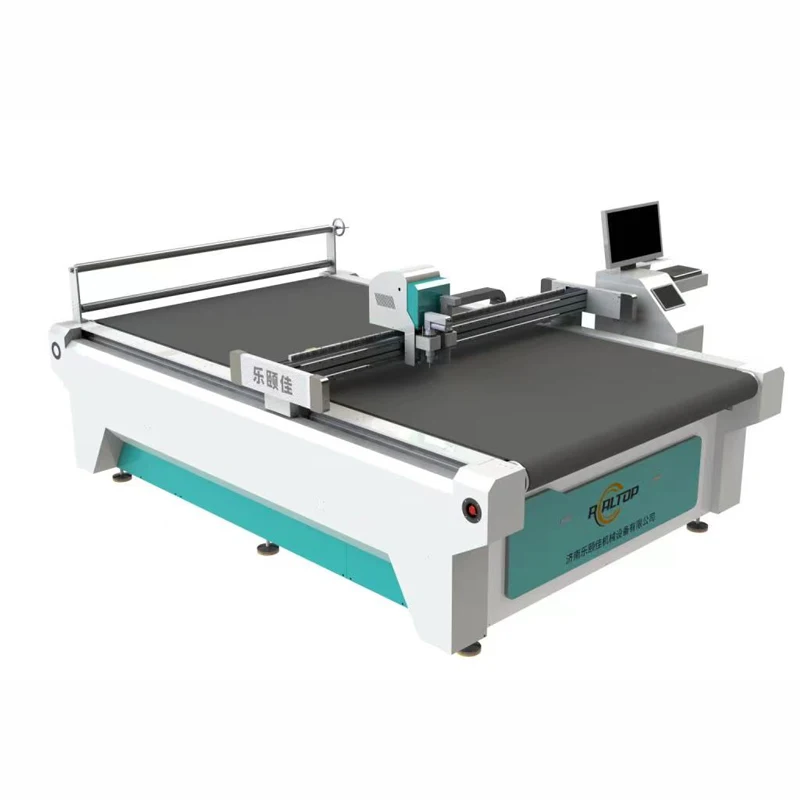
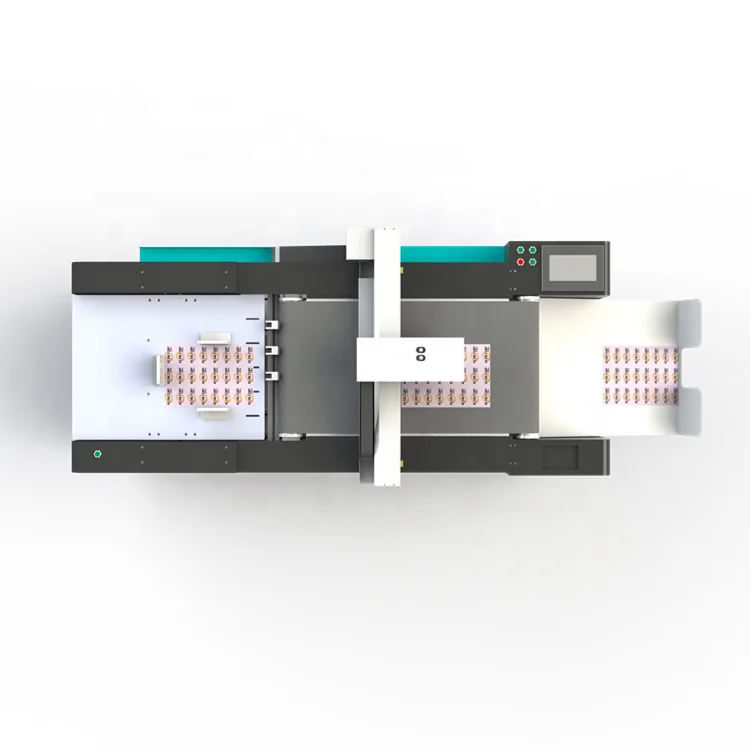
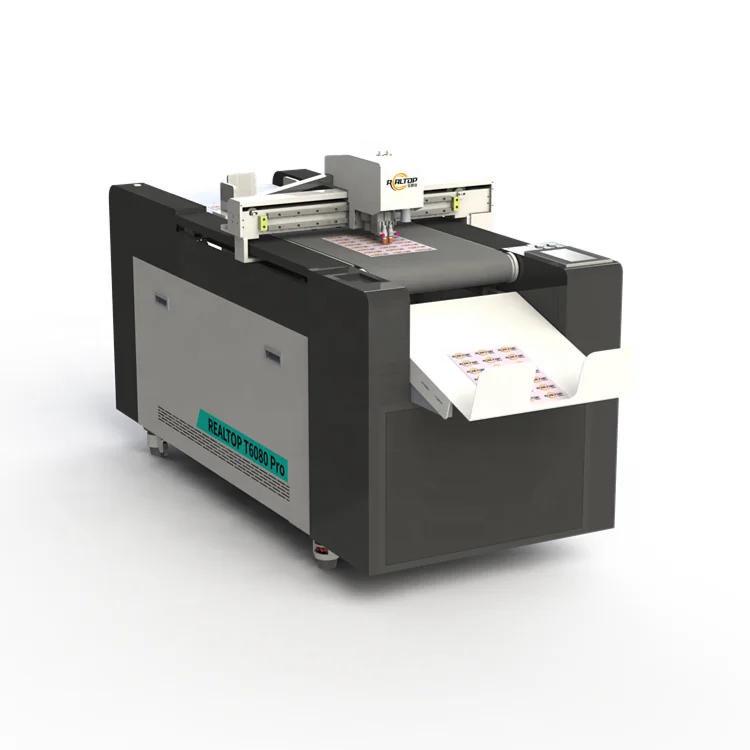
| Product Type | CNC Digital Flatbed Cutting Machine |
| Model | RT-D2516/RT-S2516 |
| Working Area | 1600 × 2500 mm |
| Machine Size (L×W×H) | 3450 × 2300 × 1250 mm |
| Rated Power | 9 kW |
| Voltage | 380V ± 10% (frequency to be confirmed per destination) |
| Control System | CNC, HP-GL compatible format |
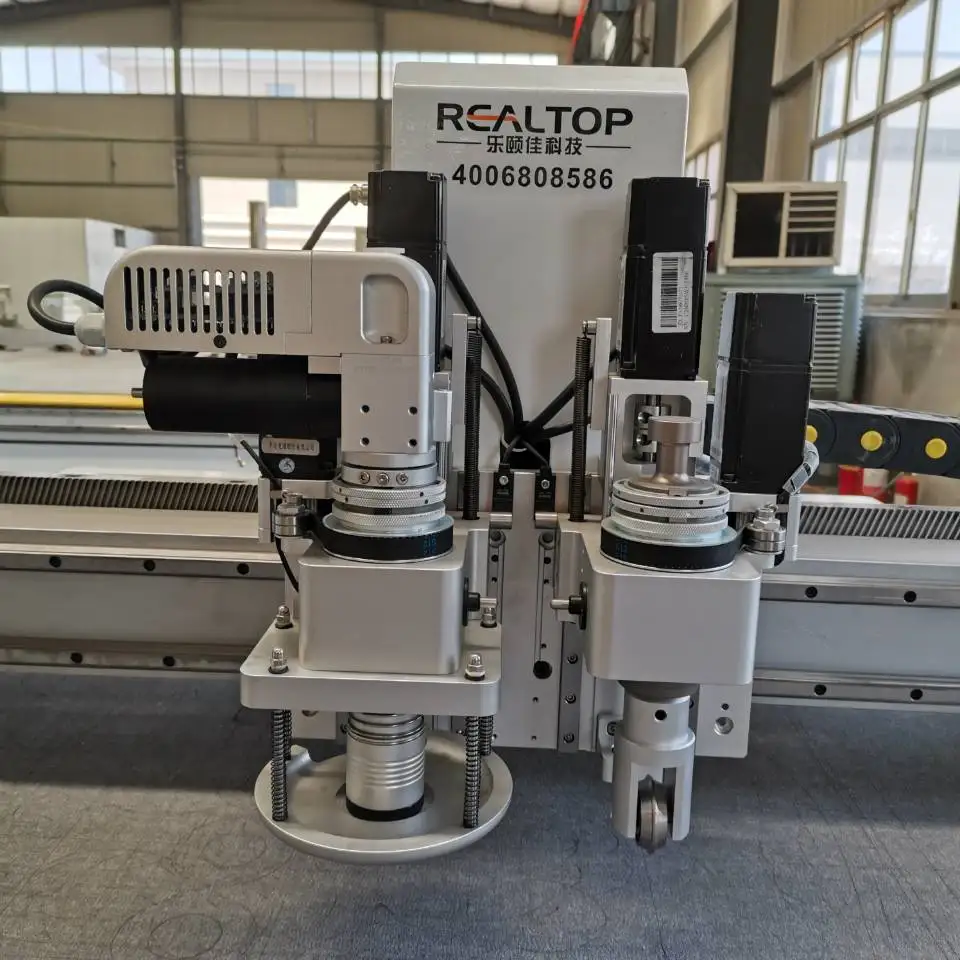
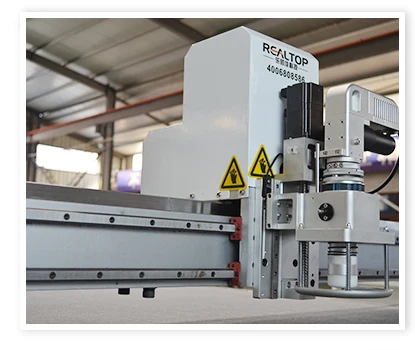
| Multifunctional Tool Head | Swiss imported knife; options include oscillating knife, pneumatic knife, high-power vibrating knife, circular knife, V-cutting knife, drag knife, creasing wheel, dotted line knife, punching, brush |
| Visual Positioning | Small CCD camera mark-point positioning, panoramic camera recognition, projection positioning |
| Translational Velocity | 800–1200 mm/s |
| Cutting Speed | 200–800 mm/s (basis to be confirmed by material type and thickness) |
| Cutting Thickness | ≤ 100 mm (basis to be confirmed by material density) |
| Repeated Accuracy | ≤ 0.1 mm |
| Transmission System | Digital servo motor (Delta or Panasonic, IP67), linear guide, synchronous belt, ball screw; Taiwan Hiwin rail |
| Working Table | Magnesium-aluminum alloy vacuum adsorption table, fluorocarbon PVDF powder spraying, anodic oxidation, hard oxidation; 7.5 kW vacuum pump with aviation aluminum shell and built-in silencer sponge |
| Safety Device | Infrared induction blocking, anti-collision, emergency stop |
| Other Configuration | Germany imported conveyor belt, auto feeding |
| Software | Professional carton design software; language options: English, Russian, Italian, Chinese (special languages customizable) |
| Warranty | One year free warranty; lifetime technical support and parts service |
Application Suitability
| Application | Material or Output |
|---|---|
| Garment and footwear pattern cutting | Woven fabric, knit textile, PU-coated composite, non-woven fabric, shoe material |
| Carton and packaging sample making | Corrugated cardboard, cardboard, plastic box, sticker, film |
| Automotive interior and gasket fabrication | Leather, luggage material, sponge, PU, EVA, XPE, rubber, gasket material |
| Signage and advertising display | PVC, PP, PE, foam board, fiberglass, PTFE, ETFE |
| Soft furnishing and carpet production | Carpet, cloth, composite materials, sponge |
When the Spec Sheet Says "Up to 100 mm" but Your Material Tells a Different Story
A cutting machine’s maximum thickness is only valid for the specific material density and tool head combination tested at the factory — your composite fabric may behave entirely differently.
I have stood in workshops where a CNC digital cutting machine manufacturer promised clean cuts through 60 mm foam, and the first production run on high-density EVA left ragged edges that required manual trimming. The oscillating knife frequency that works on corrugated cardboard will crush multi-layer PU-coated fabric if the vacuum zoning is not matched to the part size. Buyers often discover this only after the machine is bolted to their floor [NEED_CITE: oscillating knife frequency selection for composite and coated textiles].
Mapping Knife Type to the Material You Actually Run
A flatbed platform that accepts oscillating knife, pneumatic knife, drag knife, creasing wheel, V-cutting, and punching tool heads gives the production floor real flexibility. The question is never which CNC digital cutting machine manufacturer offers the most tools — it is whether the tool selected for your specific material holds its edge through a full shift. Swiss-imported knife blanks on the RT-D2516/RT-S2516 reduce mid-shift blade changes on abrasive substrates like fiberglass and carbon-fiber-reinforced composites.
CCD Positioning Is Only as Reliable as the Camera You Chose
Printed contour cutting on stretch fabric demands a camera that tracks registration marks at production speed without losing lock. The panoramic camera recognition option covers large-format printed panels in a single pass, while mark-point positioning suits smaller, repeatable garment pieces. Projection positioning overlays the cut path directly onto the material surface, letting operators visually verify nesting before the knife touches down [NEED_CITE: CCD camera tracking accuracy on stretch and knit fabrics at production speed].
Why Vacuum Table Flatness Defines Cut Quality on Thin Film
The magnesium-aluminum alloy table on this platform receives fluorocarbon PVDF powder spraying and hard anodic oxidation, producing a surface that resists scratching from abrasive composite dust. Uniform suction across the 1600 × 2500 mm area prevents thin films and stickers from lifting at the edges during high-speed passes. The 7.5 kW vacuum pump with built-in silencer sponge keeps noise below the threshold where operators remove hearing protection and lose concentration.
The Hidden Cost of Ordering by Working Area Alone
A buyer who specifies only table size often receives a machine configured for generic cardboard, then discovers the pneumatic knife cannot pierce their 8 mm EVA foam without delamination. The conveyor belt feeds correctly for roll goods but wrinkles leather hides if the tension is not adjusted at the factory. These mismatches surface during commissioning, not during the sales call, and the resulting reconfiguration delays production by weeks [NEED_CITE: reconfiguration lead times when tool head and material are mismatched at order stage].
Why Source This Configuration from a Single-Platform Builder
The design team covers both knife and laser cutting processes in-house, so a buyer processing mixed materials can evaluate both methods against sample results rather than being steered toward whichever technology the seller happens to stock. Tool head and table configuration is specified per material sample submitted before the order is locked. Voltage, plug type, and control language are confirmed against the destination electrical standard before the machine enters assembly. Software file format compatibility is verified with the buyer’s existing nesting or design files, avoiding post-delivery workflow interruptions. Sample cutting on the buyer’s own material is standard practice, producing a report that documents edge quality, cycle time, and recommended tooling before commitment.
Documentation & Verification
- Machine specification sheet listing every selected tool head and table zone configuration
- Sample cutting report produced on your submitted material batch before order confirmation
- Electrical schematic and voltage/frequency confirmation matched to your facility supply
- Software licence documentation with file format compatibility note for your design workflow
- CE declaration where applicable to your import market requirements
- Factory test record documenting repeated accuracy and cutting speed on your material
Installation, Commissioning & Support
- Foundation must be level to within 2 mm across the 3450 × 2300 mm machine footprint
- Dedicated 9 kW circuit at confirmed voltage and frequency with appropriate breaker rating
- Machine ships fully assembled; reconnection of vacuum pump and conveyor belt on site
- First-run parameter tuning on your production material with tool head frequency and vacuum zoning adjustment
- Operator training covering tool change, blade replacement, and CCD camera calibration procedures
- Spare parts list identifying consumable blades, vacuum seals, and drive belts for local stocking
What to Prepare Before Requesting a Quotation
Send a representative sample of the material you run in daily production, including any coating, lamination, or backing layers. Specify the local voltage, frequency, and plug standard at your facility, along with the control language your operators read. If your workflow depends on a specific nesting software or file format, provide a sample file so compatibility is confirmed before the CNC digital cutting machine manufacturer finalizes the control package.
Frequently Asked Questions
Q: How do I decide between oscillating knife and laser cutting for my material?
A: Oscillating knife suits thick, layered, or coated materials where edge sealing is not required and particulate extraction is limited. Laser seals synthetic edges and handles intricate contours without blade wear but produces fumes that demand extraction infrastructure. Sample testing on your exact material determines which method delivers acceptable edge quality at your required throughput.
Q: How do working area, tool head, and vacuum zoning interact to define configuration?
A: A large table with a single vacuum zone will lose suction on small nested parts, allowing lift during cutting. Multi-zone zoning matched to your typical nest layout holds each part flat independently. The tool head must then be selected for the material thickness and density within that held area, not just the maximum thickness the machine can physically reach.
Q: Which CCD positioning option fits printed contour cutting?
A: Mark-point positioning works when registration marks are consistently placed and the camera can index to each mark. Panoramic recognition captures the entire printed area and adjusts the cut path to compensate for print distortion. Projection positioning lets operators visually verify alignment before cutting begins, useful on high-value materials where scrap is costly.
Q: Can voltage, plug type, and control language be customized before shipment?
A: Voltage and frequency are confirmed against your facility supply and the machine is wired accordingly. Plug type matches the destination standard. Control interface language is set to your operator preference from available options or customized for special requirements. All three are documented on the electrical schematic before the machine enters final assembly.
Q: How flexible is the platform for future material changes?
A: The multifunctional tool head mount accepts different tool types without mechanical modification to the gantry. Adding a creasing wheel or punching tool later requires only the tool module and a software parameter update. Vacuum table zoning can be reconfigured by adjusting valve settings to match new nest layouts and part sizes.










商品评价
There are no reviews yet.