

Fast Delivery
Quick, reliable shipping to any location.

Free & easy returns
Return this item by mail or in store within 90 days for a full refund.
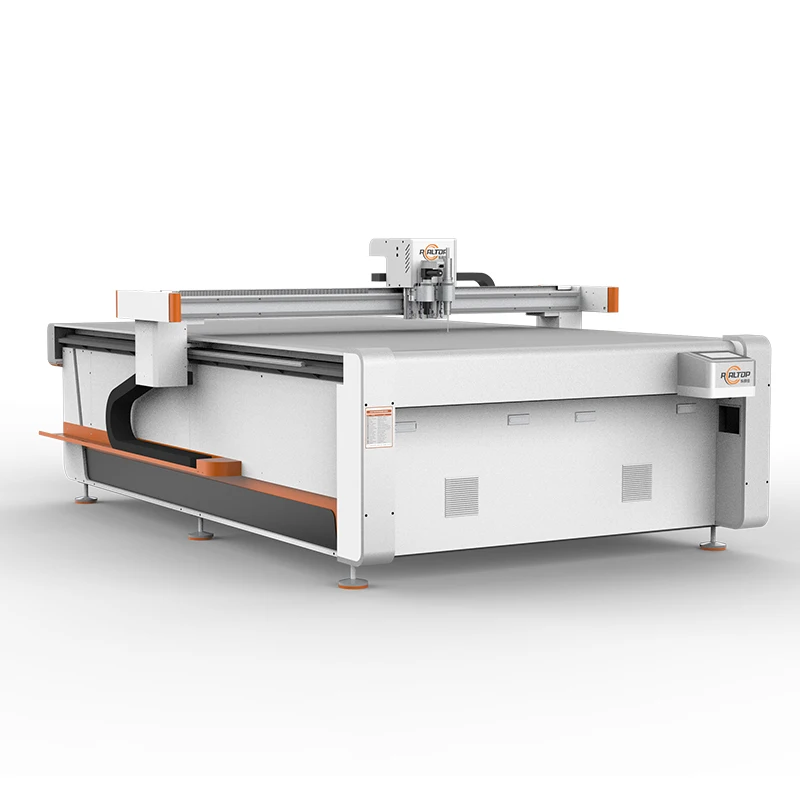
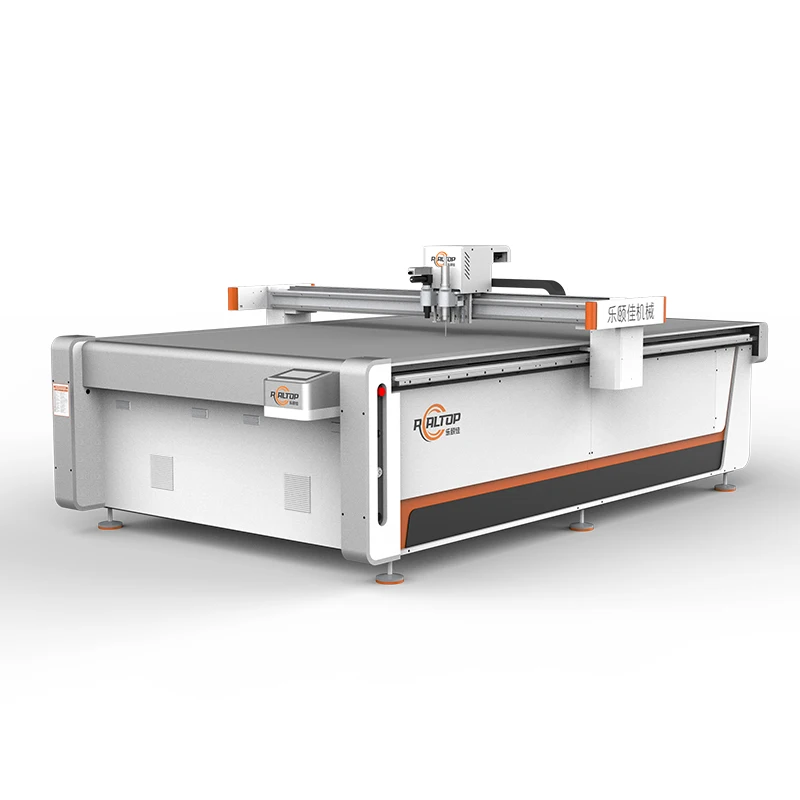
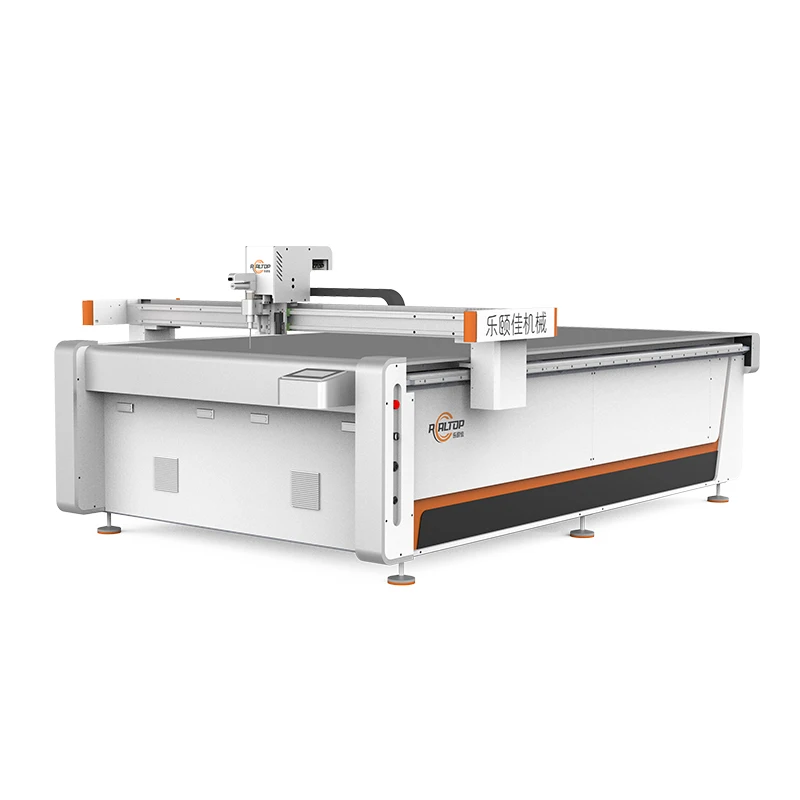
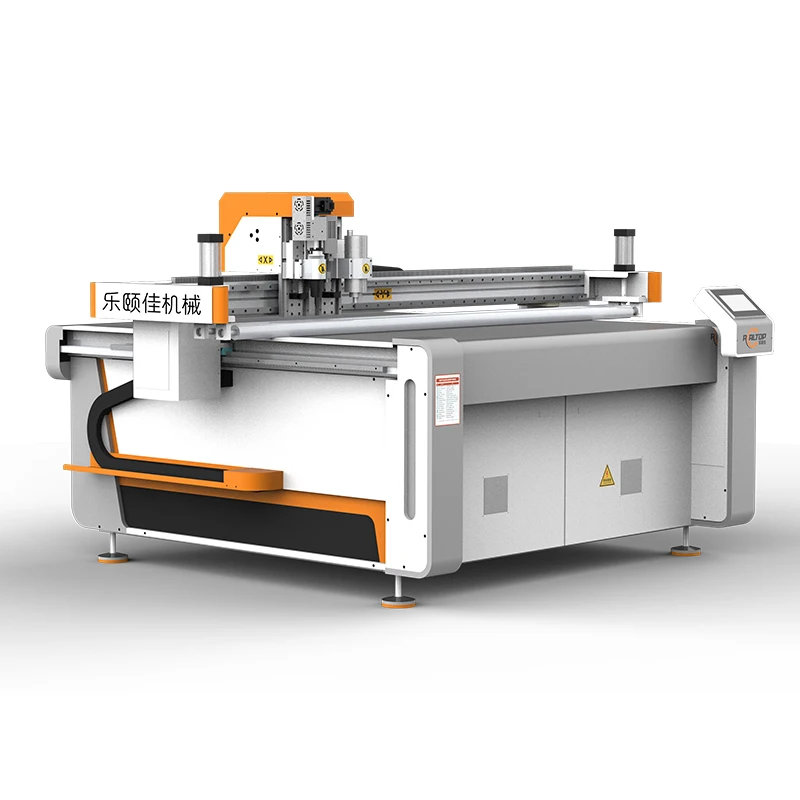
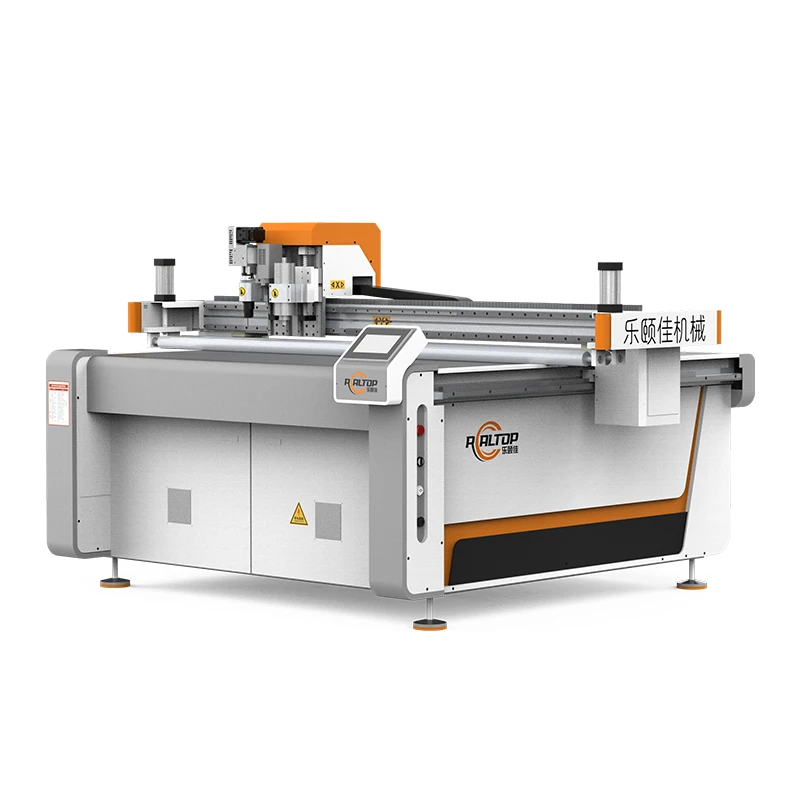
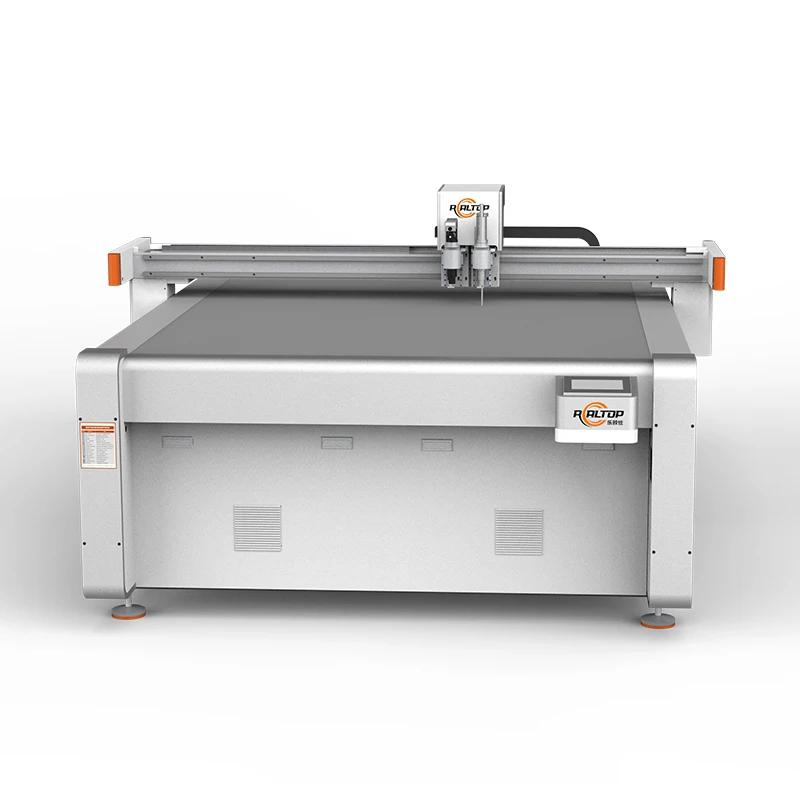
Complete Cutting Range — The RT–R2513 CNC Oscillating Knife Cutting Machine is engineered as a configurable flatbed platform where tool head, vacuum zoning, and software compatibility are matched to your material before the order is placed.
Technical Specifications
| Parameter | Value |
|---|---|
| Product Type | CNC Oscillating Knife Cutting Machine |
| Model | RT–R2513 |
| Working Area | 2500 × 1300 mm (L × W) |
| Machine Dimensions | 3550 × 1910 × 1400 mm |
| Cutting Thickness Capacity | ≤ 18 mm |
| Cutting Tools | Oscillating knife, Creasing tool, Kiss-Cut Knife Tool, Round punch |
| Repeated Positioning Accuracy | < 0.05 mm |
| Fixing Method | Vacuum system with aluminum alloy honeycomb platform |
| Vacuum Pump | 7.5 kW |
| Rated Power | 9 kW |
| Voltage | 380 V |
| Servo Motors | Delta servo motors |
| Guide Rail | Imported straight-line square guide (Taiwan Hiwin) |
| Transmission | Rack transmission via Ethernet port |
| Frame Structure | Welded thick square seamless steel, high-temperature treated |
| Conveyor Belt | Germany imported |
| Supported File Formats | DXF, OLT, PDF, AI |
| Safety Devices | Infrared sensors, emergency stop |
| Warranty | 1 year (excluding felt and knife blades) |
| Delivery Time | < 30 working days |
Application Suitability
| Application | Material or Output |
|---|---|
| Packaging and carton sample making | Corrugated cardboard, grey board, folding carton stock |
| Advertising and signage production | Stickers, vinyl, PP paper, self-adhesive labels |
| Leather goods and footwear | Natural leather, synthetic PU/PVC hides |
| Gasket and seal fabrication | Non-metallic gasket sheets, rubber, fiber composite |
| Pattern and nesting cutting | Business cards, tags, billboards, cards |
Why Working Area Alone Is the Wrong Starting Point
Many buyers specify a CNC Oscillating Knife Cutting Machine manufacturer by table size first, only to discover the machine cannot handle their material thickness or produces crushed edges on foam and corrugated board. The correct sequence is material, thickness, and edge requirement — then machine configuration.
A 2500 × 1300 mm bed may accommodate your sheet, but if the vacuum zoning does not match your part geometry, small pieces lift during the final cuts, ruining the entire nest. I have seen packaging sample shops lose entire production runs because the kiss-cut tool was swapped for an oscillating blade without adjusting the vacuum zones underneath [NEED_CITE: vacuum table zoning requirements for small-part retention]. The voltage and control language also need confirmation before the machine ships, not after it arrives on a workshop floor with a mismatched 3-phase supply.
Tool Head Matching for Material Integrity
The RT–R2513 supports four distinct tool options — oscillating knife, creasing tool, kiss-cut knife, and round punch — each suited to a different material behavior. Oscillating knives cut through leather and foam by vibrating at high frequency, producing clean edges without the drag marks a static blade leaves on fibrous stock. The creasing wheel scores corrugated board along fold lines without penetrating the liner, which is essential for carton sample makers who need structural integrity in the finished box. Selecting the wrong CNC Oscillating Knife Cutting Machine tool head for a given density is the most common cause of rejected edges in flexible material processing.
Vacuum Platform and Part Hold-Down
The aluminum alloy honeycomb vacuum platform, driven by a 7.5 kW pump, distributes suction evenly across the 2500 × 1300 mm bed. This matters most when cutting small labels or sticker nests where a single-zone table would leave edges unsecured. The honeycomb structure maintains flatness under repeated loading, preventing the warping that causes positional drift over a long cutting run. For buyers processing thin vinyl or PP paper, the uniform adsorption prevents material shift that would otherwise accumulate into millimeter-level errors by the end of the sheet [NEED_CITE: vacuum flatness tolerance standards for digital cutting tables].
Reading the Specification Sheet Beyond the Headline Numbers
The repeated positioning accuracy of < 0.05 mm is achieved through the combination of Taiwan Hiwin square guide rails and rack transmission, which together resist the lateral deflection that belt-driven systems develop over extended bed lengths. The welded steel frame undergoes high-temperature treatment to relieve internal stress, a step that prevents gradual bed distortion that would otherwise show up as drift in long production runs. The 9 kW rated power accounts for the servo, vacuum pump, and oscillating head operating simultaneously — a figure that matters when sizing the dedicated circuit in your workshop. Ethernet-based data transmission supports the DXF, AI, PDF, and OLT formats common in packaging and signage prepress workflows, avoiding the need for intermediate file conversion that can corrupt contour paths.
The Hidden Cost of Configuration Guesswork
When the tool head, vacuum zoning, and blade type are not validated against the buyer’s actual stock, the consequences appear within the first week of production. Ragged edges on leather force manual trimming that erodes throughput. Foam crushed by an incorrect oscillation frequency generates waste that accumulates quickly across high-volume runs [NEED_CITE: material waste rates from incorrect knife tooling selection]. Kiss-cut labels that do not release cleanly from the backing sheet cause jams on downstream applicators. Each of these failures traces back to a configuration decision made without a sample cut on the buyer’s own material.
Why Source This Machine Here
The RT–R2513 is produced in a facility that builds both knife and laser cutting systems, so the recommendation on cutting method is based on your material rather than limited to one technology. In-house design covers the frame, motion system, and tool head integration, meaning configuration changes are handled at the engineering level, not patched on the assembly line. Every machine ships with a factory test record on the buyer’s specified material, so edge quality and cutting depth are verified before crating. The documentation package includes electrical schematics with your confirmed voltage, a software license note covering your file formats, and a spare parts list aligned to your tool head configuration. CE compliance is addressed where applicable to your destination market.
Documentation & Verification
- Machine specification sheet confirming RT–R2513 tool head and vacuum table configuration per your material
- Electrical schematic with 380 V or confirmed local voltage and phase layout
- Sample cutting report on your leather, cardboard, or sticker stock before dispatch
- Software license and file format compatibility note for DXF, AI, PDF, or OLT workflows
- Spare parts list matching your selected oscillating blade, creasing wheel, and punch tooling
Installation, Commissioning & Support
- Dedicated 380 V three-phase circuit sized for the 9 kW rated draw with isolator within reach of the 3550 × 1910 × 1400 mm footprint
- Level foundation required to maintain < 0.05 mm positioning accuracy across the 2500 × 1300 mm bed
- Delta servo parameters and rack transmission tension set during on-site commissioning
- Operator training covers tool head changeover, vacuum zoning adjustment, and file import from your existing CAD workflow
- Ten oscillating blades included; replacement blade and felt ordering matched to your cutting material
Preparing Your Inquiry
To receive a configuration recommendation rather than a generic quotation, include your primary material type, maximum thickness, and sheet dimensions. Specify your daily volume and whether your workflow uses DXF, AI, or another file format. Confirm your facility voltage and frequency, the control panel language your operators require, and whether you need a sample cut on your own stock before committing to production.
Frequently Asked Questions
Q: How do I choose between oscillating knife and creasing tool for my packaging work?
A: The oscillating knife cuts fully through corrugated board and card stock, while the creasing tool scores fold lines without cutting the liner. For carton sample making, you typically need both in the same nest — creasing first for structural folds, then oscillating knife for the outer profile. The RT–R2513 supports both tools, and the correct sequence is programmed in your DXF or AI file.
Q: What file formats does the software accept for nesting and contour cutting?
A: The system imports DXF, OLT, PDF, and AI files directly via Ethernet. Before order confirmation, your existing file format is tested for compatibility with the nesting and tool path software to ensure contour lines, crease lines, and cut lines are recognized correctly without manual re-drawing.
Q: Why does vacuum table zoning matter for small sticker and label cutting?
A: Small parts have less surface area for suction to grip, so they can lift during the final cut and shift position. The aluminum honeycomb platform with a 7.5 kW pump distributes vacuum across the bed, but zoning configuration ensures suction concentrates where the active nest is positioned, preventing lift on parts as small as business cards or tags.
Q: What is the difference between oscillating knife and kiss-cut knife for label production?
A: An oscillating knife cuts through both the label face stock and the backing liner, producing a fully separated piece. A kiss-cut knife penetrates only the face stock and adhesive layer, leaving the backing intact so labels remain on a roll or sheet for downstream dispensing. The correct tool depends on how your labels are applied after cutting.
Q: How is cutting thickness capacity validated before the machine ships?
A: The ≤ 18 mm capacity is a general limit, but actual cutting performance depends on material density and tool head configuration. A sample cutting test on your specific material and thickness is conducted at the factory, and the report documents edge quality, cutting speed, and blade type used, so you can verify the result matches your production standard.










商品评价
There are no reviews yet.