


Fast Delivery
Quick, reliable shipping to any location.

Free & easy returns
Return this item by mail or in store within 90 days for a full refund.
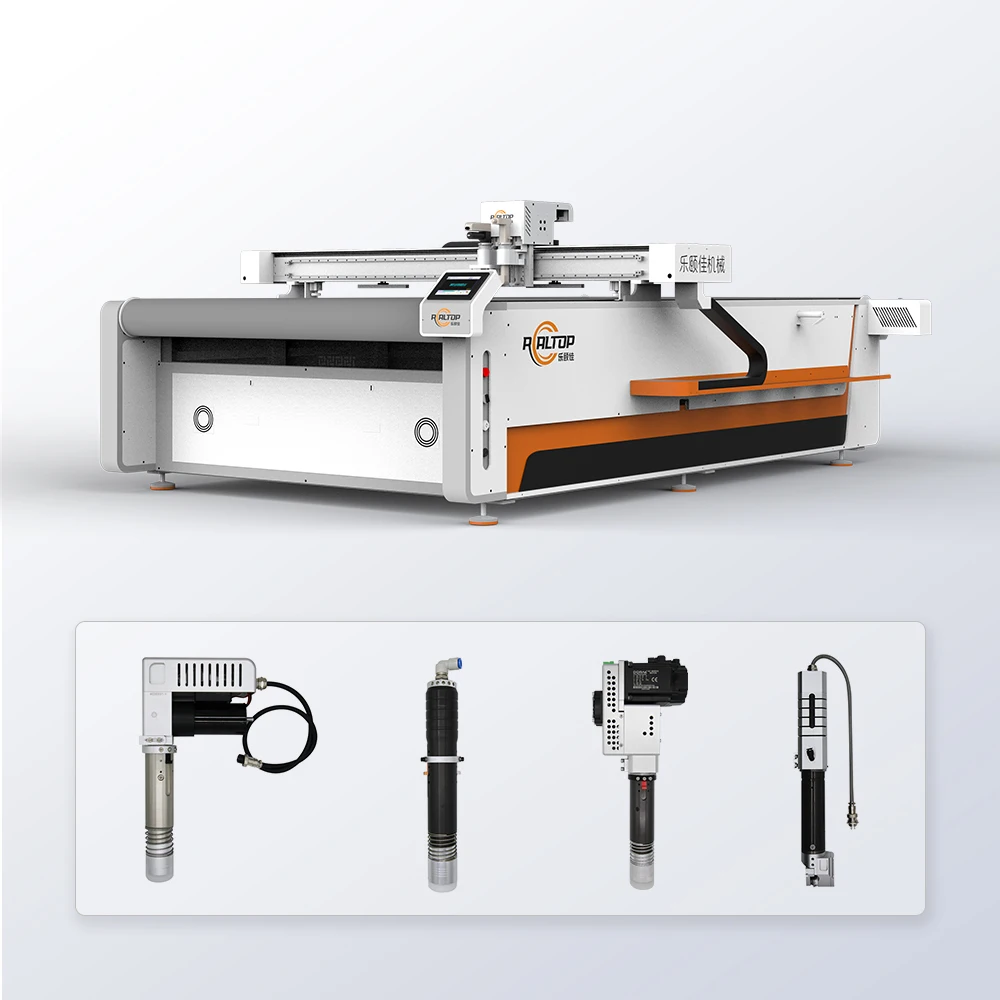
Configurable Tooling for Real Material Matching — every head and table option is set against your actual fabric roll or mat stock, not a generic showroom sample.
Technical Specifications
| Parameter | Value |
|---|---|
| Product Type | CNC Oscillating Knife Cutting Machine |
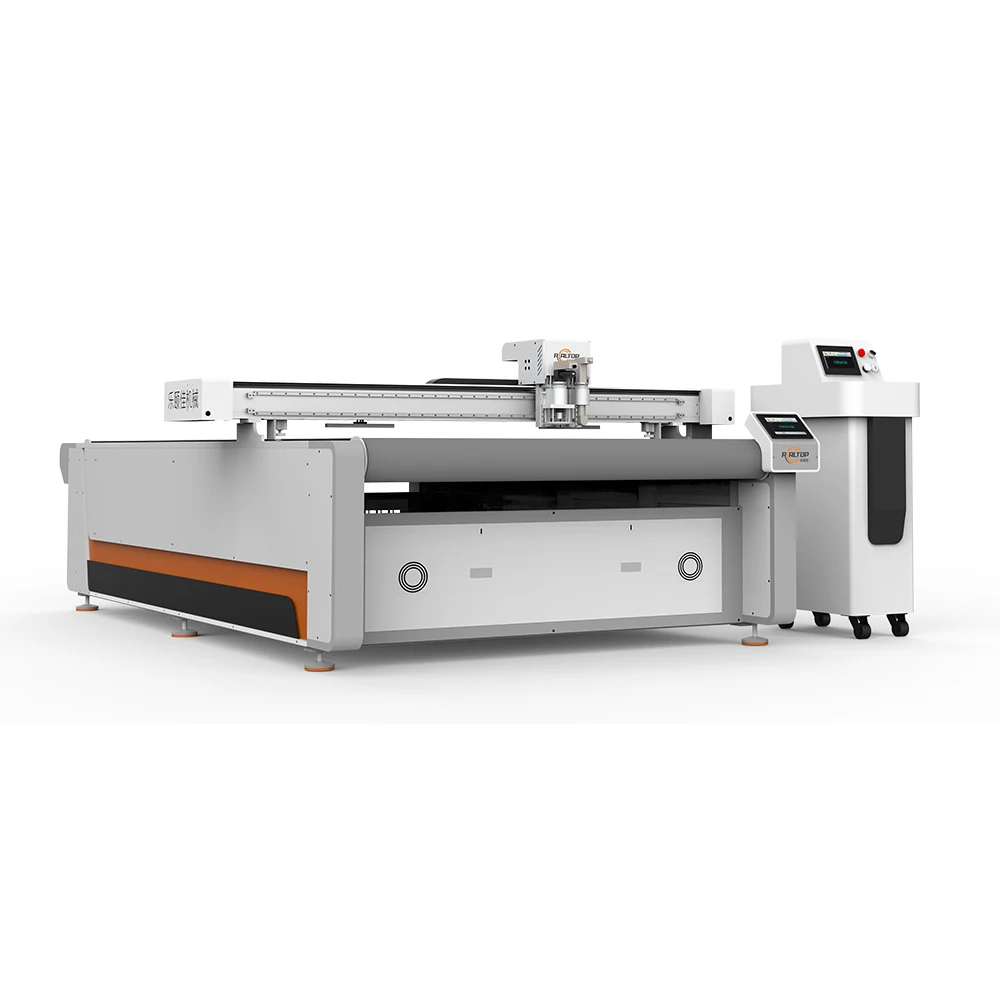
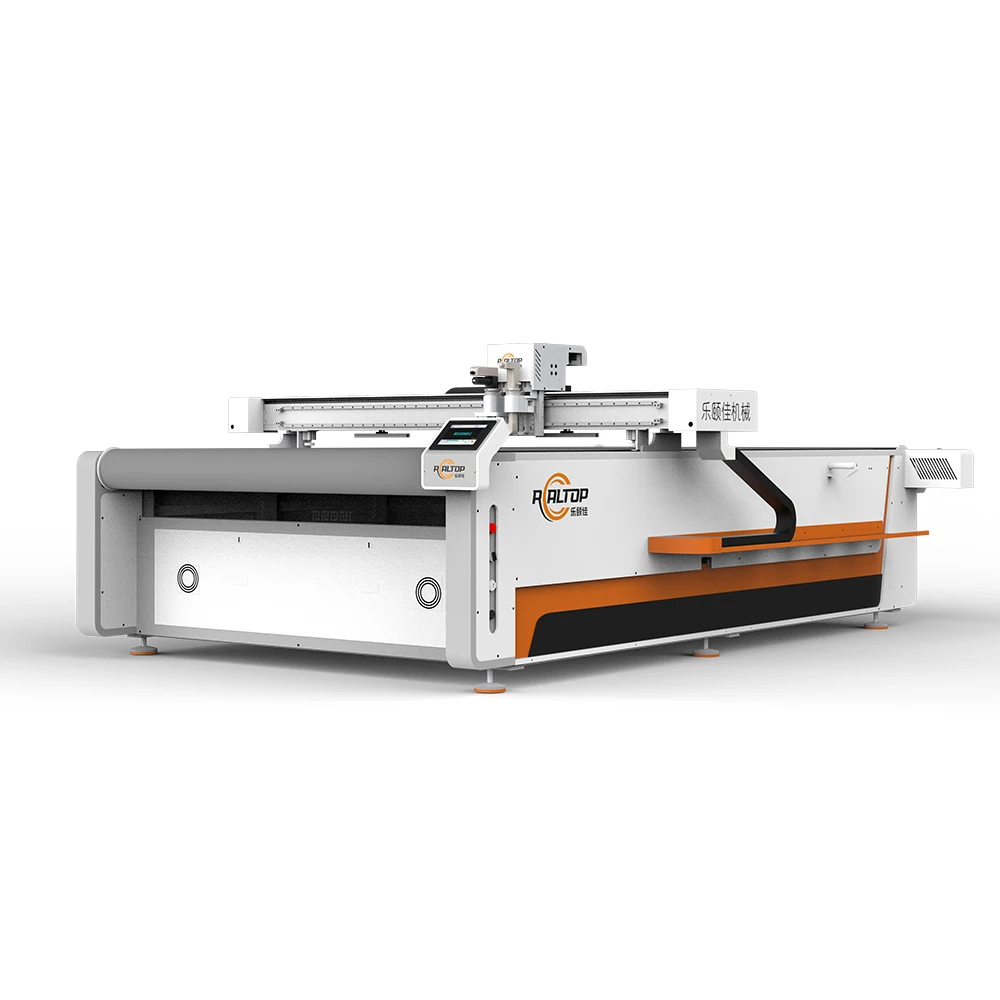
| Working Area | 1600 × 2500 mm |
| Tool Head Options | Oscillating knife, Driven rotary knife, Creasing wheel, Kiss cutting tool, Pneumatic knife, Milling tool, V groove knife |
| Cutting Speed | 0–2000 mm/s |
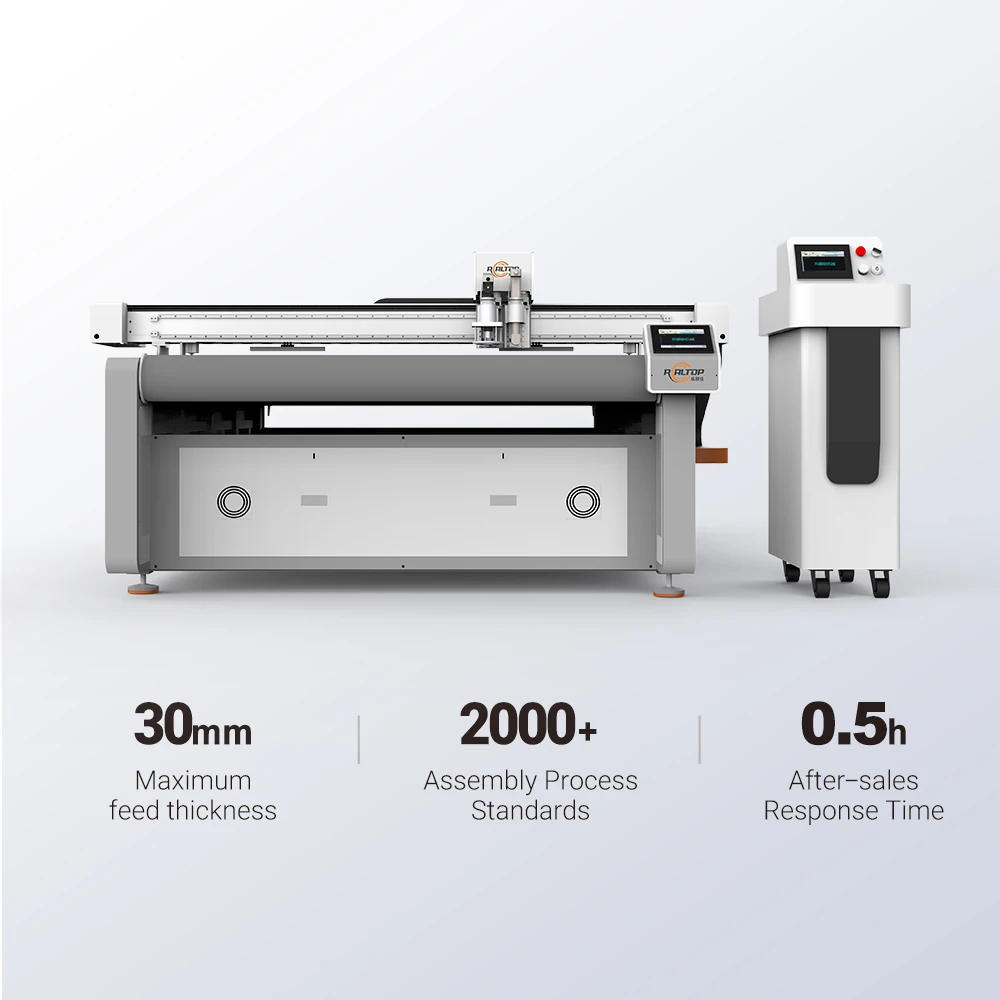
| Cutting Thickness | ≤30 mm (basis not stated in source — confirm material and lay-up format) |
| Cutting Accuracy | ±0.1 mm |
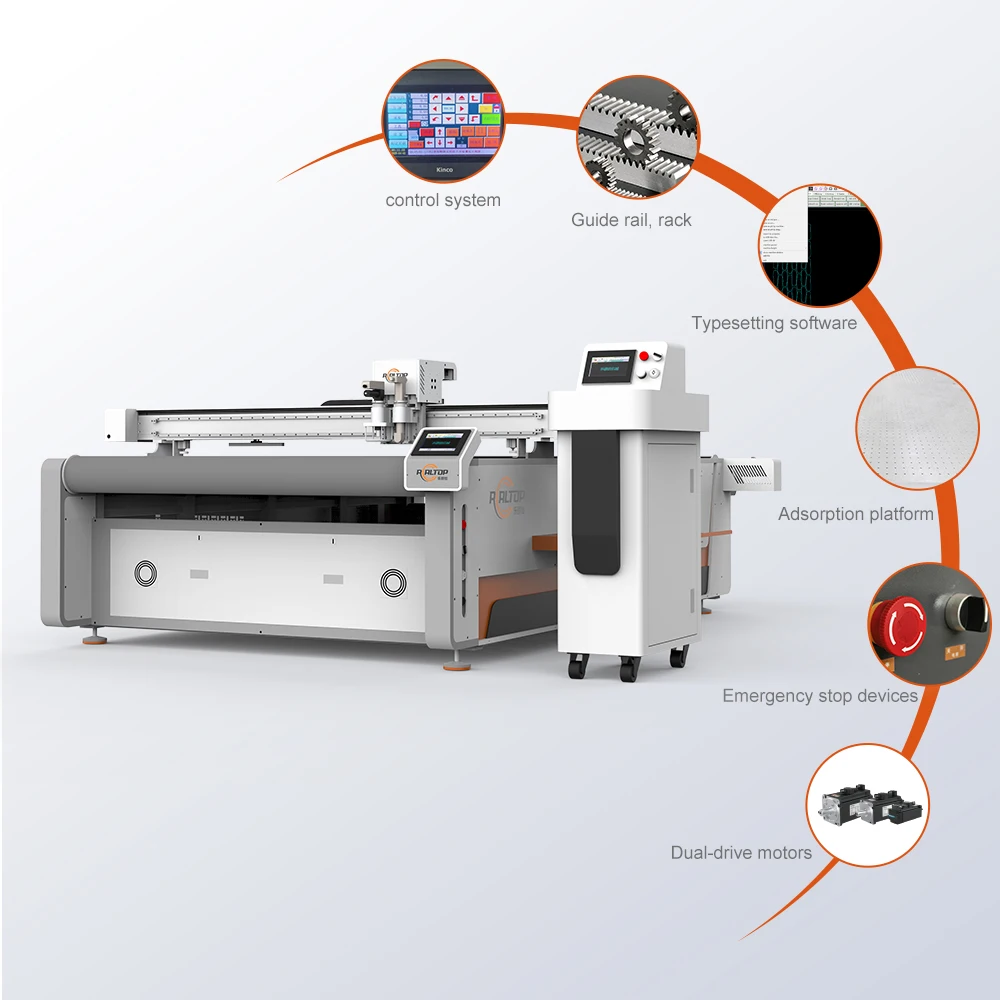
| Vacuum Table | Aluminum bellows vacuum table |
| Vacuum Pump | 9 kW |
| Servo Drive | Multiple options available (Panasonic, Delta, Dorna) |
| Control System | PLC control panel |
| Voltage Options | 110V, 220V, 380V (frequency to be confirmed per market) |
| Software File Formats | PLT, DXF, AI, PDF |
| Language Options | English, Russian, Italian, Chinese; special languages customizable |
| Nesting | Intelligent nesting with automatic defect avoidance |
| Safety Devices | Infrared sensor, Emergency stop |
| Machine Size | 3300 × 2100 × 1350 mm |
| Standards | CE |
Application Suitability
| Application | Material or Output |
|---|---|
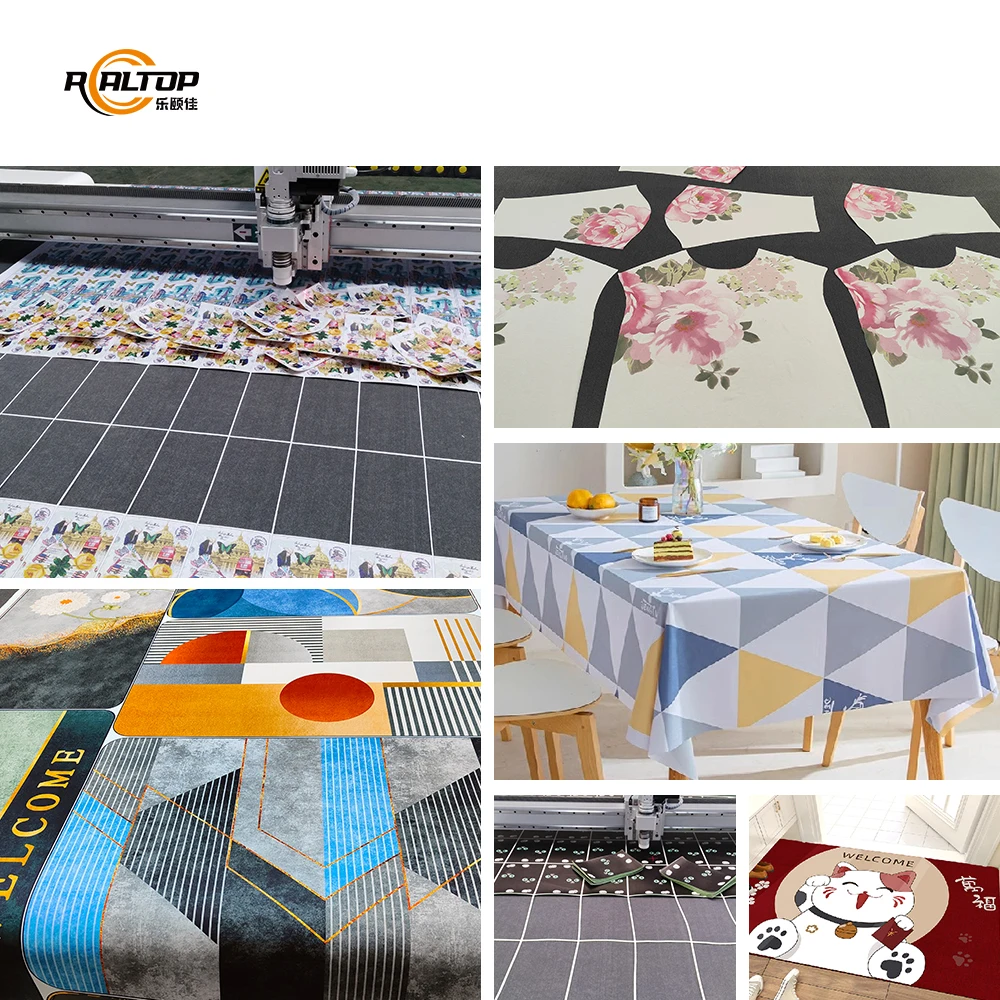
| Automotive interior trimming | PVC mats, seat fabrics, carpet, tinted film |
| Apparel and footwear production | Suits, knitwear, lace, pattern-matched fabric lay-ups |
| Home textile manufacturing | Sofa fabrics, curtains, multi-layer rug cutting |
| Composite processing | Carbon fiber prepreg, aramid, specialty laminates |
| Signage and gasket fabrication | PVC sheets, EVA foam, rubber, PTFE |
Why Working Area Alone Won’t Tell You If the Machine Can Cut Your Mat
The thickness and density of the stock decide whether the knife can finish the pass — not the bed size.
I have seen buyers focus on a 1600 × 2500 mm table and overlook the fact that high-density PVC combined with glass fiber reinforcement demands a V-groove knife under sustained oscillation, not a standard drag blade. When the material composition is not matched to the tool head before the CNC Oscillating Knife Cutting Machine for sale ships, the first week on the production floor turns into a parameter-tuning marathon [NEED_CITE: tool head and material compatibility in flatbed cutting].
Surveying the Full Knife Range Against Your Production Mix
This catalogue covers oscillating, rotary, pneumatic, and V-groove knife heads on a single flatbed platform, letting garment and automotive buyers compare cut quality on their own stock before choosing a method. A driven rotary knife handles aramid and woven composites cleanly, while a pneumatic knife suits thicker foam and rubber lay-ups where blade drag causes edge distortion.
Matching Laser and Knife Methods Before You Commit
Some materials — especially sealed synthetic textiles and coated films — produce a cleaner edge under CO2 laser than under any knife. The full equipment range here spans both technologies, so a buyer evaluating seat fabric versus PVC mat production can survey each option side by side [NEED_CITE: comparative flatbed cutting methods for textile and composite].
Reading the Specs That Actually Affect Mat and Film Quality
The 9 kW vacuum pump paired with the aluminum bellows table holds small cut pieces flat; without adequate zoning, lightweight tinted film lifts mid-pass and the blade catches. The ±0.1 mm accuracy spec matters most on contour-cut car mats where a half-millimeter drift leaves visible gaps against the transmission tunnel. File format support for PLT, DXF, AI, and PDF means your existing nesting software can feed the machine without an intermediate conversion step. Intelligent nesting with automatic defect avoidance further reduces scrap on printed fabric rolls where flaw positions vary batch to batch.
What Happens When the Tool Head Is Chosen by Default
A buyer who accepts the factory-standard oscillating knife without specifying a V-groove head for thick PVC composite often finds the blade chattering on the glass-fiber layer, producing ragged bevels that fail the customer’s edge-seal inspection. Re-tooling on site takes days and interrupts scheduled production runs [NEED_CITE: consequences of incorrect tool head selection in CNC knife cutting].
Why Buyers Source from This Line
The design team covers both knife and laser cutting on one platform, so you match the method to the material instead of forcing a single process. Tool head and table configurations are specified per stock type and daily volume, not quoted as a default package. CCD camera positioning is available for printed-contour work where registration marks shift during unwinding. Software compatibility — including file format and nesting workflow — is confirmed before the order goes to production. Voltage, plug type, and control language are locked in during the specification stage, avoiding rewiring costs at the destination port.
Documentation & Verification
- Machine specification sheet listing every tool head and table zone configured for your material
- Electrical schematic with voltage and frequency confirmed against your local supply standard
- Sample cutting report run on your actual mat or fabric roll before order confirmation
- Software licence and file format compatibility note matching your nesting workflow
- Factory test record documenting run parameters and cut-edge inspection
- CE declaration covering the configured machine assembly
Installation, Commissioning & Support
- Floor space planning based on the 3300 × 2100 mm footprint with clearance for material loading
- Dedicated circuit sized for 9 kW vacuum pump plus servo drive load at your confirmed voltage
- Machine arrives fully assembled; positioning and leveling handled by your local rigging team
- First-run parameter setting on your material with tool head and vacuum zone adjustments
- Operator training on PLC panel in your selected language, covering nesting and tool change
- Spare parts list matched to your chosen knife heads, with wear-item reorder intervals noted
What to Send with Your Inquiry
Share the exact material composition, ply count, and sheet or roll dimensions you plan to run daily. Include your local voltage and frequency standard plus the control language your operators need. If you have existing nesting files, send a sample so we can confirm software import and cut-path accuracy before quoting.
Frequently Asked Questions
Q: How do I decide between knife and laser for my fabric or mat material?
A: Knives handle thick, layered, or fiber-reinforced stock without heat-affected edges, while lasers seal synthetics and cut intricate contours on thinner sheets. Send a material sample so both methods can be tested and compared on the same pattern before you commit to a configuration.
Q: Which machine size fits my daily output target?
A: Working areas range from compact to large format. The right size depends on your typical sheet or roll width, lay-up height, and whether you cut single-ply or multi-ply. Share your daily volume and material dimensions to receive a model recommendation.
Q: How is the correct tool head chosen for my material?
A: Each knife type suits a different thickness and composition range — oscillating for woven fabric, pneumatic for foam, V-groove for dense PVC composite. We run your sample material through the candidate heads and select the one that delivers a clean edge at production speed.
Q: Can the voltage and control language be set for my market?
A: Voltage options include 110V, 220V, and 380V, with frequency confirmed for your region. The PLC interface supports English, Russian, Italian, and Chinese, with additional languages customizable before shipment.
Q: How do I request a sample cut on my own material?
A: Ship a roll or sheet sample to the factory. We run it on the configured machine, document cut quality, edge condition, and cycle time, and send the report along with cut pieces for your inspection before any order is placed.
Configurable Tooling for Real Material Matching — every head and table option is set against your actual fabric roll or mat stock, not a generic showroom sample.
Technical Specifications
| Parameter | Value |
|---|---|
| Product Type | CNC Oscillating Knife Cutting Machine |
| Working Area | 1600 × 2500 mm |
| Tool Head Options | Oscillating knife, Driven rotary knife, Creasing wheel, Kiss cutting tool, Pneumatic knife, Milling tool, V groove knife |
| Cutting Speed | 0–2000 mm/s |
| Cutting Thickness | ≤30 mm (basis not stated in source — confirm material and lay-up format) |
| Cutting Accuracy | ±0.1 mm |
| Vacuum Table | Aluminum bellows vacuum table |
| Vacuum Pump | 9 kW |
| Servo Drive | Multiple options available (Panasonic, Delta, Dorna) |
| Control System | PLC control panel |
| Voltage Options | 110V, 220V, 380V (frequency to be confirmed per market) |
| Software File Formats | PLT, DXF, AI, PDF |
| Language Options | English, Russian, Italian, Chinese; special languages customizable |
| Nesting | Intelligent nesting with automatic defect avoidance |
| Safety Devices | Infrared sensor, Emergency stop |
| Machine Size | 3300 × 2100 × 1350 mm |
| Standards | CE |
Application Suitability
| Application | Material or Output |
|---|---|
| Automotive interior trimming | PVC mats, seat fabrics, carpet, tinted film |
| Apparel and footwear production | Suits, knitwear, lace, pattern-matched fabric lay-ups |
| Home textile manufacturing | Sofa fabrics, curtains, multi-layer rug cutting |
| Composite processing | Carbon fiber prepreg, aramid, specialty laminates |
| Signage and gasket fabrication | PVC sheets, EVA foam, rubber, PTFE |
Why Working Area Alone Won’t Tell You If the Machine Can Cut Your Mat
The thickness and density of the stock decide whether the knife can finish the pass — not the bed size.
I have seen buyers focus on a 1600 × 2500 mm table and overlook the fact that high-density PVC combined with glass fiber reinforcement demands a V-groove knife under sustained oscillation, not a standard drag blade. When the material composition is not matched to the tool head before the CNC Oscillating Knife Cutting Machine for sale ships, the first week on the production floor turns into a parameter-tuning marathon [NEED_CITE: tool head and material compatibility in flatbed cutting].
Surveying the Full Knife Range Against Your Production Mix
This catalogue covers oscillating, rotary, pneumatic, and V-groove knife heads on a single flatbed platform, letting garment and automotive buyers compare cut quality on their own stock before choosing a method. A driven rotary knife handles aramid and woven composites cleanly, while a pneumatic knife suits thicker foam and rubber lay-ups where blade drag causes edge distortion.
Matching Laser and Knife Methods Before You Commit
Some materials — especially sealed synthetic textiles and coated films — produce a cleaner edge under CO2 laser than under any knife. The full equipment range here spans both technologies, so a buyer evaluating seat fabric versus PVC mat production can survey each option side by side [NEED_CITE: comparative flatbed cutting methods for textile and composite].
Reading the Specs That Actually Affect Mat and Film Quality
The 9 kW vacuum pump paired with the aluminum bellows table holds small cut pieces flat; without adequate zoning, lightweight tinted film lifts mid-pass and the blade catches. The ±0.1 mm accuracy spec matters most on contour-cut car mats where a half-millimeter drift leaves visible gaps against the transmission tunnel. File format support for PLT, DXF, AI, and PDF means your existing nesting software can feed the machine without an intermediate conversion step. Intelligent nesting with automatic defect avoidance further reduces scrap on printed fabric rolls where flaw positions vary batch to batch.
What Happens When the Tool Head Is Chosen by Default
A buyer who accepts the factory-standard oscillating knife without specifying a V-groove head for thick PVC composite often finds the blade chattering on the glass-fiber layer, producing ragged bevels that fail the customer’s edge-seal inspection. Re-tooling on site takes days and interrupts scheduled production runs [NEED_CITE: consequences of incorrect tool head selection in CNC knife cutting].
Why Buyers Source from This Line
The design team covers both knife and laser cutting on one platform, so you match the method to the material instead of forcing a single process. Tool head and table configurations are specified per stock type and daily volume, not quoted as a default package. CCD camera positioning is available for printed-contour work where registration marks shift during unwinding. Software compatibility — including file format and nesting workflow — is confirmed before the order goes to production. Voltage, plug type, and control language are locked in during the specification stage, avoiding rewiring costs at the destination port.
Documentation & Verification
- Machine specification sheet listing every tool head and table zone configured for your material
- Electrical schematic with voltage and frequency confirmed against your local supply standard
- Sample cutting report run on your actual mat or fabric roll before order confirmation
- Software licence and file format compatibility note matching your nesting workflow
- Factory test record documenting run parameters and cut-edge inspection
- CE declaration covering the configured machine assembly
Installation, Commissioning & Support
- Floor space planning based on the 3300 × 2100 mm footprint with clearance for material loading
- Dedicated circuit sized for 9 kW vacuum pump plus servo drive load at your confirmed voltage
- Machine arrives fully assembled; positioning and leveling handled by your local rigging team
- First-run parameter setting on your material with tool head and vacuum zone adjustments
- Operator training on PLC panel in your selected language, covering nesting and tool change
- Spare parts list matched to your chosen knife heads, with wear-item reorder intervals noted
What to Send with Your Inquiry
Share the exact material composition, ply count, and sheet or roll dimensions you plan to run daily. Include your local voltage and frequency standard plus the control language your operators need. If you have existing nesting files, send a sample so we can confirm software import and cut-path accuracy before quoting.
Frequently Asked Questions
Q: How do I decide between knife and laser for my fabric or mat material?
A: Knives handle thick, layered, or fiber-reinforced stock without heat-affected edges, while lasers seal synthetics and cut intricate contours on thinner sheets. Send a material sample so both methods can be tested and compared on the same pattern before you commit to a configuration.
Q: Which machine size fits my daily output target?
A: Working areas range from compact to large format. The right size depends on your typical sheet or roll width, lay-up height, and whether you cut single-ply or multi-ply. Share your daily volume and material dimensions to receive a model recommendation.
Q: How is the correct tool head chosen for my material?
A: Each knife type suits a different thickness and composition range — oscillating for woven fabric, pneumatic for foam, V-groove for dense PVC composite. We run your sample material through the candidate heads and select the one that delivers a clean edge at production speed.
Q: Can the voltage and control language be set for my market?
A: Voltage options include 110V, 220V, and 380V, with frequency confirmed for your region. The PLC interface supports English, Russian, Italian, and Chinese, with additional languages customizable before shipment.
Q: How do I request a sample cut on my own material?
A: Ship a roll or sheet sample to the factory. We run it on the configured machine, document cut quality, edge condition, and cycle time, and send the report along with cut pieces for your inspection before any order is placed.










商品评价
There are no reviews yet.