



Fast Delivery
Quick, reliable shipping to any location.

Free & easy returns
Return this item by mail or in store within 90 days for a full refund.
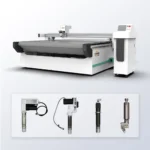
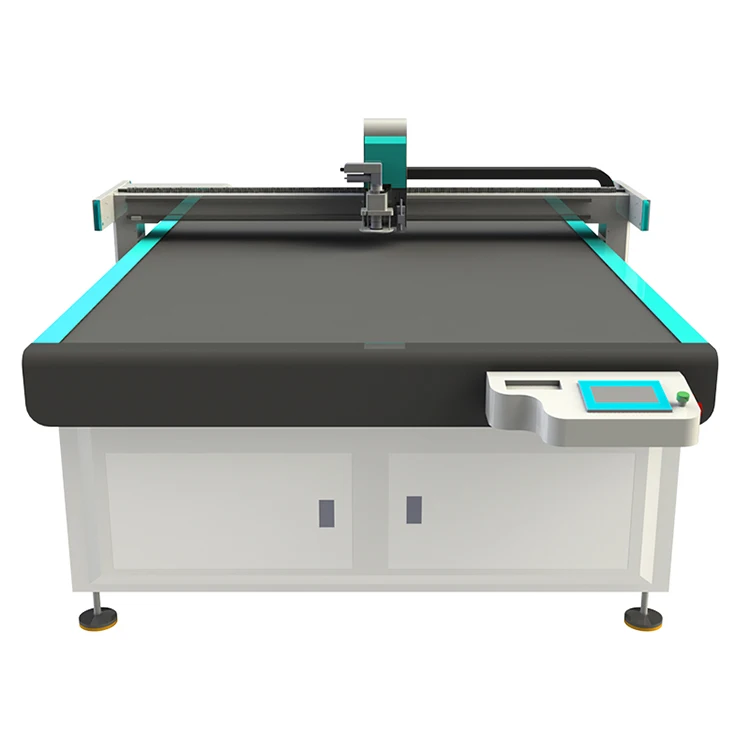
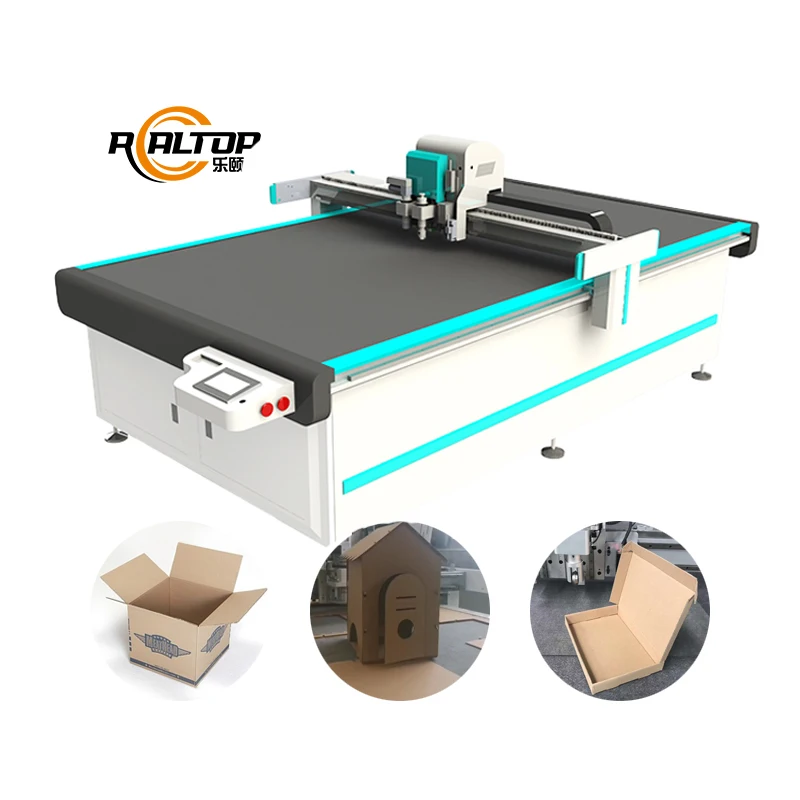
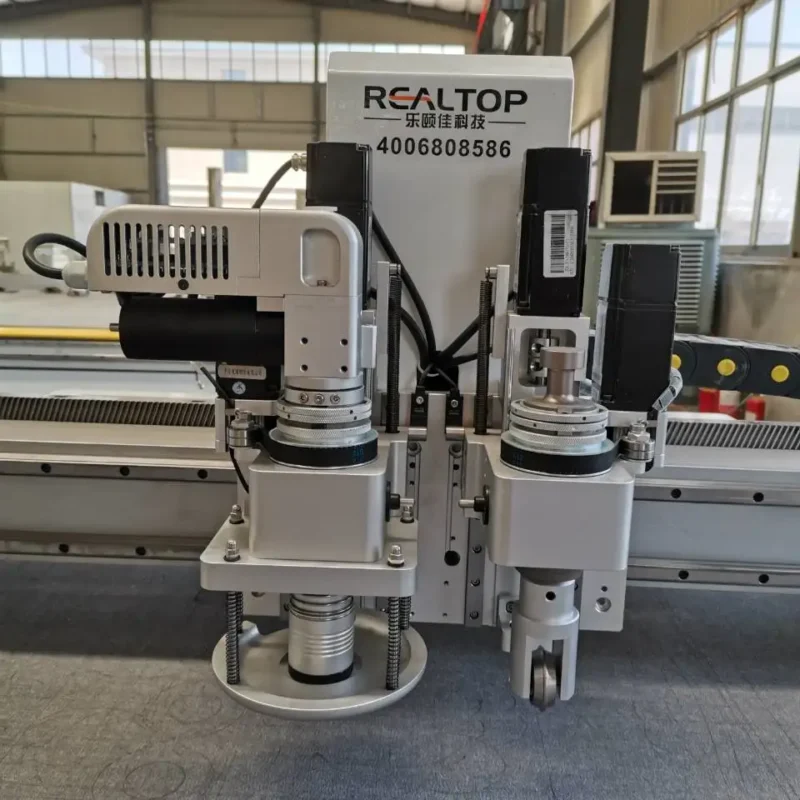
Material-Specific Tooling — The RT-D2516/RT-S2516 platform supports oscillating, drag, circular and pneumatic knife heads so fabric, coated textile and composite producers select the cutting action their material demands rather than accepting a single forced method.
Technical Specifications
| Parameter | Value |
|---|---|
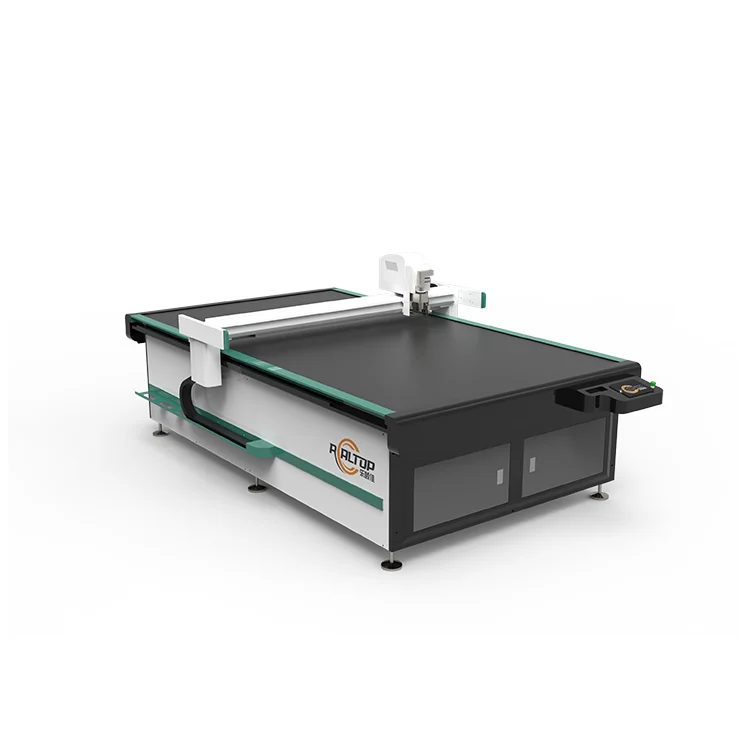
| Model | RT-D2516 / RT-S2516 |
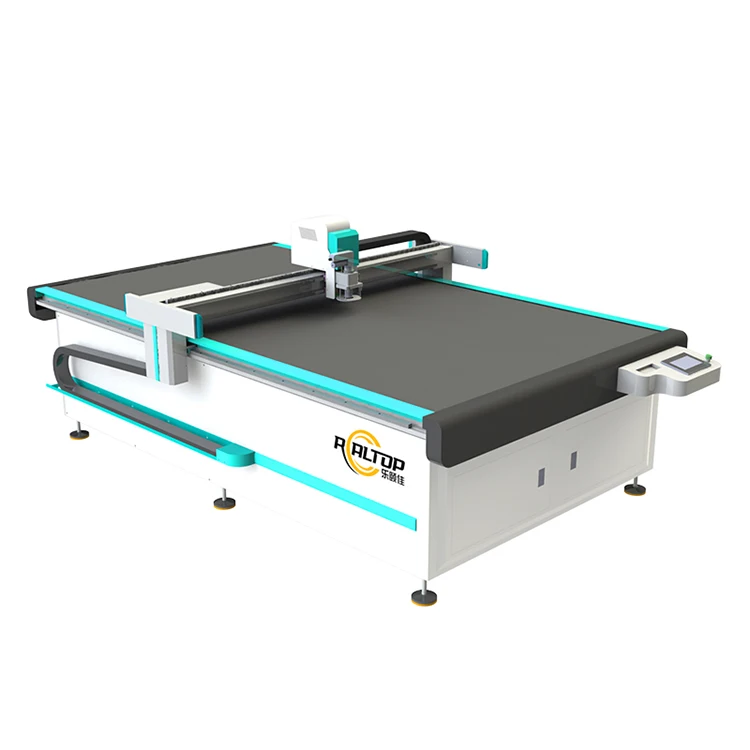
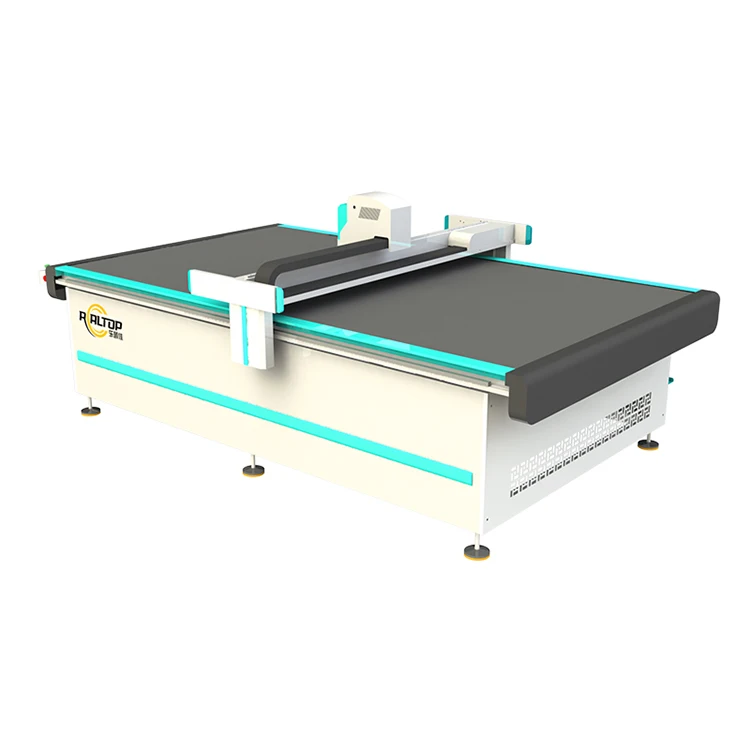
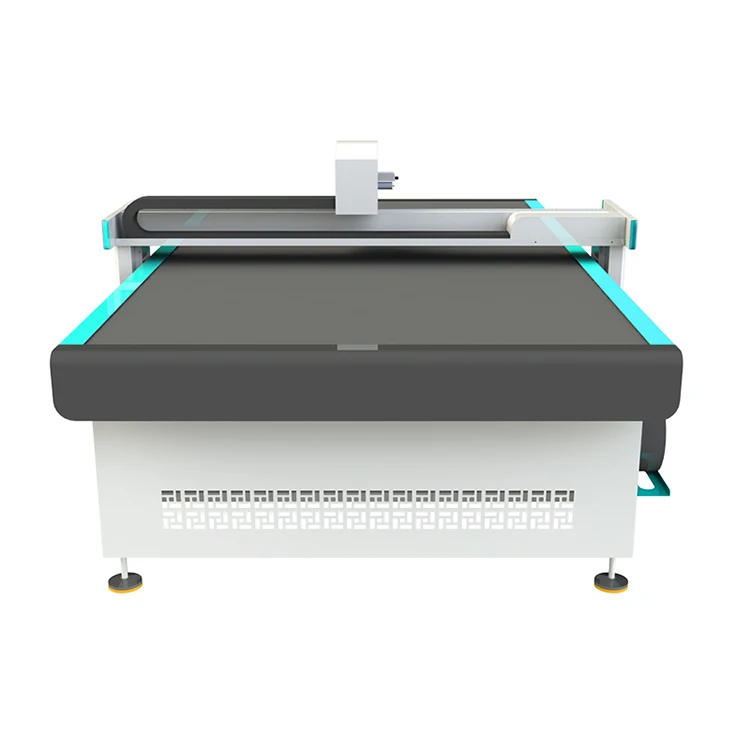
| Product Type | CNC Oscillating Knife Cutting Machine |
| Working Area | 1600 × 2500 mm |
| Machine Size | 3450 × 2300 × 1250 mm |
| Rated Power | 9 kW |
| Table Configuration | Flat working table or auto feeding table (selectable) |
| Cutting Speed | 200–800 mm/s (basis not stated in source — confirm block format, material and thickness) |
| Translational Velocity | 800–2000 mm/s |
| Repeated Accuracy | ≤ 0.1 mm |
| Cutting Thickness Capacity | ≤ 100 mm (varies with material density and tool head) |
| Multifunctional Head | Swiss imported knife with vibration full cut, half cut and cursor location |
| Safety Device | Infrared sensors |
| Transmission System | Digital servo motor, linear guide, synchronous belt, ball screw |
| Servo Motor | Delta |
| Linear Rail | Taiwan Hiwin |
| Vacuum Pump | 7.5 kW |
| Conveyor Belt | Germany imported |
| Instruction System | HP-GL compatible format |
| Voltage | 380 V ± 10 % |
| Language Options | English, Russian, Italian, Chinese (special languages customizable) |
Application Suitability
| Application | Material or Output |
|---|---|
| Garment and protective apparel cutting | Woven fabrics, nonwovens, coated barrier textiles, PTFE-laminated membranes |
| Soft home furnishing production | Upholstery fabrics, curtain panels, blackout linings, multi-layer quilted composites |
| Automotive interior trimming | Leather hides, sponge composite leather, synthetic suede, headliner fabrics |
| Carpet and floor mat fabrication | Tufted carpet, needle-punch felt, rubber-backed mats, foam underlay |
| Bag, luggage and shoe material cutting | PU leather, canvas, nylon webbing, EVA foam sheets |
| Sealing gasket manufacturing | Non-asbestos fibre sheets, cork-rubber composites, PTFE gasket stock |
Why "Working Area Only" Specifications Fail in Fabric Cutting
Choosing a CNC oscillating knife cutting machine for sale on table size alone is the most common mistake I see across garment and technical textile workshops. The cutting method, tool head and vacuum zoning must be matched to the actual material before any comparison on footprint makes sense.
A buyer once specified a 1600 × 2500 mm flatbed for nonwoven interlining, which ran fine during the factory demonstration. When production shifted to a coated surgical-gown fabric with a TPU barrier layer, the standard oscillating knife produced ragged edges and delaminated the coating. The vacuum zones were too large for the narrow pattern pieces, so the material lifted mid-cut and ruined an entire morning’s output. That mismatch was not a machine defect — it was a specification gap. The correct move would have been sample cutting on the actual barrier fabric, selecting a high-frequency vibrating knife and re-zoning the vacuum table for small garment panels before the purchase order was signed [NEED_CITE: textile cutting failure modes related to vacuum zoning and tool head selection].
Matching the Knife Action to the Fabric Structure
Woven apparel textiles, loosely tufted carpets and dense composite gaskets each respond differently to blade oscillation. The RT-D2516/RT-S2516 offers Swiss imported vibrating full-cut and half-cut heads, a circular knife for long straight runs, a drag knife for thin single-ply vinyl and a pneumatic knife for heavy sponge composites. This range means a curtain producer cutting multi-layer blackout lining can use high-frequency vibration to prevent ply shift, while a signage shop trimming self-adhesive film can switch to drag knife for clean contour work. Selecting the correct head is a CNC oscillating knife cutting machine for sale decision that matters more than any single spec-sheet number.
Auto Feeding for Continuous Roll Goods Production
Fabric shops running bolts of surgical gown material or upholstery textiles need continuous material flow, not manual lay-up between every sheet. The auto feeding table option pairs a Germany imported conveyor belt with the 7.5 kW vacuum pump, pulling roll stock across the cutting zone and advancing the next section once the current nest is cleared. For high-volume protective apparel runs, this eliminates the idle time of hand-positioning each layer and keeps throughput consistent across shifts [NEED_CITE: continuous conveyor feeding advantages in multi-layer textile cutting].
Reading the Specifications That Actually Matter
Several parameters on this platform deserve closer attention than the headline working area. The Delta servo motors driving Taiwan Hiwin linear rails deliver the ≤ 0.1 mm repeated accuracy that pattern nesting software relies on — if the carriage drifts even half a millimetre over a long cut path, nested garment pieces accumulate mismatch at the seams. The 7.5 kW vacuum pump must be evaluated against the table’s zoning layout; a single large plenum holds a full hide of leather well but struggles with small gasket blanks near the edges. Translational velocity of 800–2000 mm/s governs non-cutting travel between cuts, while the 200–800 mm/s cutting speed range must be confirmed against your specific fabric weight and ply count before quoting throughput. The HP-GL compatible instruction system accepts PLT, DXF and AI exports from most garment CAD packages, but software file compatibility should still be verified with your existing nesting workflow before the order is finalised.
The Hidden Cost of Wrong Configuration
Skipping a material-specific sample cut is the single most expensive shortcut in fabric equipment procurement. I have watched an entire batch of AAMI Level 3 surgical gown panels come off the table with frayed seams because the oscillation frequency was set for standard nonwoven rather than the SMS tri-laminate actually in production. Ragged edges on medical barrier fabrics mean the lot fails visual inspection and cannot be re-cut from the same yardage. Similarly, a vacuum table without adequate zoning for small die-shaped pieces lets fabric lift during the final pass, producing dimensional drift that only shows up when the operator tries to sew the panels together downstream [NEED_CITE: material lift and dimensional drift in small-part vacuum cutting].
Why Source This Platform Here
In-house design covers both knife and laser cutting technologies, so a buyer evaluating barrier fabrics can compare oscillating knife against CO2 laser sealing on the same production floor rather than visiting two separate suppliers. Tool head and vacuum table configuration are specified per material and daily volume, not quoted as a default package. CCD camera positioning is available for printed contour work on branded curtain panels or advertising textiles. Voltage, control language and plug type are confirmed before production starts — 380 V ± 10 % is standard, but other ratings are configurable for export markets. Sample cutting on your own roll goods is performed before the purchase order is finalised, with a written report documenting edge quality, cutting speed and material yield.
Documentation & Verification
- Machine specification sheet listing every tool head and vacuum zone configuration confirmed for your fabric
- Electrical schematic with voltage and frequency matched to your workshop supply before build
- Sample cutting report on your actual roll material showing edge quality and ply separation results
- Factory test record documenting repeated accuracy over a full cutting cycle before crating
- Software licence and file format compatibility note covering your existing PLT, DXF or AI workflow
- Spare parts list identifying Swiss knife blades, conveyor belt segments and vacuum seals by part number
Installation, Commissioning & Support
- Floor plan review for the 3450 × 2300 × 1250 mm footprint plus roll-stock staging clearance
- Dedicated 380 V ± 10 % circuit sized for 9 kW rated draw plus 7.5 kW vacuum pump start-up surge
- Assembly of table sections and conveyor belt tensioning performed on-site after delivery
- First-run parameter tuning: oscillation frequency, vacuum zone mapping and feed rate set for your fabric
- Operator training on tool head changeover, blade replacement intervals and nesting software import
- Preventive maintenance schedule covering Hiwin rail lubrication, belt tracking and vacuum filter cleaning
What to Include in Your Inquiry
To receive a configuration that actually fits your production, share the fabric type, weight per square metre and maximum ply count you intend to cut. Specify whether you run roll goods or pre-cut sheets, and provide your daily volume target so the auto feeding table and vacuum zoning can be sized accordingly. Confirm your workshop voltage, frequency and preferred control language so the electrical package is built correctly the first time.
Frequently Asked Questions
Q: How do I decide between knife cutting and laser cutting for my coated barrier fabric?
A: Knife cutting preserves the fabric hand and avoids heat-affected edges on melt-sensitive coatings like TPU and PTFE. Laser cutting seals synthetic edges and suits thin single-ply materials where fraying is a concern. Request sample cuts on your actual roll stock with both methods before deciding which platform fits your product range.
Q: What working area and tool head do I need for multi-layer curtain panel production?
A: The 1600 × 2500 mm table accommodates standard curtain widths plus nesting margin. A high-frequency vibrating knife head handles multi-layer blackout and lining fabrics without ply shift. Confirm the maximum ply height and fabric weight so oscillation amplitude and vacuum zoning are set correctly.
Q: How can I verify the machine handles my material thickness before ordering?
A: Send a roll sample of your heaviest production fabric. A cutting test is run with the proposed tool head and vacuum configuration, and a written report documents edge quality, dimensional accuracy and achievable cutting speed before any commitment is made.
Q: Will my existing garment nesting software export files this machine accepts?
A: The instruction system reads HP-GL compatible formats including PLT, DXF and AI. Share a sample nest file from your CAD package so file import, kerf compensation and layer recognition are validated before the machine ships.
Q: Can the voltage and control interface be matched to my local workshop standards?
A: Voltage is configurable within the 380 V ± 10 % range, and other ratings are available for specific export markets. Control language options include English, Russian, Italian and Chinese, with special languages arranged on request. Electrical specifications are locked in before production begins.
Material-Specific Tooling — The RT-D2516/RT-S2516 platform supports oscillating, drag, circular and pneumatic knife heads so fabric, coated textile and composite producers select the cutting action their material demands rather than accepting a single forced method.
Technical Specifications
| Parameter | Value |
|---|---|
| Model | RT-D2516 / RT-S2516 |
| Product Type | CNC Oscillating Knife Cutting Machine |
| Working Area | 1600 × 2500 mm |
| Machine Size | 3450 × 2300 × 1250 mm |
| Rated Power | 9 kW |
| Table Configuration | Flat working table or auto feeding table (selectable) |
| Cutting Speed | 200–800 mm/s (basis not stated in source — confirm block format, material and thickness) |
| Translational Velocity | 800–2000 mm/s |
| Repeated Accuracy | ≤ 0.1 mm |
| Cutting Thickness Capacity | ≤ 100 mm (varies with material density and tool head) |
| Multifunctional Head | Swiss imported knife with vibration full cut, half cut and cursor location |
| Safety Device | Infrared sensors |
| Transmission System | Digital servo motor, linear guide, synchronous belt, ball screw |
| Servo Motor | Delta |
| Linear Rail | Taiwan Hiwin |
| Vacuum Pump | 7.5 kW |
| Conveyor Belt | Germany imported |
| Instruction System | HP-GL compatible format |
| Voltage | 380 V ± 10 % |
| Language Options | English, Russian, Italian, Chinese (special languages customizable) |
Application Suitability
| Application | Material or Output |
|---|---|
| Garment and protective apparel cutting | Woven fabrics, nonwovens, coated barrier textiles, PTFE-laminated membranes |
| Soft home furnishing production | Upholstery fabrics, curtain panels, blackout linings, multi-layer quilted composites |
| Automotive interior trimming | Leather hides, sponge composite leather, synthetic suede, headliner fabrics |
| Carpet and floor mat fabrication | Tufted carpet, needle-punch felt, rubber-backed mats, foam underlay |
| Bag, luggage and shoe material cutting | PU leather, canvas, nylon webbing, EVA foam sheets |
| Sealing gasket manufacturing | Non-asbestos fibre sheets, cork-rubber composites, PTFE gasket stock |
Why "Working Area Only" Specifications Fail in Fabric Cutting
Choosing a CNC oscillating knife cutting machine for sale on table size alone is the most common mistake I see across garment and technical textile workshops. The cutting method, tool head and vacuum zoning must be matched to the actual material before any comparison on footprint makes sense.
A buyer once specified a 1600 × 2500 mm flatbed for nonwoven interlining, which ran fine during the factory demonstration. When production shifted to a coated surgical-gown fabric with a TPU barrier layer, the standard oscillating knife produced ragged edges and delaminated the coating. The vacuum zones were too large for the narrow pattern pieces, so the material lifted mid-cut and ruined an entire morning’s output. That mismatch was not a machine defect — it was a specification gap. The correct move would have been sample cutting on the actual barrier fabric, selecting a high-frequency vibrating knife and re-zoning the vacuum table for small garment panels before the purchase order was signed [NEED_CITE: textile cutting failure modes related to vacuum zoning and tool head selection].
Matching the Knife Action to the Fabric Structure
Woven apparel textiles, loosely tufted carpets and dense composite gaskets each respond differently to blade oscillation. The RT-D2516/RT-S2516 offers Swiss imported vibrating full-cut and half-cut heads, a circular knife for long straight runs, a drag knife for thin single-ply vinyl and a pneumatic knife for heavy sponge composites. This range means a curtain producer cutting multi-layer blackout lining can use high-frequency vibration to prevent ply shift, while a signage shop trimming self-adhesive film can switch to drag knife for clean contour work. Selecting the correct head is a CNC oscillating knife cutting machine for sale decision that matters more than any single spec-sheet number.
Auto Feeding for Continuous Roll Goods Production
Fabric shops running bolts of surgical gown material or upholstery textiles need continuous material flow, not manual lay-up between every sheet. The auto feeding table option pairs a Germany imported conveyor belt with the 7.5 kW vacuum pump, pulling roll stock across the cutting zone and advancing the next section once the current nest is cleared. For high-volume protective apparel runs, this eliminates the idle time of hand-positioning each layer and keeps throughput consistent across shifts [NEED_CITE: continuous conveyor feeding advantages in multi-layer textile cutting].
Reading the Specifications That Actually Matter
Several parameters on this platform deserve closer attention than the headline working area. The Delta servo motors driving Taiwan Hiwin linear rails deliver the ≤ 0.1 mm repeated accuracy that pattern nesting software relies on — if the carriage drifts even half a millimetre over a long cut path, nested garment pieces accumulate mismatch at the seams. The 7.5 kW vacuum pump must be evaluated against the table’s zoning layout; a single large plenum holds a full hide of leather well but struggles with small gasket blanks near the edges. Translational velocity of 800–2000 mm/s governs non-cutting travel between cuts, while the 200–800 mm/s cutting speed range must be confirmed against your specific fabric weight and ply count before quoting throughput. The HP-GL compatible instruction system accepts PLT, DXF and AI exports from most garment CAD packages, but software file compatibility should still be verified with your existing nesting workflow before the order is finalised.
The Hidden Cost of Wrong Configuration
Skipping a material-specific sample cut is the single most expensive shortcut in fabric equipment procurement. I have watched an entire batch of AAMI Level 3 surgical gown panels come off the table with frayed seams because the oscillation frequency was set for standard nonwoven rather than the SMS tri-laminate actually in production. Ragged edges on medical barrier fabrics mean the lot fails visual inspection and cannot be re-cut from the same yardage. Similarly, a vacuum table without adequate zoning for small die-shaped pieces lets fabric lift during the final pass, producing dimensional drift that only shows up when the operator tries to sew the panels together downstream [NEED_CITE: material lift and dimensional drift in small-part vacuum cutting].
Why Source This Platform Here
In-house design covers both knife and laser cutting technologies, so a buyer evaluating barrier fabrics can compare oscillating knife against CO2 laser sealing on the same production floor rather than visiting two separate suppliers. Tool head and vacuum table configuration are specified per material and daily volume, not quoted as a default package. CCD camera positioning is available for printed contour work on branded curtain panels or advertising textiles. Voltage, control language and plug type are confirmed before production starts — 380 V ± 10 % is standard, but other ratings are configurable for export markets. Sample cutting on your own roll goods is performed before the purchase order is finalised, with a written report documenting edge quality, cutting speed and material yield.
Documentation & Verification
- Machine specification sheet listing every tool head and vacuum zone configuration confirmed for your fabric
- Electrical schematic with voltage and frequency matched to your workshop supply before build
- Sample cutting report on your actual roll material showing edge quality and ply separation results
- Factory test record documenting repeated accuracy over a full cutting cycle before crating
- Software licence and file format compatibility note covering your existing PLT, DXF or AI workflow
- Spare parts list identifying Swiss knife blades, conveyor belt segments and vacuum seals by part number
Installation, Commissioning & Support
- Floor plan review for the 3450 × 2300 × 1250 mm footprint plus roll-stock staging clearance
- Dedicated 380 V ± 10 % circuit sized for 9 kW rated draw plus 7.5 kW vacuum pump start-up surge
- Assembly of table sections and conveyor belt tensioning performed on-site after delivery
- First-run parameter tuning: oscillation frequency, vacuum zone mapping and feed rate set for your fabric
- Operator training on tool head changeover, blade replacement intervals and nesting software import
- Preventive maintenance schedule covering Hiwin rail lubrication, belt tracking and vacuum filter cleaning
What to Include in Your Inquiry
To receive a configuration that actually fits your production, share the fabric type, weight per square metre and maximum ply count you intend to cut. Specify whether you run roll goods or pre-cut sheets, and provide your daily volume target so the auto feeding table and vacuum zoning can be sized accordingly. Confirm your workshop voltage, frequency and preferred control language so the electrical package is built correctly the first time.
Frequently Asked Questions
Q: How do I decide between knife cutting and laser cutting for my coated barrier fabric?
A: Knife cutting preserves the fabric hand and avoids heat-affected edges on melt-sensitive coatings like TPU and PTFE. Laser cutting seals synthetic edges and suits thin single-ply materials where fraying is a concern. Request sample cuts on your actual roll stock with both methods before deciding which platform fits your product range.
Q: What working area and tool head do I need for multi-layer curtain panel production?
A: The 1600 × 2500 mm table accommodates standard curtain widths plus nesting margin. A high-frequency vibrating knife head handles multi-layer blackout and lining fabrics without ply shift. Confirm the maximum ply height and fabric weight so oscillation amplitude and vacuum zoning are set correctly.
Q: How can I verify the machine handles my material thickness before ordering?
A: Send a roll sample of your heaviest production fabric. A cutting test is run with the proposed tool head and vacuum configuration, and a written report documents edge quality, dimensional accuracy and achievable cutting speed before any commitment is made.
Q: Will my existing garment nesting software export files this machine accepts?
A: The instruction system reads HP-GL compatible formats including PLT, DXF and AI. Share a sample nest file from your CAD package so file import, kerf compensation and layer recognition are validated before the machine ships.
Q: Can the voltage and control interface be matched to my local workshop standards?
A: Voltage is configurable within the 380 V ± 10 % range, and other ratings are available for specific export markets. Control language options include English, Russian, Italian and Chinese, with special languages arranged on request. Electrical specifications are locked in before production begins.
商品评价
There are no reviews yet.