

Fast Delivery
Quick, reliable shipping to any location.

Free & easy returns
Return this item by mail or in store within 90 days for a full refund.
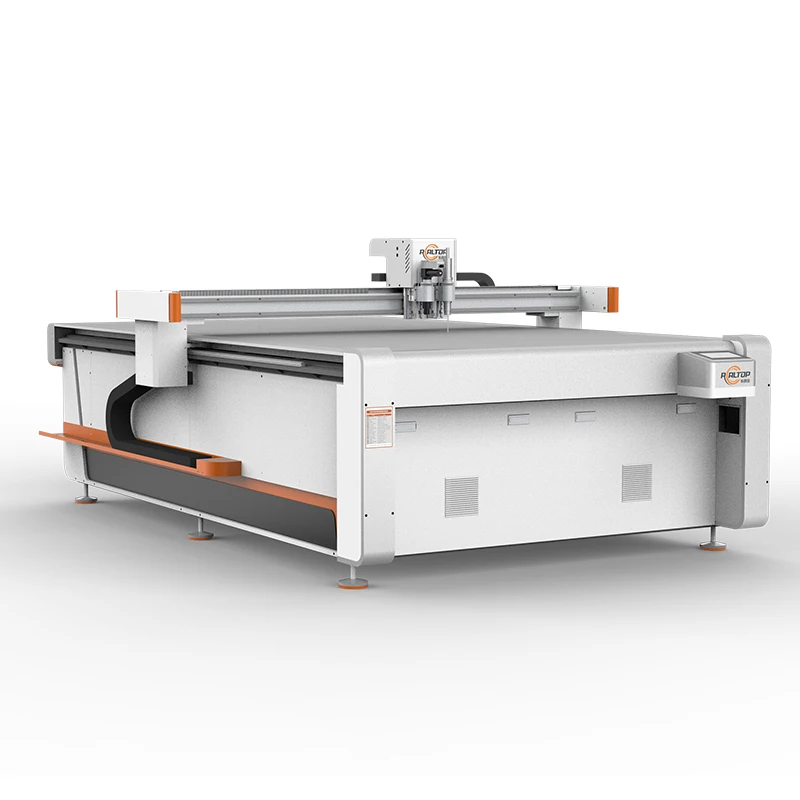
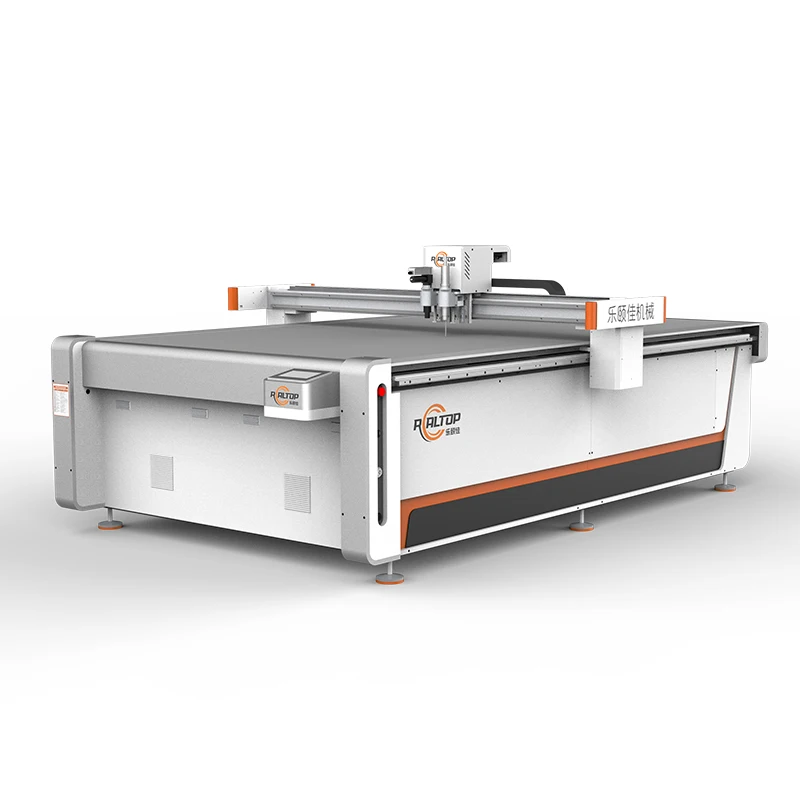
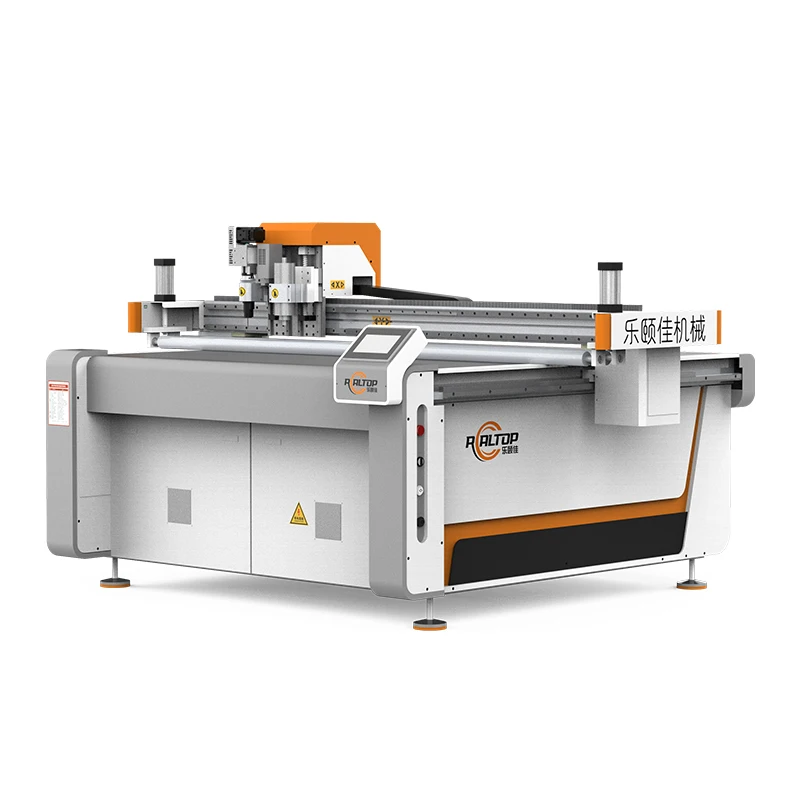
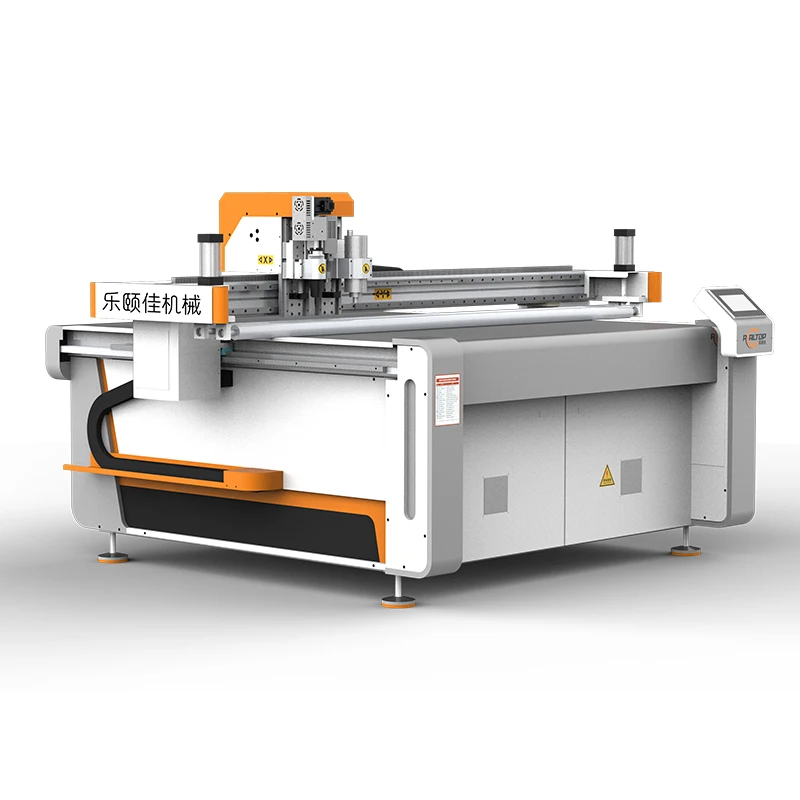
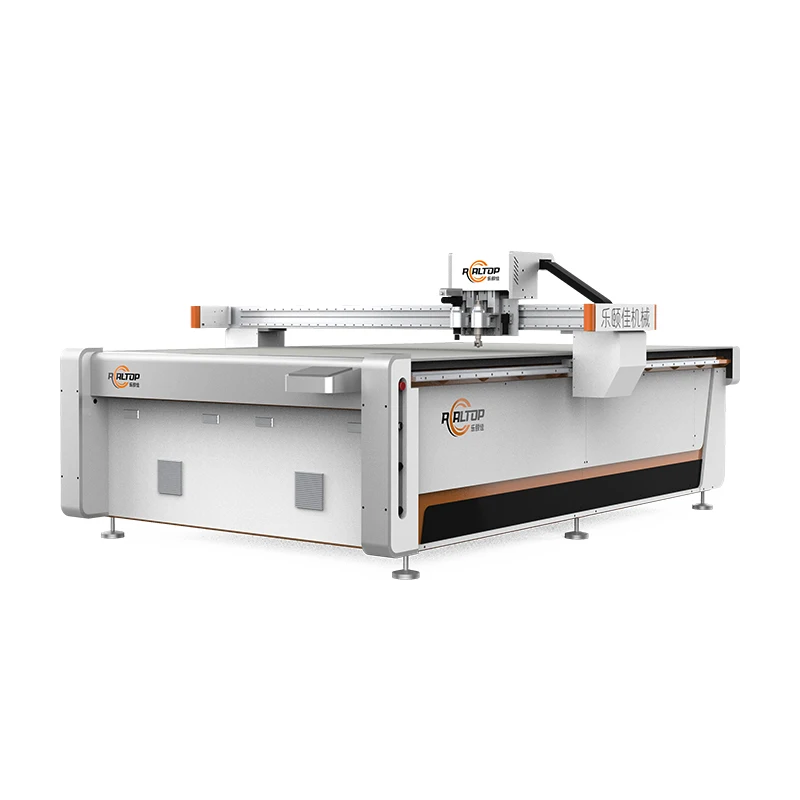
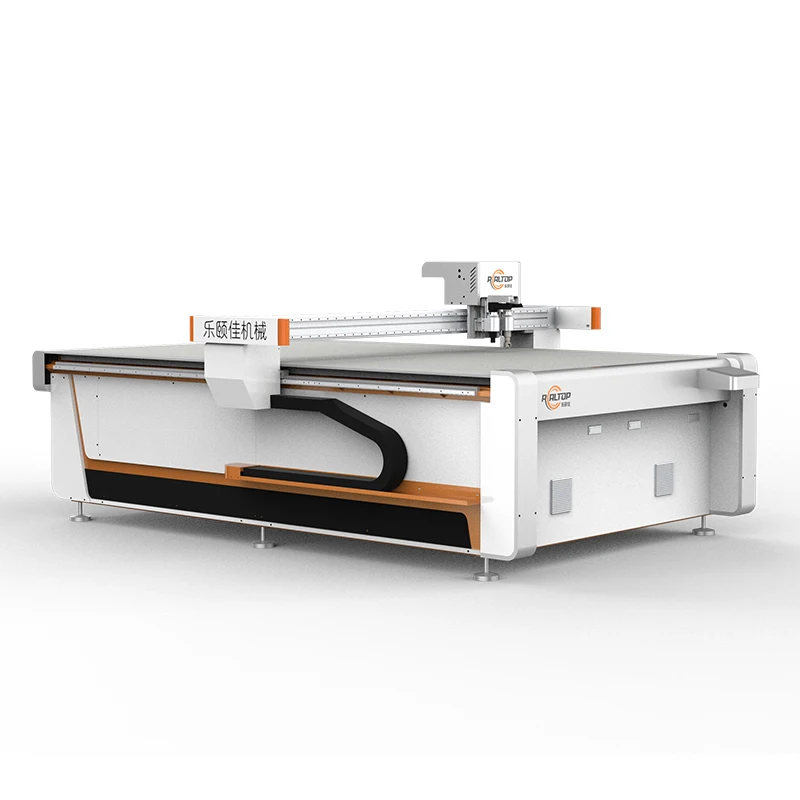
Knife and Laser Range — RT-D2516 and RT-S2516 digital cutting tables share a 1600×2500 mm platform and interchangeable tool heads, so packaging, signage and composite buyers can match the exact cutting method to their stock before ordering.
Technical Specifications
| Parameter | Value |
|---|---|
| Model | RT-D2516 / RT-S2516 |
| Product Type | CNC Digital Cutting Machine |
| Working Area | 1600 × 2500 mm |
| Machine Dimensions | 3450 × 2300 × 1250 mm |
| Rated Power | 9 kW |
| Voltage | 380V ±10% |
| Translational Velocity | 800 – 2000 mm/s |
| Cutting Speed | 200 – 800 mm/s (basis to be confirmed) |
| Max Cutting Thickness | ≤ 100 mm (varies with material) |
| Repeated Accuracy | ≤ 0.1 mm |
| Multifunctional Head | Swiss imported knife (vibration full cut, half cut, cursor location) |
| Tool Options | Oscillating knife, creasing wheel, V-cutting knife |
| Platform | Aluminum air box vacuum platform (integrated and split-box adsorption) |
| Transmission System | Digital servo motor, linear guide, synchronous belt, ball screw |
| Instruction System | HP-GL compatible format |
| Software | Auto typesetting (PLT, DXF, AI formats) |
| Control Panel | Touch screen, multiple language supported |
| Safety Device | Infrared sensors |
| Other Configuration | Delta servo motor (Japan/China optional), Germany imported conveyor belt, 7.5 kW vacuum pump, Taiwan Hiwin rail |
Application Suitability
| Application | Material or Output |
|---|---|
| Packaging and carton sample making | Corrugated board, honeycomb cardboard, plastic box stock |
| Graphic advertising and signage | Vinyl, sticker film, foam board, PVC sheet |
| Soft home furnishings and automotive interiors | Leather, fabric, textile, composite leather, carpet |
| Bags, footwear and clothing | PU, EVA, sponge, non-woven fabric, cloth |
| Sealing pads and gaskets | Rubber, PTFE, ETFE, fiberglass, gasket material |
Why Working Area Alone Is Not Enough for CNC Digital Cutting Machine Selection
Tool head, vacuum zoning and material thickness must be specified together.
A buyer once sent us a drawing showing a 1600×2500 mm cutting area and assumed any machine covering that footprint would handle their 3 mm honeycomb cardboard. The problem was not the table size — it was the tool head. The machine they first considered had a drag knife that crushed the flutes instead of shearing them cleanly, leaving ragged edges on every fold line. For corrugated and honeycomb stock, an oscillating knife or dedicated V-cutting knife is essential to preserve structural integrity at the crease [NEED_CITE: oscillating versus drag knife performance on corrugated substrates]. This is why our catalogue approach pairs each working area with the correct tool configuration rather than listing dimensions in isolation.
Full Catalogue Logic: Knife Versus Laser Across Material Families
When you browse the complete CNC digital cutting machine for sale range, the first decision is not model number — it is cutting method. The RT-D2516 and RT-S2516 sit in the knife-cutting family, handling flexible, semi-rigid and layered materials that a laser beam would melt, scorch or fail to cut cleanly. Fabric, leather, foam, gasket rubber and corrugated board all respond better to mechanical blade action. The Swiss imported knife head on these models supports vibration full cutting, half cutting and cursor location, giving sample makers and short-run producers three modes in one tool station.
Matching Tool Head to Production Reality
Choosing the right CNC digital cutting machine for sale depends heavily on what your material does under the blade. A creasing wheel scores fold lines on cardboard without severing fibers, which keeps the crease sharp and the board strong. A V-cutting knife slots honeycomb panels for clean ninety-degree folds in carton and display work. If you are cutting sticker film or thin PVC for signage, the oscillating knife at high frequency delivers a sealed, burr-free edge. Each tool option is available on the same 1600×2500 mm platform, so a packaging house and a signage producer can both start from the RT-D2516 or RT-S2516 frame and specify different heads.
Specs That Matter on the Shop Floor
The Delta servo motor and Taiwan Hiwin linear guide combination delivers ≤ 0.1 mm repeatability, which matters when you are nesting dozens of carton blanks on a single sheet and every millimeter of yield counts. Translational velocity between 800 and 2000 mm/s keeps the head moving quickly between cut zones, while actual cutting speed of 200 – 800 mm/s varies with material density and thickness [NEED_CITE: cutting speed variance by substrate density]. The aluminum air box vacuum platform uses a 7.5 kW pump to hold stock flat; split-box zoning is available so that small parts cut from a large sheet stay pinned down instead of lifting when surrounding material is removed. The HP-GL compatible instruction system and auto typesetting software accept PLT, DXF and AI files, which means most existing packaging design workflows transfer without format conversion.
The Cost of Skipping the Sample Cut
A distributor once imported a batch of flatbed cutters specified only on working area and rated power. When their end customers tried cutting 5 mm EVA foam, the default tool head compressed the material before the blade penetrated, leaving a crushed top edge on every piece. The fix required retrofitting a different oscillating knife module and recalibrating the Z-axis depth — work that delayed delivery and eroded margin. Running a sample cut on the buyer’s actual material before the order is signed avoids this class of problem entirely [NEED_CITE: importance of pre-shipment material sample testing].
Why Source the Full Range From One Manufacturer
Sourcing both knife and laser systems from the same factory means your configuration is matched to material, not forced into one method. In-house design covers frame, motion and tool head engineering, so the RT-D2516 and RT-S2516 share proven components with the rest of the catalogue. Voltage, plug type and control language are confirmed before production, not guessed at packing. Every machine ships with a factory test record run on your specified material range, so performance is verified before it leaves Jinan.
Documentation & Verification
- Machine specification sheet listing working area, tool head options and vacuum zoning layout
- Electrical schematic with 380V ±10% voltage confirmation signed before production
- Software licence and file format compatibility note covering PLT, DXF and AI inputs
- Sample cutting report on buyer’s own material with recorded video of cut quality
- Factory test record documenting repeatability and cutting edge results before dispatch
- Operation and maintenance manual with spare parts list specific to configured tool heads
Installation, Commissioning & Support
- Floor space planning around the 3450 × 2300 × 1250 mm machine footprint with access clearance
- Dedicated 380V ±10% circuit rated for the 9 kW total load plus vacuum pump startup surge
- Split-box platform option reduces transport dimensions for container loading
- First-run calibration of oscillating knife depth and creasing wheel pressure on your stock
- Touch screen control panel configured in operator’s language before shipment
- Spare knife blades, creasing wheels and vacuum seals included in initial parts kit
What We Need to Quote the Right Configuration
Send your material type, maximum sheet thickness and the largest blank size you plan to cut. Tell us your local voltage and frequency, preferred control language and whether your existing design files are in PLT, DXF or AI format. If your daily volume is high enough to consider the auto-feeding conveyor version, share your average run length so we can recommend flatbed or feeding table accordingly.
Frequently Asked Questions
Q: How do I choose between the RT-D2516 and RT-S2516 for my packaging work?
A: The decision usually comes down to table type and feeding method. The RT-D2516 uses a flat working table suited to sample making and short runs on varied board stocks. The RT-S2516 offers an auto feeding table for higher-volume sheet processing. Both share the same 1600 × 2500 mm cutting area and tool head options, so your choice depends on daily volume and material handling preference.
Q: Which tool head should I specify for corrugated and honeycomb cardboard?
A: An oscillating knife handles straight and curved cuts on corrugated board cleanly. For fold lines on carton stock, the creasing wheel scores without severing fibers. Honeycomb panels that need ninety-degree folds benefit from the V-cutting knife, which removes a channel for clean bending. Multiple tools can be configured on the same multifunctional head.
Q: What voltage and language settings are confirmed before my machine ships?
A: We confirm 380V ±10% or your local equivalent, along with plug type and frequency, before production begins. The touch screen control panel supports multiple languages, and we lock in your preferred language at the order stage. The electrical schematic is signed off by both parties to prevent mismatched supply on arrival.
Q: Can the auto typesetting software work with my existing nesting files?
A: The software accepts PLT, DXF and AI formats and operates on an HP-GL compatible instruction system. If your current workflow uses one of these formats, your files transfer directly. We verify file compatibility during the sample stage, running your actual design files on the machine before shipment to confirm nesting accuracy.
Q: Does the full catalogue include laser cutting options as well?
A: Yes. Alongside the RT-D2516 and RT-S2516 knife cutting tables, the catalogue covers CO2 laser machines for acrylic, wood and textile, plus fiber laser systems for sheet metal and tube. A buyer evaluating both knife and laser methods can compare options in one place and select the cutting technology that matches their primary material.
Knife and Laser Range — RT-D2516 and RT-S2516 digital cutting tables share a 1600×2500 mm platform and interchangeable tool heads, so packaging, signage and composite buyers can match the exact cutting method to their stock before ordering.
Technical Specifications
| Parameter | Value |
|---|---|
| Model | RT-D2516 / RT-S2516 |
| Product Type | CNC Digital Cutting Machine |
| Working Area | 1600 × 2500 mm |
| Machine Dimensions | 3450 × 2300 × 1250 mm |
| Rated Power | 9 kW |
| Voltage | 380V ±10% |
| Translational Velocity | 800 – 2000 mm/s |
| Cutting Speed | 200 – 800 mm/s (basis to be confirmed) |
| Max Cutting Thickness | ≤ 100 mm (varies with material) |
| Repeated Accuracy | ≤ 0.1 mm |
| Multifunctional Head | Swiss imported knife (vibration full cut, half cut, cursor location) |
| Tool Options | Oscillating knife, creasing wheel, V-cutting knife |
| Platform | Aluminum air box vacuum platform (integrated and split-box adsorption) |
| Transmission System | Digital servo motor, linear guide, synchronous belt, ball screw |
| Instruction System | HP-GL compatible format |
| Software | Auto typesetting (PLT, DXF, AI formats) |
| Control Panel | Touch screen, multiple language supported |
| Safety Device | Infrared sensors |
| Other Configuration | Delta servo motor (Japan/China optional), Germany imported conveyor belt, 7.5 kW vacuum pump, Taiwan Hiwin rail |
Application Suitability
| Application | Material or Output |
|---|---|
| Packaging and carton sample making | Corrugated board, honeycomb cardboard, plastic box stock |
| Graphic advertising and signage | Vinyl, sticker film, foam board, PVC sheet |
| Soft home furnishings and automotive interiors | Leather, fabric, textile, composite leather, carpet |
| Bags, footwear and clothing | PU, EVA, sponge, non-woven fabric, cloth |
| Sealing pads and gaskets | Rubber, PTFE, ETFE, fiberglass, gasket material |
Why Working Area Alone Is Not Enough for CNC Digital Cutting Machine Selection
Tool head, vacuum zoning and material thickness must be specified together.
A buyer once sent us a drawing showing a 1600×2500 mm cutting area and assumed any machine covering that footprint would handle their 3 mm honeycomb cardboard. The problem was not the table size — it was the tool head. The machine they first considered had a drag knife that crushed the flutes instead of shearing them cleanly, leaving ragged edges on every fold line. For corrugated and honeycomb stock, an oscillating knife or dedicated V-cutting knife is essential to preserve structural integrity at the crease [NEED_CITE: oscillating versus drag knife performance on corrugated substrates]. This is why our catalogue approach pairs each working area with the correct tool configuration rather than listing dimensions in isolation.
Full Catalogue Logic: Knife Versus Laser Across Material Families
When you browse the complete CNC digital cutting machine for sale range, the first decision is not model number — it is cutting method. The RT-D2516 and RT-S2516 sit in the knife-cutting family, handling flexible, semi-rigid and layered materials that a laser beam would melt, scorch or fail to cut cleanly. Fabric, leather, foam, gasket rubber and corrugated board all respond better to mechanical blade action. The Swiss imported knife head on these models supports vibration full cutting, half cutting and cursor location, giving sample makers and short-run producers three modes in one tool station.
Matching Tool Head to Production Reality
Choosing the right CNC digital cutting machine for sale depends heavily on what your material does under the blade. A creasing wheel scores fold lines on cardboard without severing fibers, which keeps the crease sharp and the board strong. A V-cutting knife slots honeycomb panels for clean ninety-degree folds in carton and display work. If you are cutting sticker film or thin PVC for signage, the oscillating knife at high frequency delivers a sealed, burr-free edge. Each tool option is available on the same 1600×2500 mm platform, so a packaging house and a signage producer can both start from the RT-D2516 or RT-S2516 frame and specify different heads.
Specs That Matter on the Shop Floor
The Delta servo motor and Taiwan Hiwin linear guide combination delivers ≤ 0.1 mm repeatability, which matters when you are nesting dozens of carton blanks on a single sheet and every millimeter of yield counts. Translational velocity between 800 and 2000 mm/s keeps the head moving quickly between cut zones, while actual cutting speed of 200 – 800 mm/s varies with material density and thickness [NEED_CITE: cutting speed variance by substrate density]. The aluminum air box vacuum platform uses a 7.5 kW pump to hold stock flat; split-box zoning is available so that small parts cut from a large sheet stay pinned down instead of lifting when surrounding material is removed. The HP-GL compatible instruction system and auto typesetting software accept PLT, DXF and AI files, which means most existing packaging design workflows transfer without format conversion.
The Cost of Skipping the Sample Cut
A distributor once imported a batch of flatbed cutters specified only on working area and rated power. When their end customers tried cutting 5 mm EVA foam, the default tool head compressed the material before the blade penetrated, leaving a crushed top edge on every piece. The fix required retrofitting a different oscillating knife module and recalibrating the Z-axis depth — work that delayed delivery and eroded margin. Running a sample cut on the buyer’s actual material before the order is signed avoids this class of problem entirely [NEED_CITE: importance of pre-shipment material sample testing].
Why Source the Full Range From One Manufacturer
Sourcing both knife and laser systems from the same factory means your configuration is matched to material, not forced into one method. In-house design covers frame, motion and tool head engineering, so the RT-D2516 and RT-S2516 share proven components with the rest of the catalogue. Voltage, plug type and control language are confirmed before production, not guessed at packing. Every machine ships with a factory test record run on your specified material range, so performance is verified before it leaves Jinan.
Documentation & Verification
- Machine specification sheet listing working area, tool head options and vacuum zoning layout
- Electrical schematic with 380V ±10% voltage confirmation signed before production
- Software licence and file format compatibility note covering PLT, DXF and AI inputs
- Sample cutting report on buyer’s own material with recorded video of cut quality
- Factory test record documenting repeatability and cutting edge results before dispatch
- Operation and maintenance manual with spare parts list specific to configured tool heads
Installation, Commissioning & Support
- Floor space planning around the 3450 × 2300 × 1250 mm machine footprint with access clearance
- Dedicated 380V ±10% circuit rated for the 9 kW total load plus vacuum pump startup surge
- Split-box platform option reduces transport dimensions for container loading
- First-run calibration of oscillating knife depth and creasing wheel pressure on your stock
- Touch screen control panel configured in operator’s language before shipment
- Spare knife blades, creasing wheels and vacuum seals included in initial parts kit
What We Need to Quote the Right Configuration
Send your material type, maximum sheet thickness and the largest blank size you plan to cut. Tell us your local voltage and frequency, preferred control language and whether your existing design files are in PLT, DXF or AI format. If your daily volume is high enough to consider the auto-feeding conveyor version, share your average run length so we can recommend flatbed or feeding table accordingly.
Frequently Asked Questions
Q: How do I choose between the RT-D2516 and RT-S2516 for my packaging work?
A: The decision usually comes down to table type and feeding method. The RT-D2516 uses a flat working table suited to sample making and short runs on varied board stocks. The RT-S2516 offers an auto feeding table for higher-volume sheet processing. Both share the same 1600 × 2500 mm cutting area and tool head options, so your choice depends on daily volume and material handling preference.
Q: Which tool head should I specify for corrugated and honeycomb cardboard?
A: An oscillating knife handles straight and curved cuts on corrugated board cleanly. For fold lines on carton stock, the creasing wheel scores without severing fibers. Honeycomb panels that need ninety-degree folds benefit from the V-cutting knife, which removes a channel for clean bending. Multiple tools can be configured on the same multifunctional head.
Q: What voltage and language settings are confirmed before my machine ships?
A: We confirm 380V ±10% or your local equivalent, along with plug type and frequency, before production begins. The touch screen control panel supports multiple languages, and we lock in your preferred language at the order stage. The electrical schematic is signed off by both parties to prevent mismatched supply on arrival.
Q: Can the auto typesetting software work with my existing nesting files?
A: The software accepts PLT, DXF and AI formats and operates on an HP-GL compatible instruction system. If your current workflow uses one of these formats, your files transfer directly. We verify file compatibility during the sample stage, running your actual design files on the machine before shipment to confirm nesting accuracy.
Q: Does the full catalogue include laser cutting options as well?
A: Yes. Alongside the RT-D2516 and RT-S2516 knife cutting tables, the catalogue covers CO2 laser machines for acrylic, wood and textile, plus fiber laser systems for sheet metal and tube. A buyer evaluating both knife and laser methods can compare options in one place and select the cutting technology that matches their primary material.










商品评价
There are no reviews yet.