

Fast Delivery
Quick, reliable shipping to any location.

Free & easy returns
Return this item by mail or in store within 90 days for a full refund.
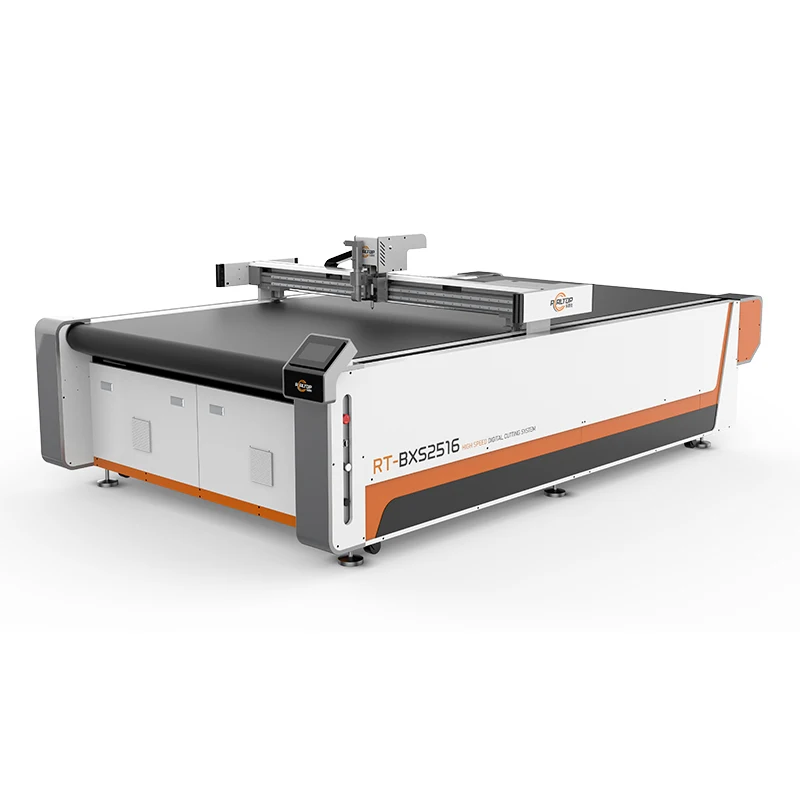
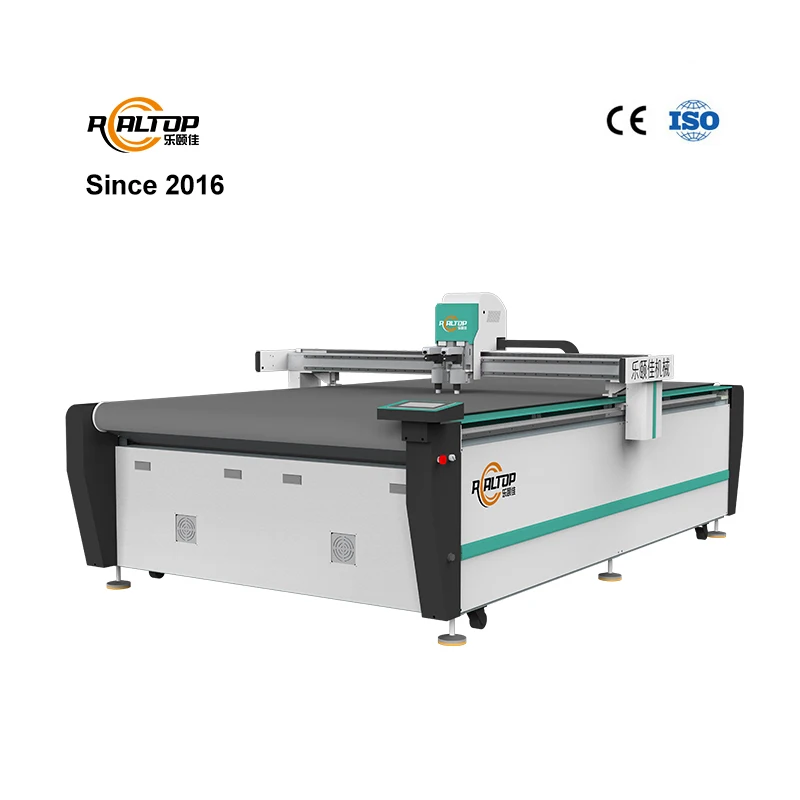
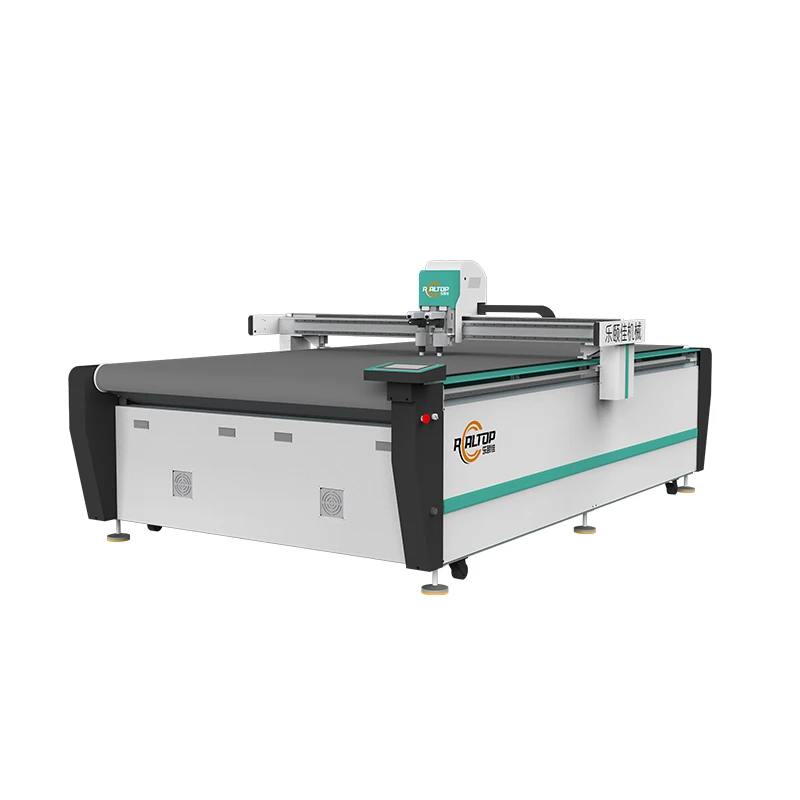
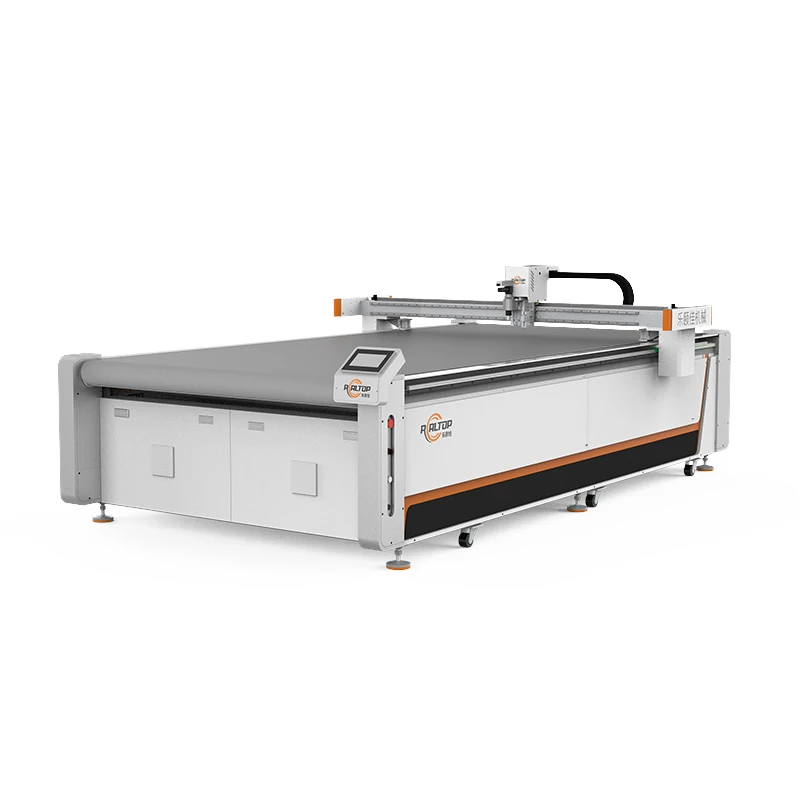
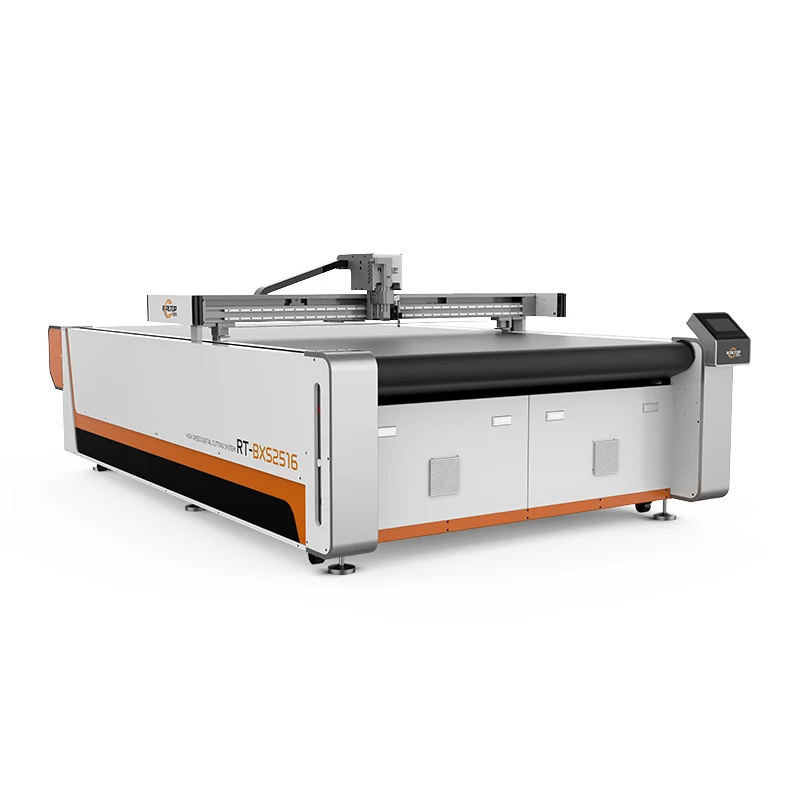
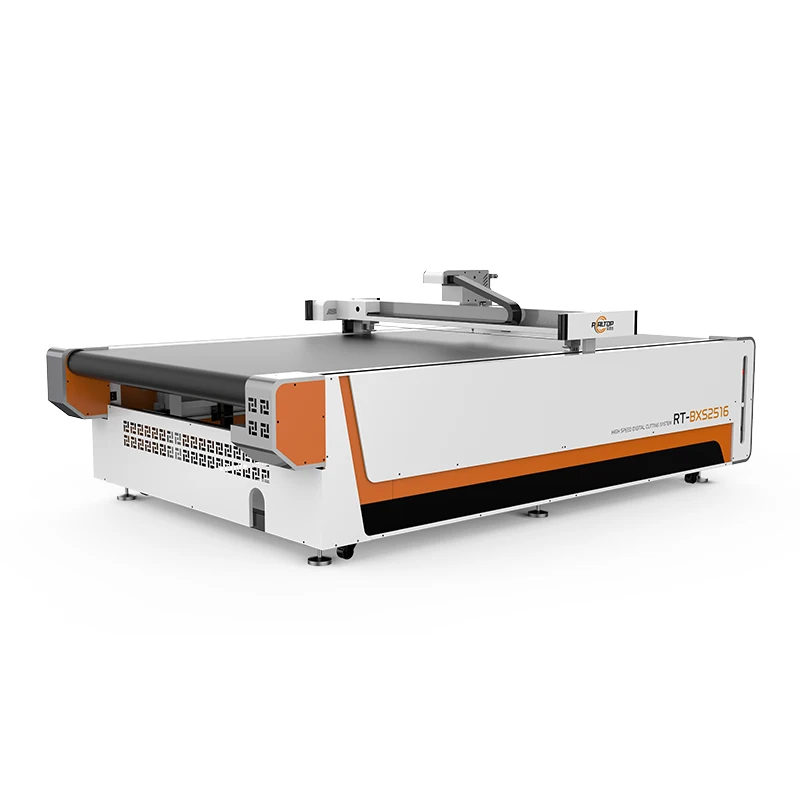
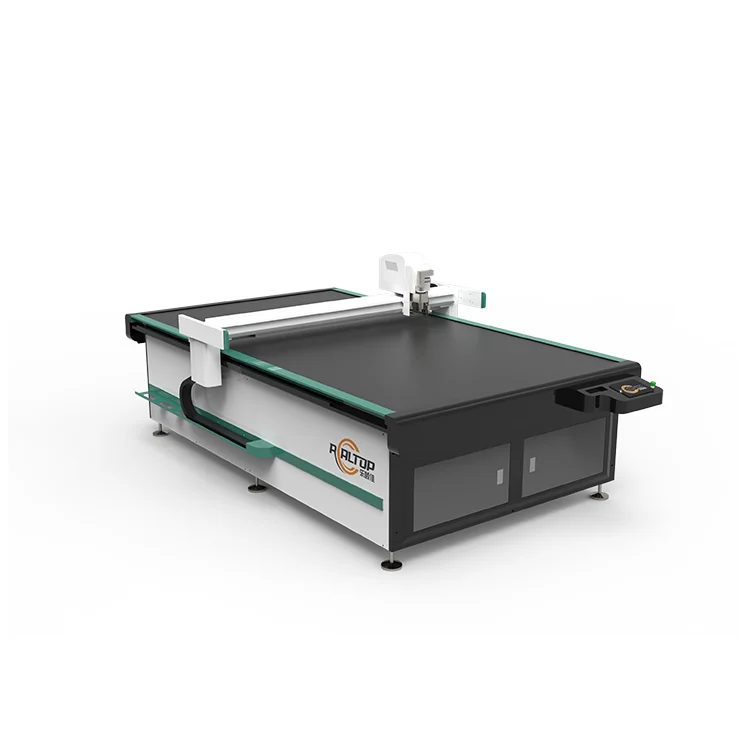
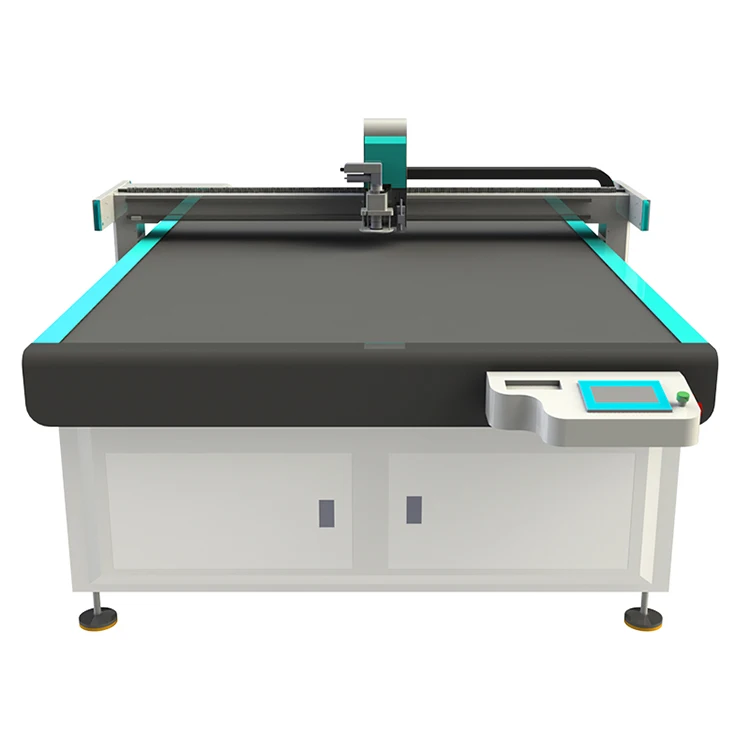
Knife and laser systems built under one roof — the RT-D2516/RT-S2516 oscillating knife table sits within a complete catalogue where buyers match the cutting method to their material stack-up, not the other way around.
Technical Specifications
| Parameter | Value |
|---|---|
| Model | RT-D2516 / RT-S2516 |
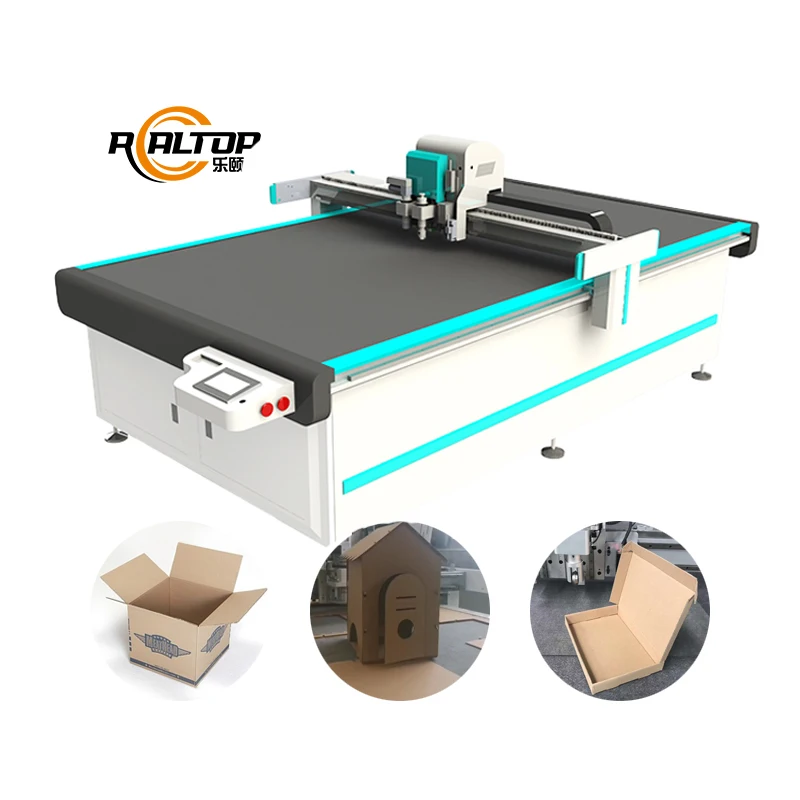
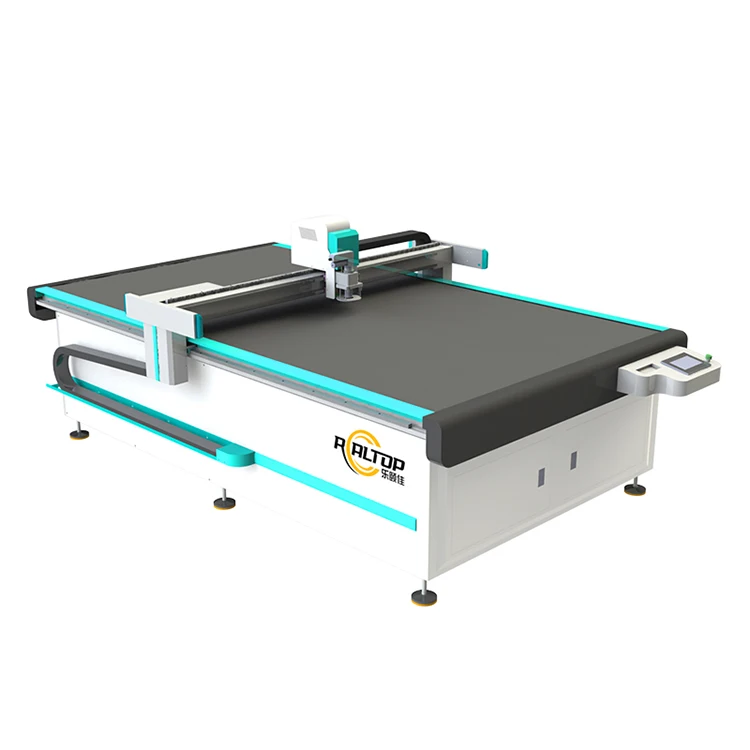
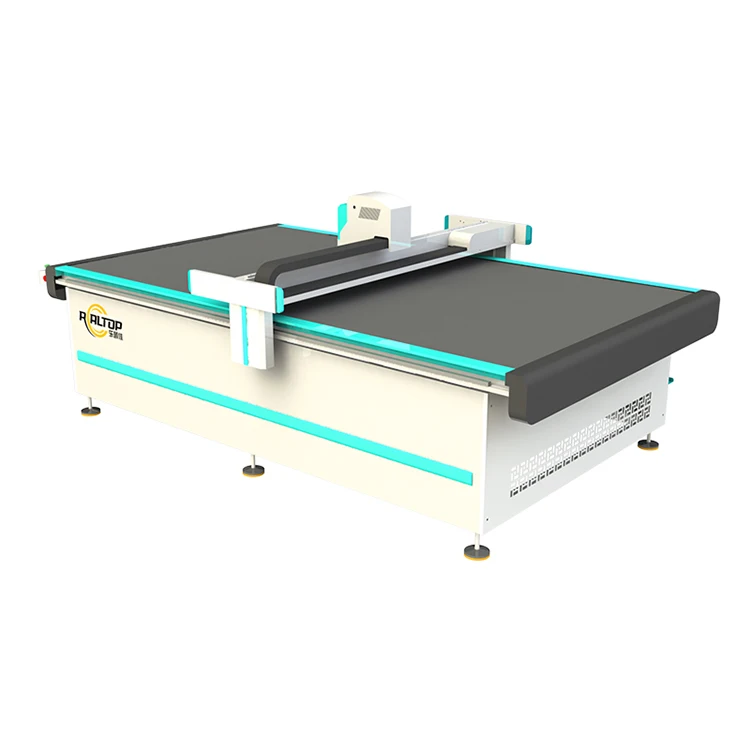
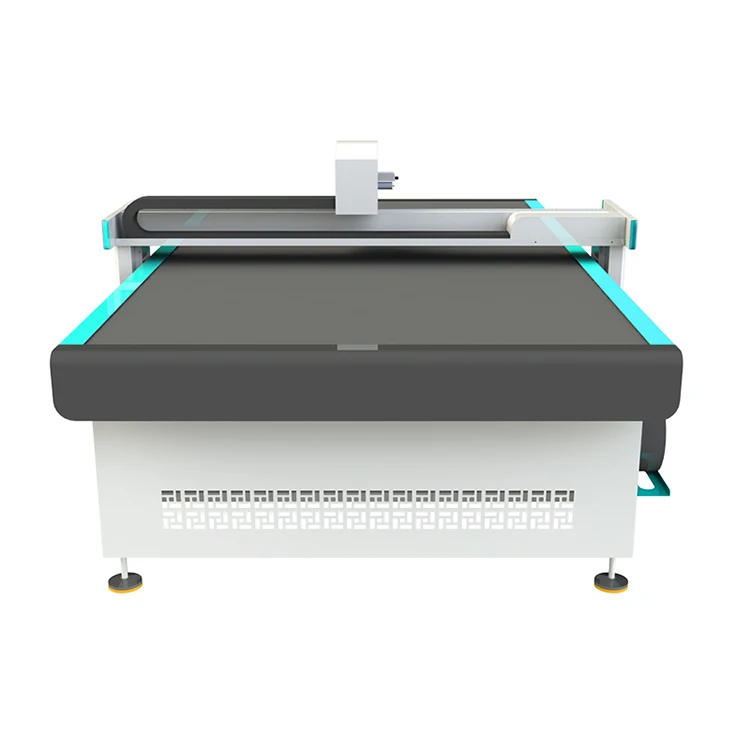
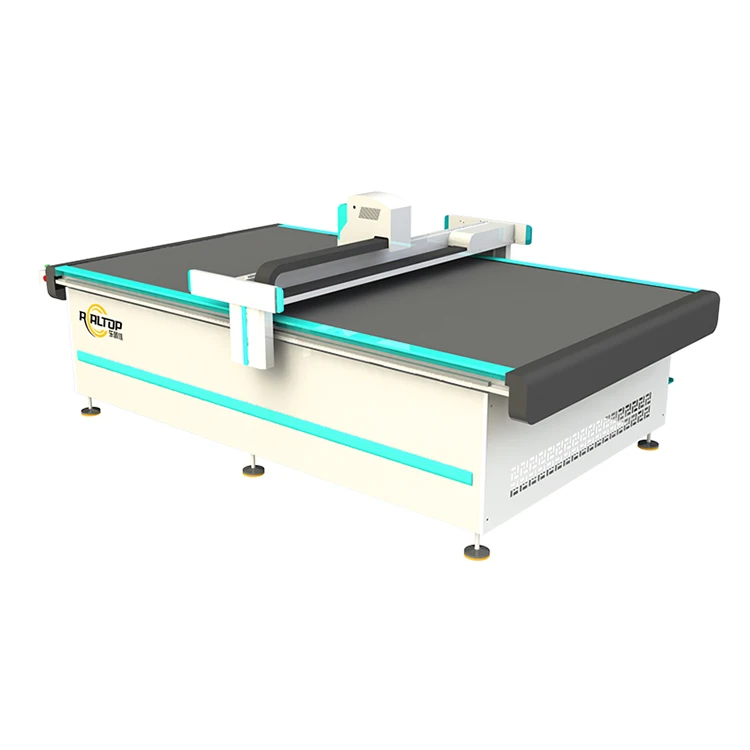
| Product Type | CNC Oscillating Knife Cutting Machine |
| Working Area | 1600 × 2500 mm |
| Machine Size | 3450 × 2300 × 1250 mm |
| Rated Power | 9 kW |
| Voltage | 380V ±10% (configurable per destination market) |
| Translational Velocity | 800 – 2000 mm/s |
| Cutting Speed | 200 – 800 mm/s (varies with material type and density) |
| Cutting Thickness | ≤100 mm (basis not stated in source, confirm material type and density) |
| Repeated Accuracy | ≤0.1 mm |
| Transmission System | Digital servo motor, linear guide, synchronous belt, ball screw |
| Linear Guide | Taiwan Hiwin rail |
| Servo Motor Options | Delta or Panasonic (China-made or Japan-made selectable) |
| Vacuum Table | Magnesium-aluminum alloy, PVDF powder spraying, hard oxidation |
| Vacuum Pump | 7.5 kW, integrated aviation aluminum shell pump with built-in silencer sponge (~35% noise reduction) |
| Conveyor | Germany imported belt (available on auto-feeding RT-S2516 configuration) |
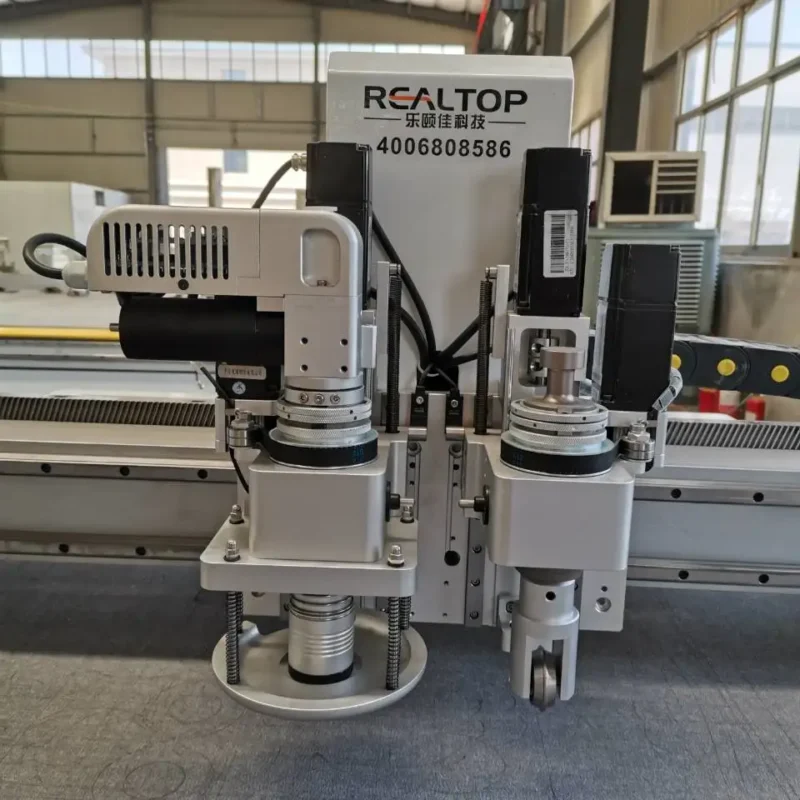
| Multifunctional Head | Swiss imported knife; optional oscillating, pneumatic, high-power vibrating, circular, V-cutting, drag knife, creasing wheel, dotted line knife, punching, brush |
| Visual Positioning | Small CCD mark-point positioning, panoramic camera recognition, projection positioning |
| Safety Devices | Infrared sensors, beam anti-collision on both sides, emergency stop with in-situ resume |
| Control Panel | Touch screen, multiple languages (English, Russian, Italian, Chinese; special languages customizable) |
| Instruction System | HP-GL compatible format |
| Software & File Formats | Auto typesetting; supports PLT, DXF, AI |
| Assembly State | Fully assembled before dispatch |
Application Suitability
| Application | Material or Output |
|---|---|
| Automotive interior trimming | Multi-layer composite leather, PVC, PU foam for seat panels and door inserts |
| Garment and footwear production | Woven fabric, non-woven textile, shoe upper material, luggage fabric |
| Gasket and sealing fabrication | Rubber, PTFE, ETFE, silicone sheet, soft glass |
| Packaging and sample making | Corrugated cardboard, carton board, sticker film, plastic box material |
| Carpet and floor mat cutting | Carpet rolls, sponge, EVA, XPE foam in large-format sheets |
| Composite material fabrication | Carbon fiber prepreg, fiberglass cloth, layered PU and PE composites |
Why Material Thickness Changes the Machine You Actually Need
A CNC oscillating knife cutting machine manufacturer worth working with will ask about your material stack-up before quoting a working area. The bed size only tells half the story — the tool head and vacuum zoning decide whether your parts stay flat or lift mid-cut.
I remember a car interior customer in Mexico who ordered based on a single-layer PVC sample run. His actual production stock was multi-layer composite leather for seats. The knife couldn’t cut through clean, and throughput dropped sharply against the quoted rate. I was on a flight down there with the correct oscillating tool head within the week. [NEED_CITE: common causes of cutting quality loss in multi-layer composite materials]
Specifying a flatbed CNC table on working area alone, without confirming material thickness, density and layer count, is the most frequent cause of post-delivery disappointment in this equipment class. The cutting speed range of 200–800 mm/s shifts considerably depending on whether you are slicing single-ply garment fabric or 80 mm foam blocks.
Matching the Tool Head to Your Actual Stock
The RT-D2516/RT-S2516 multifunctional head accepts a Swiss imported knife as the baseline, with oscillating, pneumatic, high-power vibrating, circular, V-cutting and drag knife options available alongside creasing, punching and brush tools. This matters because a drag knife that handles corrugated cardboard cleanly will crush EVA foam, and a circular knife that sails through carpet rolls will fray woven textile edges. As a CNC oscillating knife cutting machine manufacturer covering both knife and laser methods, Realtop specifies the tool head per material rather than defaulting to a single configuration across the catalogue.
Visual Positioning for Printed Contour Work
When your material arrives pre-printed — signage vinyl, garment panels with sublimation graphics, or packaging prototypes with registration marks — the cutting path must track those printed contours accurately. The RT-D2516/RT-S2516 offers three recognition approaches: small CCD mark-point positioning for discrete fiducials, panoramic camera recognition for full-sheet pattern matching, and projection positioning for operator-guided alignment. Choosing among them depends on your print registration method and production speed. [NEED_CITE: CCD camera recognition accuracy standards for digital cutting tables]
Reading the Specs That Actually Affect Your Floor
The 7.5 kW vacuum pump paired with the magnesium-aluminum alloy table and PVDF-coated surface is designed to hold small parts flat across the full 1600 × 2500 mm area. Small gaskets and intricate garment pattern pieces are where vacuum zoning becomes critical — insufficient suction on a given zone lets thin material lift under the knife, producing ragged edges or shifting the cut path entirely. The repeated accuracy of ≤0.1 mm, delivered through Taiwan Hiwin linear guides and digital servo motors, only holds if the workpiece stays put. The integrated silencer sponge inside the aviation aluminum pump shell reduces operational noise by roughly 35%, which matters in workshops running multiple tables in the same bay. Servo motor selection between Delta and Panasonic allows buyers to align with local service availability.
The Hidden Cost of a Wrong Configuration Choice
Selecting a machine on price and bed size, then discovering your vacuum table zoning cannot hold the small parts you actually produce, means either re-cutting from larger sheets and wasting material or running at reduced speed to compensate. A wrong tool head for foam or composite leather produces crushed edges that fail quality inspection downstream. Voltage mismatches discovered at commissioning can stall installation for weeks while transformers are sourced locally. [NEED_CITE: industrial equipment voltage mismatch consequences in export markets] These are not theoretical — they show up in warranty calls within the first production month.
Why Source This CNC Oscillating Knife Cutting Machine Manufacturer
Realtop builds both knife and laser cutting systems in-house, which means a buyer evaluating the RT-D2516/RT-S2516 can compare it directly against CO2 and fiber laser options in the same catalogue and let the material decide the method. Tool head and table configurations are specified per material sample and daily volume, not pulled from a default list. The CCD positioning system is confirmed against your actual printed stock before the order is locked. Voltage, plug type, and control panel language are verified for the destination market — not left as a post-shipment surprise. Sample cutting on your own material is completed before commitment, so the cutting speed and edge quality you see in the report are what you will get on your floor.
Documentation & Verification
- Machine specification sheet listing confirmed tool head and vacuum table zoning for your material
- Electrical schematic with voltage and frequency matched to your facility supply
- Sample cutting report run on your actual fabric, leather, foam or composite stock
- Software licence and file format compatibility note covering PLT, DXF and AI workflows
- Factory test record documenting repeated accuracy and cutting speed before crate closure
- Spare parts list identifying wear items specific to your selected tool head configuration
Installation, Commissioning & Support
- Requires a level floor capable of supporting the 3450 × 2300 mm footprint with clearance for material feed on the auto-feeding variant
- Dedicated 380V ±10% circuit rated for the combined 9 kW machine and 7.5 kW vacuum pump draw
- Arrives fully assembled — no on-site frame welding or rail alignment required
- First-run parameter setting includes vacuum zoning calibration for your specific sheet dimensions and part geometry
- Operator training covers touch screen navigation in your confirmed language and tool head changeover procedures
- Wear parts inventory sized to your selected knife type and expected daily cutting volume
What to Include in Your Inquiry
Send your material type, maximum sheet dimensions, layer count and typical daily volume so the tool head and table configuration can be matched correctly. Confirm your facility voltage and frequency, and specify the control panel language your operators need. If your workflow depends on printed contour recognition, include a sample of your printed material with registration marks so the positioning system can be validated before quotation.
Frequently Asked Questions
Q: How do I decide between oscillating knife and laser cutting for my material?
A: The choice depends on material composition and edge requirements. Oscillating knife cutting handles foam, composite leather and multi-layer fabric without thermal edge effects, while laser suits acrylic, wood and thin textile where sealed edges are needed. A CNC oscillating knife cutting machine manufacturer offering both methods can run sample cuts on your stock to compare edge quality and throughput before you commit.
Q: My working area is 1600 × 2500 mm but my parts are very small — will they stay flat?
A: Small parts demand precise vacuum zoning so suction concentrates where the material actually sits. The magnesium-aluminum alloy table with PVDF coating on this model supports zoned holding. Confirm your smallest typical part dimensions during inquiry so vacuum zone layout can be matched to your nesting pattern.
Q: Which tool head should I use for multi-layer automotive leather?
A: Multi-layer composite leather for seat panels typically requires an oscillating or high-power vibrating knife to cut through cleanly without crushing intermediate foam layers. A drag knife or circular knife would struggle with this stack-up. Provide your exact layer composition and total thickness for tool head recommendation.
Q: Can the control panel and software run in my local language?
A: The touch screen supports English, Russian, Italian and Chinese as standard, with special languages customizable per order. File format compatibility with PLT, DXF and AI is confirmed before shipment, and the auto typesetting software licence is included with documented format support for your existing nesting workflow.
Q: What happens if my facility voltage does not match 380V?
A: Voltage is configurable per destination market. Confirm your facility supply voltage and frequency during inquiry so the electrical schematic, motor windings and control panel are built to match. This verification happens before production, avoiding the transformer delays and commissioning setbacks that voltage mismatches cause on arrival.
Knife and laser systems built under one roof — the RT-D2516/RT-S2516 oscillating knife table sits within a complete catalogue where buyers match the cutting method to their material stack-up, not the other way around.
Technical Specifications
| Parameter | Value |
|---|---|
| Model | RT-D2516 / RT-S2516 |
| Product Type | CNC Oscillating Knife Cutting Machine |
| Working Area | 1600 × 2500 mm |
| Machine Size | 3450 × 2300 × 1250 mm |
| Rated Power | 9 kW |
| Voltage | 380V ±10% (configurable per destination market) |
| Translational Velocity | 800 – 2000 mm/s |
| Cutting Speed | 200 – 800 mm/s (varies with material type and density) |
| Cutting Thickness | ≤100 mm (basis not stated in source, confirm material type and density) |
| Repeated Accuracy | ≤0.1 mm |
| Transmission System | Digital servo motor, linear guide, synchronous belt, ball screw |
| Linear Guide | Taiwan Hiwin rail |
| Servo Motor Options | Delta or Panasonic (China-made or Japan-made selectable) |
| Vacuum Table | Magnesium-aluminum alloy, PVDF powder spraying, hard oxidation |
| Vacuum Pump | 7.5 kW, integrated aviation aluminum shell pump with built-in silencer sponge (~35% noise reduction) |
| Conveyor | Germany imported belt (available on auto-feeding RT-S2516 configuration) |
| Multifunctional Head | Swiss imported knife; optional oscillating, pneumatic, high-power vibrating, circular, V-cutting, drag knife, creasing wheel, dotted line knife, punching, brush |
| Visual Positioning | Small CCD mark-point positioning, panoramic camera recognition, projection positioning |
| Safety Devices | Infrared sensors, beam anti-collision on both sides, emergency stop with in-situ resume |
| Control Panel | Touch screen, multiple languages (English, Russian, Italian, Chinese; special languages customizable) |
| Instruction System | HP-GL compatible format |
| Software & File Formats | Auto typesetting; supports PLT, DXF, AI |
| Assembly State | Fully assembled before dispatch |
Application Suitability
| Application | Material or Output |
|---|---|
| Automotive interior trimming | Multi-layer composite leather, PVC, PU foam for seat panels and door inserts |
| Garment and footwear production | Woven fabric, non-woven textile, shoe upper material, luggage fabric |
| Gasket and sealing fabrication | Rubber, PTFE, ETFE, silicone sheet, soft glass |
| Packaging and sample making | Corrugated cardboard, carton board, sticker film, plastic box material |
| Carpet and floor mat cutting | Carpet rolls, sponge, EVA, XPE foam in large-format sheets |
| Composite material fabrication | Carbon fiber prepreg, fiberglass cloth, layered PU and PE composites |
Why Material Thickness Changes the Machine You Actually Need
A CNC oscillating knife cutting machine manufacturer worth working with will ask about your material stack-up before quoting a working area. The bed size only tells half the story — the tool head and vacuum zoning decide whether your parts stay flat or lift mid-cut.
I remember a car interior customer in Mexico who ordered based on a single-layer PVC sample run. His actual production stock was multi-layer composite leather for seats. The knife couldn’t cut through clean, and throughput dropped sharply against the quoted rate. I was on a flight down there with the correct oscillating tool head within the week. [NEED_CITE: common causes of cutting quality loss in multi-layer composite materials]
Specifying a flatbed CNC table on working area alone, without confirming material thickness, density and layer count, is the most frequent cause of post-delivery disappointment in this equipment class. The cutting speed range of 200–800 mm/s shifts considerably depending on whether you are slicing single-ply garment fabric or 80 mm foam blocks.
Matching the Tool Head to Your Actual Stock
The RT-D2516/RT-S2516 multifunctional head accepts a Swiss imported knife as the baseline, with oscillating, pneumatic, high-power vibrating, circular, V-cutting and drag knife options available alongside creasing, punching and brush tools. This matters because a drag knife that handles corrugated cardboard cleanly will crush EVA foam, and a circular knife that sails through carpet rolls will fray woven textile edges. As a CNC oscillating knife cutting machine manufacturer covering both knife and laser methods, Realtop specifies the tool head per material rather than defaulting to a single configuration across the catalogue.
Visual Positioning for Printed Contour Work
When your material arrives pre-printed — signage vinyl, garment panels with sublimation graphics, or packaging prototypes with registration marks — the cutting path must track those printed contours accurately. The RT-D2516/RT-S2516 offers three recognition approaches: small CCD mark-point positioning for discrete fiducials, panoramic camera recognition for full-sheet pattern matching, and projection positioning for operator-guided alignment. Choosing among them depends on your print registration method and production speed. [NEED_CITE: CCD camera recognition accuracy standards for digital cutting tables]
Reading the Specs That Actually Affect Your Floor
The 7.5 kW vacuum pump paired with the magnesium-aluminum alloy table and PVDF-coated surface is designed to hold small parts flat across the full 1600 × 2500 mm area. Small gaskets and intricate garment pattern pieces are where vacuum zoning becomes critical — insufficient suction on a given zone lets thin material lift under the knife, producing ragged edges or shifting the cut path entirely. The repeated accuracy of ≤0.1 mm, delivered through Taiwan Hiwin linear guides and digital servo motors, only holds if the workpiece stays put. The integrated silencer sponge inside the aviation aluminum pump shell reduces operational noise by roughly 35%, which matters in workshops running multiple tables in the same bay. Servo motor selection between Delta and Panasonic allows buyers to align with local service availability.
The Hidden Cost of a Wrong Configuration Choice
Selecting a machine on price and bed size, then discovering your vacuum table zoning cannot hold the small parts you actually produce, means either re-cutting from larger sheets and wasting material or running at reduced speed to compensate. A wrong tool head for foam or composite leather produces crushed edges that fail quality inspection downstream. Voltage mismatches discovered at commissioning can stall installation for weeks while transformers are sourced locally. [NEED_CITE: industrial equipment voltage mismatch consequences in export markets] These are not theoretical — they show up in warranty calls within the first production month.
Why Source This CNC Oscillating Knife Cutting Machine Manufacturer
Realtop builds both knife and laser cutting systems in-house, which means a buyer evaluating the RT-D2516/RT-S2516 can compare it directly against CO2 and fiber laser options in the same catalogue and let the material decide the method. Tool head and table configurations are specified per material sample and daily volume, not pulled from a default list. The CCD positioning system is confirmed against your actual printed stock before the order is locked. Voltage, plug type, and control panel language are verified for the destination market — not left as a post-shipment surprise. Sample cutting on your own material is completed before commitment, so the cutting speed and edge quality you see in the report are what you will get on your floor.
Documentation & Verification
- Machine specification sheet listing confirmed tool head and vacuum table zoning for your material
- Electrical schematic with voltage and frequency matched to your facility supply
- Sample cutting report run on your actual fabric, leather, foam or composite stock
- Software licence and file format compatibility note covering PLT, DXF and AI workflows
- Factory test record documenting repeated accuracy and cutting speed before crate closure
- Spare parts list identifying wear items specific to your selected tool head configuration
Installation, Commissioning & Support
- Requires a level floor capable of supporting the 3450 × 2300 mm footprint with clearance for material feed on the auto-feeding variant
- Dedicated 380V ±10% circuit rated for the combined 9 kW machine and 7.5 kW vacuum pump draw
- Arrives fully assembled — no on-site frame welding or rail alignment required
- First-run parameter setting includes vacuum zoning calibration for your specific sheet dimensions and part geometry
- Operator training covers touch screen navigation in your confirmed language and tool head changeover procedures
- Wear parts inventory sized to your selected knife type and expected daily cutting volume
What to Include in Your Inquiry
Send your material type, maximum sheet dimensions, layer count and typical daily volume so the tool head and table configuration can be matched correctly. Confirm your facility voltage and frequency, and specify the control panel language your operators need. If your workflow depends on printed contour recognition, include a sample of your printed material with registration marks so the positioning system can be validated before quotation.
Frequently Asked Questions
Q: How do I decide between oscillating knife and laser cutting for my material?
A: The choice depends on material composition and edge requirements. Oscillating knife cutting handles foam, composite leather and multi-layer fabric without thermal edge effects, while laser suits acrylic, wood and thin textile where sealed edges are needed. A CNC oscillating knife cutting machine manufacturer offering both methods can run sample cuts on your stock to compare edge quality and throughput before you commit.
Q: My working area is 1600 × 2500 mm but my parts are very small — will they stay flat?
A: Small parts demand precise vacuum zoning so suction concentrates where the material actually sits. The magnesium-aluminum alloy table with PVDF coating on this model supports zoned holding. Confirm your smallest typical part dimensions during inquiry so vacuum zone layout can be matched to your nesting pattern.
Q: Which tool head should I use for multi-layer automotive leather?
A: Multi-layer composite leather for seat panels typically requires an oscillating or high-power vibrating knife to cut through cleanly without crushing intermediate foam layers. A drag knife or circular knife would struggle with this stack-up. Provide your exact layer composition and total thickness for tool head recommendation.
Q: Can the control panel and software run in my local language?
A: The touch screen supports English, Russian, Italian and Chinese as standard, with special languages customizable per order. File format compatibility with PLT, DXF and AI is confirmed before shipment, and the auto typesetting software licence is included with documented format support for your existing nesting workflow.
Q: What happens if my facility voltage does not match 380V?
A: Voltage is configurable per destination market. Confirm your facility supply voltage and frequency during inquiry so the electrical schematic, motor windings and control panel are built to match. This verification happens before production, avoiding the transformer delays and commissioning setbacks that voltage mismatches cause on arrival.
商品评价
There are no reviews yet.