



Fast Delivery
Quick, reliable shipping to any location.

Free & easy returns
Return this item by mail or in store within 90 days for a full refund.
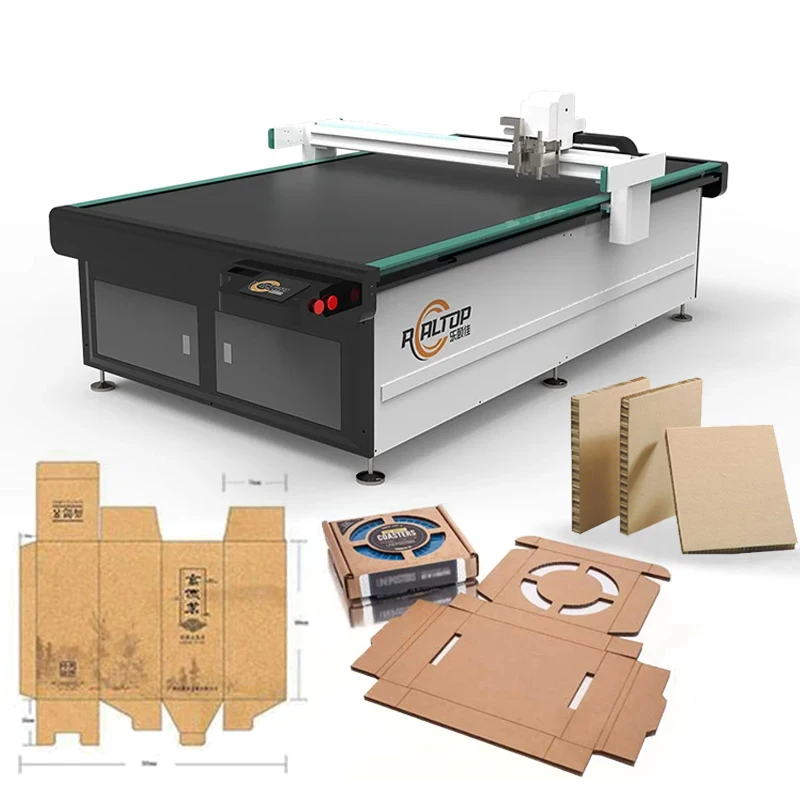
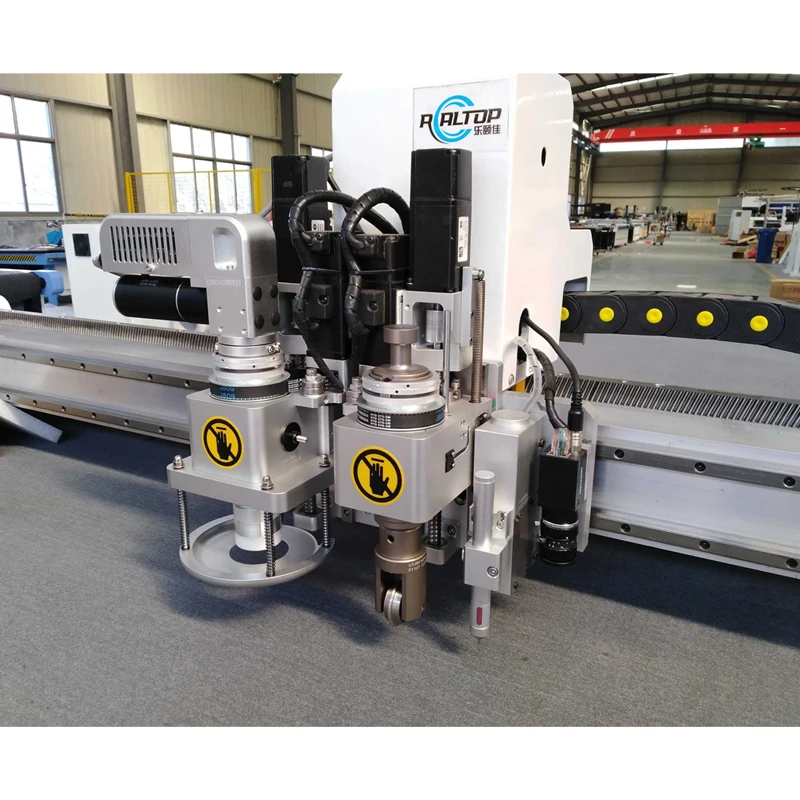
Multi-tool workstations — the RT–R2513, RT-D2516, and RT-S2516 series configure oscillating knife, creasing wheel, kiss-cut and punch heads on a single flatbed, letting packaging shops run cutting and creasing in one cycle instead of splitting the job across two machines.
Technical Specifications
| Parameter | Value |
|---|---|
| Model | RT–R2513 / RT-D2516 / RT-S2516 |
| Working Area | 2500×1300 mm (RT–R2513); 1600×2500 mm (RT-D2516 / RT-S2516) |
| Machine Size | 3550×1910×1400 mm (RT–R2513); 3450×2300×1250 mm (RT-D2516 / RT-S2516) |
| Cutting Tools | Oscillating knife, Creasing tool, Kiss-Cut Knife Tool, Round punch |
| Cutting Thickness | ≤18 mm (basis not stated in source — confirm material type and density) |
| Fixing Method | Aluminum alloy honeycomb vacuum adsorption platform |
| Rated Power | 9 kW |
| Voltage | 380 V |
| Vacuum Pump | 7.5 kW |
| Transmission Drive | Rack transmission with imported straight-line square guide |
| Repeated Accuracy | <0.05 mm |
| Servo Motor | Dongling servo (Delta servo motor as alternative configuration) |
| Safety Device | Infrared sensors, emergency stop devices |
| Profile Format | DXF, OLT, PDF, AI |
| Transmission Method | Ethernet port |
| Other Configuration | Germany imported conveyor belt, auto feeding, Taiwan Hiwin rail |
| Software | Professional carton cutting software (language customization supported) |
| Blade Included | 10 pieces of oscillating blades |
| Warranty | 1 year (excluding felt and knife blades) |
| Delivery Time | <30 working days |
Application Suitability
| Application | Material or Output |
|---|---|
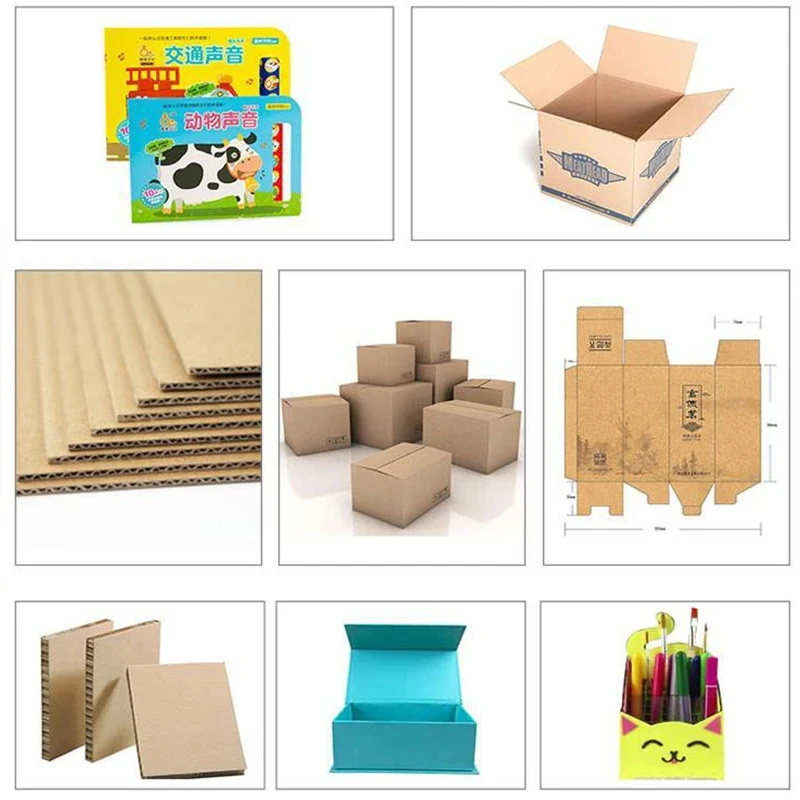
| Short-run corrugated carton prototyping | Single, double and triple-wall corrugated board up to 18 mm |
| Corrugated box production with creasing | Corrugated cardboard requiring combined cut and fold-line in one pass |
| Sticker and label kiss-cutting | Self-adhesive vinyl, paper-backed label stock on release liner |
| Retail display and signage | Corrugated board, PP hollow sheet, billboard-grade paper board |
| Paper box packaging | Large electrical carton, express paper box, snack food packaging, high-end gift box stock |
| Leather and non-metal sheet cutting | Leather hides and PP paper for packaging inserts |
What Board Thickness Tells You That the Brochure Does Not
A working area spec alone never guarantees the machine will cut your flute profile cleanly.
I have watched packaging shops order a flatbed cutter because the table size matched their sheet, then discover on day one that the oscillating knife could not push through double-wall corrugated at production speed. The RT–R2513, RT-D2516 and RT-S2516 series list a maximum cutting thickness of ≤18 mm, but that figure depends entirely on board density, flute type and moisture content [NEED_CITE: corrugated flute classification and crush resistance standards]. Before you compare quotations against a Digital Flatbed Cutter manufacturer, send actual board samples and ask for a cut report at the speeds you plan to run. A Packaging CNC Cutting Machine for sale only earns its place on the floor when it handles your heaviest regular stock, not just the thinnest sheet in the pile.
Matching Working Area to Standard Sheet Sizes in Packaging
The RT–R2513 offers 2500×1300 mm, suited to half-pallet sheets common in sample-making departments and boutique carton plants. The RT-D2516 and RT-S2516 open the table to 1600×2500 mm, giving room for full-size corrugated sheets used in industrial box production. Choosing between them is not about picking the biggest area — oversized tables waste vacuum energy on small-part jobs and make zoning more complex.
Why Tool Head Combination Dictates Your Daily Workflow
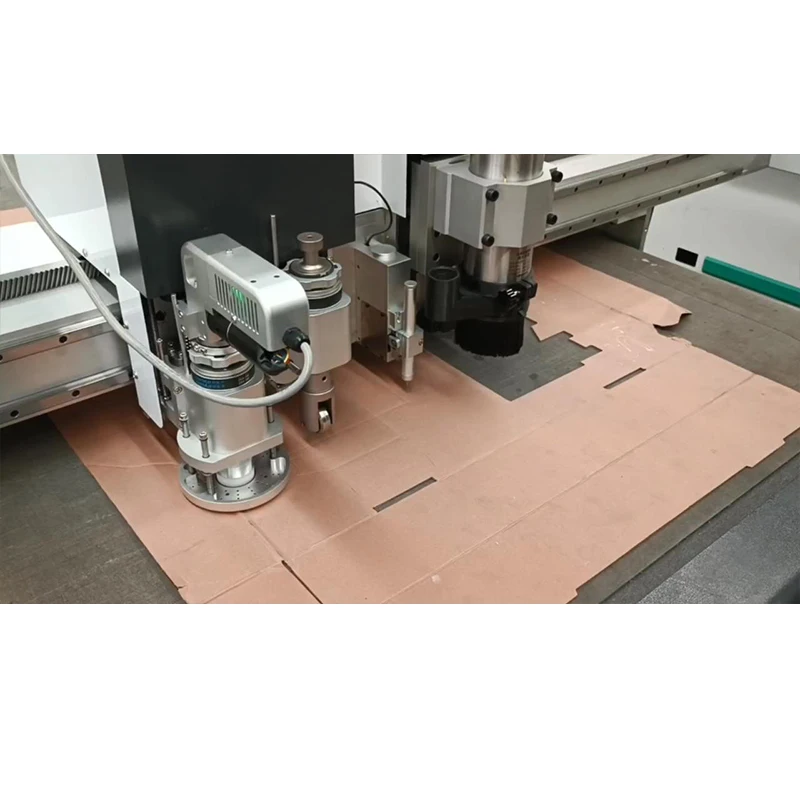
A packaging line that cuts, creases and punches finger holes needs all three operations in one pass. This Digital Flatbed Cutter manufacturer configures the oscillating knife for through-cut, the creasing wheel for fold lines, the kiss-cut knife for label stock and the round punch for ventilation or hang holes. Switching between tools happens within the same job file, which matters when short-run carton orders demand several format changes per shift [NEED_CITE: packaging sample making workflow and tool change frequency].
Reading the Spec Sheet Like a Production Engineer
The aluminum alloy honeycomb vacuum table paired with a 7.5 kW pump determines whether small die-cut labels stay flat or lift at the blade’s exit stroke. Rack transmission on imported straight-line square guides holds repeated accuracy below 0.05 mm — critical when creasing lines must land within a fraction of a millimeter of the printed score mark. The 9 kW rated power covers the servo drives, vacuum system and oscillating head simultaneously, so voltage drop on a long cable run can degrade cut quality before the operator notices. Dongling servo drives (with Delta as an alternative) control acceleration into corners, which directly affects edge quality on tight-radius carton lock tabs.
The Hidden Cost of Skipping the Vacuum Zone Conversation
I once shipped a flatbed cutter to a carton shop where the vacuum table was set for large sheets, but the operator ran small die-cut labels all day. Pieces lifted mid-cut, edges tore, and four days went into re-zoning the table and rewriting hold-down parameters. If your product mix includes small stickers, business cards or tag stock alongside full-size carton blanks, the honeycomb platform must be zoned accordingly before the machine leaves the factory [NEED_CITE: vacuum table zoning requirements for mixed-format digital cutting].
Why This Digital Flatbed Cutter Manufacturer Builds It This Way
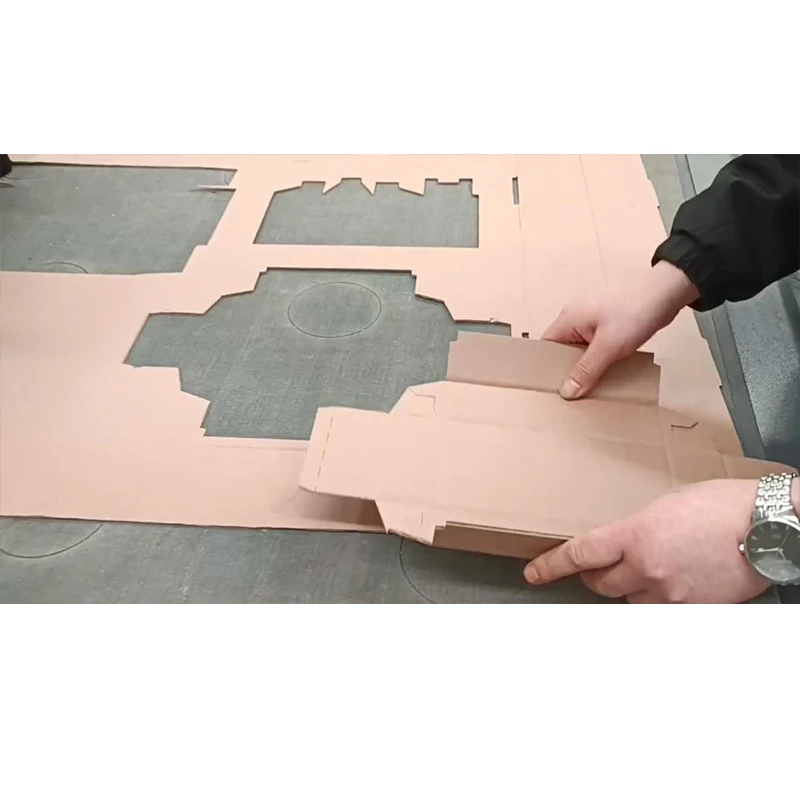
In-house design covers both knife cutting and table engineering, so tool head selection starts from the buyer’s material rather than a fixed catalogue. CCD camera positioning is available for printed contour work when register marks must be tracked at production speed. Software compatibility with DXF, OLT, PDF and AI is confirmed before order, avoiding the situation where a shop’s existing nesting files will not open on the new machine. Voltage, plug type and control language are locked in before shipment, not discovered during unpacking. Sample cutting on the buyer’s own corrugated board runs before commitment, so the cut edge and crease depth are verified on actual stock.
Documentation & Verification
- Machine specification sheet listing tool head and table configuration per material
- Electrical schematic with voltage confirmation matching buyer facility supply
- Sample cutting report on buyer’s own corrugated board and thickness
- Software licence and file format compatibility note confirmed before order
- Factory test record showing repeated accuracy and cut edge inspection
- Packing photographs documenting machine condition before container loading
Installation, Commissioning & Support
- 380 V dedicated circuit required; verify local frequency matches servo drive rating
- Machine footprint up to 3550×1910 mm requires clear floor space plus operator access on three sides
- 7.5 kW vacuum pump needs separate exhaust routing to avoid dust recirculation
- Taiwan Hiwin rail lubrication schedule provided in operation manual
- Ten oscillating blades included; felt replacement interval depends on board abrasiveness
- Software training covers nesting import, tool path assignment and crease pressure adjustment
What We Need from You to Size the Right Configuration
Send the corrugated flute type, grammage and maximum sheet size you run most often. Tell us your daily volume range and whether you need kiss-cut, crease and punch in the same job file. Confirm your facility voltage and frequency, preferred control language, and whether your design team works in DXF, AI or PDF so we validate file import before the order goes to production.
Frequently Asked Questions
Q: How do I match working area and cutting thickness to my corrugated flute type?
A: Flute profile determines both the knife stroke depth and the vacuum pressure needed to hold the sheet. Send us a sample of your heaviest regular board — single, double or triple wall — and we run a cut test at production speed. The report shows edge quality and crease depth, so you see results on your actual stock before committing to a model.
Q: Which tool head combination handles cutting, creasing and punching in one cycle?
A: The oscillating knife handles through-cuts, the creasing wheel scores fold lines, the kiss-cut knife cuts label stock without damaging the release liner, and the round punch creates ventilation or hang holes. All four tools mount on the same head carriage, so the machine switches between them within a single job file without manual intervention.
Q: What file formats and nesting workflows does the included software support?
A: The professional carton cutting software imports DXF, OLT, PDF and AI files. Language customization is available for the control interface. We confirm file format compatibility during the pre-order stage — send your typical job files and we verify that nesting, tool path assignment and crease parameters transfer correctly before the machine enters production.
Q: What voltage, language and plug customization options exist before shipment?
A: The standard configuration runs on 380 V, but voltage and plug type are confirmed against your facility supply before the order is finalized. Control language is set to match your operator team. These details are locked in the specification sheet, so there are no surprises when the machine arrives on the floor.
Q: What documentation and lead time should I expect?
A: Typical lead time is under 30 working days. You receive a machine specification sheet, electrical schematic, factory test record, sample cutting report on your material, operation manual, software licence note and spare parts list. Packing photographs are taken before container loading so you have condition records before the crate is sealed.










商品评价
There are no reviews yet.