



Fast Delivery
Quick, reliable shipping to any location.

Free & easy returns
Return this item by mail or in store within 90 days for a full refund.
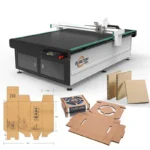
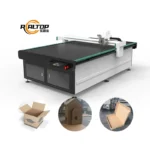
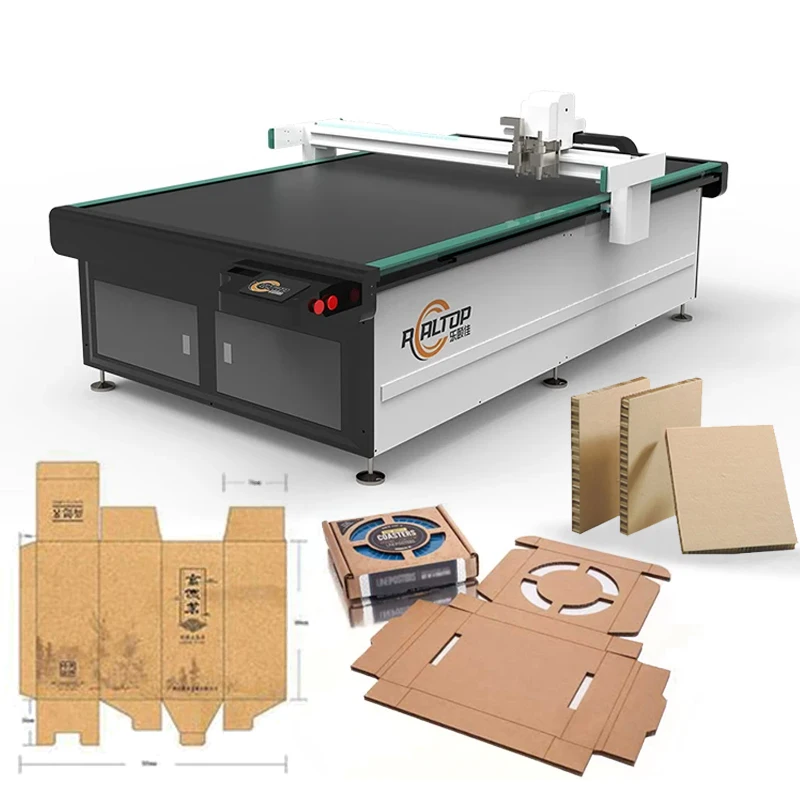
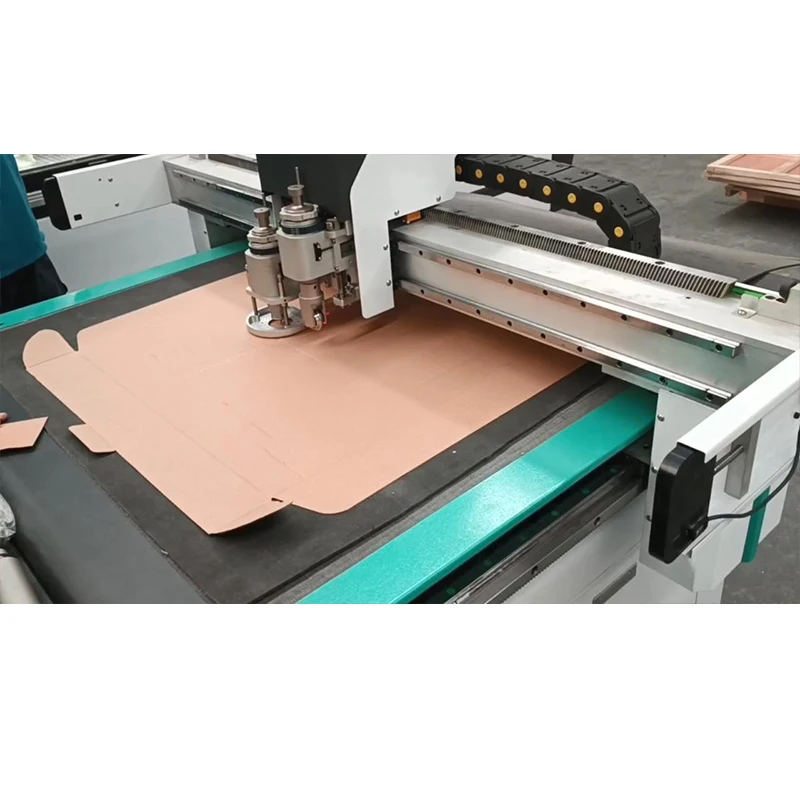
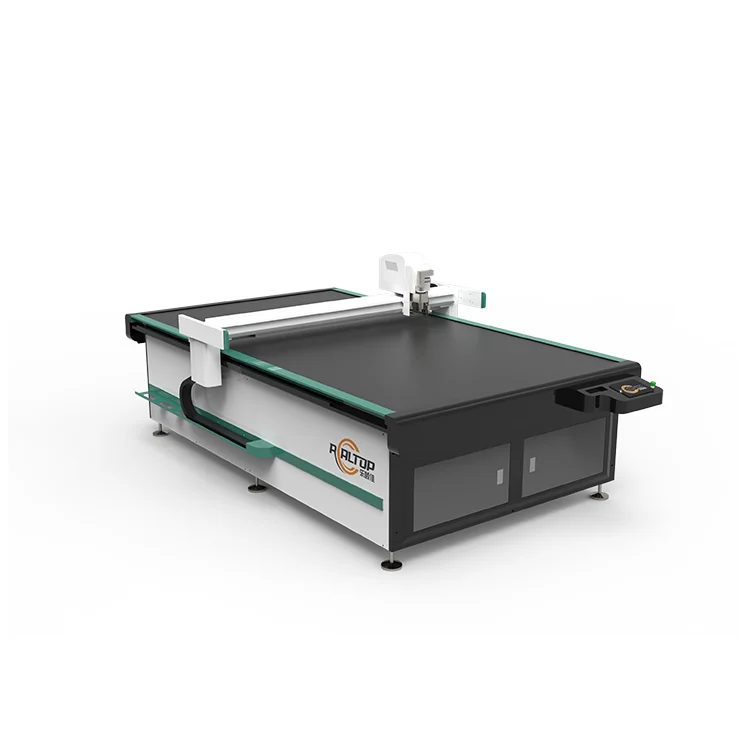
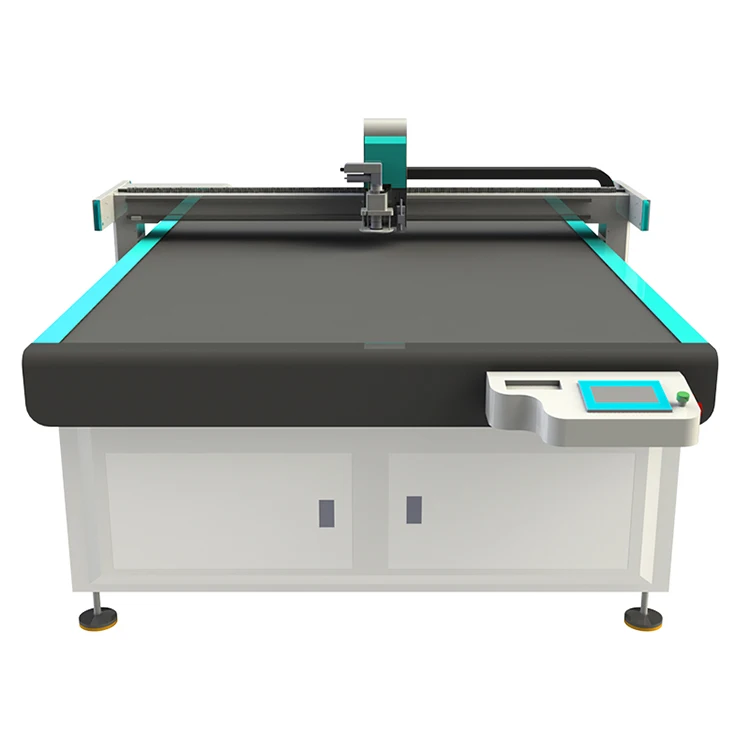
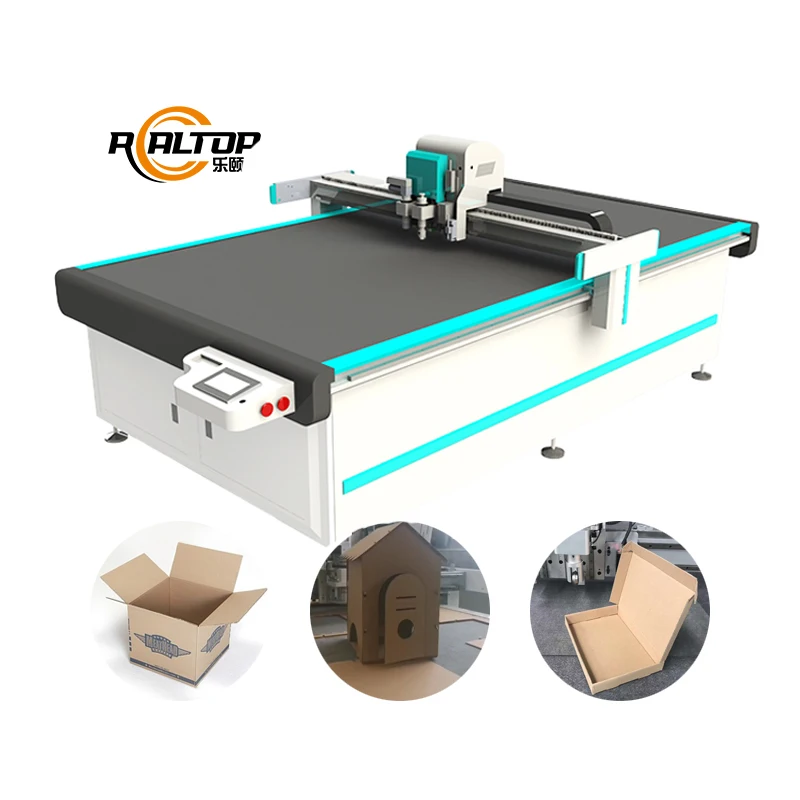
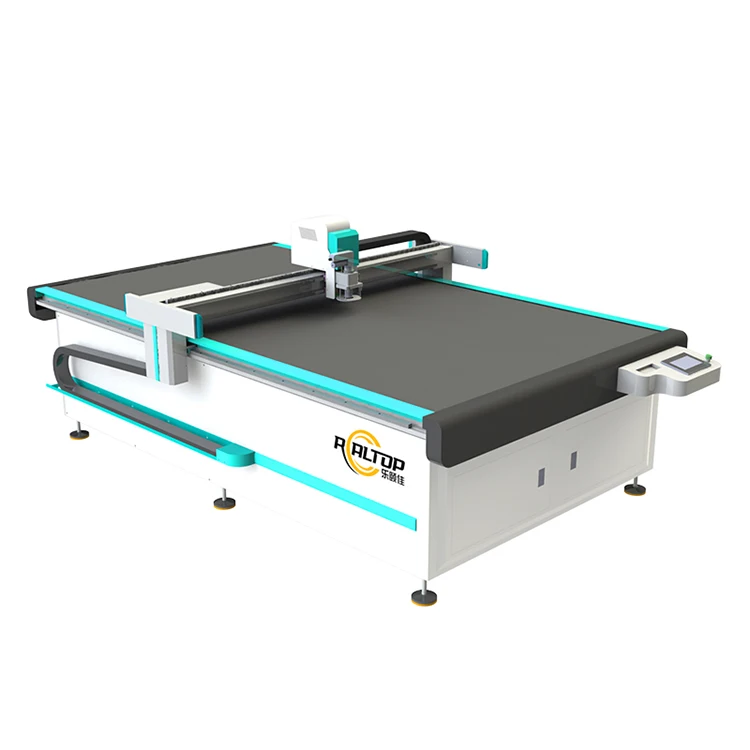
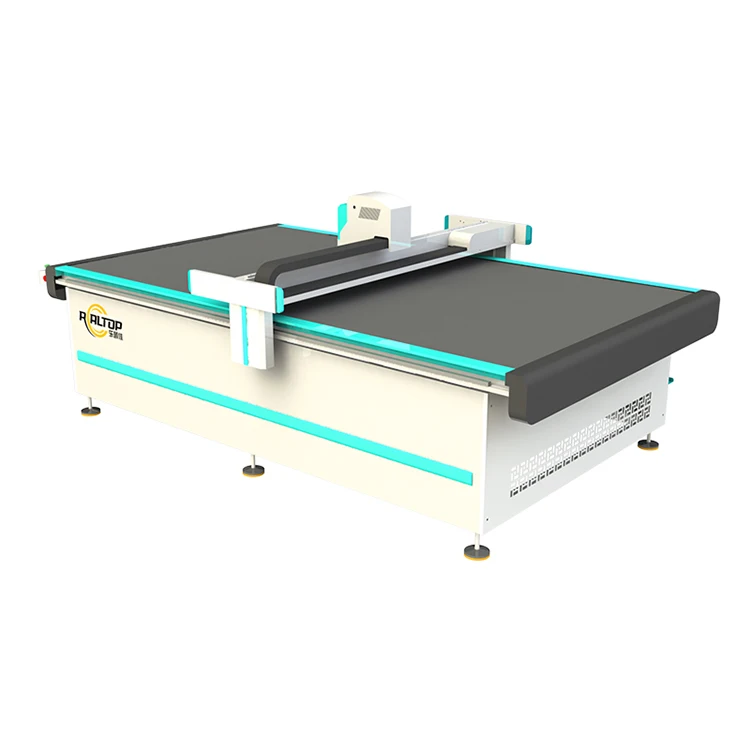
Cutting Method Matched to Board Grade — Realtop-2516 pairs oscillating knife, creasing wheel and kiss-cut tools on one bed so corrugated sample makers select the head by flute profile rather than forcing one blade through every stock.
Technical Specifications
| Parameter | Value |
|---|---|
| Product Type | CNC Corrugated Cardboard Pattern Cutting Machine |
| Model | RT-R2513 / RT-D2516 / RT-S2516 |
| Working Area | 2500×1300 mm (RT-R2513) / 1600×2500 mm (RT-D2516, RT-S2516) |
| Machine Size | 3550×1910×1400 mm (RT-R2513) / 3450×2300×1250 mm (RT-D2516, RT-S2516) |
| Cutting Tools | Oscillating knife, creasing tool, kiss-cut knife, round punch |
| Cutting Thickness | Up to 18 mm (basis not stated in source — confirm flute profile and board grade) |
| Vacuum Table | Aluminum alloy honeycomb with zoned adsorption |
| Vacuum Pump | 7.5 kW |
| Rated Power | 9 kW |
| Voltage | 380 V (frequency to be confirmed for target market) |
| Servo Motor | Dongling servo (Delta servo available as configuration option) |
| Guide Rail | Taiwan Hiwin straight-line square guide rail |
| Transmission | Rack and pinion |
| Repeated Accuracy | <0.05 mm |
| Safety Device | Infrared sensors, emergency stop |
| Profile Format | DXF, OLT, PDF, AI |
| Conveyor Belt | Germany imported belt (auto-feeding option) |
| Blade Supply | 10 pieces of oscillating blades included |
| Control Language | English, Russian, Italian, Chinese (others customizable) |
| Warranty | 1 year (excludes consumables: felt, knife blades) |
| Delivery Time | Under 30 working days |
Application Suitability
| Application | Material or Output |
|---|---|
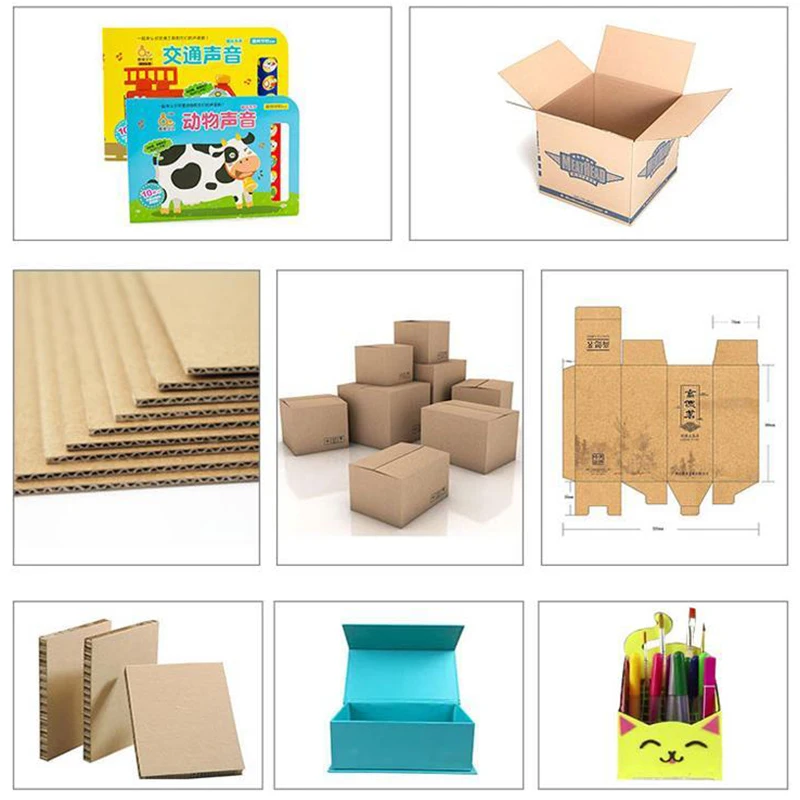
| Carton sample making and short-run packaging | Single, double and triple-wall corrugated board up to 18 mm |
| Corrugated display and POP cutting | Corrugated board, foam board, PVC sheet |
| Sticker and label contour cutting | Adhesive vinyl, PP paper, coated sticker stock |
| Gift box and premium carton prototyping | Coated cardstock, greyboard, kraft paper |
| Express packaging box production | Lightweight E-flute and B-flute corrugated |
Why Flute Profile Decides the Blade Before Working Area Does
A 2500 mm bed means nothing when the oscillating knife stalls on double-wall BC-flute. Buyers often specify a CNC corrugated cardboard cutting machine manufacturer by table size first, only to discover on the factory floor that the quoted blade cannot penetrate the full board depth cleanly. The result is ragged edges on the sample, crushed flutes on the crease line and a re-cut that burns both material and deadline [NEED_CITE: cutting force requirements by corrugated flute profile]. When the tool head is chosen after the material is tested — not before — the sample leaves the table with edges the client actually accepts.
The Knife, Crease and Punch Combination on One Head
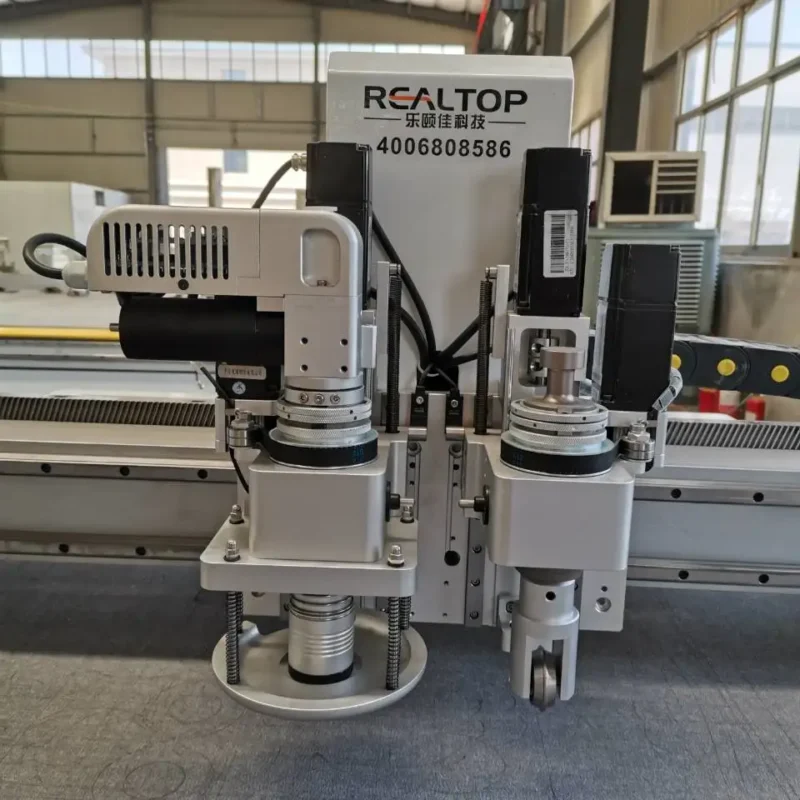
Most sample rooms run a creasing wheel, an oscillating knife and a round punch across separate passes or separate machines. Realtop-2516 mounts all three on a single carriage, so a carton pattern is cut, creased and punched without unloading the sheet. For short-run packaging work where a single design may go through six revisions before client sign-off, keeping the board registered to the vacuum table across every tool change removes the alignment drift that accumulates with each re-load.
Vacuum Zoning for Small Die-Cut Parts
The aluminum honeycomb table is divided into independently controlled zones. When a sample sheet carries a mix of large carton panels and small die-cut inserts — dividers, corner braces, fitments — the operator activates only the zones under the remaining stock. This keeps the vacuum holding force where it is needed without pulling air through empty table area, which would otherwise let small parts lift during the knife pass. Zoned adsorption is the difference between a clean kiss-cut on a sticker sheet and a blade that drags a lifting corner across the next contour [NEED_CITE: vacuum hold-down force distribution on zoned tables].
Reading the Spec Sheet Against Actual Board Stock
Four parameters on the table above carry more weight in daily production than the rest. The cutting thickness ceiling must be validated against the specific flute profile, because a triple-wall board at 18 mm demands a different stroke frequency than a solid greyboard at the same depth. Repeated accuracy below 0.05 mm matters most on kiss-cut jobs where the blade must stop at the release liner without scoring it. The 7.5 kW vacuum pump rating determines whether the table holds a warped E-flute sheet flat enough for the CCD option to track printed marks at speed. Rack-and-pinion transmission paired with Hiwin square rails keeps the carriage path predictable over years of two-shift operation, which directly affects crease placement on a complex carton pattern.
What a Mis-Matched Tool Head Costs in the Sample Room
When the creasing wheel is swapped for a drag knife on thick corrugated because no creasing tool was ordered, the score line fractures the top liner and the carton fails the fold test. When the vacuum zones are not specified for the sheet size in use, small parts shift mid-cut and the entire nesting run is scrapped. These are not machine faults; they are configuration decisions made without the buyer’s actual stock on the table [NEED_CITE: tool head selection errors reported in corrugated sample departments]. Every configuration gap found after delivery costs a re-order of tooling, a week of downtime and a sample deadline missed in front of the client.
Why Buyers Source This Range Here
Realtop builds both knife and laser platforms in-house, so a packaging buyer can compare oscillating knife against CO2 laser on the same board grade before committing to a method. Every tool head and table configuration is specified against the buyer’s declared material, not taken from a default list. Sample cutting on the buyer’s own corrugated stock runs before the order is confirmed, so edge quality and crease depth are verified, not promised. Software compatibility with the buyer’s existing DXF or AI workflow is validated at quotation stage. Voltage, plug type and control language are locked in before production starts, eliminating the arrival-day surprises that stall commissioning [NEED_CITE: voltage and frequency confirmation protocol for export machinery].
Documentation & Verification
- Machine specification sheet listing every tool head and zone configuration confirmed against your board grade
- Sample cutting report run on your own corrugated stock with edge and crease photographs
- Electrical schematic with voltage, frequency and plug type confirmed for your market
- Software licence and file format compatibility note covering DXF, OLT, PDF and AI import
- Factory test record with repeated accuracy measurement before crate is sealed
- Spare parts list with felt and blade reorder codes matched to your tool head set
Installation, Commissioning & Support
- 3550×1910 mm footprint for RT-R2513 requires level concrete floor with clear access on three sides
- Dedicated 380 V circuit with confirmed frequency must be in place before the machine is uncrated
- Machine ships in one piece; vacuum pump and conveyor belt are connected on site during commissioning
- First-run parameter setting covers oscillation frequency, crease pressure and vacuum zone mapping for your board
- Operator training covers tool change sequence, nesting software workflow and zone activation for small parts
- Ten oscillating blades ship with the machine; felt and blade reorder codes are on the spare parts list
What to Send with Your Inquiry
Send the board grade, flute profile and maximum sheet thickness you will cut most days, along with the largest single carton panel dimension. Include your target daily sample volume and whether your workflow is DXF-first or AI-first. State the voltage and frequency at your facility, the control language your operators need, and whether your current plotter or sample table will stay on the floor alongside this unit. If you can ship a stack of your actual board stock, a sample cutting run will confirm edge and crease quality before the quotation is finalized.
Frequently Asked Questions
Q: Should I choose oscillating knife or CO2 laser for corrugated board sample making?
A: Oscillating knife cuts corrugated without burning the flute edges or producing smoke, which keeps the sample clean for client presentation. CO2 laser seals edges on coated synthetics but leaves a burn line on kraft liners. For carton sample rooms working mostly corrugated and greyboard, the knife is the default method; laser is added when the same shop also cuts acrylic or fabric display components.
Q: What working area fits standard carton panels and oversized formats?
A: The RT-R2513 at 2500×1300 mm covers most single-panel carton work and display inserts. The RT-D2516 and RT-S2516 at 1600×2500 mm handle large electrical appliance cartons and full-size display stands in one set. Choose by the largest sheet you will run, not the average, because re-cutting an oversized panel in two halves ruins registration.
Q: Which tool head combination handles cutting, creasing and punching in one setup?
A: The standard three-tool carriage mounts an oscillating knife for contour cutting, a creasing wheel for fold lines and a round punch for handle holes or ventilation slots. All three work without unloading the sheet, keeping the board registered to the vacuum table. A kiss-cut knife tool is available as a fourth option for sticker and label contour work on the same bed.
Q: What file formats does the nesting software accept from my existing workflow?
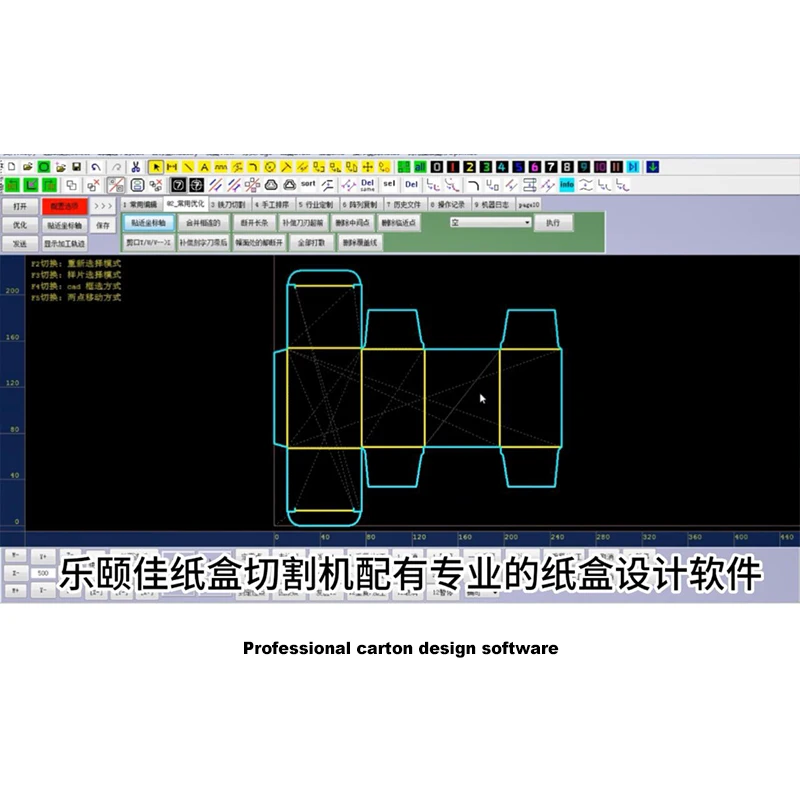
A: The included carton cutting and nesting software imports DXF, OLT, PDF and AI files directly. Language customization is supported, so the interface can match the operator’s working language. Before the order is confirmed, a sample file from your current design software is run through the nesting engine to verify layer recognition and tool path assignment.
Q: How are voltage, plug and control language confirmed before the machine ships?
A: These three items are locked into the specification sheet at quotation stage, not left to a default setting. The electrical schematic shows the confirmed voltage, frequency and plug type for your market. Control language is set before the operating system image is loaded, so your operators see their language on first power-up, not after a firmware change on site.
Cutting Method Matched to Board Grade — Realtop-2516 pairs oscillating knife, creasing wheel and kiss-cut tools on one bed so corrugated sample makers select the head by flute profile rather than forcing one blade through every stock.
Technical Specifications
| Parameter | Value |
|---|---|
| Product Type | CNC Corrugated Cardboard Pattern Cutting Machine |
| Model | RT-R2513 / RT-D2516 / RT-S2516 |
| Working Area | 2500×1300 mm (RT-R2513) / 1600×2500 mm (RT-D2516, RT-S2516) |
| Machine Size | 3550×1910×1400 mm (RT-R2513) / 3450×2300×1250 mm (RT-D2516, RT-S2516) |
| Cutting Tools | Oscillating knife, creasing tool, kiss-cut knife, round punch |
| Cutting Thickness | Up to 18 mm (basis not stated in source — confirm flute profile and board grade) |
| Vacuum Table | Aluminum alloy honeycomb with zoned adsorption |
| Vacuum Pump | 7.5 kW |
| Rated Power | 9 kW |
| Voltage | 380 V (frequency to be confirmed for target market) |
| Servo Motor | Dongling servo (Delta servo available as configuration option) |
| Guide Rail | Taiwan Hiwin straight-line square guide rail |
| Transmission | Rack and pinion |
| Repeated Accuracy | <0.05 mm |
| Safety Device | Infrared sensors, emergency stop |
| Profile Format | DXF, OLT, PDF, AI |
| Conveyor Belt | Germany imported belt (auto-feeding option) |
| Blade Supply | 10 pieces of oscillating blades included |
| Control Language | English, Russian, Italian, Chinese (others customizable) |
| Warranty | 1 year (excludes consumables: felt, knife blades) |
| Delivery Time | Under 30 working days |
Application Suitability
| Application | Material or Output |
|---|---|
| Carton sample making and short-run packaging | Single, double and triple-wall corrugated board up to 18 mm |
| Corrugated display and POP cutting | Corrugated board, foam board, PVC sheet |
| Sticker and label contour cutting | Adhesive vinyl, PP paper, coated sticker stock |
| Gift box and premium carton prototyping | Coated cardstock, greyboard, kraft paper |
| Express packaging box production | Lightweight E-flute and B-flute corrugated |
Why Flute Profile Decides the Blade Before Working Area Does
A 2500 mm bed means nothing when the oscillating knife stalls on double-wall BC-flute. Buyers often specify a CNC corrugated cardboard cutting machine manufacturer by table size first, only to discover on the factory floor that the quoted blade cannot penetrate the full board depth cleanly. The result is ragged edges on the sample, crushed flutes on the crease line and a re-cut that burns both material and deadline [NEED_CITE: cutting force requirements by corrugated flute profile]. When the tool head is chosen after the material is tested — not before — the sample leaves the table with edges the client actually accepts.
The Knife, Crease and Punch Combination on One Head
Most sample rooms run a creasing wheel, an oscillating knife and a round punch across separate passes or separate machines. Realtop-2516 mounts all three on a single carriage, so a carton pattern is cut, creased and punched without unloading the sheet. For short-run packaging work where a single design may go through six revisions before client sign-off, keeping the board registered to the vacuum table across every tool change removes the alignment drift that accumulates with each re-load.
Vacuum Zoning for Small Die-Cut Parts
The aluminum honeycomb table is divided into independently controlled zones. When a sample sheet carries a mix of large carton panels and small die-cut inserts — dividers, corner braces, fitments — the operator activates only the zones under the remaining stock. This keeps the vacuum holding force where it is needed without pulling air through empty table area, which would otherwise let small parts lift during the knife pass. Zoned adsorption is the difference between a clean kiss-cut on a sticker sheet and a blade that drags a lifting corner across the next contour [NEED_CITE: vacuum hold-down force distribution on zoned tables].
Reading the Spec Sheet Against Actual Board Stock
Four parameters on the table above carry more weight in daily production than the rest. The cutting thickness ceiling must be validated against the specific flute profile, because a triple-wall board at 18 mm demands a different stroke frequency than a solid greyboard at the same depth. Repeated accuracy below 0.05 mm matters most on kiss-cut jobs where the blade must stop at the release liner without scoring it. The 7.5 kW vacuum pump rating determines whether the table holds a warped E-flute sheet flat enough for the CCD option to track printed marks at speed. Rack-and-pinion transmission paired with Hiwin square rails keeps the carriage path predictable over years of two-shift operation, which directly affects crease placement on a complex carton pattern.
What a Mis-Matched Tool Head Costs in the Sample Room
When the creasing wheel is swapped for a drag knife on thick corrugated because no creasing tool was ordered, the score line fractures the top liner and the carton fails the fold test. When the vacuum zones are not specified for the sheet size in use, small parts shift mid-cut and the entire nesting run is scrapped. These are not machine faults; they are configuration decisions made without the buyer’s actual stock on the table [NEED_CITE: tool head selection errors reported in corrugated sample departments]. Every configuration gap found after delivery costs a re-order of tooling, a week of downtime and a sample deadline missed in front of the client.
Why Buyers Source This Range Here
Realtop builds both knife and laser platforms in-house, so a packaging buyer can compare oscillating knife against CO2 laser on the same board grade before committing to a method. Every tool head and table configuration is specified against the buyer’s declared material, not taken from a default list. Sample cutting on the buyer’s own corrugated stock runs before the order is confirmed, so edge quality and crease depth are verified, not promised. Software compatibility with the buyer’s existing DXF or AI workflow is validated at quotation stage. Voltage, plug type and control language are locked in before production starts, eliminating the arrival-day surprises that stall commissioning [NEED_CITE: voltage and frequency confirmation protocol for export machinery].
Documentation & Verification
- Machine specification sheet listing every tool head and zone configuration confirmed against your board grade
- Sample cutting report run on your own corrugated stock with edge and crease photographs
- Electrical schematic with voltage, frequency and plug type confirmed for your market
- Software licence and file format compatibility note covering DXF, OLT, PDF and AI import
- Factory test record with repeated accuracy measurement before crate is sealed
- Spare parts list with felt and blade reorder codes matched to your tool head set
Installation, Commissioning & Support
- 3550×1910 mm footprint for RT-R2513 requires level concrete floor with clear access on three sides
- Dedicated 380 V circuit with confirmed frequency must be in place before the machine is uncrated
- Machine ships in one piece; vacuum pump and conveyor belt are connected on site during commissioning
- First-run parameter setting covers oscillation frequency, crease pressure and vacuum zone mapping for your board
- Operator training covers tool change sequence, nesting software workflow and zone activation for small parts
- Ten oscillating blades ship with the machine; felt and blade reorder codes are on the spare parts list
What to Send with Your Inquiry
Send the board grade, flute profile and maximum sheet thickness you will cut most days, along with the largest single carton panel dimension. Include your target daily sample volume and whether your workflow is DXF-first or AI-first. State the voltage and frequency at your facility, the control language your operators need, and whether your current plotter or sample table will stay on the floor alongside this unit. If you can ship a stack of your actual board stock, a sample cutting run will confirm edge and crease quality before the quotation is finalized.
Frequently Asked Questions
Q: Should I choose oscillating knife or CO2 laser for corrugated board sample making?
A: Oscillating knife cuts corrugated without burning the flute edges or producing smoke, which keeps the sample clean for client presentation. CO2 laser seals edges on coated synthetics but leaves a burn line on kraft liners. For carton sample rooms working mostly corrugated and greyboard, the knife is the default method; laser is added when the same shop also cuts acrylic or fabric display components.
Q: What working area fits standard carton panels and oversized formats?
A: The RT-R2513 at 2500×1300 mm covers most single-panel carton work and display inserts. The RT-D2516 and RT-S2516 at 1600×2500 mm handle large electrical appliance cartons and full-size display stands in one set. Choose by the largest sheet you will run, not the average, because re-cutting an oversized panel in two halves ruins registration.
Q: Which tool head combination handles cutting, creasing and punching in one setup?
A: The standard three-tool carriage mounts an oscillating knife for contour cutting, a creasing wheel for fold lines and a round punch for handle holes or ventilation slots. All three work without unloading the sheet, keeping the board registered to the vacuum table. A kiss-cut knife tool is available as a fourth option for sticker and label contour work on the same bed.
Q: What file formats does the nesting software accept from my existing workflow?
A: The included carton cutting and nesting software imports DXF, OLT, PDF and AI files directly. Language customization is supported, so the interface can match the operator’s working language. Before the order is confirmed, a sample file from your current design software is run through the nesting engine to verify layer recognition and tool path assignment.
Q: How are voltage, plug and control language confirmed before the machine ships?
A: These three items are locked into the specification sheet at quotation stage, not left to a default setting. The electrical schematic shows the confirmed voltage, frequency and plug type for your market. Control language is set before the operating system image is loaded, so your operators see their language on first power-up, not after a firmware change on site.
商品评价
There are no reviews yet.