

Fast Delivery
Quick, reliable shipping to any location.

Free & easy returns
Return this item by mail or in store within 90 days for a full refund.
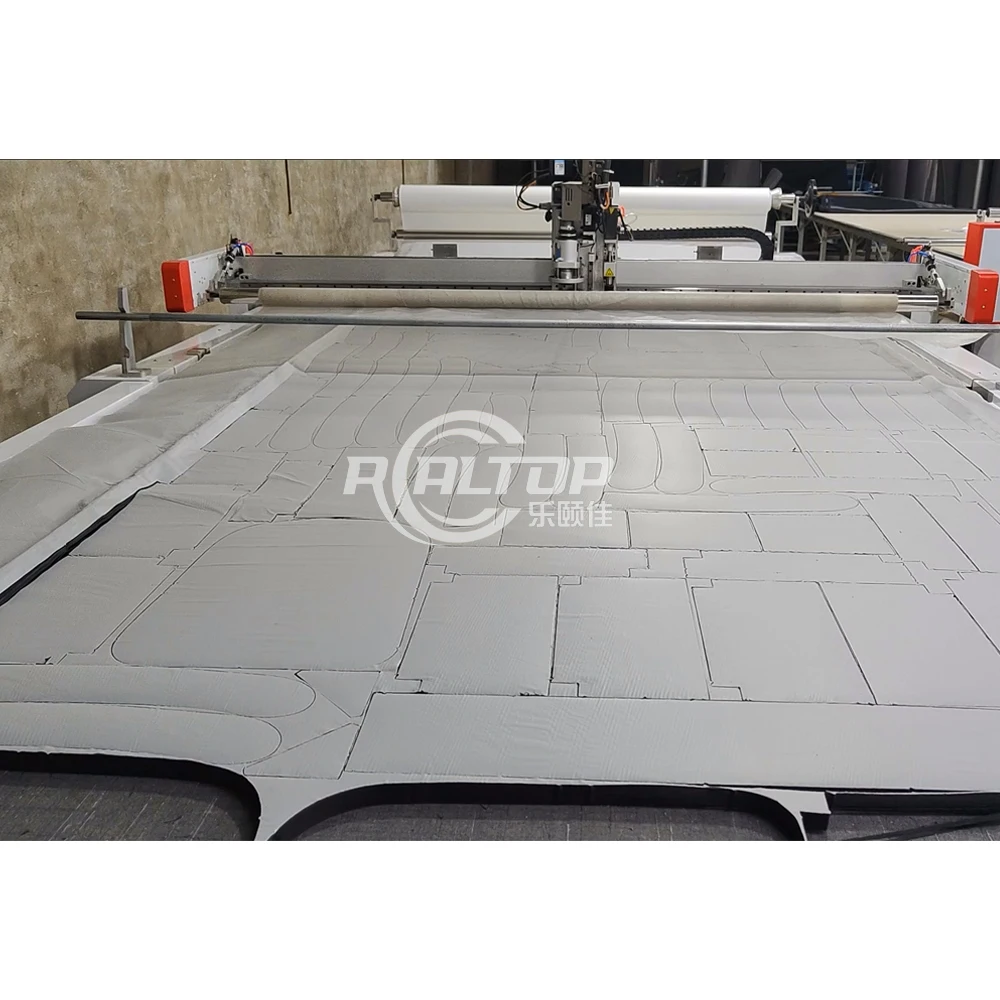
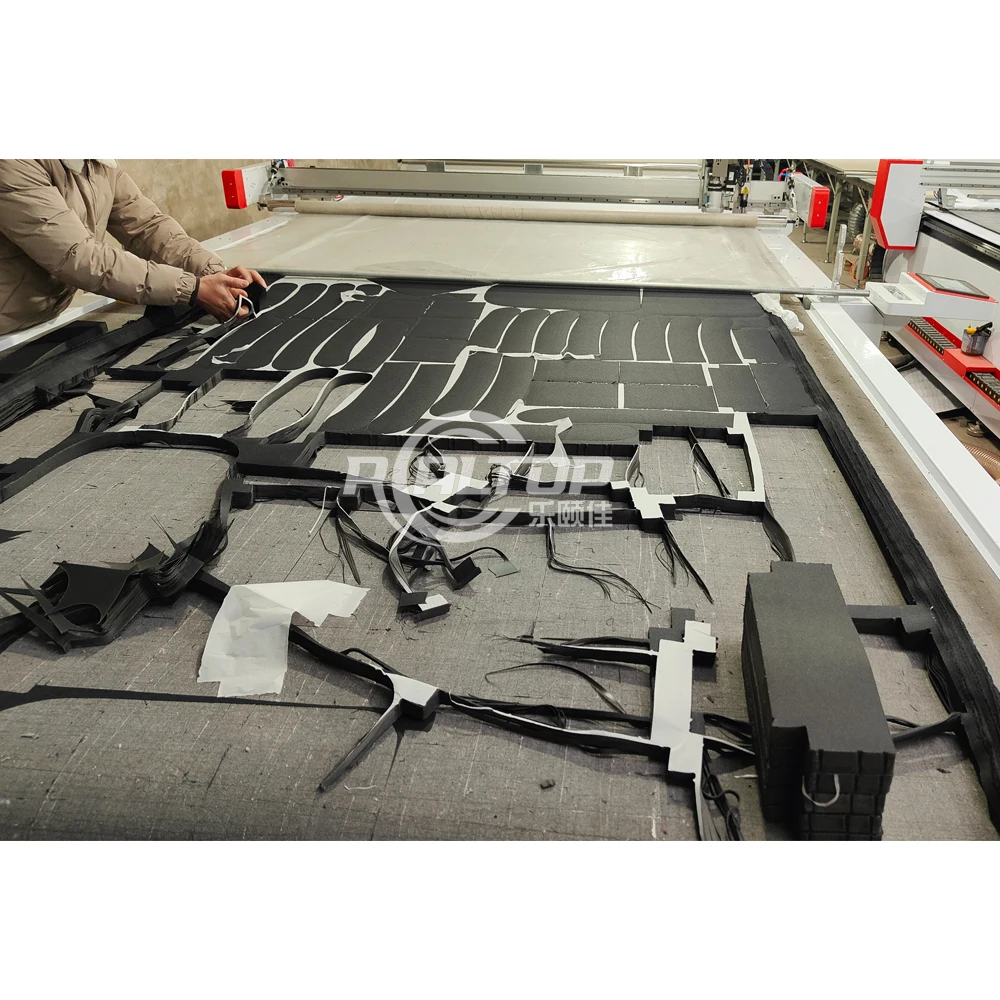
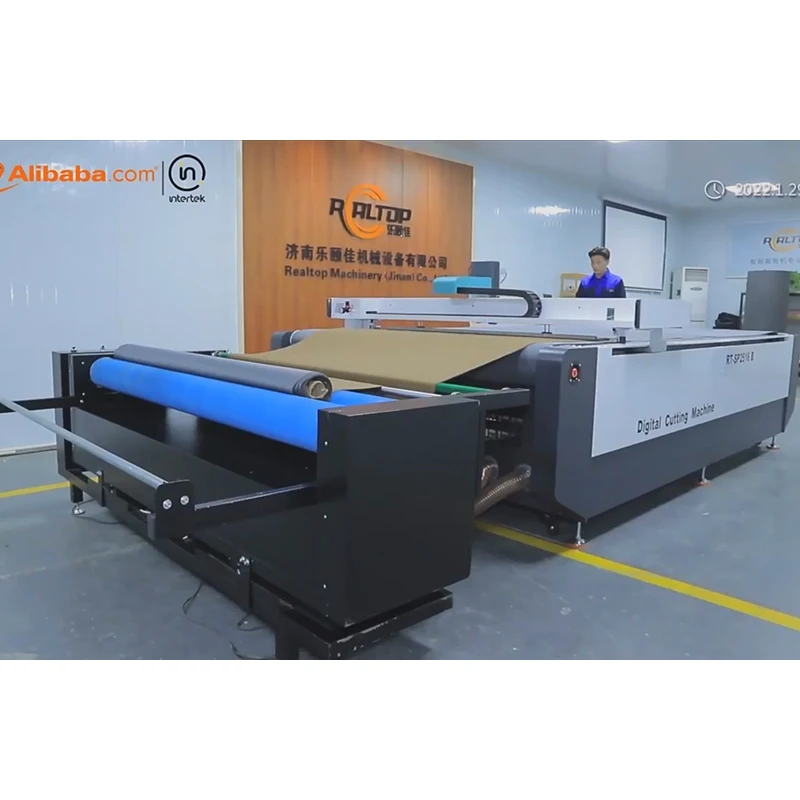
Cutting Method Matched to Material — REALTOP tests your actual fabric on an oscillating knife table before specifying tool heads, vacuum zones and feeding systems, so the cutting method fits the textile rather than forcing the textile onto a generic flatbed.
Technical Specifications
| Parameter | Value |
|---|---|
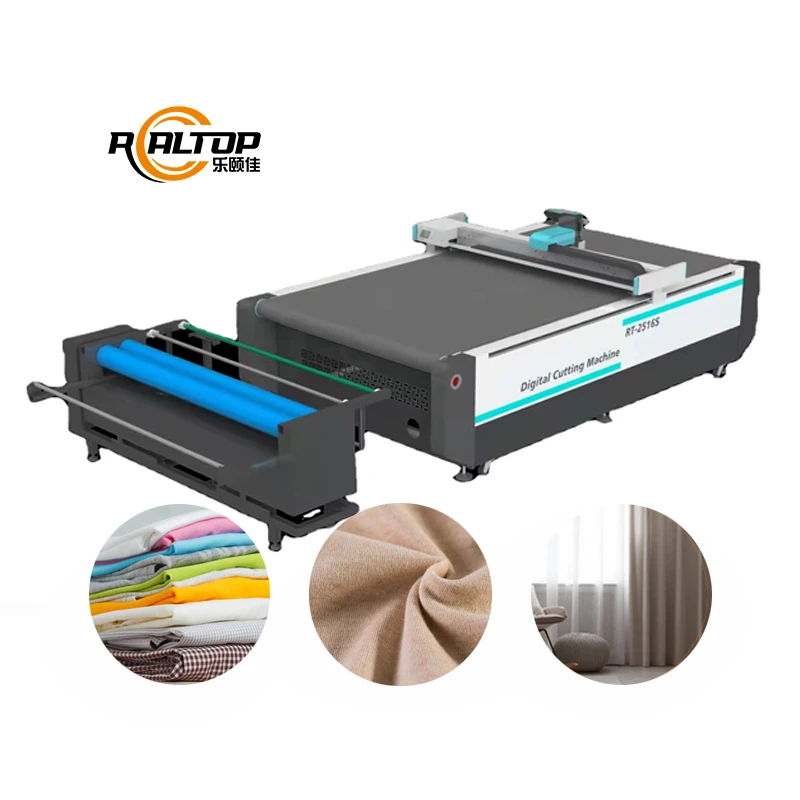
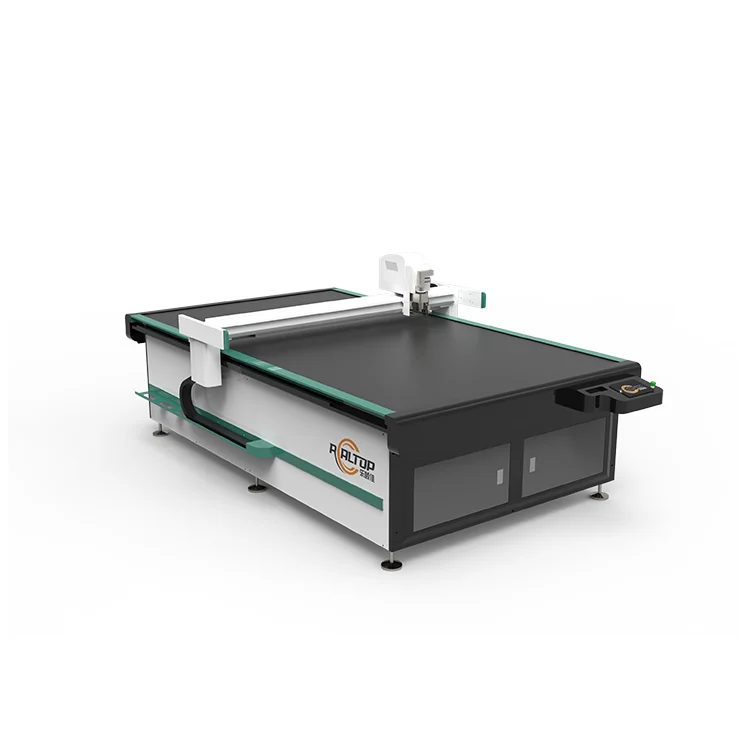
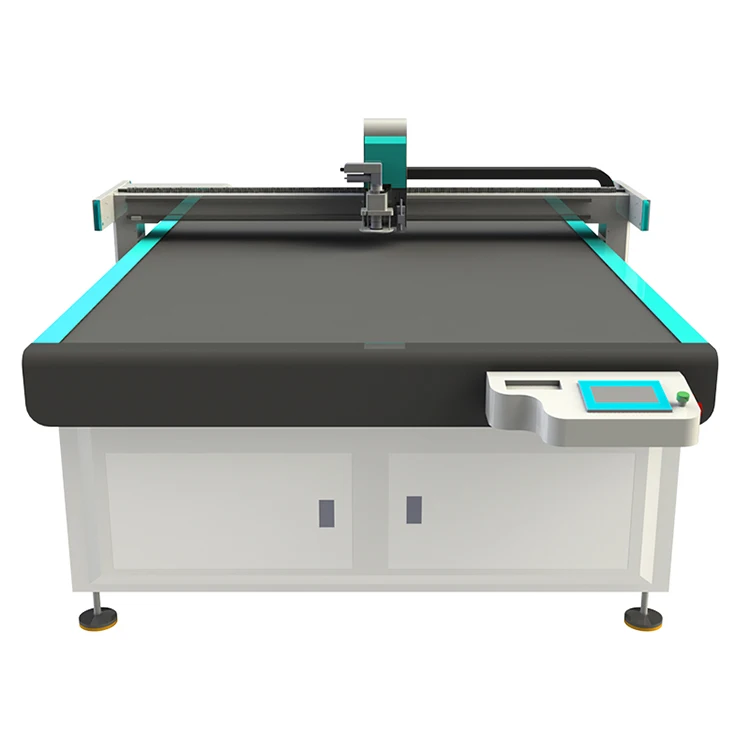
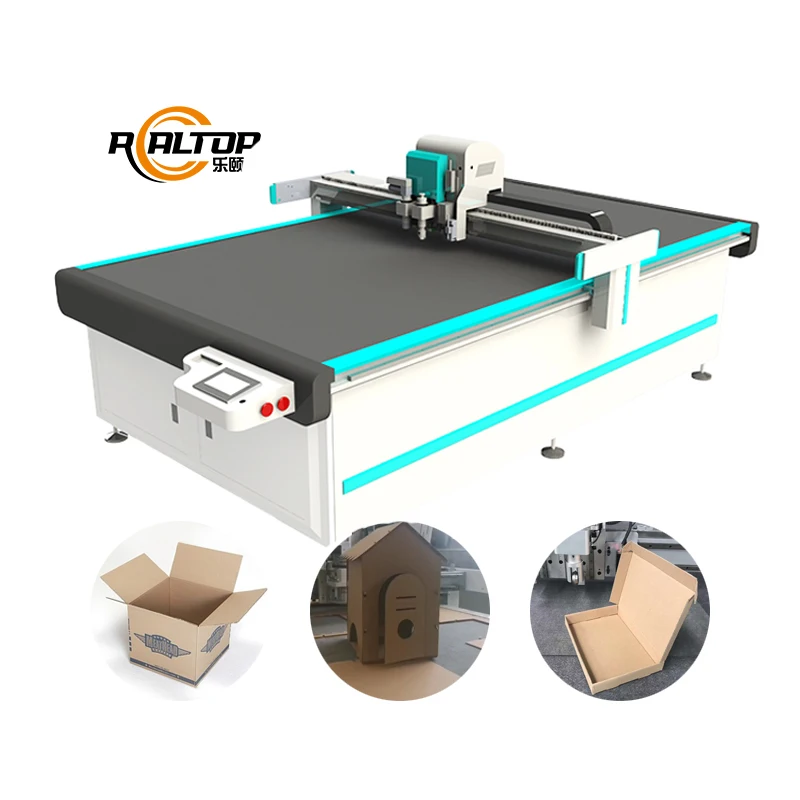
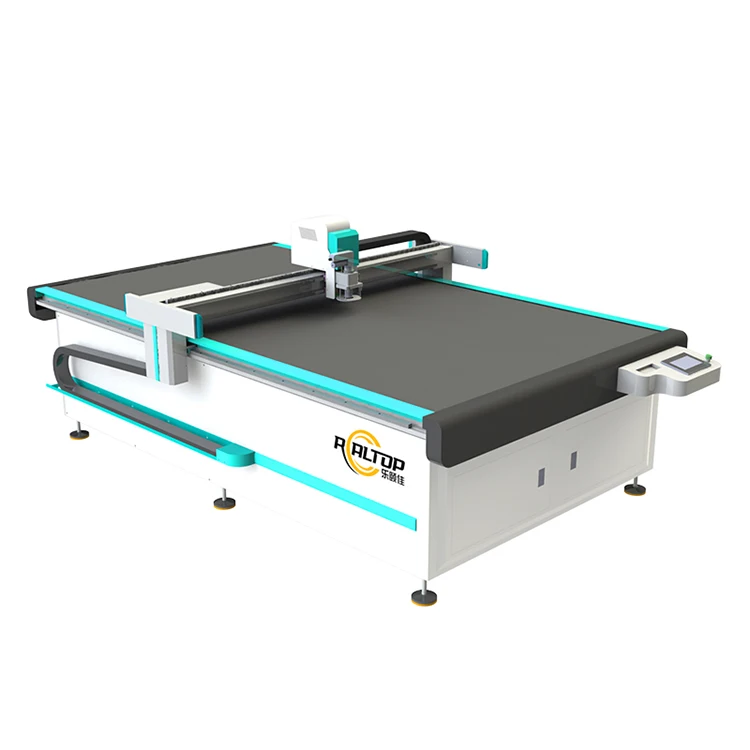
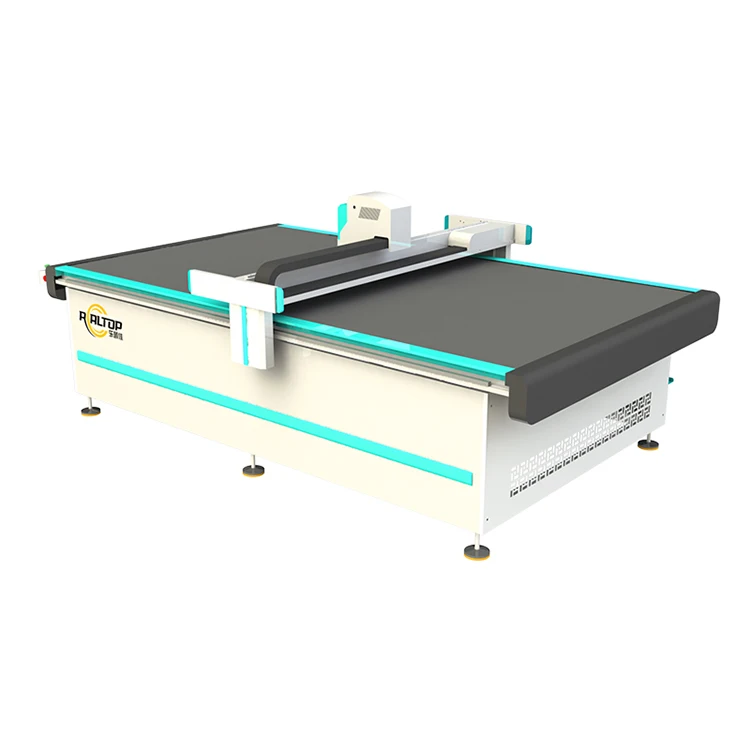
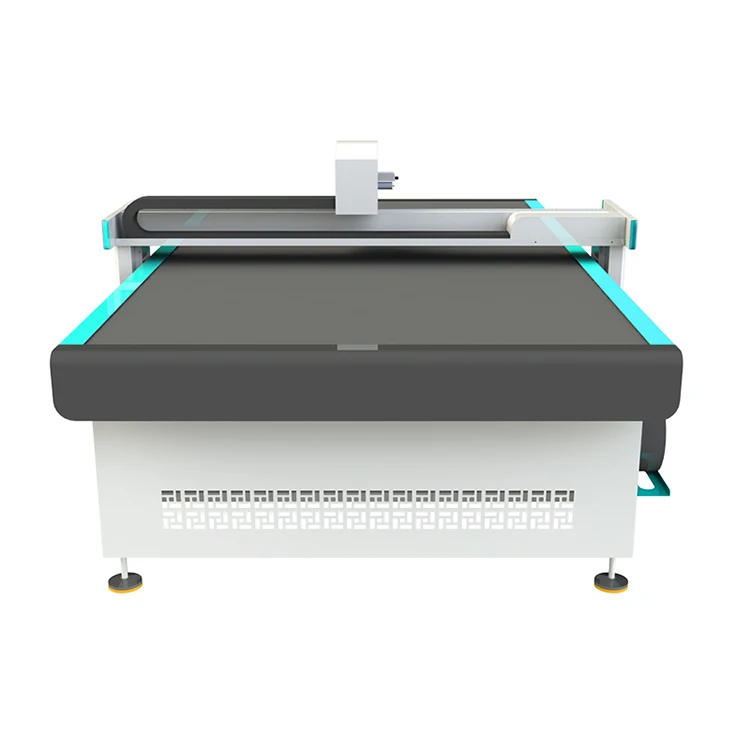
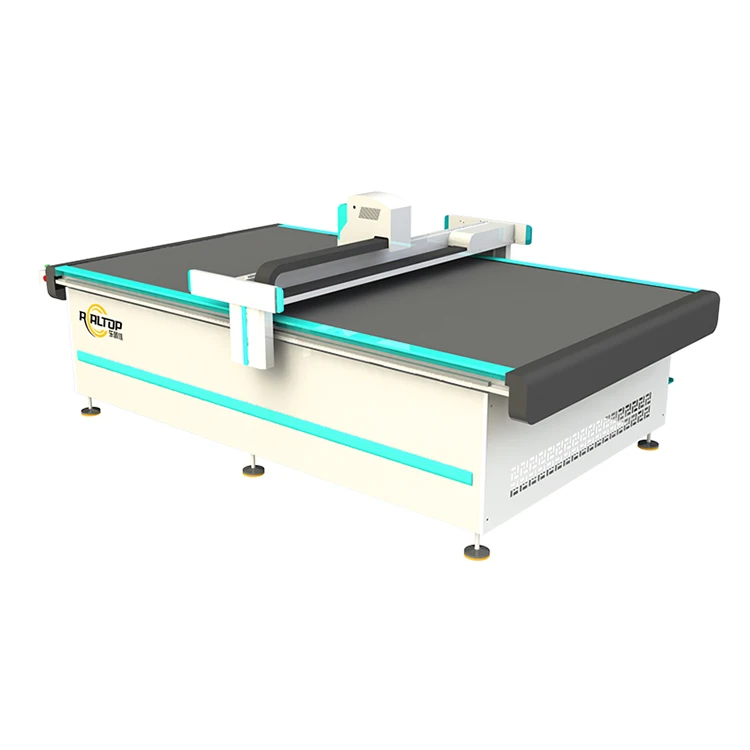
| Product Type | CNC Oscillating Knife Fabric Cutting Machine |
| Working Area | 1600 × 2500 mm |
| Overall Dimensions (L×W×H) | 3450 × 2300 × 1250 mm |
| Rated Power | 9 kW |
| Voltage | 380V ± 10% (frequency to be confirmed for target market) |
| Control System | CNC, HP-GL compatible format |
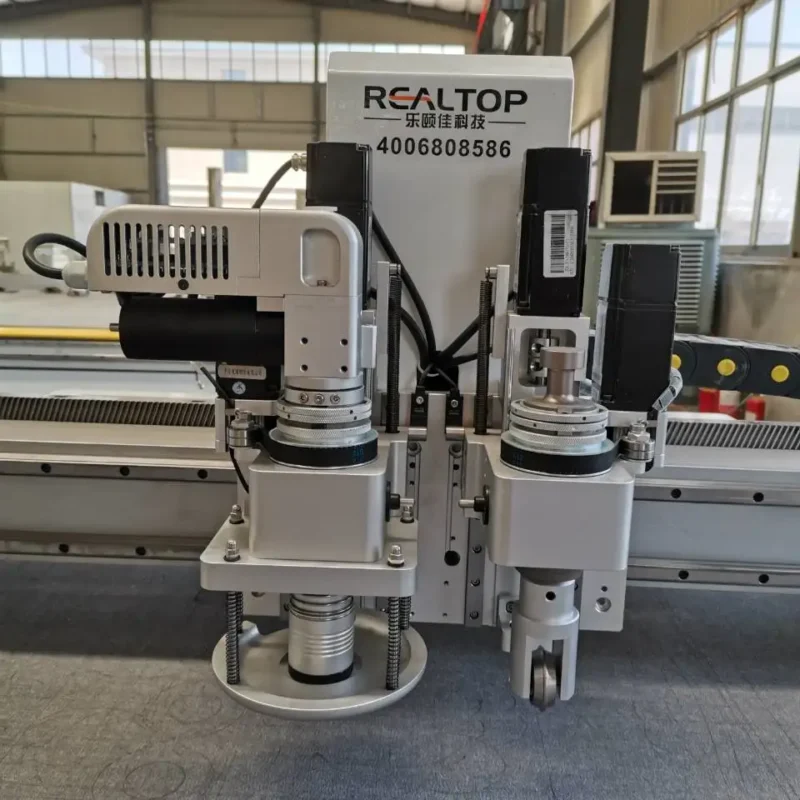
| Tool Head | Swiss imported oscillating knife (vibration full cutting, half cutting, cursor location); modular holder for round knife, marking pen, auto feeder |
| Cutting Thickness | ≤ 50 mm (basis not stated in source — confirm material and ply count) |
| Translational Velocity | 800–1200 mm/s |
| Repeated Accuracy | ≤ 0.1 mm |
| Transmission System | Panasonic digital servo motor, Taiwan Hiwin linear guide, synchronous belt, ball screw, rack and pinion |
| Working Table | Flat vacuum table with aviation aluminum countertop, inner wind structure, high-density felt |
| Vacuum Pump | 7.5 kW |
| Auto Feeding | Germany imported conveyor belt |
| Safety Device | Infrared sensors |
| Software Language Options | English, Russian, Italian, Chinese (special languages customizable) |
| Certification | CE |
Application Suitability
| Application | Material or Output |
|---|---|
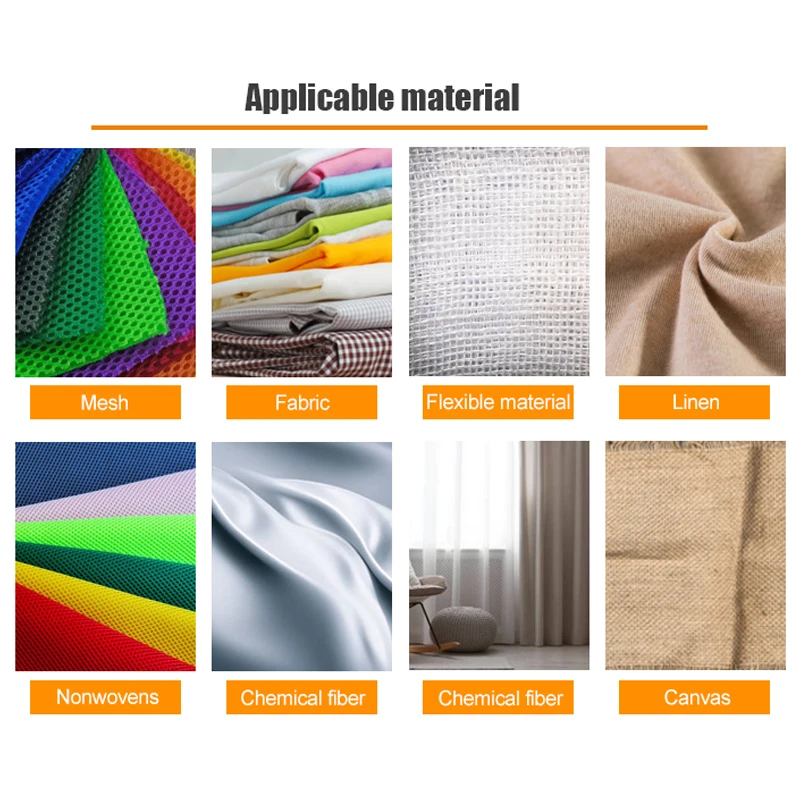
| Garment and textile cutting | Single-ply and multi-ply woven, knit and non-woven fabric |
| Leather goods and footwear | Natural leather, PU, synthetic leather, composite hides |
| Automotive interior trim | Sponge composite leather, fabric-backed vinyl, headliner material |
| Soft signage and PVC | PVC sheets, soft glass, flexible banner material |
| Gasket and seal production | Silicon, rubber, fiber-reinforced composite sheets |
| Fashion and interior textiles | Upholstery fabric, drapery material, technical textiles |
Why Specifying a Cutting Method Before a Working Area Matters
Buyers often start with table dimensions and assume the cutting method will follow — then discover that a knife rated for a given area cannot handle the thickness or ply count of their actual material stack. The cutting method must be validated against the material before the working area is locked in. A CNC oscillating knife cutting machine manufacturer should insist on sample cutting with your fabric before any specification is finalized [NEED_CITE: industrial textile cutting method selection guidelines].
I have watched a garment factory accept a machine based on a 2500 mm table size, only to find their three-layer bonded fleece caused ragged edges because the oscillating frequency and stroke were matched to single-ply cotton. The production floor ended up running the material in single layers, which cut their throughput in half. These mismatches show up after installation, when the buyer is already committed.
How the Oscillating Knife Adapts to Different Textile Structures
A CNC oscillating knife cutting machine manufacturer configures the tool head around the textile structure rather than the other way around. The Swiss imported oscillating knife on this platform delivers full-cut, half-cut and cursor-location modes within a single modular holder. When a production run shifts from bonded fleece to lightweight nylon, the operator switches from oscillating full-cut to a round knife or drag knife without removing the tool head assembly. This modular approach means a single cutting table can cover woven apparel fabric, non-woven interlining and leather hide in the same shift.
Vacuum Zoning for Small Pattern Pieces
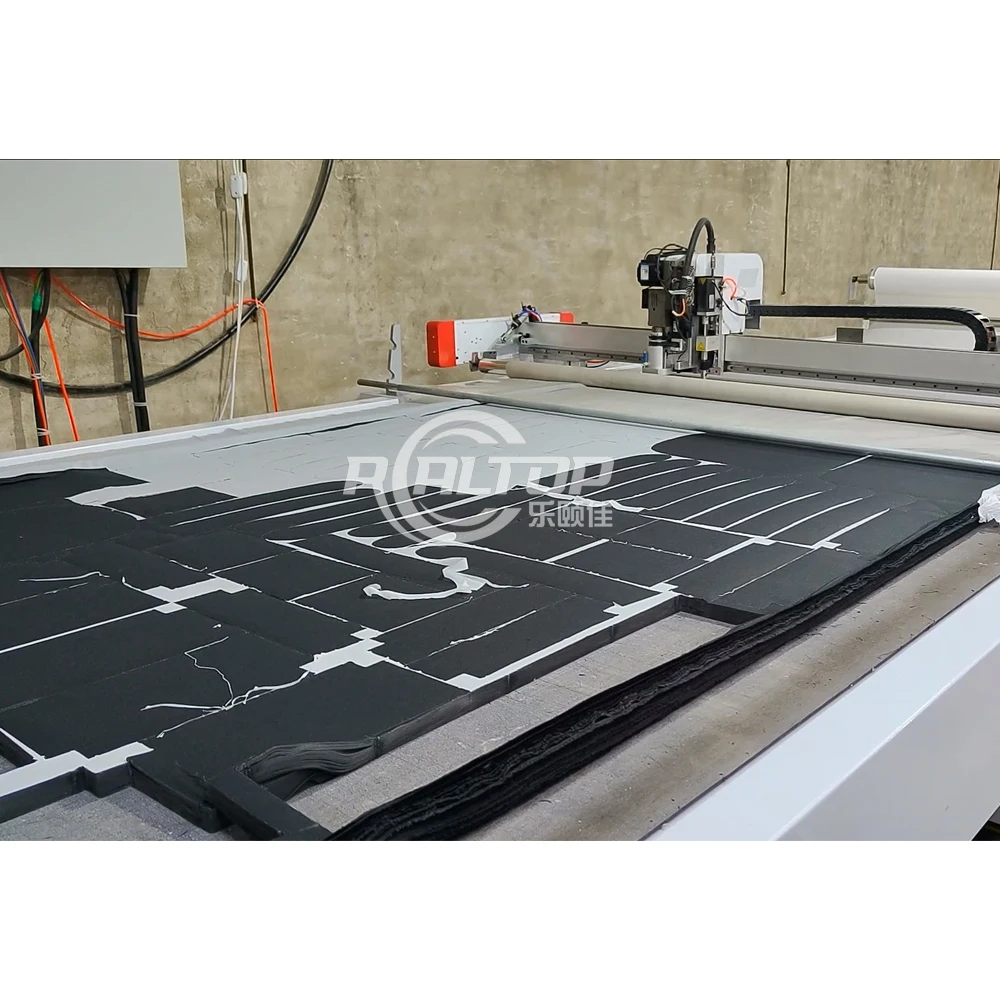
Flatbed cutting tables often lose suction at the edges, which causes small garment pieces — collar stays, pocket flaps, belt loops — to lift during the knife pass. The aviation aluminum countertop on this platform uses a zoned inner wind structure paired with a 7.5 kW vacuum pump to distribute suction across the working area [NEED_CITE: vacuum table zoning principles for CNC cutting]. The high-density felt surface seals the vacuum against irregular textile backs, holding multi-ply fabric stacks flat even when the cut pattern produces dozens of small pieces that would otherwise shift and cause registration errors downstream.
Reading the Specs: What the Numbers Mean on the Production Floor
The 800–1200 mm/s translational velocity is the traverse speed between cuts; actual cutting speed depends on fabric density, ply count and pattern complexity. The ≤ 0.1 mm repeated accuracy, maintained by Panasonic servo motors driving a rack-and-pinion transmission on Taiwan Hiwin linear guides, means nested pattern pieces hold registration across a full 1600 × 2500 mm lay — critical when cutting striped or checked fabric where a visible misalignment ruins the garment. The HP-GL compatible control system accepts files from most nesting software used in garment CAD workflows, reducing the risk of file-format rejection that can stall a production launch. Voltage must be confirmed at 380V ± 10% with the correct frequency for the destination country, as running a 9 kW machine on an incompatible supply can damage the servo drives and vacuum pump motor before the warranty period ends.
The Hidden Cost of Skipping a Sample Cut
When a buyer skips the sample cutting step, the first sign of trouble appears on the production floor: crushed foam cores, frayed edges on synthetic weave, or incomplete cuts through bonded layers that require manual trimming. These defects are often blamed on the operator or the nesting software, when the root cause is a tool-head and material mismatch that a sample cut would have revealed [NEED_CITE: textile cutting defect root cause analysis]. The cost shows up as rework labor, material waste and delayed shipments — problems that compound across every shift until the configuration is corrected.
Why Buyers Source This Platform
The in-house design team covers both knife and laser cutting technologies, so a buyer comparing methods for composite automotive leather gets an honest recommendation based on edge-sealing requirements rather than a push toward whichever machine is in stock. Tool head and table configurations are specified per material type and daily volume, not sold as a one-size package. Sample cutting on the buyer’s own textile is standard before any order is confirmed, producing a cutting report that documents edge quality and achievable thickness. Software compatibility is verified against the buyer’s nesting workflow before shipment. Voltage, plug type and control language are confirmed in writing so the machine arrives ready to power on.
Documentation & Verification
- Machine specification sheet listing confirmed tool head, table size and vacuum pump rating
- Electrical schematic with voltage and frequency matched to your facility
- Sample cutting report on your actual fabric documenting edge quality and ply count
- Tool head and table configuration list tied to your material and volume
- Software licence and file format compatibility note for your nesting workflow
- Factory test record captured before dispatch
Installation, Commissioning & Support
- Foundation must support 3450 × 2300 mm footprint with level tolerance for the 1600 × 2500 mm table
- Dedicated 380V circuit rated for 9 kW total plus 7.5 kW vacuum pump startup surge
- Machine ships fully assembled; verify door and aisle clearance before delivery day
- First-run parameter setting includes vacuum zone mapping and servo calibration on your material
- Operator training covers tool head changeover, nesting import and infrared safety sensor testing
- Spare parts list identifies oscillating knife blades, felt strips and conveyor belt sections
What to Include in Your Inquiry
To configure a CNC oscillating knife cutting machine manufacturer solution around your production, send the fabric type, thickness and maximum ply count you plan to cut, along with your daily output target in linear meters or piece count. Confirm the voltage and frequency at your facility and the control language your operators need. If you run a specific nesting software, name it so file-format compatibility can be verified before the quotation stage.
Frequently Asked Questions
Q: Oscillating knife versus CO₂ laser — which method suits my textile?
A: Oscillating knife leaves an unsealed, clean edge ideal for garment fabric where fused edges would stiffen the seam. CO₂ laser seals synthetic edges and prevents fraying on nylon or polyester but can scorch natural fibers. The choice depends on your material composition and whether the cut edge will be visible in the finished product.
Q: How do I specify cutting thickness beyond the table dimensions?
A: The ≤ 50 mm figure must be validated against your specific material density and ply structure. A bonded three-layer fleece behaves differently from a single layer of canvas at the same total thickness. Request a sample cut on your actual lay-up to confirm achievable depth and edge quality before ordering.
Q: Which tool heads fit the modular holder and when do I add them?
A: The holder accepts an oscillating knife for most textiles, a round knife for single-ply synthetics, a marking pen for pattern reference lines and an auto feeder for roll-fed fabric. Start with the heads you need now; additional heads can be added as your product range expands without replacing the machine.
Q: When is CCD camera contour recognition necessary?
A: If your workflow involves cutting around pre-printed marks on fabric — such as sublimated panels or registered logos — a CCD camera tracks those marks and adjusts the cut path in real time. For plain fabric cut from nested CAD files, standard CNC positioning is sufficient and avoids unnecessary cost.
Q: What electrical details must I confirm before shipment?
A: Confirm voltage, frequency (50 or 60 Hz), plug type and phase configuration for your facility. The 380V ± 10% supply must accommodate both the 9 kW machine and the 7.5 kW vacuum pump startup load. Getting these details wrong can require transformer replacement or drive damage on site.
Cutting Method Matched to Material — REALTOP tests your actual fabric on an oscillating knife table before specifying tool heads, vacuum zones and feeding systems, so the cutting method fits the textile rather than forcing the textile onto a generic flatbed.
Technical Specifications
| Parameter | Value |
|---|---|
| Product Type | CNC Oscillating Knife Fabric Cutting Machine |
| Working Area | 1600 × 2500 mm |
| Overall Dimensions (L×W×H) | 3450 × 2300 × 1250 mm |
| Rated Power | 9 kW |
| Voltage | 380V ± 10% (frequency to be confirmed for target market) |
| Control System | CNC, HP-GL compatible format |
| Tool Head | Swiss imported oscillating knife (vibration full cutting, half cutting, cursor location); modular holder for round knife, marking pen, auto feeder |
| Cutting Thickness | ≤ 50 mm (basis not stated in source — confirm material and ply count) |
| Translational Velocity | 800–1200 mm/s |
| Repeated Accuracy | ≤ 0.1 mm |
| Transmission System | Panasonic digital servo motor, Taiwan Hiwin linear guide, synchronous belt, ball screw, rack and pinion |
| Working Table | Flat vacuum table with aviation aluminum countertop, inner wind structure, high-density felt |
| Vacuum Pump | 7.5 kW |
| Auto Feeding | Germany imported conveyor belt |
| Safety Device | Infrared sensors |
| Software Language Options | English, Russian, Italian, Chinese (special languages customizable) |
| Certification | CE |
Application Suitability
| Application | Material or Output |
|---|---|
| Garment and textile cutting | Single-ply and multi-ply woven, knit and non-woven fabric |
| Leather goods and footwear | Natural leather, PU, synthetic leather, composite hides |
| Automotive interior trim | Sponge composite leather, fabric-backed vinyl, headliner material |
| Soft signage and PVC | PVC sheets, soft glass, flexible banner material |
| Gasket and seal production | Silicon, rubber, fiber-reinforced composite sheets |
| Fashion and interior textiles | Upholstery fabric, drapery material, technical textiles |
Why Specifying a Cutting Method Before a Working Area Matters
Buyers often start with table dimensions and assume the cutting method will follow — then discover that a knife rated for a given area cannot handle the thickness or ply count of their actual material stack. The cutting method must be validated against the material before the working area is locked in. A CNC oscillating knife cutting machine manufacturer should insist on sample cutting with your fabric before any specification is finalized [NEED_CITE: industrial textile cutting method selection guidelines].
I have watched a garment factory accept a machine based on a 2500 mm table size, only to find their three-layer bonded fleece caused ragged edges because the oscillating frequency and stroke were matched to single-ply cotton. The production floor ended up running the material in single layers, which cut their throughput in half. These mismatches show up after installation, when the buyer is already committed.
How the Oscillating Knife Adapts to Different Textile Structures
A CNC oscillating knife cutting machine manufacturer configures the tool head around the textile structure rather than the other way around. The Swiss imported oscillating knife on this platform delivers full-cut, half-cut and cursor-location modes within a single modular holder. When a production run shifts from bonded fleece to lightweight nylon, the operator switches from oscillating full-cut to a round knife or drag knife without removing the tool head assembly. This modular approach means a single cutting table can cover woven apparel fabric, non-woven interlining and leather hide in the same shift.
Vacuum Zoning for Small Pattern Pieces
Flatbed cutting tables often lose suction at the edges, which causes small garment pieces — collar stays, pocket flaps, belt loops — to lift during the knife pass. The aviation aluminum countertop on this platform uses a zoned inner wind structure paired with a 7.5 kW vacuum pump to distribute suction across the working area [NEED_CITE: vacuum table zoning principles for CNC cutting]. The high-density felt surface seals the vacuum against irregular textile backs, holding multi-ply fabric stacks flat even when the cut pattern produces dozens of small pieces that would otherwise shift and cause registration errors downstream.
Reading the Specs: What the Numbers Mean on the Production Floor
The 800–1200 mm/s translational velocity is the traverse speed between cuts; actual cutting speed depends on fabric density, ply count and pattern complexity. The ≤ 0.1 mm repeated accuracy, maintained by Panasonic servo motors driving a rack-and-pinion transmission on Taiwan Hiwin linear guides, means nested pattern pieces hold registration across a full 1600 × 2500 mm lay — critical when cutting striped or checked fabric where a visible misalignment ruins the garment. The HP-GL compatible control system accepts files from most nesting software used in garment CAD workflows, reducing the risk of file-format rejection that can stall a production launch. Voltage must be confirmed at 380V ± 10% with the correct frequency for the destination country, as running a 9 kW machine on an incompatible supply can damage the servo drives and vacuum pump motor before the warranty period ends.
The Hidden Cost of Skipping a Sample Cut
When a buyer skips the sample cutting step, the first sign of trouble appears on the production floor: crushed foam cores, frayed edges on synthetic weave, or incomplete cuts through bonded layers that require manual trimming. These defects are often blamed on the operator or the nesting software, when the root cause is a tool-head and material mismatch that a sample cut would have revealed [NEED_CITE: textile cutting defect root cause analysis]. The cost shows up as rework labor, material waste and delayed shipments — problems that compound across every shift until the configuration is corrected.
Why Buyers Source This Platform
The in-house design team covers both knife and laser cutting technologies, so a buyer comparing methods for composite automotive leather gets an honest recommendation based on edge-sealing requirements rather than a push toward whichever machine is in stock. Tool head and table configurations are specified per material type and daily volume, not sold as a one-size package. Sample cutting on the buyer’s own textile is standard before any order is confirmed, producing a cutting report that documents edge quality and achievable thickness. Software compatibility is verified against the buyer’s nesting workflow before shipment. Voltage, plug type and control language are confirmed in writing so the machine arrives ready to power on.
Documentation & Verification
- Machine specification sheet listing confirmed tool head, table size and vacuum pump rating
- Electrical schematic with voltage and frequency matched to your facility
- Sample cutting report on your actual fabric documenting edge quality and ply count
- Tool head and table configuration list tied to your material and volume
- Software licence and file format compatibility note for your nesting workflow
- Factory test record captured before dispatch
Installation, Commissioning & Support
- Foundation must support 3450 × 2300 mm footprint with level tolerance for the 1600 × 2500 mm table
- Dedicated 380V circuit rated for 9 kW total plus 7.5 kW vacuum pump startup surge
- Machine ships fully assembled; verify door and aisle clearance before delivery day
- First-run parameter setting includes vacuum zone mapping and servo calibration on your material
- Operator training covers tool head changeover, nesting import and infrared safety sensor testing
- Spare parts list identifies oscillating knife blades, felt strips and conveyor belt sections
What to Include in Your Inquiry
To configure a CNC oscillating knife cutting machine manufacturer solution around your production, send the fabric type, thickness and maximum ply count you plan to cut, along with your daily output target in linear meters or piece count. Confirm the voltage and frequency at your facility and the control language your operators need. If you run a specific nesting software, name it so file-format compatibility can be verified before the quotation stage.
Frequently Asked Questions
Q: Oscillating knife versus CO₂ laser — which method suits my textile?
A: Oscillating knife leaves an unsealed, clean edge ideal for garment fabric where fused edges would stiffen the seam. CO₂ laser seals synthetic edges and prevents fraying on nylon or polyester but can scorch natural fibers. The choice depends on your material composition and whether the cut edge will be visible in the finished product.
Q: How do I specify cutting thickness beyond the table dimensions?
A: The ≤ 50 mm figure must be validated against your specific material density and ply structure. A bonded three-layer fleece behaves differently from a single layer of canvas at the same total thickness. Request a sample cut on your actual lay-up to confirm achievable depth and edge quality before ordering.
Q: Which tool heads fit the modular holder and when do I add them?
A: The holder accepts an oscillating knife for most textiles, a round knife for single-ply synthetics, a marking pen for pattern reference lines and an auto feeder for roll-fed fabric. Start with the heads you need now; additional heads can be added as your product range expands without replacing the machine.
Q: When is CCD camera contour recognition necessary?
A: If your workflow involves cutting around pre-printed marks on fabric — such as sublimated panels or registered logos — a CCD camera tracks those marks and adjusts the cut path in real time. For plain fabric cut from nested CAD files, standard CNC positioning is sufficient and avoids unnecessary cost.
Q: What electrical details must I confirm before shipment?
A: Confirm voltage, frequency (50 or 60 Hz), plug type and phase configuration for your facility. The 380V ± 10% supply must accommodate both the 9 kW machine and the 7.5 kW vacuum pump startup load. Getting these details wrong can require transformer replacement or drive damage on site.
商品评价
There are no reviews yet.