


Fast Delivery
Quick, reliable shipping to any location.

Free & easy returns
Return this item by mail or in store within 90 days for a full refund.
Dual-Technology Cutting Source — One factory engineering both oscillating knife and laser platforms lets buyers match the cutting method to the actual material rather than compromise on a single process.
Technical Specifications
| Parameter | Value |
|---|---|
| Model | RT-D2516 / RT-S2516 |
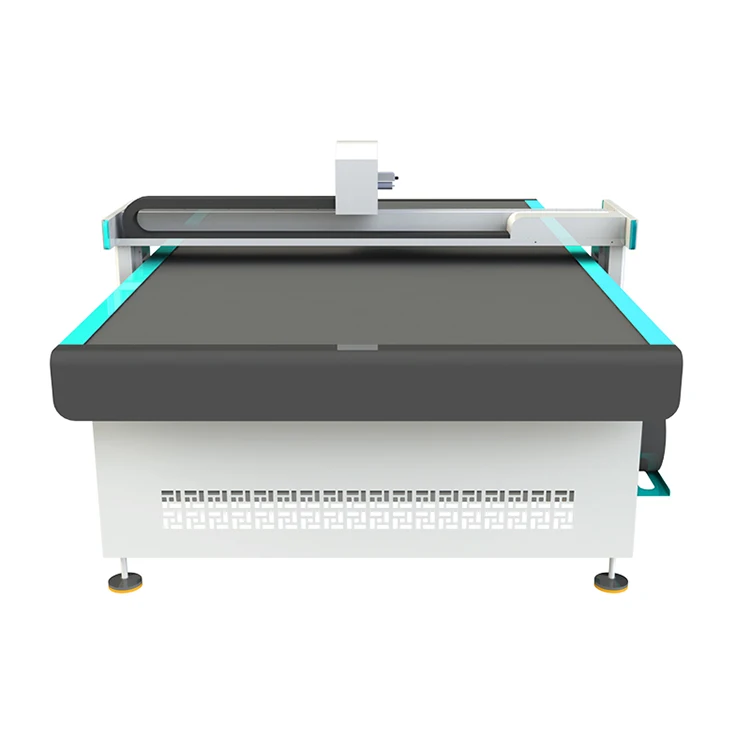
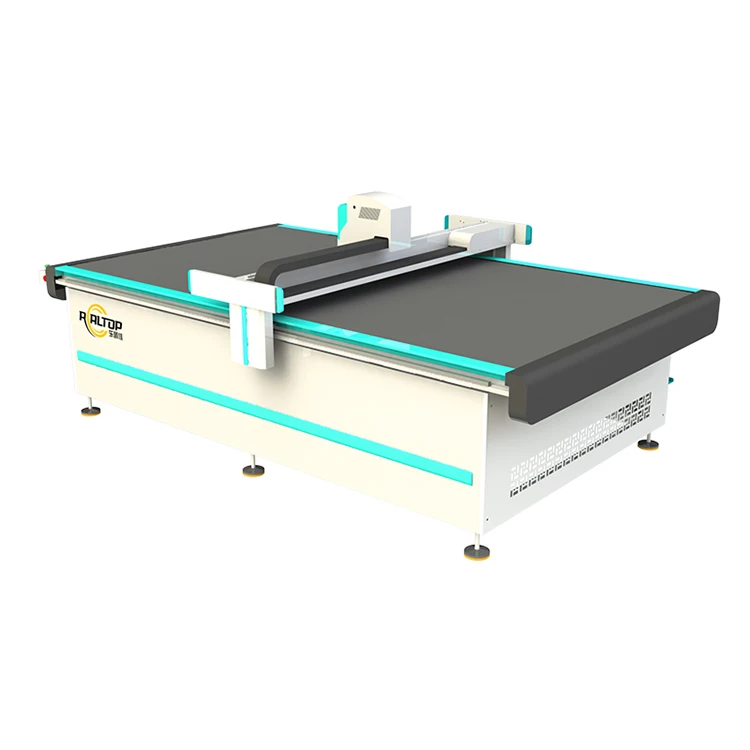
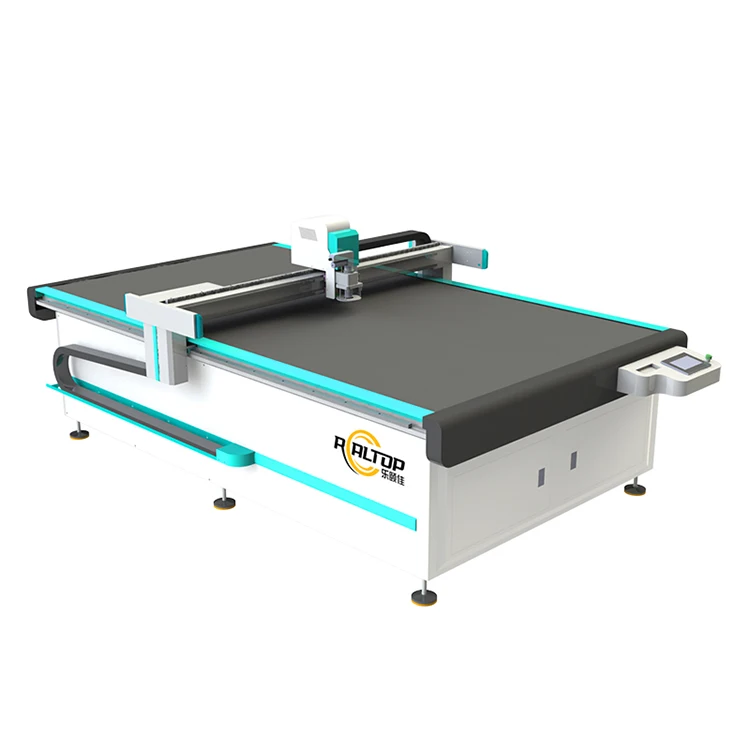
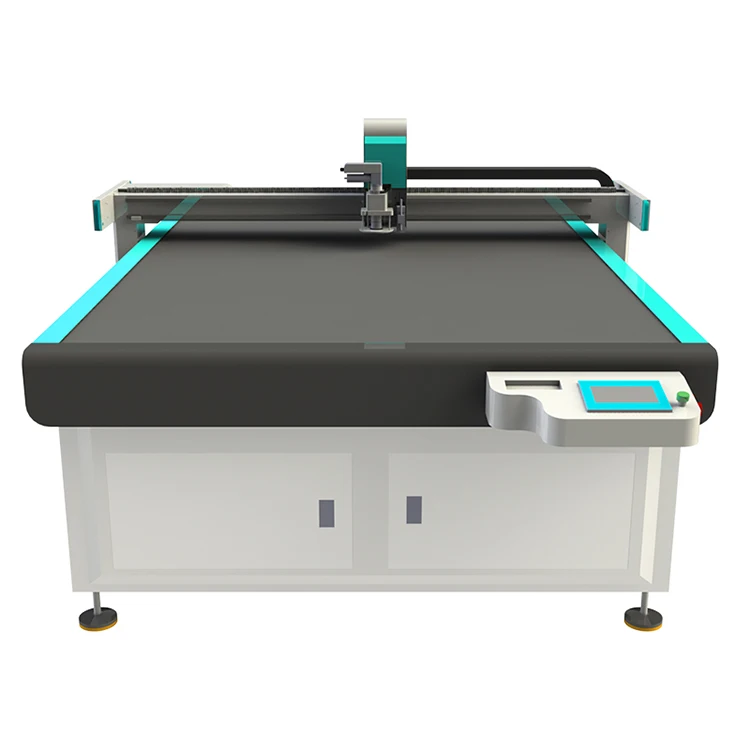
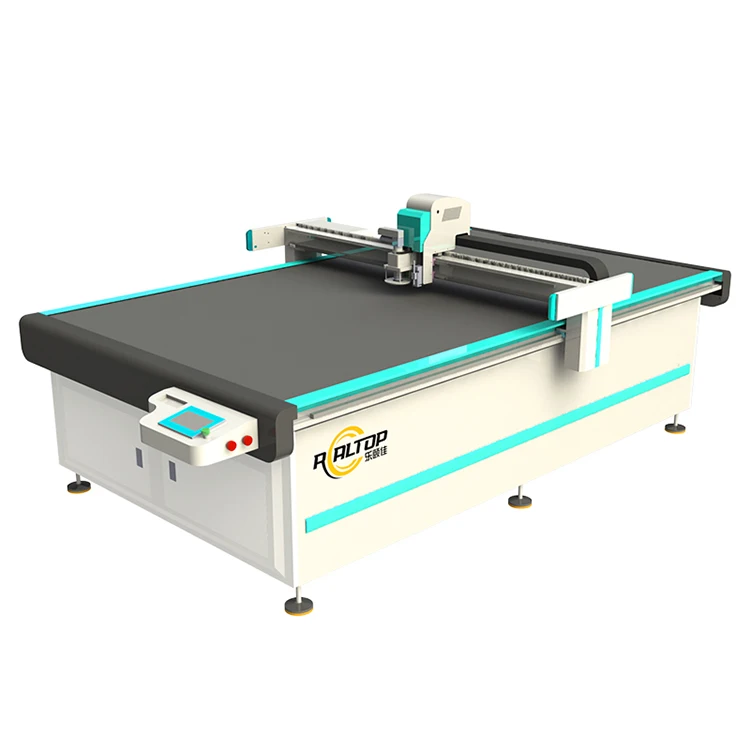
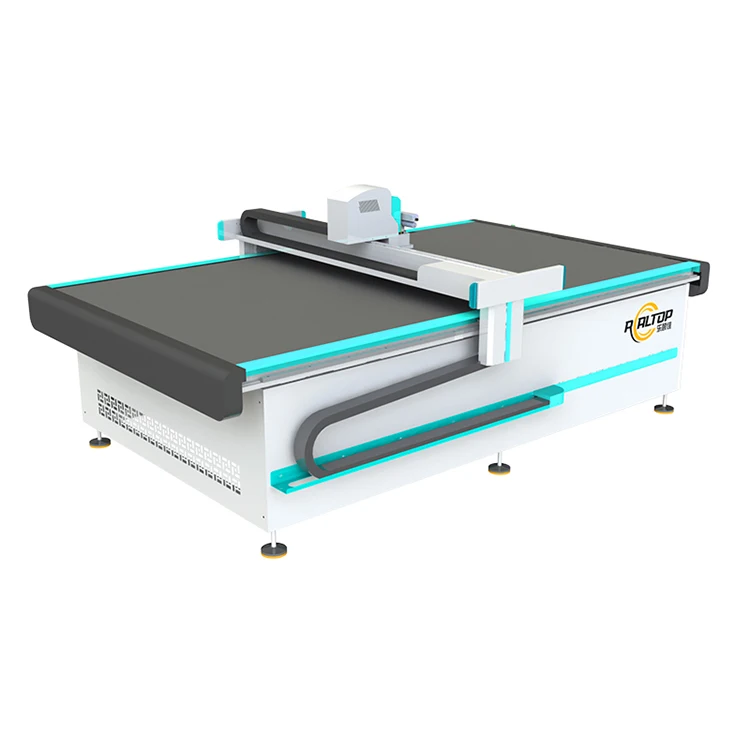
| Product Type | CNC Oscillating Knife Cutting Machine |
| Working Area | 1600 × 2500 mm |
| Machine Dimensions (L × W × H) | 3450 × 2300 × 1250 mm |
| Rated Power | 9 kW |
| Voltage | 380V ±10% |
| Vacuum Pump | 7.5 kW |
| Table Type | Flat vacuum table with auto feeding, German-imported conveyor belt |
| Tool Head | Multifunctional head with Swiss-imported oscillating knife (full cut, half cut, cursor location) |
| Translational Speed | 800–1200 mm/s |
| Cutting Speed | 200–800 mm/s (basis not stated in source — confirm material and thickness) |
| Repeated Accuracy | ≤ 0.1 mm |
| Transmission System | Yaskawa digital servo motor, Taiwan Hiwin linear guide, synchronous belt, ball screw |
| Cross Beam | Thickened and widened large beam |
| Control Format | HP-GL compatible |
| Safety Device | Infrared sensors |
| Tool Change | Multiple quick-change tool heads |
| Certification | CE |
Application Suitability
| Application | Material or Output |
|---|---|
| Garment and footwear pattern cutting | Woven fabric, nonwoven textile, flexible garment composites |
| Leather goods sample and short-run production | Natural leather, sponge composite leather, synthetic PU |
| Automotive interior trim | Soft PVC, sponge-backed vinyl, gasket rubber |
| Industrial sealing components | Silicon sheet, soft glass, rubber gasket stock |
| Packaging and signage prototyping | Corrugated board, foam sheet, flexible composite laminates |
Why Specifying a Cloth CNC Cutting Machine on Bed Size Alone Invites Failure
A working area figure tells you nothing about edge quality, tool wear, or whether the vacuum system can hold small nested pieces flat at production speed.
When I first started quoting cutting lines, buyers would send a drawing with the bed dimensions they wanted and expect a price the next morning. The problem surfaces weeks later when the material arrives — a nonwoven that frays if the oscillation frequency is wrong, or a sponge composite that crushes under a drag knife instead of slicing cleanly. The machine footprint was correct, but the tool head, blade type, and vacuum zoning never matched the actual stock. That mismatch stops a production floor faster than any electrical fault [NEED_CITE: material-tool mismatch as primary cause of unplanned downtime in digital cutting]. A Cloth CNC Cutting Machine manufacturer that asks for material samples before confirming configuration is protecting both sides from that scenario.
Surveying the Full Knife and Laser Range Before Committing
Buyers entering the digital cutting space often assume one technology covers every job. The reality is that oscillating knife handles thick, compressible materials like foam and sponge composite leather without melting the edge, while CO2 laser seals synthetic textile edges and engraves detail that no blade can replicate. Having both platforms under one engineering team means the method is chosen on material behavior and daily volume, not on whichever machine happens to be in the showroom. The RT-D2516 / RT-S2516 sits in the knife segment, sized for roll-fed garment and nonwoven work where edge sealing is unnecessary and ply height demands a physical blade.
Matching the Oscillating Knife to Nonwoven and Composite Stock
Nonwoven fabrics — especially those reinforced with glass fiber or mineral fill — dull standard blades within hours. The Swiss-imported oscillating knife on this platform runs a high-frequency stroke that slices rather than tears, extending blade life on abrasive composites. For pure garment textiles, the same head switches to a finer blade and lower oscillation amplitude to prevent ply shift. Half-cut mode scores crease lines on packaging samples without penetrating the backing, so a single tool head covers cutting and creasing without a manual changeover [NEED_CITE: oscillating knife stroke frequency and abrasive textile wear rates].
What the Specification Sheet Actually Means on the Shop Floor
The 1600 × 2500 mm bed is wide enough for standard garment roll widths, and the German-imported conveyor belt feeds material continuously so operators are not manually repositioning between cuts. A 7.5 kW vacuum pump generates sufficient hold-down across the zoned table, though small nested parts near the edges may require masking to prevent lift — a detail often overlooked until the first production run. Yaskawa servo motors paired with Hiwin linear guides keep the repeated accuracy within 0.1 mm, which matters when cutting interlocking pattern pieces where a half-millimeter drift accumulates across a fifty-piece marker. The thickened cross beam resists deflection at the far end of the 2500 mm stroke, preventing the jogged edges that appear on lighter gantry designs after months of high-speed traversing. HP-GL compatibility means the controller accepts plot files from most pattern CAD systems without an intermediate translator, preserving curve fidelity on complex armhole and collar contours.
The Hidden Cost of Skipping the Material Trial
I once shipped a line configured for standard nonwoven, and the buyer’s actual stock turned out to be a glass-fiber-reinforced composite. The blade shattered on day three, the vacuum zones could not grip the stiff sheets, and the entire line sat idle while we air-freighted a heavier-duty tool head. Since then, I require three rolls from different production batches before signing off on configuration. Skipping this step saves a week on the front end and costs a month on the back end — in blade consumption, in rejected parts, and in operator frustration that no manual can resolve [NEED_CITE: composite material variability and tooling failure rates in oscillating knife cutting].
Why Buyers Survey the Full Catalogue Here
Realtop engineers both oscillating knife and laser cutting platforms in the same Jinan facility, so a buyer comparing methods gets cut samples from both processes on the same material batch. The in-house design team adjusts vacuum zoning, beam stiffness, and tool head selection per material rather than offering a fixed catalogue machine. Every Cloth CNC Cutting Machine manufacturer claims sample testing, but here the sample report ships with the quotation, showing edge quality, ply height limits, and cycle time on the buyer’s own stock. Voltage, plug type, and control language are confirmed line-by-line before production starts, not discovered at the packing stage. The factory test record documents actual cutting passes on the buyer’s material, giving the buyer a baseline for acceptance when the crate arrives.
Documentation & Verification
- Machine specification sheet listing RT-D2516 / RT-S2516 configuration per confirmed material
- Electrical schematic with 380V ±10% circuit diagram and vacuum pump wiring
- Sample cutting report on buyer-supplied nonwoven, leather, or composite roll stock
- Tool head and blade selection list matched to confirmed material thickness and type
- HP-GL file format compatibility note for buyer’s pattern CAD or nesting software
- CE declaration covering oscillating knife and vacuum table safety requirements
Installation, Commissioning & Support
- 3450 × 2300 mm footprint requires level concrete floor with anchor bolts near the vacuum pump
- Dedicated 380V three-phase circuit rated above 9 kW with upstream breaker for servo protection
- Conveyor belt and auto-feeding rollers assembled on-site after transport frame removal
- First-run parameter tuning on buyer’s material: oscillation amplitude, vacuum zone mapping, feed rate
- Operator training covering quick-change tool head swap and HP-GL file import workflow
- Consumable blade and oscillating knife wear parts list with reorder part numbers
What to Include in Your First Inquiry
Tell us the material type, maximum ply height, and roll width you run daily. Confirm your local voltage and frequency so the servo drives and vacuum pump are wound correctly before assembly. If your nesting software outputs HP-GL or DXF, send a sample file so we can verify curve resolution and import paths on the actual controller.
Frequently Asked Questions
Q: How do I decide between oscillating knife and laser for my textile products?
A: Oscillating knife cuts thick, compressible materials like foam and multi-ply nonwoven without melting edges or producing fumes, making it the default for garment and automotive interior work. Laser seals synthetic edges and handles intricate engraving but generates heat that can scorch natural fibers. We cut samples on both platforms with your material so the choice is based on edge quality and throughput, not assumption.
Q: Can the vacuum table hold small nested pieces without masking?
A: The zoned vacuum system on the 1600 × 2500 mm bed provides strong hold-down for most fabric and nonwoven pieces, but very small gasket or label parts near the table edges can lift at high translational speed. During the material trial we map vacuum zones and recommend masking sheets or custom fixtures where needed, documented in the sample cutting report before you commit.
Q: What file formats does the controller accept from my existing nesting software?
A: The system accepts HP-GL compatible plot files, which covers most pattern CAD and nesting platforms used in garment and footwear production. Before order confirmation we run your sample DXF or PLT files through the controller to verify curve resolution, cut sequence, and tool path output, noting any translation issues in the software compatibility document.
Q: How is voltage and frequency handled for different export markets?
A: The standard configuration is 380V ±10%, but servo drives and the 7.5 kW vacuum pump can be specified for other industrial voltages. You confirm local voltage, frequency, and plug type at the quotation stage, and the electrical schematic reflects those values before production begins so there are no transformer surprises at installation.










商品评价
There are no reviews yet.