

Fast Delivery
Quick, reliable shipping to any location.

Free & easy returns
Return this item by mail or in store within 90 days for a full refund.
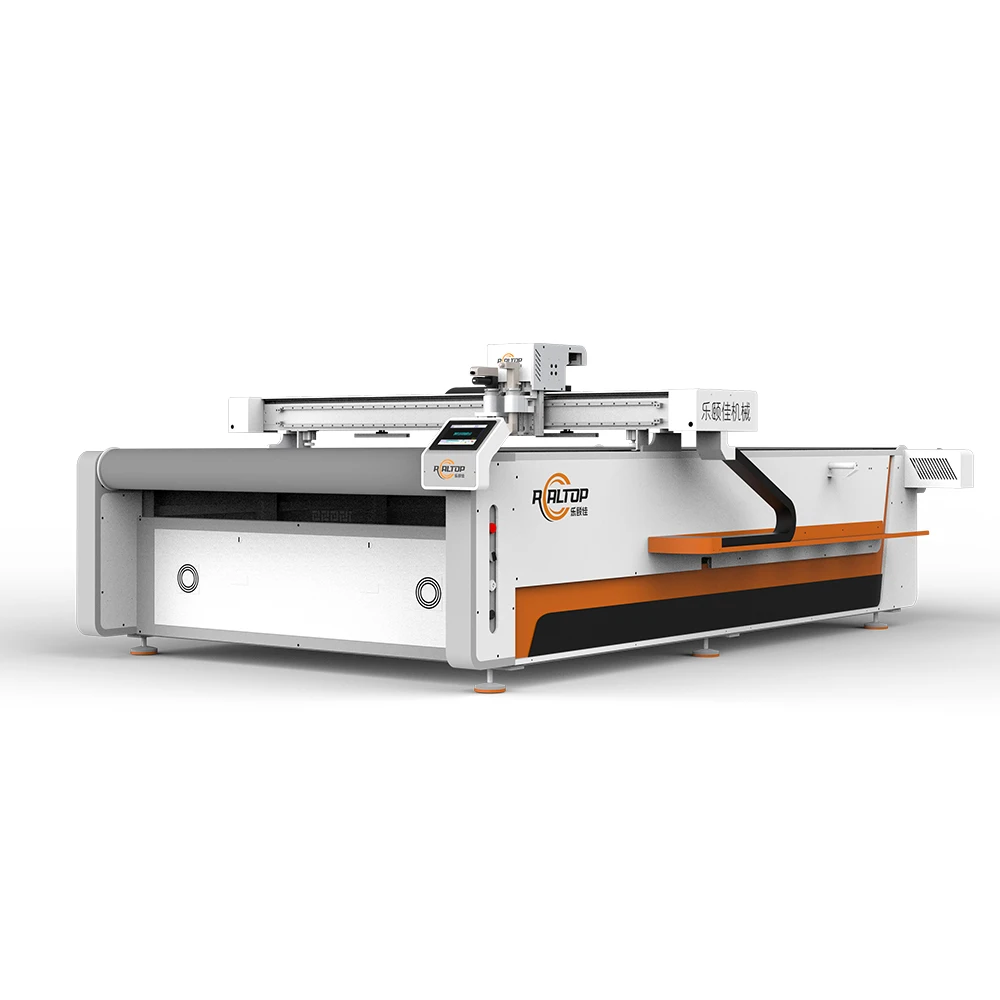
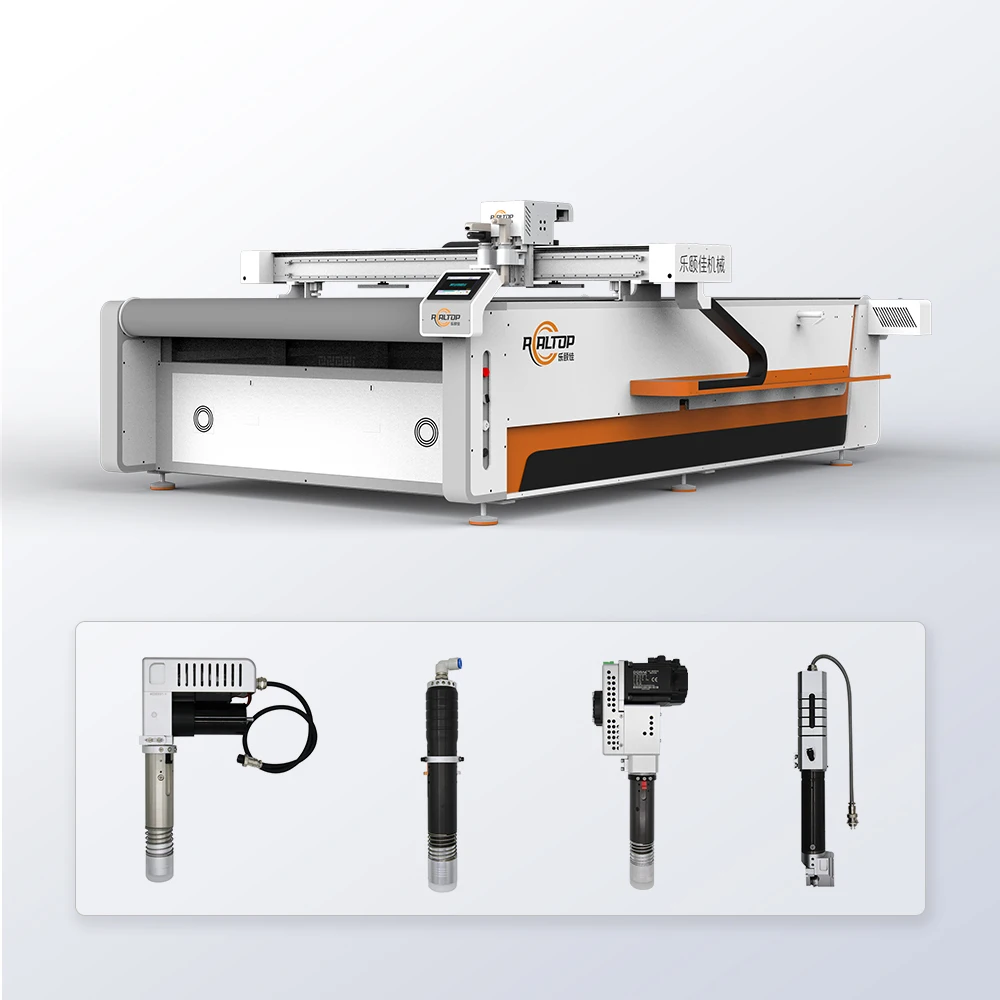
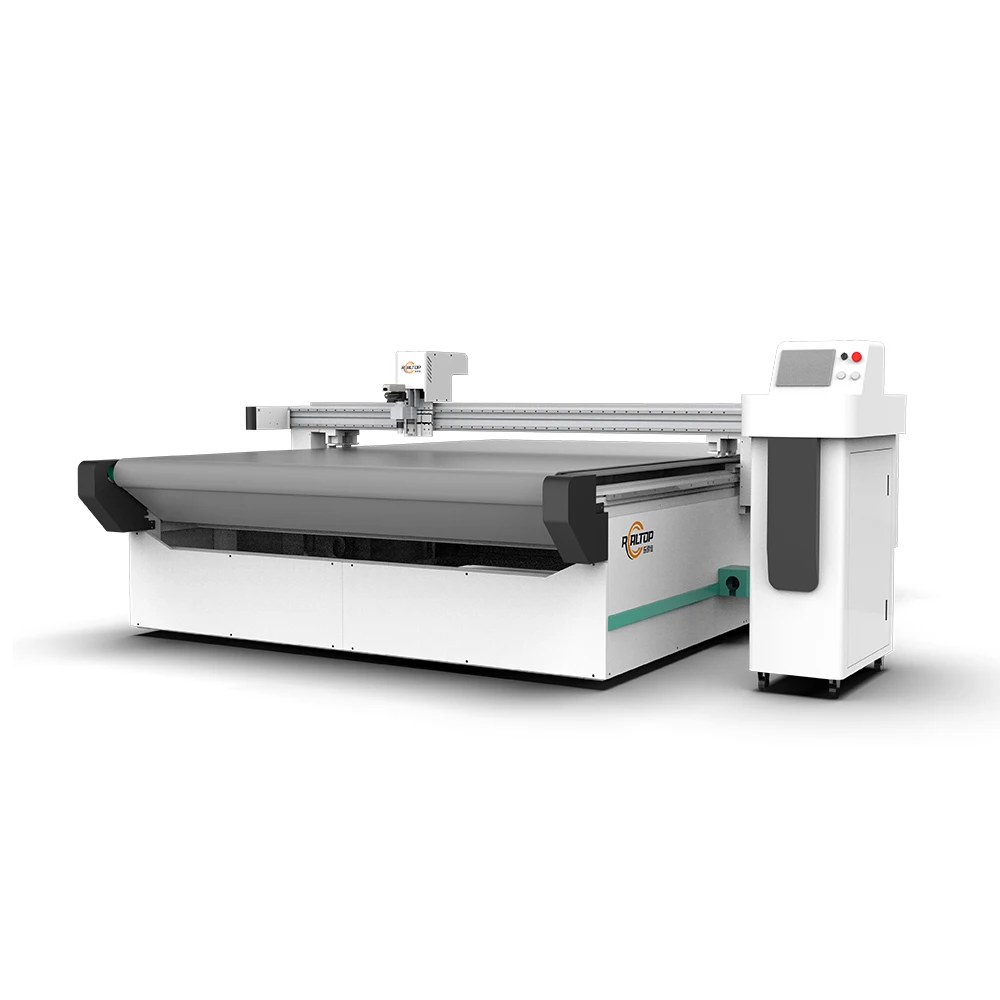
Tooling Flexibility — The in-house engineering team configures oscillating, pneumatic, drag and creasing tool heads around your material before the CNC Knife Cutting Machine manufacturer locks the build sheet.
Technical Specifications
| Parameter | Value |
|---|---|
| Model | RT-D2516/RT-S2516 |
| Product Type | CNC Oscillating Knife Cutting Machine |
| Working Area | 1600×2500 mm |
| Machine Size | 3450×2300×1250 mm |
| Rated Power | 9 kW |
| Table Options | Flat working table or auto feeding table |
| Translational Velocity | 800–2000 mm/s |
| Cutting Speed | 200–800 mm/s (varies by material type and thickness) |
| Repeated Accuracy | ≤0.1 mm |
| Transmission System | Digital servo motor, linear guide, synchronous belt, imported ball screw |
| Servo Motor | Delta (Panasonic optional) |
| Guide Rail | Taiwan Hiwin |
| Vacuum Pump | 7.5 kW |
| Vacuum Table | Aluminum air box platform, integrated or split box |
| Conveyor Belt | Germany imported |
| Control Panel | Touch screen, multiple language support |
| Instruction System | HP-GL compatible format |
| Software Compatibility | PLT, DXF, AI with auto typesetting |
| Voltage | 380V ±10% |
| Safety Devices | Infrared sensors, anti-collision, emergency stop |
Application Suitability
| Application | Material or Output |
|---|---|
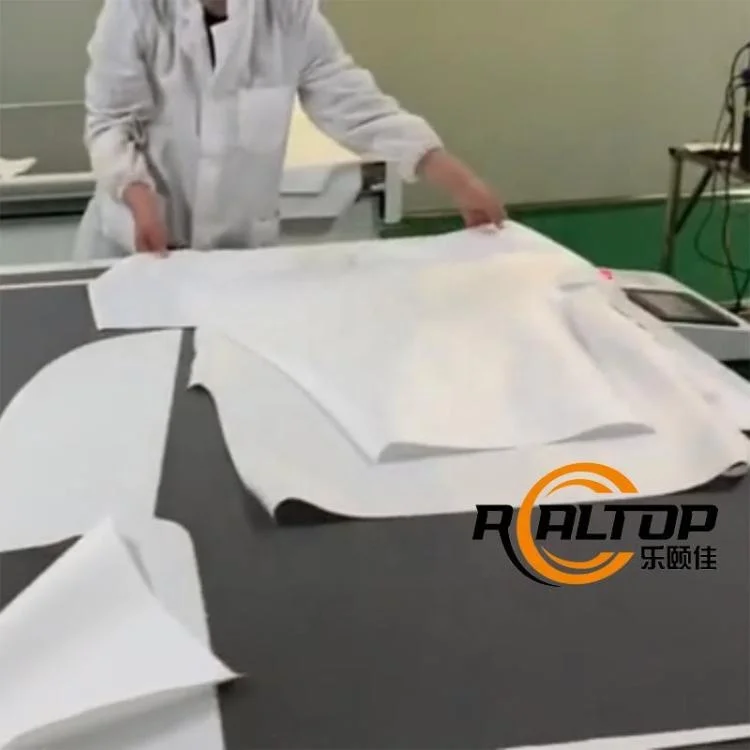
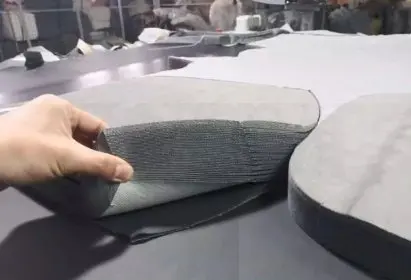
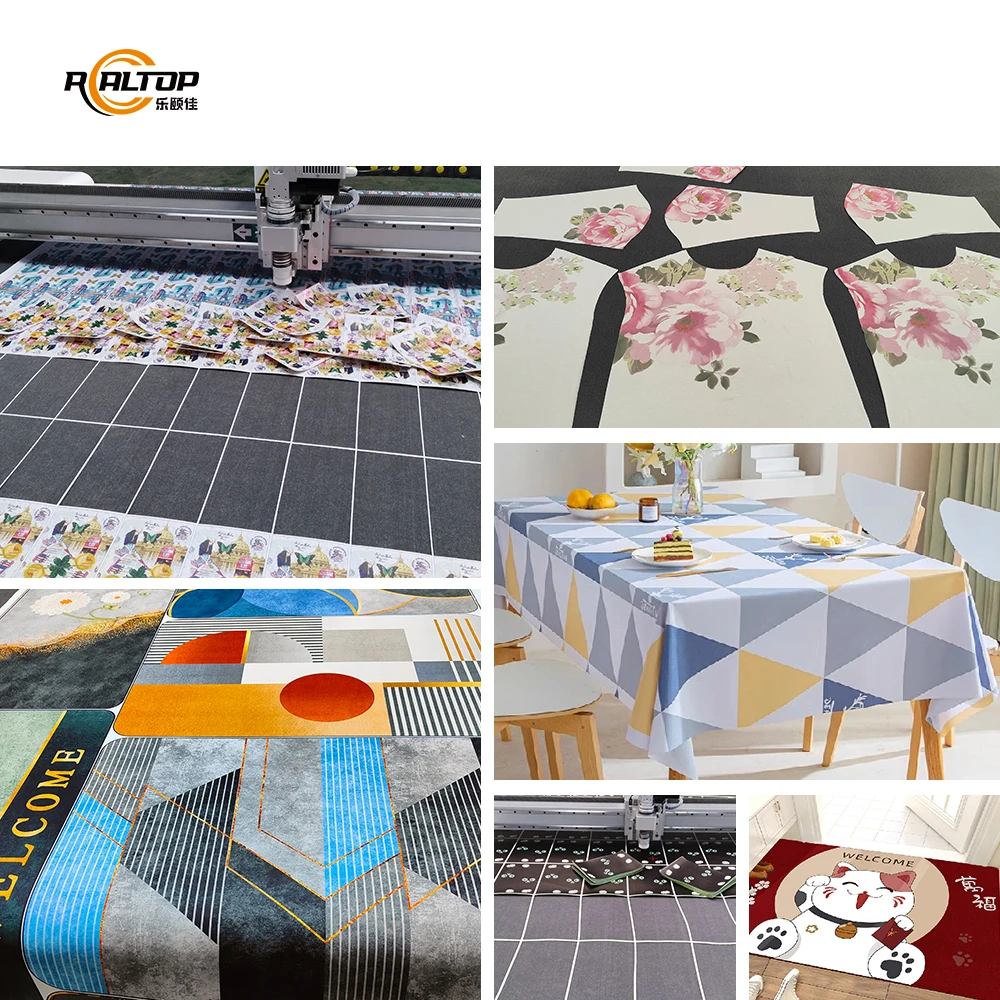
| Garment and jersey production | Multi-layer knitted fabric, polar fleece, performance textiles |
| Automotive interior trimming | Leather, sponge composite leather, carbon fiber sheets |
| Footwear component cutting | PU, EVA, synthetic leather, non-woven fabric |
| Gasket and sealing pad fabrication | Rubber, PTFE, ETFE, silicone, compressed fiber |
| Packaging and carton sampling | Corrugated cardboard, plastic box stock, sticker film |
| Carpet and floor mat processing | Woven carpet, sponge-backed mats, XPE foam |
| Signage and graphic printing | PVC sheet, soft glass, adhesive vinyl, PP film |
What the Cutting Speed Figure Leaves Out
Actual throughput depends on material grip, layer count and contour complexity, not the travel speed rating alone.
When I walk a buyer through the 200–800 mm/s cutting speed range on this platform, the first question I ask is what they are cutting and how many layers they stack. A single ply of carbon fiber sheet behaves completely differently from a 30-layer layup of jersey knit, and polar fleece shifts between layers under blade drag in ways that can ruin an entire spread if the vacuum zoning is not matched to the nest. Buyers who focus on the headline speed number without confirming how their specific layup holds flat often discover the gap only after the machine is on their floor [NEED_CITE: material hold-down requirements for multi-layer digital cutting].
Matching the Tool Head to the Material Stack
The RT-D2516/RT-S2516 platform supports a full set of interchangeable heads — oscillating knife, pneumatic knife, high-power vibrating knife, circular knife, drag knife, creasing wheel, V-cutting knife, dotted line knife and punching tools. This matters because a drag knife that produces a clean edge on single-ply sticker film will crush the face of corrugated cardboard, and an oscillating knife tuned for leather will leave ragged fibers on polar fleece if the vibration amplitude is not adjusted for the stack height. As a CNC Knife Cutting Machine manufacturer covering both knife and laser technologies in-house, REALTOP can advise whether a given material is better served by blade or beam before the buyer commits.
Why Vacuum Zoning Decides Small-Part Yield
The aluminum air box platform on this machine is available in integrated or split box configurations. Split zoning lets the operator activate vacuum only under the area being cut, which holds small gasket pieces and shoe components flat without pulling air through uncovered zones. On a full-size 1600×2500 mm table, running a single undivided vacuum zone means small nesting parts can lift at the trailing edge of a cut path, forcing a re-cut or manual intervention that erodes the daily throughput [NEED_CITE: vacuum hold-down dynamics on flatbed digital cutters].
Reading the Specs Through a Production Lens
The repeated accuracy of ≤0.1 mm, driven by Taiwan Hiwin linear guides and imported ball screws, keeps contour cuts aligned across long production runs — critical when cutting interlocking gasket patterns or multi-panel garment pieces that must match at the seam. The Delta servo motors (with Panasonic as an optional upgrade) provide the torque response needed for sharp corner transitions at the upper end of the 800–2000 mm/s translational velocity range. On the software side, PLT, DXF and AI file support with auto typesetting means the nesting workflow can be validated before the machine arrives, rather than discovering import failures during commissioning. The 7.5 kW vacuum pump is sized to maintain hold-down across the full working area, though buyers processing very porous materials should confirm zoning requirements against their typical nest layout.
The Hidden Cost of a Mismatched Configuration
I once worked with a sportswear producer who specified a machine by working area alone and took a standard undivided vacuum table. Their primary job was nested polar fleece jerseys, and the layer shift they experienced at production speed meant half the output was unusable. Retrofitting a split vacuum box and switching from a standard oscillating knife to a high-power vibrating head solved the problem, but it cost them weeks of downtime and re-tooling expense that a pre-purchase sample cut would have surfaced [NEED_CITE: cost of post-installation reconfiguration in digital cutting]. Selecting the right configuration up front — tool head, vacuum zoning, table type — is the single most consequential decision in the entire purchase.
Why Buyers Source This Platform Here
The design and production of both knife and laser cutting systems under one roof means the recommendation is based on material science, not on pushing whichever machine is in stock. Every RT-D2516/RT-S2516 ships with a tool head and table configuration list matched to the buyer’s declared material and daily volume. Software licence and file format compatibility are confirmed before the order is placed, not during installation. Voltage, plug type and control panel language are locked in during the specification review so the machine arrives ready to connect. And the sample cutting report — run on the buyer’s own material — documents edge quality and layer behavior before any commitment is made.
Documentation & Verification
- Machine specification sheet listing the exact tool heads and vacuum zoning configured for your material
- Electrical schematic with voltage and frequency confirmed against your facility supply
- Sample cutting report on your own fabric, leather or gasket stock showing edge and accuracy results
- Software licence documentation with PLT, DXF, AI file format compatibility verified
- Factory test record documenting repeated accuracy and cutting speed on your specified layup
- Operation and maintenance manual with spare parts list matched to your tool head configuration
Installation, Commissioning & Support
- Machine footprint 3450×2300×1250 mm requires level concrete floor with clearance for auto feeding table conveyor extension
- 380V ±10% three-phase supply with dedicated circuit for 9 kW machine load plus 7.5 kW vacuum pump
- Split vacuum box configuration assembled and zone-tested on site to match your nesting layout
- Touch screen control panel calibrated to your operator language during commissioning
- First-run parameter tuning for your material thickness, layer count and cutting speed range
- Spare knife blades, conveyor belt sections and vacuum seals included in the initial parts kit
What to Include in Your Inquiry
To size the configuration properly, share the material types you cut most often, typical layer count or single-ply thickness, and your daily output target. Let us know your facility voltage and frequency, the control language your operators need, and whether the machine will sit inline with an upstream spreader or downstream sorting station. If you can send a sample of your most challenging material, we will run a cutting test and return a report before any specification is finalized.
Frequently Asked Questions
Q: How do I choose between oscillating knife, pneumatic knife and drag knife for my materials?
A: Oscillating knives suit thicker stacks like sponge composite leather and multi-layer fabric, where vertical vibration shears cleanly through the layup. Pneumatic knives handle dense single sheets such as rubber gasket material. Drag knives work best on thin, single-ply films and sticker stock. The choice depends on your dominant material and layer count, confirmed by a sample cut.
Q: What cutting speed and daily throughput can I expect on jersey fabric?
A: The 200–800 mm/s range varies with fabric type, layer count and contour complexity. Polar fleece at high layer counts requires slower speeds to prevent inter-layer shift, while single-ply performance knit can run at the upper range. Submitting your actual layup for a sample cut is the only reliable way to confirm throughput.
Q: How does the auto feeding table integrate with my existing workflow?
A: The conveyor-fed version of the RT-D2516/RT-S2516 uses a Germany-imported belt to advance material continuously across the 1600×2500 mm working area. It is designed to accept material from an upstream spreading table and feed cut nests toward a downstream sorting station, maintaining production flow without manual repositioning.
Q: What floor space and utilities does this machine require?
A: Plan for the 3450×2300×1250 mm machine footprint plus clearance on the feed and discharge sides if using the auto feeding conveyor. You will need a 380V ±10% supply capable of supporting the 9 kW rated machine power plus the 7.5 kW vacuum pump on a dedicated circuit, along with standard compressed air for pneumatic tool options.
Tooling Flexibility — The in-house engineering team configures oscillating, pneumatic, drag and creasing tool heads around your material before the CNC Knife Cutting Machine manufacturer locks the build sheet.
Technical Specifications
| Parameter | Value |
|---|---|
| Model | RT-D2516/RT-S2516 |
| Product Type | CNC Oscillating Knife Cutting Machine |
| Working Area | 1600×2500 mm |
| Machine Size | 3450×2300×1250 mm |
| Rated Power | 9 kW |
| Table Options | Flat working table or auto feeding table |
| Translational Velocity | 800–2000 mm/s |
| Cutting Speed | 200–800 mm/s (varies by material type and thickness) |
| Repeated Accuracy | ≤0.1 mm |
| Transmission System | Digital servo motor, linear guide, synchronous belt, imported ball screw |
| Servo Motor | Delta (Panasonic optional) |
| Guide Rail | Taiwan Hiwin |
| Vacuum Pump | 7.5 kW |
| Vacuum Table | Aluminum air box platform, integrated or split box |
| Conveyor Belt | Germany imported |
| Control Panel | Touch screen, multiple language support |
| Instruction System | HP-GL compatible format |
| Software Compatibility | PLT, DXF, AI with auto typesetting |
| Voltage | 380V ±10% |
| Safety Devices | Infrared sensors, anti-collision, emergency stop |
Application Suitability
| Application | Material or Output |
|---|---|
| Garment and jersey production | Multi-layer knitted fabric, polar fleece, performance textiles |
| Automotive interior trimming | Leather, sponge composite leather, carbon fiber sheets |
| Footwear component cutting | PU, EVA, synthetic leather, non-woven fabric |
| Gasket and sealing pad fabrication | Rubber, PTFE, ETFE, silicone, compressed fiber |
| Packaging and carton sampling | Corrugated cardboard, plastic box stock, sticker film |
| Carpet and floor mat processing | Woven carpet, sponge-backed mats, XPE foam |
| Signage and graphic printing | PVC sheet, soft glass, adhesive vinyl, PP film |
What the Cutting Speed Figure Leaves Out
Actual throughput depends on material grip, layer count and contour complexity, not the travel speed rating alone.
When I walk a buyer through the 200–800 mm/s cutting speed range on this platform, the first question I ask is what they are cutting and how many layers they stack. A single ply of carbon fiber sheet behaves completely differently from a 30-layer layup of jersey knit, and polar fleece shifts between layers under blade drag in ways that can ruin an entire spread if the vacuum zoning is not matched to the nest. Buyers who focus on the headline speed number without confirming how their specific layup holds flat often discover the gap only after the machine is on their floor [NEED_CITE: material hold-down requirements for multi-layer digital cutting].
Matching the Tool Head to the Material Stack
The RT-D2516/RT-S2516 platform supports a full set of interchangeable heads — oscillating knife, pneumatic knife, high-power vibrating knife, circular knife, drag knife, creasing wheel, V-cutting knife, dotted line knife and punching tools. This matters because a drag knife that produces a clean edge on single-ply sticker film will crush the face of corrugated cardboard, and an oscillating knife tuned for leather will leave ragged fibers on polar fleece if the vibration amplitude is not adjusted for the stack height. As a CNC Knife Cutting Machine manufacturer covering both knife and laser technologies in-house, REALTOP can advise whether a given material is better served by blade or beam before the buyer commits.
Why Vacuum Zoning Decides Small-Part Yield
The aluminum air box platform on this machine is available in integrated or split box configurations. Split zoning lets the operator activate vacuum only under the area being cut, which holds small gasket pieces and shoe components flat without pulling air through uncovered zones. On a full-size 1600×2500 mm table, running a single undivided vacuum zone means small nesting parts can lift at the trailing edge of a cut path, forcing a re-cut or manual intervention that erodes the daily throughput [NEED_CITE: vacuum hold-down dynamics on flatbed digital cutters].
Reading the Specs Through a Production Lens
The repeated accuracy of ≤0.1 mm, driven by Taiwan Hiwin linear guides and imported ball screws, keeps contour cuts aligned across long production runs — critical when cutting interlocking gasket patterns or multi-panel garment pieces that must match at the seam. The Delta servo motors (with Panasonic as an optional upgrade) provide the torque response needed for sharp corner transitions at the upper end of the 800–2000 mm/s translational velocity range. On the software side, PLT, DXF and AI file support with auto typesetting means the nesting workflow can be validated before the machine arrives, rather than discovering import failures during commissioning. The 7.5 kW vacuum pump is sized to maintain hold-down across the full working area, though buyers processing very porous materials should confirm zoning requirements against their typical nest layout.
The Hidden Cost of a Mismatched Configuration
I once worked with a sportswear producer who specified a machine by working area alone and took a standard undivided vacuum table. Their primary job was nested polar fleece jerseys, and the layer shift they experienced at production speed meant half the output was unusable. Retrofitting a split vacuum box and switching from a standard oscillating knife to a high-power vibrating head solved the problem, but it cost them weeks of downtime and re-tooling expense that a pre-purchase sample cut would have surfaced [NEED_CITE: cost of post-installation reconfiguration in digital cutting]. Selecting the right configuration up front — tool head, vacuum zoning, table type — is the single most consequential decision in the entire purchase.
Why Buyers Source This Platform Here
The design and production of both knife and laser cutting systems under one roof means the recommendation is based on material science, not on pushing whichever machine is in stock. Every RT-D2516/RT-S2516 ships with a tool head and table configuration list matched to the buyer’s declared material and daily volume. Software licence and file format compatibility are confirmed before the order is placed, not during installation. Voltage, plug type and control panel language are locked in during the specification review so the machine arrives ready to connect. And the sample cutting report — run on the buyer’s own material — documents edge quality and layer behavior before any commitment is made.
Documentation & Verification
- Machine specification sheet listing the exact tool heads and vacuum zoning configured for your material
- Electrical schematic with voltage and frequency confirmed against your facility supply
- Sample cutting report on your own fabric, leather or gasket stock showing edge and accuracy results
- Software licence documentation with PLT, DXF, AI file format compatibility verified
- Factory test record documenting repeated accuracy and cutting speed on your specified layup
- Operation and maintenance manual with spare parts list matched to your tool head configuration
Installation, Commissioning & Support
- Machine footprint 3450×2300×1250 mm requires level concrete floor with clearance for auto feeding table conveyor extension
- 380V ±10% three-phase supply with dedicated circuit for 9 kW machine load plus 7.5 kW vacuum pump
- Split vacuum box configuration assembled and zone-tested on site to match your nesting layout
- Touch screen control panel calibrated to your operator language during commissioning
- First-run parameter tuning for your material thickness, layer count and cutting speed range
- Spare knife blades, conveyor belt sections and vacuum seals included in the initial parts kit
What to Include in Your Inquiry
To size the configuration properly, share the material types you cut most often, typical layer count or single-ply thickness, and your daily output target. Let us know your facility voltage and frequency, the control language your operators need, and whether the machine will sit inline with an upstream spreader or downstream sorting station. If you can send a sample of your most challenging material, we will run a cutting test and return a report before any specification is finalized.
Frequently Asked Questions
Q: How do I choose between oscillating knife, pneumatic knife and drag knife for my materials?
A: Oscillating knives suit thicker stacks like sponge composite leather and multi-layer fabric, where vertical vibration shears cleanly through the layup. Pneumatic knives handle dense single sheets such as rubber gasket material. Drag knives work best on thin, single-ply films and sticker stock. The choice depends on your dominant material and layer count, confirmed by a sample cut.
Q: What cutting speed and daily throughput can I expect on jersey fabric?
A: The 200–800 mm/s range varies with fabric type, layer count and contour complexity. Polar fleece at high layer counts requires slower speeds to prevent inter-layer shift, while single-ply performance knit can run at the upper range. Submitting your actual layup for a sample cut is the only reliable way to confirm throughput.
Q: How does the auto feeding table integrate with my existing workflow?
A: The conveyor-fed version of the RT-D2516/RT-S2516 uses a Germany-imported belt to advance material continuously across the 1600×2500 mm working area. It is designed to accept material from an upstream spreading table and feed cut nests toward a downstream sorting station, maintaining production flow without manual repositioning.
Q: What floor space and utilities does this machine require?
A: Plan for the 3450×2300×1250 mm machine footprint plus clearance on the feed and discharge sides if using the auto feeding conveyor. You will need a 380V ±10% supply capable of supporting the 9 kW rated machine power plus the 7.5 kW vacuum pump on a dedicated circuit, along with standard compressed air for pneumatic tool options.










商品评价
There are no reviews yet.