


Fast Delivery
Quick, reliable shipping to any location.

Free & easy returns
Return this item by mail or in store within 90 days for a full refund.
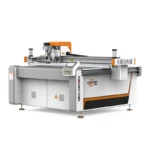
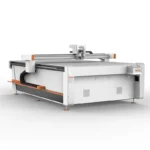
Configurable Tool Heads and Tables — The RT-D2516/RT-S2516 platform offers nine distinct tool options and zoned vacuum suction, letting packaging and composite buyers match the cutting action to their actual material stack rather than forcing a single blade through every job.
Technical Specifications
| Parameter | Value |
|---|---|
| Product Type | Digital Flatbed CNC Oscillating Knife Cutting Machine |
| Model | RT-D2516/RT-S2516 |
| Working Area | 1600×2500mm |
| Machine Size | 3450×2300×1250mm |
| Rated Power | 9kW |
| Voltage | 380V±10% (customizable) |
| Table Type | Flat working table or auto-feeding table (options) |
| Tool Head Options | Swiss imported oscillating knife, creasing wheel, V-cutting knife, drag knife, pneumatic knife, circular knife, dotted line knife, punching tool, brush |
| Positioning System | Small CCD camera mark point / panoramic camera / projection (options) |
| Translational Velocity | 800–2000mm/s |
| Cutting Speed | 200–800mm/s (varies by material and thickness) |
| Cutting Thickness | ≤100mm (varies by material and tool head combination) |
| Repeated Accuracy | ≤0.1mm |
| Transmission System | Delta or Panasonic digital servo motor, Taiwan Hiwin linear guide, synchronous belt, ball screw |
| Vacuum Table | Magnesium-aluminum alloy, fluorocarbon PVDF powder spraying, anodic oxidation |
| Vacuum Pump | 7.5kW |
| Safety Devices | Infrared induction blocking, anti-collision sensors, emergency stop |
| Control Panel | Touch screen, multiple languages (EN/RU/IT/ZH, others customizable) |
| Instruction System | HP-GL compatible |
| Software File Formats | PLT, DXF, AI with auto nesting |
| Conveyor Belt | Germany imported (auto-feeding configuration) |
Application Suitability
| Application | Material or Output |
|---|---|
| Carton sample making and slotting | Corrugated cardboard, honeycomb cardboard with oscillating knife, creasing wheel and V-cut |
| Packaging prototyping | Grey board, laminated board, folding carton stock |
| Gasket and seal production | PVC sheet, silicone, rubber, carbon fiber, fiberglass |
| Foam and composite fabrication | Foam board, sponge, PU, EVA, XPE multi-layer composites |
| Signage and display cutting | Foam board, acrylic-backed vinyl, corrugated plastic |
| Automotive interior trimming | Leather, synthetic textile, acoustic insulation mats |
| Soft goods cutting | Fabric, shoe material, luggage material, carpet, non-woven |
Why the Wrong Tool Head Wastes More Than Material
A CNC digital cutting machine for sale that lists nine tool options but ships with only one is a machine that will struggle the first time your material changes. Specifying the tool head against your actual material stack before ordering is the single most reliable way to avoid ragged edges, crushed cores, and re-cut waste.
I saw a corrugated sample shop run laminated grey board on a standard oscillating knife. The blade tore the laminate film, leaving white stress marks on every crease line. They blamed the machine; the real issue was a missing creasing wheel and the wrong knife amplitude. Once the configuration was corrected, the cut quality matched what the buyer expected from their sample [NEED_CITE: tool head selection by material type and thickness for digital flatbed cutting].
When buyers focus only on working area and price, the tooling conversation gets skipped. The result is a flatbed knife cutter that technically works but produces output you cannot ship to your own customers.
The Full Catalogue Approach to Cutting Method Selection
This catalogue exists because no single cutting method handles every material a packaging or signage shop encounters. A CNC flatbed knife cutter manufacturer that offers both oscillating knife and laser platforms lets buyers match the process to the job: knife for thick corrugated and foam where a sealed edge is unnecessary, laser for thin film and textile where edge sealing prevents fraying. Choosing the method first, then sizing the working area, prevents the common mistake of buying a machine that is dimensionally correct but mechanically wrong for the material.
What Separates Catalogue Specs from Workshop Reality
Translational velocity of 800–2000mm/s and cutting speed of 200–800mm/s are ranges, not guarantees. The actual speed on a 3mm honeycomb board differs from that on a 15mm EVA foam sheet because tool resistance, vacuum hold-down, and knife stroke all change. The Hiwin linear guide and ball screw transmission maintain the ≤0.1mm repeatability across those variations, but throughput depends on your specific material. Buyers should treat published speeds as starting points for sample testing rather than fixed production targets [NEED_CITE: cutting speed variability across material types on CNC knife systems].
Reading the Specs That Actually Matter for Packaging
The 7.5kW vacuum pump paired with a magnesium-aluminum alloy table is not just a suction number — it determines whether small carton blanks stay flat during high-speed knife passes. Zoned suction matters when you are nesting irregular gasket shapes or small packaging prototypes, because a single-zone table loses grip on parts under roughly 100mm across. The Swiss imported oscillating knife handles full and half cutting with cursor location, which is the difference between a clean through-cut on double-wall corrugated and a crushed edge that fails the fold test. For printed carton work, the CCD camera mark point positioning option tracks registration marks so contour cuts align with the print — a feature that must be verified at production speed, not just during a slow demonstration [NEED_CITE: CCD positioning accuracy at production speeds on flatbed digital cutters].
The 380V±10% supply with customizable voltage and the touch-screen control panel supporting English, Russian, Italian and Chinese (with other languages on request) mean the machine can be configured for the target market before it leaves the factory, avoiding on-site electrical rework.
The Hidden Cost of a Misconfigured Flatbed
A buyer who specifies working area alone and accepts whatever default tool head ships with the machine will discover the mismatch during the first production week. Crushed foam cores, delaminated composite edges, and creasing wheels that score instead of fold all trace back to a configuration conversation that never happened. Rework time, scrapped material, and missed sample deadlines add up faster than any price difference between a configured and an unconfigured CNC digital cutting machine for sale. I have watched packaging sample shops lose repeat orders because their crease lines cracked on fold — a problem that was never about the machine frame and entirely about the tooling [NEED_CITE: cost of rework from incorrect tool head configuration].
Why Buyers Source This Range Here
The design team covers both knife and laser cutting under one roof, so a packaging buyer comparing methods gets an honest recommendation rather than a forced sale into whichever technology the factory happens to build. Tool head and table configuration is specified per material and daily volume before quotation, not left to a default build. CCD camera positioning is validated on the buyer’s printed stock at speed, not demonstrated on a static test sheet. Software compatibility with PLT, DXF, AI and HP-GL formats is confirmed against the buyer’s existing nesting workflow before the order is placed. Sample cutting on the buyer’s own material runs before commitment, producing a report that documents edge quality, cutting speed and tool wear on the actual stock. Voltage, plug type, control language and documentation are customized to the destination market before shipment.
Documentation & Verification
- Machine specification sheet listing the exact tool head and table configuration matched to your material
- Electrical schematic and voltage confirmation for your facility’s 380V or customized supply
- Software licence and file format compatibility note covering PLT, DXF, AI nesting workflows
- Sample cutting report documenting edge quality and speed on your corrugated or composite stock
- Factory test record showing repeated accuracy on your specified working area and material thickness
- Spare parts list covering oscillating knife blades, creasing wheels and vacuum table consumables
Installation, Commissioning & Support
- Foundation must support 3450×2300mm footprint plus operator clearance on the 1600×2500mm working area
- Dedicated 380V±10% circuit rated for 9kW machine plus 7.5kW vacuum pump draw
- Machine ships with beam and gantry separated; reassembly requires Hiwin rail alignment check
- First-run commissioning includes servo tuning on Delta or Panasonic drives and vacuum zone mapping
- Operator training covers tool head changeover across all nine options and nesting software setup
- Spare oscillating knife blades and creasing wheel consumables included for initial production runs
What to Share With Your Inquiry
Send the specific material type, thickness and sheet size you run most often, along with your daily volume target and whether you need flat-table or auto-feeding configuration. Confirm your facility voltage, frequency and preferred control language. If your work involves printed contour cutting, share a sample file so CCD positioning can be validated before the machine is built.
Frequently Asked Questions
Q: How do I choose between oscillating knife and laser for corrugated packaging samples?
A: Oscillating knife is standard for corrugated and honeycomb board because it cuts without burning or sealing the flute edges, which keeps fold lines clean. Laser suits thin film, textile and sticker work where a sealed edge prevents fraying. If your shop handles both, the catalogue covers each method so you select by material rather than compromise.
Q: Which tool heads do I actually need for carton sample making?
A: Most carton sample work requires the oscillating knife for outline cuts, the creasing wheel for fold lines and the V-cutting knife for slotting. Additional tools like the drag knife or punching head depend on whether you also produce gaskets or perforated inserts from the same table.
Q: What CCD camera option fits printed contour cutting?
A: The small CCD camera handles mark point positioning for jobs with printed registration marks. The panoramic camera suits larger sheets with multiple contour targets. Both options must be tested at your production speed on your printed stock before the configuration is finalized.
Q: Can the voltage, plug and control panel language be customized for my market?
A: Yes. The standard 380V±10% supply can be adjusted, plug type matched to your local standard, and the touch-screen control panel configured in English, Russian, Italian, Chinese or other languages by request. All electrical details are confirmed in the specification sheet before production.
Q: How do I request sample cutting on my own material before ordering?
A: Send a representative sheet or roll of your material along with a cutting file. The sample is run on the configured tool head and table, and a report documents edge quality, cutting speed and tool condition so you can evaluate the result before committing to the purchase.










商品评价
There are no reviews yet.