

Fast Delivery
Quick, reliable shipping to any location.

Free & easy returns
Return this item by mail or in store within 90 days for a full refund.
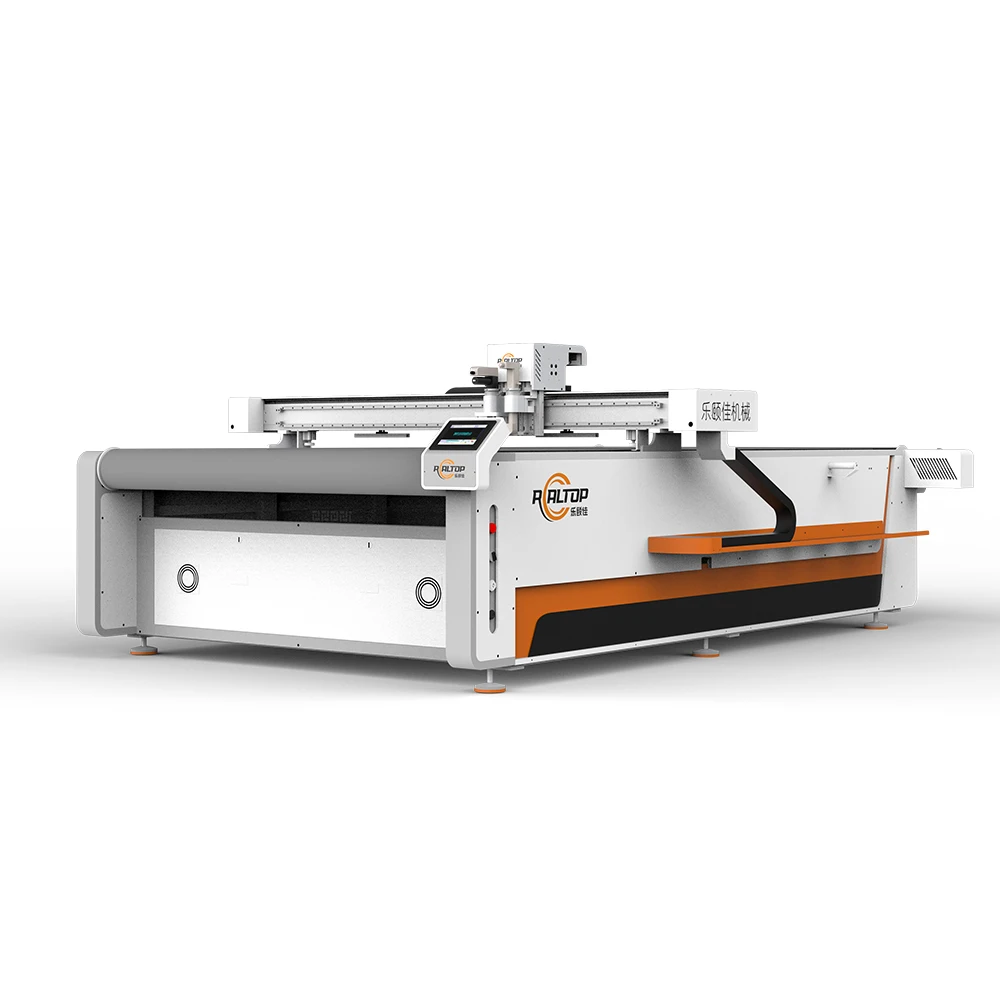
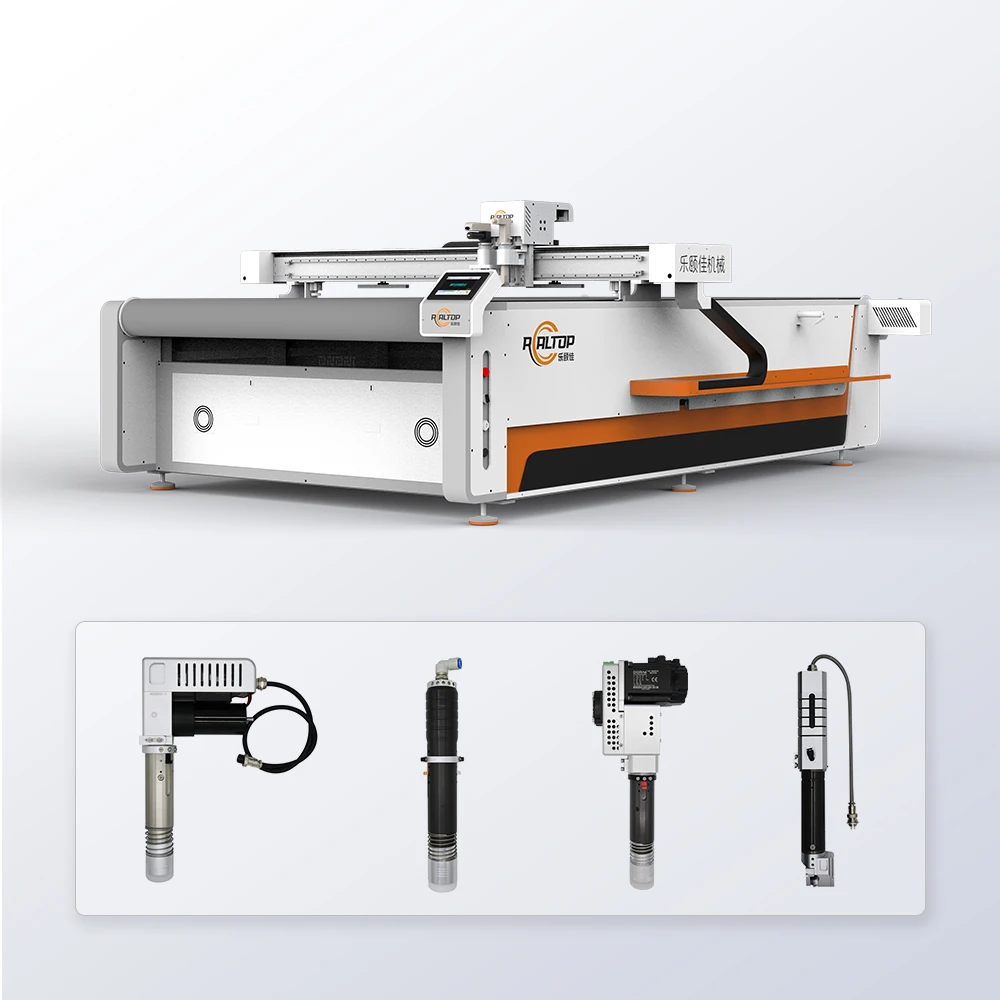
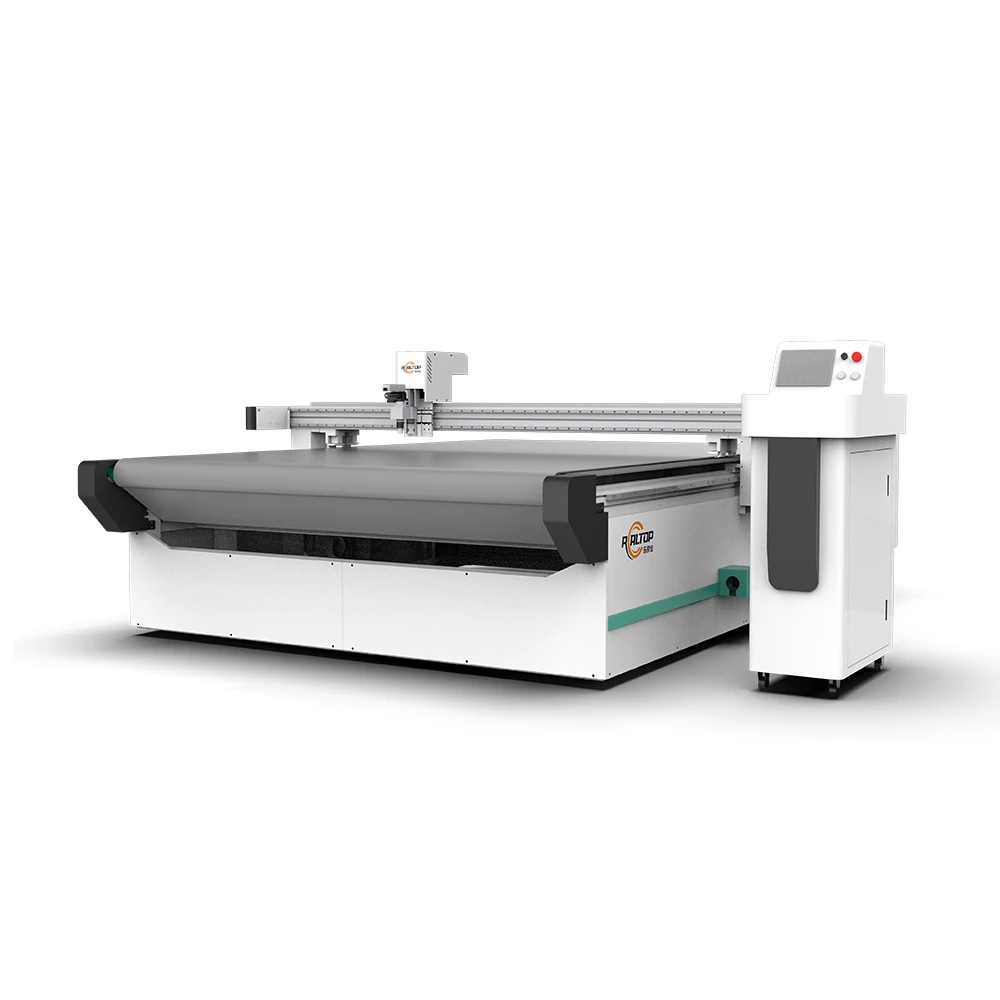
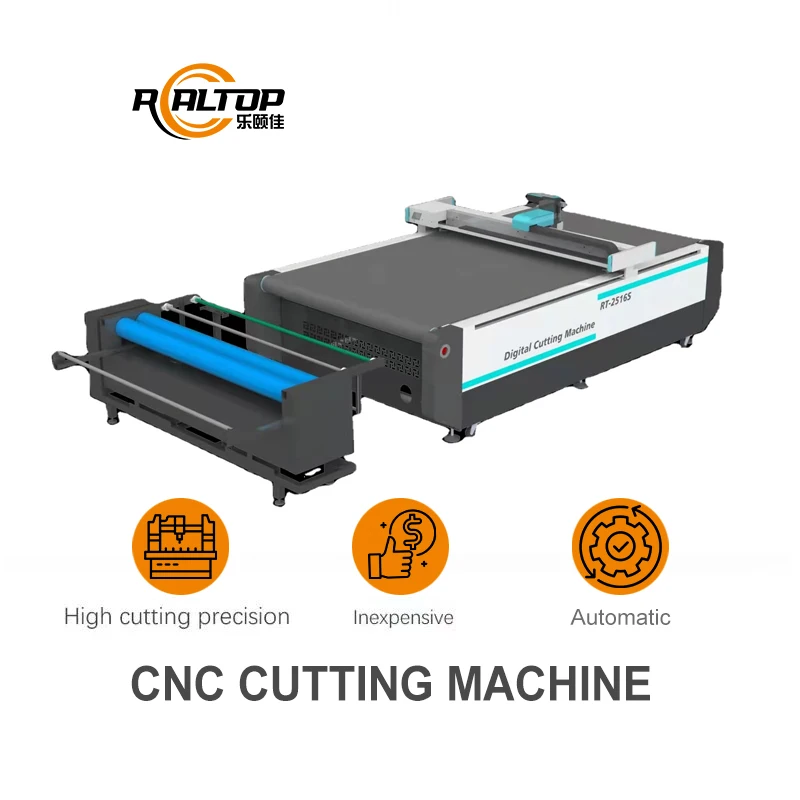
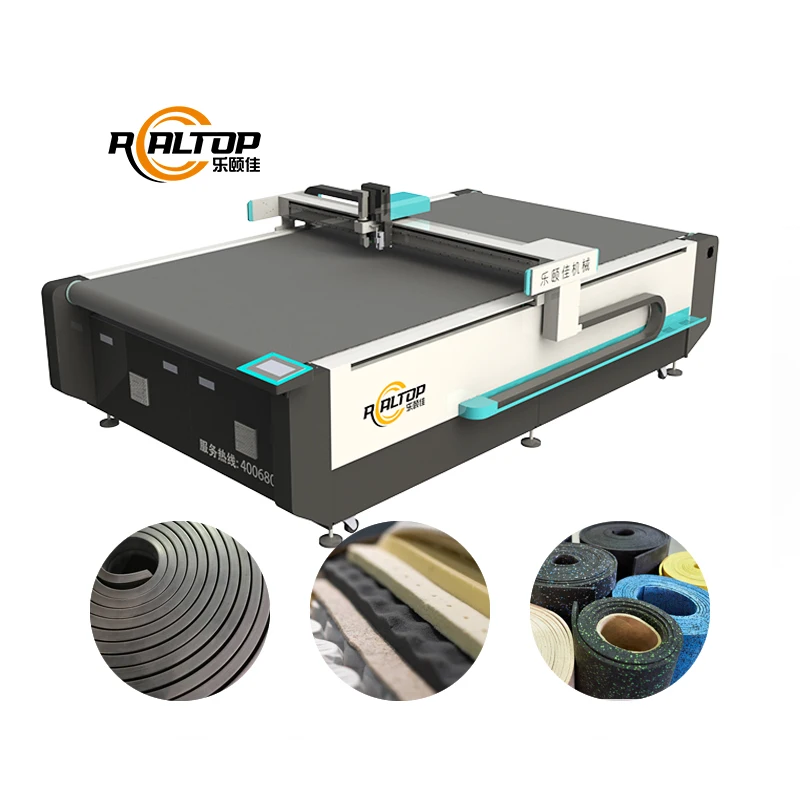
Multi-Method Cutting Platform — The RT-D2516/RT-S2516 supports oscillating knife, drag knife, and creasing tool heads on a single flatbed, allowing buyers to match the cutting method to fabric, leather, or composite material rather than forcing one technique across every job.
Technical Specifications
| Parameter | Value |
|---|---|
| Model | RT-D2516/RT-S2516 |
| Product Type | CNC Oscillating Knife Cutting Machine |
| Working Area | 1600 × 2500 mm |
| Machine Size (L × W × H) | 3450 × 2300 × 1250 mm |
| Rated Power | 9 kW |
| Translational Velocity | 800–2000 mm/s |
| Cutting Speed | 200–800 mm/s (varies by material and thickness) |
| Cutting Thickness | ≤100 mm (varies by material; basis to be confirmed per application) |
| Repeatability | ≤0.1 mm |
| Transmission System | Digital servo motor, linear guide, synchronous belt, ball screw; Taiwan Hiwin rail |
| Servo Motor Options | Delta (China/Taiwan) or Panasonic (Japan) |
| Vacuum Pump | 7.5 kW, aviation aluminum shell, built-in silencer sponge |
| Vacuum Table | Magnesium-aluminum alloy, PVDF powder spraying, anodic and hard oxidation |
| Table Type Options | Flat working table or auto feeding table |
| Tool Head Options | Oscillating knife, pneumatic knife, high-power vibrating knife, circular knife, V-cutting knife, drag knife, creasing wheel, dotted-line knife, punching, brush |
| Visual Positioning Options | Small CCD camera mark-point positioning, panoramic camera recognition, projection positioning |
| Control System | CNC with touch-screen control panel |
| Instruction System | HP-GL compatible format |
| Software File Formats | PLT, DXF, AI |
| Voltage | 380V ±10% |
| Language Options | English, Russian, Italian, Chinese; special languages customizable |
| Safety Devices | Infrared induction blocking, anti-collision beam sensors, emergency stop, in-situ resume |
| Warranty | 1 year |
| Standards | CE declaration where applicable |
Application Suitability
| Application | Material or Output |
|---|---|
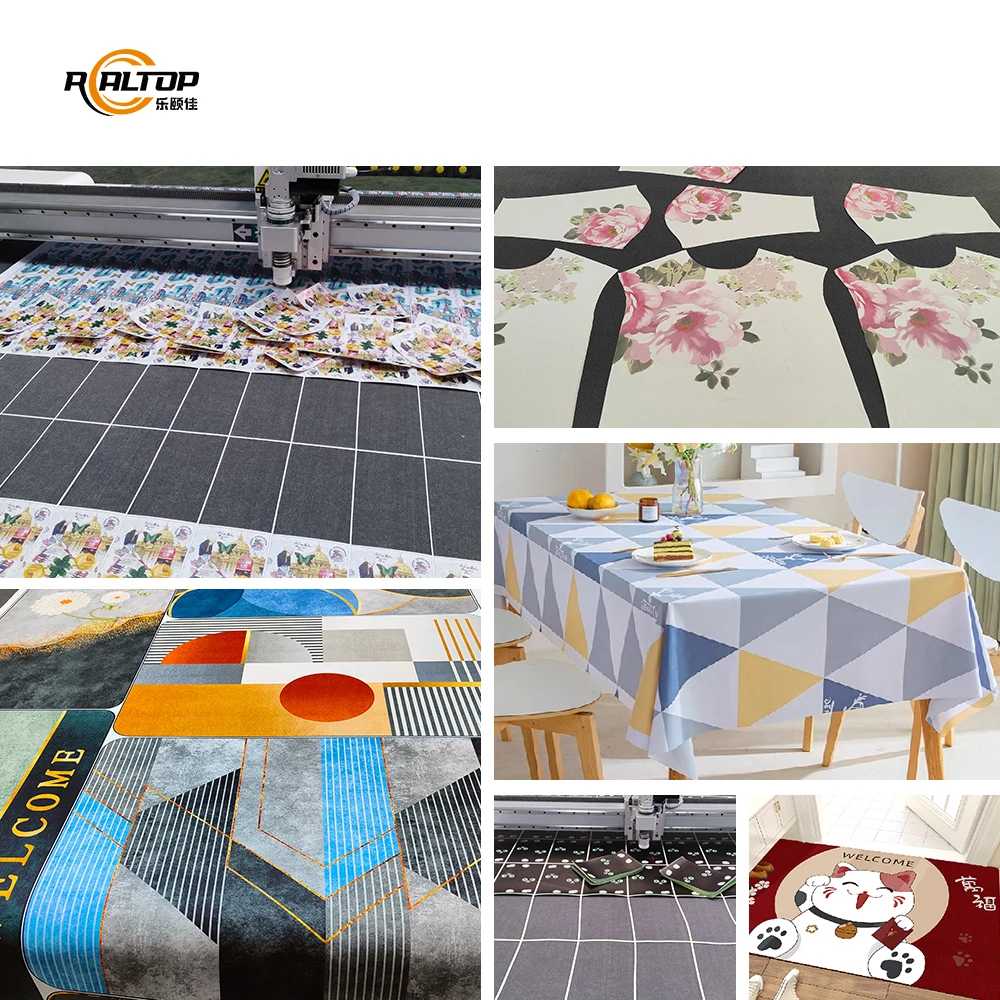
| Garment and footwear production | Fabric, leather, artificial leather, shoe materials, non-woven fabric |
| Automotive interior trimming | Sponge composite leather, PU, EVA, XPE, gasket material |
| Packaging and carton sample making | Corrugated cardboard, cardboard, sticker, film |
| Carpet and floor mat cutting | Carpet, PVC sheet, soft glass, rubber |
| Composite and foam fabrication | Foam board, PE, PP, fiberglass, carbon fiber, PTFE, ETFE |
| Soft home furnishings | Textile, clothing flexible materials, luggage material, silicon |
Why Working Area Alone Fails Material Selection
A flatbed sized for sheet dimensions does not guarantee the tool head can handle what sits on that sheet.
I once watched a buyer specify a machine purely on the 1600 × 2500 mm working area, only to discover after delivery that the oscillating knife could not penetrate the 40 mm composite leather they ran daily. The blade deflected, edges frayed, and the operator had to make two passes on every contour — effectively halving throughput. When a CNC oscillating knife cutting machine manufacturer quotes capacity, the real question is whether the tool head and blade stroke match the buyer’s densest, thickest production material, not the sample swatch sent during inquiry [NEED_CITE: material density and compressibility differences across composite leather grades]. That mismatch does not show up in a spec sheet; it shows up on the shop floor during the first full shift.
Tool Head Selection Across Material Families
The RT-D2516/RT-S2516 supports ten distinct tool head types, each suited to a different material behavior. Oscillating knife handles flexible fabrics and foams where a vibrating blade prevents material drag. Drag knife works for thinner vinyl and sticker films where a static blade following the contour is sufficient. Creasing wheel pairs with corrugated cardboard for packaging sample runs where fold lines must accompany cut lines. This CNC digital cutting machine for sale configuration means a garment factory cutting leather in the morning and textile in the afternoon can switch heads rather than switching machines.
Vacuum Table Zoning and Small-Part Hold-Down
The magnesium-aluminum alloy table with PVDF coating resists blade contact wear across thousands of cutting cycles. More important for production continuity is how the 7.5 kW vacuum pump distributes suction across the table surface. Small parts — shoe uppers, gaskets, badge outlines — tend to lift when surrounding material is cut away and air leaks through the kerf. Zoned suction addresses this by concentrating vacuum where the workpiece sits [NEED_CITE: vacuum hold-down principles for flatbed digital cutters]. The RT-D2516/RT-S2516 offers both flat table and auto-feeding table options, so roll-fed fabric operations can advance material continuously while maintaining hold-down pressure.
Core Parameters and Their Production Impact
Cutting speed ranges from 200 to 800 mm/s, but the usable speed depends entirely on material resistance. Dense rubber gasket material demands the lower end of that range to keep edge quality acceptable, while open-weave textile can run near the top. Repeatability at ≤0.1 mm matters for nested patterns where adjacent pieces share a cut line — drift beyond that tolerance wastes material at every shared boundary. The Delta or Panasonic servo motor choice affects how smoothly the head decelerates into tight corners; higher-inertia motors can overshoot on intricate contours. Translational velocity up to 2000 mm/s governs non-cutting moves between paths, which matters when a nesting layout contains dozens of separate pieces spread across the 1600 × 2500 mm bed.
The Cost of Skipping Material Trials
Buyers who skip sample cutting before order confirmation often discover problems after the machine is bolted to their floor. A PVC film that cuts cleanly at 5 mm may tear at 8 mm when blade oscillation frequency cannot keep pace with feed rate. A carbon fiber sheet that looks flat on the table may delaminate under vacuum pressure if the hold-down is not adjusted for brittle composites [NEED_CITE: common flatbed cutting defects in composite materials]. These failures cost more than a delayed shipment — they cost the buyer’s confidence in the entire production line, because downstream operations like stitching or assembly now receive parts with ragged edges or inconsistent dimensions.
Why Source This Range From One Manufacturer
REALTOP builds both knife and laser cutting systems in-house, so a buyer comparing methods can evaluate actual cut samples from each technology on the same material before committing. The design team specifies tool head and table configuration per application rather than defaulting to a standard package. CCD camera positioning — available as small mark-point, panoramic, or projection — is matched to the buyer’s print registration workflow, not added as a generic option. Voltage, plug type, and control language are confirmed before production, not assumed. Sample cutting on the buyer’s own material generates a documented report, closing the gap between catalog promises and shop-floor reality.
Documentation & Verification
- Machine specification sheet listing confirmed tool head and table configuration per application
- Electrical schematic with voltage and frequency matched to the destination market
- Sample cutting report produced on buyer-supplied material before order confirmation
- Software license note confirming PLT, DXF, AI file format compatibility
- Factory test record documenting repeatability and cutting speed on specified material
- Spare parts list covering blades, vacuum seals, and servo drive components
Installation, Commissioning & Support
- 3450 × 2300 mm footprint requires level concrete floor with clearance for material loading on three sides
- Dedicated 380V ±10% circuit with rated capacity exceeding 9 kW to prevent voltage sag during pump start
- Machine ships partially assembled; beam, gantry, and table sections require on-site alignment
- First-run commissioning includes vacuum pressure calibration across the magnesium-aluminum table zones
- Operator training covers tool head changeover, CCD camera calibration, and nesting software workflow
- Consumable blade and vacuum seal inventory sized for the buyer’s weekly cutting volume
What to Include With Your Inquiry
Before recommending a configuration, we need the actual material type, thickness range, and daily cutting volume. Send a sample roll or sheet so the tool head and vacuum setup can be tested against your real production stock rather than a catalog generic. Confirm your facility voltage and frequency, preferred control language, and whether your workflow uses PLT, DXF, or AI files from existing nesting software.
Frequently Asked Questions
Q: How do I choose between oscillating knife, drag knife, and circular knife for my material?
A: Oscillating knife suits flexible fabrics and foams where vibration prevents material drag during contour cutting. Drag knife works for thin vinyl and sticker films where a static blade traces the path. Circular knife handles straight or gentle-curve cuts on thicker stock. The correct choice depends on material compressibility and contour complexity — send a sample for testing before specifying.
Q: What is the real cutting thickness for leather versus foam versus gasket material?
A: The specification states up to 100 mm, but usable thickness varies significantly by material density. Soft open-cell foam cuts thicker than dense rubber gasket at the same blade stroke. Cutting speed also drops as thickness increases. A sample cutting test on your actual material establishes the realistic depth and speed for your production environment.
Q: Which CCD camera option fits my printed-contour workflow?
A: Small CCD mark-point positioning reads printed registration marks for die-line cutting on pre-printed sheets. Panoramic camera recognition captures the entire printed area for distortion compensation on large-format graphics. Projection positioning overlays the cut path visually for manual alignment. The right option depends on your print format, mark style, and production speed requirements.
Q: Can voltage, plug, and control language be customized before shipment?
A: Yes. The standard voltage is 380V ±10%, but other configurations are available. Plug type is matched to the destination country standard. Control panel language options include English, Russian, Italian, and Chinese, with special languages customizable. All three must be confirmed during order specification to avoid on-site rewiring or reconfiguration delays.
Q: Where does this 1600 × 2500 mm model sit in the full cutting machine range?
A: The RT-D2516/RT-S2516 covers mid-to-large format sheet and roll-fed materials. Smaller format machines handle signage and sample-making jobs, while larger beds serve high-volume multi-layer textile cutting. This model balances working area with floor space, fitting garment, automotive interior, and packaging operations that process standard sheet sizes at moderate to high daily volumes.










商品评价
There are no reviews yet.