



Fast Delivery
Quick, reliable shipping to any location.

Free & easy returns
Return this item by mail or in store within 90 days for a full refund.
Configuration Locked to Material — We specify every tool head, vacuum zone and conveyor parameter against your actual board grade and thickness before a purchase order is signed, not after the machine arrives.
Technical Specifications
| Parameter | Value |
|---|---|
| Model | RT-D2516/RT-S2516 |
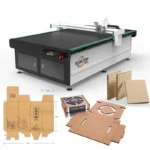
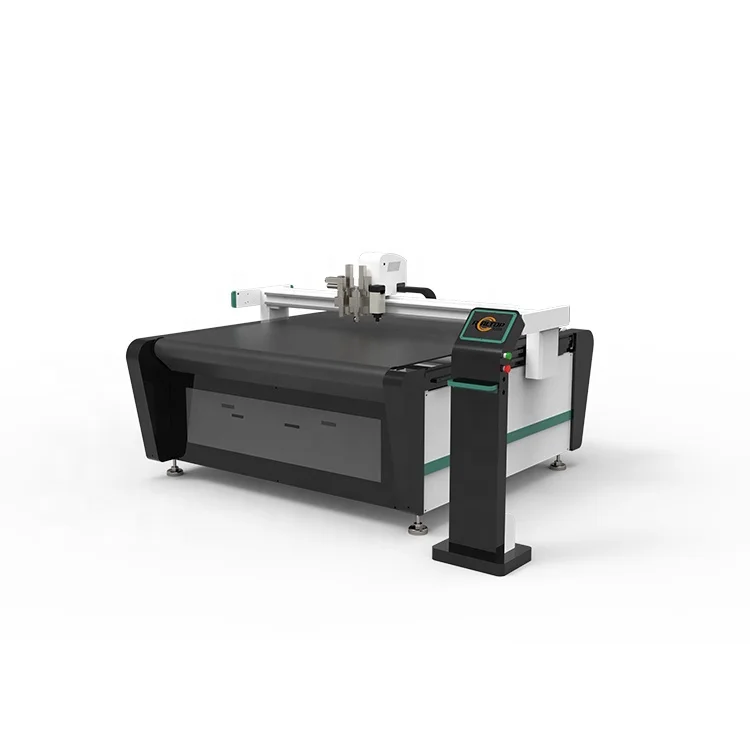
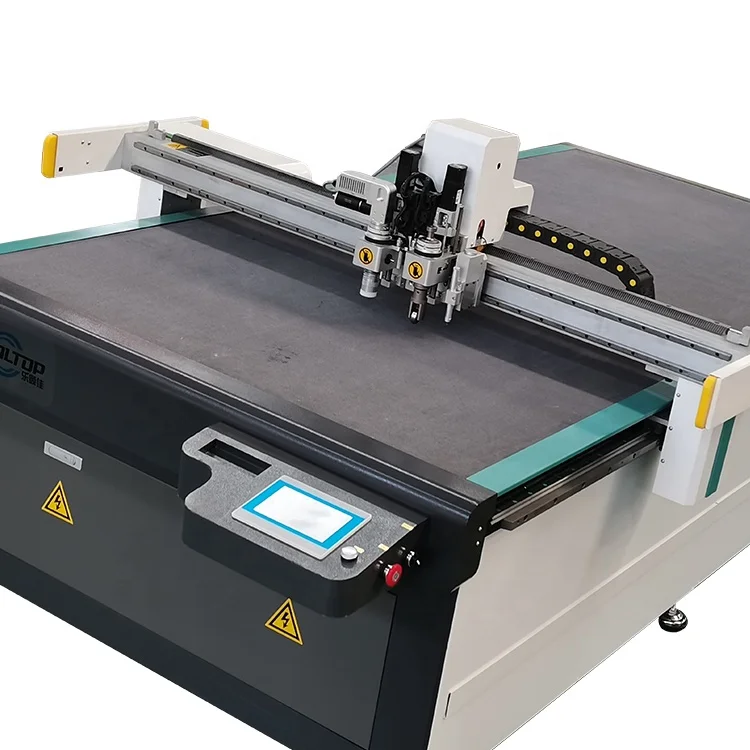
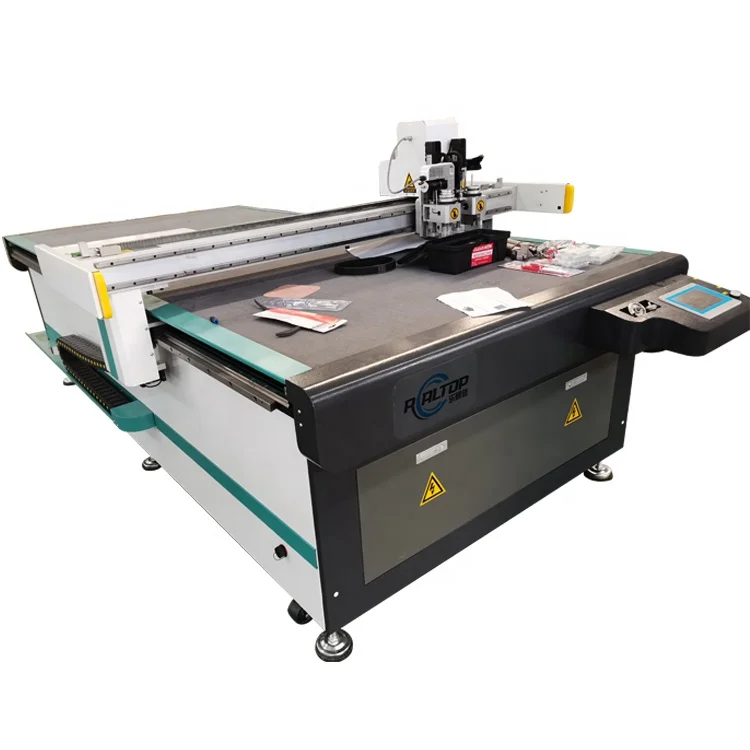
| Product Type | CNC Flatbed Digital Cutting Table |
| Working Area | 1600×2500 mm |
| Overall Dimensions | 3450×2300×1250 mm |
| Rated Power | 9 kW |
| Vacuum Pump | 7.5 kW |
| Tool Head | Swiss imported oscillating knife (vibration full cutting, vibration half cutting, cursor location) |
| Cutting Speed (translational) | 800–1200 mm/s |
| Cutting Speed (material) | 200–800 mm/s (basis not stated in source — confirm material type / thickness) |
| Pneumatic Cutting Tool Capacity | Up to 70 mm max thickness |
| Repeatability | ≤0.1 mm |
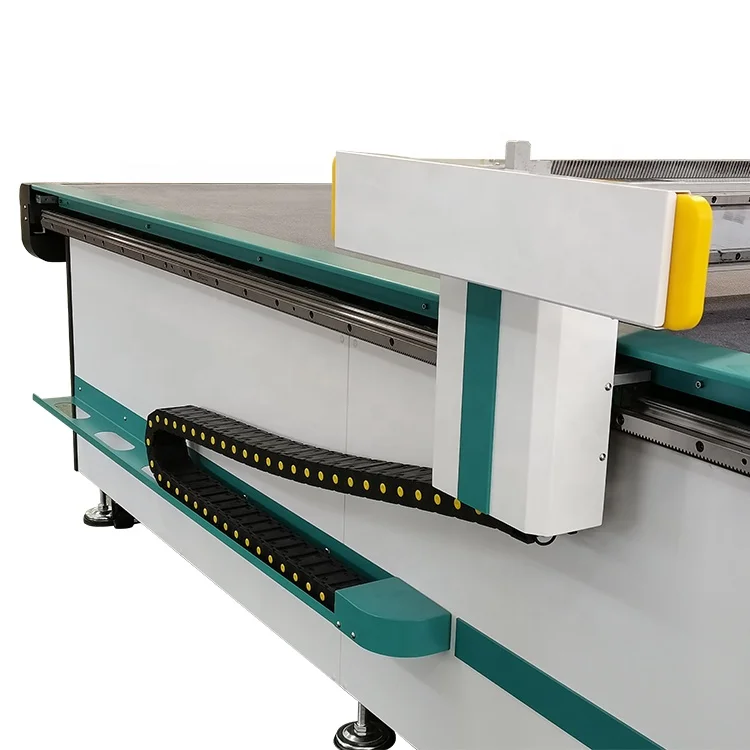
| Transmission System | Digital servo motor, linear guide, synchronous belt, ball screw (imported) |
| Servo Motor | Japanese Yaskawa |
| Linear Rail | Taiwan Hiwin |
| Conveyor Belt | Germany imported |
| Instruction System | HP-GL compatible format |
| Voltage | 380V ±10% |
| Table Type | Flat working table with auto feeding conveyor and vacuum hold-down |
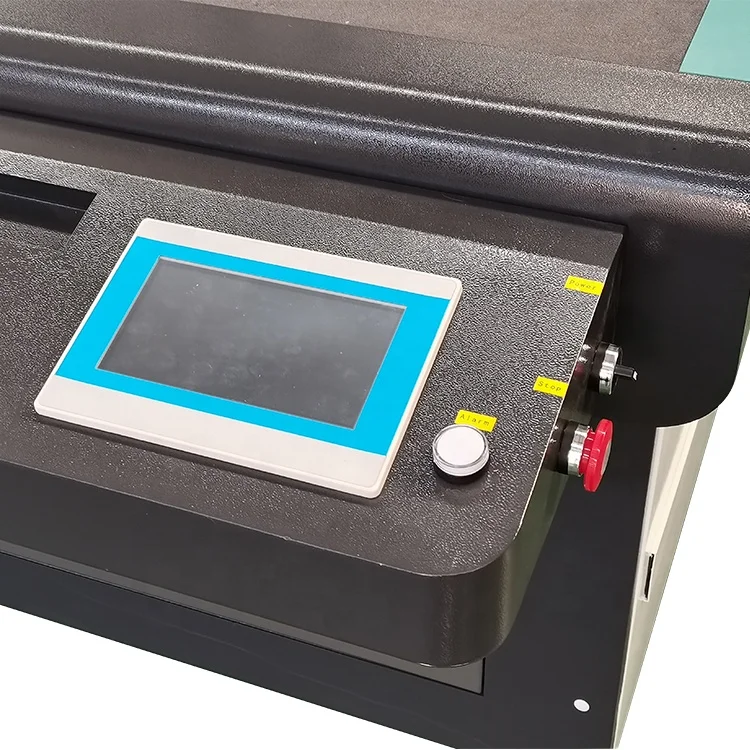
| Safety Device | Infrared sensors |
Application Suitability
| Application | Material or Output |
|---|---|
| Carton and packaging sample making | Corrugated board, grey board, folding carton stock |
| Cardboard box prototyping and short-run production | Single and double-wall corrugated, honeycomb board |
| Christmas decoration and hard paper die-cutting | Coated paper board, laminated card stock |
| Sticker and label contour cutting | Self-adhesive vinyl, release liner sheets |
| Gift box structural sampling | Rigid board, foam-core, magnetic closure stock |
| Flexible material converting | Leather, PVC, silicone, rubber, garment textiles |
Why the Voltage Question Beats the Price Discussion
A 380V machine plugged into a 415V or 220V three-phase supply will sit idle for weeks, not days.
Every CNC digital cutting table manufacturer quotes a working area and a price. Few ask what the incoming supply actually reads at your factory panel before the crate is nailed shut. I spent years watching machines land in workshops across the Middle East and North Africa where local grids sit at 415V or even 440V, and a transformer order can take three to four weeks while the production floor waits. That delay has nothing to do with the cutting tool and everything to do with one unchecked line on a spec sheet [NEED_CITE: voltage and frequency standards by export market].
The RT-D2516/RT-S2516 carries a rated input of 380V ±10%, which gives a narrow band. If your site falls outside that band, the Yaskawa servo drives and the 7.5 kW vacuum pump will both refuse to start, or worse, start and overheat within the first production shift. Confirming voltage, plug standard and phase rotation before the build begins is not paperwork — it is the difference between a machine that cuts on day one and one that sits under plastic wrap.
Matching the Knife Head to the Board Grade
The Swiss imported oscillating knife on this platform handles three distinct modes: vibration full cutting, vibration half cutting and cursor location. Full cutting shears through corrugated flute profiles and dense grey board in a single pass, while half cutting scores the crease lines that let a carton blank fold cleanly without cracking the liner. Cursor positioning lets the operator register the sheet against a physical stop before the servo drives engage, which matters when sample makers are iterating through ten or twelve structural revisions in a single afternoon. A CNC digital cutting table manufacturer worth engaging will run your actual board on the table and hand you the cut sample before you sign anything.
The Conveyor-Vacuum Handshake in Continuous Sampling
Auto feeding with a Germany-imported conveyor belt paired with a 7.5 kW vacuum pump is not a luxury specification — it is what keeps a 1600×2500 mm sheet flat and stationary while the knife traverses at up to 800 mm/s material speed. Without adequate vacuum hold-down, thin sticker sheets lift at the trailing edge and the knife snags, leaving a ragged contour that scrapes the entire batch. The conveyor advances the next sheet while the operator unloads the finished nest, collapsing the gap between cuts [NEED_CITE: vacuum zoning and small-part hold-down in flatbed cutting]. For packaging sample rooms running mixed board grades in short sequences, that continuous flow is the real throughput multiplier.
Decoding the Drivetrain and What Repeatability Actually Means
The Japanese Yaskawa servo motors paired with Taiwan Hiwin linear rails and imported ball screws deliver a stated repeatability of ≤0.1 mm across the full 1600×2500 mm travel. In packaging work, that tolerance determines whether a crease line lands on the same coordinate every time you run a hundred copies of a gift box blank — a drift of even half a millimetre on a tab-and-slot closure will cause the assembled box to twist on the shelf. The HP-GL compatible instruction system accepts nesting files from most packaging CAD platforms, so existing design workflows port over without a software rip-and-replace. The 9 kW total rated power covers the servo drives, spindle oscillation and vacuum system under simultaneous load, which means the main breaker must be sized for sustained draw, not just the startup surge.
What Happens When Configuration Is Skipped
Choosing a cutting table on working area alone is the single most common mistake in this category. A buyer sends a board size, gets a quote, and the machine arrives — but the oscillating knife cannot penetrate the 8 mm double-wall corrugated they actually run because the pneumatic capacity was never cross-checked. Or the vacuum zones are configured for full-sheet hold-down, and small sticker parts lift and shift mid-cut because zoning was never discussed. These are not warranty claims; they are specification gaps, and they surface only when the first real job hits the table [NEED_CITE: common specification gaps in flatbed cutting equipment procurement].
What This Manufacturer Brings to the Table
In-house design covering both oscillating knife and laser cutting means a packaging sample maker can match the process to the material instead of forcing one method across every substrate. Tool head and table configurations are locked per material before the order, not left as a generic default. CCD camera contour positioning is available for printed sticker and label work where registration marks must be tracked at production speed. Software compatibility is confirmed against the buyer’s existing nesting workflow before metal is cut. Sample cutting on the buyer’s own board grade, flute profile and thickness is standard practice, so the cut edge and crease quality are visible before commitment.
Documentation & Verification
- Machine specification sheet confirming tool head, vacuum zone and conveyor layout per your board grade
- Electrical schematic with voltage, phase and plug standard matched to your facility supply
- Sample cutting report produced on your actual corrugated or grey board stock before order
- Software licence and HP-GL file format compatibility note for your nesting platform
- Factory test record documenting repeatability and cut quality across your material range
Installation, Commissioning & Support
- Floor space allocation based on the 3450×2300×1250 mm overall footprint plus operator clearance zones
- Dedicated 380V ±10% three-phase circuit rated for sustained 9 kW draw plus vacuum pump startup surge
- Assembly verification on the flat working table, conveyor belt tension and vacuum zone seal check at commissioning
- Servo drive tuning and oscillating knife depth calibration against your thickest board stock on day one
- Spare oscillating knife blades, conveyor belt segments and vacuum seal strips included in the initial parts kit
Before You Send an Enquiry
Share the exact board grades and thicknesses you plan to run, along with typical sheet dimensions and whether you need half-cut creasing on the same table. Confirm your incoming three-phase voltage, plug type and control language preference so the electrical build matches your site. If you already use a specific packaging CAD or nesting platform, send a sample file so we can verify HP-GL compatibility and nesting yield before the quotation stage.
Frequently Asked Questions
Q: How do I verify cutting speed claims against my actual board grade and thickness?
A: Translational speed of 800–1200 mm/s refers to empty-axis travel. Material cutting speed depends on flute profile, density and knife oscillation frequency. Request a sample cutting report run on your own board stock, which shows the real feed rate and edge quality you will see in production.
Q: Which tool head configuration handles both corrugated board and flexible materials on one table?
A: The Swiss imported oscillating knife covers full cutting, half cutting and cursor positioning in one head, handling corrugated, grey board, sticker vinyl and flexible textiles. For thicker rigid boards approaching 70 mm, the pneumatic cutting tool option should be confirmed at the quotation stage.
Q: Why does voltage confirmation matter before the machine ships?
A: The RT-D2516/RT-S2516 is rated at 380V ±10%. If your facility supply reads outside this band, the servo drives and vacuum pump will not operate correctly. Providing your actual voltage, frequency and plug standard before the build avoids transformer delays on arrival.
Q: How should I size the working area versus my real sheet dimensions?
A: The 1600×2500 mm bed accommodates most standard packaging sheet sizes. Consider your largest blank plus nesting margin — oversizing the table without matching vacuum zone coverage can cause small parts to lift during cutting.










商品评价
There are no reviews yet.