

Fast Delivery
Quick, reliable shipping to any location.

Free & easy returns
Return this item by mail or in store within 90 days for a full refund.
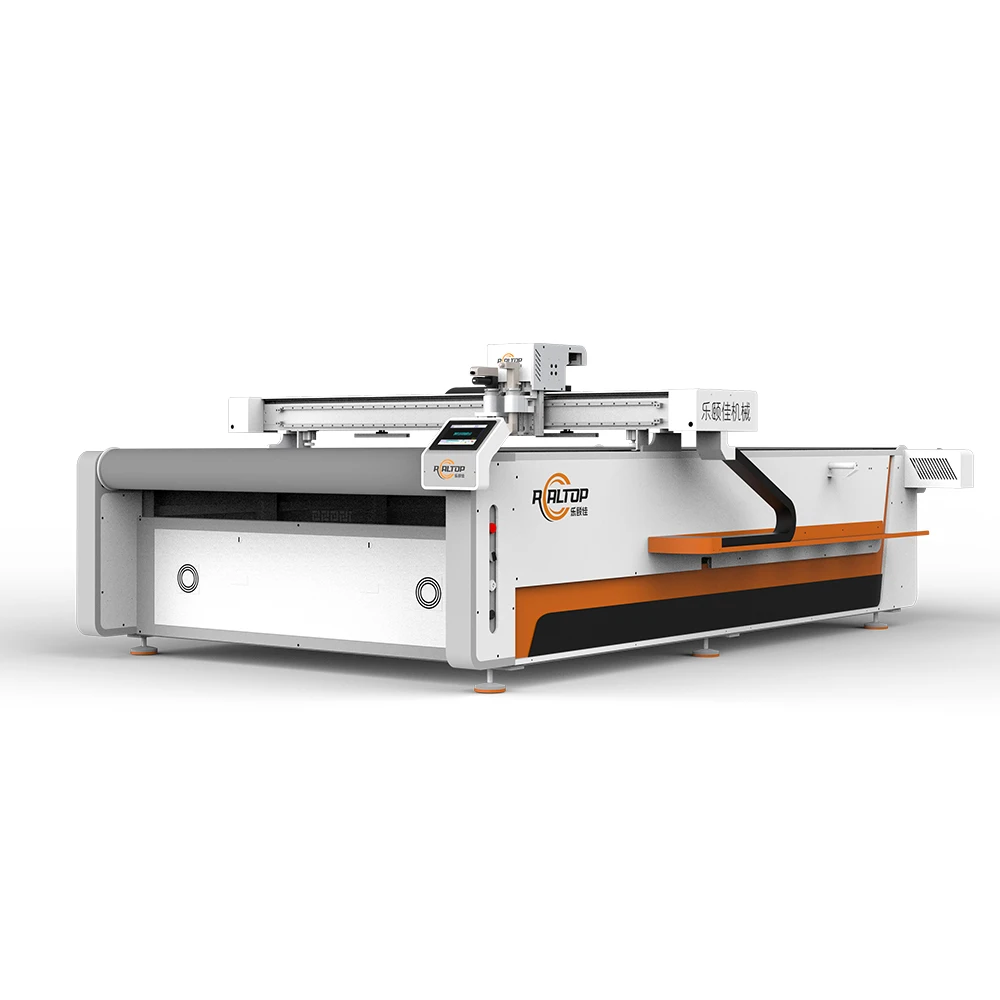
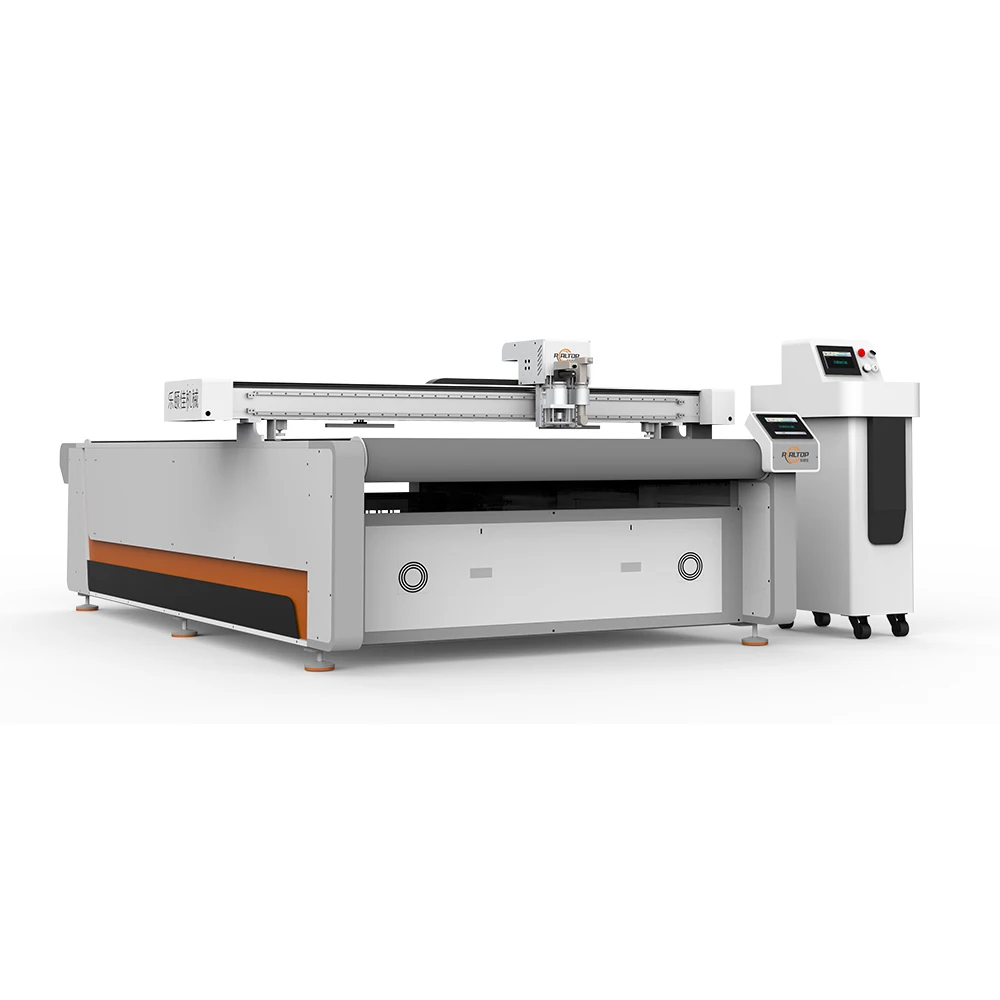
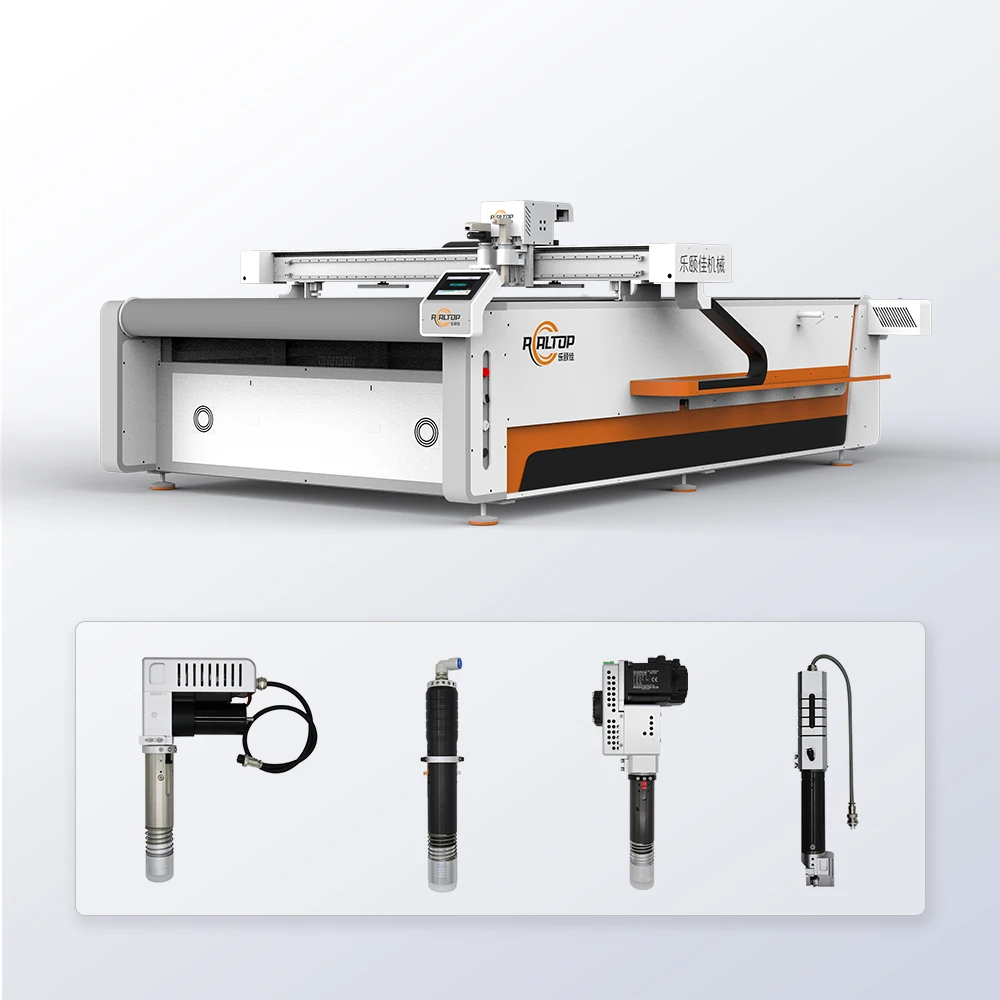
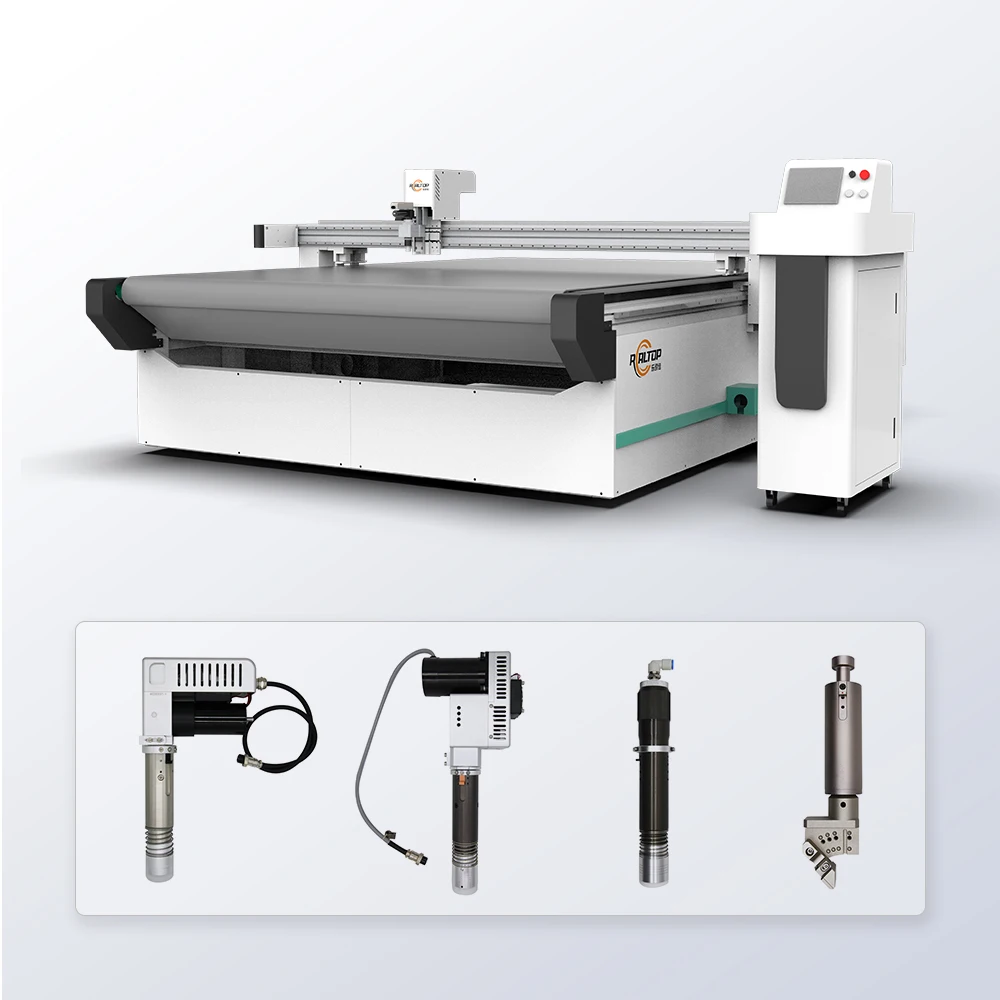
Tool Head and Table Configuration Specified per Material — we match oscillating knife, drag knife, and circular blade options to the buyer’s fabric weight, coating, and daily volume before finalizing the cutting configuration.
Technical Specifications
| Parameter | Value |
|---|---|
| Model | RT-D2516/RT-S2516 |
| Product Type | CNC Oscillating Knife Cutting Machine |
| Working Area | 1600×2500mm |
| Overall Dimensions | 3450×2300×1250mm |
| Rated Power | 9 kW |
| Voltage | 380V±10% |
| Translational Velocity | 800–2000mm/s |
| Cutting Speed | 200–800mm/s (according to different cutting materials) |
| Repeated Accuracy | ≤0.1mm |
| Table Type | Flat working table / auto feeding table (configurable) |
| Multifunctional Head | Swiss imported knife (vibration full cutting, vibration half cutting, cursor location function) |
| Safety Device | Infrared sensors, anti-collision, emergency stop |
| Transmission System | Digital servo motor, linear guide, synchronous belt, ball screw |
| Instruction System | HP-GL compatible format |
| Servo Motor Brand | Delta or Panasonic (optional) |
| Vacuum Pump | 7.5 kW |
| Conveyor Belt | Germany imported |
| Linear Rail | Taiwan Hiwin |
| Control Panel | Touch screen, multiple language supported |
| Software | Auto typesetting; supports PLT, DXF, AI file formats |
| Language Options | English, Russian, Italian, Chinese (special languages customizable) |
| Assembly State | Fully assembled |
Application Suitability
| Application | Material or Output |
|---|---|
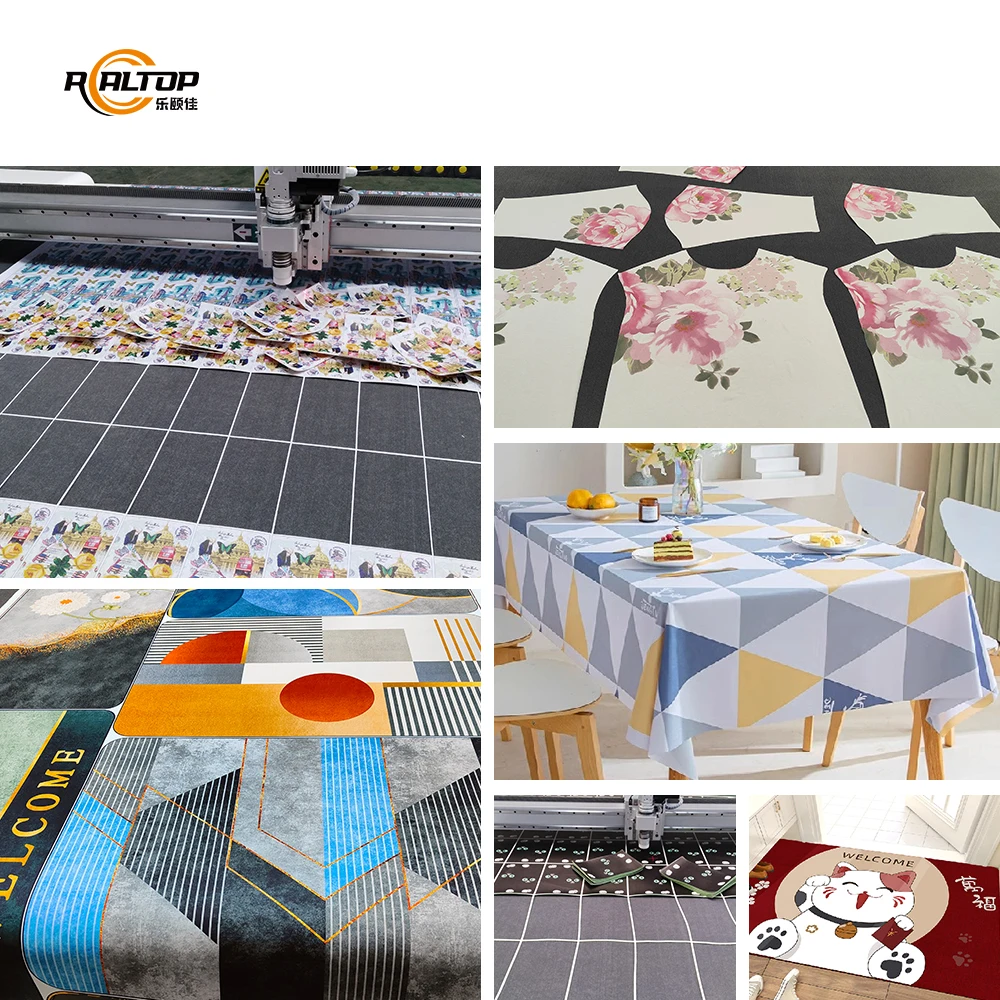
| Garment and footwear cutting | Cotton, polyester, denim, PU leather, shoe uppers |
| Soft home furnishings | Upholstery fabric, non-woven fabric, carpet |
| Automotive interior trim | Automotive fabric, PU foam, composite trim panels |
| Luggage and bag production | Nylon, canvas, synthetic leather, Oxford cloth |
| Packaging and signage sample making | Corrugated cardboard, sticker, film |
| Sports and outdoor products | Neoprene, sponge, EVA, XPE |
| Sealing and gasket fabrication | PTFE, ETFE, rubber, silicone, soft glass |
| Composite material processing | Carbon fiber prepreg, fiberglass, coated layers |
Why a Fabric Sample Tells You Nothing About Cutting Performance
The label on a bolt of cloth says nothing about how it behaves under a high-frequency blade.
When I worked on the assembly floor, we tested every knife setup on the bench before shipping. Later, moving into technical sales, I met a garment factory owner from Southeast Asia who had already bought a cutter based on a plain cotton sample. His actual production ran multi-layer coated technical fabric, and the blade chattered through the coating, leaving ragged edges and forcing re-cuts. A cloth CNC cutting machine specified only by working area and fabric type will often fall short once the real material hits the table. [NEED_CITE: material behavior under oscillating knife cutting]
Mapping the Full REALTOP Cutting Range to Your Material
This catalogue covers the complete cloth CNC cutting machine family from one CNC cutting machine manufacturer. Rather than forcing every soft material through a single knife type, the range includes oscillating, drag, circular, and punch tool heads. A buyer cutting lightweight jersey needs a different setup than one running 15-layer automotive carpet, and the tool head and blade geometry are selected after reviewing the actual production material.
Knife Versus Laser — Choosing the Right Cutting Method
Not every textile job belongs on a knife table. Synthetics that need sealed edges — nylon webbing, hook-and-loop, certain technical textiles — often run better on a CO2 or fiber laser. The flatbed cutting machine range spans both knife and laser systems, so the cutting method is matched to the material behavior rather than the buyer being pushed toward whatever is in stock. [NEED_CITE: thermal versus mechanical cutting for coated synthetics]
Reading the Specs That Actually Shape Your Daily Output
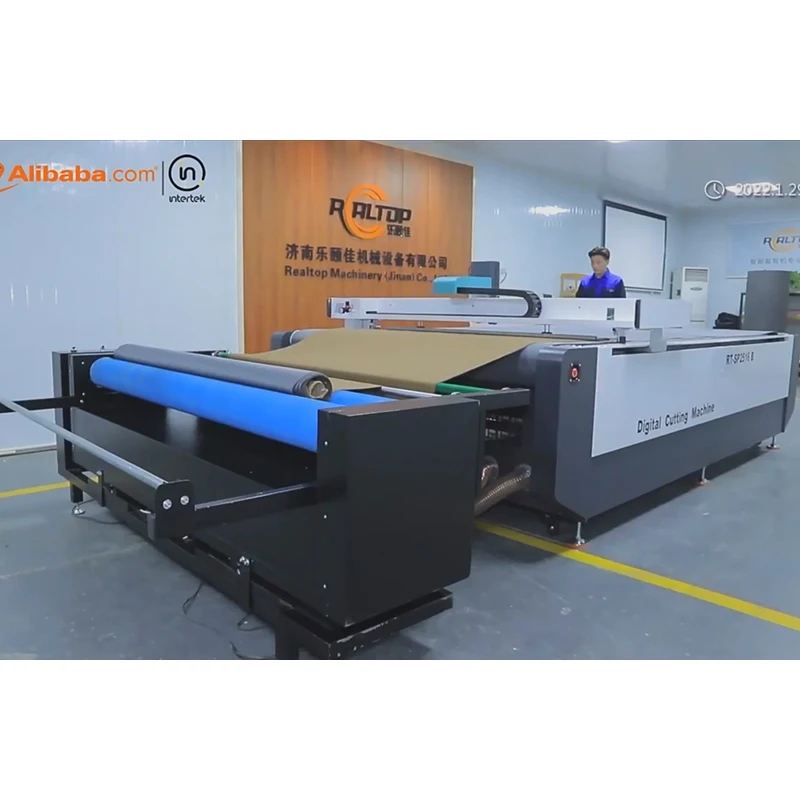
The 1600×2500mm working area fits standard fabric rolls and garment marker lays without constant repositioning, and the auto-feeding conveyor option allows continuous roll cutting for high-volume clothing cloth runs. The Swiss imported oscillating knife handles full-depth and half-depth cuts, which matters when kiss-cutting stickers or scoring gasket material without cutting through the backing. A 7.5 kW vacuum pump paired with zone-controllable table sections holds small pattern pieces flat — something a single-zone table struggles with once parts drop below a certain size. Repeated accuracy at ≤0.1mm across Taiwan Hiwin linear rails keeps pattern alignment consistent across multi-ply lays.
What Happens When the Wrong Tool Head Meets Your Fabric
Choosing an oscillating knife for a dense, multi-layer foam composite can produce crushed edges and foam dust rather than a clean slice. A drag knife dragged across woven carbon fiber prepreg may pull fibers and fray the cut line. These problems do not show up in a machine brochure — they surface during the first production shift, when rejects pile up and operators start overriding safety stops to force the cut through. Every tool head in this range is specified against the buyer’s actual material before the order is confirmed. [NEED_CITE: edge quality failure modes in composite cutting]
Why Buyers Source the Full Range From One CNC Cutting Machine Manufacturer
In-house design covers both knife and laser platforms, so a buyer comparing methods gets an honest technical comparison instead of a sales pitch for whatever model needs moving. CCD camera positioning is available for printed contour work, verified on the buyer’s own printed fabric before the machine ships. Software accepts PLT, DXF, and AI files, and automatic nesting is configured for the buyer’s marker workflow. Voltage, plug type, and control panel language are confirmed for the destination market before production begins. Sample cutting on the buyer’s material is standard, not optional, producing a report on edge quality and cutting depth before any commitment is made.
Documentation & Verification
- Machine specification sheet listing confirmed tool heads and working area
- Electrical schematic with voltage and frequency matched to destination country
- Sample cutting report on your own fabric with edge quality photographs
- Software licence and file format compatibility note for PLT, DXF, AI workflows
- Factory test record showing repeated accuracy verification before crating
- Packing photographs documenting machine condition at point of shipment
Installation, Commissioning & Support
- 9 kW rated power requires a dedicated 380V±10% circuit with proper earthing at the facility
- Machine arrives fully assembled; positioning requires a flat floor capable of supporting the 3450×2300×1250mm footprint
- First commissioning includes vacuum pump tuning and auto-feeding conveyor belt alignment
- Touch screen control panel is set to the buyer’s preferred language before dispatch
- Operator training covers tool head changeover between oscillating, drag, and circular knife setups
- Spare parts list identifies Swiss knife blades, conveyor belt segments, and servo motor components
Before You Send the Inquiry
To get an accurate configuration rather than a generic quotation, include the fabric type, coating details, and typical ply count your factory runs. Specify whether you need batch cutting on a flat table or continuous roll feeding, and confirm your local voltage and frequency standard. If your production relies on printed contour cutting, send a sample of the printed material so the camera system can be tested against your actual registration marks.
Frequently Asked Questions
Q: How do I decide between an oscillating knife and a laser for my fabric?
A: The choice depends on material behavior. Oscillating knives handle multi-ply woven and knit fabrics without melting edges, while lasers seal cut edges on synthetics that would otherwise fray. We run sample cuts on your actual material using both methods and compare edge quality, ply separation, and cycle time before recommending one.
Q: Should I choose a flat table or auto-feeding conveyor for cloth cutting?
A: Flat tables suit batch cutting where operators manually spread fabric lays of varying thickness. Auto-feeding conveyors work better for continuous roll processing, where fabric is fed from a roll and cut in an uninterrupted sequence. The decision rests on your daily volume and whether you cut from rolls or pre-folded lays.
Q: What tool heads come with the machine and can I add more later?
A: The multifunctional head supports Swiss imported vibration knives for full and half cutting, with cursor location for positioning. Additional tool heads including drag knife, creasing wheel, and punch tools can be configured based on the materials in your production mix. Tool head selection is confirmed during the sample cutting stage.
Q: Will the machine work with my existing pattern files and nesting software?
A: The system accepts PLT, DXF, and AI formats and runs HP-GL compatible instructions. Automatic nesting is included to arrange pattern pieces for material yield. We confirm file format compatibility by opening your production files on our software before the order is finalized.
Q: Can the control language and voltage be set for my country?
A: The touch screen supports English, Russian, Italian, and Chinese, with other languages customizable on request. Voltage is confirmed at 380V±10% as standard, and plug type and electrical configuration are matched to the destination market standard before the machine enters production.
Tool Head and Table Configuration Specified per Material — we match oscillating knife, drag knife, and circular blade options to the buyer’s fabric weight, coating, and daily volume before finalizing the cutting configuration.
Technical Specifications
| Parameter | Value |
|---|---|
| Model | RT-D2516/RT-S2516 |
| Product Type | CNC Oscillating Knife Cutting Machine |
| Working Area | 1600×2500mm |
| Overall Dimensions | 3450×2300×1250mm |
| Rated Power | 9 kW |
| Voltage | 380V±10% |
| Translational Velocity | 800–2000mm/s |
| Cutting Speed | 200–800mm/s (according to different cutting materials) |
| Repeated Accuracy | ≤0.1mm |
| Table Type | Flat working table / auto feeding table (configurable) |
| Multifunctional Head | Swiss imported knife (vibration full cutting, vibration half cutting, cursor location function) |
| Safety Device | Infrared sensors, anti-collision, emergency stop |
| Transmission System | Digital servo motor, linear guide, synchronous belt, ball screw |
| Instruction System | HP-GL compatible format |
| Servo Motor Brand | Delta or Panasonic (optional) |
| Vacuum Pump | 7.5 kW |
| Conveyor Belt | Germany imported |
| Linear Rail | Taiwan Hiwin |
| Control Panel | Touch screen, multiple language supported |
| Software | Auto typesetting; supports PLT, DXF, AI file formats |
| Language Options | English, Russian, Italian, Chinese (special languages customizable) |
| Assembly State | Fully assembled |
Application Suitability
| Application | Material or Output |
|---|---|
| Garment and footwear cutting | Cotton, polyester, denim, PU leather, shoe uppers |
| Soft home furnishings | Upholstery fabric, non-woven fabric, carpet |
| Automotive interior trim | Automotive fabric, PU foam, composite trim panels |
| Luggage and bag production | Nylon, canvas, synthetic leather, Oxford cloth |
| Packaging and signage sample making | Corrugated cardboard, sticker, film |
| Sports and outdoor products | Neoprene, sponge, EVA, XPE |
| Sealing and gasket fabrication | PTFE, ETFE, rubber, silicone, soft glass |
| Composite material processing | Carbon fiber prepreg, fiberglass, coated layers |
Why a Fabric Sample Tells You Nothing About Cutting Performance
The label on a bolt of cloth says nothing about how it behaves under a high-frequency blade.
When I worked on the assembly floor, we tested every knife setup on the bench before shipping. Later, moving into technical sales, I met a garment factory owner from Southeast Asia who had already bought a cutter based on a plain cotton sample. His actual production ran multi-layer coated technical fabric, and the blade chattered through the coating, leaving ragged edges and forcing re-cuts. A cloth CNC cutting machine specified only by working area and fabric type will often fall short once the real material hits the table. [NEED_CITE: material behavior under oscillating knife cutting]
Mapping the Full REALTOP Cutting Range to Your Material
This catalogue covers the complete cloth CNC cutting machine family from one CNC cutting machine manufacturer. Rather than forcing every soft material through a single knife type, the range includes oscillating, drag, circular, and punch tool heads. A buyer cutting lightweight jersey needs a different setup than one running 15-layer automotive carpet, and the tool head and blade geometry are selected after reviewing the actual production material.
Knife Versus Laser — Choosing the Right Cutting Method
Not every textile job belongs on a knife table. Synthetics that need sealed edges — nylon webbing, hook-and-loop, certain technical textiles — often run better on a CO2 or fiber laser. The flatbed cutting machine range spans both knife and laser systems, so the cutting method is matched to the material behavior rather than the buyer being pushed toward whatever is in stock. [NEED_CITE: thermal versus mechanical cutting for coated synthetics]
Reading the Specs That Actually Shape Your Daily Output
The 1600×2500mm working area fits standard fabric rolls and garment marker lays without constant repositioning, and the auto-feeding conveyor option allows continuous roll cutting for high-volume clothing cloth runs. The Swiss imported oscillating knife handles full-depth and half-depth cuts, which matters when kiss-cutting stickers or scoring gasket material without cutting through the backing. A 7.5 kW vacuum pump paired with zone-controllable table sections holds small pattern pieces flat — something a single-zone table struggles with once parts drop below a certain size. Repeated accuracy at ≤0.1mm across Taiwan Hiwin linear rails keeps pattern alignment consistent across multi-ply lays.
What Happens When the Wrong Tool Head Meets Your Fabric
Choosing an oscillating knife for a dense, multi-layer foam composite can produce crushed edges and foam dust rather than a clean slice. A drag knife dragged across woven carbon fiber prepreg may pull fibers and fray the cut line. These problems do not show up in a machine brochure — they surface during the first production shift, when rejects pile up and operators start overriding safety stops to force the cut through. Every tool head in this range is specified against the buyer’s actual material before the order is confirmed. [NEED_CITE: edge quality failure modes in composite cutting]
Why Buyers Source the Full Range From One CNC Cutting Machine Manufacturer
In-house design covers both knife and laser platforms, so a buyer comparing methods gets an honest technical comparison instead of a sales pitch for whatever model needs moving. CCD camera positioning is available for printed contour work, verified on the buyer’s own printed fabric before the machine ships. Software accepts PLT, DXF, and AI files, and automatic nesting is configured for the buyer’s marker workflow. Voltage, plug type, and control panel language are confirmed for the destination market before production begins. Sample cutting on the buyer’s material is standard, not optional, producing a report on edge quality and cutting depth before any commitment is made.
Documentation & Verification
- Machine specification sheet listing confirmed tool heads and working area
- Electrical schematic with voltage and frequency matched to destination country
- Sample cutting report on your own fabric with edge quality photographs
- Software licence and file format compatibility note for PLT, DXF, AI workflows
- Factory test record showing repeated accuracy verification before crating
- Packing photographs documenting machine condition at point of shipment
Installation, Commissioning & Support
- 9 kW rated power requires a dedicated 380V±10% circuit with proper earthing at the facility
- Machine arrives fully assembled; positioning requires a flat floor capable of supporting the 3450×2300×1250mm footprint
- First commissioning includes vacuum pump tuning and auto-feeding conveyor belt alignment
- Touch screen control panel is set to the buyer’s preferred language before dispatch
- Operator training covers tool head changeover between oscillating, drag, and circular knife setups
- Spare parts list identifies Swiss knife blades, conveyor belt segments, and servo motor components
Before You Send the Inquiry
To get an accurate configuration rather than a generic quotation, include the fabric type, coating details, and typical ply count your factory runs. Specify whether you need batch cutting on a flat table or continuous roll feeding, and confirm your local voltage and frequency standard. If your production relies on printed contour cutting, send a sample of the printed material so the camera system can be tested against your actual registration marks.
Frequently Asked Questions
Q: How do I decide between an oscillating knife and a laser for my fabric?
A: The choice depends on material behavior. Oscillating knives handle multi-ply woven and knit fabrics without melting edges, while lasers seal cut edges on synthetics that would otherwise fray. We run sample cuts on your actual material using both methods and compare edge quality, ply separation, and cycle time before recommending one.
Q: Should I choose a flat table or auto-feeding conveyor for cloth cutting?
A: Flat tables suit batch cutting where operators manually spread fabric lays of varying thickness. Auto-feeding conveyors work better for continuous roll processing, where fabric is fed from a roll and cut in an uninterrupted sequence. The decision rests on your daily volume and whether you cut from rolls or pre-folded lays.
Q: What tool heads come with the machine and can I add more later?
A: The multifunctional head supports Swiss imported vibration knives for full and half cutting, with cursor location for positioning. Additional tool heads including drag knife, creasing wheel, and punch tools can be configured based on the materials in your production mix. Tool head selection is confirmed during the sample cutting stage.
Q: Will the machine work with my existing pattern files and nesting software?
A: The system accepts PLT, DXF, and AI formats and runs HP-GL compatible instructions. Automatic nesting is included to arrange pattern pieces for material yield. We confirm file format compatibility by opening your production files on our software before the order is finalized.
Q: Can the control language and voltage be set for my country?
A: The touch screen supports English, Russian, Italian, and Chinese, with other languages customizable on request. Voltage is confirmed at 380V±10% as standard, and plug type and electrical configuration are matched to the destination market standard before the machine enters production.










商品评价
There are no reviews yet.