

Fast Delivery
Quick, reliable shipping to any location.

Free & easy returns
Return this item by mail or in store within 90 days for a full refund.
Complete Catalogue Access — REALTOP covers both oscillating knife and laser cutting in-house, so you can match the cutting method to your specific fabric rather than forcing a single technology across all materials.
Technical Specifications
| Parameter | Value |
|---|---|
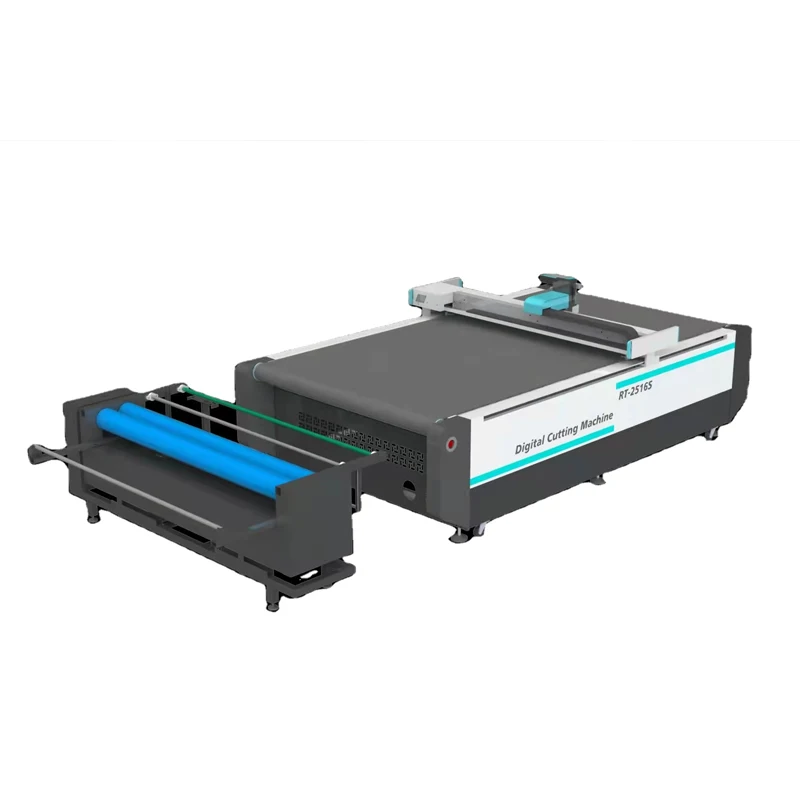
| Model | RT-D2516/RT-S2516 |
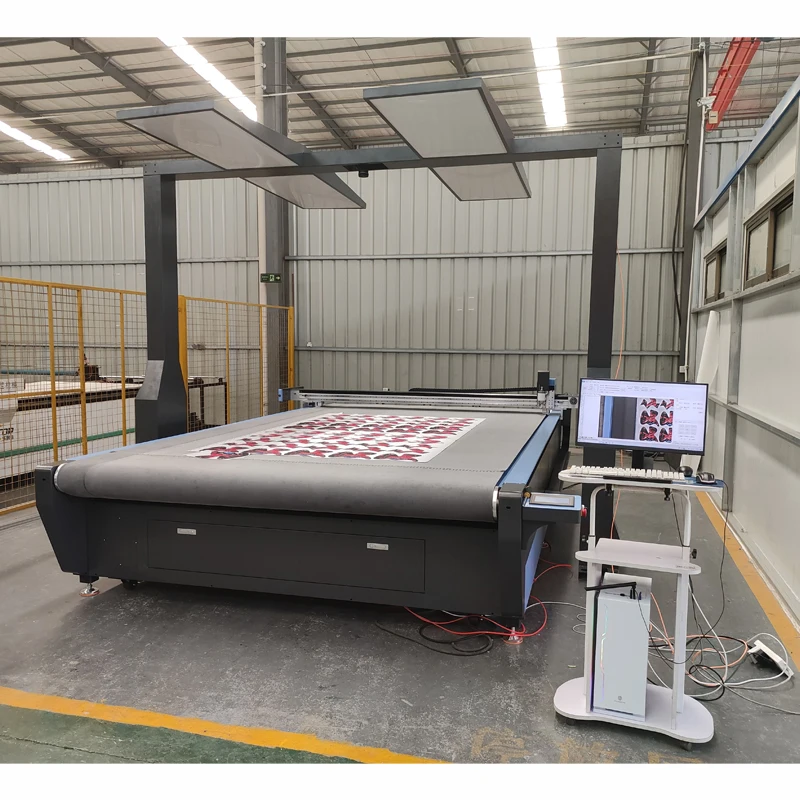
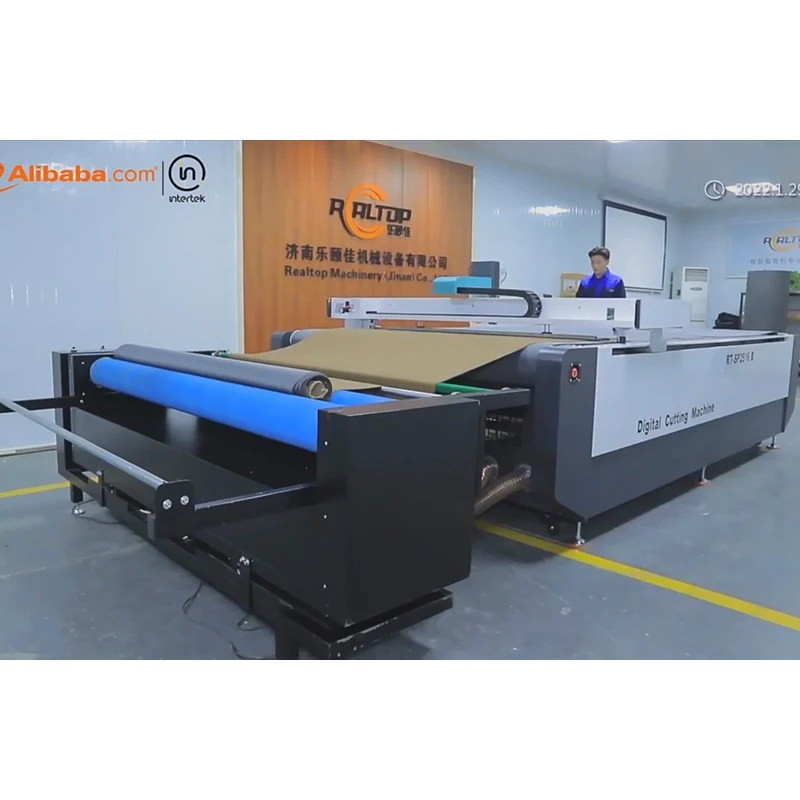
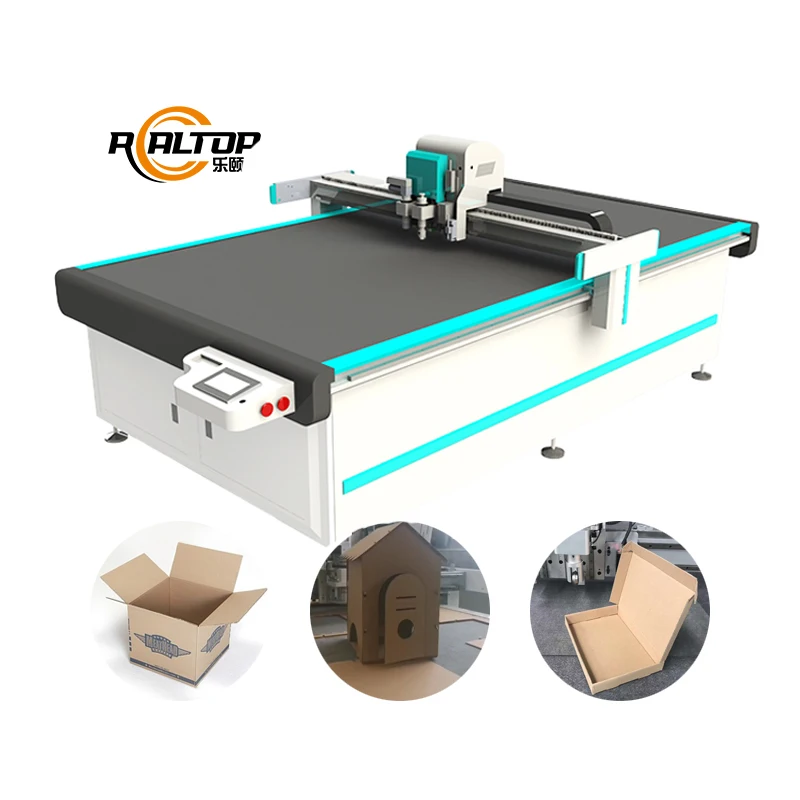
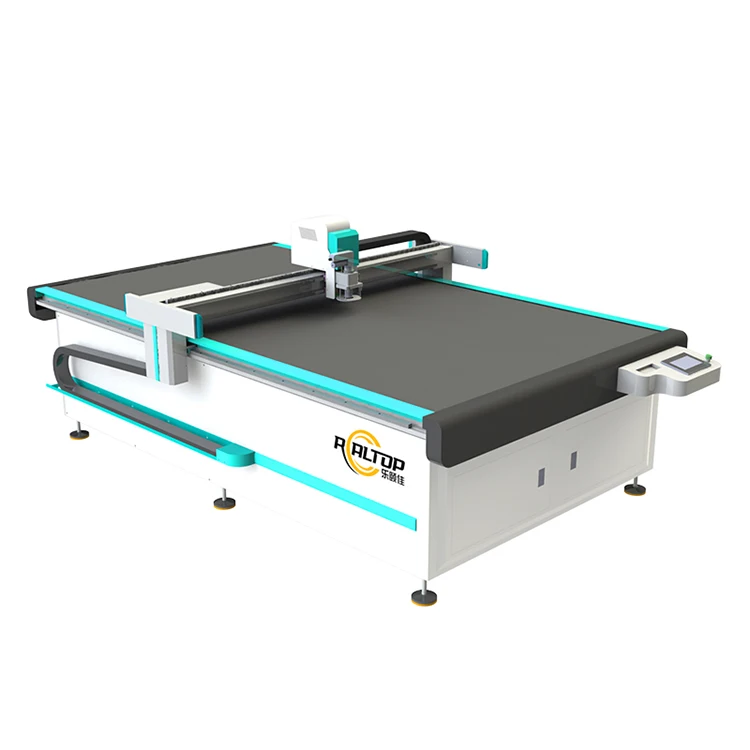
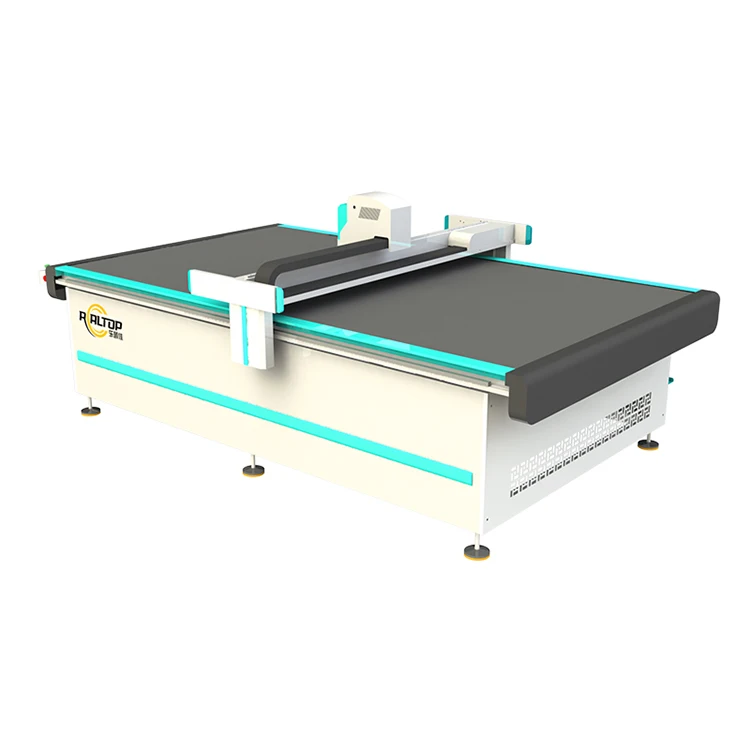
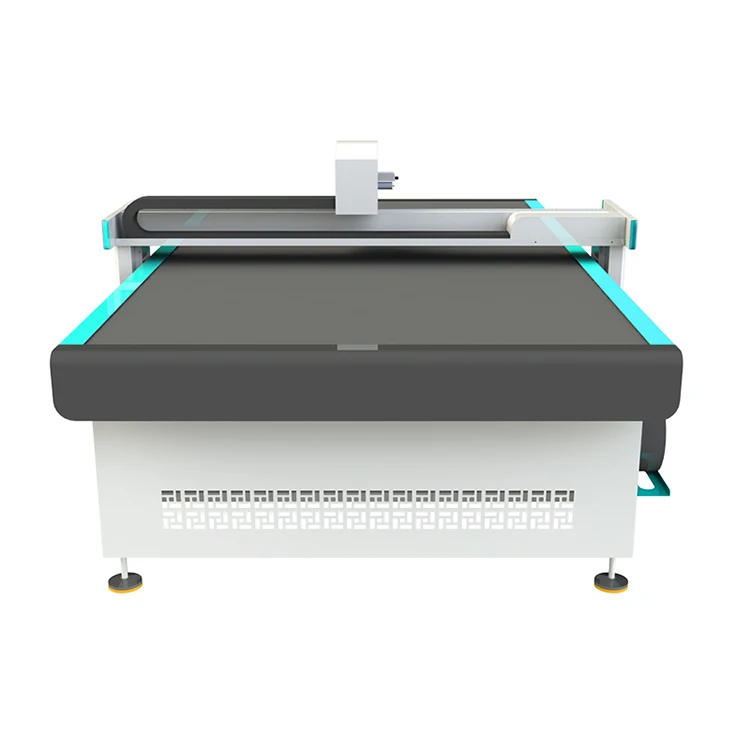
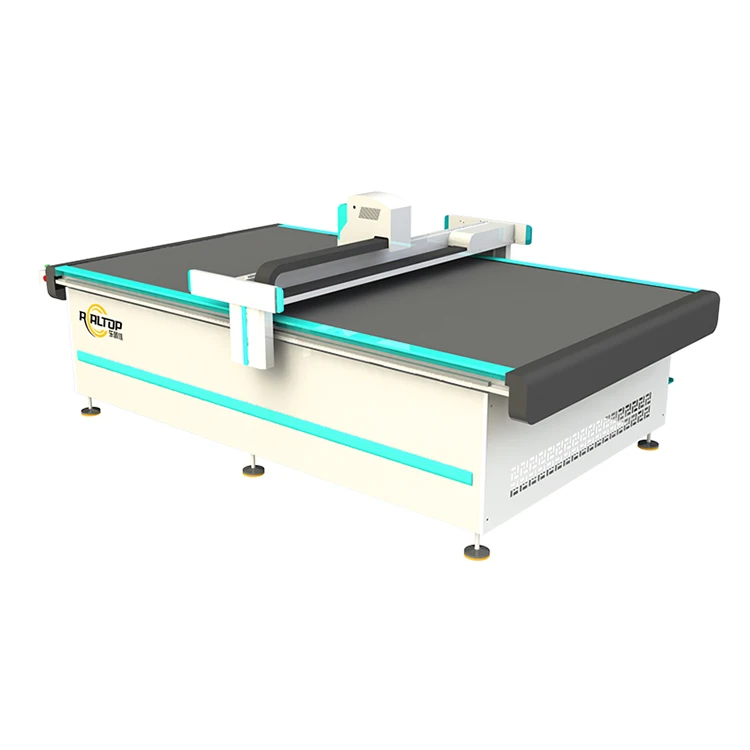
| Product Type | CNC Oscillating Knife Cutting Machine |
| Working Area | 1600×2500 mm |
| Machine Size | 3450×2300×1250 mm |
| Rated Power | 9 kW |
| Voltage | 380V ±10% |
| Vacuum Pump | 7.5 kW |
| Translational Velocity | 800–1200 mm/s |
| Cutting Thickness | ≤50 mm (varies by material — confirm block format, material and thickness) |
| Repeated Accuracy | ≤0.1 mm |
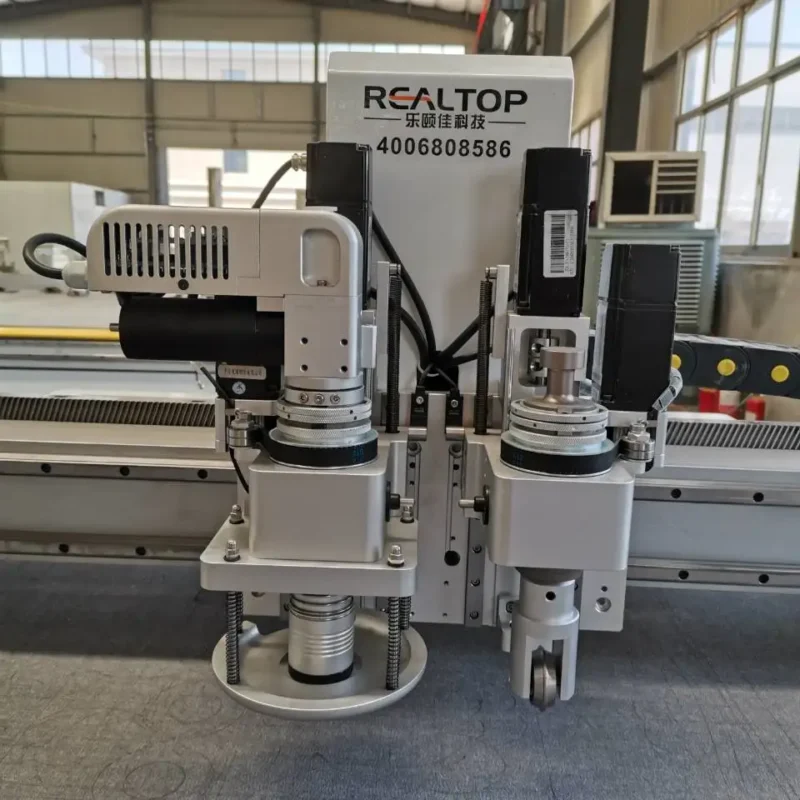
| Tool Head | Swiss imported oscillating knife (vibration full cutting, vibration half cutting, cursor location) |
| Transmission System | Digital servo motor, linear guide, synchronous belt, ball screw (imported) |
| Additional Configuration | Delta servo motor, Germany imported conveyor belt, vacuum table, auto feeding, Taiwan Hiwin rail |
| Safety Device | Infrared sensors |
| Instruction System | HP-GL compatible format |
| Software Language | English, Russian, Italian, Chinese (customization available) |
| Standards | CE declaration |
Application Suitability
| Application | Material or Output |
|---|---|
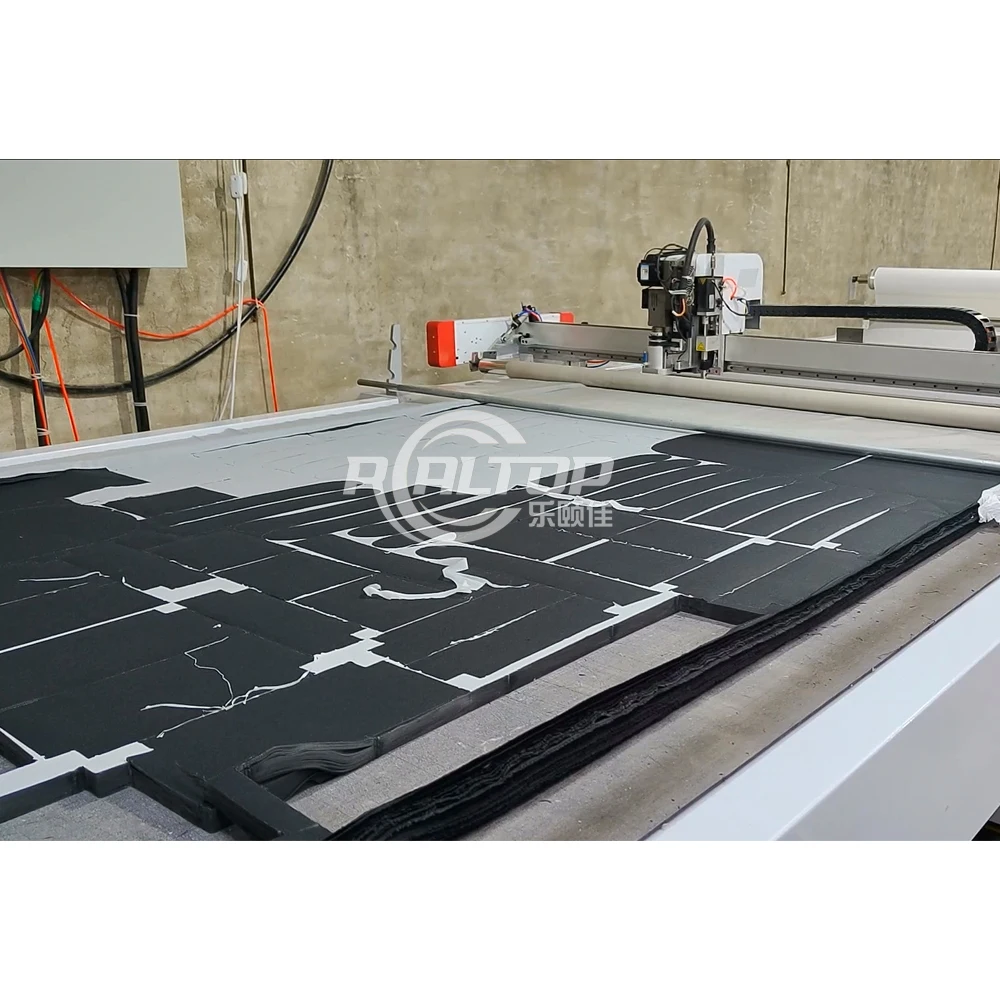
| Garment and fashion production | Single or multi-layer woven and knit fabric with nested pattern cutting |
| Sofa cover and curtain manufacturing | Thick woven upholstery fabric, velvet, chenille and lined drapery material |
| Leather goods and accessories | Natural and synthetic leather hides for bags, shoes and belts |
| Automotive interior trim | Sponge composite leather, foam-backed fabric and headliner material |
| Signage and flexible display | PVC banner, vinyl, soft glass and silicone sheet |
| Gasket and seal fabrication | Rubber, silicone and non-asbestos composite gasket sheet |
Why Cutting Thickness Claims Fail on Real Fabric
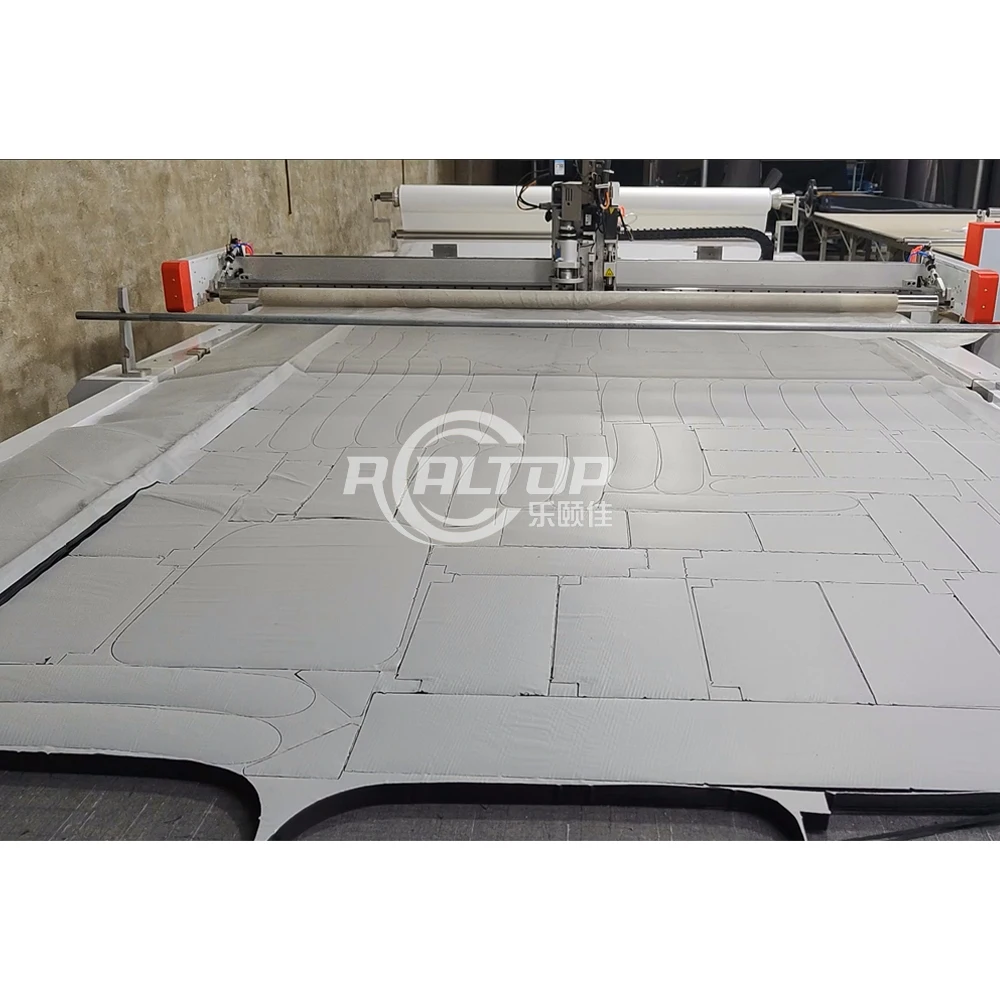
A machine quoted at "≤50 mm cutting thickness" often stalls on dense woven sofa velvet or multi-layer curtain lining long before reaching that limit. The rated depth applies only to low-density, homogeneous material under ideal vacuum hold-down.
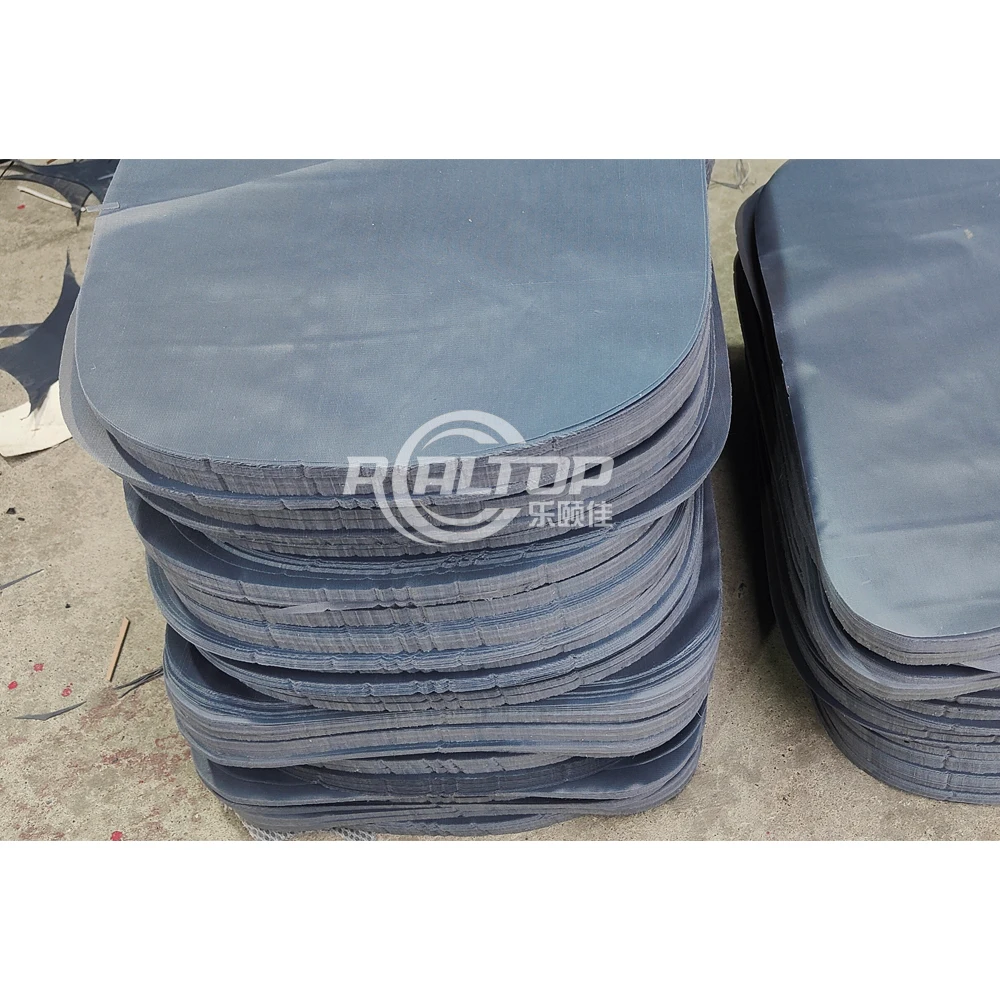
When a buyer specifies a CNC oscillating knife cutting machine manufacturer based on working area and headline thickness alone, the first production run on thick chenille or bonded foam reveals ragged edges and incomplete cuts. The Swiss oscillating knife head on the RT-D2516/RT-S2516 handles a broad range, but the actual achievable depth depends on fabric density, backing stiffness and vacuum zone coverage. I have seen workshops lose an entire shift re-cutting sofa panels because the material lifted off the table mid-pass [NEED_CITE: vacuum hold-down requirements for thick textile cutting]. Confirming thickness on your exact fabric stack before purchase removes this risk entirely.
Knife Versus Laser: Matching Method to Fabric
The decision between oscillating knife and laser is not about which technology is newer — it is about which one preserves the edge your product requires. Laser seals synthetic edges on polyester and nylon, which suits filter fabric and technical textile where fraying must be prevented. Oscillating knife leaves a clean, unburned edge on natural fiber and multi-layer woven fabric, which garment and upholstery producers need for downstream sewing.
REALTOP builds both systems in the same factory, so the CNC oscillating knife cutting machine manufacturer recommendation is based on your material sample rather than pushing whichever line has shorter lead time. The RT-D2516/RT-S2516 sits in the knife cutting range for fabric, leather and composite sheet where mechanical shearing outperforms thermal cutting.
Throughput Depends on More Than Translational Speed
The 800–1200 mm/s translational velocity figure tells only part of the story. Actual cutting throughput depends on contour complexity, the number of tool starts and stops, and how quickly the vacuum table releases and re-holds material between cuts. On a sofa cover with long straight seams, the head runs near top speed for extended periods. On an intricate garment pattern with tight curves and internal cutouts, effective throughput drops even though the head is technically capable of higher velocity [NEED_CITE: relationship between contour complexity and effective cutting speed].
The Delta servo motor and Taiwan Hiwin linear guide on this machine maintain positioning accuracy at ≤0.1 mm repeated accuracy across the full 1600×2500 mm working area, so tight nesting layouts do not degrade edge registration as the gantry accelerates and decelerates through each pattern.
What the Specifications Mean on the Shop Floor
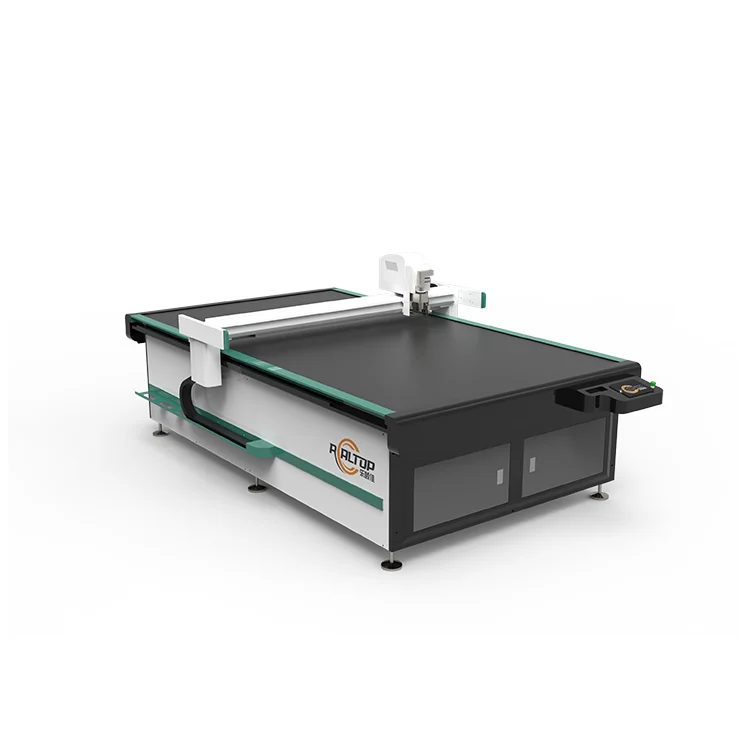
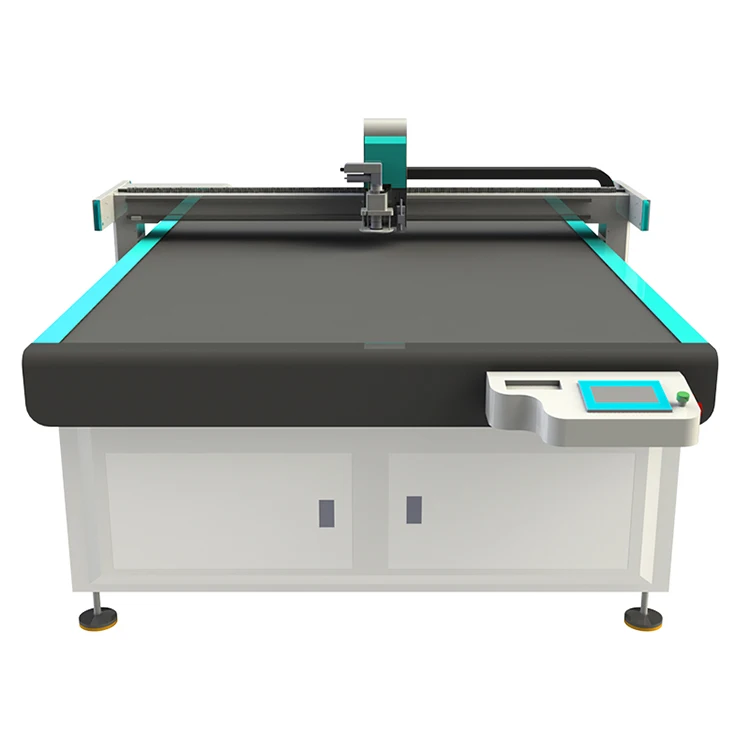
The 7.5 kW vacuum pump paired with the flat working table determines whether small cut parts stay in place during the final pass. A weaker pump or poorly zoned table lets lightweight fabric lift around the knife, producing shifted layers and wasted material. The Germany imported conveyor belt on the auto-feeding variant feeds continuous roll stock across the cutting zone, which is essential for curtain and drapery production where panel lengths exceed a single table placement.
The HP-GL compatible instruction system accepts nesting files from most commercial pattern software. Before ordering, your existing file format should be tested through the complete workflow — import, nest, cut — to confirm that no geometry is lost or distorted [NEED_CITE: HP-GL compatibility across nesting software platforms]. The software language options (English, Russian, Italian, Chinese) are set before shipment so operators can work in their native interface from day one.
The Hidden Cost of a Misconfigured Feed System
Specifying a flat table without auto-feeding for a high-volume curtain operation means an operator manually advances the fabric roll between every cut cycle. Over a production day, this manual handling adds up to significant idle time between cuts, and uneven tension from hand-feeding introduces registration drift across long panels. The RT-S2516 variant with conveyor belt and auto-feeding addresses this directly, but the choice must be made at order stage — retrofitting a feed system onto a flat-table machine is rarely practical.
Similarly, choosing a single-zone vacuum table for a workshop cutting many small garment pieces means suction spreads across the entire surface instead of concentrating under the active cutting zone [NEED_CITE: vacuum zoning impact on small part hold-down]. Confirming table zoning configuration against your typical part size prevents the most common cause of mid-cut material shift.
Why Buyers Source This Range Here
In-house design and production of both knife and laser systems means the cutting method is matched to your material sample, not to whichever machine is in stock. The RT-D2516/RT-S2516 tool head and table configuration is specified per your fabric type and daily volume before the order is confirmed.
Software compatibility with your existing nesting workflow is tested with your own files during the sample stage. Voltage, plug type and control language are documented and locked in the specification sheet before production begins. Every machine ships with a sample cutting report on the buyer’s own material, so edge quality and achievable speed are verified before the crate leaves Jinan.
Documentation & Verification
- Machine specification sheet confirming 380V ±10%, frequency and plug type for your market
- Sample cutting report on your fabric showing edge quality and speed achieved
- Tool head and vacuum table configuration list matched to your material type
- Electrical schematic with servo motor and pump circuit detail for local maintenance
- Software licence and HP-GL file format compatibility note for your nesting system
- Spare parts list covering oscillating knife blades, belts and sensor replacements
Installation, Commissioning & Support
- Foundation must support 3450×2300 mm footprint with level tolerance for the 1600×2500 mm table
- Dedicated 380V ±10% circuit with capacity for 9 kW rated power plus 7.5 kW vacuum pump
- Machine ships with gantry and table assembled; vacuum pump and conveyor connected on site
- First-run calibration sets repeated accuracy to ≤0.1 mm across the full working area
- Operator training covers Delta servo parameter adjustment and tool head changeover
- Spare oscillating knife blades and Germany imported belt segments included at delivery
What to Share Before Requesting a Quote
Send a sample of your actual production fabric — including backing, lining and any adhesive lamination — along with the maximum layer count you intend to cut. Specify your local voltage and frequency, the control language your operators need, and the file format your current nesting software exports. If your workshop runs continuous roll stock, confirm roll width and whether auto-feeding with conveyor is required or a flat table suffices.
Frequently Asked Questions
Q: How can I verify cutting thickness and edge quality on my fabric before committing to an order?
A: Send a sample roll of your production material to the factory. The sample is cut on the RT-D2516/RT-S2516 under production conditions, and a report documenting edge quality, achievable speed and layer count is returned with the cut pieces. This confirms the configuration before you sign off on the build specification.
Q: Which tool head suits thick sofa velvet versus lightweight curtain lining?
A: The Swiss oscillating knife head on this machine covers full-cut, half-cut and cursor modes across both material types. Thick upholstery velvet typically requires the full-cut oscillation at reduced speed, while lightweight lining runs at higher translational velocity. The tool head selection is confirmed during the sample cutting stage based on your actual fabric.
Q: Does the 1600×2500 mm working area alone determine which machine I need?
A: Working area defines maximum single-placement size, but vacuum zoning, feed system and tool head configuration matter equally. A curtain producer cutting long panels needs auto-feeding with conveyor, while a leather goods workshop cutting small hide pieces benefits from multi-zone vacuum concentrating suction under small parts.
Q: What electrical and software details are confirmed before the machine ships?
A: The specification sheet locks in voltage, frequency, plug type and control language before production starts. Software compatibility with your HP-GL nesting files is verified with your own pattern data, and a compatibility note is included in the documentation package so your IT team can plan integration.
Q: How does having both knife and laser lines help me choose the right method?
A: REALTOP builds both oscillating knife and laser cutting machines in-house, so the recommendation is based on your material test rather than limited to one technology. Synthetic fabric that needs sealed edges may suit laser, while natural fiber and multi-layer woven fabric typically cut cleaner with the oscillating knife on the RT-D2516/RT-S2516.
Complete Catalogue Access — REALTOP covers both oscillating knife and laser cutting in-house, so you can match the cutting method to your specific fabric rather than forcing a single technology across all materials.
Technical Specifications
| Parameter | Value |
|---|---|
| Model | RT-D2516/RT-S2516 |
| Product Type | CNC Oscillating Knife Cutting Machine |
| Working Area | 1600×2500 mm |
| Machine Size | 3450×2300×1250 mm |
| Rated Power | 9 kW |
| Voltage | 380V ±10% |
| Vacuum Pump | 7.5 kW |
| Translational Velocity | 800–1200 mm/s |
| Cutting Thickness | ≤50 mm (varies by material — confirm block format, material and thickness) |
| Repeated Accuracy | ≤0.1 mm |
| Tool Head | Swiss imported oscillating knife (vibration full cutting, vibration half cutting, cursor location) |
| Transmission System | Digital servo motor, linear guide, synchronous belt, ball screw (imported) |
| Additional Configuration | Delta servo motor, Germany imported conveyor belt, vacuum table, auto feeding, Taiwan Hiwin rail |
| Safety Device | Infrared sensors |
| Instruction System | HP-GL compatible format |
| Software Language | English, Russian, Italian, Chinese (customization available) |
| Standards | CE declaration |
Application Suitability
| Application | Material or Output |
|---|---|
| Garment and fashion production | Single or multi-layer woven and knit fabric with nested pattern cutting |
| Sofa cover and curtain manufacturing | Thick woven upholstery fabric, velvet, chenille and lined drapery material |
| Leather goods and accessories | Natural and synthetic leather hides for bags, shoes and belts |
| Automotive interior trim | Sponge composite leather, foam-backed fabric and headliner material |
| Signage and flexible display | PVC banner, vinyl, soft glass and silicone sheet |
| Gasket and seal fabrication | Rubber, silicone and non-asbestos composite gasket sheet |
Why Cutting Thickness Claims Fail on Real Fabric
A machine quoted at "≤50 mm cutting thickness" often stalls on dense woven sofa velvet or multi-layer curtain lining long before reaching that limit. The rated depth applies only to low-density, homogeneous material under ideal vacuum hold-down.
When a buyer specifies a CNC oscillating knife cutting machine manufacturer based on working area and headline thickness alone, the first production run on thick chenille or bonded foam reveals ragged edges and incomplete cuts. The Swiss oscillating knife head on the RT-D2516/RT-S2516 handles a broad range, but the actual achievable depth depends on fabric density, backing stiffness and vacuum zone coverage. I have seen workshops lose an entire shift re-cutting sofa panels because the material lifted off the table mid-pass [NEED_CITE: vacuum hold-down requirements for thick textile cutting]. Confirming thickness on your exact fabric stack before purchase removes this risk entirely.
Knife Versus Laser: Matching Method to Fabric
The decision between oscillating knife and laser is not about which technology is newer — it is about which one preserves the edge your product requires. Laser seals synthetic edges on polyester and nylon, which suits filter fabric and technical textile where fraying must be prevented. Oscillating knife leaves a clean, unburned edge on natural fiber and multi-layer woven fabric, which garment and upholstery producers need for downstream sewing.
REALTOP builds both systems in the same factory, so the CNC oscillating knife cutting machine manufacturer recommendation is based on your material sample rather than pushing whichever line has shorter lead time. The RT-D2516/RT-S2516 sits in the knife cutting range for fabric, leather and composite sheet where mechanical shearing outperforms thermal cutting.
Throughput Depends on More Than Translational Speed
The 800–1200 mm/s translational velocity figure tells only part of the story. Actual cutting throughput depends on contour complexity, the number of tool starts and stops, and how quickly the vacuum table releases and re-holds material between cuts. On a sofa cover with long straight seams, the head runs near top speed for extended periods. On an intricate garment pattern with tight curves and internal cutouts, effective throughput drops even though the head is technically capable of higher velocity [NEED_CITE: relationship between contour complexity and effective cutting speed].
The Delta servo motor and Taiwan Hiwin linear guide on this machine maintain positioning accuracy at ≤0.1 mm repeated accuracy across the full 1600×2500 mm working area, so tight nesting layouts do not degrade edge registration as the gantry accelerates and decelerates through each pattern.
What the Specifications Mean on the Shop Floor
The 7.5 kW vacuum pump paired with the flat working table determines whether small cut parts stay in place during the final pass. A weaker pump or poorly zoned table lets lightweight fabric lift around the knife, producing shifted layers and wasted material. The Germany imported conveyor belt on the auto-feeding variant feeds continuous roll stock across the cutting zone, which is essential for curtain and drapery production where panel lengths exceed a single table placement.
The HP-GL compatible instruction system accepts nesting files from most commercial pattern software. Before ordering, your existing file format should be tested through the complete workflow — import, nest, cut — to confirm that no geometry is lost or distorted [NEED_CITE: HP-GL compatibility across nesting software platforms]. The software language options (English, Russian, Italian, Chinese) are set before shipment so operators can work in their native interface from day one.
The Hidden Cost of a Misconfigured Feed System
Specifying a flat table without auto-feeding for a high-volume curtain operation means an operator manually advances the fabric roll between every cut cycle. Over a production day, this manual handling adds up to significant idle time between cuts, and uneven tension from hand-feeding introduces registration drift across long panels. The RT-S2516 variant with conveyor belt and auto-feeding addresses this directly, but the choice must be made at order stage — retrofitting a feed system onto a flat-table machine is rarely practical.
Similarly, choosing a single-zone vacuum table for a workshop cutting many small garment pieces means suction spreads across the entire surface instead of concentrating under the active cutting zone [NEED_CITE: vacuum zoning impact on small part hold-down]. Confirming table zoning configuration against your typical part size prevents the most common cause of mid-cut material shift.
Why Buyers Source This Range Here
In-house design and production of both knife and laser systems means the cutting method is matched to your material sample, not to whichever machine is in stock. The RT-D2516/RT-S2516 tool head and table configuration is specified per your fabric type and daily volume before the order is confirmed.
Software compatibility with your existing nesting workflow is tested with your own files during the sample stage. Voltage, plug type and control language are documented and locked in the specification sheet before production begins. Every machine ships with a sample cutting report on the buyer’s own material, so edge quality and achievable speed are verified before the crate leaves Jinan.
Documentation & Verification
- Machine specification sheet confirming 380V ±10%, frequency and plug type for your market
- Sample cutting report on your fabric showing edge quality and speed achieved
- Tool head and vacuum table configuration list matched to your material type
- Electrical schematic with servo motor and pump circuit detail for local maintenance
- Software licence and HP-GL file format compatibility note for your nesting system
- Spare parts list covering oscillating knife blades, belts and sensor replacements
Installation, Commissioning & Support
- Foundation must support 3450×2300 mm footprint with level tolerance for the 1600×2500 mm table
- Dedicated 380V ±10% circuit with capacity for 9 kW rated power plus 7.5 kW vacuum pump
- Machine ships with gantry and table assembled; vacuum pump and conveyor connected on site
- First-run calibration sets repeated accuracy to ≤0.1 mm across the full working area
- Operator training covers Delta servo parameter adjustment and tool head changeover
- Spare oscillating knife blades and Germany imported belt segments included at delivery
What to Share Before Requesting a Quote
Send a sample of your actual production fabric — including backing, lining and any adhesive lamination — along with the maximum layer count you intend to cut. Specify your local voltage and frequency, the control language your operators need, and the file format your current nesting software exports. If your workshop runs continuous roll stock, confirm roll width and whether auto-feeding with conveyor is required or a flat table suffices.
Frequently Asked Questions
Q: How can I verify cutting thickness and edge quality on my fabric before committing to an order?
A: Send a sample roll of your production material to the factory. The sample is cut on the RT-D2516/RT-S2516 under production conditions, and a report documenting edge quality, achievable speed and layer count is returned with the cut pieces. This confirms the configuration before you sign off on the build specification.
Q: Which tool head suits thick sofa velvet versus lightweight curtain lining?
A: The Swiss oscillating knife head on this machine covers full-cut, half-cut and cursor modes across both material types. Thick upholstery velvet typically requires the full-cut oscillation at reduced speed, while lightweight lining runs at higher translational velocity. The tool head selection is confirmed during the sample cutting stage based on your actual fabric.
Q: Does the 1600×2500 mm working area alone determine which machine I need?
A: Working area defines maximum single-placement size, but vacuum zoning, feed system and tool head configuration matter equally. A curtain producer cutting long panels needs auto-feeding with conveyor, while a leather goods workshop cutting small hide pieces benefits from multi-zone vacuum concentrating suction under small parts.
Q: What electrical and software details are confirmed before the machine ships?
A: The specification sheet locks in voltage, frequency, plug type and control language before production starts. Software compatibility with your HP-GL nesting files is verified with your own pattern data, and a compatibility note is included in the documentation package so your IT team can plan integration.
Q: How does having both knife and laser lines help me choose the right method?
A: REALTOP builds both oscillating knife and laser cutting machines in-house, so the recommendation is based on your material test rather than limited to one technology. Synthetic fabric that needs sealed edges may suit laser, while natural fiber and multi-layer woven fabric typically cut cleaner with the oscillating knife on the RT-D2516/RT-S2516.
商品评价
There are no reviews yet.