


Fast Delivery
Quick, reliable shipping to any location.

Free & easy returns
Return this item by mail or in store within 90 days for a full refund.
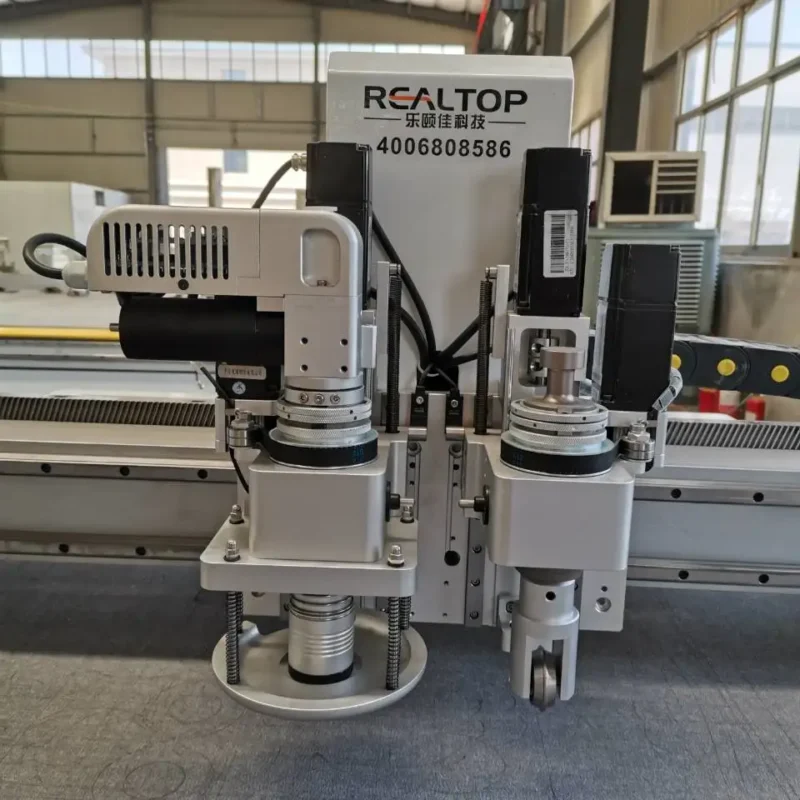
Full Tool Head Range — Specified per material and production volume so buyers match the cutting method to the task, not force one blade through everything from foam to fiberglass.
Technical Specifications
| Parameter | Value |
|---|---|
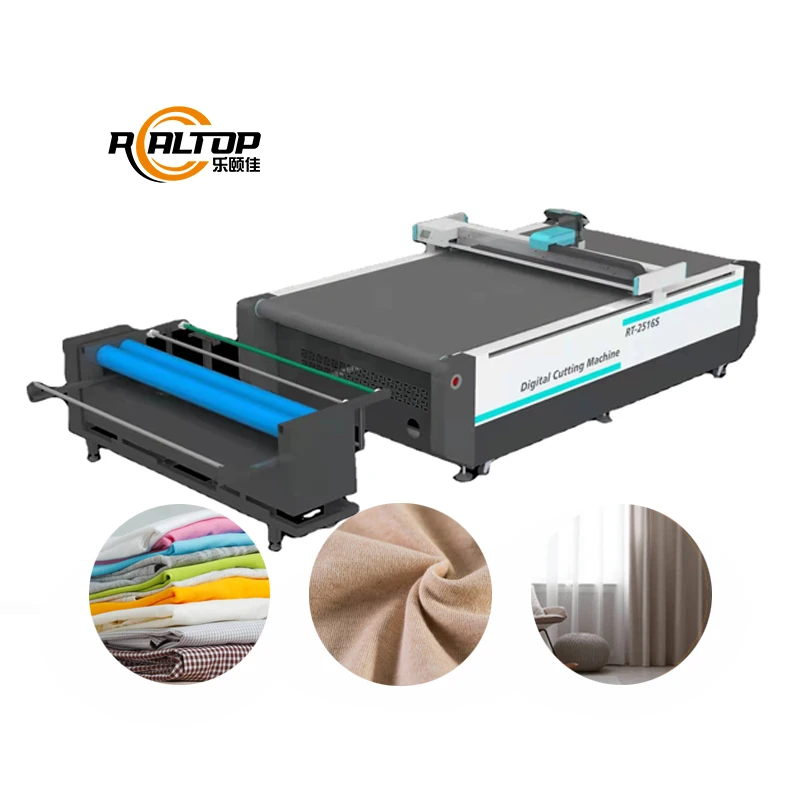
| Model | RT-D2516 / RT-S2516 |
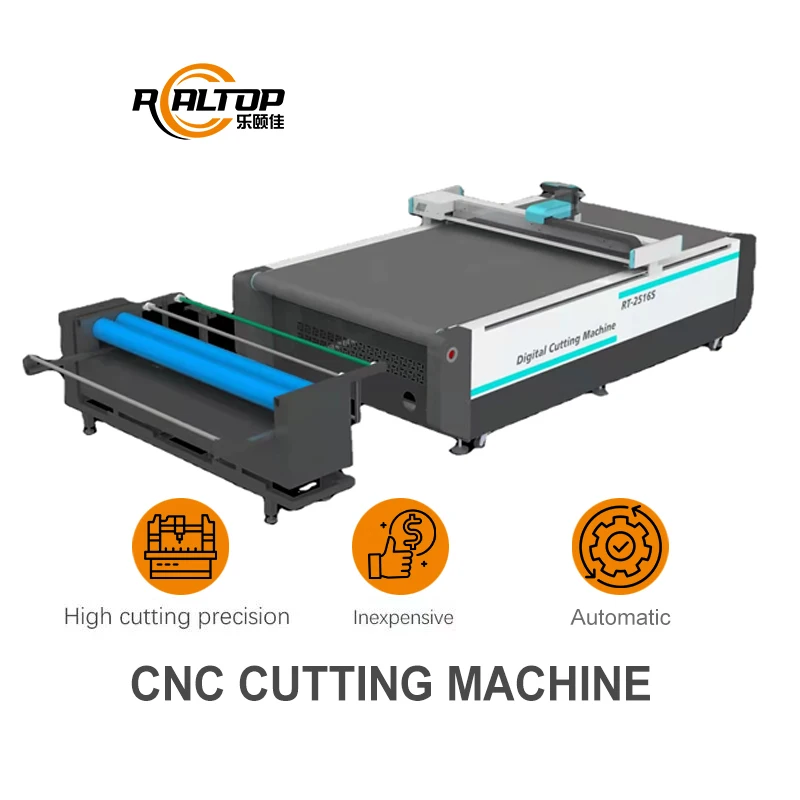
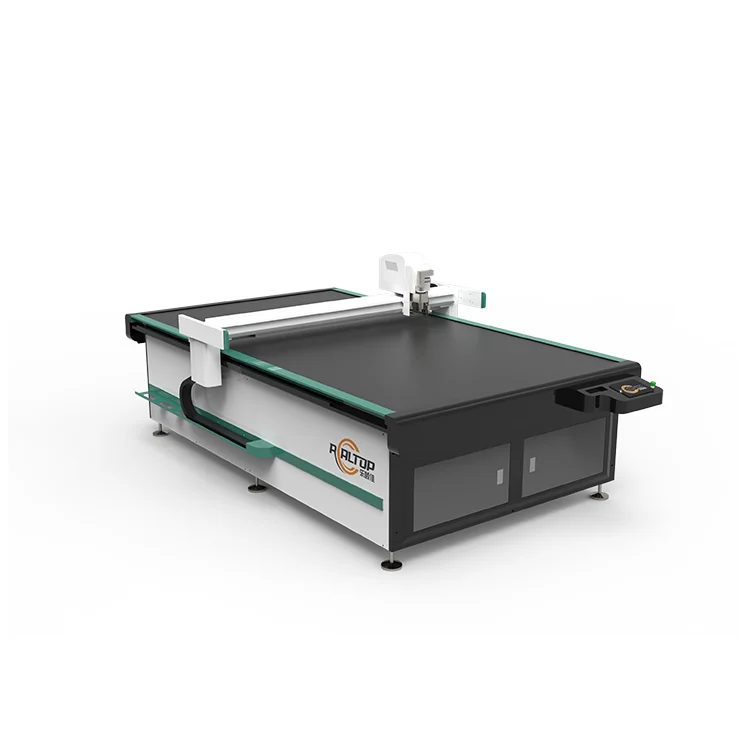
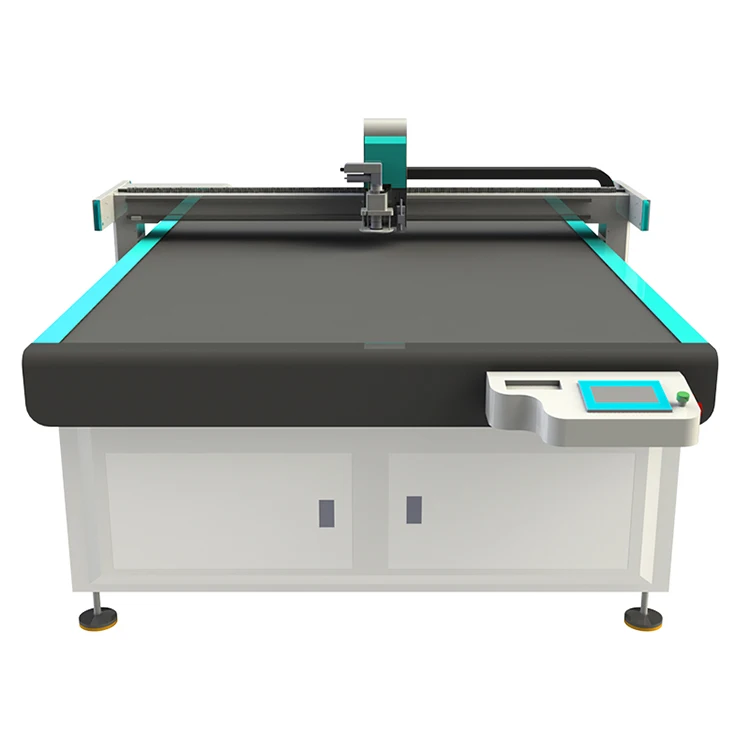
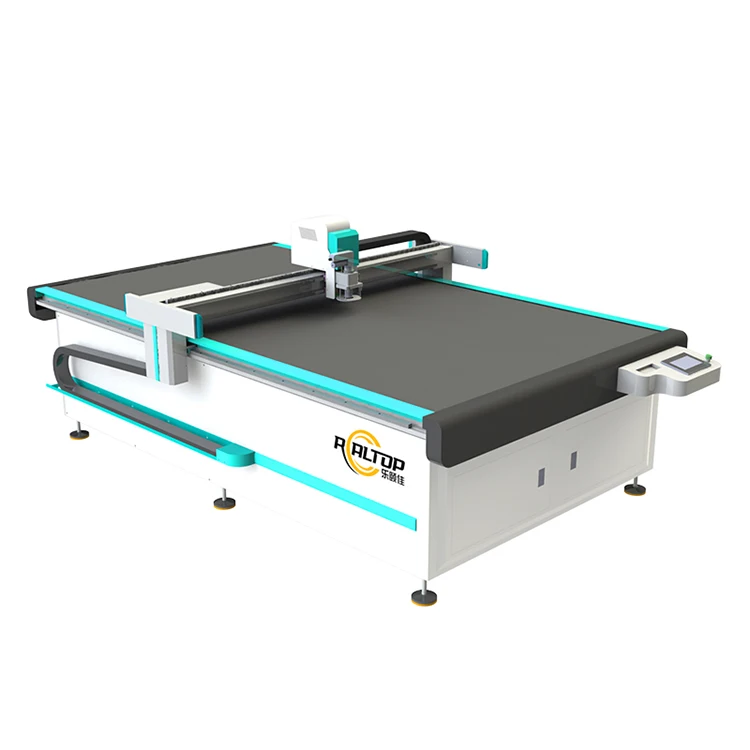
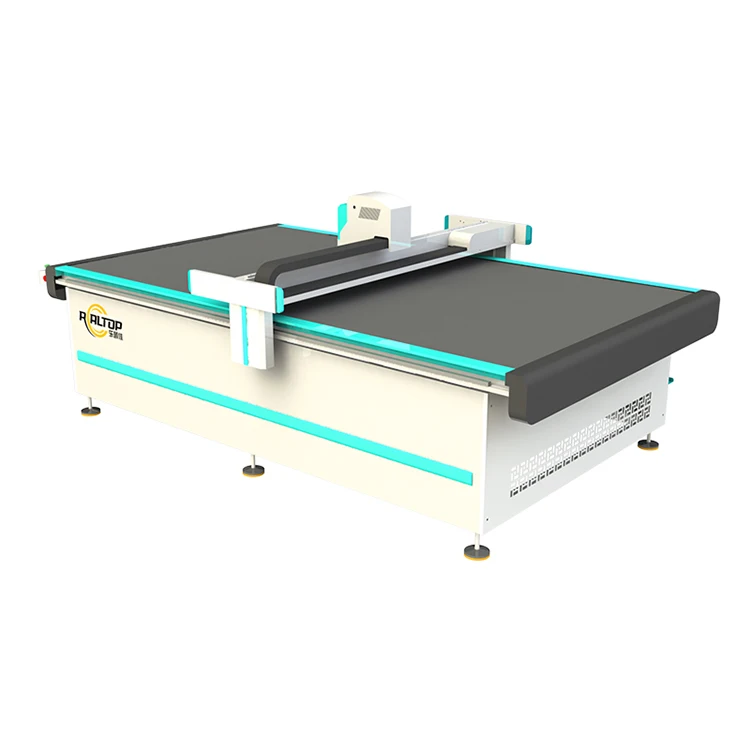
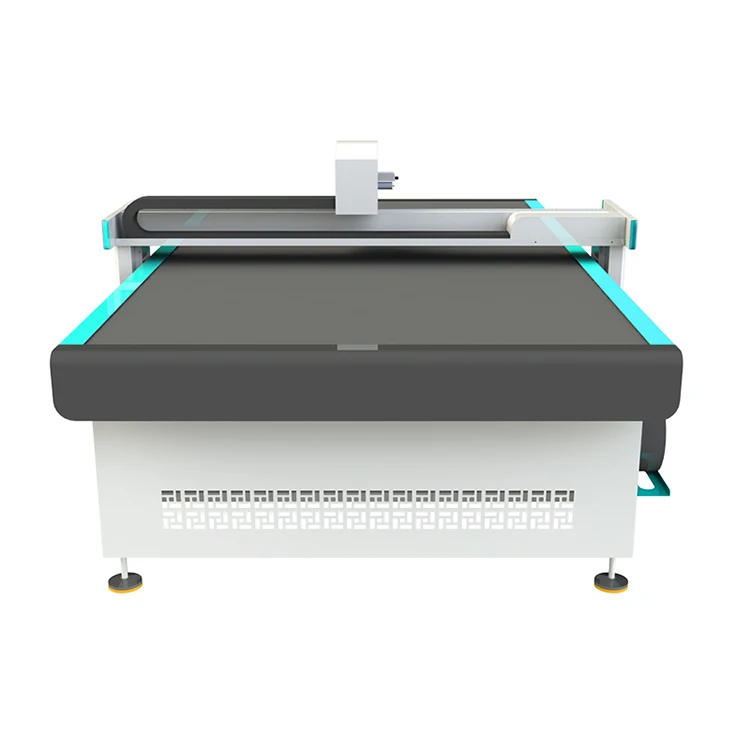
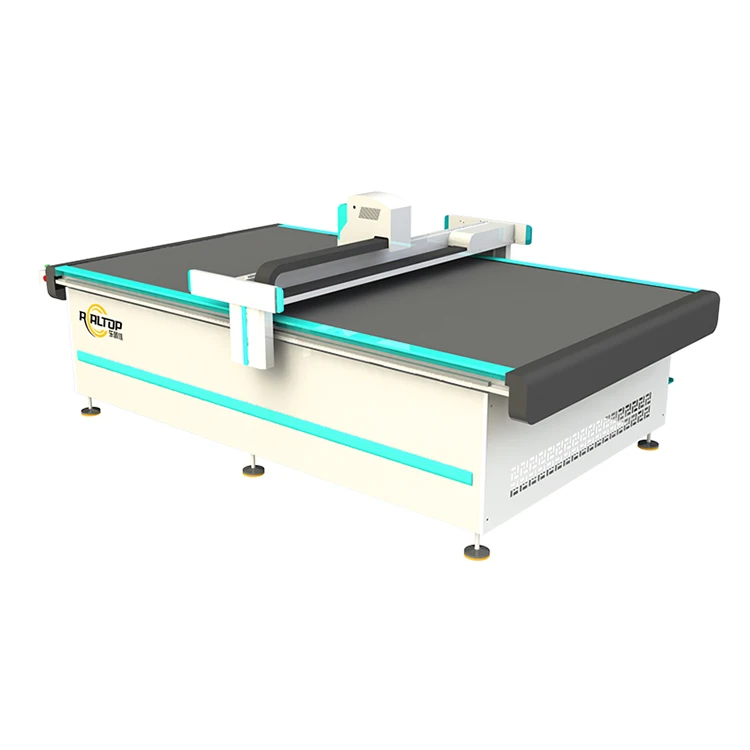
| Product Type | CNC Oscillating Knife Cutting Machine |
| Working Area | 1600 × 2500 mm |
| Overall Dimensions (L×W×H) | 3450 × 2300 × 1250 mm |
| Rated Power | 9 kW |
| Voltage | 380V ±10% (frequency to be confirmed per market) |
| Cutting Thickness Range | 20–80 mm (basis to be confirmed by material type and density) |
| Translational Velocity | 800–1200 mm/s |
| Repeated Accuracy | ≤0.1 mm |
| Control System | CNC with HP-GL compatible instruction format |
| Servo Motor | Delta (optional Panasonic, IP67 waterproof) |
| Transmission System | Digital servo motor, linear guide, synchronous belt, ball screw (imported) |
| Linear Guide | Taiwan Hiwin rail |
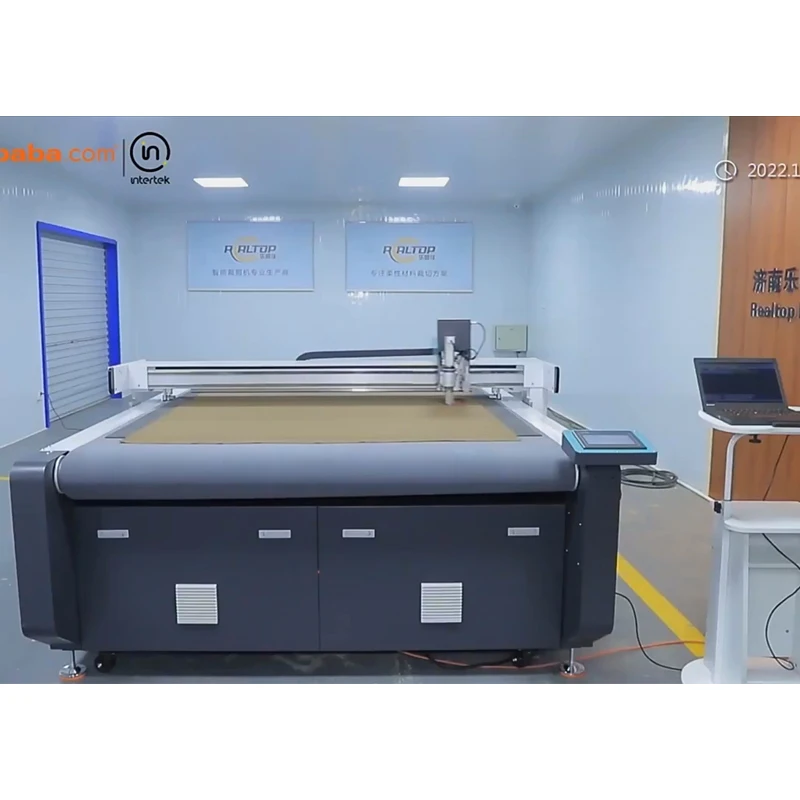
| Vacuum Table | Magnesium-aluminum alloy, PVDF powder spraying, anodic and hard oxidation |
| Vacuum Pump | 7.5 kW |
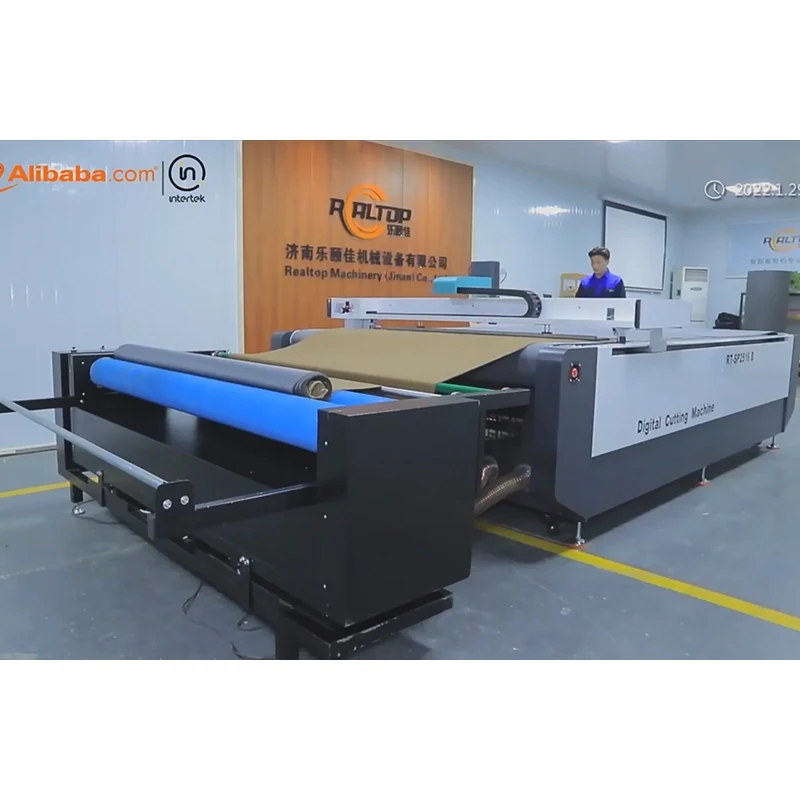
| Feeding System | Auto feeding with Germany imported conveyor belt |
| Tool Head Options | Oscillating knife, pneumatic knife, high-power vibrating knife, circular knife, V-cutting knife, drag knife, creasing wheel, dotted line knife, punching, brush |
| Visual Positioning Options | Small CCD camera mark point, panoramic camera recognition, projection positioning |
| Machine Structure | Thick-walled seamless steel welded frame, high-temperature tempering, CNC machining center finish |
| Safety Device | Infrared sensors, anti-collision on both sides of beam, emergency stop |
| Software Language Options | English, Russian, Italian, Chinese (special languages customizable) |
| Assembly State | Fully assembled |
| Warranty | 1 year with lifetime technical support and parts service |
| Standards | CE declaration (where applicable) |
Application Suitability
| Application | Material or Output |
|---|---|
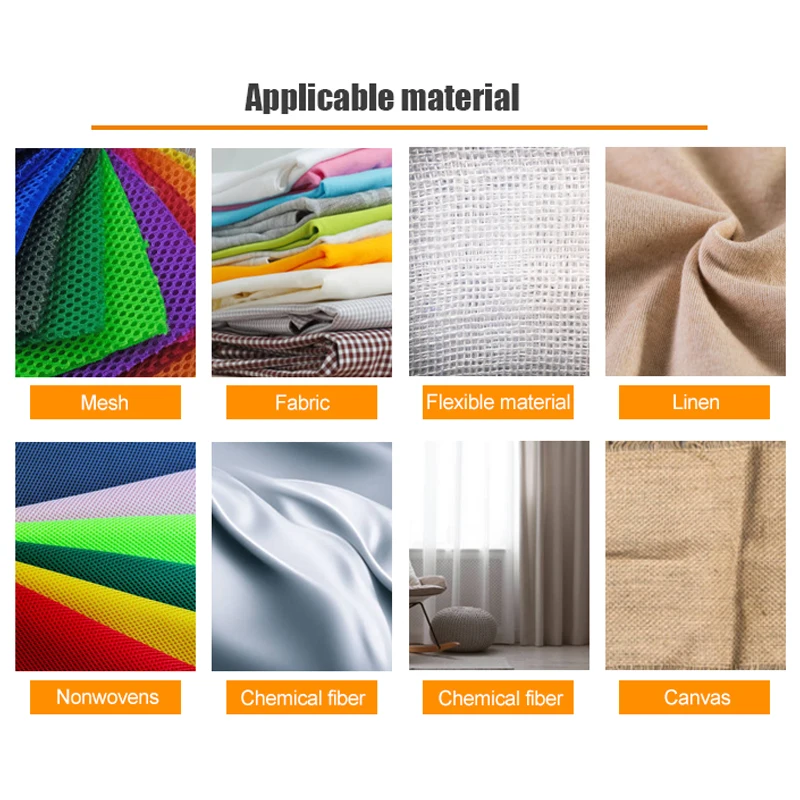
| Garment and footwear production | Clothing cloth, shoe material, leather, non-woven fabric |
| Automotive interior fabrication | PU, EVA, XPE, PVC, carpet, sponge, composite materials |
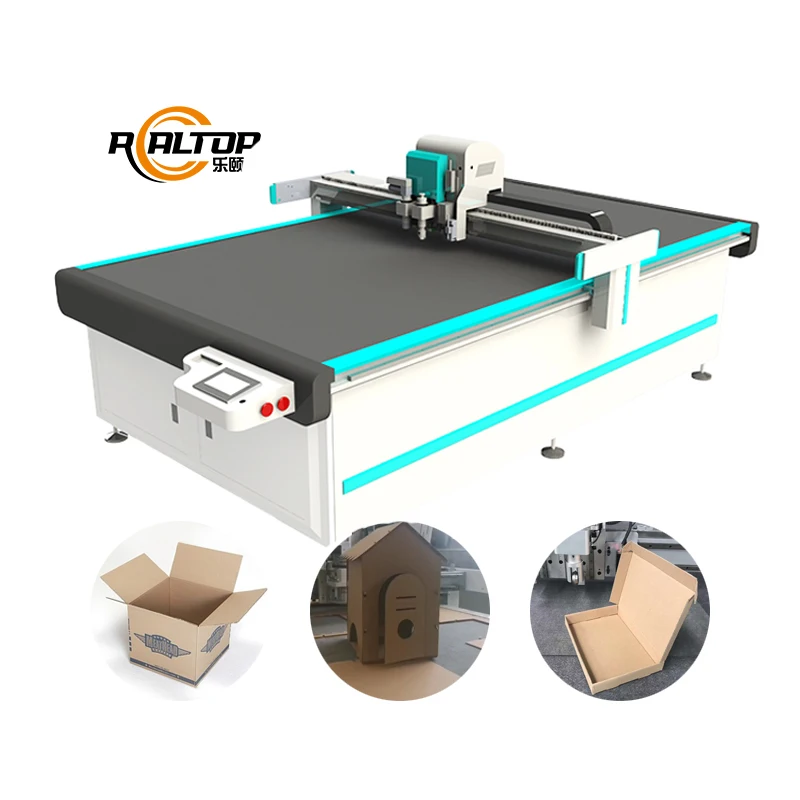
| Packaging and carton sample making | Cardboard, corrugated cardboard, plastic box, fiberglass |
| Advertising and graphic printing | Sticker, film, PVC, PP, PE |
| Sealing and gasket fabrication | Rubber, PTFE, ETFE, foam board |
| Soft home furnishings | Textile, fabric, carpet, floor mats |
| Sports and outdoor products | Composite materials, foam, EVA, luggage material |
Why Specifying a Working Area Is Not Enough
A CNC knife cutting machine manufacturer often quotes a flatbed based on sheet size alone, only for the buyer to discover the tool head cannot handle the actual material density.
The cut quality depends on the tool head, the vacuum hold-down, and the material match — not just the table dimensions.
I have stood in a cutting room in Dhaka where a newly delivered flatbed was supposed to slice through 50 mm EVA foam for shoe soles. The oscillating knife was specified for fabric, not dense foam, and the edge came out crushed. The vacuum zones were too large for the small sole pieces, which lifted during the cut. The downtime was not the machine’s fault; it was the specification’s fault [NEED_CITE: common causes of CNC cutting rejection at delivery]. Sizing the machine without matching the tool head and vacuum zoning to the real material turns an investment into a bottleneck.
Knife Versus Laser: Matching the Process to the Material
Choosing between knife and laser cutting defines the edge quality, the material suitability, and the extraction requirements. An oscillating knife cuts foam, gasket, and thick textile without melting the edge, preserving the material structure. A CO2 laser seals the edge on synthetics and cuts intricate contours on acrylic, but it chars natural fibers and requires extraction. The RT-D2516 and RT-S2516 belong to the knife cutting family, making them the default choice for layered fabric, dense foam, and composite materials where a clean, unfused edge is mandatory. This distinction prevents buyers from forcing one process across incompatible materials.
Visual Positioning for Printed Contour Work
When cutting printed fabric or pre-printed packaging samples, the machine must track the print accurately at production speed. The available visual positioning options span a small CCD camera for discrete mark points, a panoramic camera for full-sheet recognition, and projection positioning for manual alignment. A panoramic camera reads the entire sheet at once, reducing cycle time on high-volume printed textile runs. Projection positioning projects the cut path onto the material, allowing the operator to verify placement before the knife drops. Selecting the right positioning method depends on the print registration marks and the daily volume the shop must push through the CNC knife cutting machine manufacturer range [NEED_CITE: visual positioning accuracy standards in textile cutting].
Reading the Specs That Actually Matter on the Floor
The 7.5 kW vacuum pump paired with a magnesium-aluminum alloy table provides the suction required to hold porous and non-porous materials flat. Magnesium-aluminum resists warping under continuous vacuum load better than standard aluminum or MDF-backed tables. The 20–80 mm cutting thickness range (basis to be confirmed) depends heavily on material density; 80 mm of sponge behaves very differently under the blade than 80 mm of compressed gasket rubber. Translational velocity of 800–1200 mm/s determines how fast the head moves between cuts, but the actual cutting speed drops when the knife engages thick material. The Taiwan Hiwin linear guide and imported ball screw maintain the ≤0.1 mm repeated accuracy over long shifts, preventing cumulative drift that ruins nesting yield on large sheets. A 9 kW rated power draws a dedicated circuit; sharing the line with other heavy equipment risks voltage dips that trip the servo drives.
The Hidden Cost of Wrong Tooling and Zoning
Specifying the wrong tool head produces ragged edges on fabric, crushed foam, or incomplete cuts on dense rubber. When the vacuum table zoning is too coarse for small parts, pieces lift and shift, ruining the cut and risking blade damage. I have seen a gasket producer lose entire sheets of PTFE because the single-zone vacuum could not hold the small seals flat. The cost is not just wasted material; it is the lost shift, the re-order of raw stock, and the credibility hit with the buyer’s own customer [NEED_CITE: material waste ratios in digital cutting operations]. These failures trace back to the configuration conversation that never happened before the order was placed.
Why Source This Range Through the Manufacturer Direct
In-house design covers both knife and laser technologies, so the cutting method is matched to the material rather than forced into one category. Tool head and table configurations are specified per material and production volume, preventing the generic flatbed trap. Sample cutting on the buyer’s own material runs before commitment, showing the edge quality and cycle time on the actual stock. Software compatibility is confirmed against the buyer’s existing HP-GL workflow before the order, avoiding file format dead-ends. Voltage, plug type, and control language are customized and locked in before shipment, so the machine powers up on arrival rather than sitting idle waiting for a transformer.
Documentation & Verification
- Machine specification sheet confirming tool head and table matched to your material and thickness
- Sample cutting report run on your own material stock before order commitment
- Electrical schematic with voltage and frequency confirmed for your target market
- Software licence and file format compatibility note for your existing HP-GL workflow
- Factory test record documenting repeated accuracy and vacuum hold-down before dispatch
- Spare parts list with part numbers for your selected tool head configuration
Installation, Commissioning & Support
- 9 kW rated power requires a dedicated 380V ±10% circuit with confirmed frequency for your market
- Overall dimensions of 3450×2300×1250 mm require floor space plus operator clearance on all sides
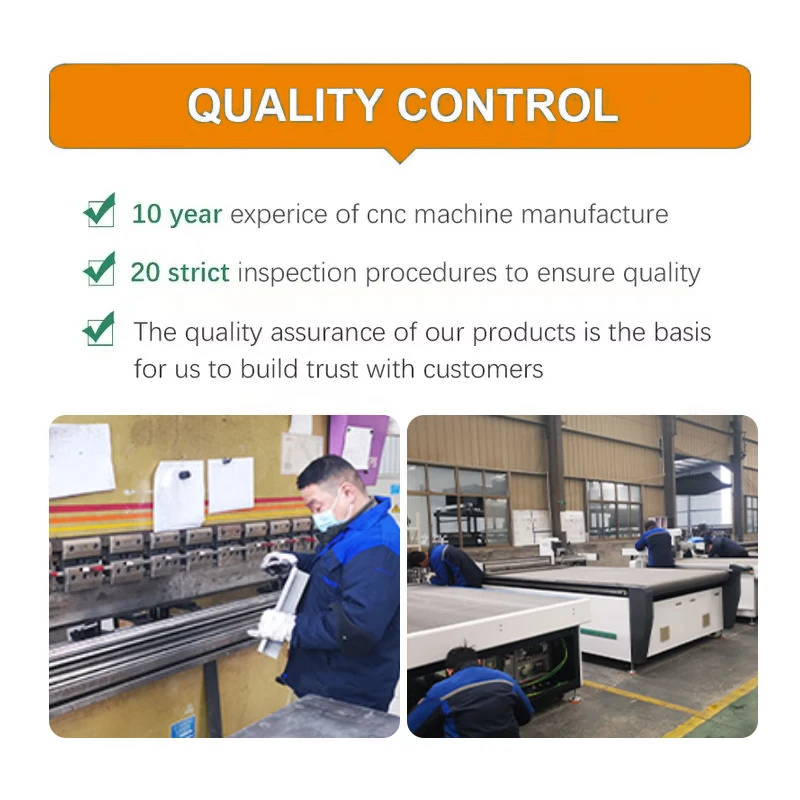
- Machine ships fully assembled; no on-site frame welding or structural bolting required
- First-run parameter setting calibrated to your specific material thickness and tool head selection
- Operator training covers tool head changes, vacuum zoning adjustment, and CCD camera calibration
- Spare oscillating and drag knife blades shipped with the machine to cover initial production runs
Before You Send the Inquiry
Provide the exact material type, density, and maximum thickness you intend to cut, along with the standard sheet size and your daily volume target. Confirm your workshop’s voltage and frequency, and specify the control language your operators require. If your workflow relies on printed contour cutting, state which registration mark system your printer uses so the correct visual positioning option is quoted.
Frequently Asked Questions
Q: How do I decide between knife and laser cutting for my material?
A: Knife cutting suits foam, gasket, thick textile, and composite materials where a clean, unfused edge is required. Laser cutting seals edges on synthetics and handles intricate acrylic work but chars natural fibers. The selection is driven by material composition, edge requirement, and extraction capacity in your workshop, not by machine price.
Q: Which tool head fits my material thickness and edge quality need?
A: Oscillating knives handle thick foam and textile with clean edges. Drag knives suit thin vinyl and sticker. Creasing wheels score cardboard for folding. Pneumatic and high-power vibrating knives address dense rubber and gasket. The correct head is chosen after a sample cut on your actual material.
Q: How do I match machine size to my sheet dimensions and nesting yield?
A: The 1600×2500 mm working area accommodates standard sheets. Nesting yield improves when the sheet fits the table with minimal offcut waste. Conveyor-fed configurations extend the effective cutting length for roll materials, increasing throughput on continuous fabric runs.
Q: Which visual positioning option suits my printed contour workflow?
A: A small CCD camera reads discrete mark points on each piece. A panoramic camera captures the entire sheet at once, reducing cycle time on high-volume runs. Projection positioning lets the operator verify cut placement manually. The choice depends on your print registration system and daily volume.
Q: Can voltage, plug type, and control language be confirmed before shipment?
A: Voltage is configurable within 380V ±10% with frequency confirmed for your market. Plug type and control language — including English, Russian, Italian, Chinese, or custom options — are locked in before production. The electrical schematic is shared for your local electrician’s review prior to dispatch.
Full Tool Head Range — Specified per material and production volume so buyers match the cutting method to the task, not force one blade through everything from foam to fiberglass.
Technical Specifications
| Parameter | Value |
|---|---|
| Model | RT-D2516 / RT-S2516 |
| Product Type | CNC Oscillating Knife Cutting Machine |
| Working Area | 1600 × 2500 mm |
| Overall Dimensions (L×W×H) | 3450 × 2300 × 1250 mm |
| Rated Power | 9 kW |
| Voltage | 380V ±10% (frequency to be confirmed per market) |
| Cutting Thickness Range | 20–80 mm (basis to be confirmed by material type and density) |
| Translational Velocity | 800–1200 mm/s |
| Repeated Accuracy | ≤0.1 mm |
| Control System | CNC with HP-GL compatible instruction format |
| Servo Motor | Delta (optional Panasonic, IP67 waterproof) |
| Transmission System | Digital servo motor, linear guide, synchronous belt, ball screw (imported) |
| Linear Guide | Taiwan Hiwin rail |
| Vacuum Table | Magnesium-aluminum alloy, PVDF powder spraying, anodic and hard oxidation |
| Vacuum Pump | 7.5 kW |
| Feeding System | Auto feeding with Germany imported conveyor belt |
| Tool Head Options | Oscillating knife, pneumatic knife, high-power vibrating knife, circular knife, V-cutting knife, drag knife, creasing wheel, dotted line knife, punching, brush |
| Visual Positioning Options | Small CCD camera mark point, panoramic camera recognition, projection positioning |
| Machine Structure | Thick-walled seamless steel welded frame, high-temperature tempering, CNC machining center finish |
| Safety Device | Infrared sensors, anti-collision on both sides of beam, emergency stop |
| Software Language Options | English, Russian, Italian, Chinese (special languages customizable) |
| Assembly State | Fully assembled |
| Warranty | 1 year with lifetime technical support and parts service |
| Standards | CE declaration (where applicable) |
Application Suitability
| Application | Material or Output |
|---|---|
| Garment and footwear production | Clothing cloth, shoe material, leather, non-woven fabric |
| Automotive interior fabrication | PU, EVA, XPE, PVC, carpet, sponge, composite materials |
| Packaging and carton sample making | Cardboard, corrugated cardboard, plastic box, fiberglass |
| Advertising and graphic printing | Sticker, film, PVC, PP, PE |
| Sealing and gasket fabrication | Rubber, PTFE, ETFE, foam board |
| Soft home furnishings | Textile, fabric, carpet, floor mats |
| Sports and outdoor products | Composite materials, foam, EVA, luggage material |
Why Specifying a Working Area Is Not Enough
A CNC knife cutting machine manufacturer often quotes a flatbed based on sheet size alone, only for the buyer to discover the tool head cannot handle the actual material density.
The cut quality depends on the tool head, the vacuum hold-down, and the material match — not just the table dimensions.
I have stood in a cutting room in Dhaka where a newly delivered flatbed was supposed to slice through 50 mm EVA foam for shoe soles. The oscillating knife was specified for fabric, not dense foam, and the edge came out crushed. The vacuum zones were too large for the small sole pieces, which lifted during the cut. The downtime was not the machine’s fault; it was the specification’s fault [NEED_CITE: common causes of CNC cutting rejection at delivery]. Sizing the machine without matching the tool head and vacuum zoning to the real material turns an investment into a bottleneck.
Knife Versus Laser: Matching the Process to the Material
Choosing between knife and laser cutting defines the edge quality, the material suitability, and the extraction requirements. An oscillating knife cuts foam, gasket, and thick textile without melting the edge, preserving the material structure. A CO2 laser seals the edge on synthetics and cuts intricate contours on acrylic, but it chars natural fibers and requires extraction. The RT-D2516 and RT-S2516 belong to the knife cutting family, making them the default choice for layered fabric, dense foam, and composite materials where a clean, unfused edge is mandatory. This distinction prevents buyers from forcing one process across incompatible materials.
Visual Positioning for Printed Contour Work
When cutting printed fabric or pre-printed packaging samples, the machine must track the print accurately at production speed. The available visual positioning options span a small CCD camera for discrete mark points, a panoramic camera for full-sheet recognition, and projection positioning for manual alignment. A panoramic camera reads the entire sheet at once, reducing cycle time on high-volume printed textile runs. Projection positioning projects the cut path onto the material, allowing the operator to verify placement before the knife drops. Selecting the right positioning method depends on the print registration marks and the daily volume the shop must push through the CNC knife cutting machine manufacturer range [NEED_CITE: visual positioning accuracy standards in textile cutting].
Reading the Specs That Actually Matter on the Floor
The 7.5 kW vacuum pump paired with a magnesium-aluminum alloy table provides the suction required to hold porous and non-porous materials flat. Magnesium-aluminum resists warping under continuous vacuum load better than standard aluminum or MDF-backed tables. The 20–80 mm cutting thickness range (basis to be confirmed) depends heavily on material density; 80 mm of sponge behaves very differently under the blade than 80 mm of compressed gasket rubber. Translational velocity of 800–1200 mm/s determines how fast the head moves between cuts, but the actual cutting speed drops when the knife engages thick material. The Taiwan Hiwin linear guide and imported ball screw maintain the ≤0.1 mm repeated accuracy over long shifts, preventing cumulative drift that ruins nesting yield on large sheets. A 9 kW rated power draws a dedicated circuit; sharing the line with other heavy equipment risks voltage dips that trip the servo drives.
The Hidden Cost of Wrong Tooling and Zoning
Specifying the wrong tool head produces ragged edges on fabric, crushed foam, or incomplete cuts on dense rubber. When the vacuum table zoning is too coarse for small parts, pieces lift and shift, ruining the cut and risking blade damage. I have seen a gasket producer lose entire sheets of PTFE because the single-zone vacuum could not hold the small seals flat. The cost is not just wasted material; it is the lost shift, the re-order of raw stock, and the credibility hit with the buyer’s own customer [NEED_CITE: material waste ratios in digital cutting operations]. These failures trace back to the configuration conversation that never happened before the order was placed.
Why Source This Range Through the Manufacturer Direct
In-house design covers both knife and laser technologies, so the cutting method is matched to the material rather than forced into one category. Tool head and table configurations are specified per material and production volume, preventing the generic flatbed trap. Sample cutting on the buyer’s own material runs before commitment, showing the edge quality and cycle time on the actual stock. Software compatibility is confirmed against the buyer’s existing HP-GL workflow before the order, avoiding file format dead-ends. Voltage, plug type, and control language are customized and locked in before shipment, so the machine powers up on arrival rather than sitting idle waiting for a transformer.
Documentation & Verification
- Machine specification sheet confirming tool head and table matched to your material and thickness
- Sample cutting report run on your own material stock before order commitment
- Electrical schematic with voltage and frequency confirmed for your target market
- Software licence and file format compatibility note for your existing HP-GL workflow
- Factory test record documenting repeated accuracy and vacuum hold-down before dispatch
- Spare parts list with part numbers for your selected tool head configuration
Installation, Commissioning & Support
- 9 kW rated power requires a dedicated 380V ±10% circuit with confirmed frequency for your market
- Overall dimensions of 3450×2300×1250 mm require floor space plus operator clearance on all sides
- Machine ships fully assembled; no on-site frame welding or structural bolting required
- First-run parameter setting calibrated to your specific material thickness and tool head selection
- Operator training covers tool head changes, vacuum zoning adjustment, and CCD camera calibration
- Spare oscillating and drag knife blades shipped with the machine to cover initial production runs
Before You Send the Inquiry
Provide the exact material type, density, and maximum thickness you intend to cut, along with the standard sheet size and your daily volume target. Confirm your workshop’s voltage and frequency, and specify the control language your operators require. If your workflow relies on printed contour cutting, state which registration mark system your printer uses so the correct visual positioning option is quoted.
Frequently Asked Questions
Q: How do I decide between knife and laser cutting for my material?
A: Knife cutting suits foam, gasket, thick textile, and composite materials where a clean, unfused edge is required. Laser cutting seals edges on synthetics and handles intricate acrylic work but chars natural fibers. The selection is driven by material composition, edge requirement, and extraction capacity in your workshop, not by machine price.
Q: Which tool head fits my material thickness and edge quality need?
A: Oscillating knives handle thick foam and textile with clean edges. Drag knives suit thin vinyl and sticker. Creasing wheels score cardboard for folding. Pneumatic and high-power vibrating knives address dense rubber and gasket. The correct head is chosen after a sample cut on your actual material.
Q: How do I match machine size to my sheet dimensions and nesting yield?
A: The 1600×2500 mm working area accommodates standard sheets. Nesting yield improves when the sheet fits the table with minimal offcut waste. Conveyor-fed configurations extend the effective cutting length for roll materials, increasing throughput on continuous fabric runs.
Q: Which visual positioning option suits my printed contour workflow?
A: A small CCD camera reads discrete mark points on each piece. A panoramic camera captures the entire sheet at once, reducing cycle time on high-volume runs. Projection positioning lets the operator verify cut placement manually. The choice depends on your print registration system and daily volume.
Q: Can voltage, plug type, and control language be confirmed before shipment?
A: Voltage is configurable within 380V ±10% with frequency confirmed for your market. Plug type and control language — including English, Russian, Italian, Chinese, or custom options — are locked in before production. The electrical schematic is shared for your local electrician’s review prior to dispatch.
商品评价
There are no reviews yet.