


Fast Delivery
Quick, reliable shipping to any location.

Free & easy returns
Return this item by mail or in store within 90 days for a full refund.
Full Catalogue Coverage — oscillating knife and carton digital cutting machines mapped to material type, thickness range and production volume before you commit to a working area or tool head.
Technical Specifications
| Parameter | Value |
|---|---|
| Model | RT–R2513 (variants: RT-D2516 / RT-S2516) |
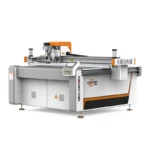
| Product Type | CNC Oscillating Knife Digital Cutting Machine |
| Working Area | 2500×1300 mm (variant: 1600×2500 mm) |
| Machine Size | 3550×1910×1400 mm (variant: 3450×2300×1250 mm) |
| Cutting Tools | Oscillating knife, Creasing tool, Kiss-Cut Knife Tool, Round punch |
| Cutting Thickness | ≤18 mm (basis to be confirmed by material type) |
| Repeated Accuracy | <0.05 mm |
| Vacuum System | Aluminum alloy honeycomb platform with zoned adsorption |
| Servo Motor | Dongling servo (Delta servo option available) |
| Transmission | Rack transmission with imported straight-line square guide |
| Rated Power | 9 kW |
| Voltage | 380 V (frequency to be confirmed for target market) |
| Vacuum Pump | 7.5 kW |
| Cutting Bed Belt | Wear-resistant anti-pull felt (composite fiber) |
| Profile Formats | DXF, OLT, PDF, AI |
| Control Language | English, Russian, Italian, Chinese (customizable) |
| Safety Device | Infrared sensors |
| Blade Supply | 10 pieces of oscillating blades included |
| Delivery Time | <30 working days |
Application Suitability
| Application | Material or Output |
|---|---|
| Packaging carton and corrugated box sample making | Single-face and double-wall corrugated board up to 18 mm |
| Short-run corrugated box production | Standard and custom flute profiles with creasing and kiss-cut |
| Sticker and label contour cutting | Vinyl, PP paper and adhesive-backed label stock |
| Cardboard point-of-sale display production | Honeycomb cardboard, greyboard and foam board |
| Leather and flexible material cutting for inserts | Genuine leather, PU and synthetic hide for packaging padding |
Why "Working Area Only" Specification Fails Packaging Producers
Selecting a CNC oscillating knife cutting machine for sale based on table size alone leaves critical variables undefined — material density, flute count and moisture content all change how the blade interacts with the board at production speed. The cutting method must match the material specification, not just the sheet footprint.
I once saw a buyer choose a 2500×1300 mm table assuming it would handle five-layer corrugated at full speed. The high moisture content in that board caused the vacuum to lose grip on small offcuts, and the oscillating knife dragged rather than sliced through the damp inner liner. The fix required re-zoning the vacuum table and switching to a higher-frequency blade oscillation, changes that should have been specified during inquiry rather than discovered on the shop floor [NEED_CITE: vacuum table zoning requirements for corrugated board with variable moisture content].
Tool Head Configuration Across the Model Range
Each machine in this family supports multiple tool heads on a single gantry: oscillating knife for through-cutting corrugated and foam board, creasing wheel for fold lines on carton stock, kiss-cut knife for adhesive label contours and round punch for ventilation or hanging holes. The combination you select determines whether a carton sample is finished in one pass or requires secondary bench work.
A CNC oscillating knife cutting machine for sale in the RT–R2513 configuration carries all four tool positions, allowing packaging sample makers to cut, crease and punch a display box without re-fixturing the sheet. This is relevant when evaluating throughput for short-run carton work where each job involves a different dieline.
Conveyor and Auto-Feeding Variants
The RT–R2513 supports an optional Germany-imported conveyor belt with auto-feeding, converting the flatbed from manual-load sample making into a continuous-feed short-run system. For corrugated producers running repeat carton formats across a shift, this removes the sheet-loading bottleneck and lets the operator manage the offload side instead.
Manual-load configurations suit sample rooms and design studios where every sheet is a different dieline. Auto-feeding configurations suit short-run production floors where the same box format repeats for hours. The decision point is daily volume and job-change frequency rather than working area [NEED_CITE: continuous feed versus manual load decision factors in carton digital cutting].
Reading the Specs That Affect Edge Quality
The <0.05 mm repeated accuracy figure depends on the rack transmission and imported linear square guide working together — rack-and-pinion drive eliminates the belt stretch that degrades positional accuracy over long cutting paths, and the square guide profile resists lateral deflection when the oscillating knife encounters dense double-wall flute.
Cutting thickness of ≤18 mm is a maximum envelope; actual clean-cut depth depends on flute profile and board density. A B-flute single-wall cuts cleanly at full speed while a BC-flute double-wall at the same thickness may require a slower feed rate to avoid crushing the inner liner. The 7.5 kW vacuum pump paired with the aluminum honeycomb platform holds the board flat across the full 2500×1300 mm area, but vacuum zoning must be specified to match the smallest offcut size in your typical dieline.
Software compatibility with DXF, OLT, PDF and AI means most packaging design workflows import without intermediate conversion. The professional carton nesting software optimizes sheet yield before the file reaches the machine controller, and the multi-language interface supports operators across different export markets without requiring English proficiency at the control panel.
The Hidden Cost of Wrong Zoning and Voltage
Undersized vacuum zoning causes small carton offcuts to lift during the final cut passes, producing ragged edges that fail the sample approval. This is not a machine fault but a configuration mismatch between the vacuum zone grid and the dieline geometry, and it only appears once production begins [NEED_CITE: vacuum zone sizing relative to minimum offcut dimension].
Voltage and frequency mismatches cause the servo motors to run at incorrect speed or overheat during extended shifts. A 380 V machine specified without confirming the target market’s Hz rating will perform differently in a 50 Hz region versus a 60 Hz region, affecting both cutting speed and vacuum pump output. These specifications must be locked before production starts, not adjusted after delivery.
What You Verify Before Shipment
In-house design covers both knife and laser cutting technologies, so the cutting method is matched to your material rather than forced into one method. Tool head and table configuration are specified per your material type and production volume based on sample cutting results.
CCD camera positioning is available within the product family for printed contour work on sticker and label stock, though this must be confirmed as part of the configuration rather than assumed across all models. Software compatibility with your existing file format and nesting workflow is verified before the order enters production.
Voltage, plug type and control language are confirmed in writing before shipment, eliminating the need for on-site electrical modification or interface translation after arrival.
Documentation & Verification
- Machine specification sheet confirming working area, tool head list and cutting thickness per material
- Electrical schematic with voltage and frequency locked to your facility supply
- Tool head and vacuum table configuration list matched to your dieline geometry
- Sample cutting report on your corrugated board stock before order confirmation
- Software licence with confirmed DXF, OLT, PDF and AI file format compatibility
- Packing photographs showing assembly state and blade inventory before dispatch
Installation, Commissioning & Support
- Foundation must support 3550×1910 mm footprint with level tolerance for the aluminum honeycomb platform
- Dedicated 380 V circuit required for the 9 kW rated load plus 7.5 kW vacuum pump
- Machine ships fully assembled; confirm site access dimensions before delivery
- First-run calibration of oscillating knife depth against your specific board flute profile
- Operator training on nesting software and tool head changeover included at commissioning
- Ten oscillating blades and felt belt documented as initial spare parts inventory
What to Share With Your Inquiry
To match the right model from this catalogue, provide the material type and flute profile you cut most often, the maximum sheet size and thickness, and your typical daily volume by carton format. Include your facility voltage and frequency, preferred control language, and whether your workflow currently uses DXF or AI dieline files. If your board stock has variable moisture content, send a sample for cutting before configuration is finalized.
Frequently Asked Questions
Q: How do I match working area and tool head to my carton volume?
A: Working area should accommodate your largest dieline with margin for vacuum sealing at the edges. Tool head selection depends on whether you need creasing, kiss-cut or punch in addition to through-cutting. For short-run carton production with repeat formats, auto-feeding on a larger table reduces per-sheet handling time compared to manual load on a compact model.
Q: Which tool handles which packaging job?
A: The oscillating knife through-cuts corrugated board and foam. The creasing wheel scores fold lines without cutting through the liner. The kiss-cut knife cuts adhesive label contours without penetrating the backing paper. The round punch creates ventilation or hanging holes. Most carton dielines require oscillating knife plus creasing wheel in one pass.
Q: Is CCD camera contour recognition available across the range?
A: CCD positioning is available within the product family for printed sticker and label contour cutting, but it must be specified during configuration. Not every model in the range carries CCD as standard. Confirm this requirement during inquiry so the correct gantry and camera mount are included in your build.
Q: What voltage and language options are available for export?
A: The standard configuration is 380 V with frequency to be confirmed for your market. Control language options include English, Russian, Italian and Chinese, with other languages customizable. Voltage and plug type must be confirmed before production to avoid on-site modification after delivery.
Q: When should I choose auto-feeding over manual load?
A: Auto-feeding suits short-run production where the same carton format repeats across a shift and sheet volume justifies continuous feed. Manual load suits sample rooms where each sheet is a different dieline and job-change frequency is high. The decision depends on daily volume and format repetition rather than working area alone.










商品评价
There are no reviews yet.