


Fast Delivery
Quick, reliable shipping to any location.

Free & easy returns
Return this item by mail or in store within 90 days for a full refund.
Turret Tooling Versus Knife or Laser — the RT-A2 handles perforation patterns on leather and synthetics where oscillating blades and CO2 beams cannot achieve clean, high-density hole arrays without edge burn or material distortion.
Technical Specifications
| Parameter | Value |
|---|---|
| Model | RT-A2 |
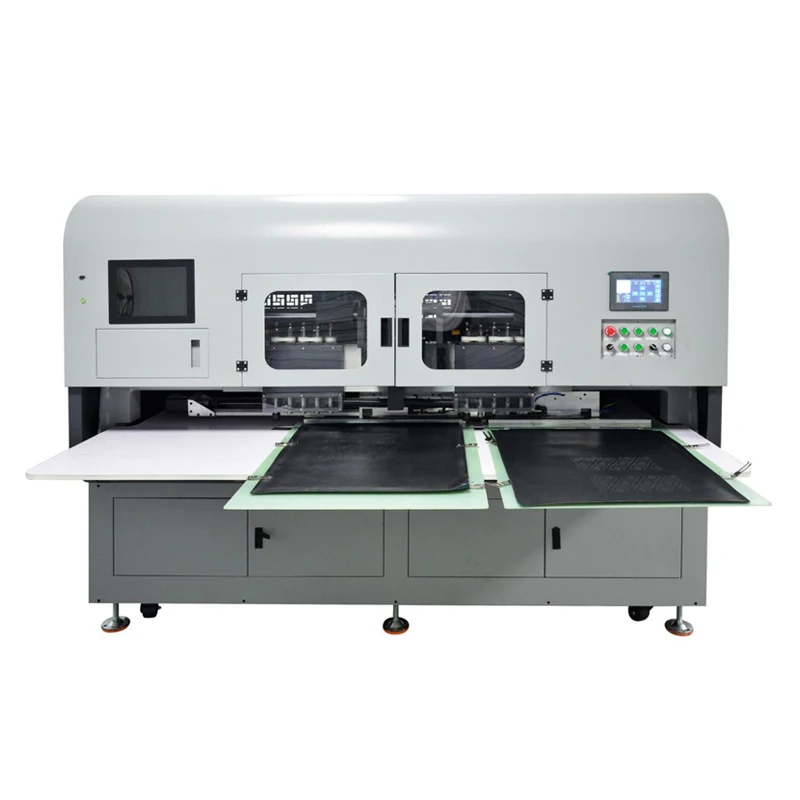
| Product Type | CNC Turret Leather Punching Machine |
| Punching Speed | 900 holes/min (basis not stated in source — confirm hole size, material, thickness) |
| Punching Area | 600 × 500 mm |
| Material Thickness Range | 1 – 6 mm |
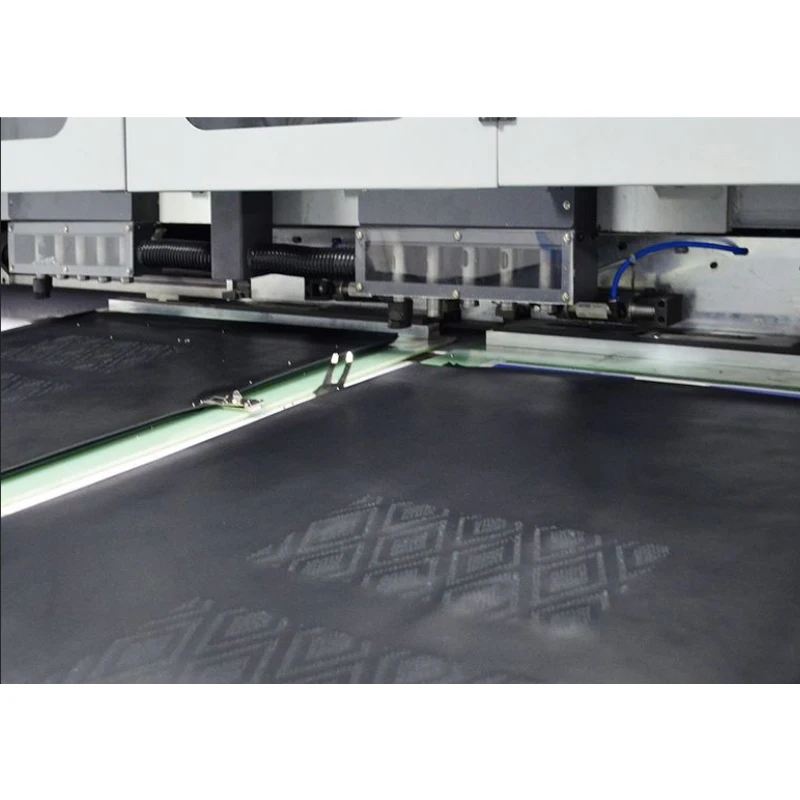
| Pore Size Range | 0.8 – 12 mm |
| Punching Accuracy | ±0.1 mm |
| Equipment Tolerance | ±0.02 mm |
| Punch Jig Options | 12 optional jigs |
| Control System | NC system with smart cutter function |
| Rated Power | 1.5 kW |
| Voltage & Frequency | 220V, 50/60Hz |
| Compressed Air Pressure | 5 – 6 bar |
| Overall Dimensions (L × W × H) | 1800 × 1510 × 1600 mm |
| Net Weight | 1000 kg |
| Dust Collection | Independent dust collecting system |
| Auxiliary Functions | Leather positioning and laying, break-point memory |
Application Suitability
| Application | Material or Output |
|---|---|
| Automotive seat and headrest perforation | Natural and synthetic leather hides, 1–6 mm thickness |
| Steering wheel cover hole patterns | PU and PVC leather, micro-perforation for grip and ventilation |
| Shoe upper and leather bag perforation | Split leather, corrected grain, and bonded leather panels |
| Sofa and upholstery panel punching | Full-grain and top-grain hides for decorative and ventilation holes |
| Dedicated punching workshops | Mixed synthetic and natural leather batches for contract perforation work |
Why Material Thickness Decides the Punching Method Before Anything Else
A CNC leather punching machine manufacturer gets asked about speed first, but the real question is whether the material thickness sits inside the machine’s effective range. The RT-A2 covers 1 to 6 mm, which handles most automotive and footwear leather stocks, but thicker gasket materials or multi-layer bonded panels fall outside this envelope. Buyers who skip the thickness check end up with incomplete punch-through on the bottom ply or excessive burr on the exit side [NEED_CITE: material thickness and punch penetration relationship in leather processing].
When I visited footwear factories in South Asia, the most common failure was not the machine itself but the hide being fed at the wrong thickness for the selected jig diameter. A 0.8 mm pore on 6 mm stock behaves very differently from the same pore on 1.5 mm stock. Confirming thickness before selecting pore size and jig combination avoids scrapped batches and damaged tooling.
Matching Pore Size to the Production Job
The 0.8 to 12 mm pore range across 12 optional jigs covers decorative micro-perforation on steering wheel covers through to ventilation holes on car seat panels. Smaller pore sizes on thin leather produce clean through-holes, while larger diameters on thicker stock require higher punch force and may leave exit-side deformation if the die clearance is not matched to material density. A CNC leather punching machine manufacturer should confirm the buyer’s target pore size against the actual hide before locking in the jig set.
Break-Point Memory and Dust Control in Daily Production
The break-point memory function lets the operator resume an interrupted punching run without losing position reference, which matters when a single hide contains hundreds of holes and a power interruption mid-cycle would otherwise waste the entire piece. The independent dust collecting system keeps leather particles off the work platform, preventing debris from interfering with the positioning pins and reducing the frequency of jig cleaning between batches [NEED_CITE: leather dust accumulation effects on CNC punching accuracy].
How Punching Area and Tolerance Shape the Layout
The 600 × 500 mm punching area accommodates most shoe upper panels and automotive trim pieces in a single setup. The ±0.1 mm punching accuracy ensures hole patterns align with downstream stitching or riveting operations, while the ±0.02 mm equipment tolerance on the turret mechanism keeps repeat positions consistent across long production runs. For upholstery hides that exceed the working area, the leather positioning and laying function allows sequential repositioning with registered reference points.
What Happens When Voltage and Air Pressure Are Overlooked
The RT-A2 runs on 220V at 50 or 60 Hz with a 1.5 kW rated power draw and requires 5 to 6 bar compressed air. Buyers in regions with unstable grid supply or 110V standard installations face motor stalling or solenoid misfire if voltage is not confirmed before shipment. Insufficient air pressure produces shallow or incomplete punches, particularly on denser leather grades, and accelerates jig wear [NEED_CITE: compressed air pressure stability in pneumatic punching systems].
Why Sourcing From a Specialist Matters
The equipment range includes punching, oscillating knife, and laser options, so the cutting method is matched to the material rather than forced into one technology. Tool head and jig configurations are specified per material type and production volume. Sample punching on the buyer’s own leather stock is available before order commitment, so pore quality and edge condition are verified on the actual hide. Voltage, plug type, and control language customization are confirmed at quotation stage. Software file format compatibility for the NC system is documented before dispatch.
Documentation & Verification
- Machine specification sheet confirming punching area, thickness range, and pore size for your leather stock
- Sample punching report produced on your own material with measured accuracy values
- Electrical schematic with voltage and frequency matched to your facility supply
- Software licence and file format compatibility note for the NC control system
- Factory test record showing turret indexing and jig alignment before dispatch
- CE declaration where applicable to your import market requirements
Installation, Commissioning & Support
- Floor loading assessment for the 1000 kg net weight and 1800 × 1510 mm footprint
- Dedicated 220V circuit with correct breaker rating for the 1.5 kW motor draw
- Compressed air line rated to 6 bar with inline filtration for solenoid protection
- First-run parameter setting on your leather thickness and pore size combination
- Operator training on jig changeover across the 12 optional punch positions
- Break-point memory procedure walkthrough for interrupted cycle recovery
What to Include in Your Inquiry
Provide the leather type, thickness range, and target pore sizes so the jig set can be matched before quotation. Confirm your facility voltage, frequency, and available compressed air pressure. Share a sample hole pattern file or drawing so the NC system compatibility can be verified against your existing workflow before production scheduling begins.
Frequently Asked Questions
Q: How do punching, knife cutting, and laser compare for leather perforation?
A: Punching produces clean through-holes with mechanical force, suitable for high-density patterns on leather up to 6 mm. Oscillating knife cutting handles contour shapes and edge trimming but cannot punch small holes at speed. Laser cutting seals synthetic edges but can leave burn marks on natural leather and struggles with thick hides. The method depends on hole size, pattern density, and material type.
Q: Can the voltage and control language be configured for my market?
A: The RT-A2 is specified at 220V, 50/60Hz and can be confirmed against your local supply standard before production. Control language options and plug type are documented at quotation stage. Buyers in 110V or three-phase regions should confirm compatibility requirements during inquiry so electrical components are sourced accordingly.
Q: What happens if I need to test my own leather before ordering?
A: Sample punching on your specific leather stock is arranged before order commitment. The test confirms pore edge quality, punch-through completeness, and positioning accuracy on your actual material. Results are documented in a sample report shared with the buyer for review before production scheduling.
Q: How do I know the punching area is sufficient for my panels?
A: The 600 × 500 mm area covers most shoe uppers, automotive trim pieces, and upholstery panels. For larger hides, the leather positioning and laying function allows sequential repositioning with registered reference points. Share your largest panel dimensions during inquiry so layout feasibility can be confirmed.
Turret Tooling Versus Knife or Laser — the RT-A2 handles perforation patterns on leather and synthetics where oscillating blades and CO2 beams cannot achieve clean, high-density hole arrays without edge burn or material distortion.
Technical Specifications
| Parameter | Value |
|---|---|
| Model | RT-A2 |
| Product Type | CNC Turret Leather Punching Machine |
| Punching Speed | 900 holes/min (basis not stated in source — confirm hole size, material, thickness) |
| Punching Area | 600 × 500 mm |
| Material Thickness Range | 1 – 6 mm |
| Pore Size Range | 0.8 – 12 mm |
| Punching Accuracy | ±0.1 mm |
| Equipment Tolerance | ±0.02 mm |
| Punch Jig Options | 12 optional jigs |
| Control System | NC system with smart cutter function |
| Rated Power | 1.5 kW |
| Voltage & Frequency | 220V, 50/60Hz |
| Compressed Air Pressure | 5 – 6 bar |
| Overall Dimensions (L × W × H) | 1800 × 1510 × 1600 mm |
| Net Weight | 1000 kg |
| Dust Collection | Independent dust collecting system |
| Auxiliary Functions | Leather positioning and laying, break-point memory |
Application Suitability
| Application | Material or Output |
|---|---|
| Automotive seat and headrest perforation | Natural and synthetic leather hides, 1–6 mm thickness |
| Steering wheel cover hole patterns | PU and PVC leather, micro-perforation for grip and ventilation |
| Shoe upper and leather bag perforation | Split leather, corrected grain, and bonded leather panels |
| Sofa and upholstery panel punching | Full-grain and top-grain hides for decorative and ventilation holes |
| Dedicated punching workshops | Mixed synthetic and natural leather batches for contract perforation work |
Why Material Thickness Decides the Punching Method Before Anything Else
A CNC leather punching machine manufacturer gets asked about speed first, but the real question is whether the material thickness sits inside the machine’s effective range. The RT-A2 covers 1 to 6 mm, which handles most automotive and footwear leather stocks, but thicker gasket materials or multi-layer bonded panels fall outside this envelope. Buyers who skip the thickness check end up with incomplete punch-through on the bottom ply or excessive burr on the exit side [NEED_CITE: material thickness and punch penetration relationship in leather processing].
When I visited footwear factories in South Asia, the most common failure was not the machine itself but the hide being fed at the wrong thickness for the selected jig diameter. A 0.8 mm pore on 6 mm stock behaves very differently from the same pore on 1.5 mm stock. Confirming thickness before selecting pore size and jig combination avoids scrapped batches and damaged tooling.
Matching Pore Size to the Production Job
The 0.8 to 12 mm pore range across 12 optional jigs covers decorative micro-perforation on steering wheel covers through to ventilation holes on car seat panels. Smaller pore sizes on thin leather produce clean through-holes, while larger diameters on thicker stock require higher punch force and may leave exit-side deformation if the die clearance is not matched to material density. A CNC leather punching machine manufacturer should confirm the buyer’s target pore size against the actual hide before locking in the jig set.
Break-Point Memory and Dust Control in Daily Production
The break-point memory function lets the operator resume an interrupted punching run without losing position reference, which matters when a single hide contains hundreds of holes and a power interruption mid-cycle would otherwise waste the entire piece. The independent dust collecting system keeps leather particles off the work platform, preventing debris from interfering with the positioning pins and reducing the frequency of jig cleaning between batches [NEED_CITE: leather dust accumulation effects on CNC punching accuracy].
How Punching Area and Tolerance Shape the Layout
The 600 × 500 mm punching area accommodates most shoe upper panels and automotive trim pieces in a single setup. The ±0.1 mm punching accuracy ensures hole patterns align with downstream stitching or riveting operations, while the ±0.02 mm equipment tolerance on the turret mechanism keeps repeat positions consistent across long production runs. For upholstery hides that exceed the working area, the leather positioning and laying function allows sequential repositioning with registered reference points.
What Happens When Voltage and Air Pressure Are Overlooked
The RT-A2 runs on 220V at 50 or 60 Hz with a 1.5 kW rated power draw and requires 5 to 6 bar compressed air. Buyers in regions with unstable grid supply or 110V standard installations face motor stalling or solenoid misfire if voltage is not confirmed before shipment. Insufficient air pressure produces shallow or incomplete punches, particularly on denser leather grades, and accelerates jig wear [NEED_CITE: compressed air pressure stability in pneumatic punching systems].
Why Sourcing From a Specialist Matters
The equipment range includes punching, oscillating knife, and laser options, so the cutting method is matched to the material rather than forced into one technology. Tool head and jig configurations are specified per material type and production volume. Sample punching on the buyer’s own leather stock is available before order commitment, so pore quality and edge condition are verified on the actual hide. Voltage, plug type, and control language customization are confirmed at quotation stage. Software file format compatibility for the NC system is documented before dispatch.
Documentation & Verification
- Machine specification sheet confirming punching area, thickness range, and pore size for your leather stock
- Sample punching report produced on your own material with measured accuracy values
- Electrical schematic with voltage and frequency matched to your facility supply
- Software licence and file format compatibility note for the NC control system
- Factory test record showing turret indexing and jig alignment before dispatch
- CE declaration where applicable to your import market requirements
Installation, Commissioning & Support
- Floor loading assessment for the 1000 kg net weight and 1800 × 1510 mm footprint
- Dedicated 220V circuit with correct breaker rating for the 1.5 kW motor draw
- Compressed air line rated to 6 bar with inline filtration for solenoid protection
- First-run parameter setting on your leather thickness and pore size combination
- Operator training on jig changeover across the 12 optional punch positions
- Break-point memory procedure walkthrough for interrupted cycle recovery
What to Include in Your Inquiry
Provide the leather type, thickness range, and target pore sizes so the jig set can be matched before quotation. Confirm your facility voltage, frequency, and available compressed air pressure. Share a sample hole pattern file or drawing so the NC system compatibility can be verified against your existing workflow before production scheduling begins.
Frequently Asked Questions
Q: How do punching, knife cutting, and laser compare for leather perforation?
A: Punching produces clean through-holes with mechanical force, suitable for high-density patterns on leather up to 6 mm. Oscillating knife cutting handles contour shapes and edge trimming but cannot punch small holes at speed. Laser cutting seals synthetic edges but can leave burn marks on natural leather and struggles with thick hides. The method depends on hole size, pattern density, and material type.
Q: Can the voltage and control language be configured for my market?
A: The RT-A2 is specified at 220V, 50/60Hz and can be confirmed against your local supply standard before production. Control language options and plug type are documented at quotation stage. Buyers in 110V or three-phase regions should confirm compatibility requirements during inquiry so electrical components are sourced accordingly.
Q: What happens if I need to test my own leather before ordering?
A: Sample punching on your specific leather stock is arranged before order commitment. The test confirms pore edge quality, punch-through completeness, and positioning accuracy on your actual material. Results are documented in a sample report shared with the buyer for review before production scheduling.
Q: How do I know the punching area is sufficient for my panels?
A: The 600 × 500 mm area covers most shoe uppers, automotive trim pieces, and upholstery panels. For larger hides, the leather positioning and laying function allows sequential repositioning with registered reference points. Share your largest panel dimensions during inquiry so layout feasibility can be confirmed.
商品评价
There are no reviews yet.