




Fast Delivery
Quick, reliable shipping to any location.

Free & easy returns
Return this item by mail or in store within 90 days for a full refund.
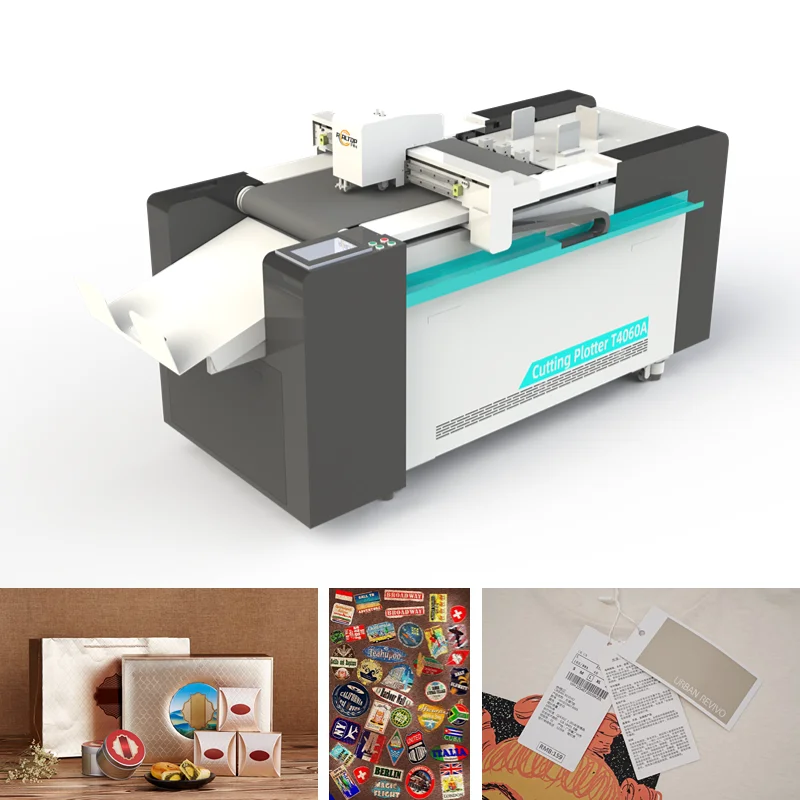
Complete Configuration Match — Every T-series unit leaves our Jinan workshop only after the buyer’s actual substrate has run through the exact tool head and vacuum zoning planned for their order.
Technical Specifications
| Parameter | Value |
|---|---|
| Product Type | CNC Flatbed Digital Cutting Plotter |
| Working Area Options | 400×600 mm / 600×800 mm / 900×1200 mm |
| Tool Head Options | Oscillating knife, Creasing wheel, Kiss cutting tool, CCD camera, Marking pen |
| Cutting Speed Range | 0–1500 mm/s |
| Cutting Thickness Capacity | ≤ 20 mm (basis not stated in source — confirm material type and density) |
| Positioning Accuracy | ±0.1 mm |
| Vacuum Pump Rating | 2.5 kW / 3.2 kW |
| Voltage Options | 110V / 220V (frequency to be confirmed per market) |
| Compatible File Formats | PLT, DXF, AI, PDF |
| Safety Devices | Infrared sensor device, Emergency stop device |
| Control Language Options | English, Russian, Italian, Chinese (special languages customizable) |
| Assembly State | Desktop structure (compact format) |
| CCD Camera | Auto-recognition of registration marks |
| Certification | CE (certificate scope to be verified) |
Application Suitability
| Application | Material or Output |
|---|---|
| Packaging prototype and sample making | Cardboard, printed carton, cardstock up to 2 mm, corrugated inserts |
| Advertising and store signage production | Self-adhesive vinyl, PVC stickers, window cling films, magnetic sheets |
| Paper box and sticker label finishing | Laminated coated paper, glossy art paper, foil-stamped labels |
| Cultural and craft product fabrication | Paper-cut lamp panels, leather bookmarks, 3D greeting card structures |
| Educational and teaching aid production | Puzzle boards, flash cards, laminated teaching sheets |
| Light industrial gasket sampling | Electronic foam pads, thin rubber sheets, small-batch protective inserts |
What "Just Pick the Biggest Working Area" Gets Wrong with a CNC Digital Cutting Plotter
Matching the bed to your largest sheet is only half the decision; the wrong tool head on the right bed still ruins every piece that comes off it.
I have watched buyers in Jinan order a large-format CNC flatbed cutting machine for sale and then run 300 gsm coated art paper with a drag knife meant for corrugated board. The blade drags the coating off, leaves feathered edges on every sticker label, and the entire sheet goes to waste. That kind of mismatch does not show up on a spec sheet — it only surfaces when real material meets real steel [NEED_CITE: common tool head mismatches reported by packaging converters]. The lesson repeated itself when a signage shop asked for a machine based solely on cutting speed, then discovered the vacuum zoning could not hold small vinyl decals flat at full traverse rate.
Three Bed Sizes Covering Desktop Sampling to Short-Run Production
Choosing between the 4060, 6080, and 0912 formats is not simply a matter of workshop floor space. The smaller bed keeps vacuum pull tight for sticker labels and thin cardstock where edge lift is the main concern, while the 900×1200 mm area handles full packaging sample sheets without repositioning. Each CNC digital cutting plotter manufacturer should walk you through which format matches your daily sheet count before the order goes to production.
Tool Head Swapping Without Recalibrating the Gantry
The T-series platform accepts oscillating knife, creasing wheel, kiss-cut blade, marking pen, and CCD camera on the same gantry carriage. Swapping between a kiss-cut for adhesive labels and a creasing wheel for carton fold lines does not require a full recalibration cycle — the control software stores the offset profile per tool so operators move from one job to the next within a single shift [NEED_CITE: multi-tool head offset management in flatbed digital plotters].
Reading the Numbers That Actually Govern Cut Quality
Positioning accuracy of ±0.1 mm matters most when cutting intricate font outlines on sticker labels; any drift wider than that leaves visible stepping on curved letterforms. The 0–1500 mm/s speed range is the mechanical ceiling — real working speed on laminated coated paper sits lower because pushing past the substrate’s friction threshold causes the oscillating knife to skate rather than shear. Vacuum pump selection between 2.5 kW and 3.2 kW should track the smallest part you plan to cut; a 30 mm vinyl decal needs concentrated hold-down across a tight zone, which the higher-rated pump delivers when paired with proper table zoning. File format support across PLT, DXF, AI, and PDF means your designer’s Illustrator output reaches the machine without an intermediate conversion step that can corrupt curve data.
The Cost of Shipping Before the Sample Runs
Buyers who skip material trials typically discover three problems at once after the CNC flatbed cutting machine for sale arrives at their dock. First, the oscillating knife angle that cuts clean cardboard fails on their specific laminated stock, leaving ragged sticker edges. Second, the CCD camera cannot resolve registration marks printed with low-contrast ink on their brand’s packaging. Third, the vacuum table zoning that held the factory’s test sample does not grip their smaller label sizes. Each of these issues is solvable, but solving them after delivery means weeks of downtime while replacement tooling ships overseas [NEED_CITE: post-shipment reconfiguration costs for digital cutting equipment].
Why Buyers Come Back for a Second Unit
The design team inside our Jinan facility handles both knife and laser cutting platforms, so when a packaging house needs to add film window cutting to their carton sampling line, the conversation stays under one roof rather than bouncing between two unrelated suppliers. Every T-series CNC digital cutting plotter goes through a factory test on the buyer’s own material before packing — not on generic white card stock. Voltage, plug type, and control panel language are confirmed in writing before the machine enters assembly, eliminating the arrival-day surprise of a 380V unit in a 220V workshop. The software license and file format compatibility note travel with the machine so there is no licensing gap between unboxing and first cut.
Documentation & Verification
- Machine specification sheet listing confirmed working area, selected tool heads, and exact voltage
- Electrical schematic showing wiring diagram matched to your facility’s power supply
- Sample cutting report generated on your actual sticker label and carton stock before dispatch
- Factory test record with photos documenting edge quality on your material
- Software license document and file format compatibility confirmation for PLT, DXF, AI, PDF workflows
- Packing photographs taken at crate closure showing machine securing and tool head protection
Installation, Commissioning & Support
- Floor loading check against the desktop-format frame weight before placement on elevated workshop floors
- Dedicated circuit provision matching the confirmed 110V or 220V supply and vacuum pump draw
- Vacuum table zoning setup calibrated to your smallest sticker label dimension during first-day commissioning
- CCD camera registration mark tuning performed on your printed packaging stock at delivery
- Operator training covering tool head swap procedure and offset verification for all five configured heads
- Spare parts list covering oscillating knife blades, creasing wheel inserts, and CCD replacement lamp
What to Include with Your Inquiry
Send us the exact material types you cut — including laminate coatings, adhesive layers, and substrate weight per square meter — along with the largest and smallest sheet dimensions in your current workflow. Tell us your workshop voltage and frequency, preferred control language, and whether your existing design files originate in Illustrator, AutoCAD, or a dedicated packaging CAD system. If your production involves printed registration marks, share a sample sheet so we can verify CCD tracking before the machine ships.
Frequently Asked Questions
Q: How do I choose between the 4060, 6080, and 0912 working areas for my packaging sample workflow?
A: Start with your largest sheet dimension and your daily piece count. The 4060 suits short-run label sampling where most jobs fit within an A3 footprint. The 6080 handles mid-format carton prototypes without repositioning. The 0912 accommodates full packaging sheets for high-mix operations. Your CNC digital cutting plotter manufacturer should confirm which size aligns with both your sheet format and throughput targets before quotation.
Q: Which tool head should I specify — oscillating knife, drag knife, or creasing wheel — for mixed paper and sticker work?
A: Oscillating knife handles most cardstock and cardboard up to the rated thickness cleanly. Creasing wheel scores fold lines on carton without cutting through. Kiss-cut tool slices adhesive vinyl and sticker labels without penetrating the backing paper. Specifying all three on one platform gives you flexibility; the right CNC flatbed cutting machine for sale should ship with the offsets pre-calibrated for each.
Q: Can the CCD camera reliably track printed registration marks on low-contrast packaging stock?
A: It depends on the contrast ratio between the printed mark and its surrounding substrate. High-contrast black marks on white stock track without issue at production speed. Low-contrast or metallic ink marks require pre-validation. Request a sample cutting report on your own printed material before the order ships to confirm the camera resolves your specific mark geometry.
Q: What voltage, plug, and language options need confirming before my machine enters production?
A: The platform supports 110V and 220V configurations with frequency matched to your local grid. Plug type must match your facility’s receptacle standard. Control language options include English, Russian, Italian, and Chinese, with special languages configurable on request. All three parameters should appear on your written specification confirmation before assembly begins.
Q: Can I send my own sticker and carton material for a cutting trial before placing the order?
A: Yes. The standard process requires your actual material — not a generic substitute — to run on the configured tool head and vacuum table. A sample cutting report documenting edge quality, kiss-cut depth, and CCD tracking performance is issued before you commit. This prevents the common situation where factory test results on white card stock do not translate to your production substrates.
Complete Configuration Match — Every T-series unit leaves our Jinan workshop only after the buyer’s actual substrate has run through the exact tool head and vacuum zoning planned for their order.
Technical Specifications
| Parameter | Value |
|---|---|
| Product Type | CNC Flatbed Digital Cutting Plotter |
| Working Area Options | 400×600 mm / 600×800 mm / 900×1200 mm |
| Tool Head Options | Oscillating knife, Creasing wheel, Kiss cutting tool, CCD camera, Marking pen |
| Cutting Speed Range | 0–1500 mm/s |
| Cutting Thickness Capacity | ≤ 20 mm (basis not stated in source — confirm material type and density) |
| Positioning Accuracy | ±0.1 mm |
| Vacuum Pump Rating | 2.5 kW / 3.2 kW |
| Voltage Options | 110V / 220V (frequency to be confirmed per market) |
| Compatible File Formats | PLT, DXF, AI, PDF |
| Safety Devices | Infrared sensor device, Emergency stop device |
| Control Language Options | English, Russian, Italian, Chinese (special languages customizable) |
| Assembly State | Desktop structure (compact format) |
| CCD Camera | Auto-recognition of registration marks |
| Certification | CE (certificate scope to be verified) |
Application Suitability
| Application | Material or Output |
|---|---|
| Packaging prototype and sample making | Cardboard, printed carton, cardstock up to 2 mm, corrugated inserts |
| Advertising and store signage production | Self-adhesive vinyl, PVC stickers, window cling films, magnetic sheets |
| Paper box and sticker label finishing | Laminated coated paper, glossy art paper, foil-stamped labels |
| Cultural and craft product fabrication | Paper-cut lamp panels, leather bookmarks, 3D greeting card structures |
| Educational and teaching aid production | Puzzle boards, flash cards, laminated teaching sheets |
| Light industrial gasket sampling | Electronic foam pads, thin rubber sheets, small-batch protective inserts |
What "Just Pick the Biggest Working Area" Gets Wrong with a CNC Digital Cutting Plotter
Matching the bed to your largest sheet is only half the decision; the wrong tool head on the right bed still ruins every piece that comes off it.
I have watched buyers in Jinan order a large-format CNC flatbed cutting machine for sale and then run 300 gsm coated art paper with a drag knife meant for corrugated board. The blade drags the coating off, leaves feathered edges on every sticker label, and the entire sheet goes to waste. That kind of mismatch does not show up on a spec sheet — it only surfaces when real material meets real steel [NEED_CITE: common tool head mismatches reported by packaging converters]. The lesson repeated itself when a signage shop asked for a machine based solely on cutting speed, then discovered the vacuum zoning could not hold small vinyl decals flat at full traverse rate.
Three Bed Sizes Covering Desktop Sampling to Short-Run Production
Choosing between the 4060, 6080, and 0912 formats is not simply a matter of workshop floor space. The smaller bed keeps vacuum pull tight for sticker labels and thin cardstock where edge lift is the main concern, while the 900×1200 mm area handles full packaging sample sheets without repositioning. Each CNC digital cutting plotter manufacturer should walk you through which format matches your daily sheet count before the order goes to production.
Tool Head Swapping Without Recalibrating the Gantry
The T-series platform accepts oscillating knife, creasing wheel, kiss-cut blade, marking pen, and CCD camera on the same gantry carriage. Swapping between a kiss-cut for adhesive labels and a creasing wheel for carton fold lines does not require a full recalibration cycle — the control software stores the offset profile per tool so operators move from one job to the next within a single shift [NEED_CITE: multi-tool head offset management in flatbed digital plotters].
Reading the Numbers That Actually Govern Cut Quality
Positioning accuracy of ±0.1 mm matters most when cutting intricate font outlines on sticker labels; any drift wider than that leaves visible stepping on curved letterforms. The 0–1500 mm/s speed range is the mechanical ceiling — real working speed on laminated coated paper sits lower because pushing past the substrate’s friction threshold causes the oscillating knife to skate rather than shear. Vacuum pump selection between 2.5 kW and 3.2 kW should track the smallest part you plan to cut; a 30 mm vinyl decal needs concentrated hold-down across a tight zone, which the higher-rated pump delivers when paired with proper table zoning. File format support across PLT, DXF, AI, and PDF means your designer’s Illustrator output reaches the machine without an intermediate conversion step that can corrupt curve data.
The Cost of Shipping Before the Sample Runs
Buyers who skip material trials typically discover three problems at once after the CNC flatbed cutting machine for sale arrives at their dock. First, the oscillating knife angle that cuts clean cardboard fails on their specific laminated stock, leaving ragged sticker edges. Second, the CCD camera cannot resolve registration marks printed with low-contrast ink on their brand’s packaging. Third, the vacuum table zoning that held the factory’s test sample does not grip their smaller label sizes. Each of these issues is solvable, but solving them after delivery means weeks of downtime while replacement tooling ships overseas [NEED_CITE: post-shipment reconfiguration costs for digital cutting equipment].
Why Buyers Come Back for a Second Unit
The design team inside our Jinan facility handles both knife and laser cutting platforms, so when a packaging house needs to add film window cutting to their carton sampling line, the conversation stays under one roof rather than bouncing between two unrelated suppliers. Every T-series CNC digital cutting plotter goes through a factory test on the buyer’s own material before packing — not on generic white card stock. Voltage, plug type, and control panel language are confirmed in writing before the machine enters assembly, eliminating the arrival-day surprise of a 380V unit in a 220V workshop. The software license and file format compatibility note travel with the machine so there is no licensing gap between unboxing and first cut.
Documentation & Verification
- Machine specification sheet listing confirmed working area, selected tool heads, and exact voltage
- Electrical schematic showing wiring diagram matched to your facility’s power supply
- Sample cutting report generated on your actual sticker label and carton stock before dispatch
- Factory test record with photos documenting edge quality on your material
- Software license document and file format compatibility confirmation for PLT, DXF, AI, PDF workflows
- Packing photographs taken at crate closure showing machine securing and tool head protection
Installation, Commissioning & Support
- Floor loading check against the desktop-format frame weight before placement on elevated workshop floors
- Dedicated circuit provision matching the confirmed 110V or 220V supply and vacuum pump draw
- Vacuum table zoning setup calibrated to your smallest sticker label dimension during first-day commissioning
- CCD camera registration mark tuning performed on your printed packaging stock at delivery
- Operator training covering tool head swap procedure and offset verification for all five configured heads
- Spare parts list covering oscillating knife blades, creasing wheel inserts, and CCD replacement lamp
What to Include with Your Inquiry
Send us the exact material types you cut — including laminate coatings, adhesive layers, and substrate weight per square meter — along with the largest and smallest sheet dimensions in your current workflow. Tell us your workshop voltage and frequency, preferred control language, and whether your existing design files originate in Illustrator, AutoCAD, or a dedicated packaging CAD system. If your production involves printed registration marks, share a sample sheet so we can verify CCD tracking before the machine ships.
Frequently Asked Questions
Q: How do I choose between the 4060, 6080, and 0912 working areas for my packaging sample workflow?
A: Start with your largest sheet dimension and your daily piece count. The 4060 suits short-run label sampling where most jobs fit within an A3 footprint. The 6080 handles mid-format carton prototypes without repositioning. The 0912 accommodates full packaging sheets for high-mix operations. Your CNC digital cutting plotter manufacturer should confirm which size aligns with both your sheet format and throughput targets before quotation.
Q: Which tool head should I specify — oscillating knife, drag knife, or creasing wheel — for mixed paper and sticker work?
A: Oscillating knife handles most cardstock and cardboard up to the rated thickness cleanly. Creasing wheel scores fold lines on carton without cutting through. Kiss-cut tool slices adhesive vinyl and sticker labels without penetrating the backing paper. Specifying all three on one platform gives you flexibility; the right CNC flatbed cutting machine for sale should ship with the offsets pre-calibrated for each.
Q: Can the CCD camera reliably track printed registration marks on low-contrast packaging stock?
A: It depends on the contrast ratio between the printed mark and its surrounding substrate. High-contrast black marks on white stock track without issue at production speed. Low-contrast or metallic ink marks require pre-validation. Request a sample cutting report on your own printed material before the order ships to confirm the camera resolves your specific mark geometry.
Q: What voltage, plug, and language options need confirming before my machine enters production?
A: The platform supports 110V and 220V configurations with frequency matched to your local grid. Plug type must match your facility’s receptacle standard. Control language options include English, Russian, Italian, and Chinese, with special languages configurable on request. All three parameters should appear on your written specification confirmation before assembly begins.
Q: Can I send my own sticker and carton material for a cutting trial before placing the order?
A: Yes. The standard process requires your actual material — not a generic substitute — to run on the configured tool head and vacuum table. A sample cutting report documenting edge quality, kiss-cut depth, and CCD tracking performance is issued before you commit. This prevents the common situation where factory test results on white card stock do not translate to your production substrates.










商品评价
There are no reviews yet.