



Fast Delivery
Quick, reliable shipping to any location.

Free & easy returns
Return this item by mail or in store within 90 days for a full refund.
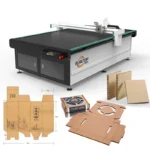
Multi-Tool Flexibility — a single workstation holds oscillating knife, creasing, kiss-cut and punch tools, letting packaging and signage shops switch jobs without swapping machines.
Technical Specifications
| Parameter | Value |
|---|---|
| Model | RT–R2513 / RT-D2516 / RT-S2516 |
| Product Type | CNC Oscillating Knife Cutting Machine |
| Working Area | 2500×1300 mm (RT–R2513); 1600×2500 mm (RT-D2516 / RT-S2516) |
| Machine Size | 3550×1910×1400 mm (RT–R2513); 3450×2300×1250 mm (RT-D2516 / RT-S2516) |
| Cutting Thickness | ≤18 mm (basis not stated in source — confirm material type and density) |
| Cutting Tools | Oscillating knife, Creasing tool, Kiss-Cut Knife Tool, Round punch |
| Repeated Accuracy | <0.05 mm |
| Guide Rail | Taiwan Hiwin linear rail |
| Servo System | Taiwan Delta Servo Motors and Drivers |
| Vacuum Pump | 7.5 kW |
| Rated Power | 9 kW |
| Voltage | 380 V (frequency to be confirmed per market) |
| Fixing Method | Vacuum system with zoned adsorption |
| Vacuum Table | Aluminum alloy honeycomb structure |
| Felt Belt | Wear-resistant anti-pull composite fiber |
| Conveyor Belt | Germany-imported belt material |
| Frame | Welded thick square seamless steel, high-temperature treated |
| Profile Format | DXF, OLT, PDF, AI |
| Transmission | Ethernet port |
| Control Language | English, Russian, Italian, Chinese; special languages customizable |
| Safety Device | Infrared sensors, emergency stop |
| Blade Supply | 10 oscillating blades included |
| Assembly State | Fully assembled before shipment |
| Warranty | 1 year (excludes felt and knife blades) |
| Delivery Time | <30 working days |
Application Suitability
| Application | Material or Output |
|---|---|
| Packaging and carton sample making | Corrugated board, card stock, express paper box packaging, high-end gift box substrates |
| Signage and sticker production | Vinyl, pattern stickers, billboards, business cards, tags, labels, PP paper |
| Leather goods and flexible material cutting | Natural hides, synthetic leather, flexible composites for footwear and accessories |
Why Material Thickness Changes Everything After the Demo
Most buyers compare CNC oscillating knife cutting machine options by working area first, then discover during production that the knife struggles with their actual stock weight. The right configuration is locked only after a cutting test on your real material, at your real thickness. A carton plant I visited in West Africa ran perfect samples on 3-ply corrugated during the trial. When production switched to 5-ply, the oscillating knife could not cut through cleanly — they had to slow the head down, and daily output dropped noticeably. The machine was not at fault; the tool head and vacuum zoning had been specified for the wrong board grade [NEED_CITE: common corrugated flute profiles and their cutting resistance]. Matching tool type, oscillation frequency and vacuum hold-down to the densest material you will actually run is the only way to avoid that surprise.
Matching the Knife to the Substrate
An oscillating knife cuts by vibrating the blade at high frequency, which works well on fibrous and foam materials where a drag knife would crush or tear. On corrugated board, the oscillation shears through flutes cleanly; on leather, it follows curved patterns without pulling the hide. The RT–R2513 and its larger-format siblings support a tool head carousel that holds the oscillating blade alongside a creasing wheel and kiss-cut tool, so a single nesting file can score fold lines and cut outlines in one pass. This CNC oscillating knife cutting machine approach removes the need for secondary creasing stations on short packaging runs.
Vacuum Zoning and Small-Part Stability
Holding small sticker shapes or narrow label strips flat during cutting is where many vacuum tables fall short. The aluminum honeycomb table on this series is divided into adsorption zones, allowing the operator to activate only the sections under the current cut path. This concentrates suction where it matters and prevents thin vinyl or PP paper from lifting at the edges as the knife exits a contour. On full-sheet corrugated, all zones engage to keep the board registered against the conveyor felt [NEED_CITE: vacuum hold-down principles for flatbed digital cutting].
What the Spec Sheet Numbers Mean on the Shop Floor
The <0.05 mm repeatability figure is driven by the Taiwan Hiwin linear rails paired with servo motors, which together maintain positional accuracy across the full 2500 mm travel on the RT–R2513. For packaging sample makers, this means crease lines land exactly where the cut file places them, so folded prototypes assemble without gap or overlap. The 7.5 kW vacuum pump generates enough suction to hold dense 5-ply board flat, but the actual hold-down force depends on zone selection and material porosity — a sealed vinyl sheet holds differently from open-flute corrugated. Ethernet file transfer avoids the format mismatches common with USB workflows, and the included nesting software accepts DXF, OLT, PDF and AI files directly, which removes a conversion step that often introduces contour errors in signage work.
The Hidden Cost of a Mis-Specified Tool Head
Choosing a drag knife for a material that needs oscillation produces ragged edges on foam and crushed flutes on corrugated — defects that show up only once production speed increases. I have seen signage shops burn through blade stock at an abnormal rate because the oscillation frequency was set for a denser material than they were actually cutting. Kiss-cut tools set too deep score the backing paper, turning a clean peel into a tear. These issues trace back to the configuration conversation that should happen before the order is placed, not after the machine arrives [NEED_CITE: tool head selection criteria for oscillating knife cutting].
Why Source This CNC Oscillating Knife Cutting Machine Here
Realtop builds both knife and laser cutting systems under one roof, so the cutting method is matched to the material rather than forced into a single technology. Tool head and table configurations are specified per material type, thickness and daily volume before the order is confirmed. Every machine ships with a sample cutting report run on the buyer’s own stock, documenting edge quality and achievable cutting depth. Voltage, plug type and control language are confirmed against the destination market’s electrical standards before the machine leaves the factory. The in-house design team covers both the mechanical frame and the software integration, which means file format compatibility is verified during the pre-order stage rather than discovered at commissioning.
Documentation & Verification
- Machine specification sheet covering all three model variants and their working area differences
- Electrical schematic with voltage and frequency confirmed for your local supply
- Tool head and vacuum zone configuration list matched to your material portfolio
- Sample cutting report on your own board stock or vinyl before shipment
- Factory test record documenting repeatability and cutting depth results
- Software licence and file format compatibility note for DXF, OLT, PDF and AI workflows
Installation, Commissioning & Support
- Fully assembled delivery — the 3550×1910 mm RT–R2513 footprint requires level concrete flooring with clearance for sheet loading on both sides
- 380 V supply with dedicated circuit for the combined 9 kW machine and 7.5 kW vacuum pump load
- Ethernet port connection to your existing network for direct file transfer from the design station
- First-run parameter setting on your actual material, adjusting oscillation frequency and vacuum zone mapping
- Operator training covering tool change, blade replacement and nesting software workflow
- Ten oscillating blades included; spare felt belt and blade reorder list provided at handover
Before You Request a Quote
Send the material types you cut most often, including thickness and maximum sheet size, along with your daily volume target. Confirm your facility voltage and frequency, the control language your operators need, and whether you work with existing DXF or AI files that require software compatibility verification. If your jobs include printed contours, note whether registration marks are part of your artwork so the correct positioning option can be included.
Frequently Asked Questions
Q: Should I choose an oscillating knife or a laser for my material mix?
A: Oscillating knives work best on fibrous, foam and corrugated materials where a laser would melt or char the edge. Lasers suit acrylic, wood and sealed synthetics where a flame-polished edge is desired. If your shop cuts both cardboard packaging and acrylic signage, sourcing both technologies from one manufacturer keeps file workflows and training consistent across machines.
Q: How do I pick the right working area for my sheet formats?
A: The RT–R2513 covers 2500×1300 mm, which fits standard packaging board sizes. The RT-D2516 and RT-S2516 offer 1600×2500 mm for wider signage rolls and larger hide layouts. Choose based on your largest common sheet, plus enough margin for nesting software to arrange parts efficiently without constant re-sheeting.
Q: Which tool head combination do I actually need?
A: A packaging sample shop typically needs the oscillating knife for cutting and the creasing wheel for fold lines. Signage producers cutting vinyl and stickers add the kiss-cut tool to cut the face film without scoring the backing. The round punch suits gasket and label work where clean holes are required at production speed.
Q: What voltage and language details must I confirm before shipment?
A: Confirm your facility voltage, frequency and plug type so the electrical cabinet is built correctly. Choose the control language your operators read daily — options include English, Russian, Italian and Chinese, with other languages available on request. Getting these wrong at the factory is straightforward to fix; fixing them on-site after arrival is not.










商品评价
There are no reviews yet.