





Fast Delivery
Quick, reliable shipping to any location.

Free & easy returns
Return this item by mail or in store within 90 days for a full refund.
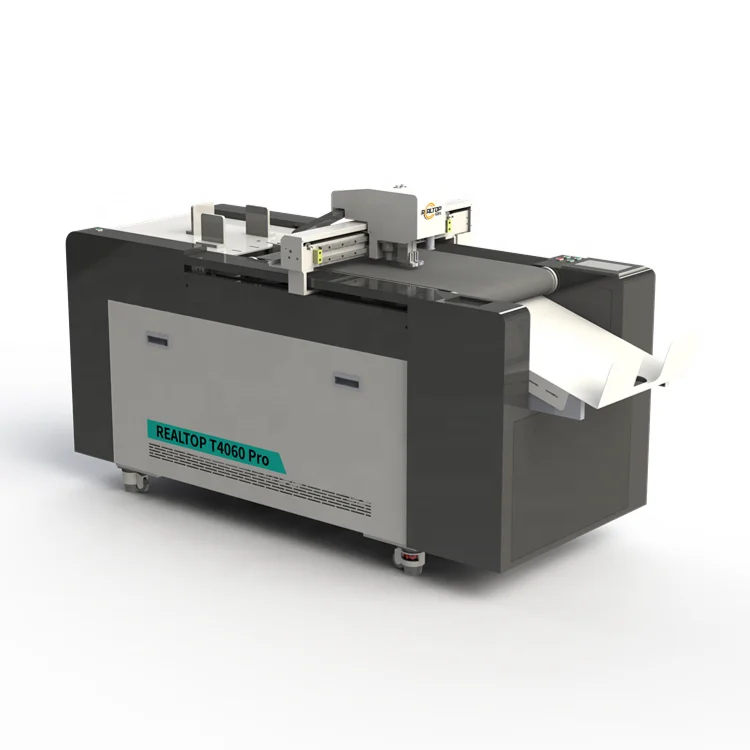
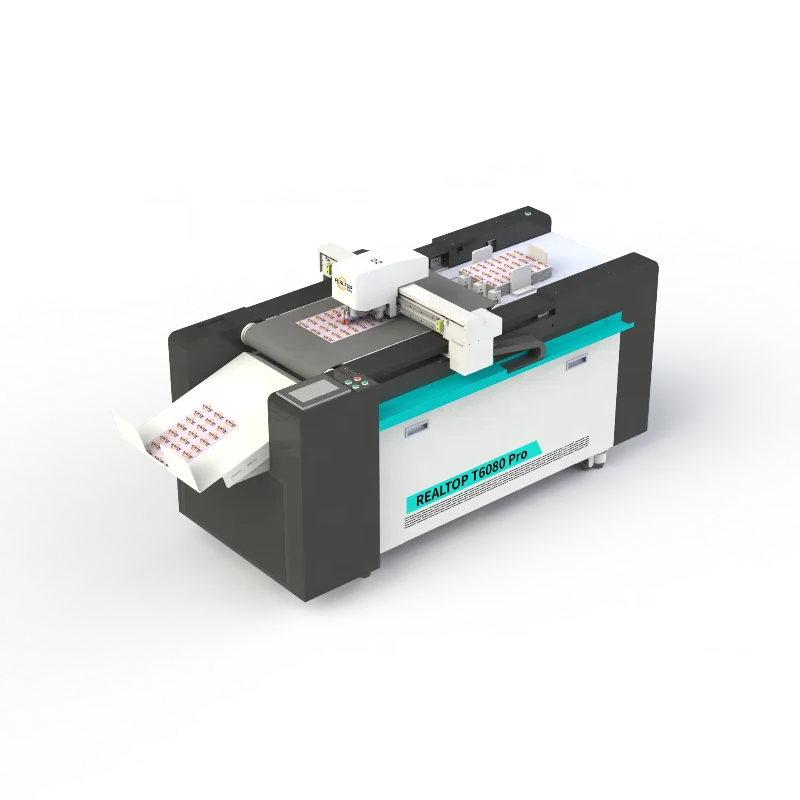
Full Catalogue Survey — From oscillating knife systems for fabric and foam to CO2 and fiber laser platforms for acrylic and sheet metal, the REALTOP range allows buyers to match the cutting method to the material rather than forcing a single technology across every production job.
Technical Specifications
| Parameter | Value |
|---|---|
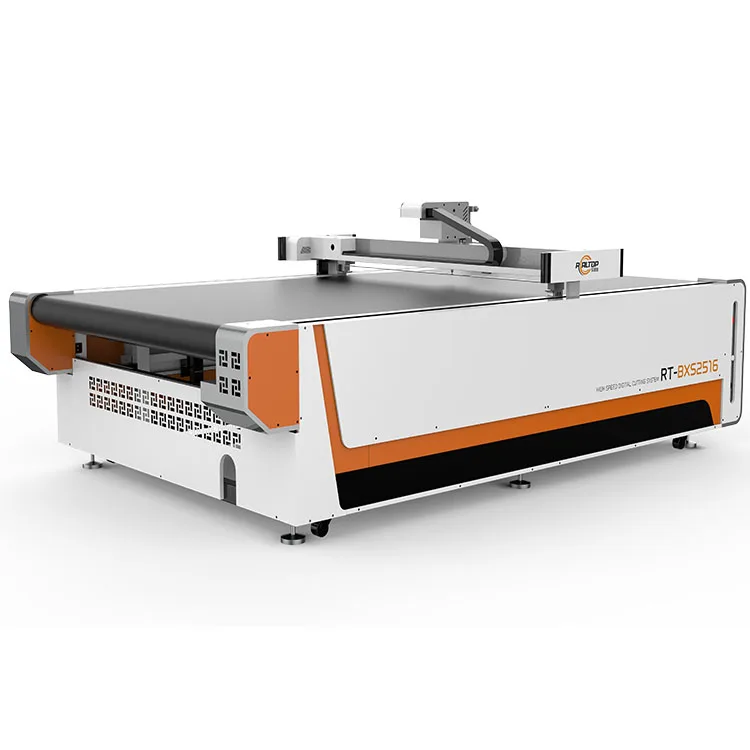
| Model | RT-D2516 / RT-S2516 |
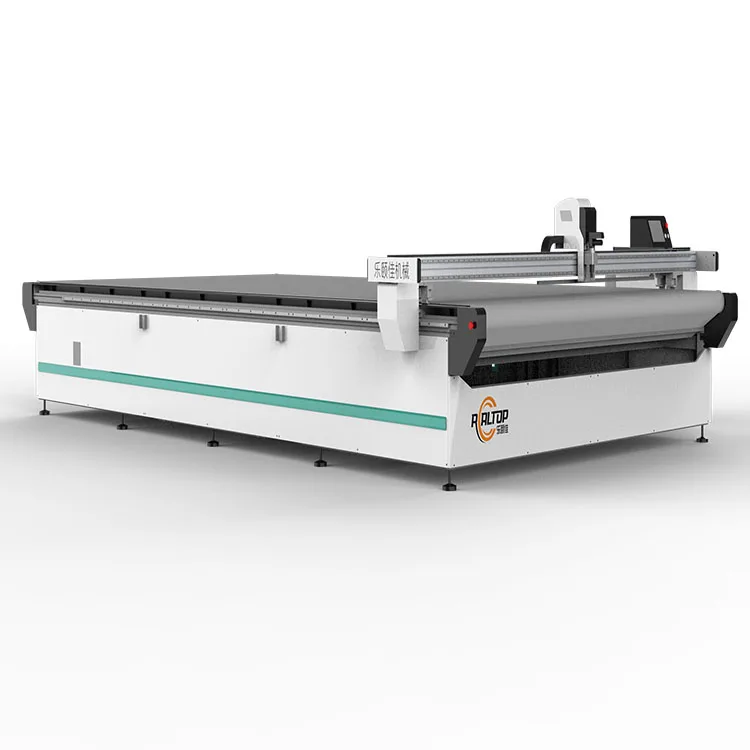
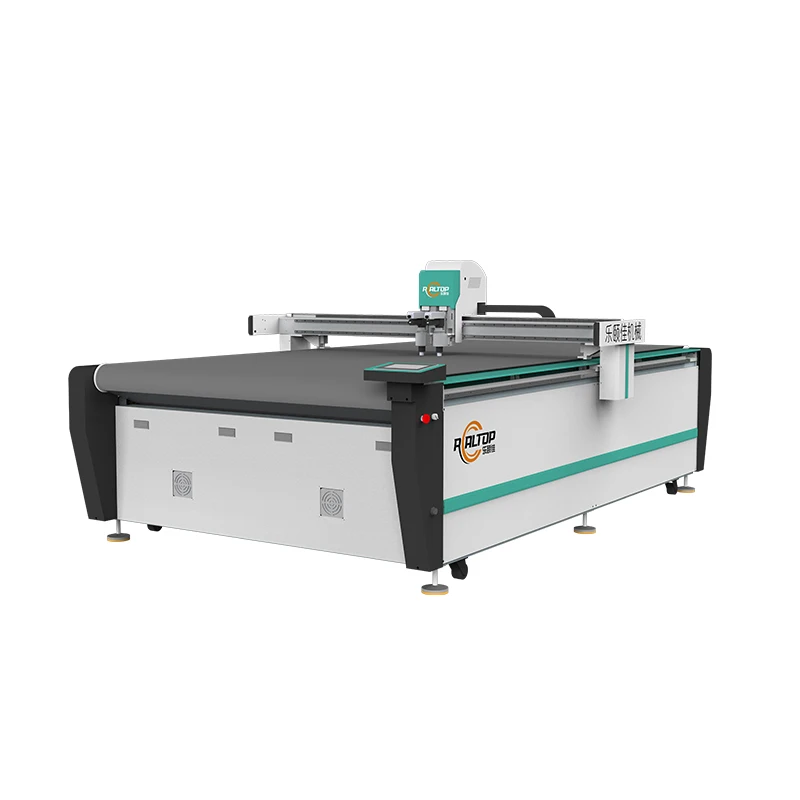
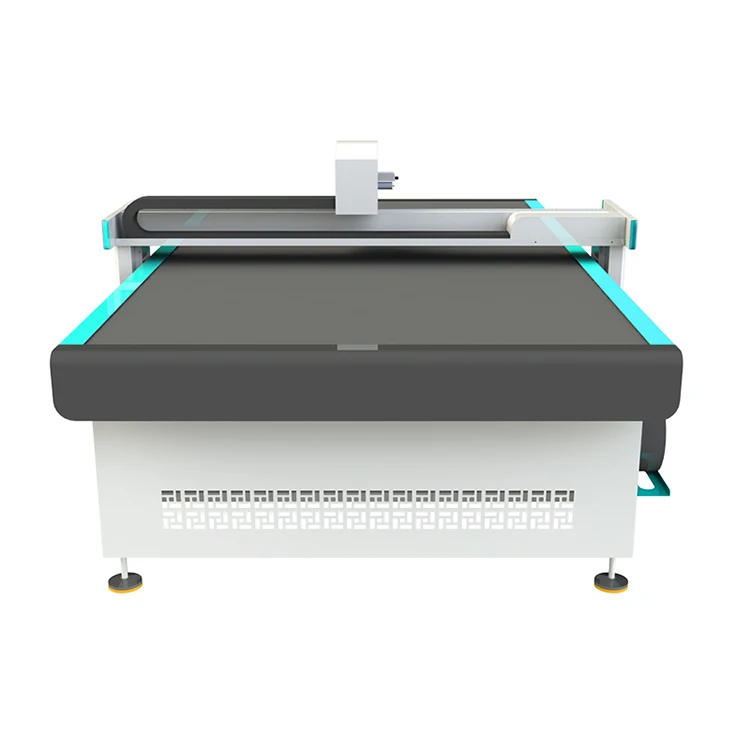
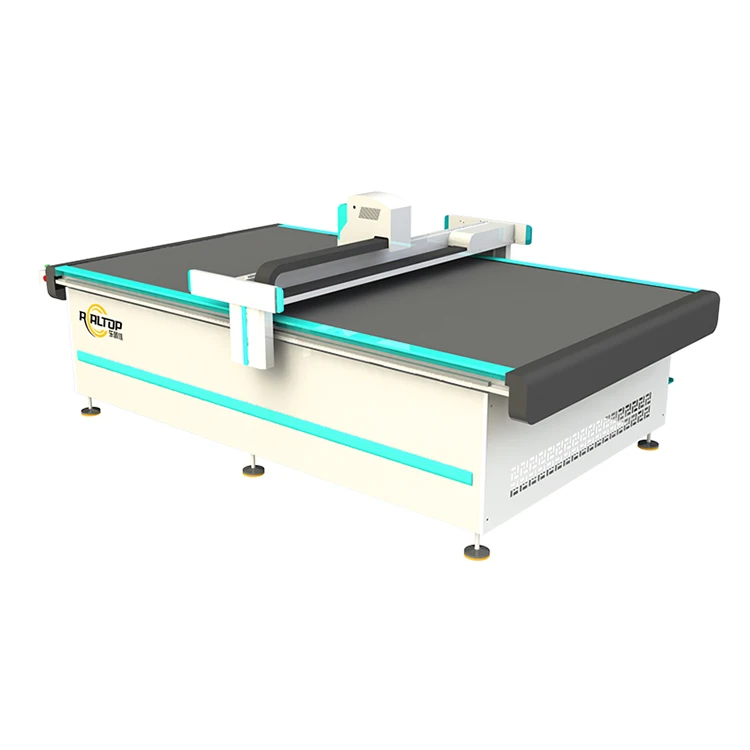
| Product Type | CNC Oscillating Knife Cutting Machine |
| Working Area | 1600 × 2500 mm |
| Machine Size | 3450 × 2300 × 1250 mm |
| Rated Power | 9 kW |
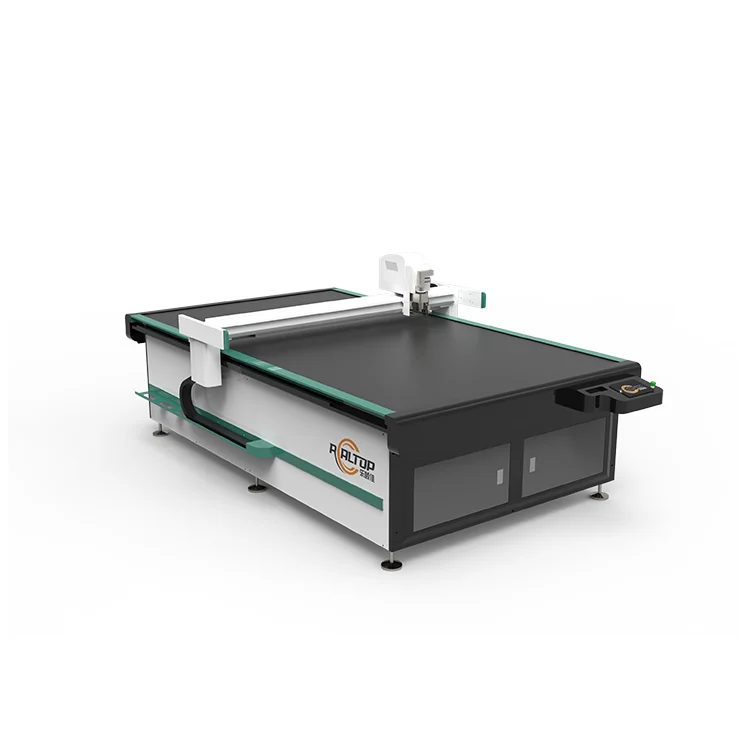
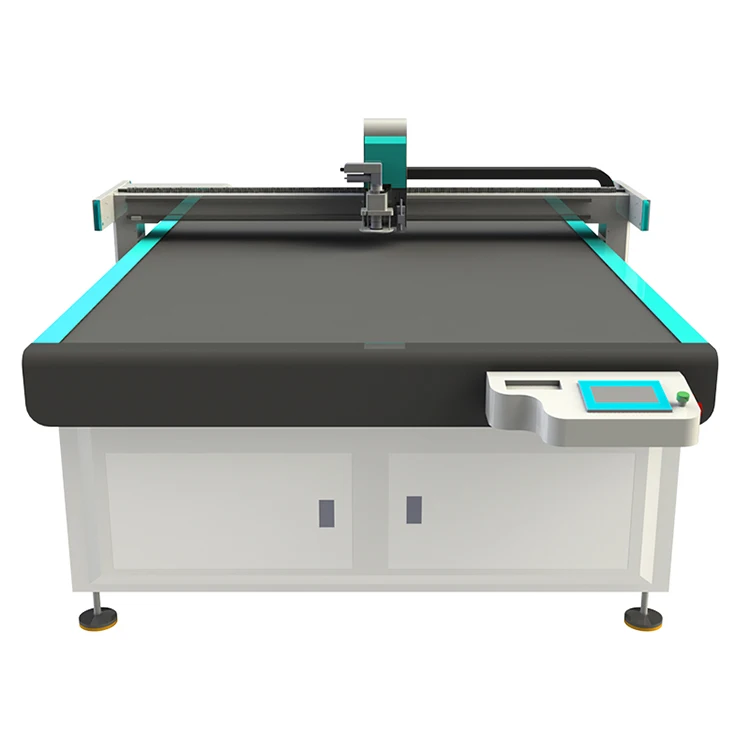
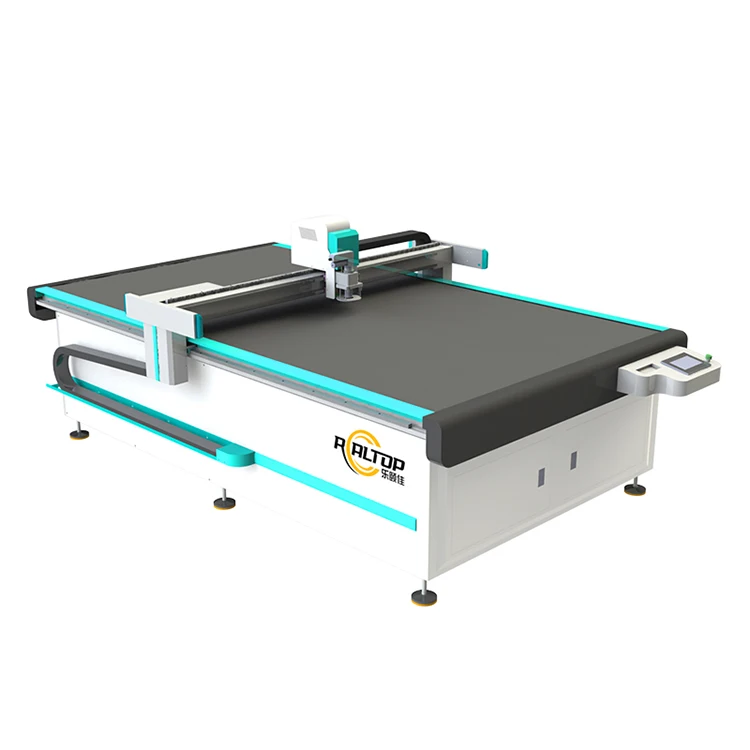
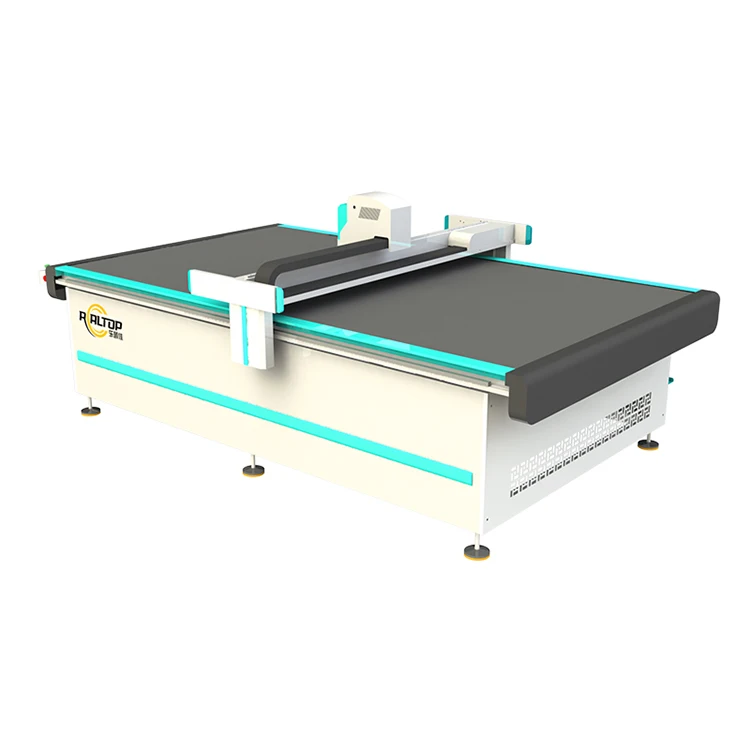
| Table Type | Flatbed working table / Auto-feeding conveyor table |
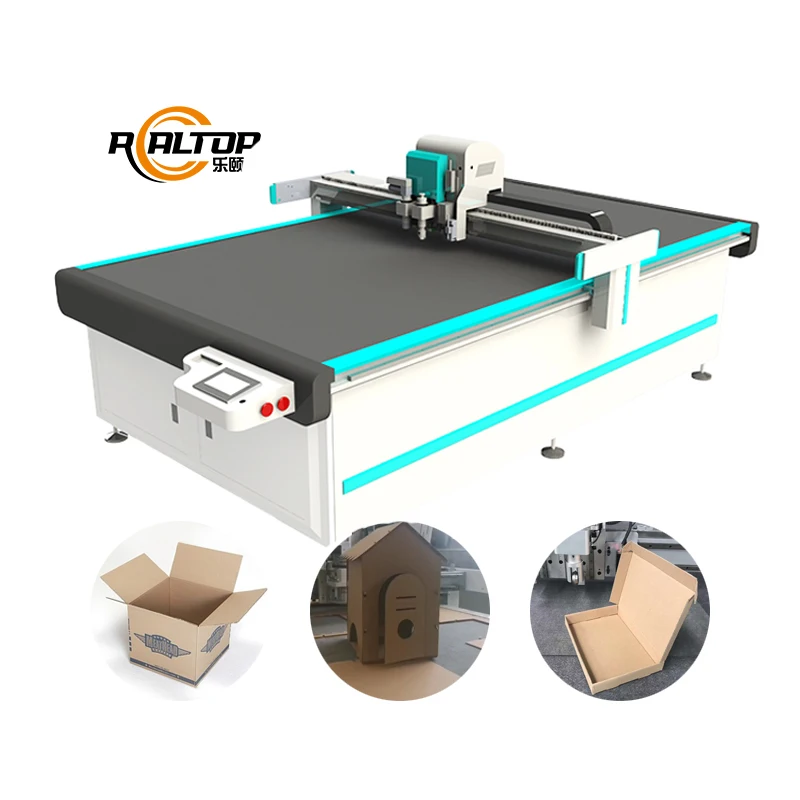
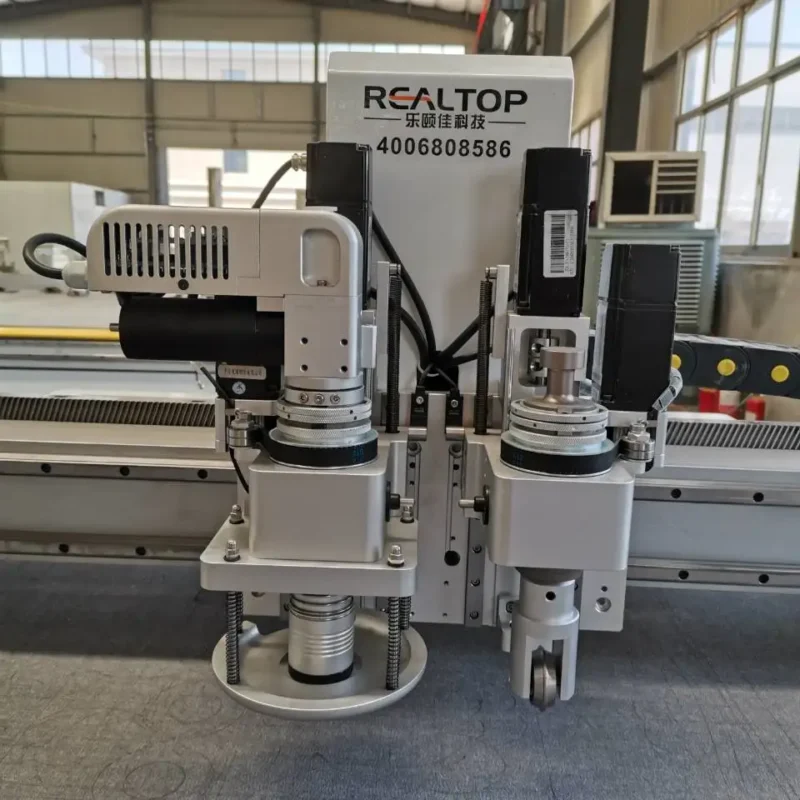
| Multifunctional Head | Swiss-imported oscillating knife with full cut, half cut, and cursor location |
| Translational Velocity | 800–2000 mm/s |
| Cutting Speed | 200–800 mm/s (varies by material) |
| Repeated Accuracy | ≤0.1 mm |
| Transmission System | Digital servo motor, linear guide, synchronous belt, ball screw |
| Instruction System | HP-GL compatible format |
| Voltage | 380V ±10% |
| Vacuum Pump | 7.5 kW |
| Guide Rail | Taiwan Hiwin linear rail |
| Conveyor Belt | Germany-imported belt (auto-feeding variant) |
| Safety Devices | Infrared sensors, anti-collision system, emergency stop |
| Control Panel | Touch screen with multiple language support |
| Software | Auto typesetting; supports PLT, DXF, AI formats |
Application Suitability
| Application | Material or Output |
|---|---|
| Garment and footwear production | Multi-layer clothing cloth, shoe material, non-woven fabric |
| Automotive interior trimming | PU, EVA, XPE foam, composite gasket material |
| Luggage and bag manufacturing | Leather, PVC, PU synthetic material |
| Carpet and floor mat fabrication | Carpet rolls, sponge, rubber underlay |
| Packaging sample making | Corrugated cardboard, cardboard, film |
| Signage and graphic finishing | Sticker, vinyl, PP, PE film |
| Soft home furnishings | Fabric, textile, foam board for upholstery and drapery |
| Sealing and gasket production | PTFE, ETFE, rubber, fiberglass composite |
What "Working Area" Alone Fails to Tell You About a CNC Oscillating Knife Cutting Machine
The cutting method must be decided before the bed size is locked in.
A machine specified purely on table dimensions often arrives at the workshop only to reveal that the tool head cannot handle the buyer’s actual material thickness, or that the vacuum zoning is insufficient for small nested parts. I have seen fabric producers invest in a large-format bed and then discover the oscillating stroke was configured for thin garment cloth when their real workload involves coated composite textiles [NEED_CITE: material thickness versus tool head stroke configuration]. The result is ragged edges, crushed foam layers, and production schedules thrown into disarray. Selecting the right CNC oscillating knife cutting machine manufacturer means confirming the cutting method against the material first, then sizing the working area around the actual nesting patterns and daily volume.
Matching the Knife Head to Your Material Stack
The Swiss-imported oscillating knife on the RT-D2516 and RT-S2516 handles full cutting, half cutting, and cursor location within a single head. This matters because fabric, leather, and foam each demand a different blade profile and vibration frequency. A drag knife may score corrugated cardboard cleanly but will crush multi-layer sponge, while an oscillating blade maintains edge quality across textile stacks. Choosing the correct tool head at the ordering stage prevents the situation where operators spend shifts swapping blades and adjusting stroke depth to compensate for a specification that was never matched to the production job.
Vacuum Zoning, Conveyor Feeding, and Small-Part Stability
A 7.5 kW vacuum pump paired with an aluminium adsorption platform holds material flat across the 1600 × 2500 mm working area. For producers cutting small gaskets or intricate garment pattern pieces, vacuum zoning determines whether parts stay anchored or lift mid-cut. The auto-feeding conveyor variant, equipped with a Germany-imported belt, moves roll material through the cutting zone continuously, reducing manual repositioning. For high-volume fabric operations, the combination of conveyor feed and zoned vacuum adsorption keeps throughput steady without operators manually advancing the material after every nest [NEED_CITE: vacuum table zoning requirements for small-part cutting].
Reading the Specification Sheet Beyond the Headline Numbers
The Delta servo motor and Taiwan Hiwin linear guide deliver a repeated accuracy of ≤0.1 mm, which directly affects how tightly nested pattern pieces can be placed on a fabric lay. Tighter nesting means less material waste per cutting cycle. The translational velocity range of 800–2000 mm/s and cutting speed range of 200–800 mm/s reflect the variation across material types — a dense rubber gasket will cut at the lower end while single-layer vinyl runs closer to the upper boundary. The 9 kW rated power covers the servo drives, oscillating head motor, and vacuum pump simultaneously, so electrical planning should account for the full load rather than just the spindle. Touch-screen control with multi-language support and HP-GL compatible instruction format means the machine integrates into workshops running existing PLT, DXF, or AI design files without software conversion hurdles.
The Hidden Cost of Skipping Material Trials
When a machine arrives without a prior cutting trial on the buyer’s actual material, the first production run becomes the test. Coated composite fabrics that look identical to standard polyester on a data sheet can behave completely differently under an oscillating blade — edges fray, layers delaminate, and nesting parameters need recalibration. I once spent two nights reconfiguring tool head settings and vacuum zones after a client sent coated material instead of the standard test fabric. A sample cutting report generated before shipment catches these mismatches while adjustments still cost hours rather than days of lost production [NEED_CITE: pre-shipment sample cutting validation].
Why Source From This Equipment Range
The REALTOP catalogue covers both oscillating knife and laser cutting technologies under one manufacturer, so a buyer processing fabric on a knife table and acrylic on a CO2 laser deals with a single design team, consistent control panel logic, and shared spare-parts logistics. Tool head and table configurations are specified per material and production volume rather than offered as a fixed package. CCD camera positioning is available for printed contour work, and software compatibility is confirmed against the buyer’s existing file formats before the order is finalized. Voltage, plug type, and control language are locked in at the specification stage so the machine arrives ready for the local electrical standard.
Documentation & Verification
- Machine specification sheet covering both knife and laser families for method comparison
- Sample cutting report generated on your actual fabric or composite material
- Tool head and table configuration list matched to your material thickness and daily volume
- Electrical schematic with confirmed voltage and frequency for your facility
- Software licence and file format compatibility note for PLT, DXF, AI workflows
- Factory test record documenting repeatability and cutting edge quality before dispatch
Installation, Commissioning & Support
- Foundation must accommodate 3450 × 2300 mm footprint with level concrete and clearance for auto-feeding conveyor
- Dedicated 380V ±10% circuit rated for 9 kW continuous load with proper earthing
- Machine ships in modular sections; reassembly includes rail alignment and belt tensioning on site
- First-run commissioning covers vacuum zone calibration and oscillating knife stroke tuning for your material
- Operator training addresses touch-screen navigation, file import, and nesting software workflow
- Spare parts list includes Swiss knife blades, conveyor belt segments, and vacuum seals
What to Share Before Requesting a Quote
Provide the exact material types, thicknesses, and sheet or roll dimensions you plan to process. Confirm your daily cutting volume and whether roll-fed auto-feeding or flatbed loading suits your workflow. State your facility voltage, frequency, and preferred control panel language so the CNC oscillating knife cutting machine manufacturer can configure the electrical system and software before production begins.
Frequently Asked Questions
Q: How do I decide between oscillating knife and laser cutting for my material?
A: Oscillating knife suits fabric, foam, leather, and composite materials where edge sealing is not required and multi-layer cutting is common. Laser is preferred for acrylic, wood, and textiles where a sealed edge prevents fraying. The REALTOP range covers both, so the decision rests on your material properties and production volume rather than equipment availability.
Q: Can the vacuum table hold small nested parts securely during cutting?
A: The 7.5 kW vacuum pump with aluminium adsorption platform provides strong hold-down across the 1600 × 2500 mm table. For very small parts, vacuum zoning concentrates suction in the active cutting area, preventing lift. Confirming your typical nesting layout at the ordering stage ensures the zone configuration matches your pattern geometry.
Q: Will the software accept my existing design files?
A: The system supports PLT, DXF, and AI formats with auto-typesetting capability and HP-GL compatible instruction output. Before order confirmation, a file format compatibility note is provided so you can verify that your current nesting workflow imports without conversion issues.
Q: What voltage and language options are available before shipment?
A: The standard configuration runs on 380V ±10%, but voltage and plug type are confirmed during the specification stage to match your local electrical standard. The touch-screen control panel supports multiple languages, and the preferred language is locked in before production so operators can navigate menus from day one.
Q: Is sample cutting available before I commit to the order?
A: Yes. Send your actual production material and a sample cutting report is generated, documenting edge quality, cutting speed, and tool head performance on your specific fabric, foam, or composite. This trial reveals material-specific behaviour that a standard test sheet would not expose.
Full Catalogue Survey — From oscillating knife systems for fabric and foam to CO2 and fiber laser platforms for acrylic and sheet metal, the REALTOP range allows buyers to match the cutting method to the material rather than forcing a single technology across every production job.
Technical Specifications
| Parameter | Value |
|---|---|
| Model | RT-D2516 / RT-S2516 |
| Product Type | CNC Oscillating Knife Cutting Machine |
| Working Area | 1600 × 2500 mm |
| Machine Size | 3450 × 2300 × 1250 mm |
| Rated Power | 9 kW |
| Table Type | Flatbed working table / Auto-feeding conveyor table |
| Multifunctional Head | Swiss-imported oscillating knife with full cut, half cut, and cursor location |
| Translational Velocity | 800–2000 mm/s |
| Cutting Speed | 200–800 mm/s (varies by material) |
| Repeated Accuracy | ≤0.1 mm |
| Transmission System | Digital servo motor, linear guide, synchronous belt, ball screw |
| Instruction System | HP-GL compatible format |
| Voltage | 380V ±10% |
| Vacuum Pump | 7.5 kW |
| Guide Rail | Taiwan Hiwin linear rail |
| Conveyor Belt | Germany-imported belt (auto-feeding variant) |
| Safety Devices | Infrared sensors, anti-collision system, emergency stop |
| Control Panel | Touch screen with multiple language support |
| Software | Auto typesetting; supports PLT, DXF, AI formats |
Application Suitability
| Application | Material or Output |
|---|---|
| Garment and footwear production | Multi-layer clothing cloth, shoe material, non-woven fabric |
| Automotive interior trimming | PU, EVA, XPE foam, composite gasket material |
| Luggage and bag manufacturing | Leather, PVC, PU synthetic material |
| Carpet and floor mat fabrication | Carpet rolls, sponge, rubber underlay |
| Packaging sample making | Corrugated cardboard, cardboard, film |
| Signage and graphic finishing | Sticker, vinyl, PP, PE film |
| Soft home furnishings | Fabric, textile, foam board for upholstery and drapery |
| Sealing and gasket production | PTFE, ETFE, rubber, fiberglass composite |
What "Working Area" Alone Fails to Tell You About a CNC Oscillating Knife Cutting Machine
The cutting method must be decided before the bed size is locked in.
A machine specified purely on table dimensions often arrives at the workshop only to reveal that the tool head cannot handle the buyer’s actual material thickness, or that the vacuum zoning is insufficient for small nested parts. I have seen fabric producers invest in a large-format bed and then discover the oscillating stroke was configured for thin garment cloth when their real workload involves coated composite textiles [NEED_CITE: material thickness versus tool head stroke configuration]. The result is ragged edges, crushed foam layers, and production schedules thrown into disarray. Selecting the right CNC oscillating knife cutting machine manufacturer means confirming the cutting method against the material first, then sizing the working area around the actual nesting patterns and daily volume.
Matching the Knife Head to Your Material Stack
The Swiss-imported oscillating knife on the RT-D2516 and RT-S2516 handles full cutting, half cutting, and cursor location within a single head. This matters because fabric, leather, and foam each demand a different blade profile and vibration frequency. A drag knife may score corrugated cardboard cleanly but will crush multi-layer sponge, while an oscillating blade maintains edge quality across textile stacks. Choosing the correct tool head at the ordering stage prevents the situation where operators spend shifts swapping blades and adjusting stroke depth to compensate for a specification that was never matched to the production job.
Vacuum Zoning, Conveyor Feeding, and Small-Part Stability
A 7.5 kW vacuum pump paired with an aluminium adsorption platform holds material flat across the 1600 × 2500 mm working area. For producers cutting small gaskets or intricate garment pattern pieces, vacuum zoning determines whether parts stay anchored or lift mid-cut. The auto-feeding conveyor variant, equipped with a Germany-imported belt, moves roll material through the cutting zone continuously, reducing manual repositioning. For high-volume fabric operations, the combination of conveyor feed and zoned vacuum adsorption keeps throughput steady without operators manually advancing the material after every nest [NEED_CITE: vacuum table zoning requirements for small-part cutting].
Reading the Specification Sheet Beyond the Headline Numbers
The Delta servo motor and Taiwan Hiwin linear guide deliver a repeated accuracy of ≤0.1 mm, which directly affects how tightly nested pattern pieces can be placed on a fabric lay. Tighter nesting means less material waste per cutting cycle. The translational velocity range of 800–2000 mm/s and cutting speed range of 200–800 mm/s reflect the variation across material types — a dense rubber gasket will cut at the lower end while single-layer vinyl runs closer to the upper boundary. The 9 kW rated power covers the servo drives, oscillating head motor, and vacuum pump simultaneously, so electrical planning should account for the full load rather than just the spindle. Touch-screen control with multi-language support and HP-GL compatible instruction format means the machine integrates into workshops running existing PLT, DXF, or AI design files without software conversion hurdles.
The Hidden Cost of Skipping Material Trials
When a machine arrives without a prior cutting trial on the buyer’s actual material, the first production run becomes the test. Coated composite fabrics that look identical to standard polyester on a data sheet can behave completely differently under an oscillating blade — edges fray, layers delaminate, and nesting parameters need recalibration. I once spent two nights reconfiguring tool head settings and vacuum zones after a client sent coated material instead of the standard test fabric. A sample cutting report generated before shipment catches these mismatches while adjustments still cost hours rather than days of lost production [NEED_CITE: pre-shipment sample cutting validation].
Why Source From This Equipment Range
The REALTOP catalogue covers both oscillating knife and laser cutting technologies under one manufacturer, so a buyer processing fabric on a knife table and acrylic on a CO2 laser deals with a single design team, consistent control panel logic, and shared spare-parts logistics. Tool head and table configurations are specified per material and production volume rather than offered as a fixed package. CCD camera positioning is available for printed contour work, and software compatibility is confirmed against the buyer’s existing file formats before the order is finalized. Voltage, plug type, and control language are locked in at the specification stage so the machine arrives ready for the local electrical standard.
Documentation & Verification
- Machine specification sheet covering both knife and laser families for method comparison
- Sample cutting report generated on your actual fabric or composite material
- Tool head and table configuration list matched to your material thickness and daily volume
- Electrical schematic with confirmed voltage and frequency for your facility
- Software licence and file format compatibility note for PLT, DXF, AI workflows
- Factory test record documenting repeatability and cutting edge quality before dispatch
Installation, Commissioning & Support
- Foundation must accommodate 3450 × 2300 mm footprint with level concrete and clearance for auto-feeding conveyor
- Dedicated 380V ±10% circuit rated for 9 kW continuous load with proper earthing
- Machine ships in modular sections; reassembly includes rail alignment and belt tensioning on site
- First-run commissioning covers vacuum zone calibration and oscillating knife stroke tuning for your material
- Operator training addresses touch-screen navigation, file import, and nesting software workflow
- Spare parts list includes Swiss knife blades, conveyor belt segments, and vacuum seals
What to Share Before Requesting a Quote
Provide the exact material types, thicknesses, and sheet or roll dimensions you plan to process. Confirm your daily cutting volume and whether roll-fed auto-feeding or flatbed loading suits your workflow. State your facility voltage, frequency, and preferred control panel language so the CNC oscillating knife cutting machine manufacturer can configure the electrical system and software before production begins.
Frequently Asked Questions
Q: How do I decide between oscillating knife and laser cutting for my material?
A: Oscillating knife suits fabric, foam, leather, and composite materials where edge sealing is not required and multi-layer cutting is common. Laser is preferred for acrylic, wood, and textiles where a sealed edge prevents fraying. The REALTOP range covers both, so the decision rests on your material properties and production volume rather than equipment availability.
Q: Can the vacuum table hold small nested parts securely during cutting?
A: The 7.5 kW vacuum pump with aluminium adsorption platform provides strong hold-down across the 1600 × 2500 mm table. For very small parts, vacuum zoning concentrates suction in the active cutting area, preventing lift. Confirming your typical nesting layout at the ordering stage ensures the zone configuration matches your pattern geometry.
Q: Will the software accept my existing design files?
A: The system supports PLT, DXF, and AI formats with auto-typesetting capability and HP-GL compatible instruction output. Before order confirmation, a file format compatibility note is provided so you can verify that your current nesting workflow imports without conversion issues.
Q: What voltage and language options are available before shipment?
A: The standard configuration runs on 380V ±10%, but voltage and plug type are confirmed during the specification stage to match your local electrical standard. The touch-screen control panel supports multiple languages, and the preferred language is locked in before production so operators can navigate menus from day one.
Q: Is sample cutting available before I commit to the order?
A: Yes. Send your actual production material and a sample cutting report is generated, documenting edge quality, cutting speed, and tool head performance on your specific fabric, foam, or composite. This trial reveals material-specific behaviour that a standard test sheet would not expose.
商品评价
There are no reviews yet.