

Fast Delivery
Quick, reliable shipping to any location.

Free & easy returns
Return this item by mail or in store within 90 days for a full refund.
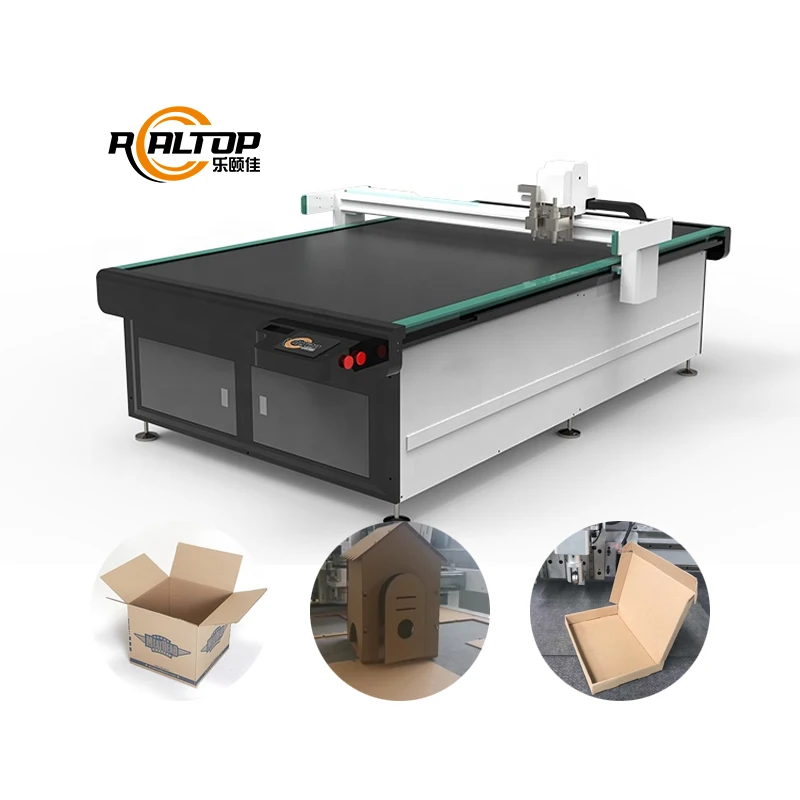
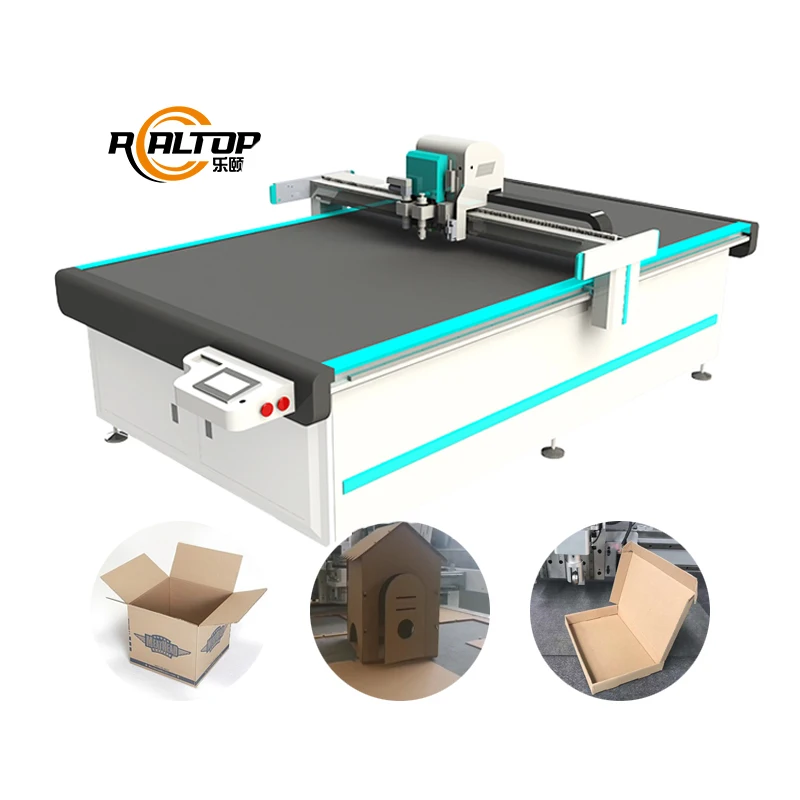
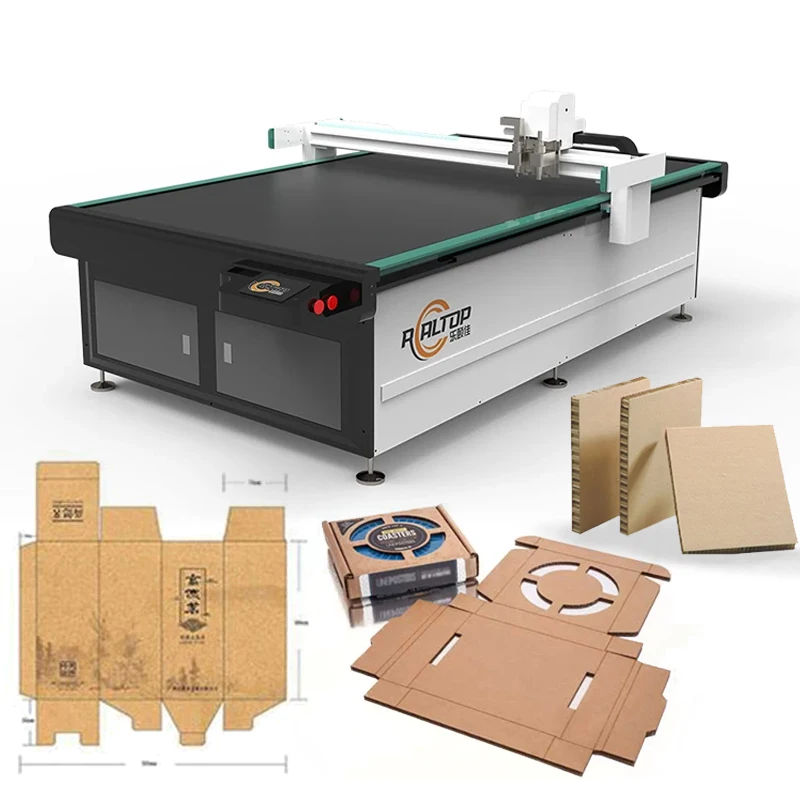
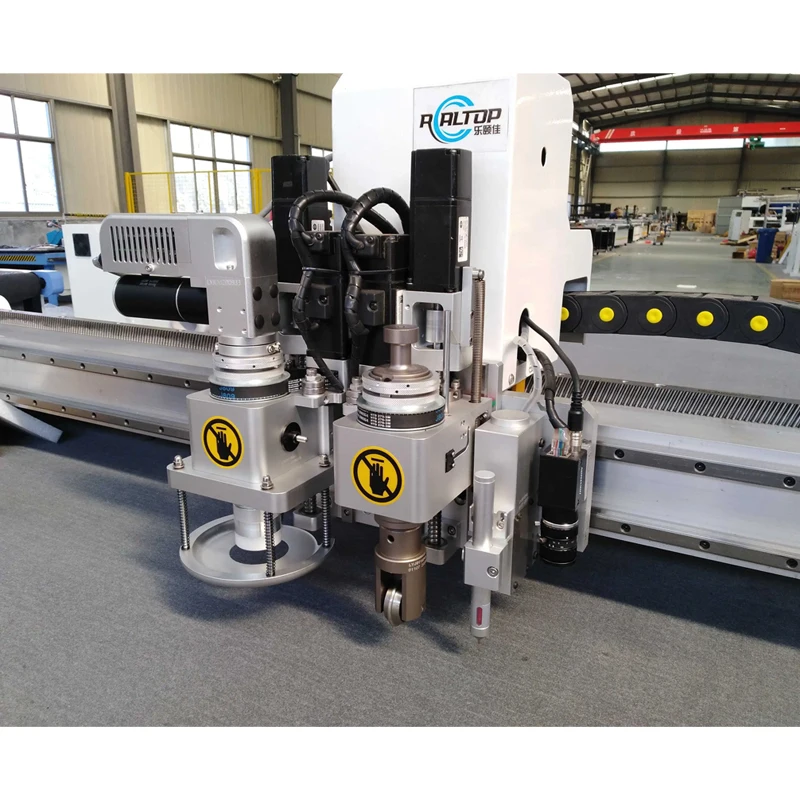
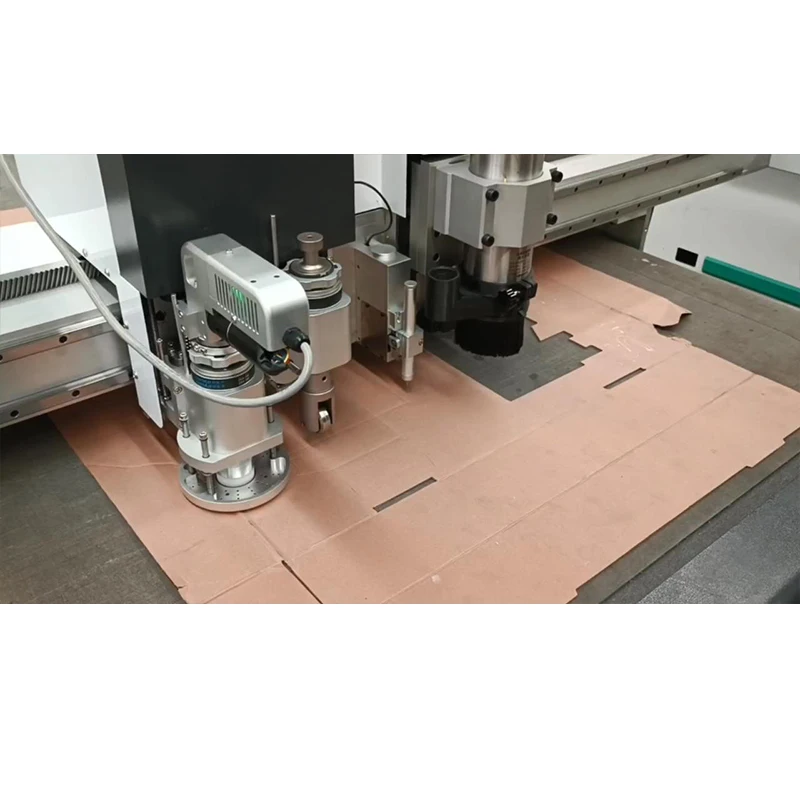
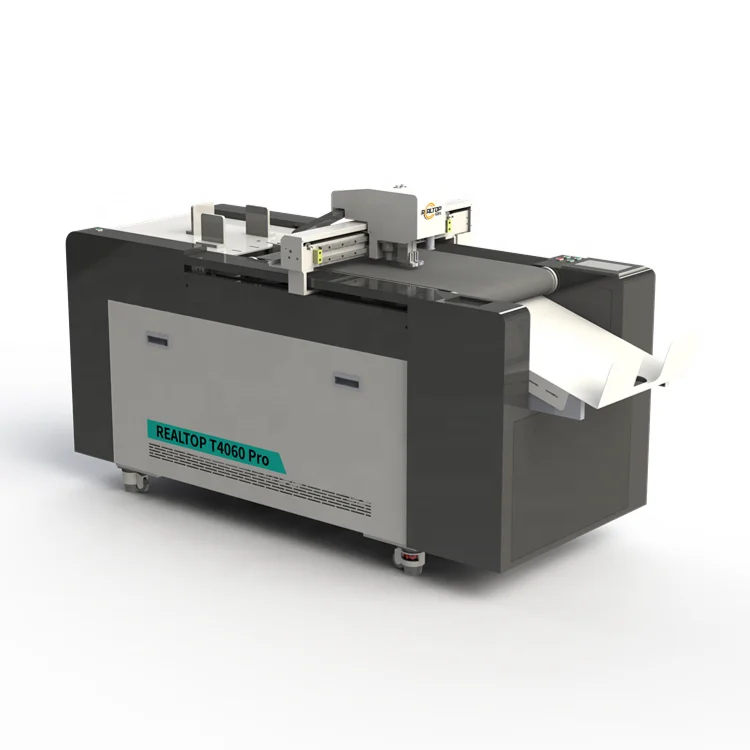
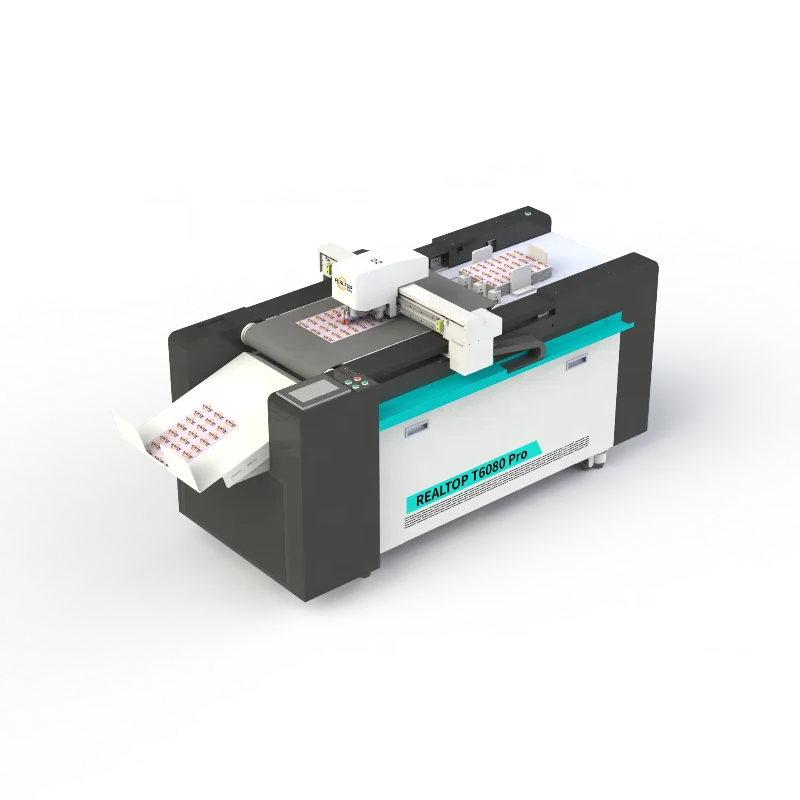
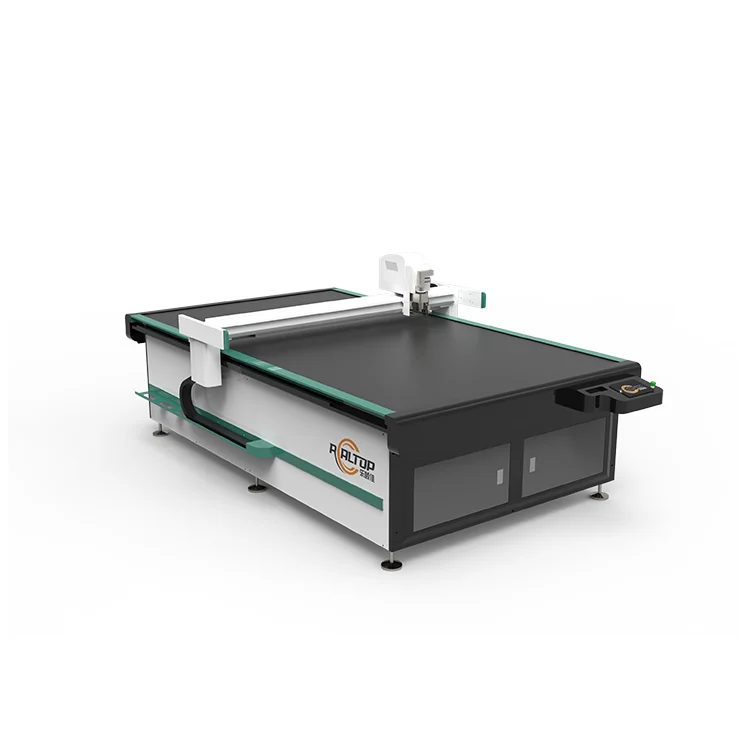
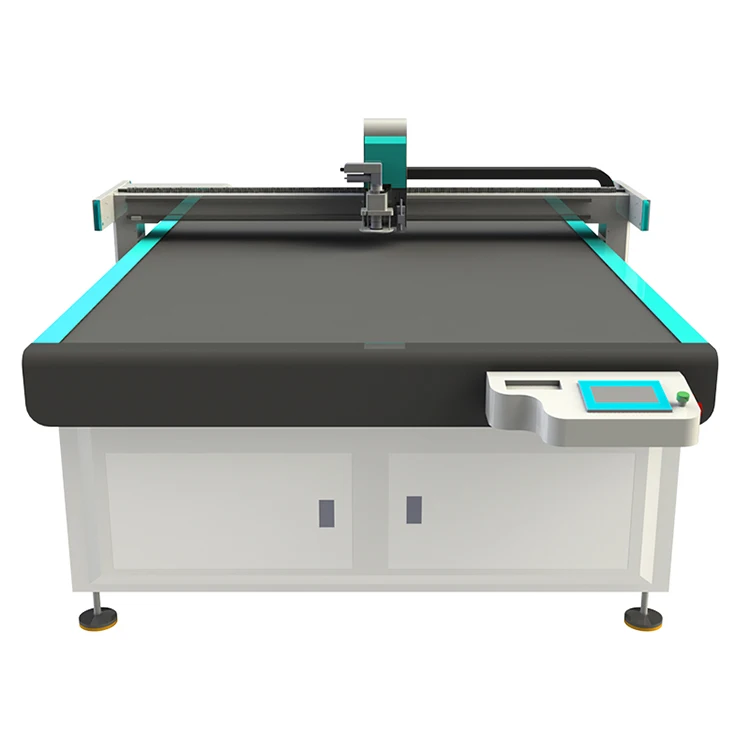
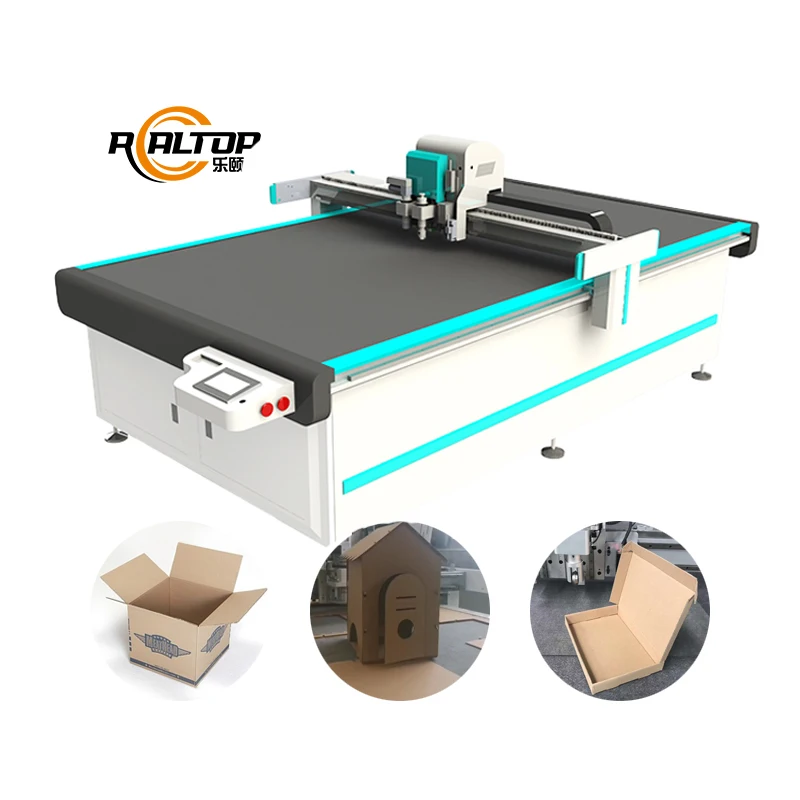
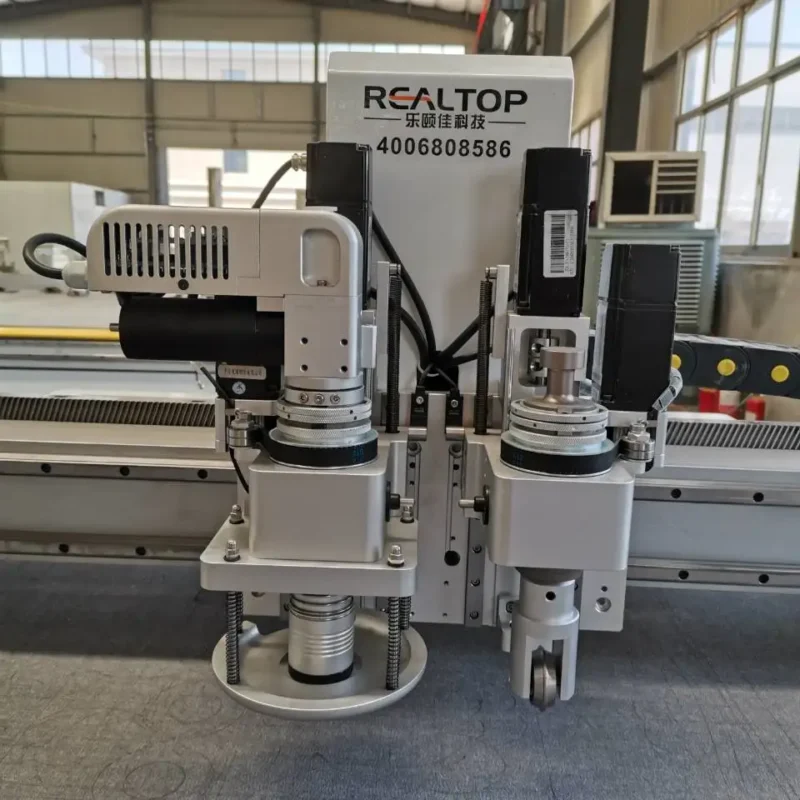
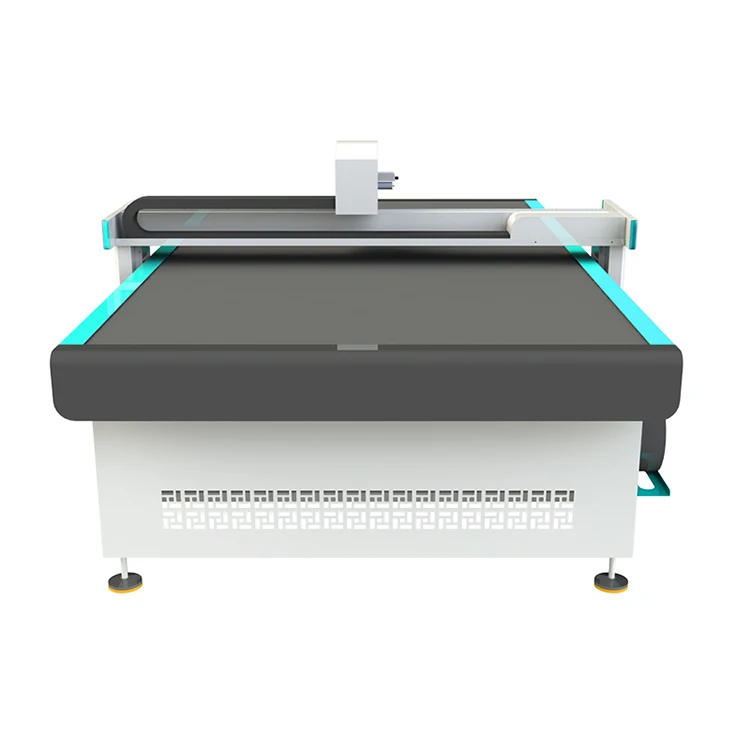
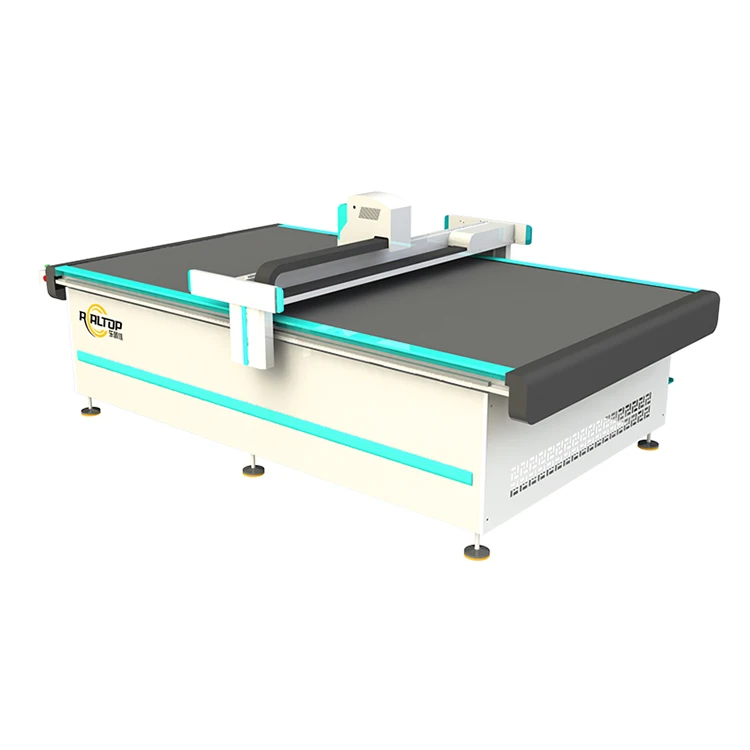
Multi-Tool Head Flexibility — oscillating knife, creasing wheel, kiss-cut blade and round punch mount on one gantry so carton sample houses switch jobs without keeping tooling inventory on the floor.
Technical Specifications
| Parameter | Value |
|---|---|
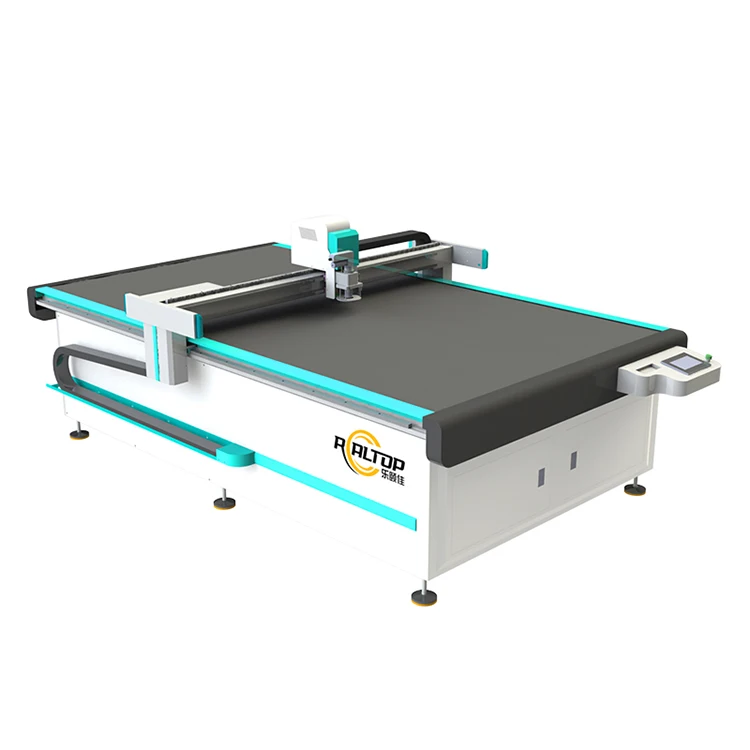
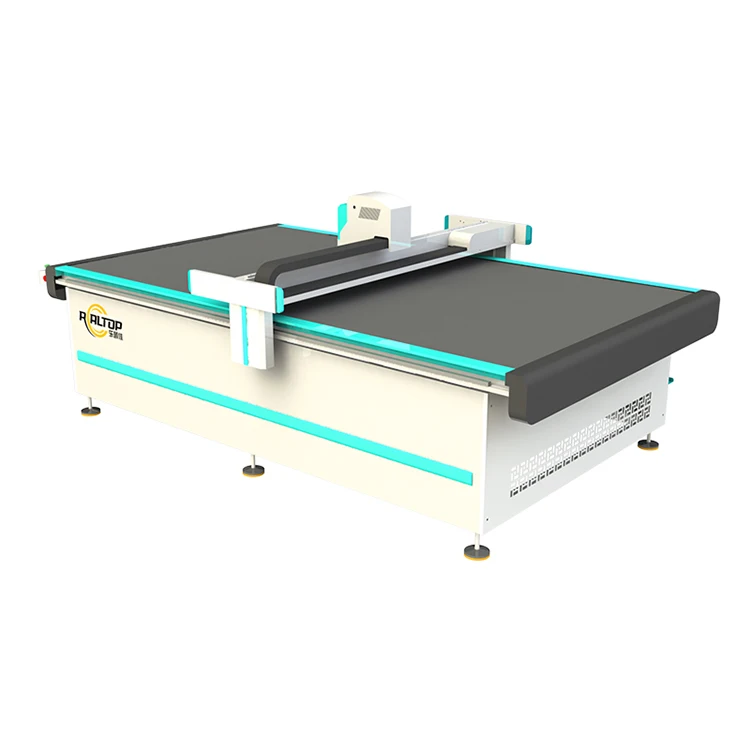
| Product Type | CNC Oscillating Knife Carton Cutting Machine |
| Model | RT–R2513 / RT-D2516 / RT-S2516 |
| Working Area | 2500×1300 mm (RT–R2513) / 1600×2500 mm (RT-D2516 / RT-S2516) |
| Machine Size | 3550×1910×1400 mm (RT–R2513) / 3450×2300×1250 mm (RT-D2516 / RT-S2516) |
| Cutting Thickness | ≤18 mm (basis not stated in source — confirm material type and flute profile) |
| Cutting Tools | Oscillating knife, Creasing tool, Kiss-Cut Knife Tool, Round punch |
| Feed System | Auto feeding with Germany imported conveyor belt (source value — verify against manufacturer catalog) |
| Table Type | Aluminum alloy honeycomb structure vacuum adsorption platform |
| Vacuum Pump | 7.5 kW |
| Servo Motor | Dongling servo (Delta servo motor listed in other configuration — verify final spec) |
| Guide Rail | Taiwan Hiwin rail |
| Rated Power | 9 kW |
| Voltage | 380 V (frequency not stated in source — confirm 50/60 Hz) |
| Repeated Accuracy | <0.05 mm |
| Profile Format | DXF, OLT, PDF, AI |
| Transmission Method | Ethernet port |
| Safety Device | Infrared sensors, emergency stop |
| Blade Supply | 10 pieces of oscillating blades included |
| Control Language | Customizable (English, Russian, Italian, Chinese mentioned in FAQ) |
| Delivery Time | <30 working days |
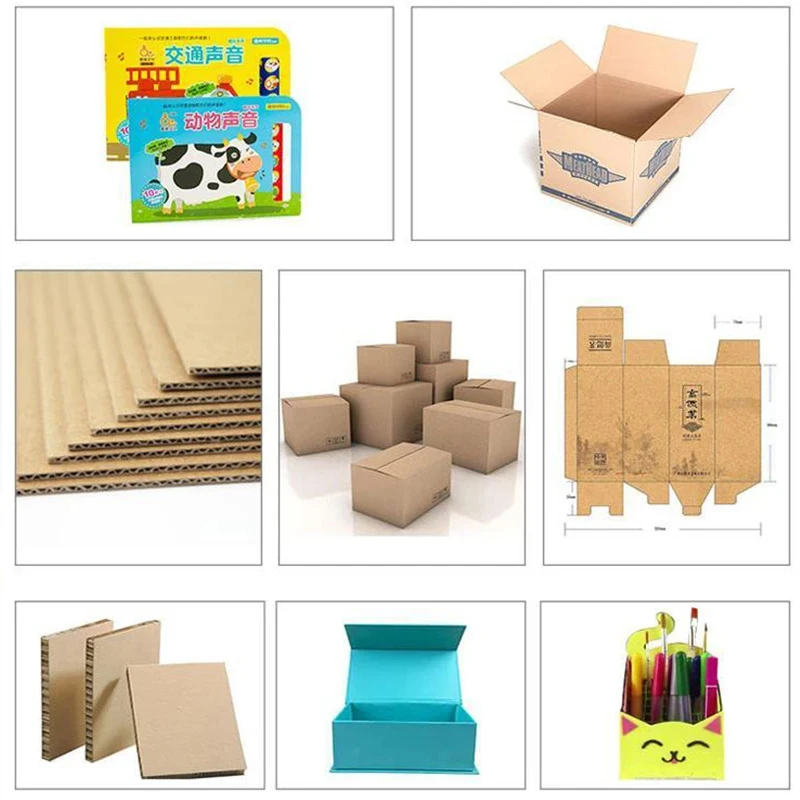
Application Suitability
| Application | Material or Output |
|---|---|
| Corrugated carton and packaging sample making | Single-wall, double-wall and E-flute corrugated board |
| Paper box prototyping and short-run production | Card stock, grey board and specialty paper |
| Sticker and label contour cutting | Printed vinyl, PP paper and self-adhesive label stock |
| Cardboard display and signage cutting | Honeycomb board, foam PVC and rigid card |
| Gift box and premium packaging sample development | Coated and uncoated board, magnetic closure box stock |
What "18 mm Cutting Depth" Actually Means on Corrugated
A quoted maximum thickness tells you nothing until it is tested on your specific flute profile and board density.
When a CNC carton cutting machine manufacturer lists a ceiling of 18 mm, that figure may hold for soft single-wall E-flute yet collapse double-wall BC-flute if the oscillating knife frequency and vacuum hold-down are not matched to the material stiffness. I once watched a sample maker lose an entire batch of grey board prototypes because the vacuum zoning left small flaps lifting during the final crease pass — the board density was far higher than the standard test piece. Before any purchase commitment, ask for a trial cut on your own corrugated grade and inspect the crease-to-cut registration across a nested layout [NEED_CITE: typical corrugated flute profiles and crush resistance values]. This single step separates a machine that fits your sample room from one that generates scrap.
Matching Tool Heads to the Actual Job in the Sample Room
A packaging sample house rarely runs one material all day. Monday might call for through-cutting double-wall corrugated carton blanks, Tuesday for kiss-cutting printed label sheets and Wednesday for punching hang-holes in a retail display header. The RT–R2513, RT-D2516 and RT-S2516 models each accept an oscillating knife for through-cuts, a creasing wheel for fold lines, a kiss-cut blade for sticker face-stock and a round punch for holes. Swapping between them on a single gantry means the operator does not walk to a tool crib or keep parallel machines running, which matters when floor space in a sample room is already tight.
How CCD Contour Recognition Fits Into Printed Packaging Workflows
Printed carton artwork rarely sits perfectly square on the sheet, and die-cut labels shift slightly after lamination. A CCD camera reads registration marks on the pre-printed stock and adjusts the cutting path in real time, so the crease lands on the scored line and the kiss-cut follows the printed border rather than drifting into the graphic. This capability is essential when a CNC carton cutting machine manufacturer supplies equipment for label converters who run short-run promotional stickers alongside structural carton samples on the same table. Confirm that the camera tracks marks at the machine’s full traverse speed, not just during slow positioning moves [NEED_CITE: CCD mark tracking accuracy at production traverse rates].
Reading the Specs That Actually Affect Sample Quality
The <0.05 mm repeated accuracy on Taiwan Hiwin linear guides matters most when a carton blank has six crease lines and four cut segments nested together — any cumulative drift shows as misaligned fold lines that prevent the box from squaring up during glue-up. The 7.5 kW vacuum pump paired with an aluminum honeycomb table must generate enough zoned suction to hold small sticker contours flat without the material lifting under the oscillating knife, which oscillates at high frequency to shear through fibrous corrugated flutes cleanly. Rated power of 9 kW covers the servo drives, spindle and vacuum system combined, so confirm your workshop has a dedicated circuit at the correct voltage and frequency before the crate arrives. The Ethernet transmission port accepts DXF, AI, PDF and OLT files, meaning an existing CAD workflow transfers without purchasing a separate nesting license.
The Hidden Cost of Skipping a Material Trial
Choosing a CNC carton cutting machine based solely on working area and quoted thickness leads to two common failures. First, the oscillating knife crushes the top liner of a dense grey board instead of shearing it, leaving a ragged edge that the client rejects during sample approval. Second, the vacuum table zoning covers only large sheets, so small carton blanks and label contours lift mid-cut and produce over-cut corners or incomplete kiss-cuts [NEED_CITE: vacuum adsorption requirements for small-format digital cutting]. Both problems surface only after the machine is installed and running your actual stock, which is why a factory sample cutting report on your own corrugated grade and card stock weight is non-negotiable.
Why Source This Range From a Single Manufacturer
Realtop builds both oscillating knife and laser cutting systems in-house, so a buyer evaluating carton sample equipment can compare knife cutting for corrugated board against CO2 laser cutting for acrylic display elements without juggling two different suppliers. Tool head and table configuration are specified per material and production volume rather than offered as a one-size package. Software compatibility is confirmed before the order is placed, covering the DXF, AI, PDF and OLT imports your design team already uses. Voltage, plug type and control language are locked down during the quotation stage, not left to assumption. Every unit ships with a sample cutting report on the buyer’s own material, giving you a physical reference before the machine leaves the factory.
Documentation & Verification
- Machine specification sheet matching the agreed tool head and table configuration
- Electrical schematic with confirmed voltage, frequency and plug type
- Sample cutting report produced on your corrugated grade and card stock
- Software licence note covering DXF, AI, PDF and OLT file format compatibility
- Factory test record documenting repeated accuracy across nested carton layouts
- CE declaration where applicable for the destination market
Installation, Commissioning & Support
- Dedicated 380 V circuit required; confirm 50/60 Hz with your local supply before dispatch
- Machine arrives fully assembled; position on level floor with clearance for the 3550 mm length (RT–R2513)
- 7.5 kW vacuum pump needs a separate exhaust path to keep the sample room clean
- First-run calibration includes vacuum zoning adjustment for your smallest carton blank
- Operation training covers tool head swaps and CCD mark setup for printed stock
- Ten oscillating blades included; order consumable felt and replacement blades for ongoing production
Preparing Your Inquiry
Send the specific corrugated flute profiles and card stock weights you plan to cut, along with typical sheet sizes and daily sample volume. Include your workshop voltage, frequency and preferred control language so the quotation locks these details in from the start. If you run an existing nesting software or CAD system, share a sample file in DXF, AI, PDF or OLT format so compatibility is verified before production begins.
Frequently Asked Questions
Q: How is cutting thickness verified for my specific corrugated flute and card stock weight?
A: The manufacturer runs a trial cut on your actual material before the order is finalized, producing a sample cutting report that documents edge quality, crease depth and vacuum hold-down performance. A quoted maximum of 18 mm is only meaningful when tested against your board density and flute profile.
Q: Which tool head combination do I need for carton creasing, sticker kiss-cut and hang-hole punching?
A: The oscillating knife handles through-cuts, the creasing wheel scores fold lines, the kiss-cut blade cuts label face-stock without penetrating the backing and the round punch drills hang-holes. All four mount on one gantry and swap per job without separate tooling inventory.
Q: Can the CCD camera track my printed registration marks at full production speed?
A: The CCD system reads pre-printed marks and adjusts the cutting path dynamically. Before commitment, confirm tracking accuracy at the machine’s rated traverse speed on your own printed stock, not only during slow positioning moves.
Q: What voltage, frequency and control language options are confirmed before shipment?
A: The quotation stage locks in voltage, frequency (50/60 Hz), plug type and control language — with English, Russian, Italian and Chinese available. These are documented on the electrical schematic so no on-site rewiring is needed.
Q: How does the vacuum table zoning handle my smallest carton blank without material lift?
A: The aluminum honeycomb table uses zoned adsorption that follows the cutting area. During commissioning, zones are adjusted to match your smallest blank or sticker contour, preventing lift under the oscillating knife during high-speed passes.
Multi-Tool Head Flexibility — oscillating knife, creasing wheel, kiss-cut blade and round punch mount on one gantry so carton sample houses switch jobs without keeping tooling inventory on the floor.
Technical Specifications
| Parameter | Value |
|---|---|
| Product Type | CNC Oscillating Knife Carton Cutting Machine |
| Model | RT–R2513 / RT-D2516 / RT-S2516 |
| Working Area | 2500×1300 mm (RT–R2513) / 1600×2500 mm (RT-D2516 / RT-S2516) |
| Machine Size | 3550×1910×1400 mm (RT–R2513) / 3450×2300×1250 mm (RT-D2516 / RT-S2516) |
| Cutting Thickness | ≤18 mm (basis not stated in source — confirm material type and flute profile) |
| Cutting Tools | Oscillating knife, Creasing tool, Kiss-Cut Knife Tool, Round punch |
| Feed System | Auto feeding with Germany imported conveyor belt (source value — verify against manufacturer catalog) |
| Table Type | Aluminum alloy honeycomb structure vacuum adsorption platform |
| Vacuum Pump | 7.5 kW |
| Servo Motor | Dongling servo (Delta servo motor listed in other configuration — verify final spec) |
| Guide Rail | Taiwan Hiwin rail |
| Rated Power | 9 kW |
| Voltage | 380 V (frequency not stated in source — confirm 50/60 Hz) |
| Repeated Accuracy | <0.05 mm |
| Profile Format | DXF, OLT, PDF, AI |
| Transmission Method | Ethernet port |
| Safety Device | Infrared sensors, emergency stop |
| Blade Supply | 10 pieces of oscillating blades included |
| Control Language | Customizable (English, Russian, Italian, Chinese mentioned in FAQ) |
| Delivery Time | <30 working days |
Application Suitability
| Application | Material or Output |
|---|---|
| Corrugated carton and packaging sample making | Single-wall, double-wall and E-flute corrugated board |
| Paper box prototyping and short-run production | Card stock, grey board and specialty paper |
| Sticker and label contour cutting | Printed vinyl, PP paper and self-adhesive label stock |
| Cardboard display and signage cutting | Honeycomb board, foam PVC and rigid card |
| Gift box and premium packaging sample development | Coated and uncoated board, magnetic closure box stock |
What "18 mm Cutting Depth" Actually Means on Corrugated
A quoted maximum thickness tells you nothing until it is tested on your specific flute profile and board density.
When a CNC carton cutting machine manufacturer lists a ceiling of 18 mm, that figure may hold for soft single-wall E-flute yet collapse double-wall BC-flute if the oscillating knife frequency and vacuum hold-down are not matched to the material stiffness. I once watched a sample maker lose an entire batch of grey board prototypes because the vacuum zoning left small flaps lifting during the final crease pass — the board density was far higher than the standard test piece. Before any purchase commitment, ask for a trial cut on your own corrugated grade and inspect the crease-to-cut registration across a nested layout [NEED_CITE: typical corrugated flute profiles and crush resistance values]. This single step separates a machine that fits your sample room from one that generates scrap.
Matching Tool Heads to the Actual Job in the Sample Room
A packaging sample house rarely runs one material all day. Monday might call for through-cutting double-wall corrugated carton blanks, Tuesday for kiss-cutting printed label sheets and Wednesday for punching hang-holes in a retail display header. The RT–R2513, RT-D2516 and RT-S2516 models each accept an oscillating knife for through-cuts, a creasing wheel for fold lines, a kiss-cut blade for sticker face-stock and a round punch for holes. Swapping between them on a single gantry means the operator does not walk to a tool crib or keep parallel machines running, which matters when floor space in a sample room is already tight.
How CCD Contour Recognition Fits Into Printed Packaging Workflows
Printed carton artwork rarely sits perfectly square on the sheet, and die-cut labels shift slightly after lamination. A CCD camera reads registration marks on the pre-printed stock and adjusts the cutting path in real time, so the crease lands on the scored line and the kiss-cut follows the printed border rather than drifting into the graphic. This capability is essential when a CNC carton cutting machine manufacturer supplies equipment for label converters who run short-run promotional stickers alongside structural carton samples on the same table. Confirm that the camera tracks marks at the machine’s full traverse speed, not just during slow positioning moves [NEED_CITE: CCD mark tracking accuracy at production traverse rates].
Reading the Specs That Actually Affect Sample Quality
The <0.05 mm repeated accuracy on Taiwan Hiwin linear guides matters most when a carton blank has six crease lines and four cut segments nested together — any cumulative drift shows as misaligned fold lines that prevent the box from squaring up during glue-up. The 7.5 kW vacuum pump paired with an aluminum honeycomb table must generate enough zoned suction to hold small sticker contours flat without the material lifting under the oscillating knife, which oscillates at high frequency to shear through fibrous corrugated flutes cleanly. Rated power of 9 kW covers the servo drives, spindle and vacuum system combined, so confirm your workshop has a dedicated circuit at the correct voltage and frequency before the crate arrives. The Ethernet transmission port accepts DXF, AI, PDF and OLT files, meaning an existing CAD workflow transfers without purchasing a separate nesting license.
The Hidden Cost of Skipping a Material Trial
Choosing a CNC carton cutting machine based solely on working area and quoted thickness leads to two common failures. First, the oscillating knife crushes the top liner of a dense grey board instead of shearing it, leaving a ragged edge that the client rejects during sample approval. Second, the vacuum table zoning covers only large sheets, so small carton blanks and label contours lift mid-cut and produce over-cut corners or incomplete kiss-cuts [NEED_CITE: vacuum adsorption requirements for small-format digital cutting]. Both problems surface only after the machine is installed and running your actual stock, which is why a factory sample cutting report on your own corrugated grade and card stock weight is non-negotiable.
Why Source This Range From a Single Manufacturer
Realtop builds both oscillating knife and laser cutting systems in-house, so a buyer evaluating carton sample equipment can compare knife cutting for corrugated board against CO2 laser cutting for acrylic display elements without juggling two different suppliers. Tool head and table configuration are specified per material and production volume rather than offered as a one-size package. Software compatibility is confirmed before the order is placed, covering the DXF, AI, PDF and OLT imports your design team already uses. Voltage, plug type and control language are locked down during the quotation stage, not left to assumption. Every unit ships with a sample cutting report on the buyer’s own material, giving you a physical reference before the machine leaves the factory.
Documentation & Verification
- Machine specification sheet matching the agreed tool head and table configuration
- Electrical schematic with confirmed voltage, frequency and plug type
- Sample cutting report produced on your corrugated grade and card stock
- Software licence note covering DXF, AI, PDF and OLT file format compatibility
- Factory test record documenting repeated accuracy across nested carton layouts
- CE declaration where applicable for the destination market
Installation, Commissioning & Support
- Dedicated 380 V circuit required; confirm 50/60 Hz with your local supply before dispatch
- Machine arrives fully assembled; position on level floor with clearance for the 3550 mm length (RT–R2513)
- 7.5 kW vacuum pump needs a separate exhaust path to keep the sample room clean
- First-run calibration includes vacuum zoning adjustment for your smallest carton blank
- Operation training covers tool head swaps and CCD mark setup for printed stock
- Ten oscillating blades included; order consumable felt and replacement blades for ongoing production
Preparing Your Inquiry
Send the specific corrugated flute profiles and card stock weights you plan to cut, along with typical sheet sizes and daily sample volume. Include your workshop voltage, frequency and preferred control language so the quotation locks these details in from the start. If you run an existing nesting software or CAD system, share a sample file in DXF, AI, PDF or OLT format so compatibility is verified before production begins.
Frequently Asked Questions
Q: How is cutting thickness verified for my specific corrugated flute and card stock weight?
A: The manufacturer runs a trial cut on your actual material before the order is finalized, producing a sample cutting report that documents edge quality, crease depth and vacuum hold-down performance. A quoted maximum of 18 mm is only meaningful when tested against your board density and flute profile.
Q: Which tool head combination do I need for carton creasing, sticker kiss-cut and hang-hole punching?
A: The oscillating knife handles through-cuts, the creasing wheel scores fold lines, the kiss-cut blade cuts label face-stock without penetrating the backing and the round punch drills hang-holes. All four mount on one gantry and swap per job without separate tooling inventory.
Q: Can the CCD camera track my printed registration marks at full production speed?
A: The CCD system reads pre-printed marks and adjusts the cutting path dynamically. Before commitment, confirm tracking accuracy at the machine’s rated traverse speed on your own printed stock, not only during slow positioning moves.
Q: What voltage, frequency and control language options are confirmed before shipment?
A: The quotation stage locks in voltage, frequency (50/60 Hz), plug type and control language — with English, Russian, Italian and Chinese available. These are documented on the electrical schematic so no on-site rewiring is needed.
Q: How does the vacuum table zoning handle my smallest carton blank without material lift?
A: The aluminum honeycomb table uses zoned adsorption that follows the cutting area. During commissioning, zones are adjusted to match your smallest blank or sticker contour, preventing lift under the oscillating knife during high-speed passes.
商品评价
There are no reviews yet.