




Fast Delivery
Quick, reliable shipping to any location.

Free & easy returns
Return this item by mail or in store within 90 days for a full refund.
Tool Head Configuration Matched to Material — The packaging and sample-making buyer can specify oscillating knife, creasing wheel, or V-groove tooling per substrate rather than forcing one method across corrugated, greyboard, and foam.
Technical Specifications
| Parameter | Value |
|---|---|
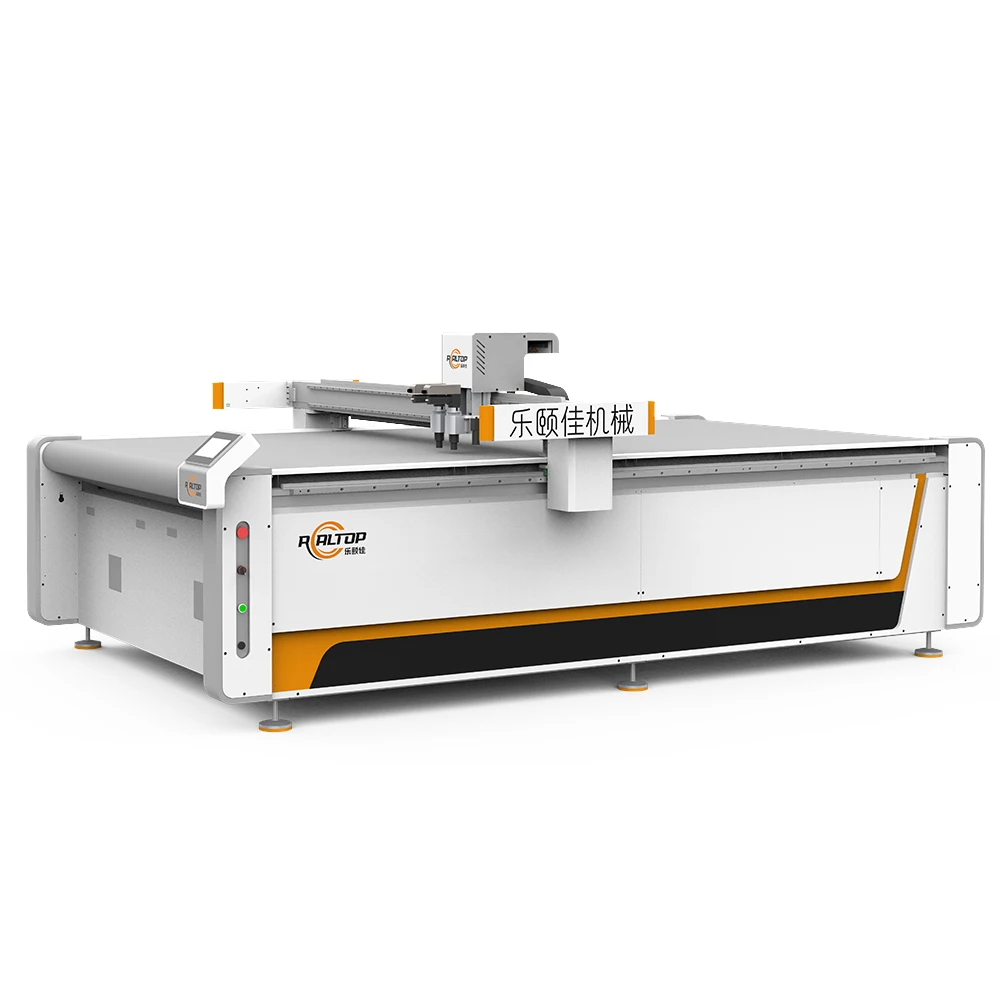
| Product Type | CNC Oscillating Knife Cutting Table for Packaging |
| Working Area | 1600×2500 mm |
| Tool Head Options | Oscillating knife, Driven rotary knife, Creasing wheel, Kiss cutting tool, Pneumatic knife, Milling tool, V-groove knife |
| Cutting Speed Range | 0–1500 mm/s |
| Cutting Thickness | ≤ 40 mm (basis to be confirmed with material type and density) |
| Cutting Accuracy | ±0.1 mm |
| Vacuum Pump | 9 kW |
| Vacuum Table | Aluminum bellows vacuum table |
| Voltage Options | 110V / 220V / 380V (configurable before shipment) |
| Overall Dimensions (L×W×H) | 3300×2100×1350 mm |
| Profile Format Compatibility | PLT, DXF, AI, PDF |
| Control System | PLC control panel with multi-language interface |
| Servo Drive Options | Panasonic, Delta, Dorna (source value — verify against manufacturer catalog) |
| Safety Devices | Infrared sensor device and emergency stop |
| Language Options | English, Russian, Italian, Chinese (customizable) |
| Software | Dedicated packaging box structure design software |
Application Suitability
| Application | Material or Output |
|---|---|
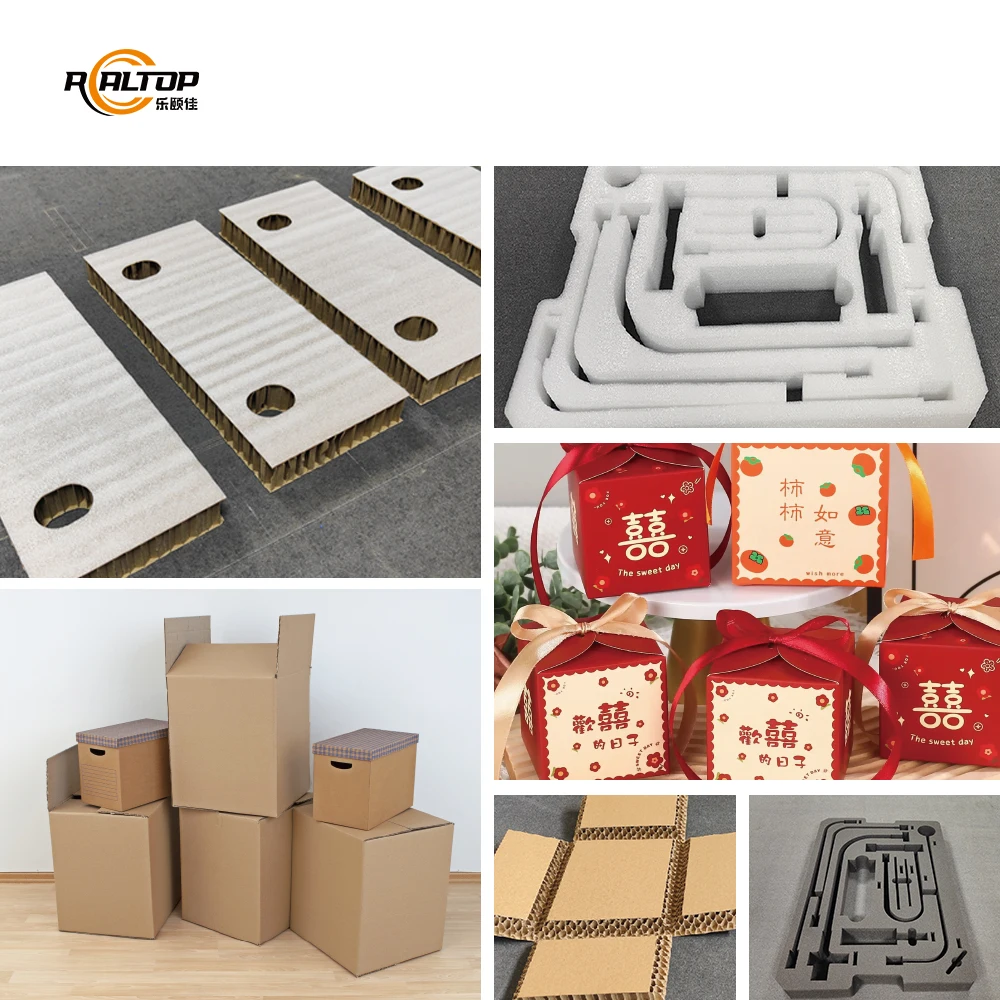
| Carton and packaging sample making | Corrugated cardboard (E-flute, B-flute, BC-flute), greyboard, cardstock |
| Short-run customized packaging | Art paper, specialty paper, adhesive-backed materials |
| Signage and display board cutting | PVC board, PET sheet, foam board |
| Protective insert and cushion cutting | EVA foam, EPE foam, PU foam |
| Gasket and seal prototyping | Rubber mats, composite materials |
| Textile and leather packaging component | Velvet, fleece fabric, non-woven fabric, synthetic leather |
When the Voltage Question Comes Before the Price
Confirming electrical specification before quotation prevents weeks of idle machines on the shop floor.
A CNC oscillating knife cutting machine manufacturer often quotes a standard voltage, and the buyer assumes compatibility until the unit arrives and trips the breaker. I once watched a packaging sample room sit idle for three weeks because the transformer retrofit was not in the project plan. The machine itself was fine; the specification handshake was not [NEED_CITE: voltage and frequency standards by export market].
How Tool Heads Define the Edge
A packaging shop cutting E-flute corrugated board and 2 mm greyboard on the same day needs both an oscillating knife and a creasing wheel on standby. Swapping tool heads on this platform is a manual operation at the carriage, and the configuration list submitted before order determines which tools arrive installed. A driven rotary knife handles thicker foam inserts without the chatter marks an oscillating blade can leave on low-density EPE.
The Vacuum Table and Small-Part Hold-Down
The aluminum bellows vacuum surface maintains flatness across the 1600×2500 mm working area, which matters when a packaging sample sheet nests dozens of small die-cut shapes. Without adequate hold-down, thin art paper and cardstock lift at the trailing edge of the cut path, producing dimensional drift beyond the ±0.1 mm accuracy rating. Zoning on the table allows the operator to pull vacuum only where material is present [NEED_CITE: vacuum table zoning practices in digital flatbed cutting].
What the Specs Mean for Packaging Production
The 0–1500 mm/s cutting speed range gives the operator room to slow down on intricate box lock structures and accelerate on long straight crease lines. The PLC control panel stores these speed profiles per job, so a switch from a simple shipper to a complex retail-ready display does not require reprogramming from scratch. Dedicated packaging box structure design software imports PLT, DXF, AI, and PDF profiles, reducing the step between box design and table cutting. The 9 kW vacuum pump provides the suction needed for heavier corrugated sheets without the table losing grip mid-cut.
The Hidden Cost of Wrong Tooling Selection
Buyers who choose a single oscillating knife for every material end up with crushed corrugated flutes on BC-flute board and frayed edges on non-woven fabric. A creasing wheel that is too wide for the flute profile leaves a fold line that cracks on assembly. These failures do not show up in the sample report — they appear two weeks into production when the box fails the drop test [NEED_CITE: corrugated board creasing and compression strength relationship].
Why Source This Machine From Here
In-house design covers both the knife cutting carriage and the vacuum table frame, so the tool head configuration and the table zoning are specified together rather than sourced from separate suppliers. Every machine ships with a sample cutting report run on the buyer’s own material, documenting edge quality and dimensional accuracy before the unit leaves the factory. Voltage, plug type, and control language are locked in the specification sheet before production begins, not assumed at dispatch. Software licence and file format compatibility are confirmed against the buyer’s existing box design workflow so there is no format conversion delay on first use.
Documentation & Verification
- Machine specification sheet listing every tool head and voltage option confirmed at order
- Electrical schematic matching the destination country voltage and frequency standard
- Sample cutting report on buyer-supplied corrugated and foam materials
- Tool head and table configuration list verified against production material stack
- Software licence note with PLT, DXF, AI, PDF format compatibility confirmed
- Factory test record covering vacuum hold-down and cutting accuracy before dispatch
Installation, Commissioning & Support
- 3300×2100 mm footprint requires a level concrete floor with clearance for sheet loading on both long sides
- 9 kW vacuum pump and PLC control demand a dedicated circuit at the confirmed voltage (110V / 220V / 380V)
- Machine ships in a single crate; table leveling and gantry alignment completed on-site during commissioning
- First-run parameter setting includes vacuum zone mapping for your specific flute and board weight range
- Operator training covers tool head changeover, crease wheel depth adjustment, and PLC job recall
- Spare parts list includes oscillating knife blades, creasing wheels, and vacuum table seals
Before You Send an Inquiry
Tell us the material types and thicknesses you plan to cut, the sheet sizes you typically buy, and the daily volume of samples or short-run boxes you produce. Include your workshop voltage and frequency, the language your operators need on the control panel, and whether your box designs originate in PLT, DXF, AI, or PDF format. If you want a sample cut on your own board stock before committing, send us a sheet and your most complex profile.
Frequently Asked Questions
Q: How do I choose between oscillating knife and creasing wheel for corrugated board?
A: The oscillating knife cuts through the flute profile for box outlines and internal cutouts, while the creasing wheel compresses the board along fold lines without breaking the outer liner. Most packaging sample work requires both tools on the same carriage. The tool head configuration list is matched to your flute type and board weight before order.
Q: Can the 1600×2500 mm working area handle full-size packaging sheets?
A: The table accommodates standard corrugated and greyboard sheets used in short-run packaging and sample making. If your material arrives in larger format, you will need to pre-cut to fit. Confirm your typical sheet dimensions during inquiry so the working area and nesting software are validated against your stock sizes.
Q: What file formats does the packaging design software accept?
A: The dedicated packaging box structure design software imports PLT, DXF, AI, and PDF profiles. Before order, we confirm compatibility with your existing design workflow so that files transfer without manual redrawing. If you use a proprietary box design system, share a sample file during the inquiry stage for format testing.
Q: Why does voltage confirmation matter before shipment?
A: Industrial workshops run on different voltage and frequency standards depending on the country. A machine wired for 380V will not operate in a 220V facility without a transformer, which adds cost and delay. The electrical specification sheet is locked in before production so the motor, vacuum pump, and control panel match your local supply on arrival.
Q: How does the vacuum table hold small packaging samples flat?
A: The aluminum bellows vacuum table uses zoned suction areas so the operator can activate vacuum only where material is present. This prevents small cut pieces from lifting during the final passes of the tool head. Zone configuration is set during commissioning based on the typical sample sizes you produce.
Tool Head Configuration Matched to Material — The packaging and sample-making buyer can specify oscillating knife, creasing wheel, or V-groove tooling per substrate rather than forcing one method across corrugated, greyboard, and foam.
Technical Specifications
| Parameter | Value |
|---|---|
| Product Type | CNC Oscillating Knife Cutting Table for Packaging |
| Working Area | 1600×2500 mm |
| Tool Head Options | Oscillating knife, Driven rotary knife, Creasing wheel, Kiss cutting tool, Pneumatic knife, Milling tool, V-groove knife |
| Cutting Speed Range | 0–1500 mm/s |
| Cutting Thickness | ≤ 40 mm (basis to be confirmed with material type and density) |
| Cutting Accuracy | ±0.1 mm |
| Vacuum Pump | 9 kW |
| Vacuum Table | Aluminum bellows vacuum table |
| Voltage Options | 110V / 220V / 380V (configurable before shipment) |
| Overall Dimensions (L×W×H) | 3300×2100×1350 mm |
| Profile Format Compatibility | PLT, DXF, AI, PDF |
| Control System | PLC control panel with multi-language interface |
| Servo Drive Options | Panasonic, Delta, Dorna (source value — verify against manufacturer catalog) |
| Safety Devices | Infrared sensor device and emergency stop |
| Language Options | English, Russian, Italian, Chinese (customizable) |
| Software | Dedicated packaging box structure design software |
Application Suitability
| Application | Material or Output |
|---|---|
| Carton and packaging sample making | Corrugated cardboard (E-flute, B-flute, BC-flute), greyboard, cardstock |
| Short-run customized packaging | Art paper, specialty paper, adhesive-backed materials |
| Signage and display board cutting | PVC board, PET sheet, foam board |
| Protective insert and cushion cutting | EVA foam, EPE foam, PU foam |
| Gasket and seal prototyping | Rubber mats, composite materials |
| Textile and leather packaging component | Velvet, fleece fabric, non-woven fabric, synthetic leather |
When the Voltage Question Comes Before the Price
Confirming electrical specification before quotation prevents weeks of idle machines on the shop floor.
A CNC oscillating knife cutting machine manufacturer often quotes a standard voltage, and the buyer assumes compatibility until the unit arrives and trips the breaker. I once watched a packaging sample room sit idle for three weeks because the transformer retrofit was not in the project plan. The machine itself was fine; the specification handshake was not [NEED_CITE: voltage and frequency standards by export market].
How Tool Heads Define the Edge
A packaging shop cutting E-flute corrugated board and 2 mm greyboard on the same day needs both an oscillating knife and a creasing wheel on standby. Swapping tool heads on this platform is a manual operation at the carriage, and the configuration list submitted before order determines which tools arrive installed. A driven rotary knife handles thicker foam inserts without the chatter marks an oscillating blade can leave on low-density EPE.
The Vacuum Table and Small-Part Hold-Down
The aluminum bellows vacuum surface maintains flatness across the 1600×2500 mm working area, which matters when a packaging sample sheet nests dozens of small die-cut shapes. Without adequate hold-down, thin art paper and cardstock lift at the trailing edge of the cut path, producing dimensional drift beyond the ±0.1 mm accuracy rating. Zoning on the table allows the operator to pull vacuum only where material is present [NEED_CITE: vacuum table zoning practices in digital flatbed cutting].
What the Specs Mean for Packaging Production
The 0–1500 mm/s cutting speed range gives the operator room to slow down on intricate box lock structures and accelerate on long straight crease lines. The PLC control panel stores these speed profiles per job, so a switch from a simple shipper to a complex retail-ready display does not require reprogramming from scratch. Dedicated packaging box structure design software imports PLT, DXF, AI, and PDF profiles, reducing the step between box design and table cutting. The 9 kW vacuum pump provides the suction needed for heavier corrugated sheets without the table losing grip mid-cut.
The Hidden Cost of Wrong Tooling Selection
Buyers who choose a single oscillating knife for every material end up with crushed corrugated flutes on BC-flute board and frayed edges on non-woven fabric. A creasing wheel that is too wide for the flute profile leaves a fold line that cracks on assembly. These failures do not show up in the sample report — they appear two weeks into production when the box fails the drop test [NEED_CITE: corrugated board creasing and compression strength relationship].
Why Source This Machine From Here
In-house design covers both the knife cutting carriage and the vacuum table frame, so the tool head configuration and the table zoning are specified together rather than sourced from separate suppliers. Every machine ships with a sample cutting report run on the buyer’s own material, documenting edge quality and dimensional accuracy before the unit leaves the factory. Voltage, plug type, and control language are locked in the specification sheet before production begins, not assumed at dispatch. Software licence and file format compatibility are confirmed against the buyer’s existing box design workflow so there is no format conversion delay on first use.
Documentation & Verification
- Machine specification sheet listing every tool head and voltage option confirmed at order
- Electrical schematic matching the destination country voltage and frequency standard
- Sample cutting report on buyer-supplied corrugated and foam materials
- Tool head and table configuration list verified against production material stack
- Software licence note with PLT, DXF, AI, PDF format compatibility confirmed
- Factory test record covering vacuum hold-down and cutting accuracy before dispatch
Installation, Commissioning & Support
- 3300×2100 mm footprint requires a level concrete floor with clearance for sheet loading on both long sides
- 9 kW vacuum pump and PLC control demand a dedicated circuit at the confirmed voltage (110V / 220V / 380V)
- Machine ships in a single crate; table leveling and gantry alignment completed on-site during commissioning
- First-run parameter setting includes vacuum zone mapping for your specific flute and board weight range
- Operator training covers tool head changeover, crease wheel depth adjustment, and PLC job recall
- Spare parts list includes oscillating knife blades, creasing wheels, and vacuum table seals
Before You Send an Inquiry
Tell us the material types and thicknesses you plan to cut, the sheet sizes you typically buy, and the daily volume of samples or short-run boxes you produce. Include your workshop voltage and frequency, the language your operators need on the control panel, and whether your box designs originate in PLT, DXF, AI, or PDF format. If you want a sample cut on your own board stock before committing, send us a sheet and your most complex profile.
Frequently Asked Questions
Q: How do I choose between oscillating knife and creasing wheel for corrugated board?
A: The oscillating knife cuts through the flute profile for box outlines and internal cutouts, while the creasing wheel compresses the board along fold lines without breaking the outer liner. Most packaging sample work requires both tools on the same carriage. The tool head configuration list is matched to your flute type and board weight before order.
Q: Can the 1600×2500 mm working area handle full-size packaging sheets?
A: The table accommodates standard corrugated and greyboard sheets used in short-run packaging and sample making. If your material arrives in larger format, you will need to pre-cut to fit. Confirm your typical sheet dimensions during inquiry so the working area and nesting software are validated against your stock sizes.
Q: What file formats does the packaging design software accept?
A: The dedicated packaging box structure design software imports PLT, DXF, AI, and PDF profiles. Before order, we confirm compatibility with your existing design workflow so that files transfer without manual redrawing. If you use a proprietary box design system, share a sample file during the inquiry stage for format testing.
Q: Why does voltage confirmation matter before shipment?
A: Industrial workshops run on different voltage and frequency standards depending on the country. A machine wired for 380V will not operate in a 220V facility without a transformer, which adds cost and delay. The electrical specification sheet is locked in before production so the motor, vacuum pump, and control panel match your local supply on arrival.
Q: How does the vacuum table hold small packaging samples flat?
A: The aluminum bellows vacuum table uses zoned suction areas so the operator can activate vacuum only where material is present. This prevents small cut pieces from lifting during the final passes of the tool head. Zone configuration is set during commissioning based on the typical sample sizes you produce.










商品评价
There are no reviews yet.