

Fast Delivery
Quick, reliable shipping to any location.

Free & easy returns
Return this item by mail or in store within 90 days for a full refund.
Configuration Matched to Material — every tool head and table setup for the 1625 is specified against your actual corrugated flute profile and board density, not just the working area.
Technical Specifications
| Parameter | Value |
|---|---|
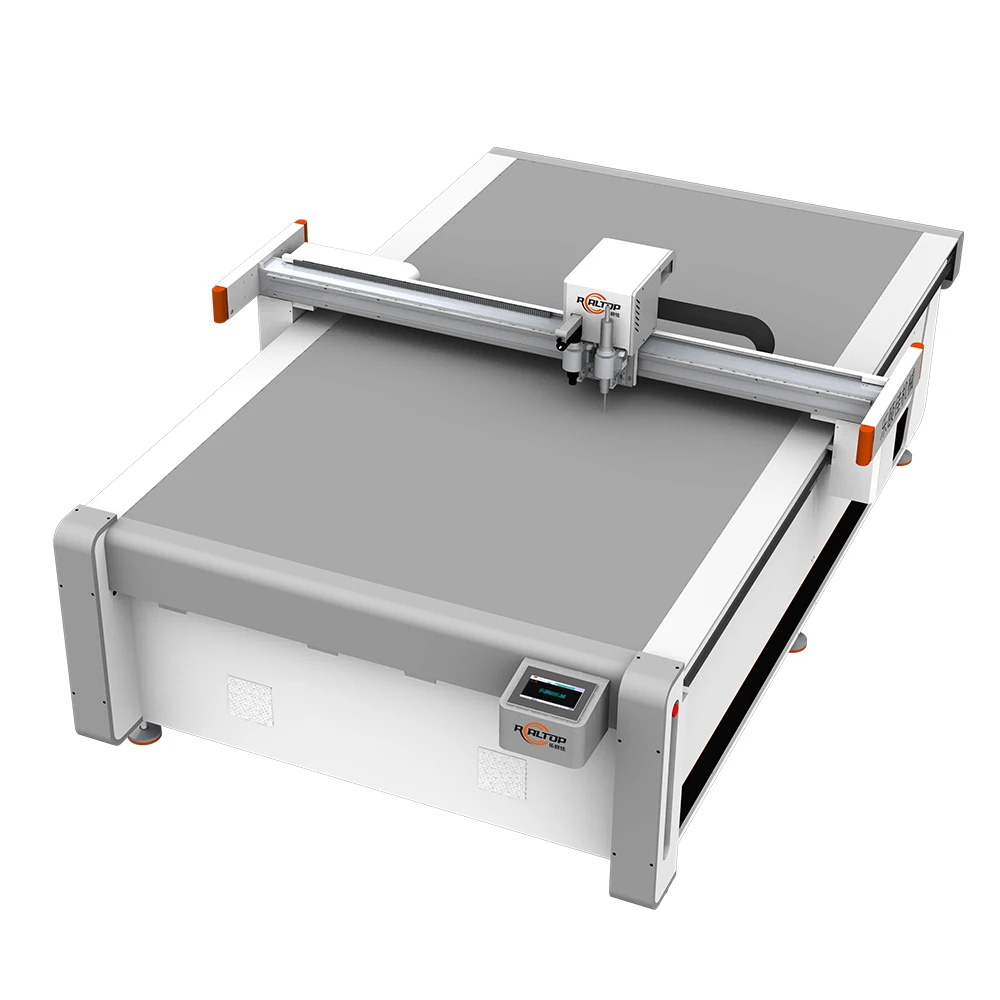
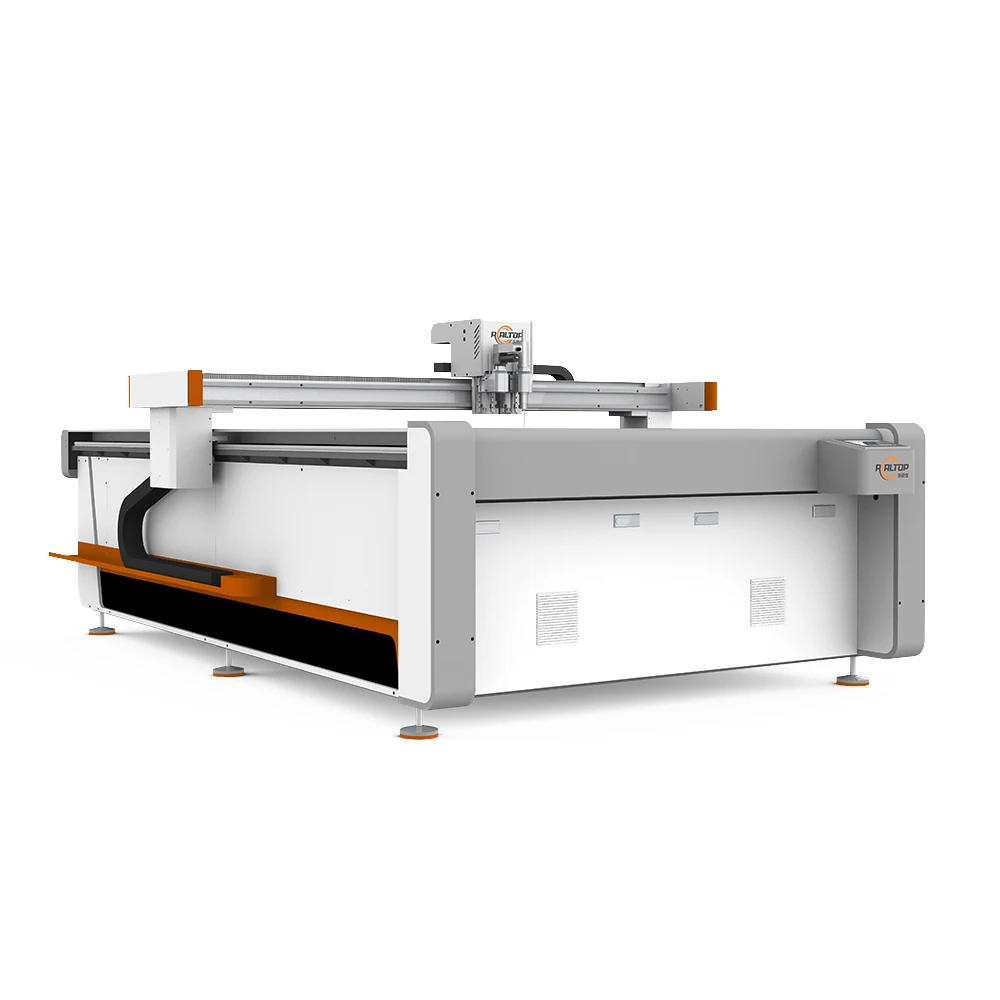
| Product Type | CNC Oscillating Knife Cutting Machine |
| Model | 1625 |
| Working Area | 1600×2500 mm |
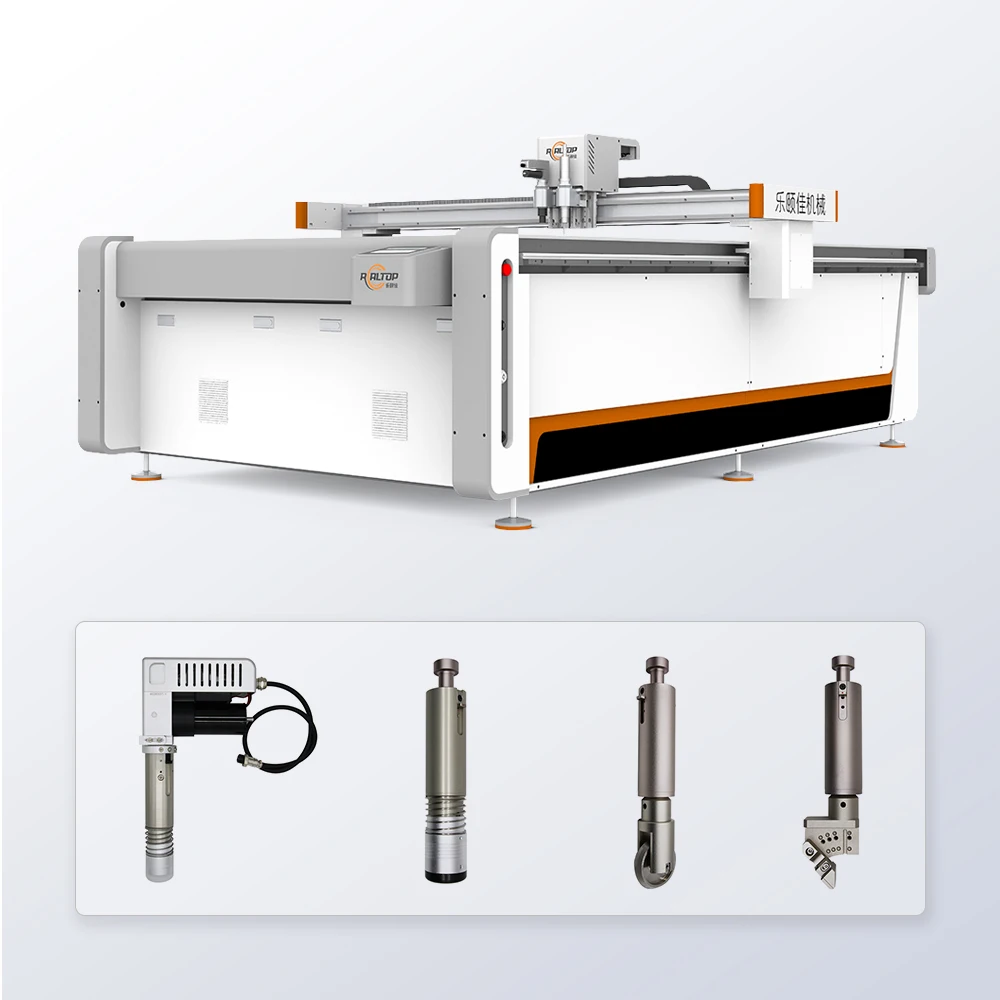
| Tool Head Options | Oscillating knife, Driven rotary knife, Creasing wheel, Kiss cutting tool, Pneumatic knife, Milling tool, V groove knife |
| Applicable Materials | Fabric, Cardboard, Carton, Mats, PVC, EVA, Leather, Acrylic, Foam, PTFE, Rubber |
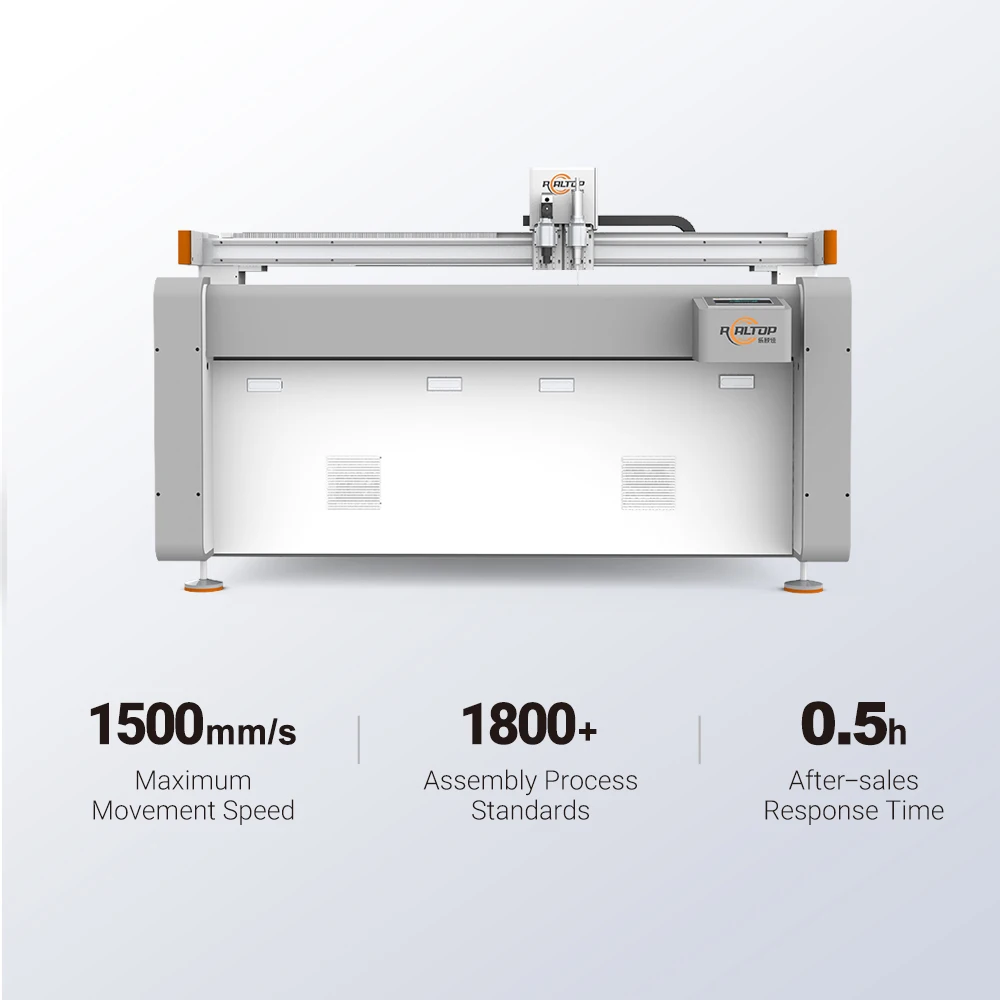
| Cutting Speed | 0-1500 mm/s |
| Cutting Thickness | ≤ 40 mm |
| Cutting Accuracy | ±0.1 mm |
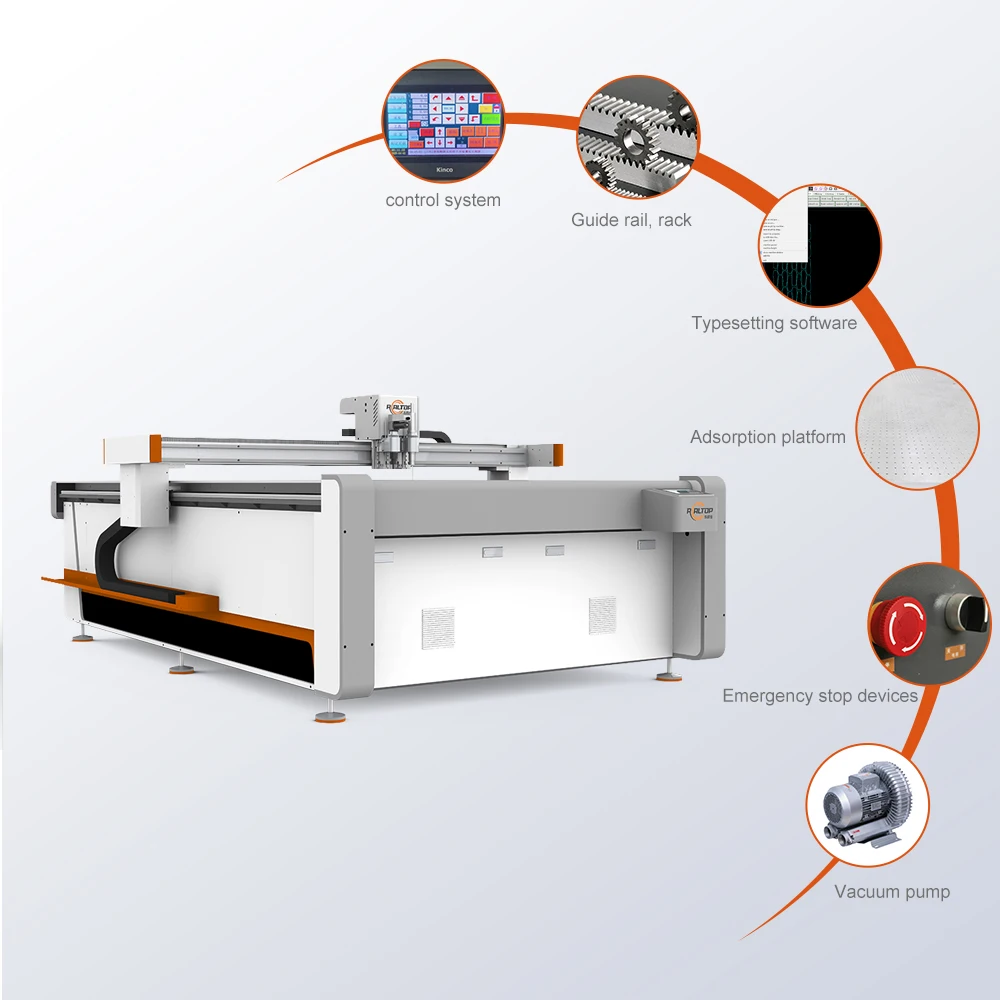
| Vacuum Pump | 9 kW |
| Vacuum Table | Aluminum bellows vacuum table (aerospace-grade aluminum cast pump, energy reduction claimed 30% — basis not stated in source) |
| Control System | PLC control panel |
| Servo Motor Options | Panasonic, Delta, Dorna |
| Voltage Options | 110V, 220V, 380V |
| Display Languages | English, Russian, Italian, Chinese (other languages customizable) |
| Profile Formats | PLT, DXF, AI, PDF |
| Safety Device | Infrared sensor device and emergency stop device |
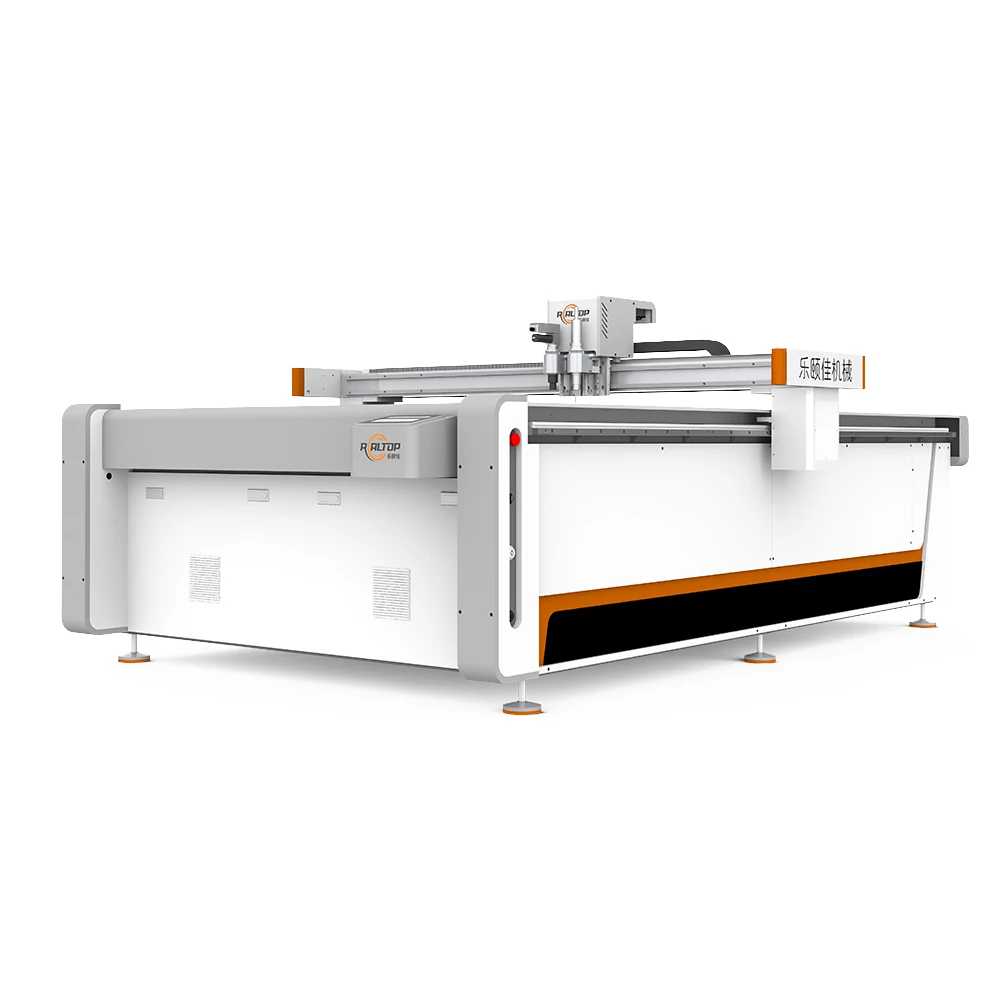
| Machine Size | 3300×2100×1350 mm |
| Standards | CE (specific scope to be confirmed) |
Application Suitability
| Application | Material or Output |
|---|---|
| Packaging sample making and carton box prototyping | E-flute, B-flute, BC-flute corrugated cardboard, greyboard, cardstock, art paper |
| Custom folding carton and short-run box production | Single-face and double-wall corrugated, adhesive-backed laminates |
| Foam insert and protective packaging fabrication | EVA, EPE, PU foam sheets, rubber mats |
| Signage and display cutting | PVC foam board, thin plastic sheets (PVC, PET), velvet and fleece fabric |
| Leather and synthetic material cutting for packaging inserts | Leather, synthetic leather, non-woven fabric, composite materials |
Why Specifying Only Working Area Fails on Corrugated Board
A 1600×2500 mm bed is useless if the tool head crushes your B-flute instead of cutting it clean.
I have watched packaging buyers commit to a CNC carton box cutting machine based solely on table dimensions, only to discover during commissioning that the standard oscillating knife tears through BC-flute at production speed while leaving ragged edges on E-flute. The issue is never the machine footprint; it is the mismatch between the tool head configuration and the actual flute profile running through the shop. [NEED_CITE: corrugated flute type and tool head selection for digital cutting] When a carton sample maker switches from 3 mm greyboard to 7 mm double-wall without changing the knife amplitude or creasing wheel pressure, the daily output drops and the edge quality forces a second pass. That is why we run the buyer’s own stock on the 1625 before the contract is signed.
Knife Versus Creasing: Choosing the Right Head for Each Flute
The 1625 supports interchangeable tool heads including oscillating knife, driven rotary knife, creasing wheel, and kiss cutting tool on a single gantry. For standard single-face B-flute around 3 mm, an oscillating knife at moderate frequency produces a clean edge without crushing the flute structure. When the job shifts to heavy BC-flute or double-wall board approaching the 40 mm thickness limit, the driven rotary knife handles the depth while the creasing wheel scores fold lines in the same setup. This eliminates a separate creasing station and keeps registration accurate across cut and fold lines. Buyers producing short-run custom cartons benefit from swapping heads between jobs rather than maintaining two dedicated machines.
How Vacuum Zoning Holds Small Packaging Inserts
The aluminum bellows vacuum table on the 1625 provides full-surface holding across the 1600×2500 mm bed. For large carton blanks, the entire table area engages to prevent material lift during high-speed traverses. [NEED_CITE: vacuum table zoning for digital flatbed cutting of small parts] When the same machine cuts small foam inserts or narrow gasket strips, localized vacuum zones concentrate suction under the part footprint so lightweight pieces do not drift after the knife exits the cut path. Without zoning, operators tape or weight down small parts, slowing the cycle and introducing registration errors on intricate packaging layouts.
Reading the Specs Beyond the Nameplate
The 9 kW vacuum pump must be evaluated against the porosity of your corrugated stock; open-flute boards leak air and demand more suction than dense greyboard. The ±0.1 mm cutting accuracy matters most when kiss-cutting adhesive-backed labels or window patches where the knife must stop precisely at the liner without cutting through. PLC control with multilingual display (English, Russian, Italian, Chinese, and customizable options) means the operator does not need to decode icons or rely on a single-language manual during shift changes. Servo motor selection across Panasonic, Delta, and Dorna allows buyers to match spare parts availability in their local market rather than depending on a single supplier for replacement drives.
The Cost of Skipping the Material Trial
Buyers who approve a CNC oscillating knife cutting table for sale based on brochure specifications alone often face rework costs once their actual material enters the machine. A creasing wheel set for art paper will crack 5 mm greyboard, producing scored lines that fracture during folding and forcing the packaging sample maker to scrap the batch. [NEED_CITE: creasing wheel pressure settings and board thickness mismatch] Conversely, an oscillating knife optimized for thick foam will leave burrs on thin cardstock, requiring manual trimming that erodes the throughput advantage of the digital cutter. These failures show up after the machine is installed, when returning it is no longer practical.
Why Buyers Source the 1625 From This Catalogue
REALTOP builds both knife and laser cutting platforms in-house, so the recommendation for the 1625 comes from comparing your material against the full method range rather than pushing one technology. The tool head and vacuum table configuration is specified per your flute type and daily sheet volume, documented before the order is confirmed. CCD camera contour recognition is available for printed packaging jobs where the cut path must track registration marks at production speed. Software compatibility across PLT, DXF, AI, and PDF is verified against your existing nesting workflow so file conversion does not become a bottleneck. Every 1625 leaves the factory with a sample cutting report on your own corrugated or foam stock, not generic test material.
Documentation & Verification
- Machine specification sheet with confirmed tool head list per your flute profile
- Electrical schematic and voltage confirmation for 110V, 220V, or 380V supply
- Sample cutting report on your corrugated type and board thickness before dispatch
- Software licence and file format compatibility note for PLT, DXF, AI, PDF workflows
- CE declaration documentation with scope matching the configured tool heads
- Spare parts list aligned with your selected servo motor brand
Installation, Commissioning & Support
- Floor space planning around the 3300×2100×1350 mm footprint with rear access clearance
- Dedicated circuit provision matching the confirmed voltage and 9 kW vacuum pump draw
- Table leveling and vacuum seal check on the aluminum bellows surface before first run
- Tool head pressure calibration against your specific board thickness and flute type
- PLC language setting and operator training on head changeover procedures
- Wear part schedule for oscillating knife blades and creasing wheel surfaces
Preparing Your Inquiry
To match the right configuration, share the corrugated flute type or foam density you run most often, the maximum sheet dimensions, and the daily volume of blanks or samples your shop produces. Specify the local voltage and frequency at your facility, along with the preferred PLC display language. If your design files originate in a specific CAD platform, confirm the export format so we verify software compatibility before quoting. We will cut your actual material on the 1625 and send the sample report before any commitment.
Frequently Asked Questions
Q: How do I choose between oscillating knife, creasing wheel, and kiss-cut tool heads for my corrugated flute type?
A: E-flute and B-flute below 4 mm typically run clean on an oscillating knife at standard frequency. BC-flute and double-wall board benefit from a driven rotary knife for depth, with a creasing wheel added for fold lines. Kiss-cut tools handle adhesive-backed labels where the liner must remain intact. We test your exact board to confirm.
Q: What is the difference between knife cutting and laser cutting for packaging materials?
A: Knife cutting on the 1625 produces no heat-affected zone, keeping corrugated edges clean without burn marks or sealed fibers that can interfere with gluing downstream. Laser suits thin cardstock or intricate window patches where a blade cannot turn tight radii. Volume and edge requirement determine the method.
Q: How is the CCD camera calibrated for printed packaging marks at production speed?
A: The CCD camera reads printed registration marks and adjusts the cut path in real time. Calibration involves setting mark contrast thresholds and scan frequency against your print quality and ink density. We validate tracking accuracy on your printed sheets before the machine ships.
Q: Can I trial-cut my own carton stock before committing to a configuration?
A: Yes. Send your corrugated board, greyboard, or foam samples and we run them on the 1625 with your specified tool heads. A sample cutting report documents edge quality, cycle time, and vacuum holding performance on your actual material before you place an order.
Q: What vacuum table zoning do I need for cutting small packaging inserts?
A: The aluminum bellows table supports zoning so suction concentrates under small part footprints, preventing lightweight foam or cardstock inserts from lifting after the knife exits. We map your typical nesting layout and configure zone valves to match your smallest piece dimensions.
Configuration Matched to Material — every tool head and table setup for the 1625 is specified against your actual corrugated flute profile and board density, not just the working area.
Technical Specifications
| Parameter | Value |
|---|---|
| Product Type | CNC Oscillating Knife Cutting Machine |
| Model | 1625 |
| Working Area | 1600×2500 mm |
| Tool Head Options | Oscillating knife, Driven rotary knife, Creasing wheel, Kiss cutting tool, Pneumatic knife, Milling tool, V groove knife |
| Applicable Materials | Fabric, Cardboard, Carton, Mats, PVC, EVA, Leather, Acrylic, Foam, PTFE, Rubber |
| Cutting Speed | 0-1500 mm/s |
| Cutting Thickness | ≤ 40 mm |
| Cutting Accuracy | ±0.1 mm |
| Vacuum Pump | 9 kW |
| Vacuum Table | Aluminum bellows vacuum table (aerospace-grade aluminum cast pump, energy reduction claimed 30% — basis not stated in source) |
| Control System | PLC control panel |
| Servo Motor Options | Panasonic, Delta, Dorna |
| Voltage Options | 110V, 220V, 380V |
| Display Languages | English, Russian, Italian, Chinese (other languages customizable) |
| Profile Formats | PLT, DXF, AI, PDF |
| Safety Device | Infrared sensor device and emergency stop device |
| Machine Size | 3300×2100×1350 mm |
| Standards | CE (specific scope to be confirmed) |
Application Suitability
| Application | Material or Output |
|---|---|
| Packaging sample making and carton box prototyping | E-flute, B-flute, BC-flute corrugated cardboard, greyboard, cardstock, art paper |
| Custom folding carton and short-run box production | Single-face and double-wall corrugated, adhesive-backed laminates |
| Foam insert and protective packaging fabrication | EVA, EPE, PU foam sheets, rubber mats |
| Signage and display cutting | PVC foam board, thin plastic sheets (PVC, PET), velvet and fleece fabric |
| Leather and synthetic material cutting for packaging inserts | Leather, synthetic leather, non-woven fabric, composite materials |
Why Specifying Only Working Area Fails on Corrugated Board
A 1600×2500 mm bed is useless if the tool head crushes your B-flute instead of cutting it clean.
I have watched packaging buyers commit to a CNC carton box cutting machine based solely on table dimensions, only to discover during commissioning that the standard oscillating knife tears through BC-flute at production speed while leaving ragged edges on E-flute. The issue is never the machine footprint; it is the mismatch between the tool head configuration and the actual flute profile running through the shop. [NEED_CITE: corrugated flute type and tool head selection for digital cutting] When a carton sample maker switches from 3 mm greyboard to 7 mm double-wall without changing the knife amplitude or creasing wheel pressure, the daily output drops and the edge quality forces a second pass. That is why we run the buyer’s own stock on the 1625 before the contract is signed.
Knife Versus Creasing: Choosing the Right Head for Each Flute
The 1625 supports interchangeable tool heads including oscillating knife, driven rotary knife, creasing wheel, and kiss cutting tool on a single gantry. For standard single-face B-flute around 3 mm, an oscillating knife at moderate frequency produces a clean edge without crushing the flute structure. When the job shifts to heavy BC-flute or double-wall board approaching the 40 mm thickness limit, the driven rotary knife handles the depth while the creasing wheel scores fold lines in the same setup. This eliminates a separate creasing station and keeps registration accurate across cut and fold lines. Buyers producing short-run custom cartons benefit from swapping heads between jobs rather than maintaining two dedicated machines.
How Vacuum Zoning Holds Small Packaging Inserts
The aluminum bellows vacuum table on the 1625 provides full-surface holding across the 1600×2500 mm bed. For large carton blanks, the entire table area engages to prevent material lift during high-speed traverses. [NEED_CITE: vacuum table zoning for digital flatbed cutting of small parts] When the same machine cuts small foam inserts or narrow gasket strips, localized vacuum zones concentrate suction under the part footprint so lightweight pieces do not drift after the knife exits the cut path. Without zoning, operators tape or weight down small parts, slowing the cycle and introducing registration errors on intricate packaging layouts.
Reading the Specs Beyond the Nameplate
The 9 kW vacuum pump must be evaluated against the porosity of your corrugated stock; open-flute boards leak air and demand more suction than dense greyboard. The ±0.1 mm cutting accuracy matters most when kiss-cutting adhesive-backed labels or window patches where the knife must stop precisely at the liner without cutting through. PLC control with multilingual display (English, Russian, Italian, Chinese, and customizable options) means the operator does not need to decode icons or rely on a single-language manual during shift changes. Servo motor selection across Panasonic, Delta, and Dorna allows buyers to match spare parts availability in their local market rather than depending on a single supplier for replacement drives.
The Cost of Skipping the Material Trial
Buyers who approve a CNC oscillating knife cutting table for sale based on brochure specifications alone often face rework costs once their actual material enters the machine. A creasing wheel set for art paper will crack 5 mm greyboard, producing scored lines that fracture during folding and forcing the packaging sample maker to scrap the batch. [NEED_CITE: creasing wheel pressure settings and board thickness mismatch] Conversely, an oscillating knife optimized for thick foam will leave burrs on thin cardstock, requiring manual trimming that erodes the throughput advantage of the digital cutter. These failures show up after the machine is installed, when returning it is no longer practical.
Why Buyers Source the 1625 From This Catalogue
REALTOP builds both knife and laser cutting platforms in-house, so the recommendation for the 1625 comes from comparing your material against the full method range rather than pushing one technology. The tool head and vacuum table configuration is specified per your flute type and daily sheet volume, documented before the order is confirmed. CCD camera contour recognition is available for printed packaging jobs where the cut path must track registration marks at production speed. Software compatibility across PLT, DXF, AI, and PDF is verified against your existing nesting workflow so file conversion does not become a bottleneck. Every 1625 leaves the factory with a sample cutting report on your own corrugated or foam stock, not generic test material.
Documentation & Verification
- Machine specification sheet with confirmed tool head list per your flute profile
- Electrical schematic and voltage confirmation for 110V, 220V, or 380V supply
- Sample cutting report on your corrugated type and board thickness before dispatch
- Software licence and file format compatibility note for PLT, DXF, AI, PDF workflows
- CE declaration documentation with scope matching the configured tool heads
- Spare parts list aligned with your selected servo motor brand
Installation, Commissioning & Support
- Floor space planning around the 3300×2100×1350 mm footprint with rear access clearance
- Dedicated circuit provision matching the confirmed voltage and 9 kW vacuum pump draw
- Table leveling and vacuum seal check on the aluminum bellows surface before first run
- Tool head pressure calibration against your specific board thickness and flute type
- PLC language setting and operator training on head changeover procedures
- Wear part schedule for oscillating knife blades and creasing wheel surfaces
Preparing Your Inquiry
To match the right configuration, share the corrugated flute type or foam density you run most often, the maximum sheet dimensions, and the daily volume of blanks or samples your shop produces. Specify the local voltage and frequency at your facility, along with the preferred PLC display language. If your design files originate in a specific CAD platform, confirm the export format so we verify software compatibility before quoting. We will cut your actual material on the 1625 and send the sample report before any commitment.
Frequently Asked Questions
Q: How do I choose between oscillating knife, creasing wheel, and kiss-cut tool heads for my corrugated flute type?
A: E-flute and B-flute below 4 mm typically run clean on an oscillating knife at standard frequency. BC-flute and double-wall board benefit from a driven rotary knife for depth, with a creasing wheel added for fold lines. Kiss-cut tools handle adhesive-backed labels where the liner must remain intact. We test your exact board to confirm.
Q: What is the difference between knife cutting and laser cutting for packaging materials?
A: Knife cutting on the 1625 produces no heat-affected zone, keeping corrugated edges clean without burn marks or sealed fibers that can interfere with gluing downstream. Laser suits thin cardstock or intricate window patches where a blade cannot turn tight radii. Volume and edge requirement determine the method.
Q: How is the CCD camera calibrated for printed packaging marks at production speed?
A: The CCD camera reads printed registration marks and adjusts the cut path in real time. Calibration involves setting mark contrast thresholds and scan frequency against your print quality and ink density. We validate tracking accuracy on your printed sheets before the machine ships.
Q: Can I trial-cut my own carton stock before committing to a configuration?
A: Yes. Send your corrugated board, greyboard, or foam samples and we run them on the 1625 with your specified tool heads. A sample cutting report documents edge quality, cycle time, and vacuum holding performance on your actual material before you place an order.
Q: What vacuum table zoning do I need for cutting small packaging inserts?
A: The aluminum bellows table supports zoning so suction concentrates under small part footprints, preventing lightweight foam or cardstock inserts from lifting after the knife exits. We map your typical nesting layout and configure zone valves to match your smallest piece dimensions.










商品评价
There are no reviews yet.