

Fast Delivery
Quick, reliable shipping to any location.

Free & easy returns
Return this item by mail or in store within 90 days for a full refund.
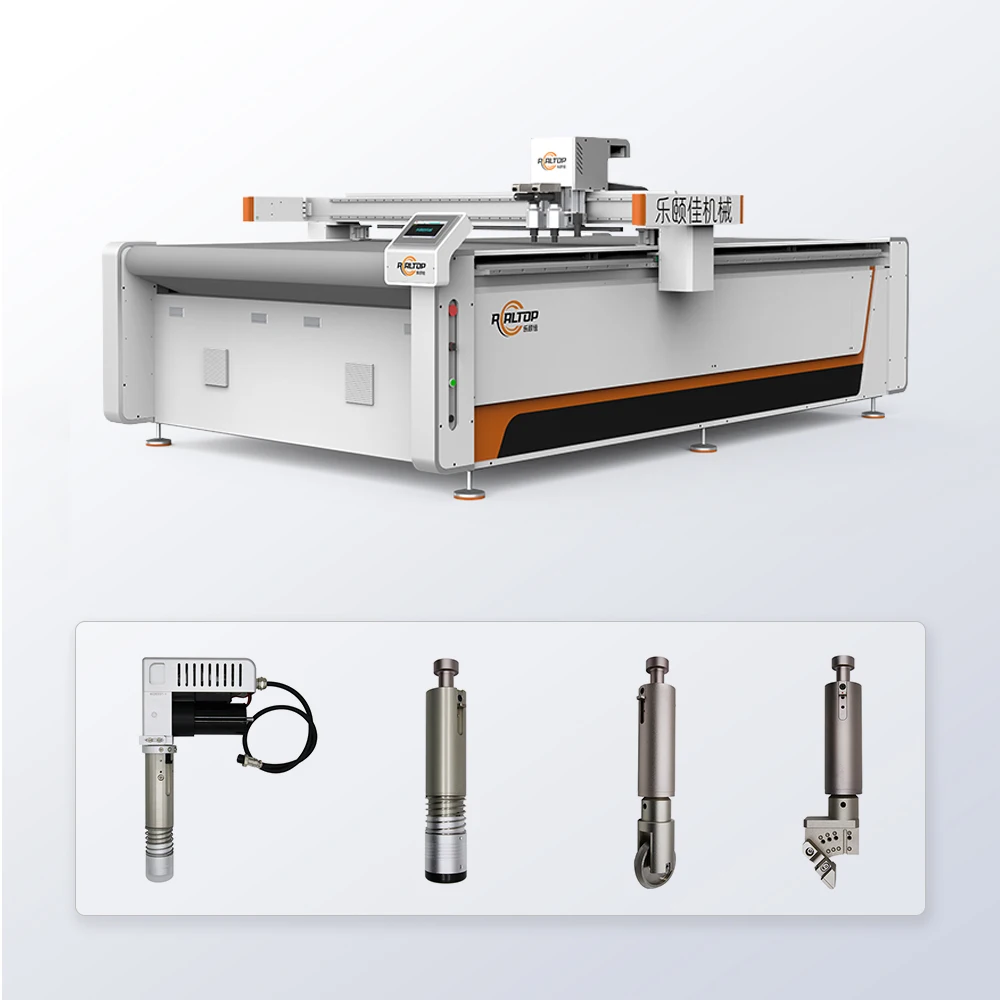
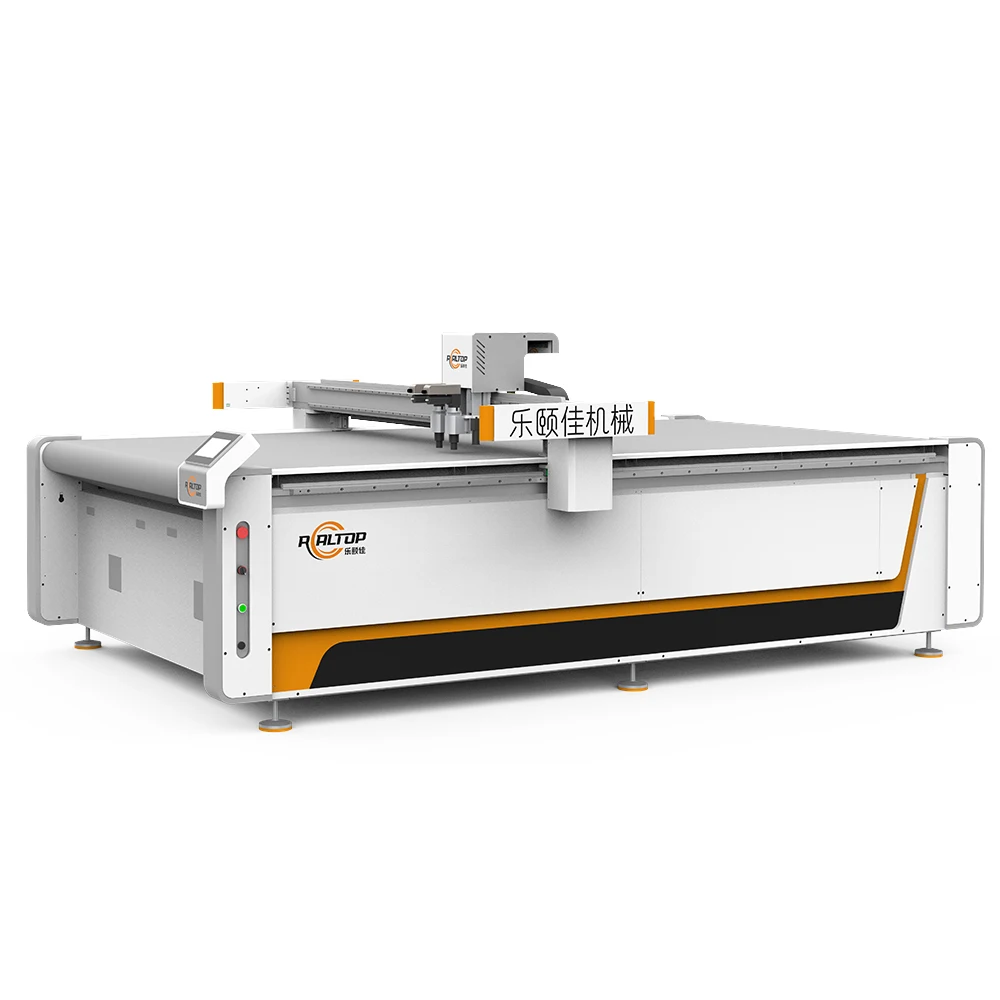
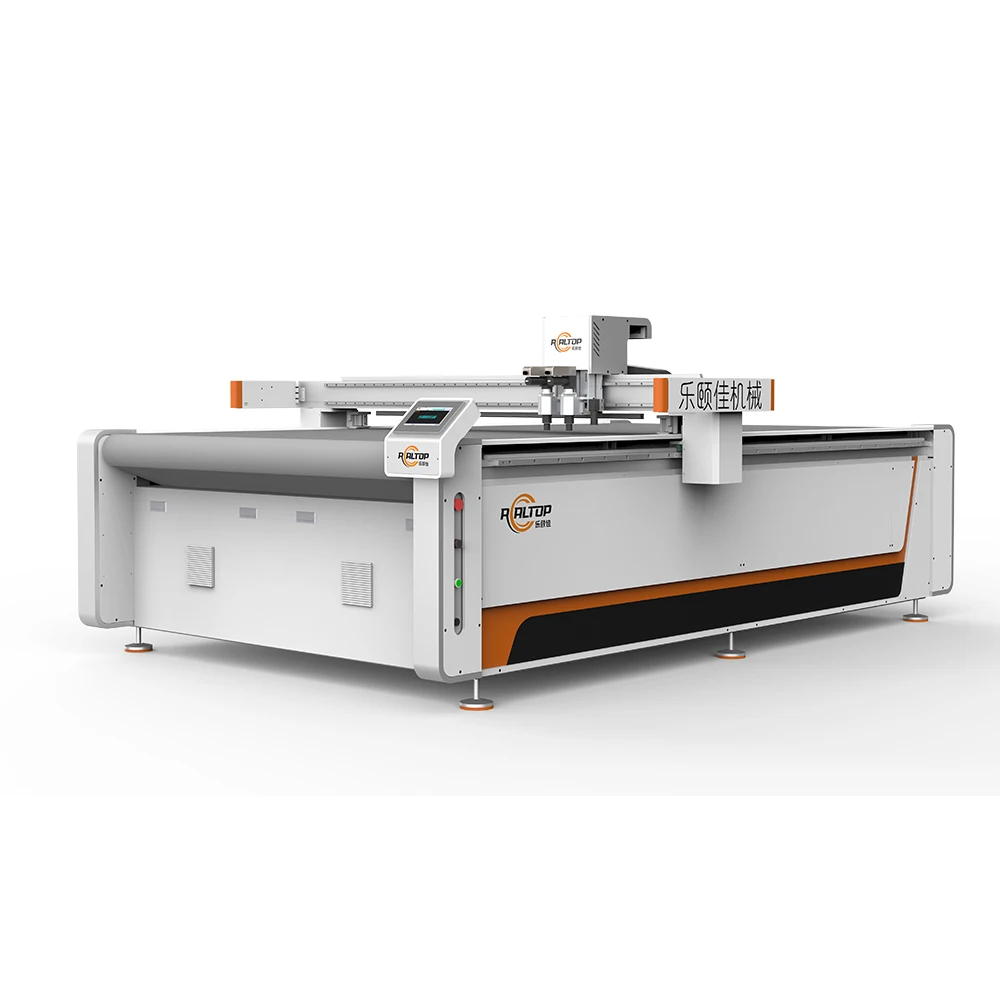
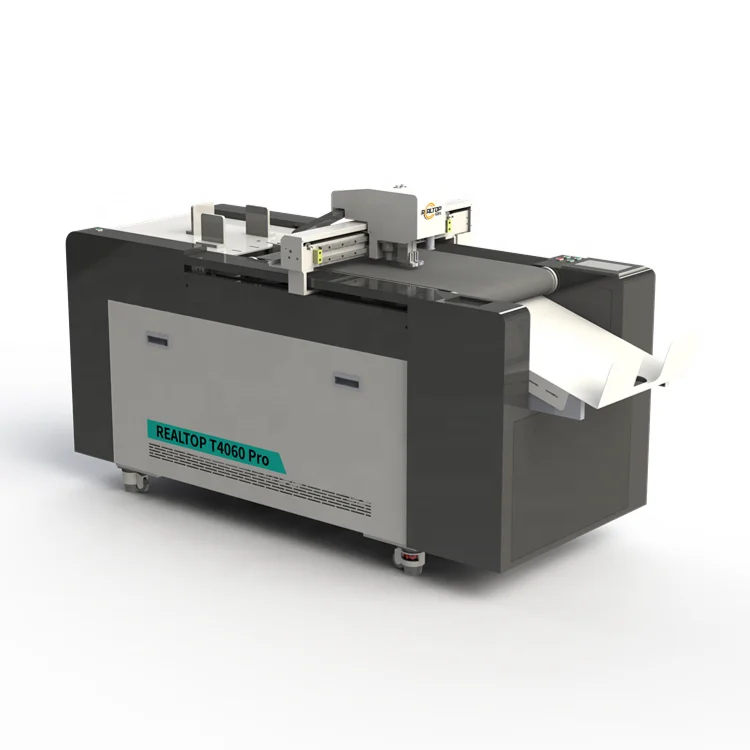
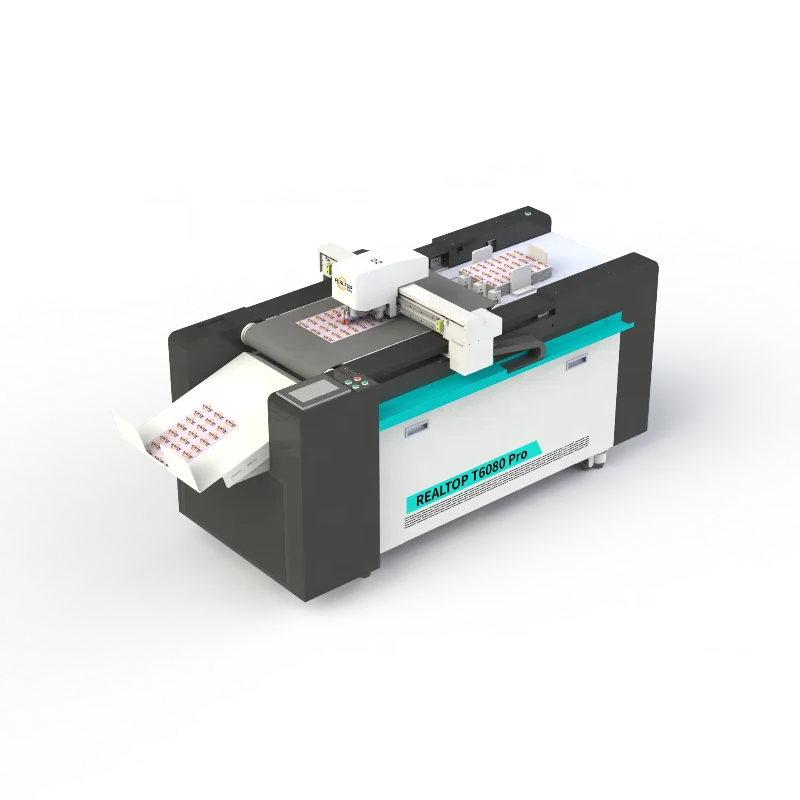
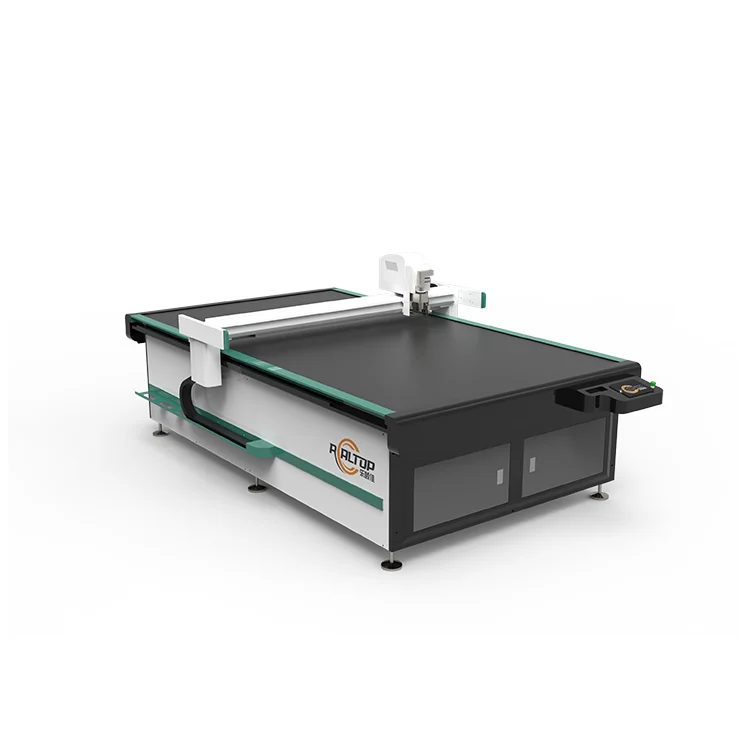
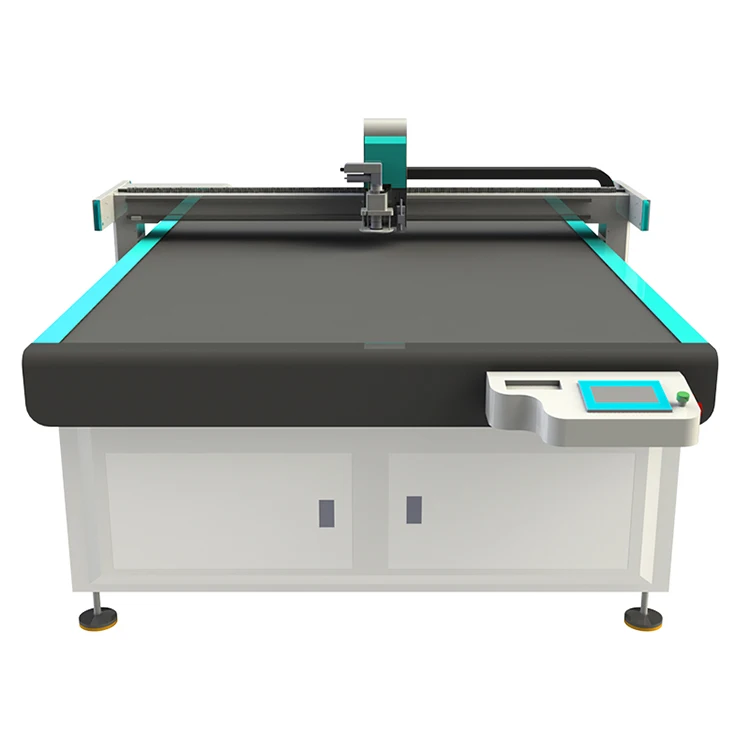
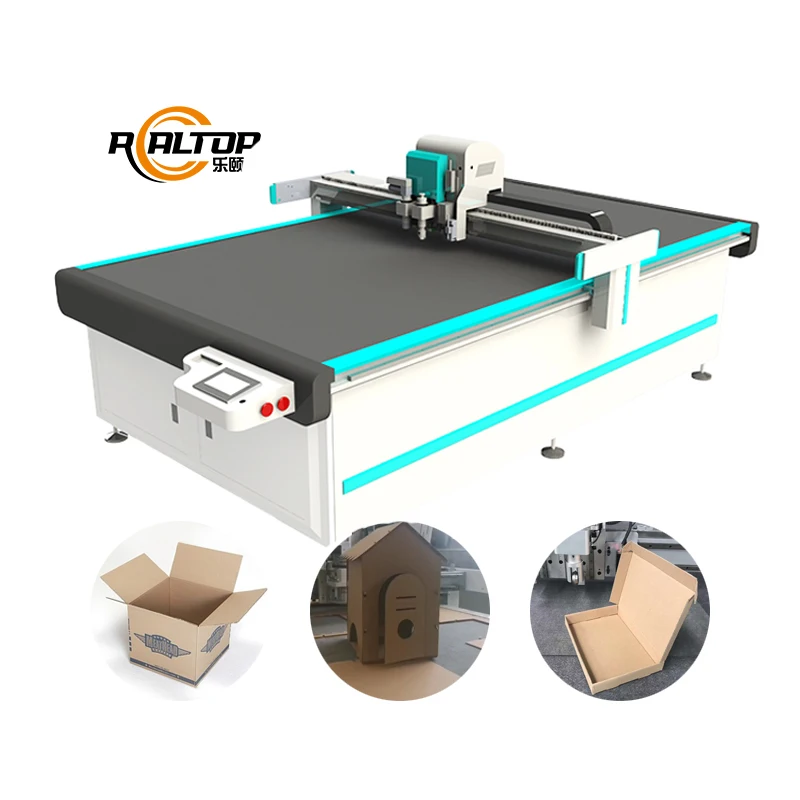
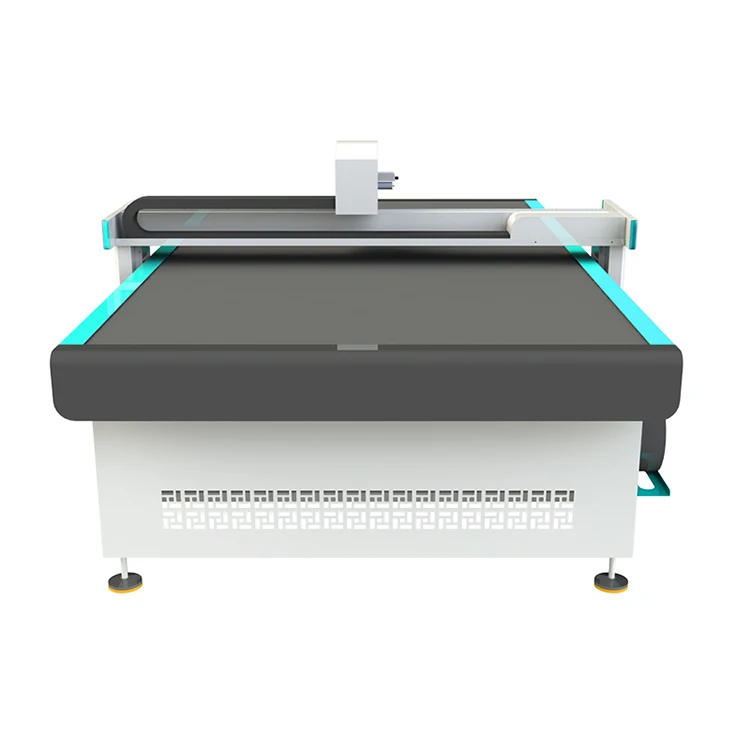
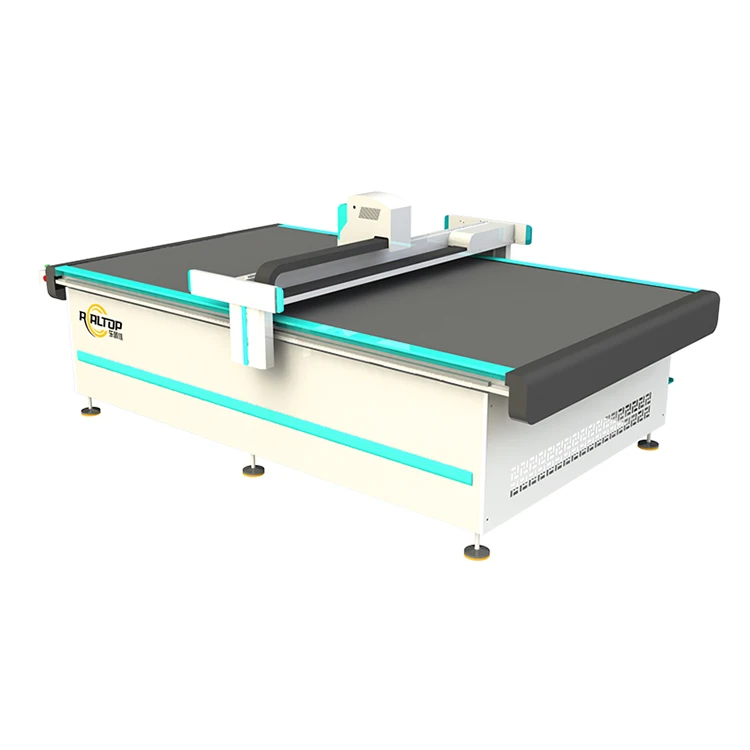
Tool head and table configuration specified per material and production volume — this catalogue entry shows where the REALTOP digital carton box plotter fits within a complete cutting equipment range, letting packaging buyers match oscillating knife, creasing, and kiss-cutting methods to their exact board weight and flute profile before narrowing to a single machine.
Technical Specifications
| Parameter | Value |
|---|---|
| Product Type | CNC Oscillating Knife Cutting Machine for Packaging |
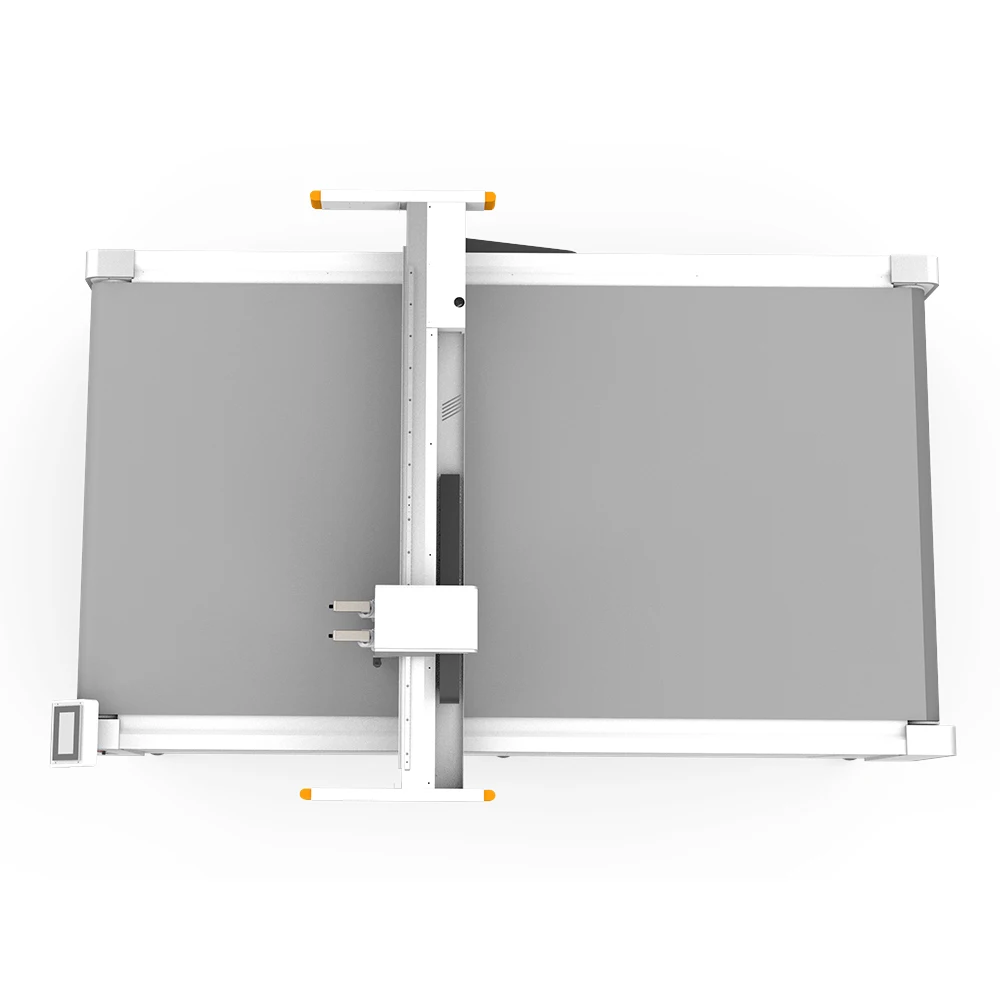
| Working Area | 1600 × 2500 mm |
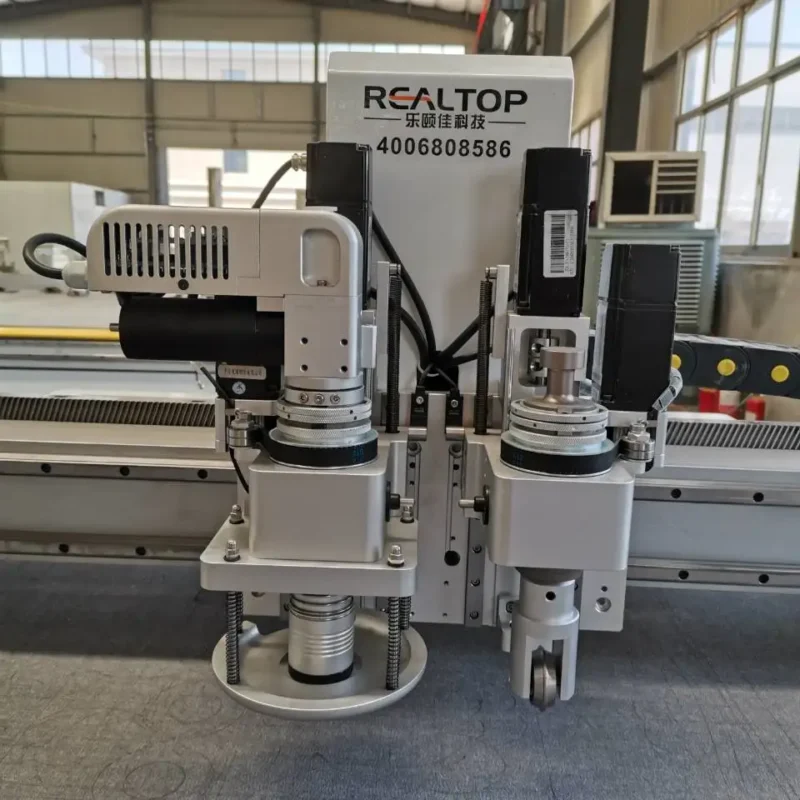
| Tools Available | Oscillating knife, Driven rotary knife, Creasing wheel, Kiss cutting tool, Pneumatic knife, Milling tool, V-groove knife |
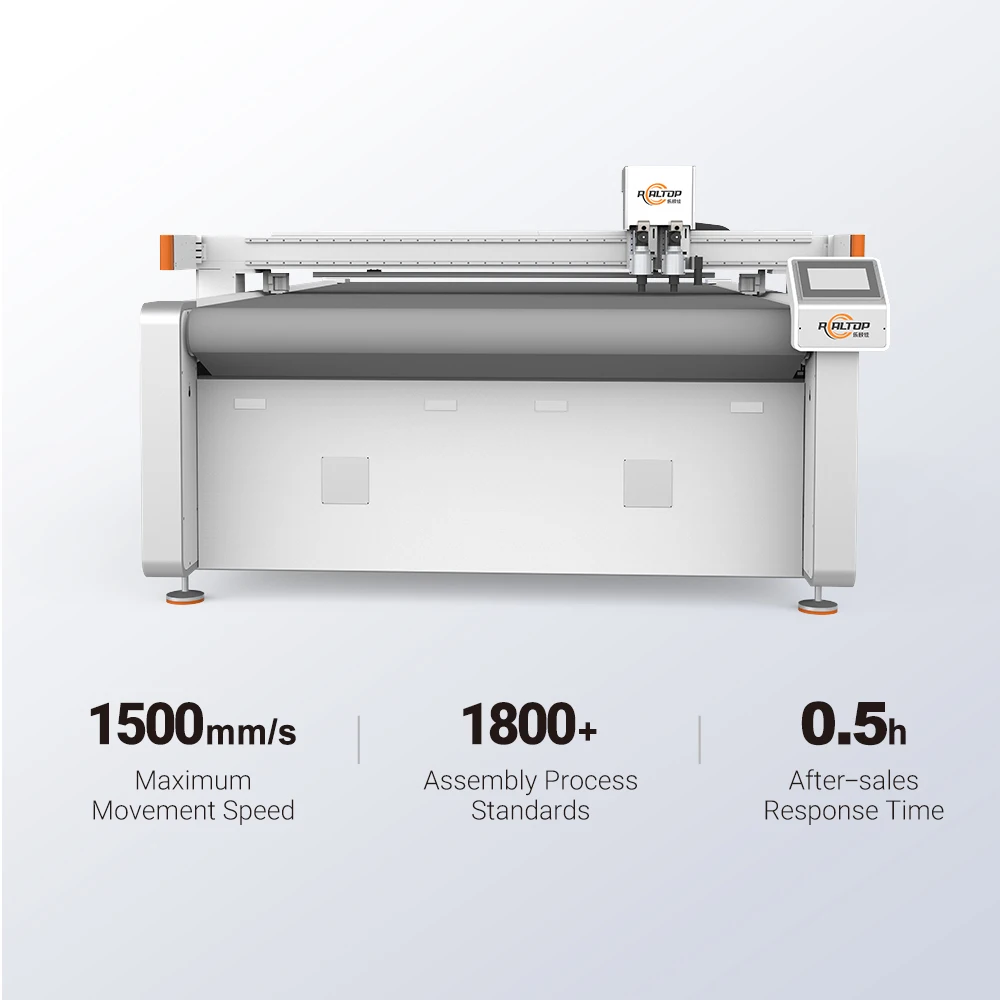
| Cutting Speed | 0–1500 mm/s |
| Cutting Thickness | ≤ 40 mm (basis not stated in source — confirm material type and density) |
| Cutting Accuracy | ±0.1 mm |
| Vacuum Pump | 9 kW |
| Vacuum Table | Aluminum bellows vacuum table |
| Control System | PLC control panel with dedicated packaging box structure design software |
| Servo Motors | Available with Panasonic, Delta, or Dorna options (verify against manufacturer catalog) |
| Voltage Options | 110V, 220V, 380V (frequency to be confirmed) |
| Profile Format Compatibility | PLT, DXF, AI, PDF |
| Safety Devices | Infrared sensor and emergency stop |
| Machine Dimensions | 3300 × 2100 × 1350 mm |
| Language Options | English, Russian, Italian, Chinese (customizable) |
| Certification | CE |
Application Suitability
| Application | Material or Output |
|---|---|
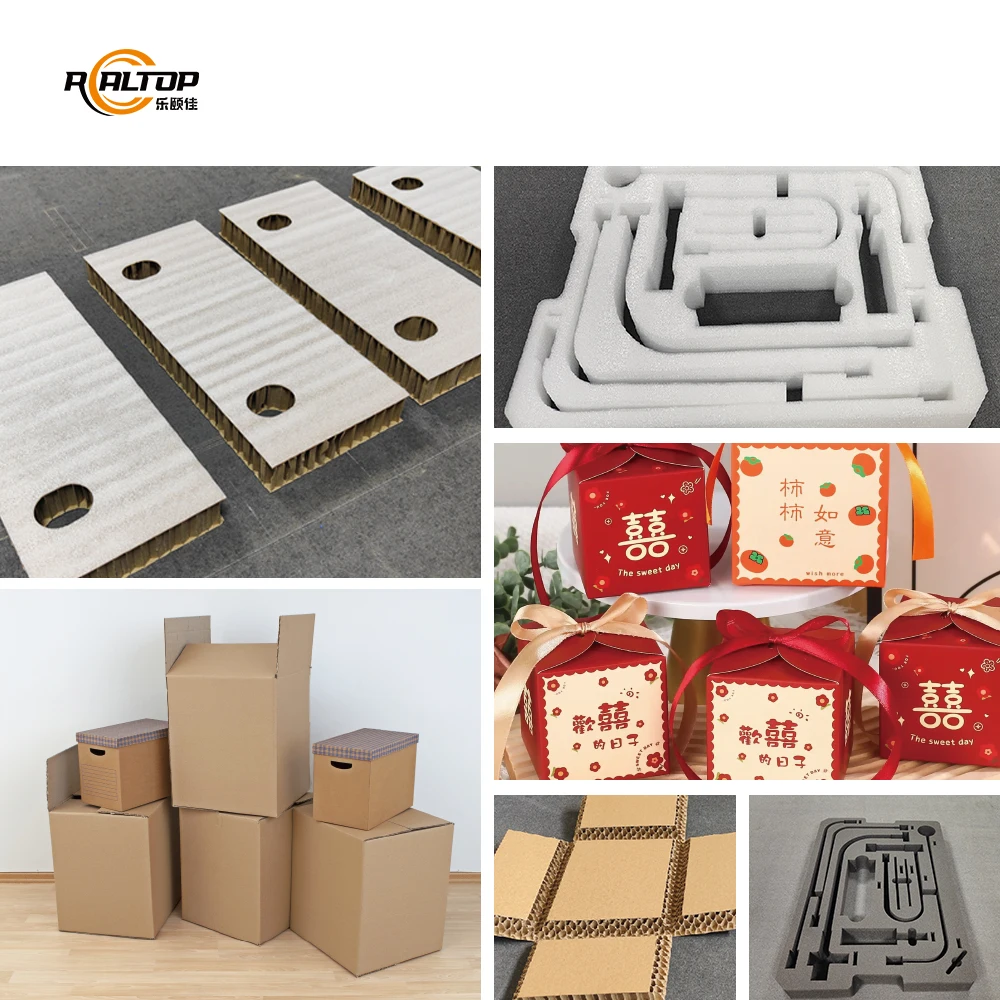
| Packaging sample making and short-run production | Corrugated cardboard (E-flute, B-flute, BC-flute), greyboard, cardstock |
| Specialty box and insert cutting | Art paper, specialty paper, adhesive-backed materials |
| Protective packaging and cushioning | EVA, EPE, PU foam, rubber mats |
| Interior lining and fabric inserts | Velvet, fleece fabric, non-woven fabric |
| Thin plastic and composite components | PVC, PET sheets, leather, synthetic leather, composite materials |
Why the Cutting Depth Specification Can Mislead Packaging Buyers
A stated 40 mm maximum thickness means nothing until you confirm the board density, flute type, and tool head actually running on your material.
I spent years on the assembly floor before moving into technical sales in Jinan, and one early carton sample-making project still shapes how I approach every specification sheet. A customer ordered based on our published cutting capacity, but the greyboard they ran was nearly a third heavier than what we used during trial cuts. The oscillating knife could not penetrate cleanly, leaving torn fibers along every edge. It took almost two weeks on-site to swap in a higher-torque spindle and stiffer blade stock before the machine produced acceptable samples [NEED_CITE: material density impact on oscillating knife cutting performance]. That gap between a catalogue number and a real workshop outcome is the reason a CNC cardboard cutting machine manufacturer must test on the buyer’s actual stock before any purchase commitment.
Where This Plotter Sits in the Complete Cutting Equipment Range
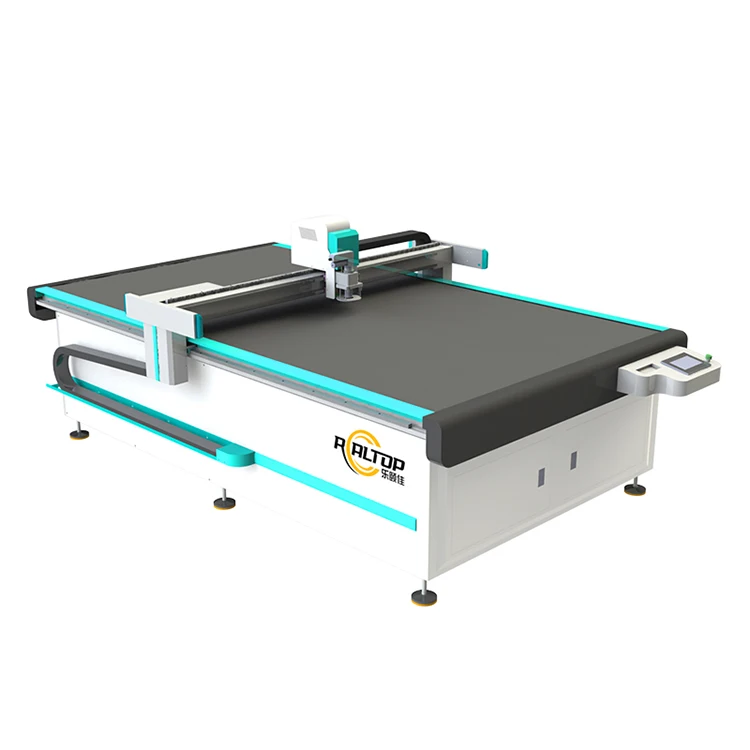
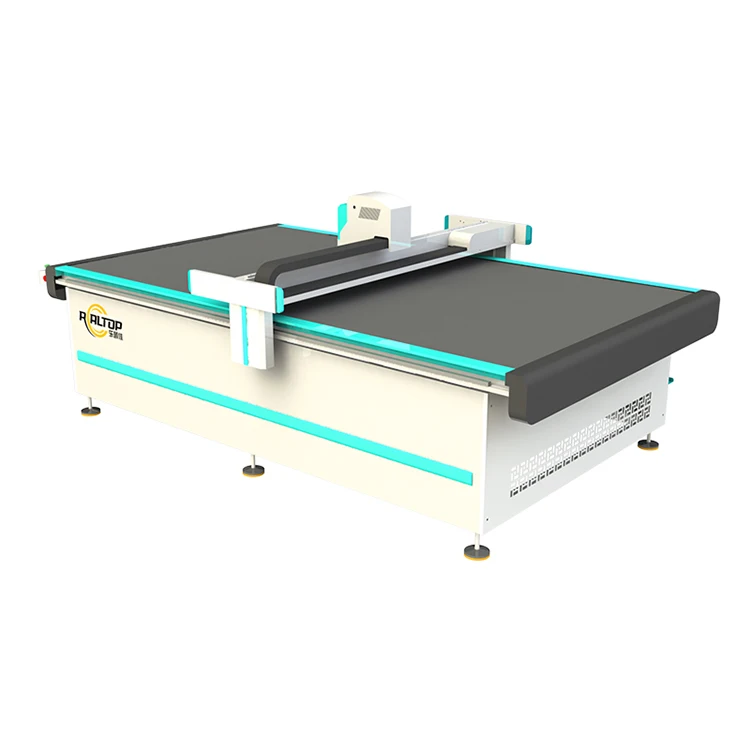
The full REALTOP catalogue spans both oscillating knife and laser platforms, each suited to different segments of the packaging workflow. This digital carton box plotter occupies the knife-cutting side, where mechanical blade action handles corrugated flutes, dense greyboard, and foam inserts without the thermal edge-sealing that a CO2 laser would leave on cellulose-based substrates. Buyers surveying the broader range will find that laser systems handle acrylic signage and thin film engraving, while this knife platform covers the structural and protective packaging materials that dominate box-making operations.
Matching Tool Heads to the Packaging Substrate Mix
A single packaging order can involve cutting through five-layer BC-flute corrugated board, scoring fold lines on 350 gsm cardstock, and kiss-cutting adhesive labels on release liner. The available tool head range on this platform — oscillating knife, driven rotary knife, creasing wheel, kiss cutting tool, pneumatic knife, milling tool, and V-groove knife — means one machine frame handles all three operations without moving the sheet between stations. The creasing wheel compresses fiber rather than cutting it, producing a clean fold line that will not crack when the box is assembled [NEED_CITE: creasing wheel mechanics on corrugated board]. For buyers evaluating the full catalogue, this multi-tool flexibility is the dividing line between a dedicated sample maker and a short-run production system.
Reading the Specification Sheet Against Real Production Conditions
The 9 kW vacuum pump paired with an aluminum bellows vacuum table provides full-surface hold-down, which matters when cutting lightweight art paper or thin PVC that tends to lift under knife drag. The PLC control panel integrates packaging-specific box structure design software alongside standard PLT, DXF, AI, and PDF file imports — eliminating the need for a separate CAD station for common box templates. Cutting accuracy of ±0.1 mm is achievable across the 1600 × 2500 mm working area, though maintaining that tolerance depends on regular blade replacement and vacuum seal integrity. The servo motor options (Panasonic, Delta, Dorna) affect long-term positioning repeatability and spare parts availability in different export markets [NEED_CITE: servo motor brand support networks by region]. Voltage configurability across 110V, 220V, and 380V must be confirmed alongside the local frequency standard before production begins.
What Happens When the Wrong Configuration Ships
When a packaging producer receives a machine with a vacuum table zoned only for large sheets, small die-cut shapes lift off the surface during high-speed knife passes, producing dimensional drift and ragged edges. If the tool head specified was an oscillating knife alone, without a creasing wheel, the buyer discovers that fold lines must be scored manually or outsourced — adding a step the digital workflow was supposed to eliminate [NEED_CITE: vacuum zoning requirements for small-part cutting on flatbed systems]. These mismatches rarely appear in the quotation stage; they surface during the first production week, when downtime costs compound faster than any specification correction.
Why Buyers Source This Equipment Here
The design team and core factory operate under one roof in Jinan, covering both knife and laser cutting technologies, so a buyer can compare methods on the same material rather than being pushed toward a single platform. Every configuration — tool head selection, vacuum table zoning, servo motor brand, voltage, and control language — is specified against the buyer’s actual substrate mix and daily volume. Sample cutting on the buyer’s own packaging board is completed before any order confirmation, with a written report documenting edge quality, cutting depth, and cycle times. Software compatibility and file format handling are verified during this stage, not after the machine arrives. The full catalogue lets buyers see upgrade and downgrade paths if their sheet format or production volume falls outside this model’s range.
Documentation & Verification
- Machine specification sheet listing confirmed tool heads, voltage, and frequency for your market
- Electrical schematic with voltage and phase confirmation matched to your workshop supply
- Sample cutting report run on your specific board weight, flute type, and foam density
- Factory test record documenting positioning accuracy and vacuum hold-down before dispatch
- Software licence and file format compatibility note for your existing design workflow
- Spare parts list with recommended blade and creasing wheel consumables for your material mix
Installation, Commissioning & Support
- Floor space planning based on the 3300 × 2100 × 1350 mm machine footprint plus operator clearance
- Dedicated electrical circuit sized to the confirmed voltage option and 9 kW vacuum pump load
- Assembly and leveling on-site, with the aluminum bellows vacuum table sealed and pressure-tested
- First-run calibration using your packaging board samples to set knife depth and creasing pressure
- Operator training on the PLC panel, packaging box design software, and tool head changeover procedure
- Consumable blade and creasing wheel stock identified and shipped with the initial spare parts kit
What to Include in Your Initial Inquiry
To match the right configuration from the full catalogue, provide the specific board types, flute profiles, and foam densities you process, along with typical sheet dimensions and daily output targets. Confirm your workshop voltage and frequency, preferred control language, and whether your current design files use PLT, DXF, AI, or PDF formats. If your material mix includes kiss-cutting on adhesive layers or V-groove work on thick greyboard, note those operations explicitly so the tool head package is built accordingly.
Frequently Asked Questions
Q: How do I decide between oscillating knife and laser cutting for my packaging materials?
A: Knife cutting handles corrugated flutes, greyboard, and foam without burning or discoloring the edges, which matters for visible packaging surfaces. Laser systems excel on acrylic, thin film, and textile engraving where sealed edges are acceptable. If your substrate mix includes dense cellulose board and adhesive-backed materials, the knife platform in this catalogue is typically the correct starting point.
Q: Which machine size and configuration fits my sheet format and daily volume?
A: The 1600 × 2500 mm working area on this model handles most standard packaging sheet sizes. For larger corrugated sheets or higher daily volumes, the full catalogue includes larger-format options. Share your maximum sheet dimensions and target output so the correct model and vacuum table zoning can be specified.
Q: What tool heads do I need for cutting, creasing, and kiss-cutting in one workflow?
A: A typical packaging configuration pairs the oscillating knife for through-cuts, a creasing wheel for fold lines, and a kiss cutting tool for adhesive layers. Add a V-groove knife if you produce rigid boxes from thick greyboard, or a driven rotary knife for continuous fabric and non-woven trimming.
Q: What voltage and control language options are available for my target market?
A: The system supports 110V, 220V, and 380V configurations, with frequency and plug type confirmed before shipment. Control panel language options include English, Russian, Italian, and Chinese, with additional languages available on request. Always verify your local supply standard before finalizing the order.
Q: Where does this model sit in the full catalogue, and what are the upgrade or downgrade paths?
A: This CNC cardboard cutting machine manufacturer offers compact models for low-volume sample rooms and large-format systems for continuous short-run production. If your daily volume or sheet size falls outside this model’s range, the catalogue includes alternative working areas and multi-head configurations to match your throughput requirements.
Tool head and table configuration specified per material and production volume — this catalogue entry shows where the REALTOP digital carton box plotter fits within a complete cutting equipment range, letting packaging buyers match oscillating knife, creasing, and kiss-cutting methods to their exact board weight and flute profile before narrowing to a single machine.
Technical Specifications
| Parameter | Value |
|---|---|
| Product Type | CNC Oscillating Knife Cutting Machine for Packaging |
| Working Area | 1600 × 2500 mm |
| Tools Available | Oscillating knife, Driven rotary knife, Creasing wheel, Kiss cutting tool, Pneumatic knife, Milling tool, V-groove knife |
| Cutting Speed | 0–1500 mm/s |
| Cutting Thickness | ≤ 40 mm (basis not stated in source — confirm material type and density) |
| Cutting Accuracy | ±0.1 mm |
| Vacuum Pump | 9 kW |
| Vacuum Table | Aluminum bellows vacuum table |
| Control System | PLC control panel with dedicated packaging box structure design software |
| Servo Motors | Available with Panasonic, Delta, or Dorna options (verify against manufacturer catalog) |
| Voltage Options | 110V, 220V, 380V (frequency to be confirmed) |
| Profile Format Compatibility | PLT, DXF, AI, PDF |
| Safety Devices | Infrared sensor and emergency stop |
| Machine Dimensions | 3300 × 2100 × 1350 mm |
| Language Options | English, Russian, Italian, Chinese (customizable) |
| Certification | CE |
Application Suitability
| Application | Material or Output |
|---|---|
| Packaging sample making and short-run production | Corrugated cardboard (E-flute, B-flute, BC-flute), greyboard, cardstock |
| Specialty box and insert cutting | Art paper, specialty paper, adhesive-backed materials |
| Protective packaging and cushioning | EVA, EPE, PU foam, rubber mats |
| Interior lining and fabric inserts | Velvet, fleece fabric, non-woven fabric |
| Thin plastic and composite components | PVC, PET sheets, leather, synthetic leather, composite materials |
Why the Cutting Depth Specification Can Mislead Packaging Buyers
A stated 40 mm maximum thickness means nothing until you confirm the board density, flute type, and tool head actually running on your material.
I spent years on the assembly floor before moving into technical sales in Jinan, and one early carton sample-making project still shapes how I approach every specification sheet. A customer ordered based on our published cutting capacity, but the greyboard they ran was nearly a third heavier than what we used during trial cuts. The oscillating knife could not penetrate cleanly, leaving torn fibers along every edge. It took almost two weeks on-site to swap in a higher-torque spindle and stiffer blade stock before the machine produced acceptable samples [NEED_CITE: material density impact on oscillating knife cutting performance]. That gap between a catalogue number and a real workshop outcome is the reason a CNC cardboard cutting machine manufacturer must test on the buyer’s actual stock before any purchase commitment.
Where This Plotter Sits in the Complete Cutting Equipment Range
The full REALTOP catalogue spans both oscillating knife and laser platforms, each suited to different segments of the packaging workflow. This digital carton box plotter occupies the knife-cutting side, where mechanical blade action handles corrugated flutes, dense greyboard, and foam inserts without the thermal edge-sealing that a CO2 laser would leave on cellulose-based substrates. Buyers surveying the broader range will find that laser systems handle acrylic signage and thin film engraving, while this knife platform covers the structural and protective packaging materials that dominate box-making operations.
Matching Tool Heads to the Packaging Substrate Mix
A single packaging order can involve cutting through five-layer BC-flute corrugated board, scoring fold lines on 350 gsm cardstock, and kiss-cutting adhesive labels on release liner. The available tool head range on this platform — oscillating knife, driven rotary knife, creasing wheel, kiss cutting tool, pneumatic knife, milling tool, and V-groove knife — means one machine frame handles all three operations without moving the sheet between stations. The creasing wheel compresses fiber rather than cutting it, producing a clean fold line that will not crack when the box is assembled [NEED_CITE: creasing wheel mechanics on corrugated board]. For buyers evaluating the full catalogue, this multi-tool flexibility is the dividing line between a dedicated sample maker and a short-run production system.
Reading the Specification Sheet Against Real Production Conditions
The 9 kW vacuum pump paired with an aluminum bellows vacuum table provides full-surface hold-down, which matters when cutting lightweight art paper or thin PVC that tends to lift under knife drag. The PLC control panel integrates packaging-specific box structure design software alongside standard PLT, DXF, AI, and PDF file imports — eliminating the need for a separate CAD station for common box templates. Cutting accuracy of ±0.1 mm is achievable across the 1600 × 2500 mm working area, though maintaining that tolerance depends on regular blade replacement and vacuum seal integrity. The servo motor options (Panasonic, Delta, Dorna) affect long-term positioning repeatability and spare parts availability in different export markets [NEED_CITE: servo motor brand support networks by region]. Voltage configurability across 110V, 220V, and 380V must be confirmed alongside the local frequency standard before production begins.
What Happens When the Wrong Configuration Ships
When a packaging producer receives a machine with a vacuum table zoned only for large sheets, small die-cut shapes lift off the surface during high-speed knife passes, producing dimensional drift and ragged edges. If the tool head specified was an oscillating knife alone, without a creasing wheel, the buyer discovers that fold lines must be scored manually or outsourced — adding a step the digital workflow was supposed to eliminate [NEED_CITE: vacuum zoning requirements for small-part cutting on flatbed systems]. These mismatches rarely appear in the quotation stage; they surface during the first production week, when downtime costs compound faster than any specification correction.
Why Buyers Source This Equipment Here
The design team and core factory operate under one roof in Jinan, covering both knife and laser cutting technologies, so a buyer can compare methods on the same material rather than being pushed toward a single platform. Every configuration — tool head selection, vacuum table zoning, servo motor brand, voltage, and control language — is specified against the buyer’s actual substrate mix and daily volume. Sample cutting on the buyer’s own packaging board is completed before any order confirmation, with a written report documenting edge quality, cutting depth, and cycle times. Software compatibility and file format handling are verified during this stage, not after the machine arrives. The full catalogue lets buyers see upgrade and downgrade paths if their sheet format or production volume falls outside this model’s range.
Documentation & Verification
- Machine specification sheet listing confirmed tool heads, voltage, and frequency for your market
- Electrical schematic with voltage and phase confirmation matched to your workshop supply
- Sample cutting report run on your specific board weight, flute type, and foam density
- Factory test record documenting positioning accuracy and vacuum hold-down before dispatch
- Software licence and file format compatibility note for your existing design workflow
- Spare parts list with recommended blade and creasing wheel consumables for your material mix
Installation, Commissioning & Support
- Floor space planning based on the 3300 × 2100 × 1350 mm machine footprint plus operator clearance
- Dedicated electrical circuit sized to the confirmed voltage option and 9 kW vacuum pump load
- Assembly and leveling on-site, with the aluminum bellows vacuum table sealed and pressure-tested
- First-run calibration using your packaging board samples to set knife depth and creasing pressure
- Operator training on the PLC panel, packaging box design software, and tool head changeover procedure
- Consumable blade and creasing wheel stock identified and shipped with the initial spare parts kit
What to Include in Your Initial Inquiry
To match the right configuration from the full catalogue, provide the specific board types, flute profiles, and foam densities you process, along with typical sheet dimensions and daily output targets. Confirm your workshop voltage and frequency, preferred control language, and whether your current design files use PLT, DXF, AI, or PDF formats. If your material mix includes kiss-cutting on adhesive layers or V-groove work on thick greyboard, note those operations explicitly so the tool head package is built accordingly.
Frequently Asked Questions
Q: How do I decide between oscillating knife and laser cutting for my packaging materials?
A: Knife cutting handles corrugated flutes, greyboard, and foam without burning or discoloring the edges, which matters for visible packaging surfaces. Laser systems excel on acrylic, thin film, and textile engraving where sealed edges are acceptable. If your substrate mix includes dense cellulose board and adhesive-backed materials, the knife platform in this catalogue is typically the correct starting point.
Q: Which machine size and configuration fits my sheet format and daily volume?
A: The 1600 × 2500 mm working area on this model handles most standard packaging sheet sizes. For larger corrugated sheets or higher daily volumes, the full catalogue includes larger-format options. Share your maximum sheet dimensions and target output so the correct model and vacuum table zoning can be specified.
Q: What tool heads do I need for cutting, creasing, and kiss-cutting in one workflow?
A: A typical packaging configuration pairs the oscillating knife for through-cuts, a creasing wheel for fold lines, and a kiss cutting tool for adhesive layers. Add a V-groove knife if you produce rigid boxes from thick greyboard, or a driven rotary knife for continuous fabric and non-woven trimming.
Q: What voltage and control language options are available for my target market?
A: The system supports 110V, 220V, and 380V configurations, with frequency and plug type confirmed before shipment. Control panel language options include English, Russian, Italian, and Chinese, with additional languages available on request. Always verify your local supply standard before finalizing the order.
Q: Where does this model sit in the full catalogue, and what are the upgrade or downgrade paths?
A: This CNC cardboard cutting machine manufacturer offers compact models for low-volume sample rooms and large-format systems for continuous short-run production. If your daily volume or sheet size falls outside this model’s range, the catalogue includes alternative working areas and multi-head configurations to match your throughput requirements.
商品评价
There are no reviews yet.