

Fast Delivery
Quick, reliable shipping to any location.

Free & easy returns
Return this item by mail or in store within 90 days for a full refund.
Precision Tool-Head Matching — the 1625 configuration is verified against your fabric type, thickness, and ply count before the order is locked, not after delivery reveals a mismatch.
Technical Specifications
| Parameter | Value |
|---|---|
| Model | 1625 |
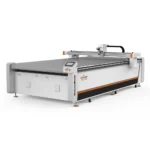
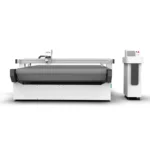
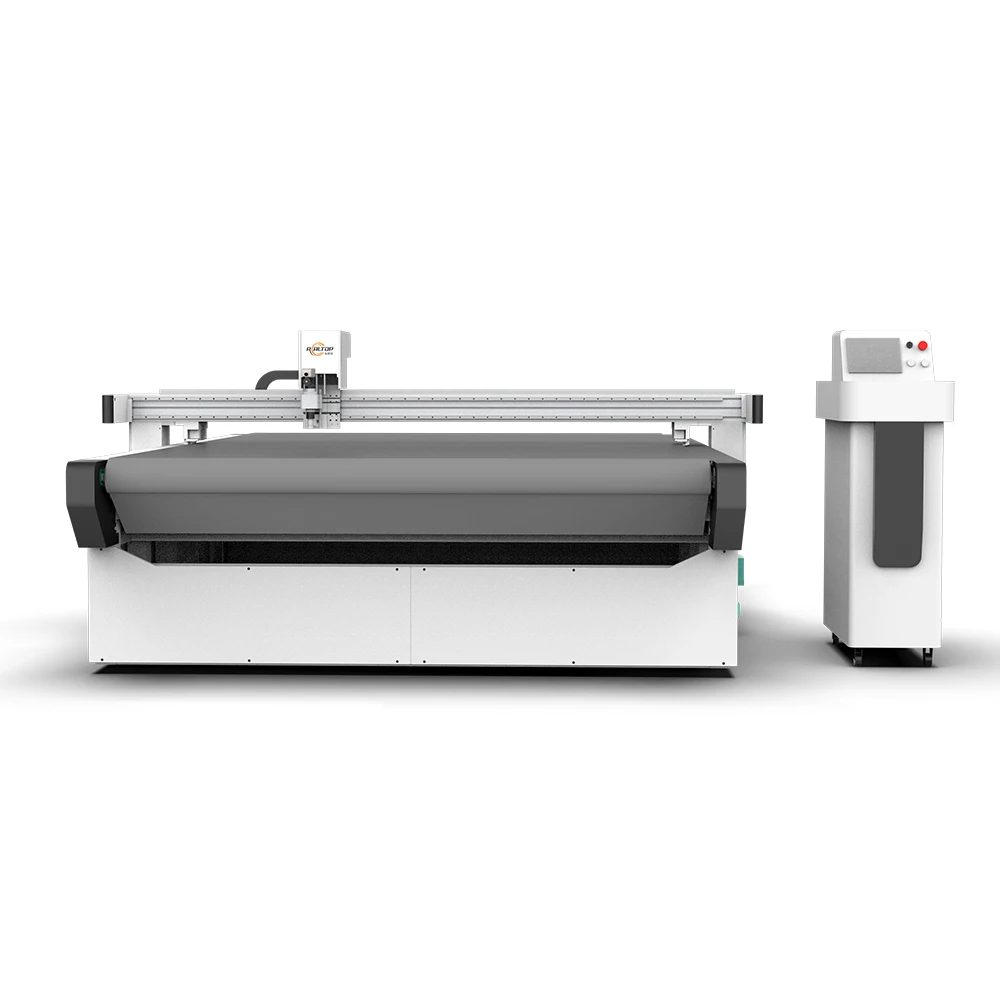
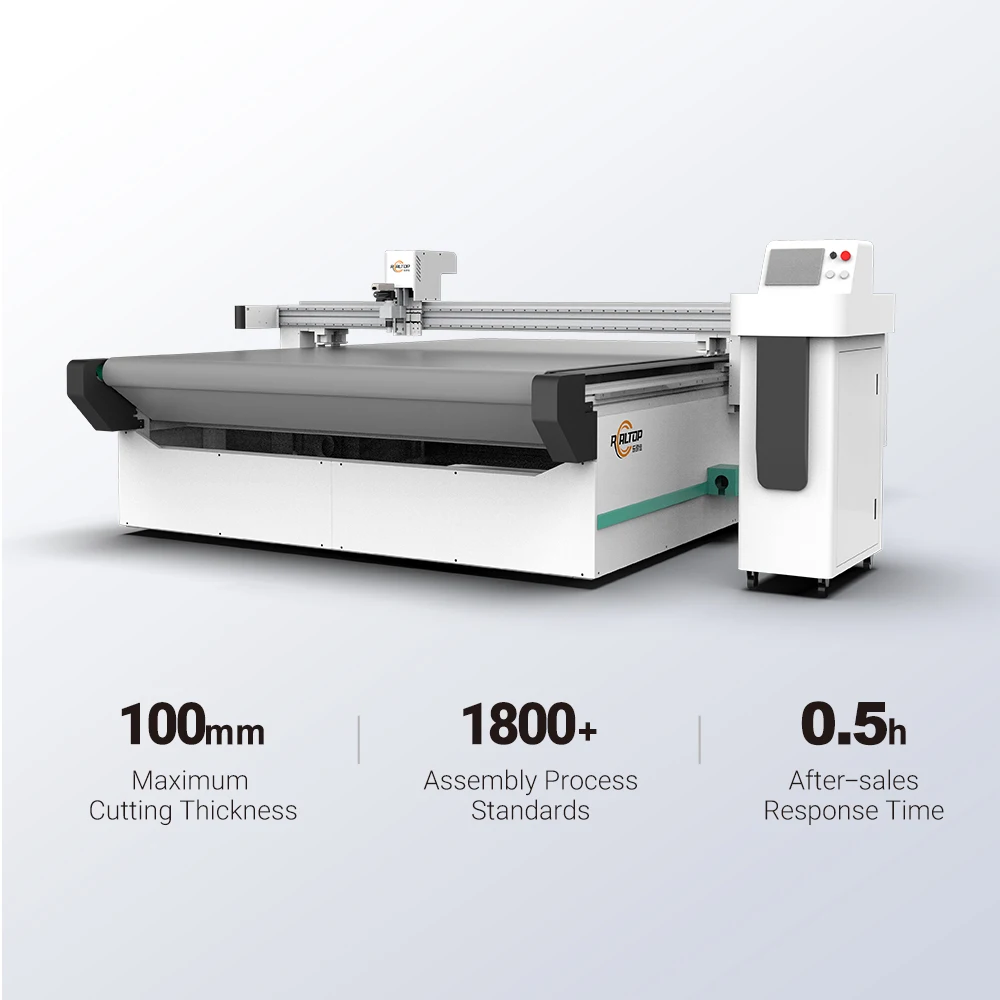
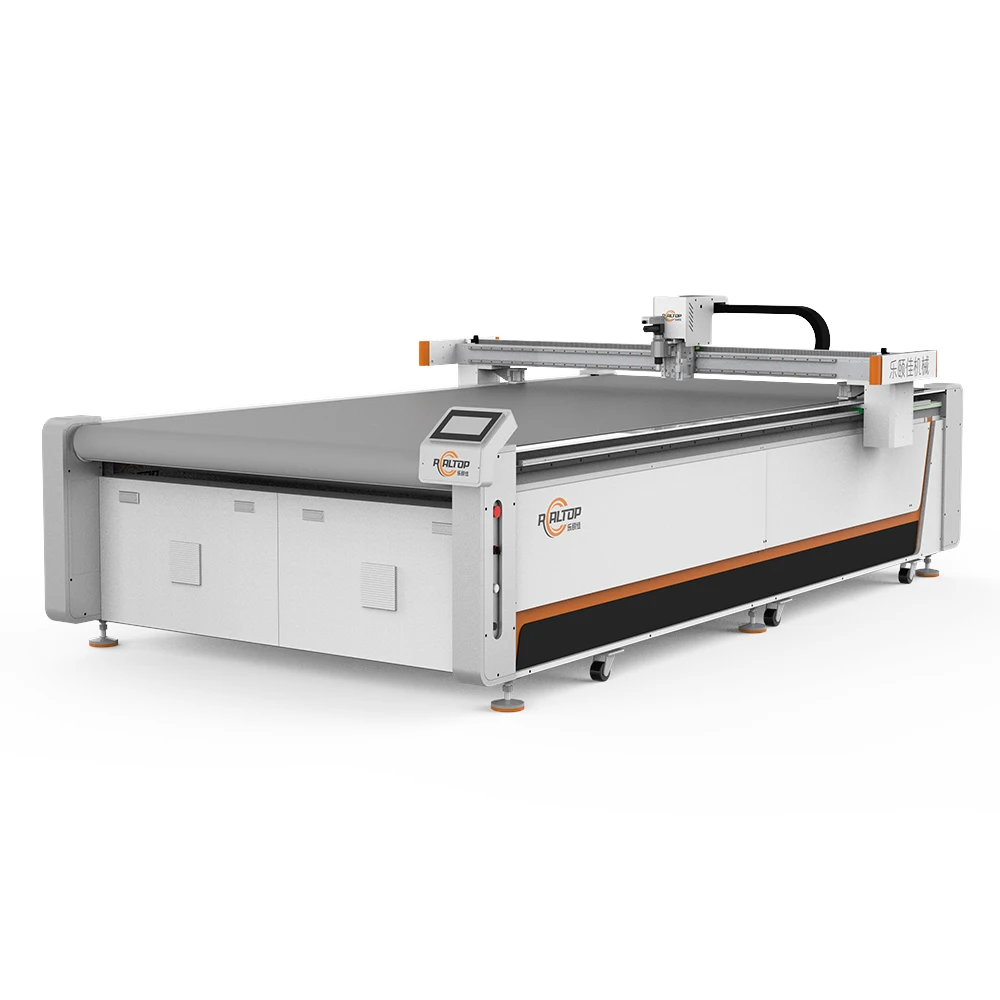
| Product Type | CNC Oscillating Knife Cutting Machine |
| Working Area | 1600×2500 mm |
| Cutting Speed | 0–2000 mm/s |
| Cutting Thickness | Up to 30 mm (basis to be confirmed by material type and layer count) |
| Cutting Accuracy | ±0.1 mm |
| Repeat Positioning Accuracy | ±0.1 mm |
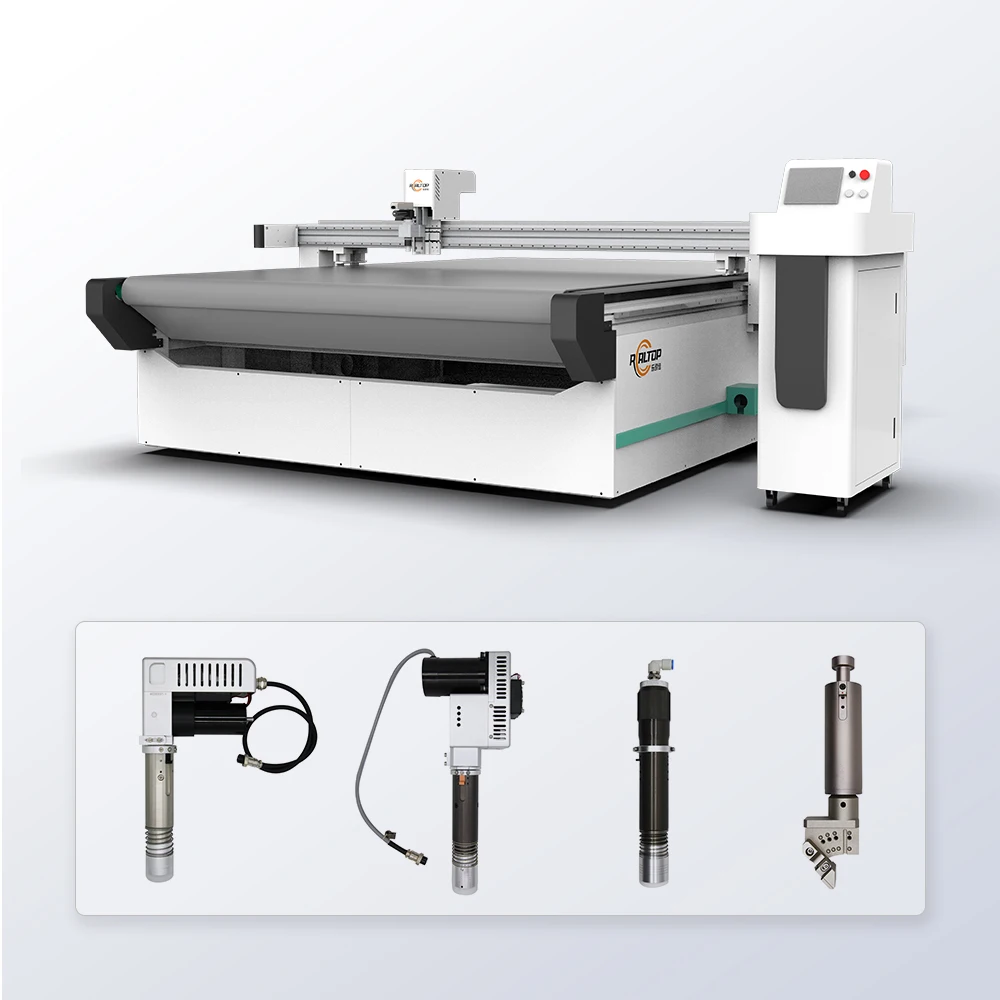
| Tool Head Options | Oscillating knife, Driven rotary knife, Creasing wheel, Kiss cutting tool, Pneumatic knife, Milling tool, V-groove knife |
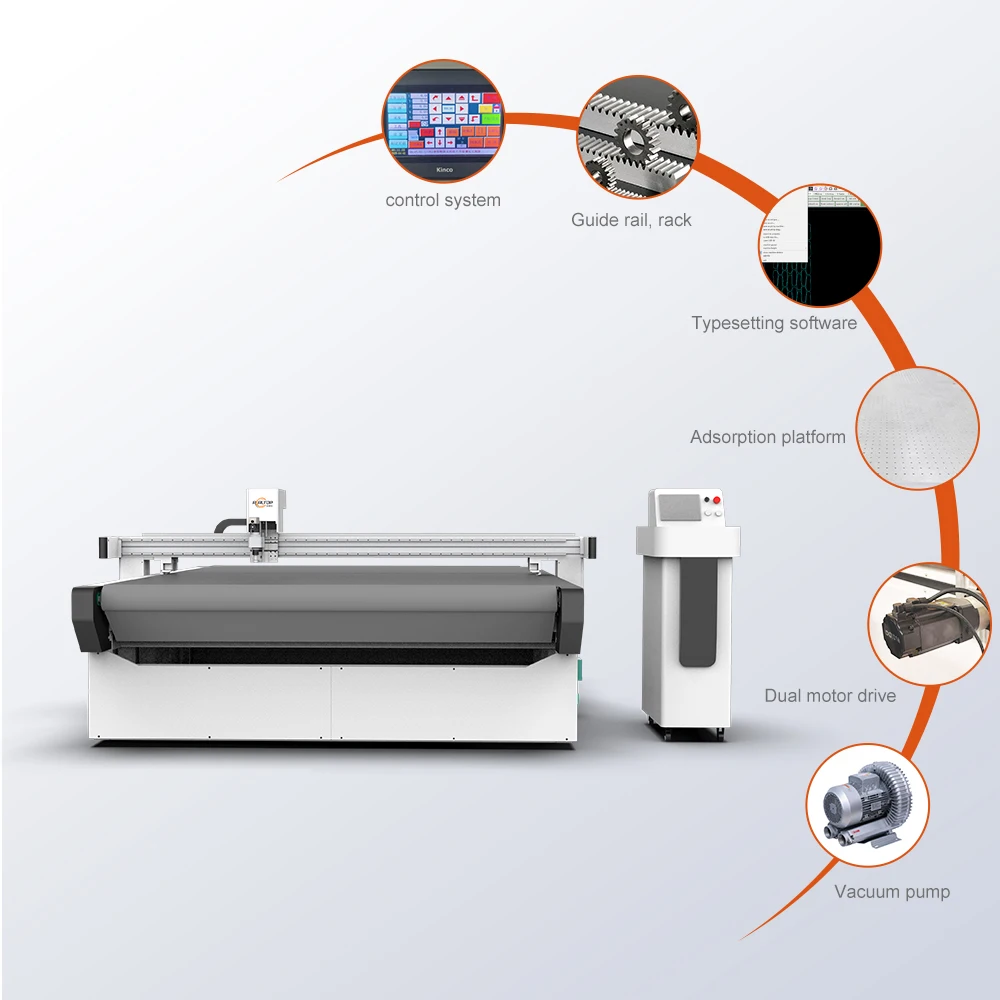
| Vacuum Table | Aluminum bellows vacuum table |
| Vacuum Pump Power | 9 kW |
| Servo Motor Options | Panasonic, Delta, Dorna (source value — verify against manufacturer catalog) |
| Control System | PLC control panel with intuitive interface |
| Display Language | English, Russian, Italian, Chinese; custom languages available |
| Supported File Formats | PLT, DXF, AI, PDF |
| Voltage Options | 110V / 220V / 380V (frequency not specified) |
| Safety Devices | Infrared sensor, emergency stop |
| Machine Dimensions | 3300×2100×1350 mm |
| Software | Intelligent nesting with automatic defect avoidance; packaging box structure design software |
| Standards | CE (inferred from product family documentation) |
Application Suitability
| Application | Material or Output |
|---|---|
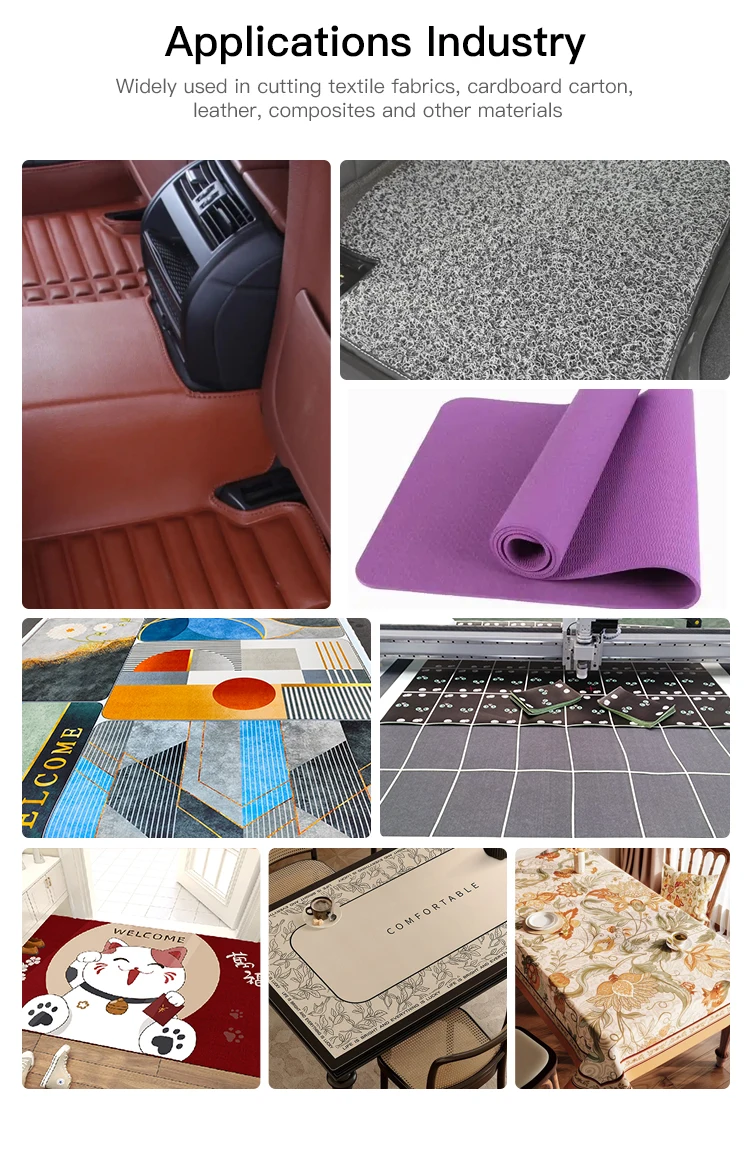
| Garment cutting | Suits, knitwear, lace, complex woven and pattern-matched fabrics |
| Automotive interiors | Seat fabrics, carpets, PVC floor mats |
| Home textiles | Sofa upholstery fabrics, curtains, rugs |
| Composite material processing | Carbon fiber prepreg, aramid, specialty laminates |
Why Stated Cutting Thickness Often Disappoints on the Shop Floor
A 30 mm rating on paper means nothing if the tool head, vacuum hold-down, and blade oscillation frequency were never matched to your actual fabric stack.
I once watched a garment factory in Dongguan take delivery of a flatbed cutter rated for the same thickness range as this class of machine. On single-layer silk it ran fine. But when they loaded six plies of coated nylon for automotive seat covers, the material shifted mid-cut and edge quality fell apart within minutes. The problem was not the machine frame — it was the vacuum zoning and the tool head selection. That shop lost nearly two weeks re-specifying the configuration. With a CNC oscillating knife cutting machine for sale across so many channels, buyers often compare working area and price first, and only discover the real gaps after the crate arrives [NEED_CITE: common configuration mismatches in digital flatbed cutting for multi-layer fabric].
Knife Versus Laser: Picking the Right Method Before the Quote
The 1625 sits within a full catalogue of both knife and laser cutting systems. This matters because a single cutting method rarely covers every fabric a production facility handles. Oscillating knife cuts through multi-layer woven and knit goods without melting synthetic edges, while laser seals edges on synthetics and handles intricate lace contours where blade drag would distort the weave. Buyers surveying options before narrowing to a method can evaluate both families side by side rather than forcing one technology across incompatible materials.
Tool Head Options and What They Actually Cut
Each tool head on this CNC oscillating knife cutting machine for sale targets a different material behavior. The oscillating knife handles thick stacked layers of upholstery and automotive textiles. The driven rotary knife suits single-ply knit and woven fabrics at higher traverse speeds. Kiss cutting tools score adhesive-backed vinyl without penetrating the liner, and the pneumatic knife takes on denser composites that resist standard oscillation. Choosing the correct head before order avoids the situation where a machine physically runs but produces ragged edges or crushed foam on your actual production jobs [NEED_CITE: tool head selection criteria for oscillating knife cutting on textile and composite materials].
Reading the Specification Sheet Like a Production Manager
The 1600×2500 mm working area aligns with standard fabric roll widths common in garment and home textile manufacturing, meaning most materials lay flat without overhang that compromises vacuum grip. The 9 kW vacuum pump paired with an aluminum bellows table provides continuous hold-down across the bed surface — critical when cutting lightweight slippery fabrics that tend to drift during oscillating blade passes. The ±0.1 mm cutting and repeat positioning accuracy holds pattern-matching tolerances required for suit panels and automotive seat inserts, where a millimeter of drift across a long cut path accumulates into visible misalignment at the sewing stage. Intelligent nesting with automatic defect avoidance further protects yield by routing cut paths around fabric flaws detected during lay-up.
What Happens When the Configuration Guess Is Wrong
Selecting a tool head based on a catalog photo rather than a sample cut on your own material leads to predictable failures. Fabric edges fray because the oscillation frequency was too low for a coated textile. Multi-layer stacks shift because the vacuum zones were not sized for small pattern pieces. File formats from your existing nesting software refuse to import, forcing operators to redraw patterns manually. These are not warranty claims — they are configuration errors that surface only under production conditions [NEED_CITE: buyer pain points in CNC digital cutting equipment procurement for textile applications].
Why Source This Range Here
In-house design covers both knife and laser technologies, so the cutting method is matched to the material rather than forced into a single platform. Tool head and table configurations are specified per material and production volume before the quotation is issued. Sample cutting on your own fabric validates edge quality, cutting speed, and layer adhesion before you commit. Software compatibility with PLT, DXF, AI, and PDF files is confirmed against your existing workflow. Voltage, plug type, and control language are locked in before production starts, not discovered during unpacking.
Documentation & Verification
- Machine specification sheet confirming working area, tool head selection, and voltage before production
- Electrical schematic and voltage confirmation matching your facility supply
- Sample cutting report on your fabric documenting edge quality and achievable speed
- Software license and file format compatibility note for PLT, DXF, AI, PDF workflows
- Spare parts list covering blades, oscillation components, and vacuum wear items
- Factory test record showing cutting accuracy and repeat positioning on your material
Installation, Commissioning & Support
- Floor space planning based on 3300×2100 mm machine footprint with clearance for material feed
- Dedicated electrical circuit sized for 9 kW vacuum pump plus servo motor load
- Machine arrives partially assembled; gantry and tool head require on-site alignment
- PLC control panel calibrated to your chosen display language during commissioning
- Operator training covers tool head changeover between oscillating, rotary, and kiss cutting tools
- Scheduled maintenance plan for aluminum bellows vacuum table seals and blade consumables
Preparing Your Inquiry
Provide your primary fabric types, single-ply thickness, and whether you run multi-layer stacks. Include your standard sheet or roll dimensions and daily cut volume so the correct tool head and vacuum zoning can be specified. State your local voltage and frequency along with the control language your operators need.
Frequently Asked Questions
Q: How do I decide between knife cutting and laser for my fabric mix?
A: Knife cutting handles multi-layer stacks without melting synthetic fibers, making it suited for woven, knit, and composite textiles in batch production. Laser cutting seals edges on synthetics and handles intricate contours in lace or delicate single-ply materials. The full catalogue lets you compare both methods against your specific fabric list before committing to a configuration.
Q: What working area sizes are available across the machine range?
A: The 1625 offers 1600×2500 mm, positioned for standard garment and home textile roll widths. Other sizes within the full catalogue cover compact tabletop formats through large-format beds for automotive interior and composite material processing. Matching working area to your actual sheet or roll dimensions prevents vacuum hold-down gaps at the material edges.
Q: How can I verify cutting thickness capability on my specific material?
A: Request a sample cutting test using your actual fabric at the ply count you intend to run. The resulting sample cutting report documents edge quality, achievable speed, and any layer shifting observed. This step confirms whether the stated thickness range applies to your material rather than relying on a generic rating.
Q: What voltage and control language options can be configured?
A: Voltage options include 110V, 220V, and 380V configurations. The PLC control panel supports English, Russian, Italian, and Chinese as standard, with custom languages available on request. Confirming both voltage and language before production avoids costly rewiring or operator confusion at installation.
Q: How does the nesting software work with my existing design files?
A: The system accepts PLT, DXF, AI, and PDF file formats directly. Intelligent nesting includes automatic defect avoidance to protect material yield. Before ordering, a software compatibility note confirms that your current design files import correctly and that the nesting workflow integrates with your existing production planning process.










商品评价
There are no reviews yet.