





Fast Delivery
Quick, reliable shipping to any location.

Free & easy returns
Return this item by mail or in store within 90 days for a full refund.
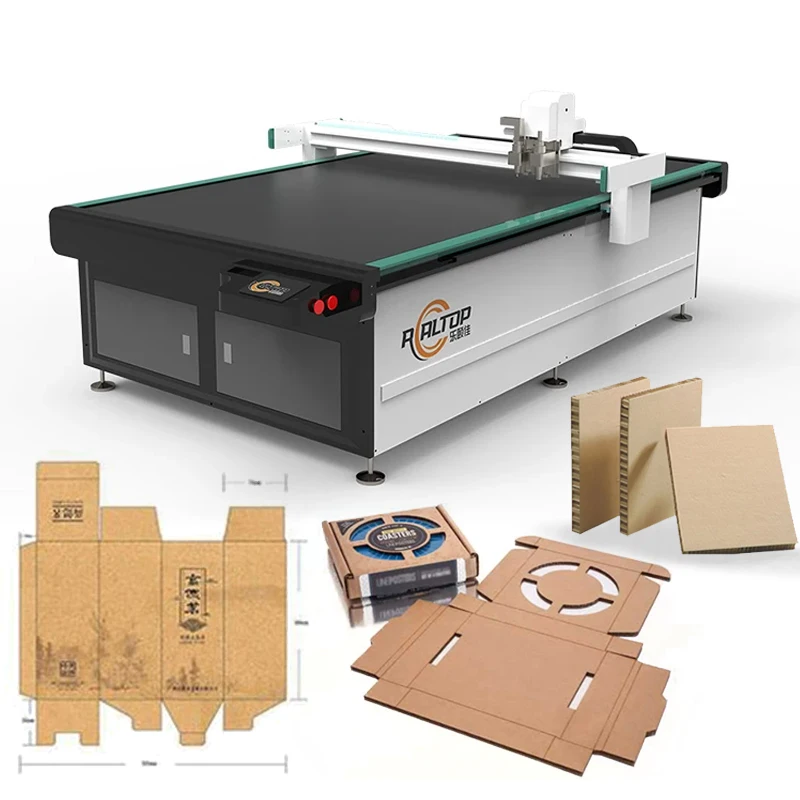
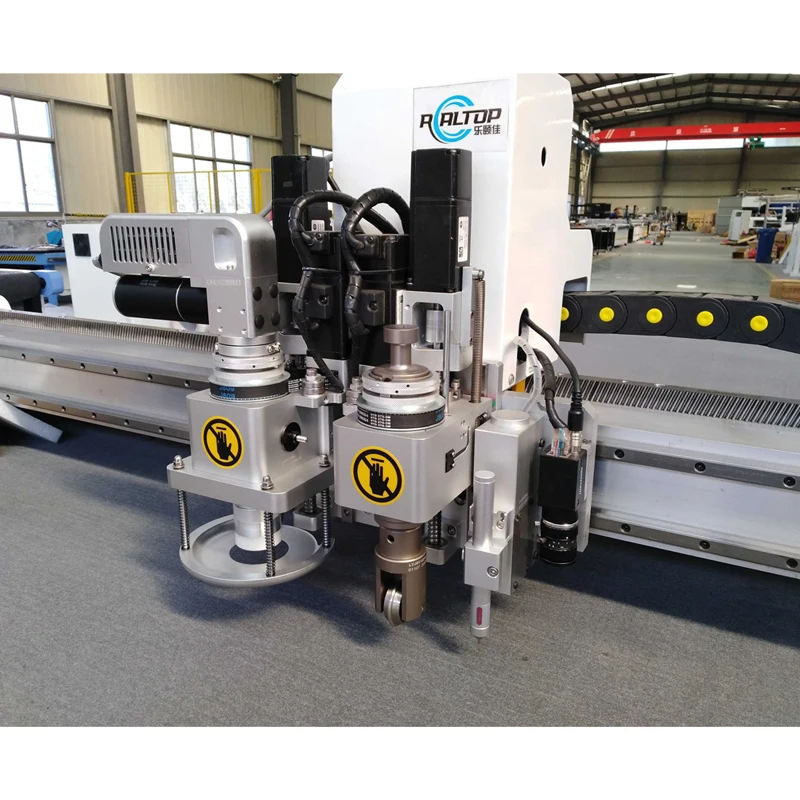
Multi-tool head configurations specified per material — oscillating knife, creasing wheel and vacuum zoning matched to your actual board stock before order, so the machine cuts and scores corrugated and carton board in one cycle without edge tear or lift.
Technical Specifications
| Parameter | Value |
|---|---|
| Product Type | CNC Oscillating Knife Digital Cutting Machine |
| Working Area | 2500×1300 mm / 1600×2500 mm options |
| Machine Size | 3550×1910×1400 mm / 3450×2300×1250 mm (varies by model) |
| Cutting Tools | Oscillating knife, creasing tool, kiss-cut knife, round punch |
| Fixing Method | Vacuum system with zoned adsorption |
| Rated Power | 9 kW |
| Vacuum Pump | 7.5 kW |
| Profile Formats | DXF, OLT, PDF, AI |
| Transmission Method | Ethernet port |
| Cutting Thickness | ≤18 mm (basis not stated in source — confirm material type and density) |
| Repeated Accuracy | <0.05 mm |
| Voltage | 380 V (frequency to be confirmed per market) |
| Servo Motor | Dongling servo |
| Guide Rail | Taiwan Hiwin rail |
| Conveyor Belt | Germany imported conveyor belt (verify against manufacturer catalog) |
| Safety Device | Infrared sensors, emergency stop |
| Language Options | English, Russian, Italian, Chinese (customization available) |
| Software | Professional carton nested software with automatic layout |
| Warranty | 1 year (excluding felt, knife blades) |
| Delivery Time | <30 working days |
Application Suitability
| Application | Material or Output |
|---|---|
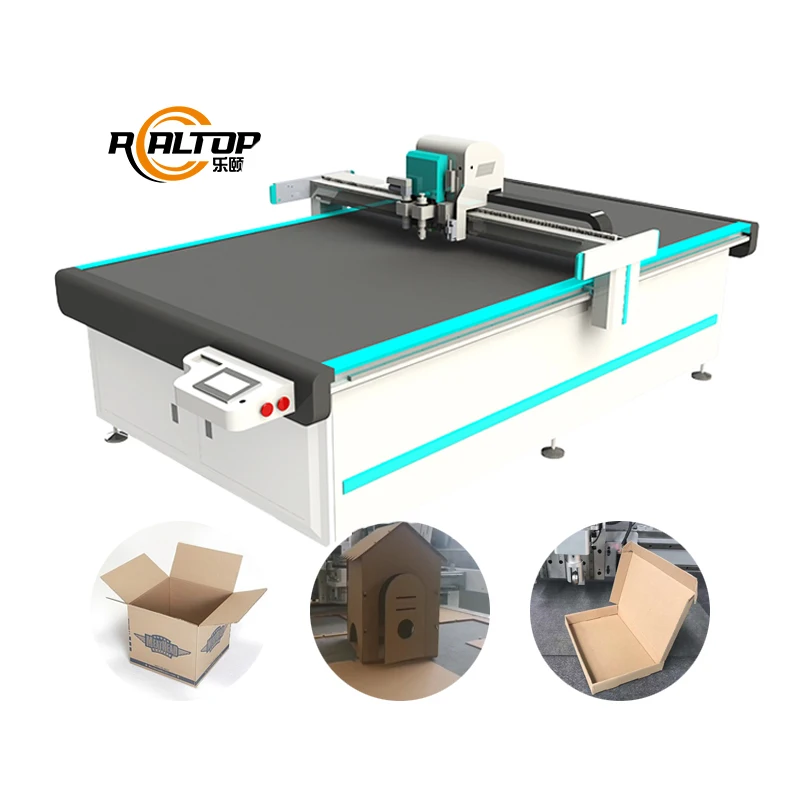
| Carton sample making | Corrugated board, grey board, kraft paper up to 18 mm |
| Express and snack packaging | Single and double-wall corrugated, folding carton stock |
| High-end gift box prototyping | Dense board, laminated paper, coated stock |
| Sticker and label contour cutting | Vinyl, PP paper, adhesive label sheets |
| Leather cutting | Natural and synthetic leather for footwear and goods |
Why "Cutting Thickness ≤18 mm" Needs a Second Question
Every board grade behaves differently under an oscillating blade — the thickness number alone never tells the full story.
A buyer once specified a CNC oscillating knife cutting machine for sale based solely on the 18 mm cutting depth rating. The corrugated board they ran daily had a higher moisture content than the standard test stock. On the first production day the knife dragged through the flutes, leaving ragged edges and crushed cores across an entire batch of carton blanks [NEED_CITE: material moisture content effects on oscillating knife cutting quality]. The machine was not at fault — the specification simply had not been matched to their real material. That is why a sample cutting test on the buyer’s own stock is the only reliable way to confirm edge quality, crease depth and throughput before an order is placed.
From Knife Selection to Clean Carton Edges
The oscillating knife head on this CNC flatbed table is available in multiple blade angles and stroke frequencies to suit different board densities. A high-frequency oscillation works through double-wall corrugated without crushing the inner flutes, while a lower-frequency stroke handles dense grey board for gift boxes. The creasing tool runs in the same cycle, pressing score lines to a controlled depth so the carton folds cleanly without cracking the liner.
Vacuum Zoning That Actually Holds Small Parts Down
The aluminum alloy honeycomb vacuum table divides the working area into independent zones. When cutting small carton components — such as inserts, dividers or label blanks — the zones directly beneath the part stay active while surrounding areas close off. This concentrated adsorption prevents the material from lifting during the final cut pass, a common cause of dimensional drift on short-run packaging jobs [NEED_CITE: vacuum zoning principles for CNC flatbed cutting tables].
Reading the Specification Sheet Like a Production Manager
The 9 kW rated power and 7.5 kW vacuum pump together define what this machine can sustain through a full shift of nested carton layouts. The Hiwin guide rails and Dongling servo motors hold repeated accuracy below 0.05 mm, which matters when crease lines must align with printed graphics across a 2500 mm sheet. The professional carton nesting software imports DXF, OLT, PDF and AI files directly, so packaging templates built in standard CAD workflows transfer without manual re-drawing. Ethernet transmission moves large nesting files to the controller faster than legacy USB methods, reducing idle time between jobs.
The Hidden Cost of Skipping Configuration Checks
A wrong tool head on corrugated board produces crushed flutes on one side and clean cuts on the other — the sheet passes visual inspection but fails the fold test downstream. Insufficient vacuum zoning on small sticker sheets lets corners lift mid-cut, shifting the entire contour by a millimeter or more [NEED_CITE: common causes of contour drift in digital flatbed cutting]. Software that cannot import the buyer’s existing AI or DXF templates forces operators to rebuild every die-line manually, adding hours to each sample run.
Why Source This Range Here
In-house design and production cover both knife and laser cutting technologies, so the cutting method is matched to the packaging material rather than forced into a single process. Tool head and table configuration are specified per material type and production volume before the order is confirmed. CCD camera positioning is available for printed contour work on labels and signage board. Voltage, plug type and control language are locked in during the specification stage, not left to assumption. Sample cutting on the buyer’s own cardboard stock runs before any commitment is made.
Documentation & Verification
- Machine specification sheet listing confirmed tool heads and vacuum zone layout
- Electrical schematic with voltage and frequency matched to your facility
- Sample cutting report on your corrugated or carton board stock
- Software licence and file format compatibility note for DXF, AI, OLT and PDF
- Factory test record documenting repeated accuracy and edge quality before dispatch
Installation, Commissioning & Support
- 9 kW rated power requires a dedicated 380 V circuit with confirmed frequency and plug type
- Machine footprint up to 3550×1910 mm demands level flooring with anchor points for vibration control
- 7.5 kW vacuum pump connects to a separate breaker to avoid voltage drop during knife start-up
- First-run parameter setting covers knife stroke, creasing depth and vacuum zone mapping to your board grade
- Operation training covers nesting software import, automatic layout and tool change procedure
- Spare parts list identifies knife blades, felt strips and conveyor belt segments for stock
Before You Request a Quote
Send the actual corrugated grade, flute type and sheet dimensions you run most often, along with your daily volume and target crease pattern. Confirm the voltage and frequency at your facility and the control language your operators need. If your design team works in a specific CAD format, include a sample file so software compatibility is verified before the quotation stage.
Frequently Asked Questions
Q: How is the cutting thickness verified for my specific board grade?
A: The ≤18 mm rating is a general figure. We run a sample cut on your actual corrugated or carton board to check edge quality, flute integrity and crease depth at production speed. The result is documented in a sample cutting report shared before order confirmation, so the configuration is proven on your material — not assumed from a catalog value.
Q: Which tool heads handle both cutting and creasing in a single pass?
A: The oscillating knife cuts through the board while the creasing tool presses score lines in the same cycle. Kiss-cut and round punch tools can also be mounted simultaneously. The exact combination is specified based on your board type and carton design so that cutting, scoring and punching complete without a second setup.
Q: Can the software import my existing packaging templates?
A: The professional carton nesting software accepts DXF, OLT, PDF and AI files. Before order, we verify that your specific CAD exports import correctly and that automatic nesting produces acceptable material yield on your typical sheet size. Any file format issue is resolved at the quoting stage, not after delivery.
Q: What electrical and language options are confirmed before shipment?
A: Voltage, frequency and plug type are confirmed against your facility supply during the specification stage. The control interface is available in English, Russian, Italian or Chinese, with other languages configurable on request. An electrical schematic and voltage confirmation document is included in the shipping documentation package.










商品评价
There are no reviews yet.