



Fast Delivery
Quick, reliable shipping to any location.

Free & easy returns
Return this item by mail or in store within 90 days for a full refund.
Complete Cutting Range — Our design team engineers both oscillating knife and laser platforms in one facility, so material properties rather than machine availability dictate the cutting method you specify.
Technical Specifications
| Parameter | Value |
|---|---|
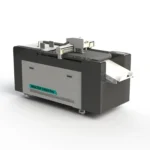
| Product Type | CNC Oscillating Knife Cutting Machine |
| Model | RT-D2516/RT-S2516 |
| Working Area | 1600×2500 mm |
| Overall Dimensions (L×W×H) | 3450×2300×1250 mm |
| Rated Power | 9 kW |
| Translational Velocity | 800–1200 mm/s |
| Cutting Speed | 200–800 mm/s (varies with material type and thickness) |
| Cutting Thickness | ≤100 mm (varies with material; basis not stated in source) |
| Repeated Accuracy | ≤0.1 mm |
| Table Type | Flatbed vacuum table with 7.5 kW vacuum pump |
| Transmission System | Digital servo motor, linear guide, synchronous belt, ball screw |
| Servo Motor Brand | Delta |
| Linear Guide | Taiwan Hiwin rail |
| Multifunctional Head | Swiss imported knife with vibration full-cut, half-cut and cursor location |
| Safety Device | Infrared sensors |
| Instruction System | HP-GL compatible format |
| Voltage | 380V±10% |
| Tool Head Options | Oscillating knife, pneumatic knife, high-power vibrating knife, circular knife, V cutting knife, drag knife, creasing wheel, dotted line knife, punching, brush |
| Visual Positioning Options | Small CCD camera mark point positioning, panoramic camera recognition positioning, projection positioning |
| Language Options | English, Russian, Italian, Chinese (other languages configurable) |
| Assembly State | Fully assembled |
| Standards | CE |
Application Suitability
| Application | Material or Output |
|---|---|
| Packaging and carton sample making | Corrugated cardboard, plastic box stock, grey board |
| Garment and footwear production | Fabric, textile, clothing cloth, shoe material, luggage material |
| Automotive interior and gasket fabrication | Sponge composite leather, PU, EVA, XPE, rubber, gasket material |
| Graphic advertising and printing | Sticker, film, foam board, PVC, soft glass |
| Soft home furnishings and carpets | Carpet, non-woven fabric, sponge, leather |
| Sealing and industrial gaskets | PTFE, ETFE, silicone, rubber, fiberglass |
| Sports and outdoor products | Composite materials, foam, PVC, PE, PP |
Why "Working Area Only" Specifications Leave Buyers Exposed
Many cutting machine inquiries start and end with table size. A 1600×2500 mm bed sounds adequate until the machine arrives and the tool head cannot handle the material stack height, or the vacuum zoning fails to hold small nested parts flat during high-speed cuts. A CNC oscillating knife cutting table for sale should be specified by material behaviour first and footprint second.
I once set up a signage shop with what looked like a perfectly matched flatbed cutter. The working area fit their sheet stock, the price was right, and the sample cuts on the supplier’s demo material were clean. But when production started on their actual PVC foam board at full nesting speed, small offcuts lifted off the table mid-cycle. The vacuum pump was powerful enough, but the table zoning was a single undivided zone — useless for holding dozens of small letter shapes in place. The shop lost hours daily to re-cuts and material waste [NEED_CITE: vacuum table zoning requirements for small-part digital cutting].
This is the gap between a machine that runs in a factory test video and one that holds tolerance on your shop floor across an eight-hour shift.
Matching Tool Head to Material Rather Than Forcing One Method
The RT-D2516/RT-S2516 supports ten distinct tool head options within a single cutting cycle. Oscillating knife handles thick foam and composite leather where a drag knife would crush the surface. Creasing wheels score corrugated cardboard for folding without cutting through. A pneumatic knife engages on denser rubber gasket stock where mechanical vibration alone leaves ragged edges. The cutting method should follow the material, not the other way around.
When a buyer sends actual production stock for sample cutting, the tool head selection becomes a verified parameter rather than a catalogue guess. This is how a CNC digital cutting machine manufacturer earns trust — by proving edge quality on the buyer’s own material before the order is placed.
Camera Positioning and the Printed Contour Problem
Contour cutting on pre-printed graphics depends entirely on the vision system’s ability to track registration marks at production speed. The small CCD camera handles mark point positioning for jobs with consistent print placement. For wide-format jobs where print distortion varies across the sheet, the panoramic camera recognition system reads multiple reference points and adjusts the cut path dynamically.
A CNC oscillating knife cutting table for sale without verified camera performance is a risk on any printed material workflow. Shops producing vehicle wraps, retail display graphics, or branded packaging need to test mark recognition on their actual printed output at full cutting speed, not on a clean test sheet [NEED_CITE: CCD camera positioning accuracy on printed flexible materials at production speed].
Reading the Specifications That Matter on the Shop Floor
The repeated accuracy of ≤0.1 mm matters most when cutting interlocking pattern pieces for automotive interiors or garment panels where cumulative drift across a long nest turns into misaligned seams downstream. This accuracy depends on the combination of Taiwan Hiwin linear guides and Delta digital servo motors, which together resist the lateral forces generated when the oscillating knife pushes through dense composite stock.
The 7.5 kW vacuum pump paired with the flatbed table determines how well thin films and flexible fabrics stay pinned during high-speed directional changes. A weaker pump allows material creep on the outer zones of the table, particularly when cutting lightweight non-woven fabric or sticker sheets where even slight lift produces jagged edges.
The HP-GL compatible instruction system defines what file formats enter the machine without manual re-drawing. Shops already running nesting software that exports HP-GL can integrate directly. The Swiss imported multifunctional knife head offers vibration full-cut and half-cut modes, where half-cut is essential for kiss-cutting sticker sheets without damaging the backing paper — a setting that must be calibrated to each material thickness on arrival.
The Hidden Cost of Underspecifying Your Configuration
A machine quoted on working area alone often arrives with a generic tool head that produces acceptable cuts on thin material but tears through thick sponge or leaves crushed edges on EVA foam. Retrofitting the correct oscillating knife or pneumatic head after delivery means downtime, recalibration, and sometimes a vacuum table modification if the original zoning does not match the new cutting forces [NEED_CITE: tool head retrofit compatibility on flatbed digital cutting tables].
Voltage mismatch is another silent failure. A facility running on a supply outside the 380V±10% range will see servo motor overheating and inconsistent cutting depth before the electrical panel trips. Confirming supply characteristics before shipment prevents weeks of commissioning delays.
What Buying Direct From the Manufacturing Floor Changes
In-house design covering both knife and laser cutting technologies means the RT-D2516/RT-S2516 is recommended based on what your material actually needs, not on clearing stock of one machine family. The design team specifies tool head and table configuration per material type and daily production volume rather than shipping a default build.
Sample cutting on the buyer’s own material before order commitment means edge quality, cutting speed, and vacuum hold-down are all verified parameters — not brochure claims. Software compatibility is confirmed in writing before production starts, so your nesting workflow integrates without manual file conversion.
Voltage, control language, and plug type are locked in during the specification confirmation stage. The factory test record documents actual cutting performance on your stock before the machine is crated.
Documentation & Verification
- Machine specification sheet listing confirmed tool head and vacuum table configuration for your material
- Electrical schematic and voltage confirmation matching your facility supply at 380V±10%
- Sample cutting report on your actual production stock verifying edge quality and cutting speed
- Software licence and file format compatibility note confirming HP-GL integration with your nesting workflow
- Factory test record documenting cutting accuracy and vacuum hold-down before dispatch
- Operation and maintenance manual with spare parts list in your specified control language
Installation, Commissioning & Support
- Flat floor with level tolerance suitable for the 3450×2300×1250 mm footprint and 9 kW rated power draw
- Dedicated 380V±10% circuit with correct phase and frequency confirmed before the machine arrives on site
- Fully assembled delivery means the RT-D2516/RT-S2516 requires positioning and power connection rather than frame assembly
- First-run calibration of oscillating knife depth and vacuum zoning matched to your material stack height
- Operator training on HP-GL file import, tool head changes, and CCD camera mark recognition workflows
- Spare oscillating knife blades, vacuum seals, and drive belts included for initial production months
What to Prepare Before Requesting a Quote
To specify the correct configuration, share the material type, maximum thickness, and typical sheet size you process. Note your daily cutting volume and whether your workflow involves pre-printed graphics that require camera positioning. Confirm your facility voltage, frequency, and preferred control language so the build matches your shop floor from day one.
Frequently Asked Questions
Q: How do I decide between oscillating knife and laser cutting for my material?
A: Oscillating knife suits thick foam, composite leather, and gasket materials where laser would melt or discolour the edge. Laser works better on thin acrylic, wood veneer, and synthetics requiring a sealed edge. Send your actual material for sample cutting so both methods can be compared on edge quality and speed before you commit.
Q: Which tool head should I run for my specific material stack?
A: The RT-D2516/RT-S2516 supports oscillating knife, drag knife, creasing wheel, pneumatic knife, and punching heads among others. The right choice depends on your material density, thickness, and whether you need creasing or kiss-cutting in the same job. Sample cutting on your stock determines the correct configuration.
Q: Can the CCD camera track printed marks reliably at full production speed?
A: Both small CCD mark point and panoramic camera options are available. Performance depends on print contrast, mark size, and sheet distortion. Testing with your actual printed output at production cutting speed is the only way to confirm reliable tracking before the machine ships.
Q: What file formats does the software accept, and will it work with my nesting system?
A: The control system accepts HP-GL compatible format. If your existing nesting or CAD software exports HP-GL, integration is direct. File format compatibility is confirmed in writing before order so there are no workflow surprises after installation.
Q: Can the vacuum table zoning handle small parts without material lift?
A: The flatbed vacuum table paired with the 7.5 kW pump provides strong hold-down across the 1600×2500 mm working area. For jobs with many small nested parts, zoning configuration must be matched to the part layout. This is verified during sample cutting on your actual nesting files.










商品评价
There are no reviews yet.