


Fast Delivery
Quick, reliable shipping to any location.

Free & easy returns
Return this item by mail or in store within 90 days for a full refund.
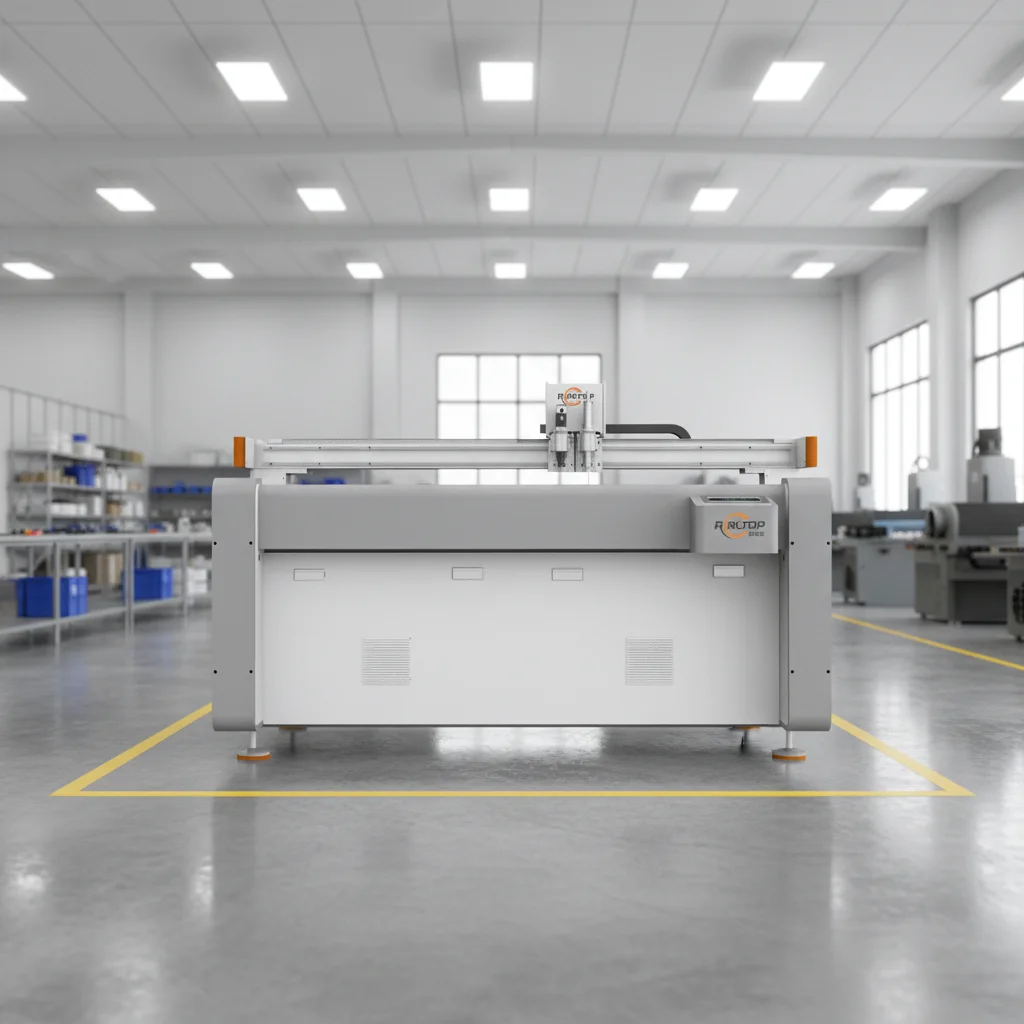
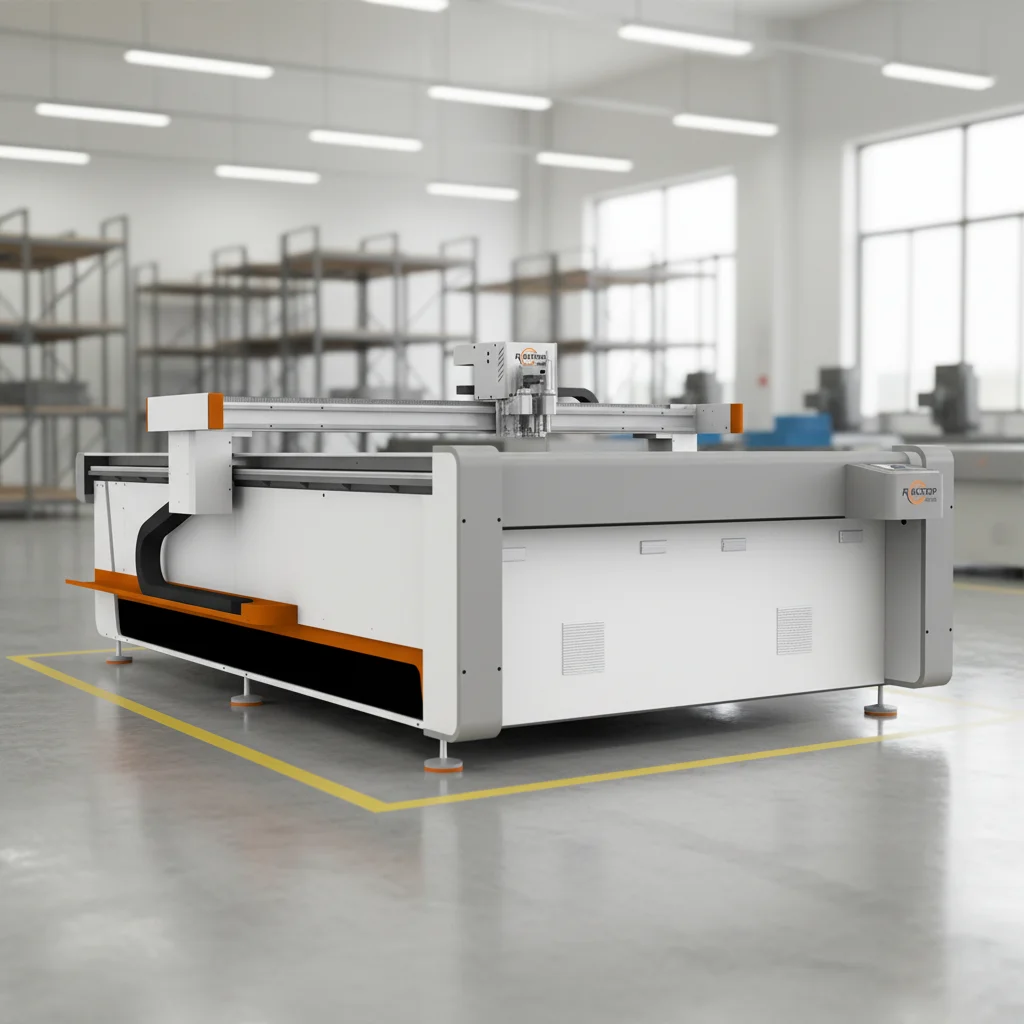
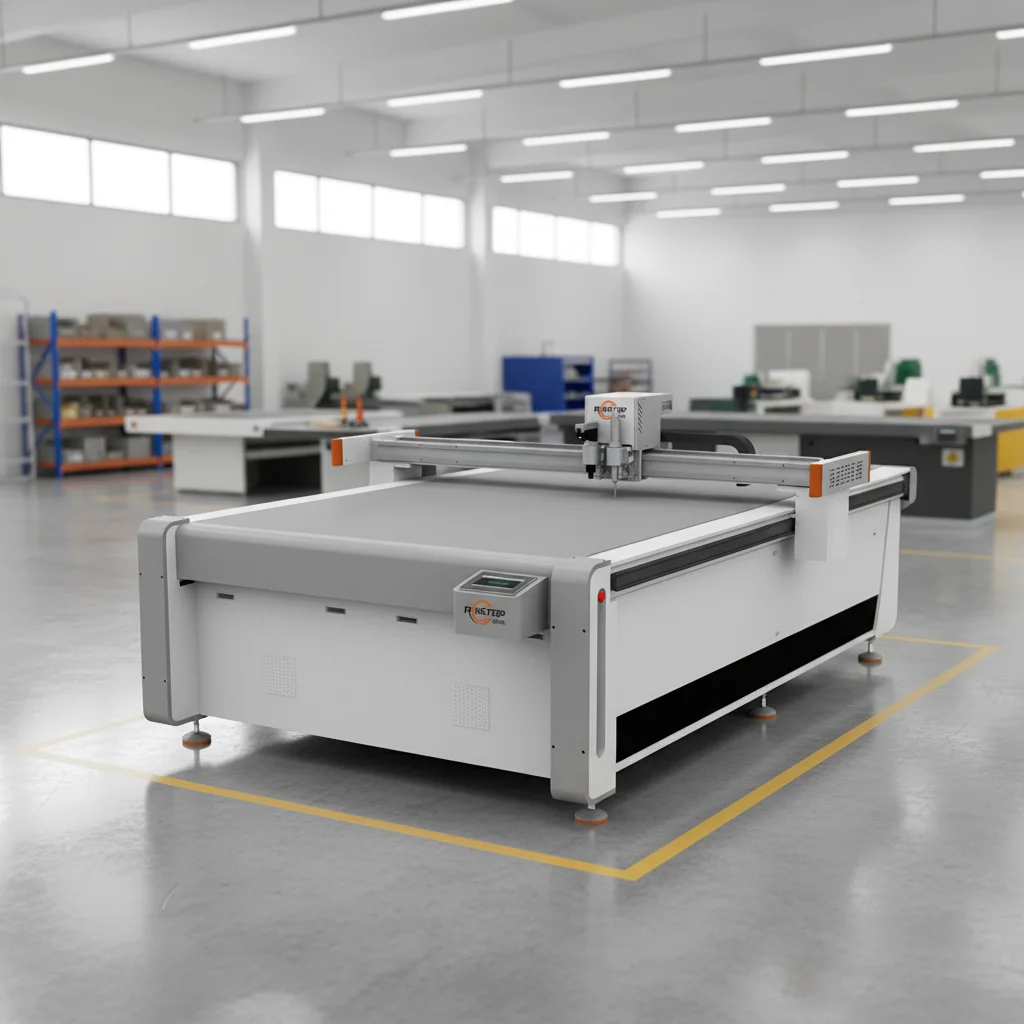
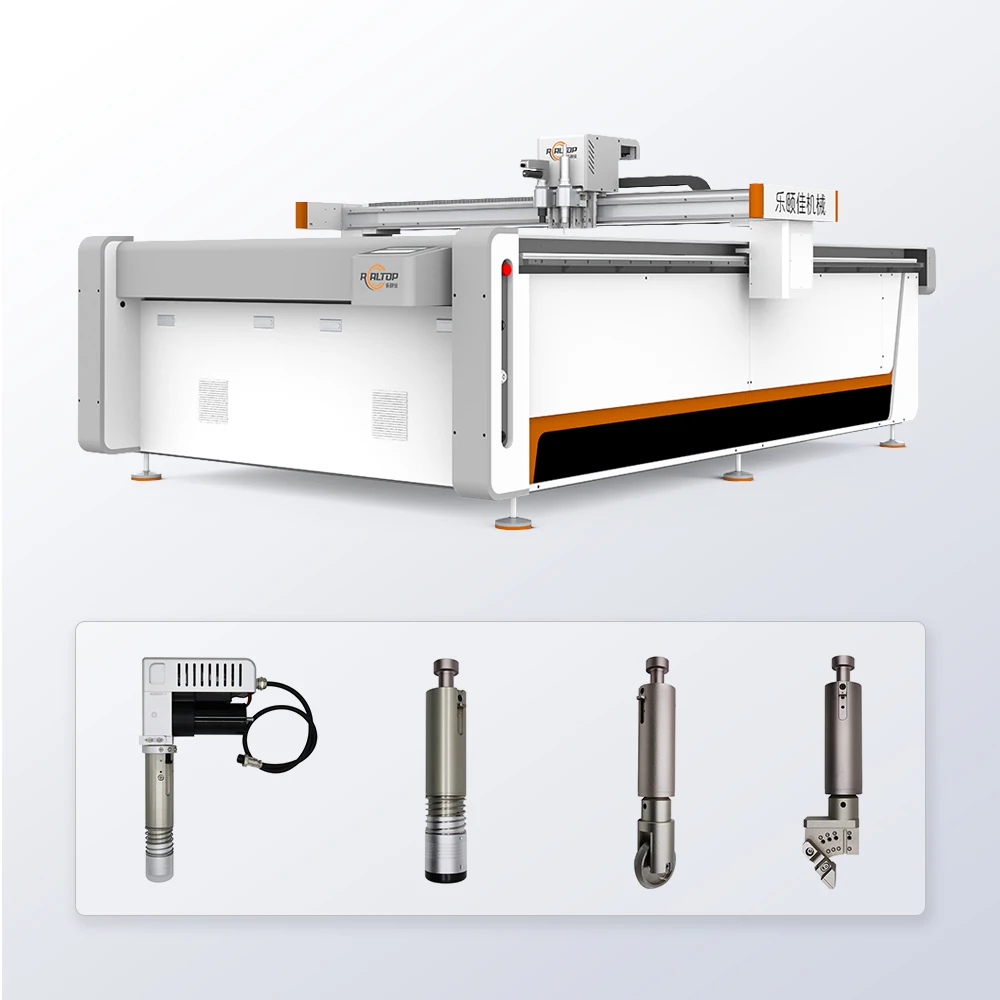
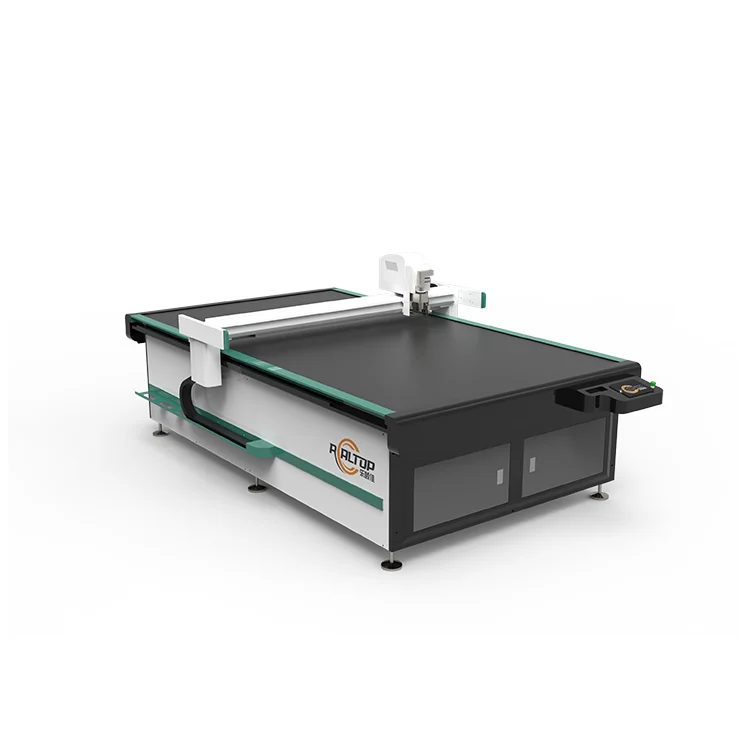
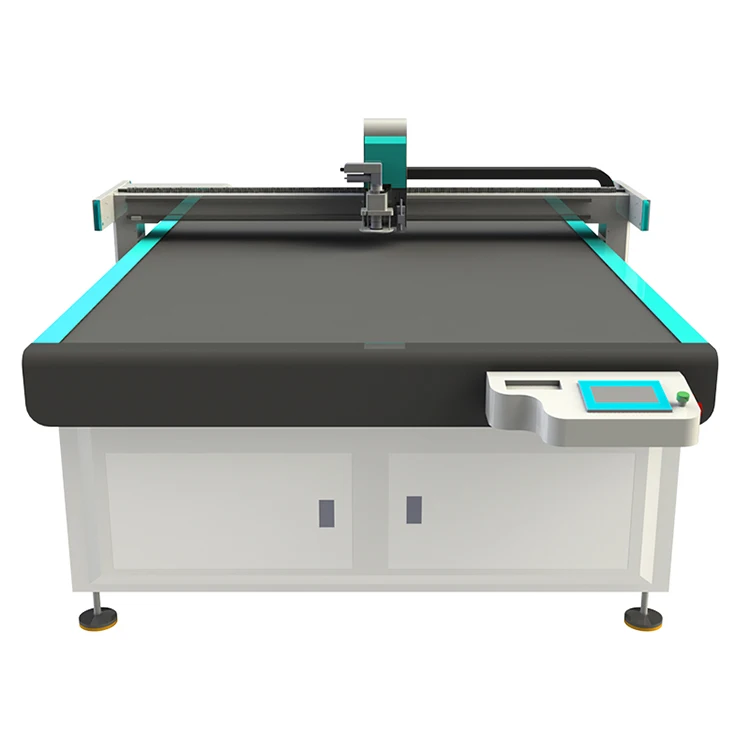
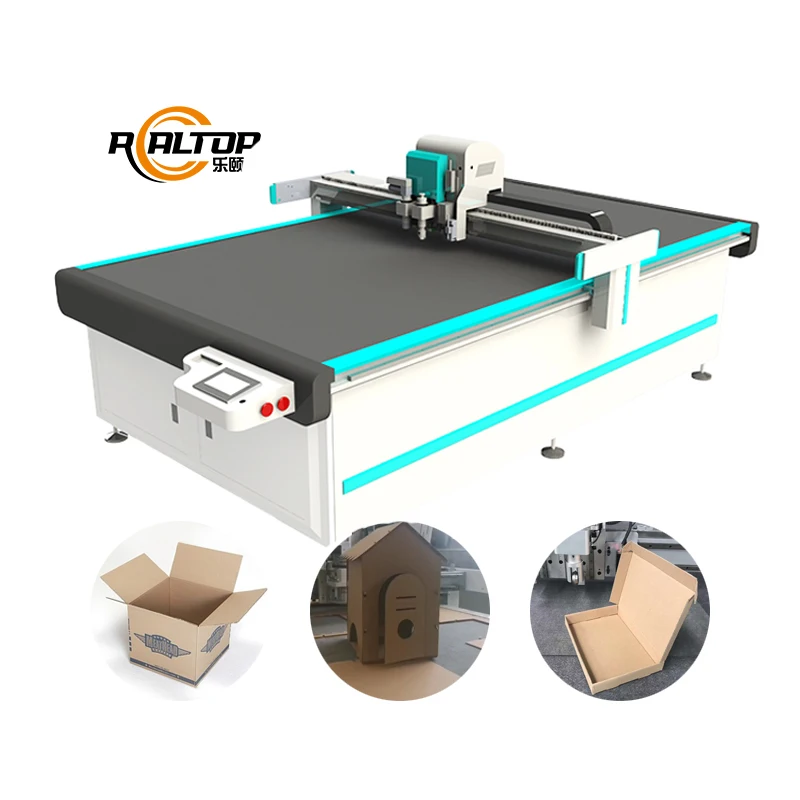
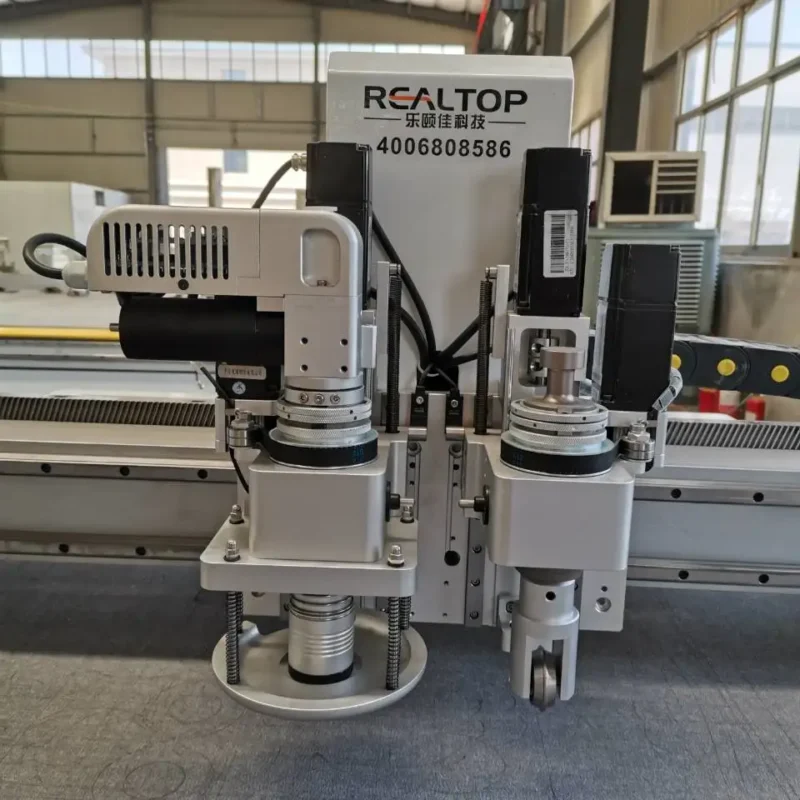
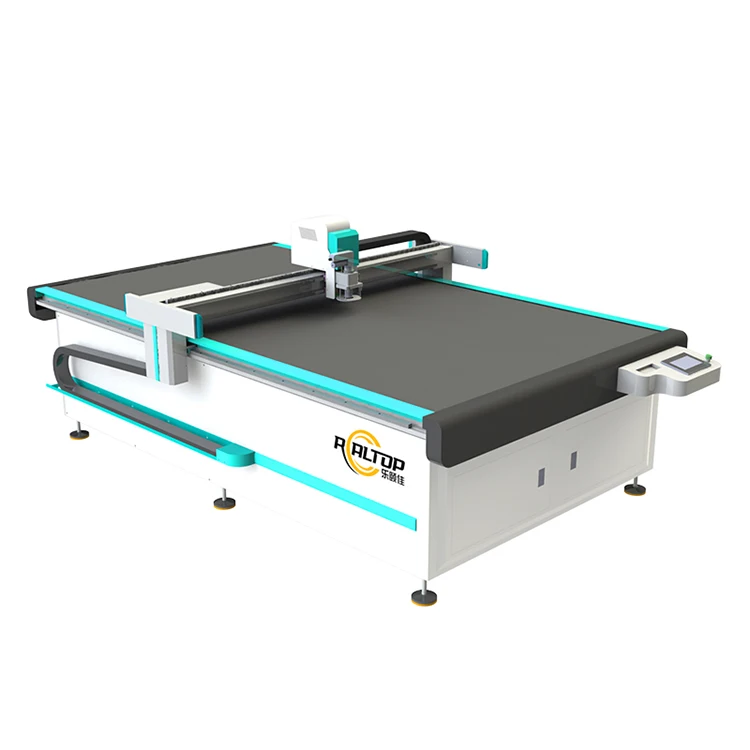
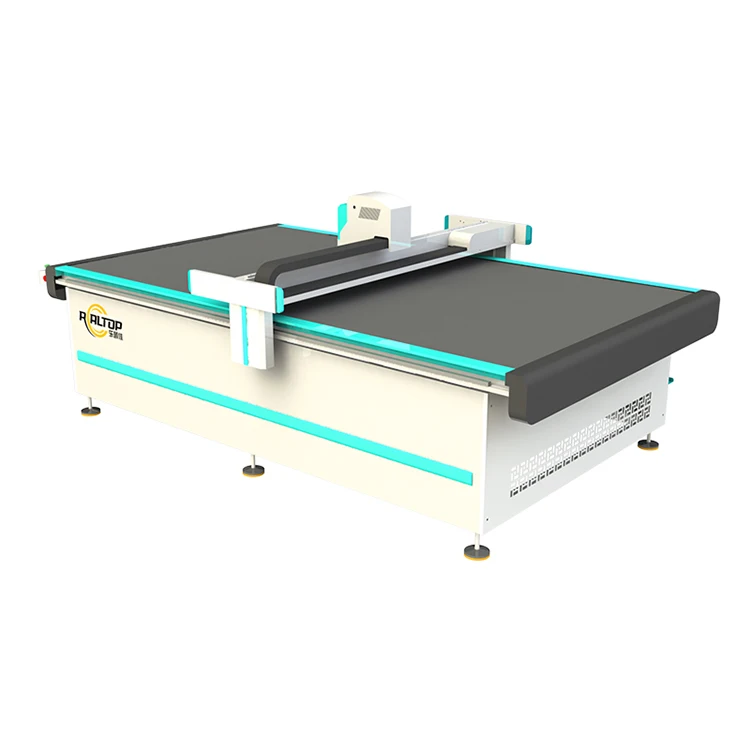
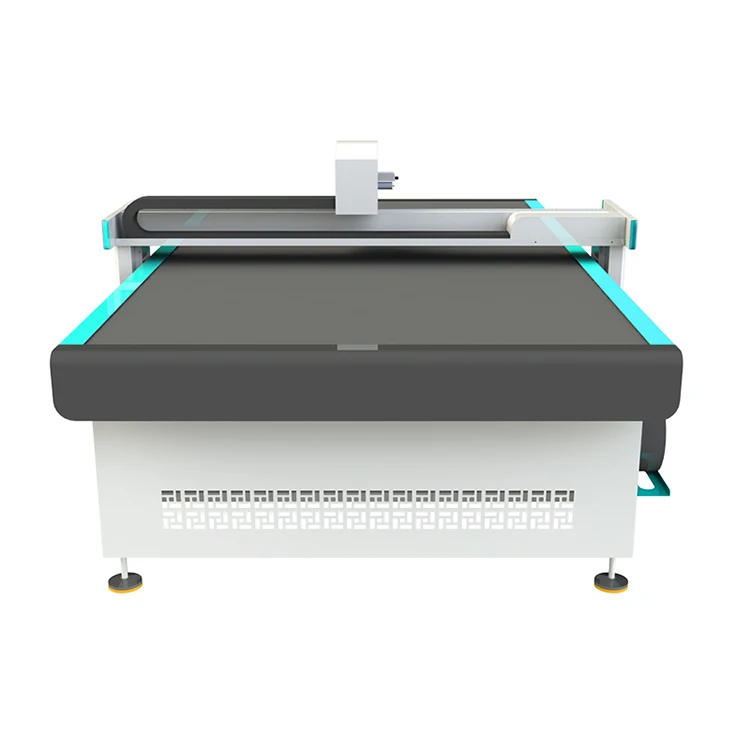
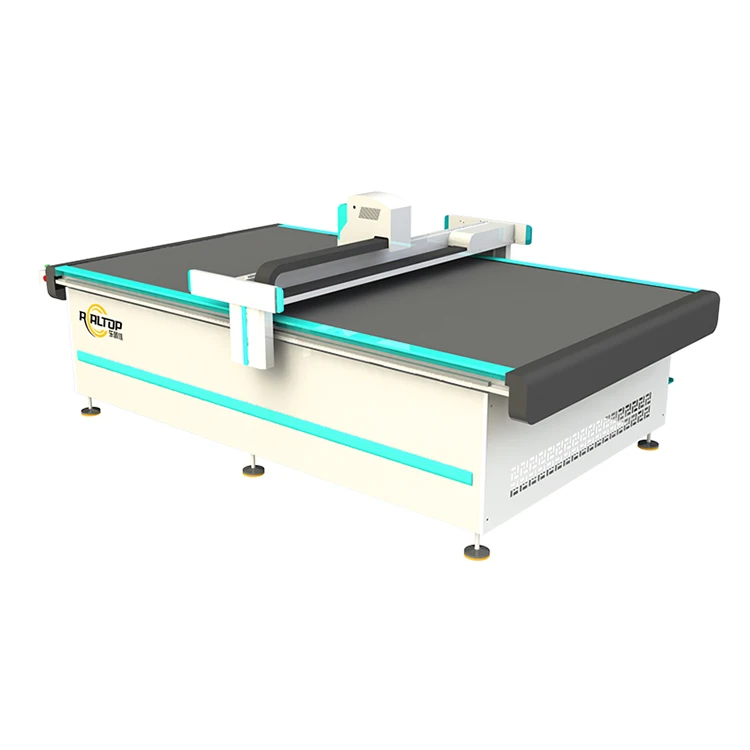
Configurable cutting platform — Seven interchangeable tool heads let a single 1600×2500mm table handle corrugated flutes, foam inserts and composite gaskets without a second machine.
Technical Specifications
| Parameter | Value |
|---|---|
| Product Type | CNC Oscillating Knife Cutting Machine |
| Model | 1625(std.) |
| Working Area | 1600 × 2500 mm |
| Cutting Speed | 0–1500 mm/s |
| Cutting Thickness Capacity | Up to 40 mm |
| Cutting Accuracy | ±0.1 mm |
| Tool Head Options | Oscillating knife, Driven rotary knife, Creasing wheel, Kiss cutting tool, Pneumatic knife, Milling tool, V groove knife |
| Vacuum Table | Aluminum bellows vacuum table |
| Vacuum Pump | 9 kW |
| Control System | PLC control panel |
| Servo Motor Options | Panasonic, Delta, Dorna |
| Voltage Options | 110V, 220V, 380V (configurable) |
| Compatible File Formats | PLT, DXF, AI, PDF |
| Safety Devices | Infrared sensor device and emergency stop device |
| Machine Dimensions | 3300 × 2100 × 1350 mm |
| Software | Packaging box structure design software included |
| Language Options | English, Russian, Italian, Chinese, custom languages available |
| Certification | CE |
Application Suitability
| Application | Material or Output |
|---|---|
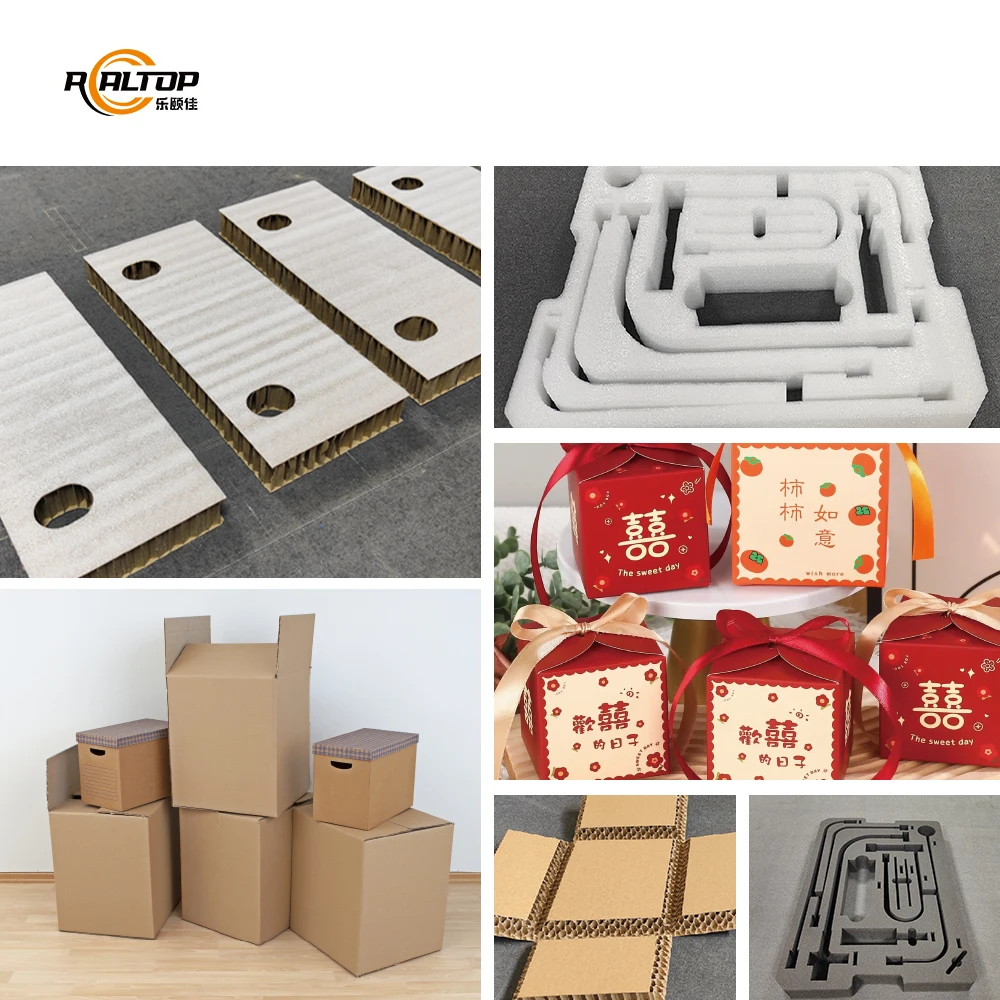
| Corrugated carton sample cutting | E-flute, B-flute, BC-flute corrugated cardboard |
| Greyboard and cardstock box making | Greyboard, art paper, specialty paper up to 40 mm |
| Packaging insert fabrication | EVA, EPE, PU foam and adhesive-backed foam sheets |
| Small-batch custom packaging | Short-run and prototype carton production without die molds |
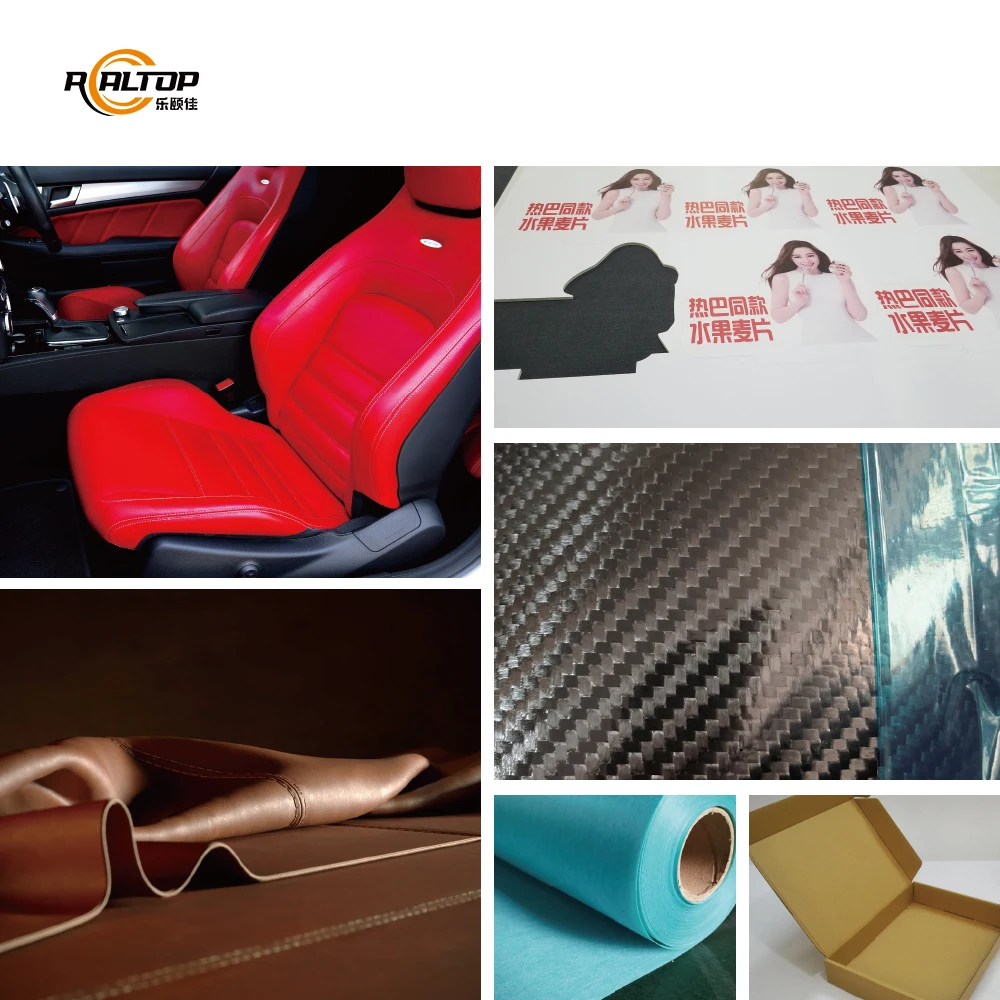
| Non-metal composite cutting | Rubber mats, thin PVC and PET sheets, leather and synthetic leather |
| Textile and fabric cutting for packaging | Velvet, fleece, non-woven fabric for protective wraps |
Why a Working Area Figure Alone Won’t Cut Your Corrugated Board
The flute profile and wall thickness determine whether the machine finishes the job or chews through your material.
I spent a week on-site in a Lima carton plant last year where a machine had been ordered based purely on table size. Three-layer E-flute cut cleanly during the factory test, but the customer’s daily production ran five-layer double-wall BC-flute. The oscillating knife module on the original configuration could not push through the second flute without tearing the liner. A higher-amplitude vibrating head had to be shipped in, costing the buyer nearly two weeks of downtime and freight charges [NEED_CITE: corrugated flute classification and wall thickness standards].
When a packaging CNC cutting machine for sale is quoted only on working area, the buyer is essentially guessing that the default tool head will handle whatever lands on the table. Corrugated board varies from 1.5 mm single-face E-flute to over 7 mm double-wall BC-flute. A driven rotary knife slices single-face cleanly but crushes multi-wall. An oscillating knife handles multi-wall but can leave micro-tears on thin art paper if the stroke frequency is too high. Matching the tool head to the actual flute profile and liner weight is the first decision, not an afterthought.
Tool Head Selection Across the Corrugated and Foam Spectrum
This CNC oscillating knife cutting machine manufacturer offers seven tool heads on a single platform, and the choice is rarely obvious. For E-flute and B-flute cartons that need both cut and crease lines, the oscillating knife and creasing wheel work in one pass, eliminating the repositioning step that introduces registration drift. Pneumatic knife handles dense greyboard stacks where mechanical stroke alone stalls. V-groove knife produces fold lines on thick foam inserts without severing the sheet, which matters when a packaging insert must fold flat for shipping then spring open inside the box [NEED_CITE: V-groove cutting technique for foam packaging inserts].
Vacuum Hold-Down and the Small-Part Problem
The aluminum bellows vacuum table paired with a 9 kW pump is not just about holding large sheets flat. Zoning becomes critical when cutting small carton components — think glue flaps, locking tabs or display shelf brackets under 100 mm wide. Without adequate zoning, these parts lift off the table mid-cut, producing ragged edges or, worse, jamming under the tool head. The bellows design distributes suction across the full 1600 × 2500 mm surface, so operators can nest small and large parts on the same sheet without manually weighting corners down.
Reading the Spec Sheet Before the Machine Arrives
Cutting thickness capacity is rated at 40 mm, but that number only applies when the correct tool head and stroke frequency are selected for the material at hand. A 40 mm EVA foam block and a 4 mm BC-flute board sit at opposite ends of the cutting behavior spectrum. Foam demands high stroke amplitude and low feed speed; corrugated needs moderate amplitude and faster traverse. The PLC control panel stores parameter sets for each material profile, so an operator switching from carton samples to foam inserts does not re-dial settings from scratch every shift. Servo motor selection — available with Panasonic, Delta or Dorna options — also affects acceleration smoothness on intricate carton contours, where jerky motion translates directly into visible chatter marks on the cut edge.
What Happens When the Wrong Configuration Ships
A machine that arrived in Bogotá was specced with a standard oscillating knife for a customer cutting 6 mm EVA foam packaging inserts. The default stroke amplitude compressed the foam rather than slicing it, leaving crushed edges that failed the client’s visual quality check. The tool head was swapped on-site for a higher-amplitude pneumatic knife, but the two-week delay meant the buyer missed a seasonal packaging deadline. On another job, a customer running adhesive-backed PVC sheets discovered the vacuum zoning was set for full-sheet hold-down, and small cut-outs under 80 mm kept drifting into the kerf. Both issues trace back to configuration choices that should have been locked down before production started [NEED_CITE: vacuum table zoning requirements for small-part digital cutting].
Why Source This Machine Through This Channel
In-house design covers both the knife cutting mechanism and the vacuum table layout, meaning the tool head recommendation is based on material testing rather than a catalog default. The sample cutting process runs your actual corrugated stock or foam sheet before the order is confirmed, producing a cutting report you can evaluate against your edge quality standard. Voltage is confirmed to match the destination market — 110V, 220V or 380V — and the control language is set before crating. The packaging box structure design software ships with the machine, and file format compatibility with your existing PLT, DXF, AI or PDF workflow is verified during the pre-order technical review. CE documentation accompanies the shipment for markets that require it.
Documentation & Verification
- Machine specification sheet listing the exact tool head and vacuum table zone layout for your material
- Sample cutting report on your corrugated flute type or foam density before order confirmation
- Electrical schematic with voltage and plug type matched to your destination country
- Software license with file format compatibility note for PLT, DXF, AI and PDF workflows
- Factory test record documenting cutting accuracy across your material thickness range
- Operation and maintenance manual in your selected control language
Installation, Commissioning & Support
- 3300 × 2100 mm footprint requires level concrete floor with clearance for sheet loading on both long sides
- 9 kW vacuum pump needs a dedicated circuit matched to your confirmed voltage at 110V, 220V or 380V
- Machine ships partially assembled; table frame and gantry require on-site bolting and alignment
- First-run commissioning includes loading your material profiles into the PLC control panel memory
- Operator training covers tool head changeover between oscillating knife, creasing wheel and pneumatic knife
- Spare parts list identifies wear items including knife blades, bellows seals and vacuum zone gaskets
What We Need to Quote the Right Configuration
Send us the specific corrugated flute types and wall thicknesses you run most often, along with any foam or composite insert materials. Confirm the voltage and frequency standard at your facility and your preferred control panel language. If you already use carton design software, tell us the file format so we verify import compatibility before the order goes to production.
Frequently Asked Questions
Q: How do I choose between the oscillating knife and the driven rotary knife for my carton stock?
A: The oscillating knife handles multi-wall corrugated up to BC-flute and foam inserts with its vertical stroke action, while the driven rotary knife suits thin single-face board and art paper where a slicing motion produces a cleaner edge. We run your material samples with both heads before recommendation.
Q: Will the vacuum table hold small carton tabs and glue flaps without them lifting during cutting?
A: The aluminum bellows table with its 9 kW pump is zoned to maintain suction on small parts. We confirm the zone layout against your nesting pattern during the pre-order sample cutting stage to verify hold-down on the smallest component in your file.
Q: Can I import my existing carton design files without re-drawing them?
A: The system accepts PLT, DXF, AI and PDF formats directly. The included packaging box structure design software adds parametric box templates. We verify your specific file import workflow during the technical review before the order is placed.
Q: How is voltage and control language confirmed before the machine ships?
A: Voltage at 110V, 220V or 380V is locked in during the specification confirmation step, and the electrical schematic is issued for your review. Control panel language — English, Russian, Italian, Chinese or a custom option — is set at the factory before crating.
Q: What does the sample cutting process involve before I commit to the order?
A: You send us your actual corrugated board, foam or composite material. We cut it with the recommended tool head configuration, measure edge quality and cutting accuracy, and issue a sample cutting report for your approval before production begins.
Configurable cutting platform — Seven interchangeable tool heads let a single 1600×2500mm table handle corrugated flutes, foam inserts and composite gaskets without a second machine.
Technical Specifications
| Parameter | Value |
|---|---|
| Product Type | CNC Oscillating Knife Cutting Machine |
| Model | 1625(std.) |
| Working Area | 1600 × 2500 mm |
| Cutting Speed | 0–1500 mm/s |
| Cutting Thickness Capacity | Up to 40 mm |
| Cutting Accuracy | ±0.1 mm |
| Tool Head Options | Oscillating knife, Driven rotary knife, Creasing wheel, Kiss cutting tool, Pneumatic knife, Milling tool, V groove knife |
| Vacuum Table | Aluminum bellows vacuum table |
| Vacuum Pump | 9 kW |
| Control System | PLC control panel |
| Servo Motor Options | Panasonic, Delta, Dorna |
| Voltage Options | 110V, 220V, 380V (configurable) |
| Compatible File Formats | PLT, DXF, AI, PDF |
| Safety Devices | Infrared sensor device and emergency stop device |
| Machine Dimensions | 3300 × 2100 × 1350 mm |
| Software | Packaging box structure design software included |
| Language Options | English, Russian, Italian, Chinese, custom languages available |
| Certification | CE |
Application Suitability
| Application | Material or Output |
|---|---|
| Corrugated carton sample cutting | E-flute, B-flute, BC-flute corrugated cardboard |
| Greyboard and cardstock box making | Greyboard, art paper, specialty paper up to 40 mm |
| Packaging insert fabrication | EVA, EPE, PU foam and adhesive-backed foam sheets |
| Small-batch custom packaging | Short-run and prototype carton production without die molds |
| Non-metal composite cutting | Rubber mats, thin PVC and PET sheets, leather and synthetic leather |
| Textile and fabric cutting for packaging | Velvet, fleece, non-woven fabric for protective wraps |
Why a Working Area Figure Alone Won’t Cut Your Corrugated Board
The flute profile and wall thickness determine whether the machine finishes the job or chews through your material.
I spent a week on-site in a Lima carton plant last year where a machine had been ordered based purely on table size. Three-layer E-flute cut cleanly during the factory test, but the customer’s daily production ran five-layer double-wall BC-flute. The oscillating knife module on the original configuration could not push through the second flute without tearing the liner. A higher-amplitude vibrating head had to be shipped in, costing the buyer nearly two weeks of downtime and freight charges [NEED_CITE: corrugated flute classification and wall thickness standards].
When a packaging CNC cutting machine for sale is quoted only on working area, the buyer is essentially guessing that the default tool head will handle whatever lands on the table. Corrugated board varies from 1.5 mm single-face E-flute to over 7 mm double-wall BC-flute. A driven rotary knife slices single-face cleanly but crushes multi-wall. An oscillating knife handles multi-wall but can leave micro-tears on thin art paper if the stroke frequency is too high. Matching the tool head to the actual flute profile and liner weight is the first decision, not an afterthought.
Tool Head Selection Across the Corrugated and Foam Spectrum
This CNC oscillating knife cutting machine manufacturer offers seven tool heads on a single platform, and the choice is rarely obvious. For E-flute and B-flute cartons that need both cut and crease lines, the oscillating knife and creasing wheel work in one pass, eliminating the repositioning step that introduces registration drift. Pneumatic knife handles dense greyboard stacks where mechanical stroke alone stalls. V-groove knife produces fold lines on thick foam inserts without severing the sheet, which matters when a packaging insert must fold flat for shipping then spring open inside the box [NEED_CITE: V-groove cutting technique for foam packaging inserts].
Vacuum Hold-Down and the Small-Part Problem
The aluminum bellows vacuum table paired with a 9 kW pump is not just about holding large sheets flat. Zoning becomes critical when cutting small carton components — think glue flaps, locking tabs or display shelf brackets under 100 mm wide. Without adequate zoning, these parts lift off the table mid-cut, producing ragged edges or, worse, jamming under the tool head. The bellows design distributes suction across the full 1600 × 2500 mm surface, so operators can nest small and large parts on the same sheet without manually weighting corners down.
Reading the Spec Sheet Before the Machine Arrives
Cutting thickness capacity is rated at 40 mm, but that number only applies when the correct tool head and stroke frequency are selected for the material at hand. A 40 mm EVA foam block and a 4 mm BC-flute board sit at opposite ends of the cutting behavior spectrum. Foam demands high stroke amplitude and low feed speed; corrugated needs moderate amplitude and faster traverse. The PLC control panel stores parameter sets for each material profile, so an operator switching from carton samples to foam inserts does not re-dial settings from scratch every shift. Servo motor selection — available with Panasonic, Delta or Dorna options — also affects acceleration smoothness on intricate carton contours, where jerky motion translates directly into visible chatter marks on the cut edge.
What Happens When the Wrong Configuration Ships
A machine that arrived in Bogotá was specced with a standard oscillating knife for a customer cutting 6 mm EVA foam packaging inserts. The default stroke amplitude compressed the foam rather than slicing it, leaving crushed edges that failed the client’s visual quality check. The tool head was swapped on-site for a higher-amplitude pneumatic knife, but the two-week delay meant the buyer missed a seasonal packaging deadline. On another job, a customer running adhesive-backed PVC sheets discovered the vacuum zoning was set for full-sheet hold-down, and small cut-outs under 80 mm kept drifting into the kerf. Both issues trace back to configuration choices that should have been locked down before production started [NEED_CITE: vacuum table zoning requirements for small-part digital cutting].
Why Source This Machine Through This Channel
In-house design covers both the knife cutting mechanism and the vacuum table layout, meaning the tool head recommendation is based on material testing rather than a catalog default. The sample cutting process runs your actual corrugated stock or foam sheet before the order is confirmed, producing a cutting report you can evaluate against your edge quality standard. Voltage is confirmed to match the destination market — 110V, 220V or 380V — and the control language is set before crating. The packaging box structure design software ships with the machine, and file format compatibility with your existing PLT, DXF, AI or PDF workflow is verified during the pre-order technical review. CE documentation accompanies the shipment for markets that require it.
Documentation & Verification
- Machine specification sheet listing the exact tool head and vacuum table zone layout for your material
- Sample cutting report on your corrugated flute type or foam density before order confirmation
- Electrical schematic with voltage and plug type matched to your destination country
- Software license with file format compatibility note for PLT, DXF, AI and PDF workflows
- Factory test record documenting cutting accuracy across your material thickness range
- Operation and maintenance manual in your selected control language
Installation, Commissioning & Support
- 3300 × 2100 mm footprint requires level concrete floor with clearance for sheet loading on both long sides
- 9 kW vacuum pump needs a dedicated circuit matched to your confirmed voltage at 110V, 220V or 380V
- Machine ships partially assembled; table frame and gantry require on-site bolting and alignment
- First-run commissioning includes loading your material profiles into the PLC control panel memory
- Operator training covers tool head changeover between oscillating knife, creasing wheel and pneumatic knife
- Spare parts list identifies wear items including knife blades, bellows seals and vacuum zone gaskets
What We Need to Quote the Right Configuration
Send us the specific corrugated flute types and wall thicknesses you run most often, along with any foam or composite insert materials. Confirm the voltage and frequency standard at your facility and your preferred control panel language. If you already use carton design software, tell us the file format so we verify import compatibility before the order goes to production.
Frequently Asked Questions
Q: How do I choose between the oscillating knife and the driven rotary knife for my carton stock?
A: The oscillating knife handles multi-wall corrugated up to BC-flute and foam inserts with its vertical stroke action, while the driven rotary knife suits thin single-face board and art paper where a slicing motion produces a cleaner edge. We run your material samples with both heads before recommendation.
Q: Will the vacuum table hold small carton tabs and glue flaps without them lifting during cutting?
A: The aluminum bellows table with its 9 kW pump is zoned to maintain suction on small parts. We confirm the zone layout against your nesting pattern during the pre-order sample cutting stage to verify hold-down on the smallest component in your file.
Q: Can I import my existing carton design files without re-drawing them?
A: The system accepts PLT, DXF, AI and PDF formats directly. The included packaging box structure design software adds parametric box templates. We verify your specific file import workflow during the technical review before the order is placed.
Q: How is voltage and control language confirmed before the machine ships?
A: Voltage at 110V, 220V or 380V is locked in during the specification confirmation step, and the electrical schematic is issued for your review. Control panel language — English, Russian, Italian, Chinese or a custom option — is set at the factory before crating.
Q: What does the sample cutting process involve before I commit to the order?
A: You send us your actual corrugated board, foam or composite material. We cut it with the recommended tool head configuration, measure edge quality and cutting accuracy, and issue a sample cutting report for your approval before production begins.
商品评价
There are no reviews yet.