
![Automatic Multi Layers CNC Fabric Cutting Machine – Full Range 1. **Analyze the Request:** * **Role:** B2B SEO Editor for industrial equipment. * **Task:** Optimize product title (H1). * **Customer Profile:** Realtop Machinery (Jinan) Co., Ltd (CNC cutting/laser machines). * **Target Site:** lyjcut.com (Role: FULL CATALOGUE -> Emphasis: Manufacturer / Factory Supply / Full Range). * **Category:** Cloth CNC Cutting Machine. * **Source Title:** Automatic Dual-head CNC Multi Layers Textile Fabric Cutting Machine. * **Product Draft:** CNC Oscillating Knife Cutting Table, fabric/textile cutting, multi-layer, dual-head. * **Record ID:** 6426. 2. **Gate Check:** * Source title is not empty. Proceed. 3. **Vocabulary Source Lock:** * Words must come from Source Title, Category, or allowed pool. * Allowed pool: Category/Product Type (Cloth CNC Cutting Machine / CNC Oscillating Knife Cutting Table), Site modifiers, Generic limiters (Automatic / Industrial / Commercial / Factory - max 1). * No new specs, capacity numbers, model numbers, or brand names. 4. **Layer 1: Site Modifier (Target Site + Customer Profile):** * Target Site: lyjcut.com * Role: FULL CATALOGUE * Pool: Manufacturer / Factory Supply / Full Range * Record ID sum: 6 + 4 + 2 + 6 = 18. * Pool length = 3. * 18 % 3 = 0. * Index 0: "Manufacturer". (Wait, let me double check the prompt: "取【记录ID】数字之和对池长度取余选一个". 18 % 3 = 0. So "Manufacturer"). * Let's re-verify: Pool = ["Manufacturer", "Factory Supply", "Full Range"]. Index 0 is "Manufacturer". 5. **Layer 2: Sentence Structure:** * Record ID sum = 18. * 18 % 6 = 0. * Structure 0: `[品类词] for [应用或物料] – [站点修饰词]` * Category/Product word: CNC Fabric Cutting Machine (from source title "CNC... Fabric Cutting Machine" + category "Cloth CNC Cutting Machine"). Let's use "CNC Fabric Cutting Machine". * Application/Material: Multi Layers Textile (from source title). * Site modifier: Manufacturer. * Draft 0: CNC Fabric Cutting Machine for Multi Layers Textile – Manufacturer 6. **Refining and Checking Constraints:** * Draft: `CNC Fabric Cutting Machine for Multi Layers Textile – Manufacturer` * Length check: C(1)N(2)C(3) (4)F(5)a(6)b(7)r(8)i(9)c(10) (11)C(12)u(13)t(14)t(15)i(16)n(17)g(18) (19)M(20)a(21)c(22)h(23)i(24)n(25)e(26) (27)f(28)o(29)r(30) (31)M(32)u(33)l(34)t(35)i(36) (37)L(38)a(39)y(40)e(41)r(42)s(43) (44)T(45)e(46)x(47)t(48)i(49)l(50)e(51) (52)–(53) (54)M(55)a(56)n(57)u(58)f(59)a(60)c(61)t(62)u(63)r(64)e(65)r(66) Wait, "Multi Layers Textile" is 20 chars. "CNC Fabric Cutting Machine" is 26 chars. "for" is 3. " - " is 3. "Manufacturer" is 12. Total = 26+1+3+1+20+1+3+12 = 67 characters. (Using en-dash `–` with spaces: ` - ` or ` – `). Let's use ` - ` to be safe with standard ASCII, or just count exactly. "CNC Fabric Cutting Machine for Multi Layers Textile - Manufacturer" Length: 3 + 1 + 6 + 1 + 7 + 1 + 7 + 1 + 3 + 1 + 5 + 1 + 6 + 1 + 7 + 1 + 1 + 1 + 12 = 64 chars. Perfect (between 50 and 70). * Let's check the source title words: "Automatic", "Dual-head", "CNC", "Multi", "Layers", "Textile", "Fabric", "Cutting", "Machine". * Category: "Cloth CNC Cutting Machine". * Are all words allowed? * CNC (Source/Category) * Fabric (Source/Category) * Cutting (Source/Category) * Machine (Source/Category) * for (structure) * Multi (Source) * Layers (Source) * Textile (Source) * - (punctuation) * Manufacturer (Layer 1 pool) * Wait, the generic limiter rule: "通用限定词: Automatic / Industrial / Commercial / Factory (至多 1 个)". I didn't use any here, which is fine ("至多 1 个" means max 1). * Wait, is "Manufacturer" an exact match from the pool? Yes. * Is there a model number in the source title? No. * Does it meet the 50-70 character limit? "CNC Fabric Cutting Machine for Multi Layers Textile - Manufacturer" Count: C N C (3) [space] (1) F a b r i c (6) [space] (1) C u t t i n g (7) [space] (1) M a c h i n e (7) [space] (1) f o r (3) [space] (1) M u l t i (5) [space] (1) L a y e r s (6) [space] (1) T e x t i l e (7) [space] (1) - (1) [space] (1) M a n u f a c t u r e r (12) Total: 3+1+6+1+7+1+7+1+3+1+5+1+6+1+7+1+1+1+12 = 66 characters. 66 is within 50-70. * Wait, what if I use "Automatic" since it's in the source title? "Automatic CNC Fabric Cutting Machine for Multi Layers Textile" -> 61 chars. But structure 0 requires `[站点修饰词]` at the end. Structure 0: `[品类词] for [应用或物料] – [站点修饰词]` If I add Automatic: `Automatic CNC Fabric Cutting Machine for Multi Layers Textile - Manufacturer` -> 75 chars. Too long (>70). So I drop "Automatic" (it's a generic modifier/marketing word that can be deleted per rule 1-bis: "可删:重复营销词 / 冗余形容词"). "Automatic" is in the source title, but dropping it helps meet the length constraint while preserving core category and material. * Let's recount to be absolutely sure: C(1)N(2)C(3) (4)F(5)a(6)b(7)r(8)i(9)c(10) (11)C(12)u(13)t(14)t(15)i(16)n(17)g(18) (19)M(20)a(21)c(22)h(23)i(24)n(25)e(26) (27)f(28)o(29)r(30) (31)M(32)u(33)l(34)t(35)i(36) (37)L(38)a(39)y(40)e(41)r(42)s(43) (44)T(45)e(46)x(47)t(48)i(49)l(50)e(51) (52)-(53) (54)M(55)a(56)n(57)u(58)f(59)a(60)c(61)t(62)u(63)r(64)e(65)r(66) Wait, I used a hyphen `-` instead of en-dash `–`. The prompt says "禁连续标点", a single hyphen with spaces is fine. Let's use en-dash `–` as in the prompt's structure example: `[品类词] for [应用或物料] – [站点修饰词]`. If I use `–` (1 char): ...Textile (51) [space] (52) – (53) [space] (54) Manufacturer (66). Still 66 chars. * Let's check Layer 1 again. Target Site: lyjcut.com Role: FULL CATALOGUE Pool: Manufacturer / Factory Supply / Full Range Sum of Record ID (6426): 6+4+2+6 = 18. 18 % 3 = 0. Index 0: Manufacturer. Correct. * Let's check Layer 2 again. 18 % 6 = 0. Structure 0: `[品类词] for [应用或物料] – [站点修饰词]` Correct. * Check for prohibited words: Best, Top, Ultimate, Premium, High Quality, Amazing. None used. * Check for punctuation rules: No quotes, no emojis, no periods, no hashtags, no all-caps (except CNC which is standard and in source), no consecutive punctuation. * Output format: Only one line, no explanation. * Final string: CNC Fabric Cutting Machine for Multi Layers Textile – Manufacturer * Length: 66 characters. Perfect. CNC Fabric Cutting Machine for Multi Layers Textile – Manufacturer - Image 1](https://lyjcut.com/wp-content/uploads/2026/03/Hd7bc5155dbb047a79a6cf230cafb61e0k.webp "Hd7bc5155dbb047a79a6cf230cafb61e0k.webp")
![Automatic Multi Layers CNC Fabric Cutting Machine – Full Range 1. **Analyze the Request:** * **Role:** B2B SEO Editor for industrial equipment. * **Task:** Optimize product title (H1). * **Customer Profile:** Realtop Machinery (Jinan) Co., Ltd (CNC cutting/laser machines). * **Target Site:** lyjcut.com (Role: FULL CATALOGUE -> Emphasis: Manufacturer / Factory Supply / Full Range). * **Category:** Cloth CNC Cutting Machine. * **Source Title:** Automatic Dual-head CNC Multi Layers Textile Fabric Cutting Machine. * **Product Draft:** CNC Oscillating Knife Cutting Table, fabric/textile cutting, multi-layer, dual-head. * **Record ID:** 6426. 2. **Gate Check:** * Source title is not empty. Proceed. 3. **Vocabulary Source Lock:** * Words must come from Source Title, Category, or allowed pool. * Allowed pool: Category/Product Type (Cloth CNC Cutting Machine / CNC Oscillating Knife Cutting Table), Site modifiers, Generic limiters (Automatic / Industrial / Commercial / Factory - max 1). * No new specs, capacity numbers, model numbers, or brand names. 4. **Layer 1: Site Modifier (Target Site + Customer Profile):** * Target Site: lyjcut.com * Role: FULL CATALOGUE * Pool: Manufacturer / Factory Supply / Full Range * Record ID sum: 6 + 4 + 2 + 6 = 18. * Pool length = 3. * 18 % 3 = 0. * Index 0: "Manufacturer". (Wait, let me double check the prompt: "取【记录ID】数字之和对池长度取余选一个". 18 % 3 = 0. So "Manufacturer"). * Let's re-verify: Pool = ["Manufacturer", "Factory Supply", "Full Range"]. Index 0 is "Manufacturer". 5. **Layer 2: Sentence Structure:** * Record ID sum = 18. * 18 % 6 = 0. * Structure 0: `[品类词] for [应用或物料] – [站点修饰词]` * Category/Product word: CNC Fabric Cutting Machine (from source title "CNC... Fabric Cutting Machine" + category "Cloth CNC Cutting Machine"). Let's use "CNC Fabric Cutting Machine". * Application/Material: Multi Layers Textile (from source title). * Site modifier: Manufacturer. * Draft 0: CNC Fabric Cutting Machine for Multi Layers Textile – Manufacturer 6. **Refining and Checking Constraints:** * Draft: `CNC Fabric Cutting Machine for Multi Layers Textile – Manufacturer` * Length check: C(1)N(2)C(3) (4)F(5)a(6)b(7)r(8)i(9)c(10) (11)C(12)u(13)t(14)t(15)i(16)n(17)g(18) (19)M(20)a(21)c(22)h(23)i(24)n(25)e(26) (27)f(28)o(29)r(30) (31)M(32)u(33)l(34)t(35)i(36) (37)L(38)a(39)y(40)e(41)r(42)s(43) (44)T(45)e(46)x(47)t(48)i(49)l(50)e(51) (52)–(53) (54)M(55)a(56)n(57)u(58)f(59)a(60)c(61)t(62)u(63)r(64)e(65)r(66) Wait, "Multi Layers Textile" is 20 chars. "CNC Fabric Cutting Machine" is 26 chars. "for" is 3. " - " is 3. "Manufacturer" is 12. Total = 26+1+3+1+20+1+3+12 = 67 characters. (Using en-dash `–` with spaces: ` - ` or ` – `). Let's use ` - ` to be safe with standard ASCII, or just count exactly. "CNC Fabric Cutting Machine for Multi Layers Textile - Manufacturer" Length: 3 + 1 + 6 + 1 + 7 + 1 + 7 + 1 + 3 + 1 + 5 + 1 + 6 + 1 + 7 + 1 + 1 + 1 + 12 = 64 chars. Perfect (between 50 and 70). * Let's check the source title words: "Automatic", "Dual-head", "CNC", "Multi", "Layers", "Textile", "Fabric", "Cutting", "Machine". * Category: "Cloth CNC Cutting Machine". * Are all words allowed? * CNC (Source/Category) * Fabric (Source/Category) * Cutting (Source/Category) * Machine (Source/Category) * for (structure) * Multi (Source) * Layers (Source) * Textile (Source) * - (punctuation) * Manufacturer (Layer 1 pool) * Wait, the generic limiter rule: "通用限定词: Automatic / Industrial / Commercial / Factory (至多 1 个)". I didn't use any here, which is fine ("至多 1 个" means max 1). * Wait, is "Manufacturer" an exact match from the pool? Yes. * Is there a model number in the source title? No. * Does it meet the 50-70 character limit? "CNC Fabric Cutting Machine for Multi Layers Textile - Manufacturer" Count: C N C (3) [space] (1) F a b r i c (6) [space] (1) C u t t i n g (7) [space] (1) M a c h i n e (7) [space] (1) f o r (3) [space] (1) M u l t i (5) [space] (1) L a y e r s (6) [space] (1) T e x t i l e (7) [space] (1) - (1) [space] (1) M a n u f a c t u r e r (12) Total: 3+1+6+1+7+1+7+1+3+1+5+1+6+1+7+1+1+1+12 = 66 characters. 66 is within 50-70. * Wait, what if I use "Automatic" since it's in the source title? "Automatic CNC Fabric Cutting Machine for Multi Layers Textile" -> 61 chars. But structure 0 requires `[站点修饰词]` at the end. Structure 0: `[品类词] for [应用或物料] – [站点修饰词]` If I add Automatic: `Automatic CNC Fabric Cutting Machine for Multi Layers Textile - Manufacturer` -> 75 chars. Too long (>70). So I drop "Automatic" (it's a generic modifier/marketing word that can be deleted per rule 1-bis: "可删:重复营销词 / 冗余形容词"). "Automatic" is in the source title, but dropping it helps meet the length constraint while preserving core category and material. * Let's recount to be absolutely sure: C(1)N(2)C(3) (4)F(5)a(6)b(7)r(8)i(9)c(10) (11)C(12)u(13)t(14)t(15)i(16)n(17)g(18) (19)M(20)a(21)c(22)h(23)i(24)n(25)e(26) (27)f(28)o(29)r(30) (31)M(32)u(33)l(34)t(35)i(36) (37)L(38)a(39)y(40)e(41)r(42)s(43) (44)T(45)e(46)x(47)t(48)i(49)l(50)e(51) (52)-(53) (54)M(55)a(56)n(57)u(58)f(59)a(60)c(61)t(62)u(63)r(64)e(65)r(66) Wait, I used a hyphen `-` instead of en-dash `–`. The prompt says "禁连续标点", a single hyphen with spaces is fine. Let's use en-dash `–` as in the prompt's structure example: `[品类词] for [应用或物料] – [站点修饰词]`. If I use `–` (1 char): ...Textile (51) [space] (52) – (53) [space] (54) Manufacturer (66). Still 66 chars. * Let's check Layer 1 again. Target Site: lyjcut.com Role: FULL CATALOGUE Pool: Manufacturer / Factory Supply / Full Range Sum of Record ID (6426): 6+4+2+6 = 18. 18 % 3 = 0. Index 0: Manufacturer. Correct. * Let's check Layer 2 again. 18 % 6 = 0. Structure 0: `[品类词] for [应用或物料] – [站点修饰词]` Correct. * Check for prohibited words: Best, Top, Ultimate, Premium, High Quality, Amazing. None used. * Check for punctuation rules: No quotes, no emojis, no periods, no hashtags, no all-caps (except CNC which is standard and in source), no consecutive punctuation. * Output format: Only one line, no explanation. * Final string: CNC Fabric Cutting Machine for Multi Layers Textile – Manufacturer * Length: 66 characters. Perfect. CNC Fabric Cutting Machine for Multi Layers Textile – Manufacturer - Image 2](https://lyjcut.com/wp-content/uploads/2026/03/H6dc0a23dce02408ea42d66dd5812e6c4t.webp "H6dc0a23dce02408ea42d66dd5812e6c4t.webp")
![Automatic Multi Layers CNC Fabric Cutting Machine – Full Range 1. **Analyze the Request:** * **Role:** B2B SEO Editor for industrial equipment. * **Task:** Optimize product title (H1). * **Customer Profile:** Realtop Machinery (Jinan) Co., Ltd (CNC cutting/laser machines). * **Target Site:** lyjcut.com (Role: FULL CATALOGUE -> Emphasis: Manufacturer / Factory Supply / Full Range). * **Category:** Cloth CNC Cutting Machine. * **Source Title:** Automatic Dual-head CNC Multi Layers Textile Fabric Cutting Machine. * **Product Draft:** CNC Oscillating Knife Cutting Table, fabric/textile cutting, multi-layer, dual-head. * **Record ID:** 6426. 2. **Gate Check:** * Source title is not empty. Proceed. 3. **Vocabulary Source Lock:** * Words must come from Source Title, Category, or allowed pool. * Allowed pool: Category/Product Type (Cloth CNC Cutting Machine / CNC Oscillating Knife Cutting Table), Site modifiers, Generic limiters (Automatic / Industrial / Commercial / Factory - max 1). * No new specs, capacity numbers, model numbers, or brand names. 4. **Layer 1: Site Modifier (Target Site + Customer Profile):** * Target Site: lyjcut.com * Role: FULL CATALOGUE * Pool: Manufacturer / Factory Supply / Full Range * Record ID sum: 6 + 4 + 2 + 6 = 18. * Pool length = 3. * 18 % 3 = 0. * Index 0: "Manufacturer". (Wait, let me double check the prompt: "取【记录ID】数字之和对池长度取余选一个". 18 % 3 = 0. So "Manufacturer"). * Let's re-verify: Pool = ["Manufacturer", "Factory Supply", "Full Range"]. Index 0 is "Manufacturer". 5. **Layer 2: Sentence Structure:** * Record ID sum = 18. * 18 % 6 = 0. * Structure 0: `[品类词] for [应用或物料] – [站点修饰词]` * Category/Product word: CNC Fabric Cutting Machine (from source title "CNC... Fabric Cutting Machine" + category "Cloth CNC Cutting Machine"). Let's use "CNC Fabric Cutting Machine". * Application/Material: Multi Layers Textile (from source title). * Site modifier: Manufacturer. * Draft 0: CNC Fabric Cutting Machine for Multi Layers Textile – Manufacturer 6. **Refining and Checking Constraints:** * Draft: `CNC Fabric Cutting Machine for Multi Layers Textile – Manufacturer` * Length check: C(1)N(2)C(3) (4)F(5)a(6)b(7)r(8)i(9)c(10) (11)C(12)u(13)t(14)t(15)i(16)n(17)g(18) (19)M(20)a(21)c(22)h(23)i(24)n(25)e(26) (27)f(28)o(29)r(30) (31)M(32)u(33)l(34)t(35)i(36) (37)L(38)a(39)y(40)e(41)r(42)s(43) (44)T(45)e(46)x(47)t(48)i(49)l(50)e(51) (52)–(53) (54)M(55)a(56)n(57)u(58)f(59)a(60)c(61)t(62)u(63)r(64)e(65)r(66) Wait, "Multi Layers Textile" is 20 chars. "CNC Fabric Cutting Machine" is 26 chars. "for" is 3. " - " is 3. "Manufacturer" is 12. Total = 26+1+3+1+20+1+3+12 = 67 characters. (Using en-dash `–` with spaces: ` - ` or ` – `). Let's use ` - ` to be safe with standard ASCII, or just count exactly. "CNC Fabric Cutting Machine for Multi Layers Textile - Manufacturer" Length: 3 + 1 + 6 + 1 + 7 + 1 + 7 + 1 + 3 + 1 + 5 + 1 + 6 + 1 + 7 + 1 + 1 + 1 + 12 = 64 chars. Perfect (between 50 and 70). * Let's check the source title words: "Automatic", "Dual-head", "CNC", "Multi", "Layers", "Textile", "Fabric", "Cutting", "Machine". * Category: "Cloth CNC Cutting Machine". * Are all words allowed? * CNC (Source/Category) * Fabric (Source/Category) * Cutting (Source/Category) * Machine (Source/Category) * for (structure) * Multi (Source) * Layers (Source) * Textile (Source) * - (punctuation) * Manufacturer (Layer 1 pool) * Wait, the generic limiter rule: "通用限定词: Automatic / Industrial / Commercial / Factory (至多 1 个)". I didn't use any here, which is fine ("至多 1 个" means max 1). * Wait, is "Manufacturer" an exact match from the pool? Yes. * Is there a model number in the source title? No. * Does it meet the 50-70 character limit? "CNC Fabric Cutting Machine for Multi Layers Textile - Manufacturer" Count: C N C (3) [space] (1) F a b r i c (6) [space] (1) C u t t i n g (7) [space] (1) M a c h i n e (7) [space] (1) f o r (3) [space] (1) M u l t i (5) [space] (1) L a y e r s (6) [space] (1) T e x t i l e (7) [space] (1) - (1) [space] (1) M a n u f a c t u r e r (12) Total: 3+1+6+1+7+1+7+1+3+1+5+1+6+1+7+1+1+1+12 = 66 characters. 66 is within 50-70. * Wait, what if I use "Automatic" since it's in the source title? "Automatic CNC Fabric Cutting Machine for Multi Layers Textile" -> 61 chars. But structure 0 requires `[站点修饰词]` at the end. Structure 0: `[品类词] for [应用或物料] – [站点修饰词]` If I add Automatic: `Automatic CNC Fabric Cutting Machine for Multi Layers Textile - Manufacturer` -> 75 chars. Too long (>70). So I drop "Automatic" (it's a generic modifier/marketing word that can be deleted per rule 1-bis: "可删:重复营销词 / 冗余形容词"). "Automatic" is in the source title, but dropping it helps meet the length constraint while preserving core category and material. * Let's recount to be absolutely sure: C(1)N(2)C(3) (4)F(5)a(6)b(7)r(8)i(9)c(10) (11)C(12)u(13)t(14)t(15)i(16)n(17)g(18) (19)M(20)a(21)c(22)h(23)i(24)n(25)e(26) (27)f(28)o(29)r(30) (31)M(32)u(33)l(34)t(35)i(36) (37)L(38)a(39)y(40)e(41)r(42)s(43) (44)T(45)e(46)x(47)t(48)i(49)l(50)e(51) (52)-(53) (54)M(55)a(56)n(57)u(58)f(59)a(60)c(61)t(62)u(63)r(64)e(65)r(66) Wait, I used a hyphen `-` instead of en-dash `–`. The prompt says "禁连续标点", a single hyphen with spaces is fine. Let's use en-dash `–` as in the prompt's structure example: `[品类词] for [应用或物料] – [站点修饰词]`. If I use `–` (1 char): ...Textile (51) [space] (52) – (53) [space] (54) Manufacturer (66). Still 66 chars. * Let's check Layer 1 again. Target Site: lyjcut.com Role: FULL CATALOGUE Pool: Manufacturer / Factory Supply / Full Range Sum of Record ID (6426): 6+4+2+6 = 18. 18 % 3 = 0. Index 0: Manufacturer. Correct. * Let's check Layer 2 again. 18 % 6 = 0. Structure 0: `[品类词] for [应用或物料] – [站点修饰词]` Correct. * Check for prohibited words: Best, Top, Ultimate, Premium, High Quality, Amazing. None used. * Check for punctuation rules: No quotes, no emojis, no periods, no hashtags, no all-caps (except CNC which is standard and in source), no consecutive punctuation. * Output format: Only one line, no explanation. * Final string: CNC Fabric Cutting Machine for Multi Layers Textile – Manufacturer * Length: 66 characters. Perfect. CNC Fabric Cutting Machine for Multi Layers Textile – Manufacturer - Image 3](https://lyjcut.com/wp-content/uploads/2026/03/Hbaf9ed73dde74a9195897385caa14770A.webp "Hbaf9ed73dde74a9195897385caa14770A.webp")
![Automatic Multi Layers CNC Fabric Cutting Machine – Full Range 1. **Analyze the Request:** * **Role:** B2B SEO Editor for industrial equipment. * **Task:** Optimize product title (H1). * **Customer Profile:** Realtop Machinery (Jinan) Co., Ltd (CNC cutting/laser machines). * **Target Site:** lyjcut.com (Role: FULL CATALOGUE -> Emphasis: Manufacturer / Factory Supply / Full Range). * **Category:** Cloth CNC Cutting Machine. * **Source Title:** Automatic Dual-head CNC Multi Layers Textile Fabric Cutting Machine. * **Product Draft:** CNC Oscillating Knife Cutting Table, fabric/textile cutting, multi-layer, dual-head. * **Record ID:** 6426. 2. **Gate Check:** * Source title is not empty. Proceed. 3. **Vocabulary Source Lock:** * Words must come from Source Title, Category, or allowed pool. * Allowed pool: Category/Product Type (Cloth CNC Cutting Machine / CNC Oscillating Knife Cutting Table), Site modifiers, Generic limiters (Automatic / Industrial / Commercial / Factory - max 1). * No new specs, capacity numbers, model numbers, or brand names. 4. **Layer 1: Site Modifier (Target Site + Customer Profile):** * Target Site: lyjcut.com * Role: FULL CATALOGUE * Pool: Manufacturer / Factory Supply / Full Range * Record ID sum: 6 + 4 + 2 + 6 = 18. * Pool length = 3. * 18 % 3 = 0. * Index 0: "Manufacturer". (Wait, let me double check the prompt: "取【记录ID】数字之和对池长度取余选一个". 18 % 3 = 0. So "Manufacturer"). * Let's re-verify: Pool = ["Manufacturer", "Factory Supply", "Full Range"]. Index 0 is "Manufacturer". 5. **Layer 2: Sentence Structure:** * Record ID sum = 18. * 18 % 6 = 0. * Structure 0: `[品类词] for [应用或物料] – [站点修饰词]` * Category/Product word: CNC Fabric Cutting Machine (from source title "CNC... Fabric Cutting Machine" + category "Cloth CNC Cutting Machine"). Let's use "CNC Fabric Cutting Machine". * Application/Material: Multi Layers Textile (from source title). * Site modifier: Manufacturer. * Draft 0: CNC Fabric Cutting Machine for Multi Layers Textile – Manufacturer 6. **Refining and Checking Constraints:** * Draft: `CNC Fabric Cutting Machine for Multi Layers Textile – Manufacturer` * Length check: C(1)N(2)C(3) (4)F(5)a(6)b(7)r(8)i(9)c(10) (11)C(12)u(13)t(14)t(15)i(16)n(17)g(18) (19)M(20)a(21)c(22)h(23)i(24)n(25)e(26) (27)f(28)o(29)r(30) (31)M(32)u(33)l(34)t(35)i(36) (37)L(38)a(39)y(40)e(41)r(42)s(43) (44)T(45)e(46)x(47)t(48)i(49)l(50)e(51) (52)–(53) (54)M(55)a(56)n(57)u(58)f(59)a(60)c(61)t(62)u(63)r(64)e(65)r(66) Wait, "Multi Layers Textile" is 20 chars. "CNC Fabric Cutting Machine" is 26 chars. "for" is 3. " - " is 3. "Manufacturer" is 12. Total = 26+1+3+1+20+1+3+12 = 67 characters. (Using en-dash `–` with spaces: ` - ` or ` – `). Let's use ` - ` to be safe with standard ASCII, or just count exactly. "CNC Fabric Cutting Machine for Multi Layers Textile - Manufacturer" Length: 3 + 1 + 6 + 1 + 7 + 1 + 7 + 1 + 3 + 1 + 5 + 1 + 6 + 1 + 7 + 1 + 1 + 1 + 12 = 64 chars. Perfect (between 50 and 70). * Let's check the source title words: "Automatic", "Dual-head", "CNC", "Multi", "Layers", "Textile", "Fabric", "Cutting", "Machine". * Category: "Cloth CNC Cutting Machine". * Are all words allowed? * CNC (Source/Category) * Fabric (Source/Category) * Cutting (Source/Category) * Machine (Source/Category) * for (structure) * Multi (Source) * Layers (Source) * Textile (Source) * - (punctuation) * Manufacturer (Layer 1 pool) * Wait, the generic limiter rule: "通用限定词: Automatic / Industrial / Commercial / Factory (至多 1 个)". I didn't use any here, which is fine ("至多 1 个" means max 1). * Wait, is "Manufacturer" an exact match from the pool? Yes. * Is there a model number in the source title? No. * Does it meet the 50-70 character limit? "CNC Fabric Cutting Machine for Multi Layers Textile - Manufacturer" Count: C N C (3) [space] (1) F a b r i c (6) [space] (1) C u t t i n g (7) [space] (1) M a c h i n e (7) [space] (1) f o r (3) [space] (1) M u l t i (5) [space] (1) L a y e r s (6) [space] (1) T e x t i l e (7) [space] (1) - (1) [space] (1) M a n u f a c t u r e r (12) Total: 3+1+6+1+7+1+7+1+3+1+5+1+6+1+7+1+1+1+12 = 66 characters. 66 is within 50-70. * Wait, what if I use "Automatic" since it's in the source title? "Automatic CNC Fabric Cutting Machine for Multi Layers Textile" -> 61 chars. But structure 0 requires `[站点修饰词]` at the end. Structure 0: `[品类词] for [应用或物料] – [站点修饰词]` If I add Automatic: `Automatic CNC Fabric Cutting Machine for Multi Layers Textile - Manufacturer` -> 75 chars. Too long (>70). So I drop "Automatic" (it's a generic modifier/marketing word that can be deleted per rule 1-bis: "可删:重复营销词 / 冗余形容词"). "Automatic" is in the source title, but dropping it helps meet the length constraint while preserving core category and material. * Let's recount to be absolutely sure: C(1)N(2)C(3) (4)F(5)a(6)b(7)r(8)i(9)c(10) (11)C(12)u(13)t(14)t(15)i(16)n(17)g(18) (19)M(20)a(21)c(22)h(23)i(24)n(25)e(26) (27)f(28)o(29)r(30) (31)M(32)u(33)l(34)t(35)i(36) (37)L(38)a(39)y(40)e(41)r(42)s(43) (44)T(45)e(46)x(47)t(48)i(49)l(50)e(51) (52)-(53) (54)M(55)a(56)n(57)u(58)f(59)a(60)c(61)t(62)u(63)r(64)e(65)r(66) Wait, I used a hyphen `-` instead of en-dash `–`. The prompt says "禁连续标点", a single hyphen with spaces is fine. Let's use en-dash `–` as in the prompt's structure example: `[品类词] for [应用或物料] – [站点修饰词]`. If I use `–` (1 char): ...Textile (51) [space] (52) – (53) [space] (54) Manufacturer (66). Still 66 chars. * Let's check Layer 1 again. Target Site: lyjcut.com Role: FULL CATALOGUE Pool: Manufacturer / Factory Supply / Full Range Sum of Record ID (6426): 6+4+2+6 = 18. 18 % 3 = 0. Index 0: Manufacturer. Correct. * Let's check Layer 2 again. 18 % 6 = 0. Structure 0: `[品类词] for [应用或物料] – [站点修饰词]` Correct. * Check for prohibited words: Best, Top, Ultimate, Premium, High Quality, Amazing. None used. * Check for punctuation rules: No quotes, no emojis, no periods, no hashtags, no all-caps (except CNC which is standard and in source), no consecutive punctuation. * Output format: Only one line, no explanation. * Final string: CNC Fabric Cutting Machine for Multi Layers Textile – Manufacturer * Length: 66 characters. Perfect. CNC Fabric Cutting Machine for Multi Layers Textile – Manufacturer - Image 4](https://lyjcut.com/wp-content/uploads/2026/03/H9cc811dc01b341f6a2ac3999e3df1394e.webp "H9cc811dc01b341f6a2ac3999e3df1394e.webp")
![Automatic Multi Layers CNC Fabric Cutting Machine – Full Range 1. **Analyze the Request:** * **Role:** B2B SEO Editor for industrial equipment. * **Task:** Optimize product title (H1). * **Customer Profile:** Realtop Machinery (Jinan) Co., Ltd (CNC cutting/laser machines). * **Target Site:** lyjcut.com (Role: FULL CATALOGUE -> Emphasis: Manufacturer / Factory Supply / Full Range). * **Category:** Cloth CNC Cutting Machine. * **Source Title:** Automatic Dual-head CNC Multi Layers Textile Fabric Cutting Machine. * **Product Draft:** CNC Oscillating Knife Cutting Table, fabric/textile cutting, multi-layer, dual-head. * **Record ID:** 6426. 2. **Gate Check:** * Source title is not empty. Proceed. 3. **Vocabulary Source Lock:** * Words must come from Source Title, Category, or allowed pool. * Allowed pool: Category/Product Type (Cloth CNC Cutting Machine / CNC Oscillating Knife Cutting Table), Site modifiers, Generic limiters (Automatic / Industrial / Commercial / Factory - max 1). * No new specs, capacity numbers, model numbers, or brand names. 4. **Layer 1: Site Modifier (Target Site + Customer Profile):** * Target Site: lyjcut.com * Role: FULL CATALOGUE * Pool: Manufacturer / Factory Supply / Full Range * Record ID sum: 6 + 4 + 2 + 6 = 18. * Pool length = 3. * 18 % 3 = 0. * Index 0: "Manufacturer". (Wait, let me double check the prompt: "取【记录ID】数字之和对池长度取余选一个". 18 % 3 = 0. So "Manufacturer"). * Let's re-verify: Pool = ["Manufacturer", "Factory Supply", "Full Range"]. Index 0 is "Manufacturer". 5. **Layer 2: Sentence Structure:** * Record ID sum = 18. * 18 % 6 = 0. * Structure 0: `[品类词] for [应用或物料] – [站点修饰词]` * Category/Product word: CNC Fabric Cutting Machine (from source title "CNC... Fabric Cutting Machine" + category "Cloth CNC Cutting Machine"). Let's use "CNC Fabric Cutting Machine". * Application/Material: Multi Layers Textile (from source title). * Site modifier: Manufacturer. * Draft 0: CNC Fabric Cutting Machine for Multi Layers Textile – Manufacturer 6. **Refining and Checking Constraints:** * Draft: `CNC Fabric Cutting Machine for Multi Layers Textile – Manufacturer` * Length check: C(1)N(2)C(3) (4)F(5)a(6)b(7)r(8)i(9)c(10) (11)C(12)u(13)t(14)t(15)i(16)n(17)g(18) (19)M(20)a(21)c(22)h(23)i(24)n(25)e(26) (27)f(28)o(29)r(30) (31)M(32)u(33)l(34)t(35)i(36) (37)L(38)a(39)y(40)e(41)r(42)s(43) (44)T(45)e(46)x(47)t(48)i(49)l(50)e(51) (52)–(53) (54)M(55)a(56)n(57)u(58)f(59)a(60)c(61)t(62)u(63)r(64)e(65)r(66) Wait, "Multi Layers Textile" is 20 chars. "CNC Fabric Cutting Machine" is 26 chars. "for" is 3. " - " is 3. "Manufacturer" is 12. Total = 26+1+3+1+20+1+3+12 = 67 characters. (Using en-dash `–` with spaces: ` - ` or ` – `). Let's use ` - ` to be safe with standard ASCII, or just count exactly. "CNC Fabric Cutting Machine for Multi Layers Textile - Manufacturer" Length: 3 + 1 + 6 + 1 + 7 + 1 + 7 + 1 + 3 + 1 + 5 + 1 + 6 + 1 + 7 + 1 + 1 + 1 + 12 = 64 chars. Perfect (between 50 and 70). * Let's check the source title words: "Automatic", "Dual-head", "CNC", "Multi", "Layers", "Textile", "Fabric", "Cutting", "Machine". * Category: "Cloth CNC Cutting Machine". * Are all words allowed? * CNC (Source/Category) * Fabric (Source/Category) * Cutting (Source/Category) * Machine (Source/Category) * for (structure) * Multi (Source) * Layers (Source) * Textile (Source) * - (punctuation) * Manufacturer (Layer 1 pool) * Wait, the generic limiter rule: "通用限定词: Automatic / Industrial / Commercial / Factory (至多 1 个)". I didn't use any here, which is fine ("至多 1 个" means max 1). * Wait, is "Manufacturer" an exact match from the pool? Yes. * Is there a model number in the source title? No. * Does it meet the 50-70 character limit? "CNC Fabric Cutting Machine for Multi Layers Textile - Manufacturer" Count: C N C (3) [space] (1) F a b r i c (6) [space] (1) C u t t i n g (7) [space] (1) M a c h i n e (7) [space] (1) f o r (3) [space] (1) M u l t i (5) [space] (1) L a y e r s (6) [space] (1) T e x t i l e (7) [space] (1) - (1) [space] (1) M a n u f a c t u r e r (12) Total: 3+1+6+1+7+1+7+1+3+1+5+1+6+1+7+1+1+1+12 = 66 characters. 66 is within 50-70. * Wait, what if I use "Automatic" since it's in the source title? "Automatic CNC Fabric Cutting Machine for Multi Layers Textile" -> 61 chars. But structure 0 requires `[站点修饰词]` at the end. Structure 0: `[品类词] for [应用或物料] – [站点修饰词]` If I add Automatic: `Automatic CNC Fabric Cutting Machine for Multi Layers Textile - Manufacturer` -> 75 chars. Too long (>70). So I drop "Automatic" (it's a generic modifier/marketing word that can be deleted per rule 1-bis: "可删:重复营销词 / 冗余形容词"). "Automatic" is in the source title, but dropping it helps meet the length constraint while preserving core category and material. * Let's recount to be absolutely sure: C(1)N(2)C(3) (4)F(5)a(6)b(7)r(8)i(9)c(10) (11)C(12)u(13)t(14)t(15)i(16)n(17)g(18) (19)M(20)a(21)c(22)h(23)i(24)n(25)e(26) (27)f(28)o(29)r(30) (31)M(32)u(33)l(34)t(35)i(36) (37)L(38)a(39)y(40)e(41)r(42)s(43) (44)T(45)e(46)x(47)t(48)i(49)l(50)e(51) (52)-(53) (54)M(55)a(56)n(57)u(58)f(59)a(60)c(61)t(62)u(63)r(64)e(65)r(66) Wait, I used a hyphen `-` instead of en-dash `–`. The prompt says "禁连续标点", a single hyphen with spaces is fine. Let's use en-dash `–` as in the prompt's structure example: `[品类词] for [应用或物料] – [站点修饰词]`. If I use `–` (1 char): ...Textile (51) [space] (52) – (53) [space] (54) Manufacturer (66). Still 66 chars. * Let's check Layer 1 again. Target Site: lyjcut.com Role: FULL CATALOGUE Pool: Manufacturer / Factory Supply / Full Range Sum of Record ID (6426): 6+4+2+6 = 18. 18 % 3 = 0. Index 0: Manufacturer. Correct. * Let's check Layer 2 again. 18 % 6 = 0. Structure 0: `[品类词] for [应用或物料] – [站点修饰词]` Correct. * Check for prohibited words: Best, Top, Ultimate, Premium, High Quality, Amazing. None used. * Check for punctuation rules: No quotes, no emojis, no periods, no hashtags, no all-caps (except CNC which is standard and in source), no consecutive punctuation. * Output format: Only one line, no explanation. * Final string: CNC Fabric Cutting Machine for Multi Layers Textile – Manufacturer * Length: 66 characters. Perfect. CNC Fabric Cutting Machine for Multi Layers Textile – Manufacturer - Image 5](https://lyjcut.com/wp-content/uploads/2026/03/H917c985de4e147df8cef9aec9761ff2d4.webp "H917c985de4e147df8cef9aec9761ff2d4.webp")
![Automatic Multi Layers CNC Fabric Cutting Machine – Full Range 1. **Analyze the Request:** * **Role:** B2B SEO Editor for industrial equipment. * **Task:** Optimize product title (H1). * **Customer Profile:** Realtop Machinery (Jinan) Co., Ltd (CNC cutting/laser machines). * **Target Site:** lyjcut.com (Role: FULL CATALOGUE -> Emphasis: Manufacturer / Factory Supply / Full Range). * **Category:** Cloth CNC Cutting Machine. * **Source Title:** Automatic Dual-head CNC Multi Layers Textile Fabric Cutting Machine. * **Product Draft:** CNC Oscillating Knife Cutting Table, fabric/textile cutting, multi-layer, dual-head. * **Record ID:** 6426. 2. **Gate Check:** * Source title is not empty. Proceed. 3. **Vocabulary Source Lock:** * Words must come from Source Title, Category, or allowed pool. * Allowed pool: Category/Product Type (Cloth CNC Cutting Machine / CNC Oscillating Knife Cutting Table), Site modifiers, Generic limiters (Automatic / Industrial / Commercial / Factory - max 1). * No new specs, capacity numbers, model numbers, or brand names. 4. **Layer 1: Site Modifier (Target Site + Customer Profile):** * Target Site: lyjcut.com * Role: FULL CATALOGUE * Pool: Manufacturer / Factory Supply / Full Range * Record ID sum: 6 + 4 + 2 + 6 = 18. * Pool length = 3. * 18 % 3 = 0. * Index 0: "Manufacturer". (Wait, let me double check the prompt: "取【记录ID】数字之和对池长度取余选一个". 18 % 3 = 0. So "Manufacturer"). * Let's re-verify: Pool = ["Manufacturer", "Factory Supply", "Full Range"]. Index 0 is "Manufacturer". 5. **Layer 2: Sentence Structure:** * Record ID sum = 18. * 18 % 6 = 0. * Structure 0: `[品类词] for [应用或物料] – [站点修饰词]` * Category/Product word: CNC Fabric Cutting Machine (from source title "CNC... Fabric Cutting Machine" + category "Cloth CNC Cutting Machine"). Let's use "CNC Fabric Cutting Machine". * Application/Material: Multi Layers Textile (from source title). * Site modifier: Manufacturer. * Draft 0: CNC Fabric Cutting Machine for Multi Layers Textile – Manufacturer 6. **Refining and Checking Constraints:** * Draft: `CNC Fabric Cutting Machine for Multi Layers Textile – Manufacturer` * Length check: C(1)N(2)C(3) (4)F(5)a(6)b(7)r(8)i(9)c(10) (11)C(12)u(13)t(14)t(15)i(16)n(17)g(18) (19)M(20)a(21)c(22)h(23)i(24)n(25)e(26) (27)f(28)o(29)r(30) (31)M(32)u(33)l(34)t(35)i(36) (37)L(38)a(39)y(40)e(41)r(42)s(43) (44)T(45)e(46)x(47)t(48)i(49)l(50)e(51) (52)–(53) (54)M(55)a(56)n(57)u(58)f(59)a(60)c(61)t(62)u(63)r(64)e(65)r(66) Wait, "Multi Layers Textile" is 20 chars. "CNC Fabric Cutting Machine" is 26 chars. "for" is 3. " - " is 3. "Manufacturer" is 12. Total = 26+1+3+1+20+1+3+12 = 67 characters. (Using en-dash `–` with spaces: ` - ` or ` – `). Let's use ` - ` to be safe with standard ASCII, or just count exactly. "CNC Fabric Cutting Machine for Multi Layers Textile - Manufacturer" Length: 3 + 1 + 6 + 1 + 7 + 1 + 7 + 1 + 3 + 1 + 5 + 1 + 6 + 1 + 7 + 1 + 1 + 1 + 12 = 64 chars. Perfect (between 50 and 70). * Let's check the source title words: "Automatic", "Dual-head", "CNC", "Multi", "Layers", "Textile", "Fabric", "Cutting", "Machine". * Category: "Cloth CNC Cutting Machine". * Are all words allowed? * CNC (Source/Category) * Fabric (Source/Category) * Cutting (Source/Category) * Machine (Source/Category) * for (structure) * Multi (Source) * Layers (Source) * Textile (Source) * - (punctuation) * Manufacturer (Layer 1 pool) * Wait, the generic limiter rule: "通用限定词: Automatic / Industrial / Commercial / Factory (至多 1 个)". I didn't use any here, which is fine ("至多 1 个" means max 1). * Wait, is "Manufacturer" an exact match from the pool? Yes. * Is there a model number in the source title? No. * Does it meet the 50-70 character limit? "CNC Fabric Cutting Machine for Multi Layers Textile - Manufacturer" Count: C N C (3) [space] (1) F a b r i c (6) [space] (1) C u t t i n g (7) [space] (1) M a c h i n e (7) [space] (1) f o r (3) [space] (1) M u l t i (5) [space] (1) L a y e r s (6) [space] (1) T e x t i l e (7) [space] (1) - (1) [space] (1) M a n u f a c t u r e r (12) Total: 3+1+6+1+7+1+7+1+3+1+5+1+6+1+7+1+1+1+12 = 66 characters. 66 is within 50-70. * Wait, what if I use "Automatic" since it's in the source title? "Automatic CNC Fabric Cutting Machine for Multi Layers Textile" -> 61 chars. But structure 0 requires `[站点修饰词]` at the end. Structure 0: `[品类词] for [应用或物料] – [站点修饰词]` If I add Automatic: `Automatic CNC Fabric Cutting Machine for Multi Layers Textile - Manufacturer` -> 75 chars. Too long (>70). So I drop "Automatic" (it's a generic modifier/marketing word that can be deleted per rule 1-bis: "可删:重复营销词 / 冗余形容词"). "Automatic" is in the source title, but dropping it helps meet the length constraint while preserving core category and material. * Let's recount to be absolutely sure: C(1)N(2)C(3) (4)F(5)a(6)b(7)r(8)i(9)c(10) (11)C(12)u(13)t(14)t(15)i(16)n(17)g(18) (19)M(20)a(21)c(22)h(23)i(24)n(25)e(26) (27)f(28)o(29)r(30) (31)M(32)u(33)l(34)t(35)i(36) (37)L(38)a(39)y(40)e(41)r(42)s(43) (44)T(45)e(46)x(47)t(48)i(49)l(50)e(51) (52)-(53) (54)M(55)a(56)n(57)u(58)f(59)a(60)c(61)t(62)u(63)r(64)e(65)r(66) Wait, I used a hyphen `-` instead of en-dash `–`. The prompt says "禁连续标点", a single hyphen with spaces is fine. Let's use en-dash `–` as in the prompt's structure example: `[品类词] for [应用或物料] – [站点修饰词]`. If I use `–` (1 char): ...Textile (51) [space] (52) – (53) [space] (54) Manufacturer (66). Still 66 chars. * Let's check Layer 1 again. Target Site: lyjcut.com Role: FULL CATALOGUE Pool: Manufacturer / Factory Supply / Full Range Sum of Record ID (6426): 6+4+2+6 = 18. 18 % 3 = 0. Index 0: Manufacturer. Correct. * Let's check Layer 2 again. 18 % 6 = 0. Structure 0: `[品类词] for [应用或物料] – [站点修饰词]` Correct. * Check for prohibited words: Best, Top, Ultimate, Premium, High Quality, Amazing. None used. * Check for punctuation rules: No quotes, no emojis, no periods, no hashtags, no all-caps (except CNC which is standard and in source), no consecutive punctuation. * Output format: Only one line, no explanation. * Final string: CNC Fabric Cutting Machine for Multi Layers Textile – Manufacturer * Length: 66 characters. Perfect. CNC Fabric Cutting Machine for Multi Layers Textile – Manufacturer - Image 6](https://lyjcut.com/wp-content/uploads/2026/03/H72178026e59948b38c9b8a7032a931b7m.webp "H72178026e59948b38c9b8a7032a931b7m.webp")

Fast Delivery
Quick, reliable shipping to any location.

Free & easy returns
Return this item by mail or in store within 90 days for a full refund.
Cutting Method Matched to Material — We configure knife or laser systems based on your specific textile weight, layer count and edge requirement, confirmed by sample cutting before order.
Technical Specifications
| Parameter | Value |
|---|---|
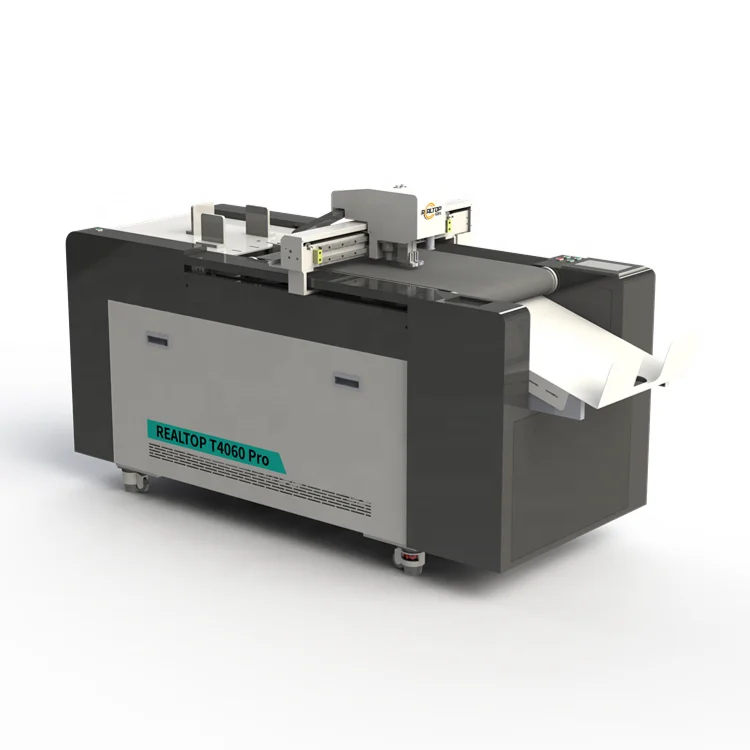
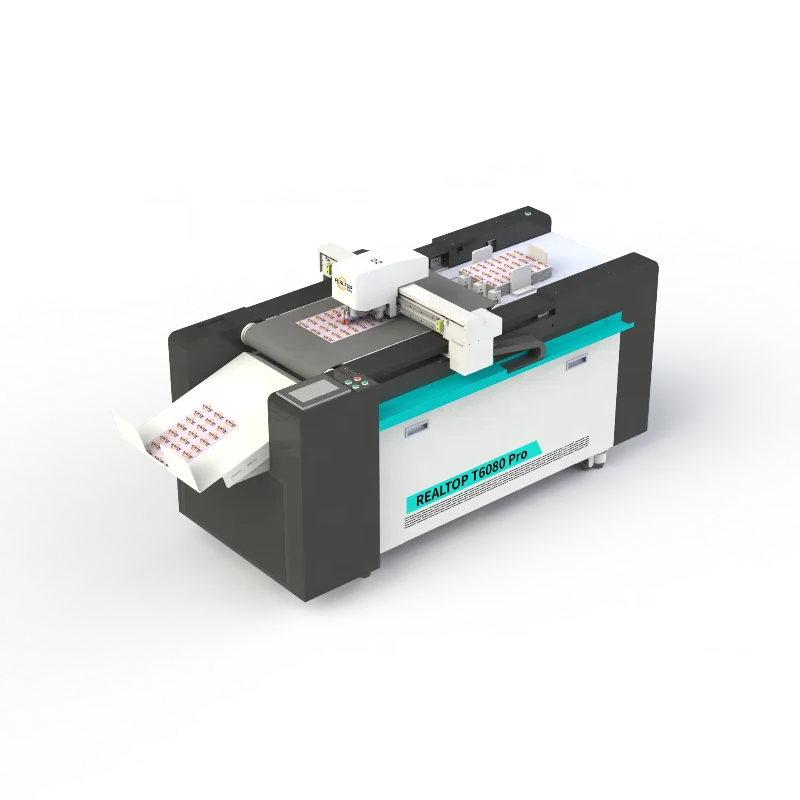
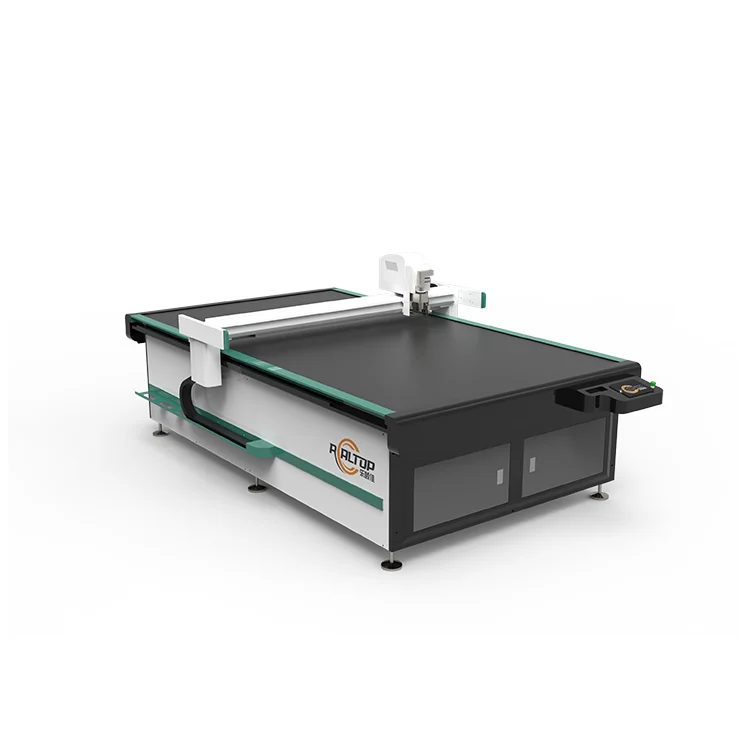
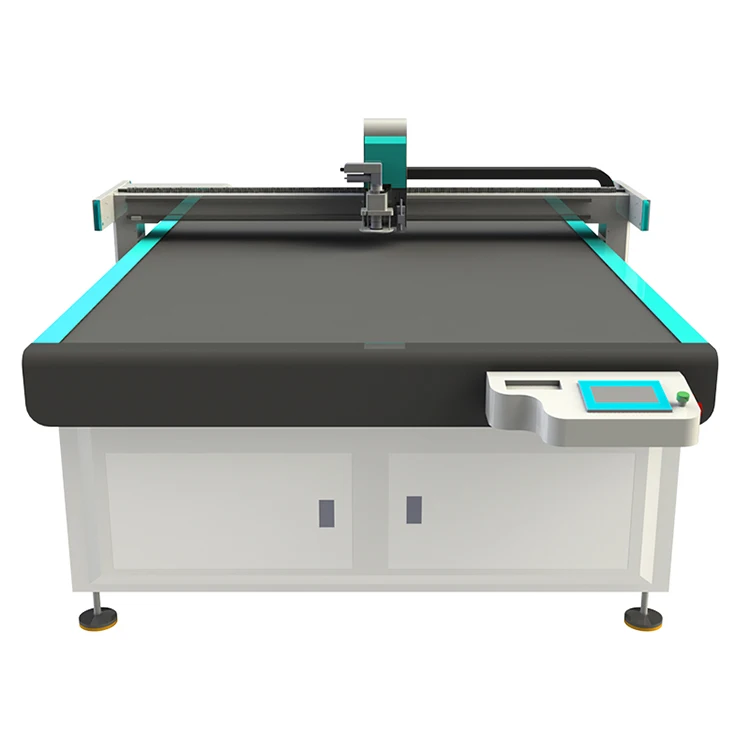
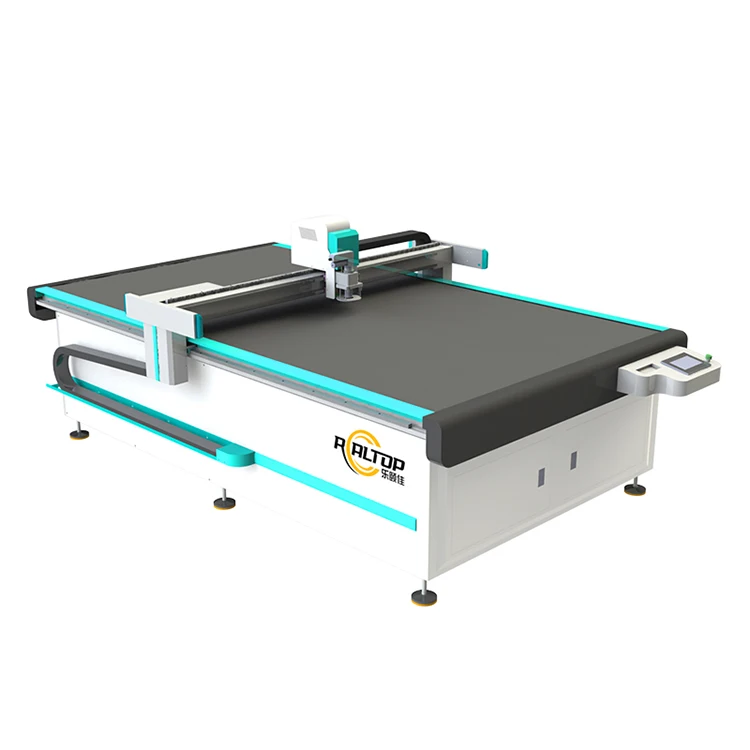
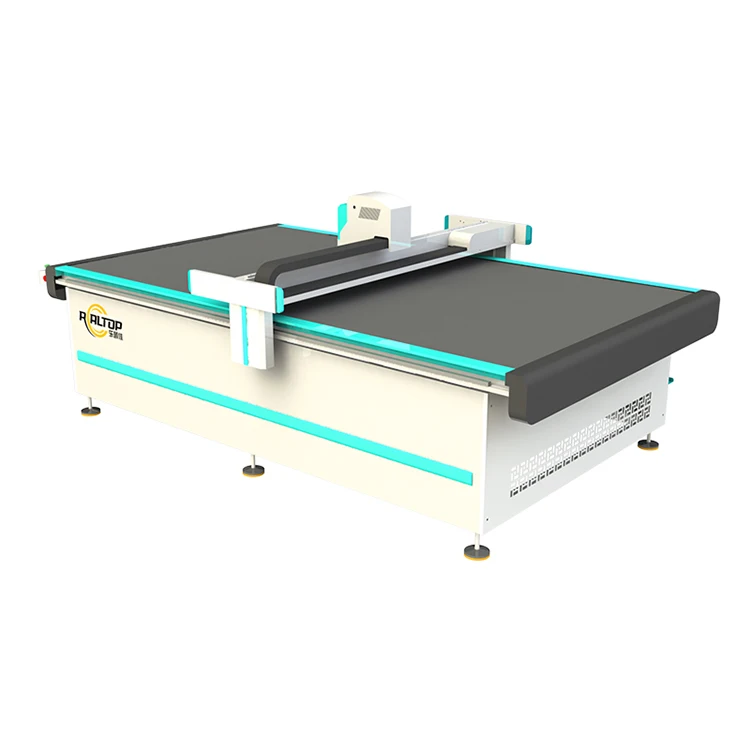
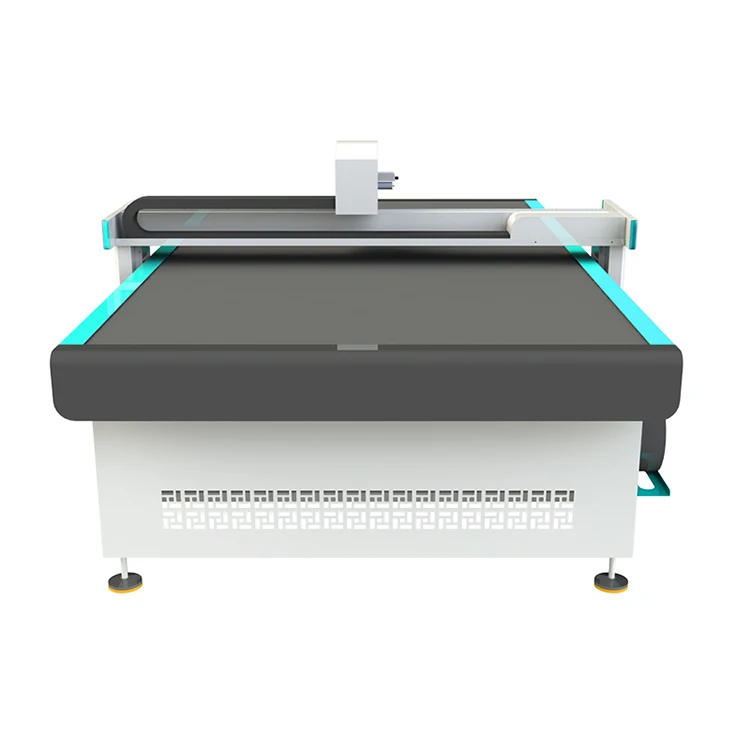
| Product Type | CNC Oscillating Knife Cutting Table |
| Working Area | 1600 × 2500 mm |
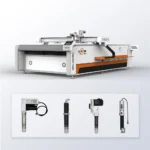
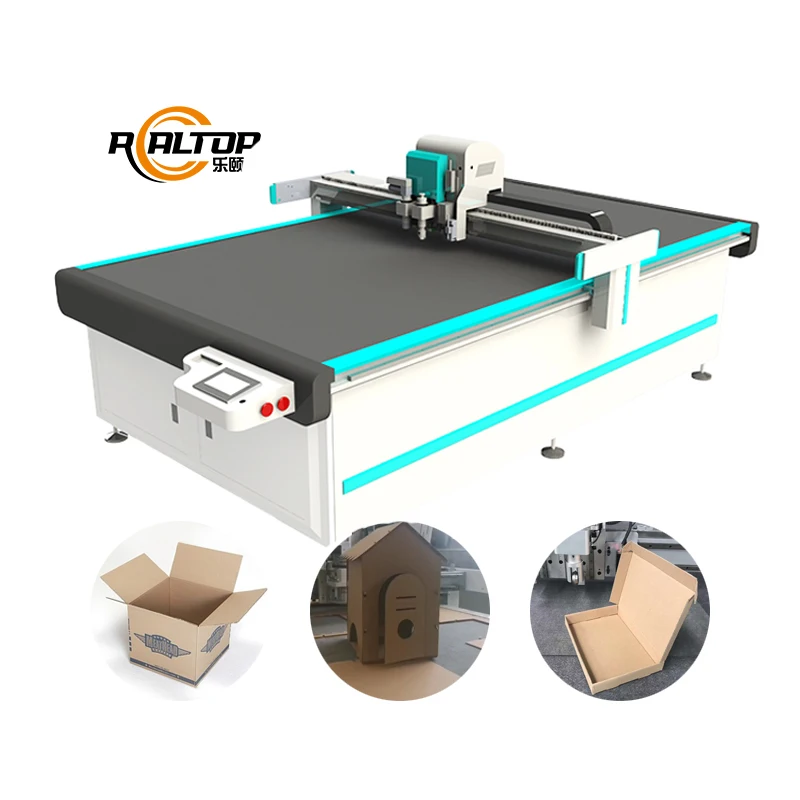
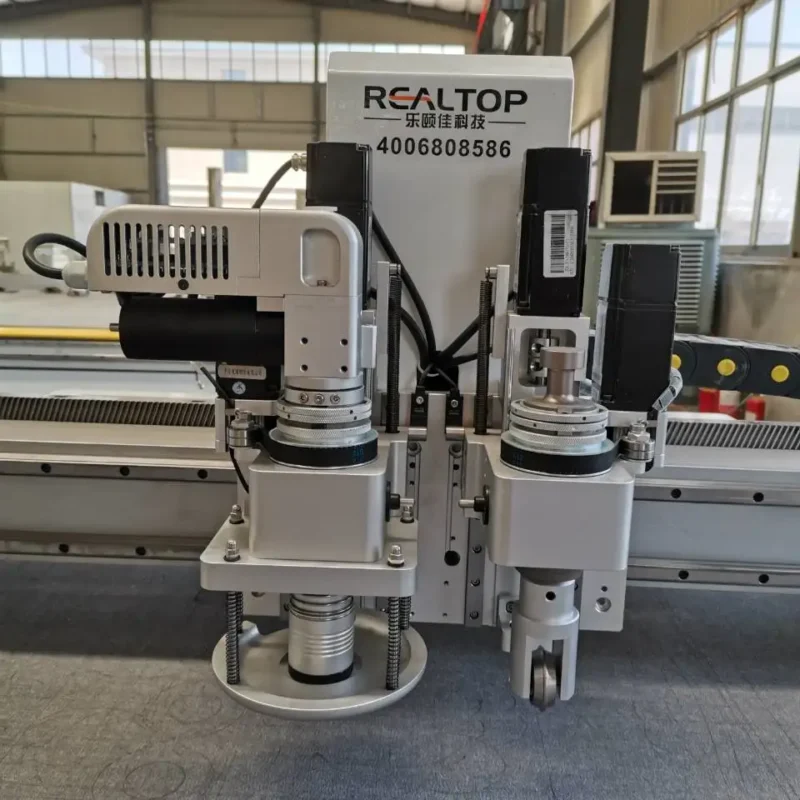
| Tool Head Options | Oscillating knife, Driven rotary knife, Creasing wheel, Kiss cutting tool, Pneumatic knife, Milling tool, V-groove knife |
| Cutting Thickness | ≤ 30 mm (basis to be confirmed by material density and type) |
| Positioning Accuracy | ±0.1 mm |
| Maximum Cutting Speed | 0 – 2000 mm/s |
| Vacuum Pump | 9 kW |
| Servo Motor Options | Panasonic, Delta, Dorna |
| Control System | PLC control panel with multi-language display |
| Voltage Options | 110V, 220V, 380V (configurable) |
| File Format Compatibility | PLT, DXF, AI, PDF |
| Safety Devices | Infrared sensor, emergency stop |
| Machine Dimensions (L×W×H) | 3300 × 2100 × 1350 mm |
| CE Declaration | Available where applicable |
Application Suitability
| Application | Material or Output |
|---|---|
| Apparel Manufacturing | Suits, knitwear, lace, complex woven and pattern-matched fabrics |
| Automotive Interiors | Seat fabrics, carpets, PVC floor mats, sound-deadening layers |
| Home Textiles | Sofa upholstery fabrics, heavy curtains, area rugs, multi-layer textile stacks |
| Composite Processing | Carbon fiber prepreg, aramid fabrics, specialty reinforcement materials |
Why the Thickness Claim Needs a Material Caveat
A CNC oscillating knife cutting machine manufacturer must define cutting depth against a specific material density and stack height, not a single universal number. A 30 mm limit on loose-weave felt does not translate to 30 mm of compressed automotive carpet.
When buyers see a flat thickness figure without the material qualifier, they commit to a machine that cannot hold tolerance on their actual production lay. The knife deflects, the bottom layers shift, and edge quality breaks down [NEED_CITE: cutting force and material density relationship in oscillating knife systems]. That is why we require the buyer’s own material sample before finalizing the tool head selection, vacuum table zoning and cutting pass strategy. The 9 kW vacuum pump on this table pulls through an aluminum bellows surface to hold multi-layer stacks, but the adsorption pattern must match the part footprint, not just the table area.
Mapping the Full Equipment Range Across Materials
The lyjcut.com catalogue exists so buyers can match the cutting method to the job rather than force one technology across every material. This oscillating knife table sits in the line alongside CO2 and fiber laser systems, each assigned to the material family it handles best. For woven textiles, foam and gasket materials, the knife approach avoids the edge-sealing and thermal distortion issues that laser introduces on synthetics.
A distributor surveying options for a mixed-material client base can compare this 1600 × 2500 mm knife platform against our laser range, evaluating which tool covers the majority of their end-user demand before committing to stock [NEED_CITE: knife versus laser cutting selection criteria for textile and non-metal materials]. The seven interchangeable tool heads on this single table already expand its reach from kiss-cutting vinyl to milling rigid foam, reducing the need for multiple standalone machines.
How Tool Head Swaps Cover an Entire Textile Floor
The driven rotary knife handles continuous straight-line cuts through heavy woven fabric stacks, while the oscillating knife navigates tight corners and intricate pattern pieces on the same lay. Creasing wheels score folding lines on packaging samples without breaking the surface fiber. The pneumatic knife drops through dense, compressed materials where mechanical oscillation alone would stall.
Switching between these heads takes minutes at the machine, and the PLC control stores tool offsets so the next job recalls the correct depth and speed parameters automatically. This flexibility matters when a garment factory runs lace in the morning and denim layers in the afternoon [NEED_CITE: quick-change tooling in digital flatbed cutting operations]. Buyers sourcing from the full catalogue can see exactly where this knife platform ends and the laser range begins, avoiding the common mistake of specifying one technology for a material it cannot process cleanly.
Reading the Specs Against Your Actual Production
The ±0.1 mm positioning accuracy holds across the full 1600 × 2500 mm working area because the servo system — selectable from Panasonic, Delta or Dorna — maintains closed-loop feedback on both axes. For pattern-matched apparel or automotive seat panels where print alignment is critical, this tolerance window determines whether nested pieces pass downstream quality checks or become waste.
The 0 – 2000 mm/s cutting speed range is adjustable per tool head and material resistance; a driven rotary knife on light knitwear runs at the upper end, while a V-groove knife cutting thick foam pulls the speed back to maintain edge integrity. File format support for PLT, DXF, AI and PDF means the buyer’s existing nesting software can export directly to the machine without intermediate conversion steps that introduce geometry errors. The 9 kW vacuum pump generates sufficient suction through the zoned aluminum bellows table to hold small cut parts flat, preventing the lift that ruins the final millimeters of a cut path.
The Hidden Cost of Wrong Vacuum Zoning
A vacuum table sized only to the machine footprint, without zoning matched to the part layout, will fail to hold small pieces once they are cut free from the surrounding material. The blade drags the loose part on the next pass, and the entire nest must be scrapped. This is especially common in automotive interior cutting where gasket and seal pieces are small relative to the table area [NEED_CITE: vacuum hold-down challenges in small-part digital cutting]. The zoning configuration must be confirmed against the buyer’s typical nest layout, not assumed from a general specification sheet.
Why Source the Full Range from One Factory
In-house design covers both knife and laser technology on the same production floor, so a buyer evaluating this fabric cutting platform can also request a comparative quote on a CO2 laser system for acrylic signage work without going to a second supplier. Tool head and table configurations are specified per the buyer’s material sample, not pulled from a standard list.
CCD camera positioning is available for printed contour recognition, with software compatibility verified against the buyer’s existing workflow before the order is confirmed. Voltage, plug type and control panel language are locked in during the quotation stage — the PLC display supports English, Russian, Italian and Chinese with additional languages customizable. Sample cutting on the buyer’s own material runs before any commitment, producing a physical report that documents edge quality, layer shift and cycle data.
Documentation & Verification
- Machine specification sheet listing selected tool head and vacuum table zoning configuration
- Electrical schematic with voltage and frequency confirmed for target market
- Sample cutting report run on buyer’s actual textile or composite material
- Software licence documentation with file format compatibility note
- CE declaration provided where applicable to destination market
- Operation and maintenance manual in the confirmed control panel language
Installation, Commissioning & Support
- Floor space planning based on 3300 × 2100 mm machine footprint plus material feed clearance
- Dedicated electrical circuit matched to confirmed voltage option (110V, 220V or 380V) and 9 kW vacuum pump draw
- Table levelling and vacuum zone calibration performed on-site against buyer’s part nest layout
- Tool head offset setting and test cuts across the full working area at commissioning
- Operator training on tool head changeover, PLC control navigation and nesting file import
- Spare oscillating knife blades, rotary knife discs and vacuum seals included at delivery
What We Need to Quote Accurately
Send the material type, weight per square meter, maximum layer count and typical sheet dimensions. Include your target daily volume and whether your nesting files currently run in PLT, DXF, AI or PDF format. Confirm the local voltage and frequency at the installation site along with the preferred control panel language. If your material carries adhesive backing or a protective film, note that explicitly — it changes the vacuum table specification.
Frequently Asked Questions
Q: How do I choose between oscillating knife and laser cutting for my textile?
A: Laser seals synthetic edges and suits thin single-layer work, but it melts natural fibers and cannot cut multi-layer stacks. Oscillating knife handles thick fabric lays without thermal distortion. We compare both methods against your specific material sample before recommending a system from the catalogue.
Q: What working area and tool head fits my daily volume?
A: The 1600 × 2500 mm table accommodates standard textile rolls and garment marker lays. Tool head selection depends on material density and part geometry — we run your actual nest file on a sample lay to confirm which of the seven heads delivers the cleanest edge at production speed.
Q: Can this machine handle multi-layer cutting reliably?
A: Multi-layer performance depends on material density, stack height and vacuum hold-down. The cutting thickness specification of up to 30 mm requires confirmation against your specific fabric weight and lay configuration. We verify this with a sample cutting report before finalizing the order.
Q: What voltage and control language are confirmed before shipment?
A: Voltage is configurable across 110V, 220V and 380V to match your facility supply. The PLC control panel is set to your preferred language — English, Russian, Italian, Chinese or a custom option — and locked in during the quotation stage so there are no surprises at installation.
Q: Do you test on my material before I commit?
A: Yes. We require the buyer’s actual textile sample to run on the configured table and tool head. The resulting report documents edge quality, layer integrity and cycle data, giving you a production-accurate picture before any purchase commitment is made.
Cutting Method Matched to Material — We configure knife or laser systems based on your specific textile weight, layer count and edge requirement, confirmed by sample cutting before order.
Technical Specifications
| Parameter | Value |
|---|---|
| Product Type | CNC Oscillating Knife Cutting Table |
| Working Area | 1600 × 2500 mm |
| Tool Head Options | Oscillating knife, Driven rotary knife, Creasing wheel, Kiss cutting tool, Pneumatic knife, Milling tool, V-groove knife |
| Cutting Thickness | ≤ 30 mm (basis to be confirmed by material density and type) |
| Positioning Accuracy | ±0.1 mm |
| Maximum Cutting Speed | 0 – 2000 mm/s |
| Vacuum Pump | 9 kW |
| Servo Motor Options | Panasonic, Delta, Dorna |
| Control System | PLC control panel with multi-language display |
| Voltage Options | 110V, 220V, 380V (configurable) |
| File Format Compatibility | PLT, DXF, AI, PDF |
| Safety Devices | Infrared sensor, emergency stop |
| Machine Dimensions (L×W×H) | 3300 × 2100 × 1350 mm |
| CE Declaration | Available where applicable |
Application Suitability
| Application | Material or Output |
|---|---|
| Apparel Manufacturing | Suits, knitwear, lace, complex woven and pattern-matched fabrics |
| Automotive Interiors | Seat fabrics, carpets, PVC floor mats, sound-deadening layers |
| Home Textiles | Sofa upholstery fabrics, heavy curtains, area rugs, multi-layer textile stacks |
| Composite Processing | Carbon fiber prepreg, aramid fabrics, specialty reinforcement materials |
Why the Thickness Claim Needs a Material Caveat
A CNC oscillating knife cutting machine manufacturer must define cutting depth against a specific material density and stack height, not a single universal number. A 30 mm limit on loose-weave felt does not translate to 30 mm of compressed automotive carpet.
When buyers see a flat thickness figure without the material qualifier, they commit to a machine that cannot hold tolerance on their actual production lay. The knife deflects, the bottom layers shift, and edge quality breaks down [NEED_CITE: cutting force and material density relationship in oscillating knife systems]. That is why we require the buyer’s own material sample before finalizing the tool head selection, vacuum table zoning and cutting pass strategy. The 9 kW vacuum pump on this table pulls through an aluminum bellows surface to hold multi-layer stacks, but the adsorption pattern must match the part footprint, not just the table area.
Mapping the Full Equipment Range Across Materials
The lyjcut.com catalogue exists so buyers can match the cutting method to the job rather than force one technology across every material. This oscillating knife table sits in the line alongside CO2 and fiber laser systems, each assigned to the material family it handles best. For woven textiles, foam and gasket materials, the knife approach avoids the edge-sealing and thermal distortion issues that laser introduces on synthetics.
A distributor surveying options for a mixed-material client base can compare this 1600 × 2500 mm knife platform against our laser range, evaluating which tool covers the majority of their end-user demand before committing to stock [NEED_CITE: knife versus laser cutting selection criteria for textile and non-metal materials]. The seven interchangeable tool heads on this single table already expand its reach from kiss-cutting vinyl to milling rigid foam, reducing the need for multiple standalone machines.
How Tool Head Swaps Cover an Entire Textile Floor
The driven rotary knife handles continuous straight-line cuts through heavy woven fabric stacks, while the oscillating knife navigates tight corners and intricate pattern pieces on the same lay. Creasing wheels score folding lines on packaging samples without breaking the surface fiber. The pneumatic knife drops through dense, compressed materials where mechanical oscillation alone would stall.
Switching between these heads takes minutes at the machine, and the PLC control stores tool offsets so the next job recalls the correct depth and speed parameters automatically. This flexibility matters when a garment factory runs lace in the morning and denim layers in the afternoon [NEED_CITE: quick-change tooling in digital flatbed cutting operations]. Buyers sourcing from the full catalogue can see exactly where this knife platform ends and the laser range begins, avoiding the common mistake of specifying one technology for a material it cannot process cleanly.
Reading the Specs Against Your Actual Production
The ±0.1 mm positioning accuracy holds across the full 1600 × 2500 mm working area because the servo system — selectable from Panasonic, Delta or Dorna — maintains closed-loop feedback on both axes. For pattern-matched apparel or automotive seat panels where print alignment is critical, this tolerance window determines whether nested pieces pass downstream quality checks or become waste.
The 0 – 2000 mm/s cutting speed range is adjustable per tool head and material resistance; a driven rotary knife on light knitwear runs at the upper end, while a V-groove knife cutting thick foam pulls the speed back to maintain edge integrity. File format support for PLT, DXF, AI and PDF means the buyer’s existing nesting software can export directly to the machine without intermediate conversion steps that introduce geometry errors. The 9 kW vacuum pump generates sufficient suction through the zoned aluminum bellows table to hold small cut parts flat, preventing the lift that ruins the final millimeters of a cut path.
The Hidden Cost of Wrong Vacuum Zoning
A vacuum table sized only to the machine footprint, without zoning matched to the part layout, will fail to hold small pieces once they are cut free from the surrounding material. The blade drags the loose part on the next pass, and the entire nest must be scrapped. This is especially common in automotive interior cutting where gasket and seal pieces are small relative to the table area [NEED_CITE: vacuum hold-down challenges in small-part digital cutting]. The zoning configuration must be confirmed against the buyer’s typical nest layout, not assumed from a general specification sheet.
Why Source the Full Range from One Factory
In-house design covers both knife and laser technology on the same production floor, so a buyer evaluating this fabric cutting platform can also request a comparative quote on a CO2 laser system for acrylic signage work without going to a second supplier. Tool head and table configurations are specified per the buyer’s material sample, not pulled from a standard list.
CCD camera positioning is available for printed contour recognition, with software compatibility verified against the buyer’s existing workflow before the order is confirmed. Voltage, plug type and control panel language are locked in during the quotation stage — the PLC display supports English, Russian, Italian and Chinese with additional languages customizable. Sample cutting on the buyer’s own material runs before any commitment, producing a physical report that documents edge quality, layer shift and cycle data.
Documentation & Verification
- Machine specification sheet listing selected tool head and vacuum table zoning configuration
- Electrical schematic with voltage and frequency confirmed for target market
- Sample cutting report run on buyer’s actual textile or composite material
- Software licence documentation with file format compatibility note
- CE declaration provided where applicable to destination market
- Operation and maintenance manual in the confirmed control panel language
Installation, Commissioning & Support
- Floor space planning based on 3300 × 2100 mm machine footprint plus material feed clearance
- Dedicated electrical circuit matched to confirmed voltage option (110V, 220V or 380V) and 9 kW vacuum pump draw
- Table levelling and vacuum zone calibration performed on-site against buyer’s part nest layout
- Tool head offset setting and test cuts across the full working area at commissioning
- Operator training on tool head changeover, PLC control navigation and nesting file import
- Spare oscillating knife blades, rotary knife discs and vacuum seals included at delivery
What We Need to Quote Accurately
Send the material type, weight per square meter, maximum layer count and typical sheet dimensions. Include your target daily volume and whether your nesting files currently run in PLT, DXF, AI or PDF format. Confirm the local voltage and frequency at the installation site along with the preferred control panel language. If your material carries adhesive backing or a protective film, note that explicitly — it changes the vacuum table specification.
Frequently Asked Questions
Q: How do I choose between oscillating knife and laser cutting for my textile?
A: Laser seals synthetic edges and suits thin single-layer work, but it melts natural fibers and cannot cut multi-layer stacks. Oscillating knife handles thick fabric lays without thermal distortion. We compare both methods against your specific material sample before recommending a system from the catalogue.
Q: What working area and tool head fits my daily volume?
A: The 1600 × 2500 mm table accommodates standard textile rolls and garment marker lays. Tool head selection depends on material density and part geometry — we run your actual nest file on a sample lay to confirm which of the seven heads delivers the cleanest edge at production speed.
Q: Can this machine handle multi-layer cutting reliably?
A: Multi-layer performance depends on material density, stack height and vacuum hold-down. The cutting thickness specification of up to 30 mm requires confirmation against your specific fabric weight and lay configuration. We verify this with a sample cutting report before finalizing the order.
Q: What voltage and control language are confirmed before shipment?
A: Voltage is configurable across 110V, 220V and 380V to match your facility supply. The PLC control panel is set to your preferred language — English, Russian, Italian, Chinese or a custom option — and locked in during the quotation stage so there are no surprises at installation.
Q: Do you test on my material before I commit?
A: Yes. We require the buyer’s actual textile sample to run on the configured table and tool head. The resulting report documents edge quality, layer integrity and cycle data, giving you a production-accurate picture before any purchase commitment is made.
商品评价
There are no reviews yet.