






Fast Delivery
Quick, reliable shipping to any location.

Free & easy returns
Return this item by mail or in store within 90 days for a full refund.
Specified Cutting Depth by Flute — sample cutting on the buyer’s actual corrugated board grade before tool head and vacuum zoning are locked in.
Technical Specifications
| Parameter | Value |
|---|---|
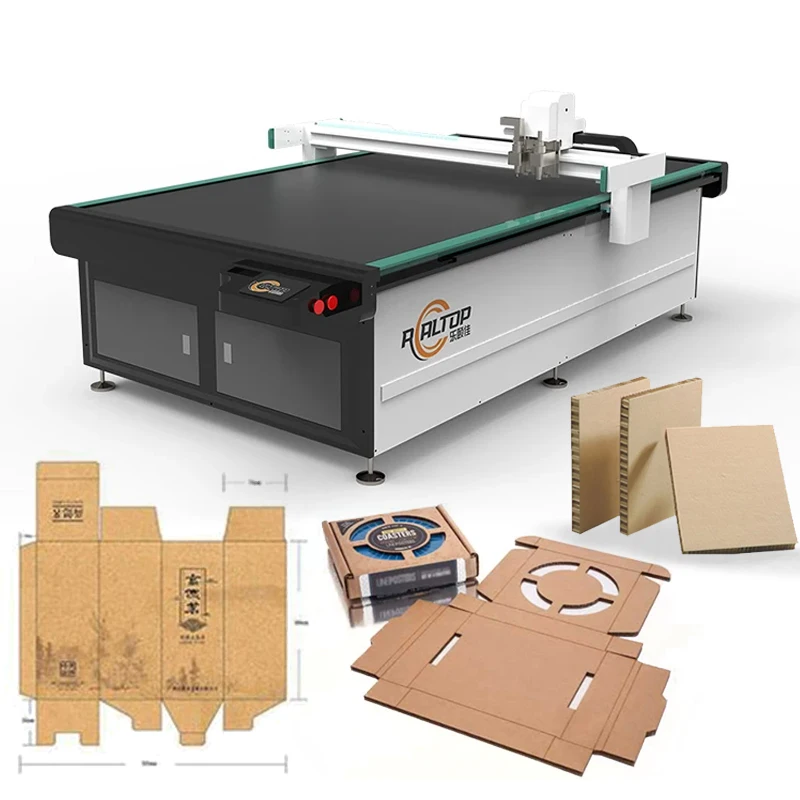
| Product Type | CNC Flatbed Digital Carton Cutting and Creasing Machine with Automatic Feeding |
| Working Area Options | 2500×1300 mm / 1600×2500 mm |
| Machine Size | 3550×1910×1400 mm / 3450×2300×1250 mm |
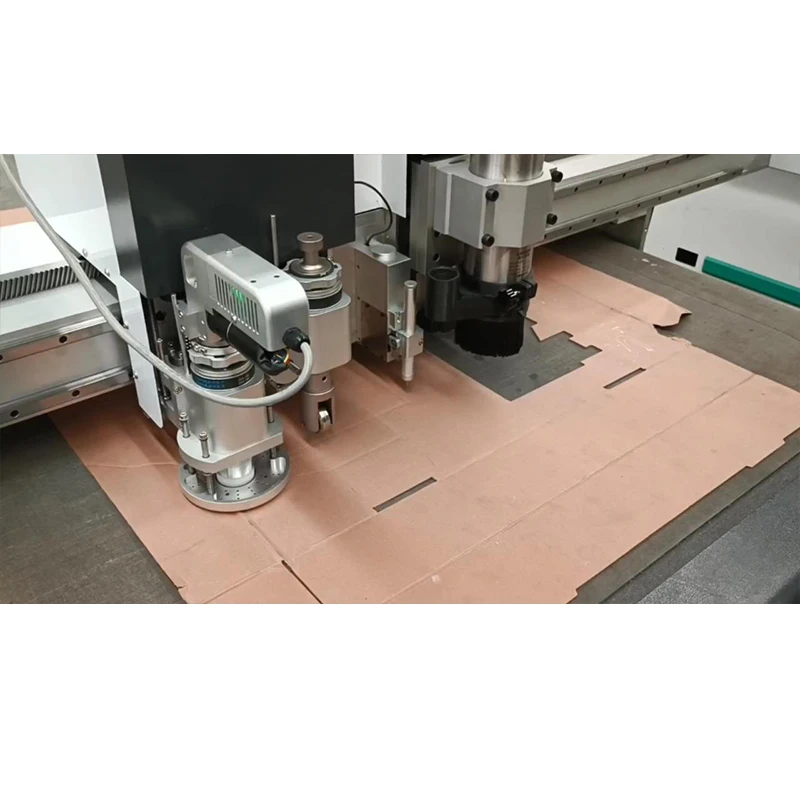
| Cutting Tools | Oscillating knife, Creasing tool, Kiss-Cut Knife, Round punch |
| Cutting Thickness | ≤18 mm (basis not stated in source — confirm board grade and flute profile) |
| Repeated Accuracy | <0.05 mm |
| Fixing Method | Vacuum system, aluminum alloy honeycomb structure |
| Vacuum Pump | 7.5 kW |
| Rated Power | 9 kW |
| Voltage | 380 V (frequency to be confirmed) |
| Servo System | Dongling servo or Delta servo motor (verify actual spec) |
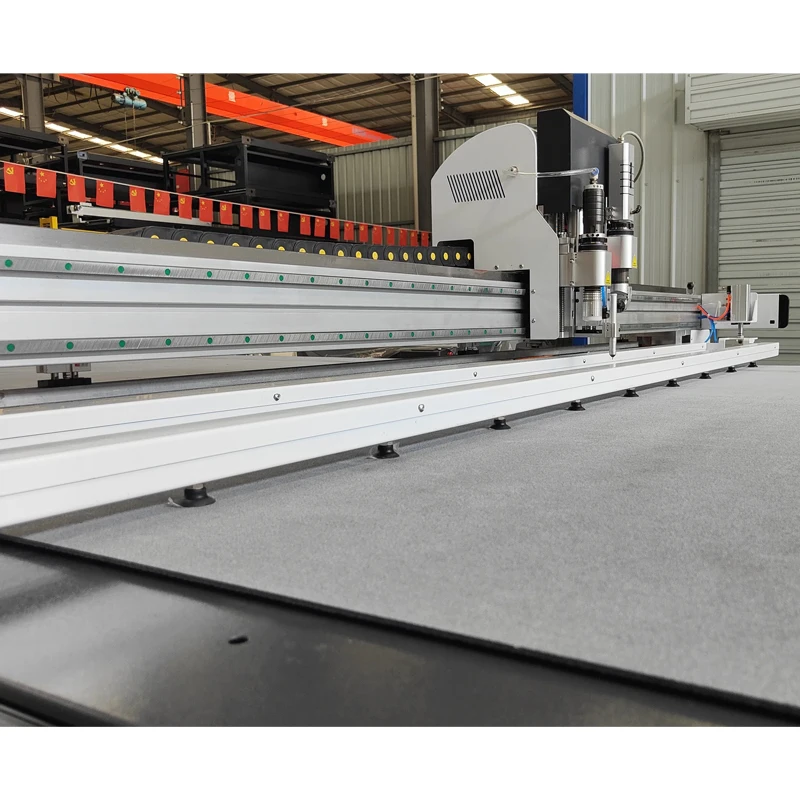
| Transmission | Rack and pinion with imported straight-line square guide rails |
| Data Transfer | Ethernet port |
| Supported File Formats | DXF, OLT, PDF, AI |
| Conveyor Belt | Germany imported |
| Safety Device | Infrared sensors and emergency stop |
| Control Language | English, Russian, Italian, Chinese, others customizable |
| Warranty | 1 year (excludes consumables: felt, knife blades) |
| Assembly State | Fully assembled, factory-tested |
Application Suitability
| Application | Material or Output |
|---|---|
| Carton and packaging sample making | Grey board, white card stock, micro-flute corrugated |
| Corrugated box short-run production | Single-face, double-face, and E/B/C flute profiles |
| Express and gift box packaging | Art paper, coated board, laminated sheets |
| Sticker and label contour cutting | Vinyl, self-adhesive paper, PP synthetic paper |
| Flexible non-metal sheet cutting | Leather, felt, composite gasket materials |
Why "18 mm Cutting Depth" Is Not the Whole Story
A thickness number on a spec sheet means nothing without the board grade and flute profile it was measured on.
I have watched buyers focus on the maximum cutting thickness figure, only to discover that a machine handles solid bleached board at that depth but crushes the flutes on double-wall corrugated when pushed to the same limit. The actual usable depth depends on whether the material compresses, delaminates, or splinters under the oscillating knife’s downward force. Before any packaging CNC cutting machine manufacturer can guarantee a depth figure, the specific board must be tested under production-speed conditions [NEED_CITE: material compression behavior in flatbed digital cutting]. That test reveals whether the crease holds, whether the cut edge is clean, and whether the vacuum table keeps the sheet from shifting mid-cycle.
Matching the Knife, the Crease and the Kiss-Cut to Your Board
A flatbed carton cutting system only performs when each tool head in the configuration is selected for the material it will encounter. Oscillating knives slice through corrugated flute walls without crushing them, while a dedicated creasing wheel compresses the board along fold lines to produce a clean hinge. When a job requires kiss-cutting stickers or labels mounted on a liner, a separate kiss-cut tool must be calibrated to cut the face stock without scoring the release paper beneath.
The configuration on this range supports oscillating knife, creasing tool, kiss-cut knife and round punch heads. A packaging producer running short-run carton prototypes will typically need the oscillating knife paired with the creasing tool, while a label converter will specify the kiss-cut head alongside contour recognition for printed marks.
Vacuum Zoning and the Problem of Small Blanks Lifting
An aluminum alloy honeycomb vacuum table provides the adsorption surface, but the real question is how the zones are divided and whether a small carton blank sitting on one corner of the bed gets enough hold-down force. When the vacuum is spread across the full table area, a small part near the edge can lift during high-speed knife travel, producing a ragged cut or a misaligned crease [NEED_CITE: vacuum hold-down requirements for small-format digital die-cutting].
Zoned adsorption allows the operator to activate only the section of the table beneath the sheet, concentrating suction where it matters. This is critical when running nesting layouts that mix large carton blanks with small tuck-flap pieces on the same sheet.
Reading the Specs That Actually Matter on the Shop Floor
The rack-and-pinion drive with imported linear square guide rails is what delivers the <0.05 mm repeatability figure. In practice, this means the crease line lands in the same position relative to the cut edge, cycle after cycle. If the transmission system has backlash, the crease drifts and the folded carton will not close square.
The 7.5 kW vacuum pump paired with the honeycomb table structure must move enough air to hold corrugated board flat despite the leakage through open flute channels. A weaker pump loses grip on double-wall profiles. The 9 kW rated power for the machine head and drive system covers the oscillating knife motor, the servo drives and the conveyor feed mechanism running simultaneously. Ethernet data transfer avoids the USB compatibility issues that still surface when operators try to load DXF or AI files from shop-floor computers running different operating systems.
What Happens When the Tool Head Is Wrong for the Flute
Specifying a drag knife instead of an oscillating knife for corrugated board means the blade drags through the flute rather than slicing it, leaving a crushed edge that weakens the box structure. A creasing wheel set to the wrong pressure on micro-flute will split the top liner instead of compressing a clean fold line.
Buyers who skip the sample cutting step often discover these problems only after the machine is installed and running their first production order [NEED_CITE: tooling mismatch consequences in corrugated packaging converting]. The material waste, the missed delivery and the loss of a customer’s confidence all land before anyone can adjust the tool head specification.
Why Buyers Source This Range from the Jinan Factory
The in-house design team covers both knife cutting and vacuum table engineering, so the tool head configuration and the adsorption zoning are specified together rather than treated as separate line items. Sample cutting runs on the buyer’s own board grade and flute profile are completed before the order is finalized, producing a cutting report that confirms the usable depth and edge quality.
Software compatibility is verified during this stage — DXF, AI, PDF and OLT file imports are tested against the nesting workflow the buyer already uses. Voltage, plug type and control language are confirmed in writing before production starts, so a machine shipped to a 220 V market does not arrive with a 380 V motor. The factory test record documents the actual cutting result on the buyer’s material, not a generic demonstration on standard stock.
Documentation & Verification
- Machine specification sheet listing confirmed working area, tool head set and voltage for destination market
- Sample cutting report on buyer’s own board grade and flute profile before order confirmation
- Electrical schematic and voltage confirmation document matching destination grid frequency
- Software licence and file format compatibility note covering DXF, AI, PDF and OLT import
- Factory test record with measured repeatability on the specified carton blank dimensions
- Operation and maintenance manual with tool change procedures and vacuum filter cleaning schedule
Installation, Commissioning & Support
- Floor space allocation for machine footprint up to 3550×1910 mm plus operator clearance on all sides
- Dedicated 380 V three-phase circuit with confirmed frequency and plug type before wiring
- Machine arrives fully assembled; leveling and vacuum seal check completed on first power-up
- Creasing pressure and knife oscillation depth calibrated to buyer’s confirmed board grade during commissioning
- Operator training on tool head changeover, nesting software and vacuum zone activation
- Spare felt pads, replacement knife blades and vacuum filter elements listed in initial spares package
What We Need to Configure Your Machine
Send us the board grades you run — flute profile, grammage and whether the sheet is single or double-wall — along with your maximum sheet size and the daily volume you need to sustain. Confirm your local voltage and frequency, your preferred control language, and whether your design files are in DXF, AI, PDF or another format. If you can ship a sample of your actual material, we will run a cutting test and return a report before any configuration is finalized.
Frequently Asked Questions
Q: How do I verify the cutting thickness works for my specific corrugated flute?
A: The ≤18 mm figure on the spec sheet is a general range. The actual usable depth depends on your board grade, flute profile and whether the sheet is single or double-wall. We run a sample cut on your exact material and provide a report showing edge quality and crease integrity before you commit to a configuration.
Q: What voltage and language options are confirmed before shipment?
A: Voltage is set to your local grid, and frequency is confirmed in writing before production. Control language is selectable from English, Russian, Italian, Chinese or other languages. The electrical schematic and plug type are documented so the machine matches your facility on arrival.
Q: Which tool heads do I need for creasing and kiss-cutting in one job?
A: A typical carton sample job requires the oscillating knife for cutting and the creasing wheel for fold lines. If the same sheet includes kiss-cut stickers or labels, the kiss-cut knife head is added to the configuration. The combination is finalized after reviewing your job mix.
Q: Will the software import my existing DXF and AI files?
A: The included carton cutting and nesting software supports DXF, OLT, PDF and AI formats. We test your actual design files during the sample cutting stage to confirm import compatibility and nesting behavior before the machine ships.
Q: How do I choose between the 1300 mm and 2500 mm working widths?
A: The choice depends on your sheet format and whether you run sample-making or short-run production. The 2500 mm width handles full corrugated sheets for e-commerce box runs, while the 1300 mm width suits carton prototyping and smaller gift box formats.










商品评价
There are no reviews yet.