

Fast Delivery
Quick, reliable shipping to any location.

Free & easy returns
Return this item by mail or in store within 90 days for a full refund.
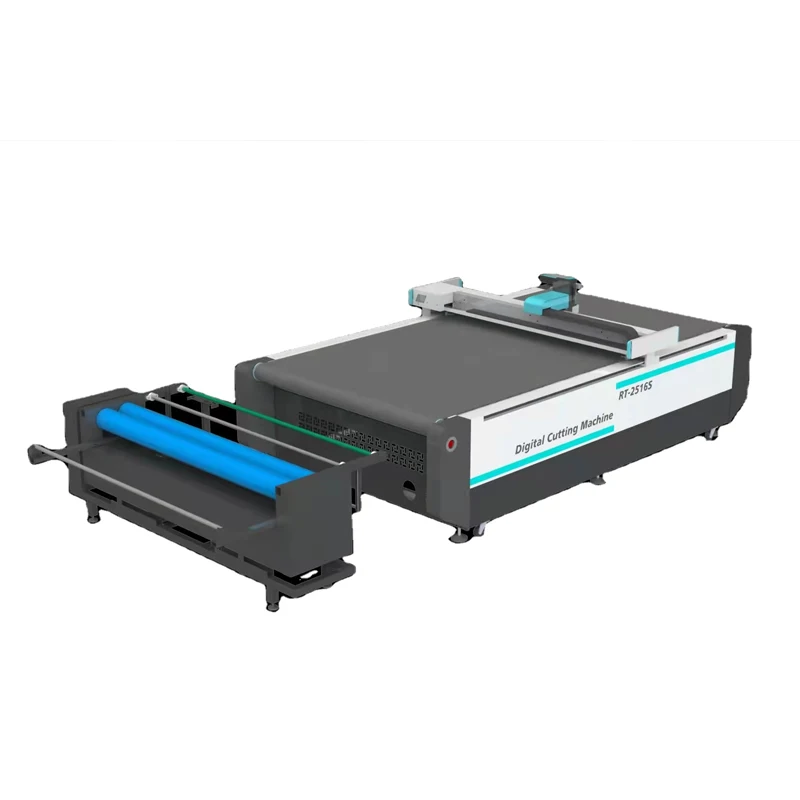
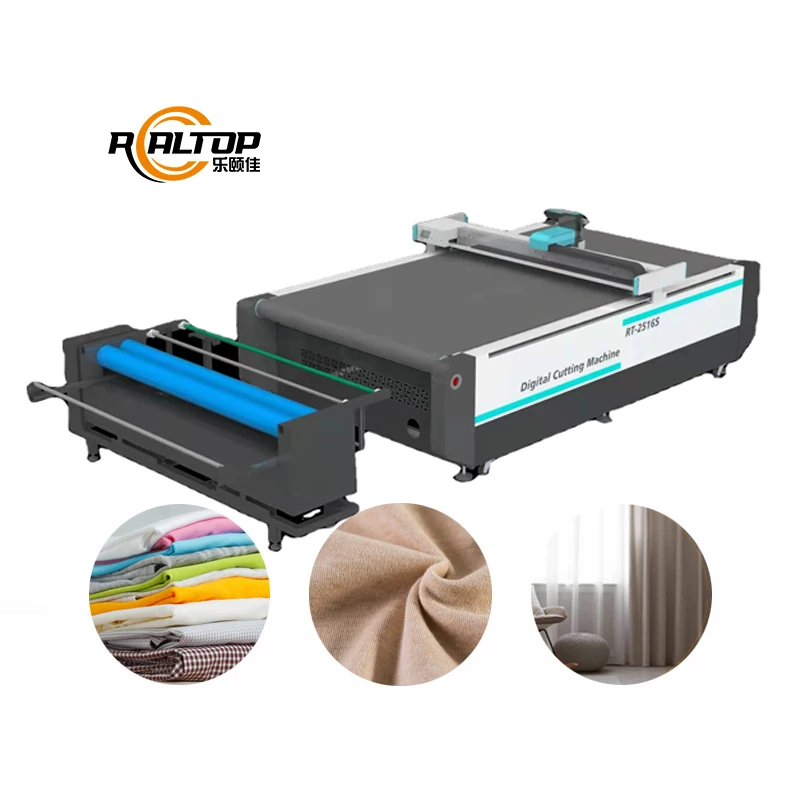
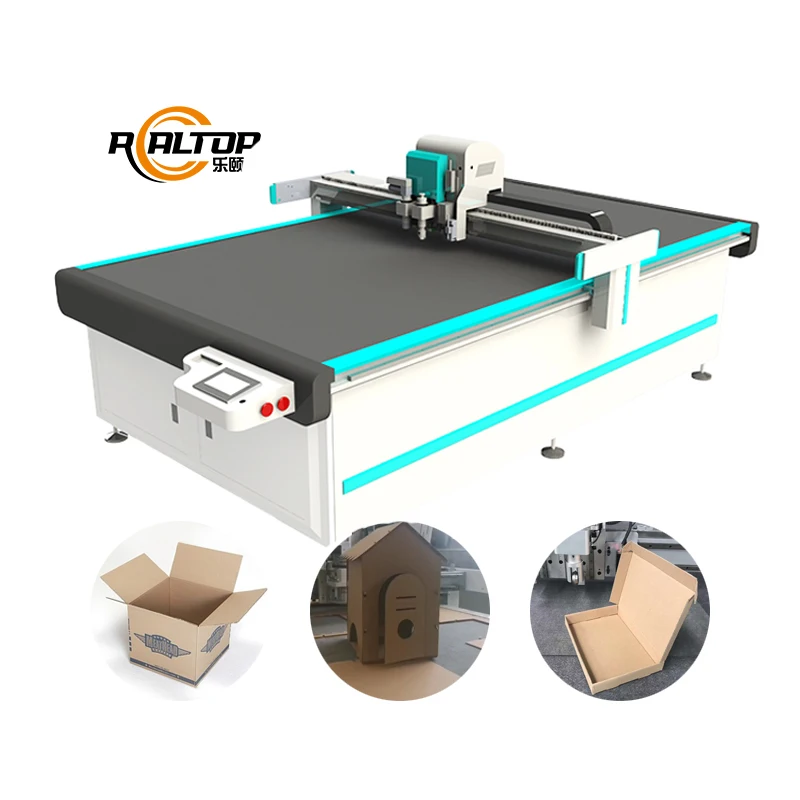
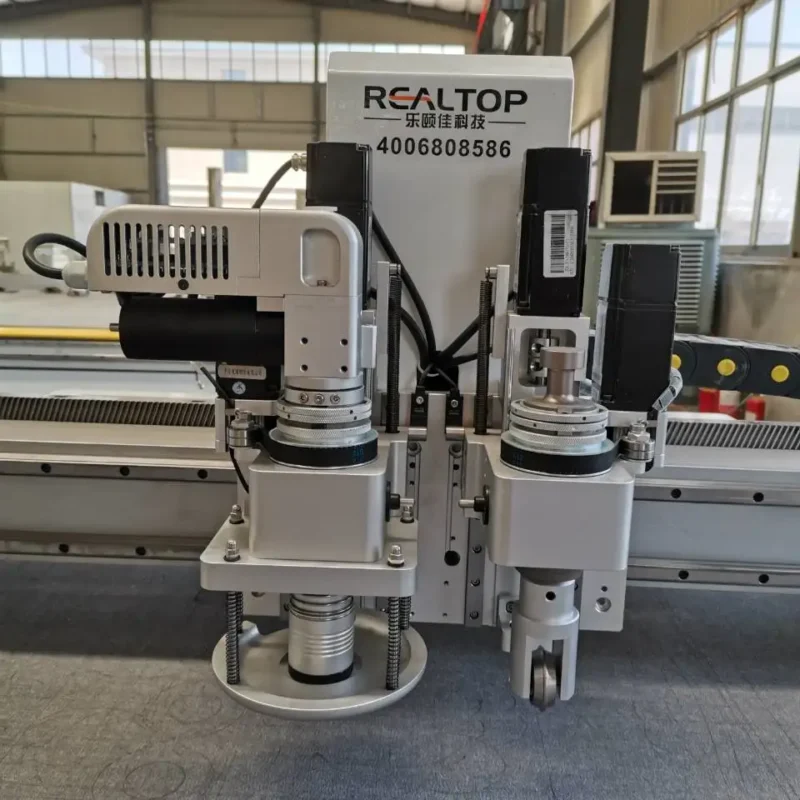
Tool Head Flexibility — A single CNC platform supports oscillating, drag, creasing and punching heads, letting fabric converters match the tool to each material layer instead of running separate machines.
Technical Specifications
| Parameter | Value |
|---|---|
| Model | RT-D2516/RT-S2516 |
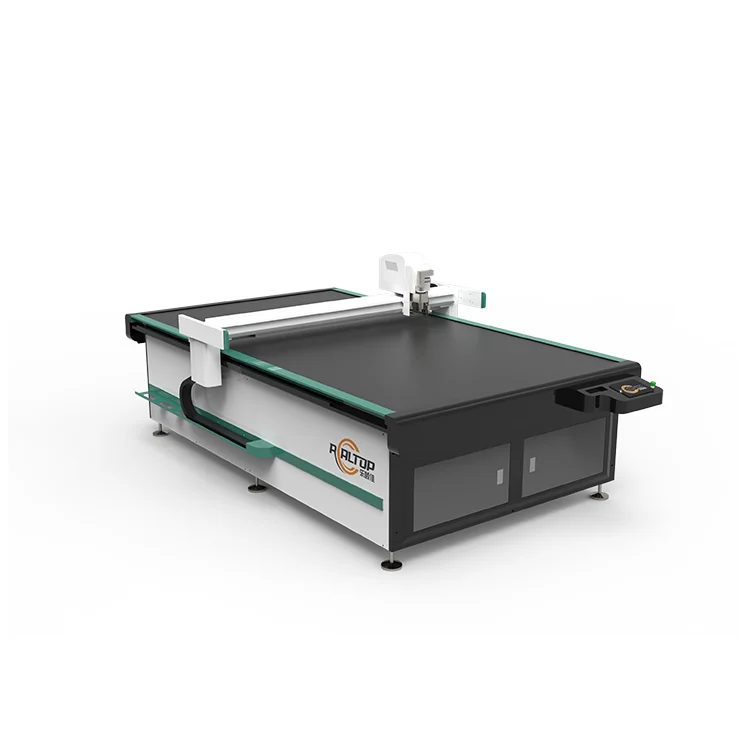
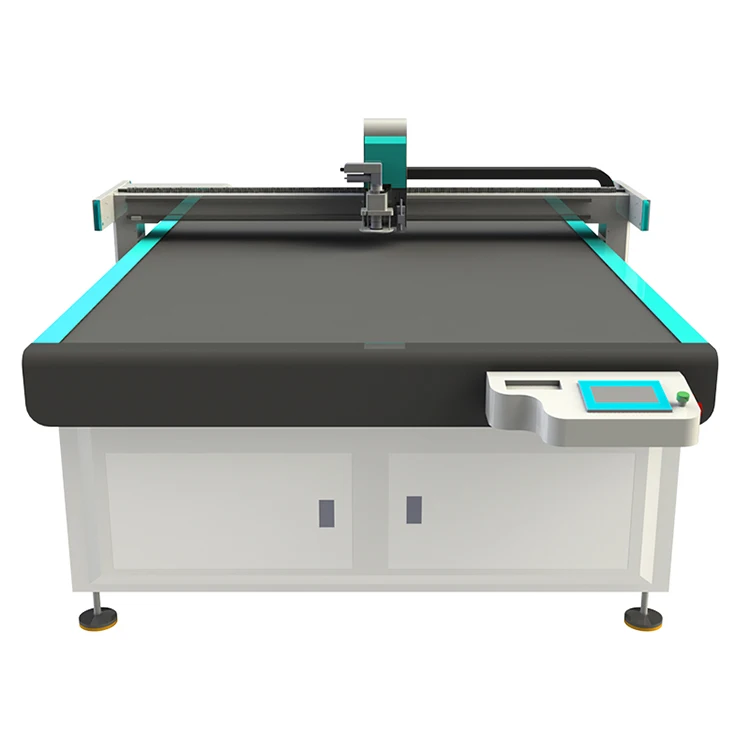
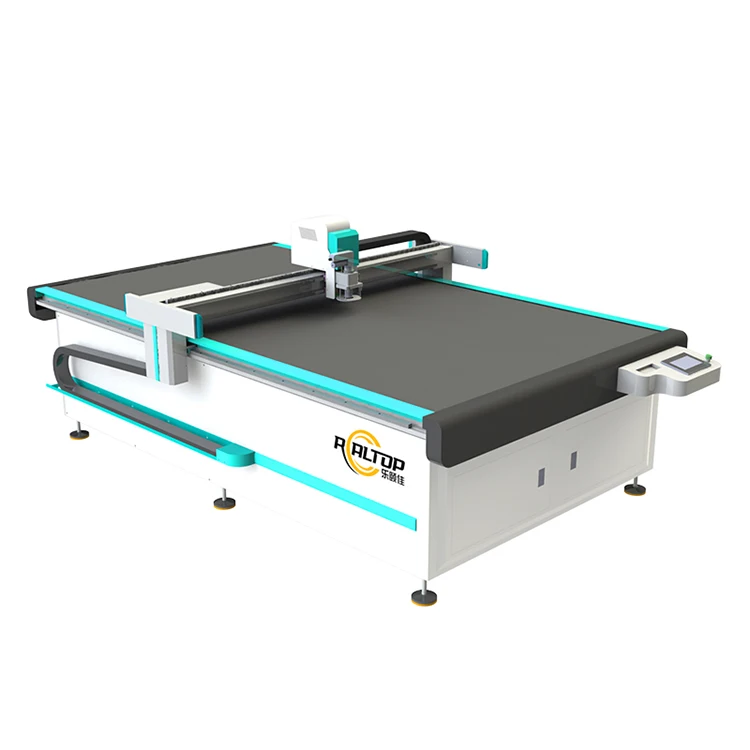
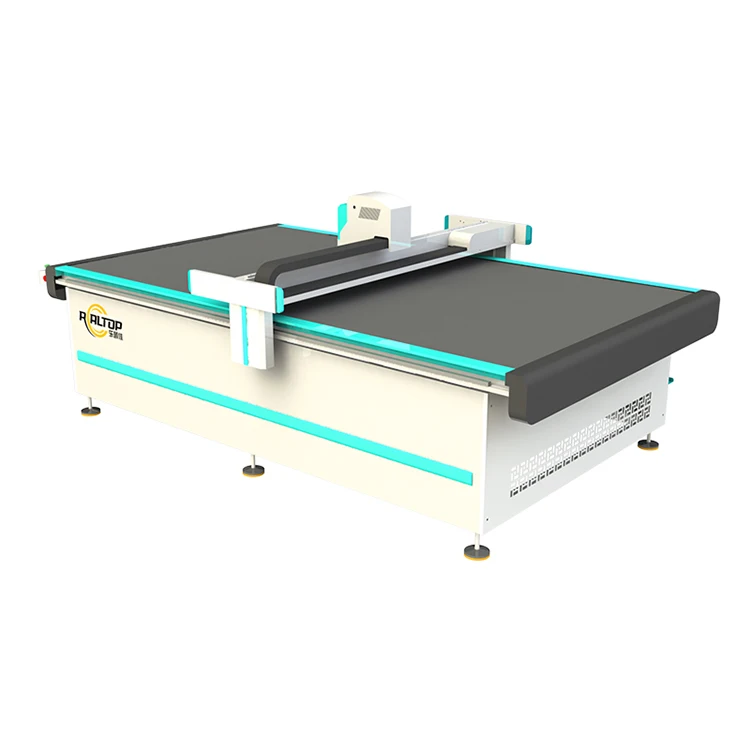
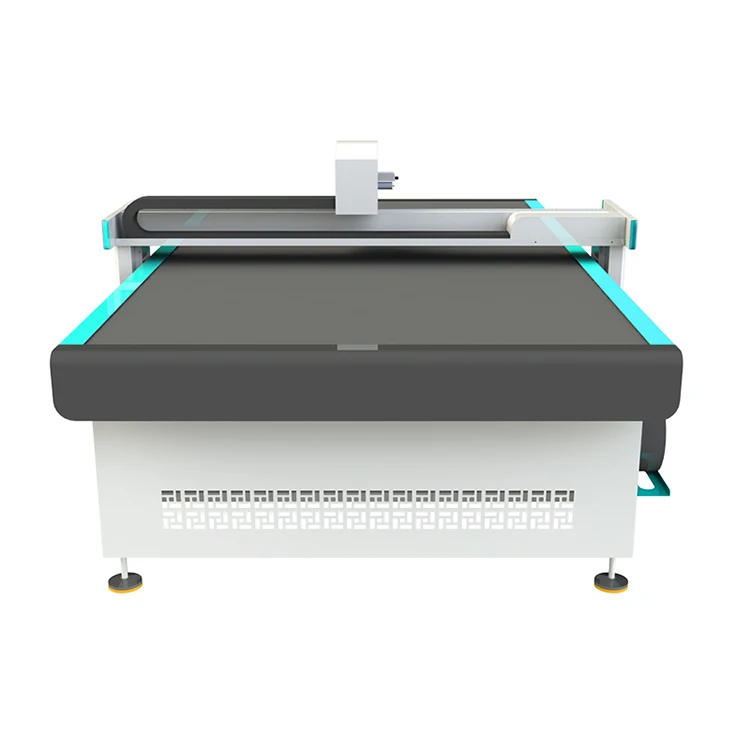
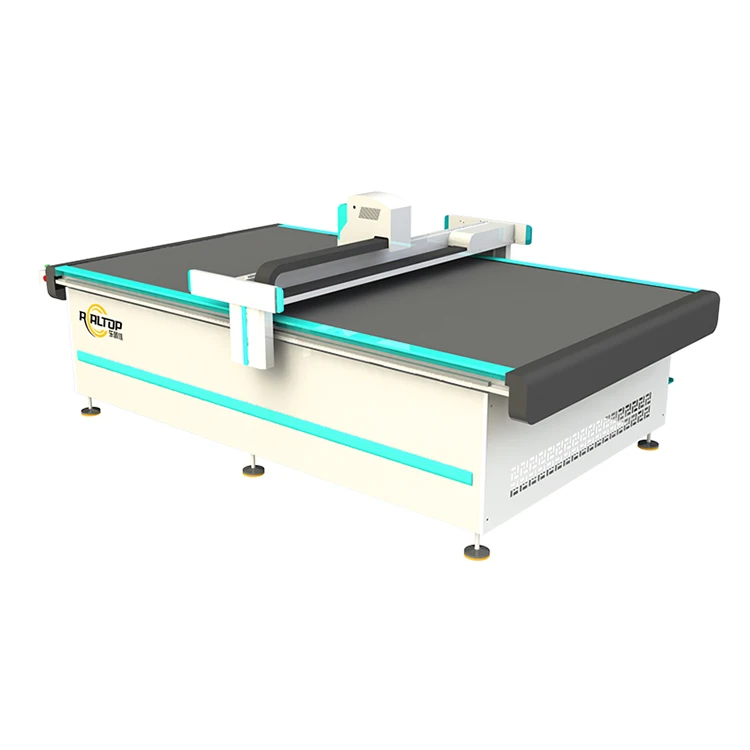
| Working Area | 1600×2500mm |
| Machine Size | 3450×2300×1250mm |
| Rated Power | 9kW |
| Vacuum Pump Power | 7.5kW |
| Working Table | Magnesium-aluminum alloy flat vacuum adsorption table (PVDF powder spraying, anodic oxidation, hard oxidation) |
| Tool Head Options | Oscillating knife, pneumatic knife, high-power vibrating knife, circular knife, V-cutting knife, drag knife, creasing wheel, dotted line knife, punching, brush |
| Visual Positioning | Small CCD camera mark point, panoramic camera recognition, projection positioning |
| Translational Velocity | 800–1200mm/s |
| Cutting Speed | 200–800mm/s (varies with material) |
| Cutting Thickness | ≤100mm (varies with material) |
| Repeated Accuracy | ≤0.1mm |
| Transmission System | Digital servo motor, linear guide, synchronous belt, ball screw |
| Servo Motor | Delta (Panasonic optional), IP67 waterproof protection |
| Instruction System | HP-GL compatible format |
| Voltage | 380V±10% |
| Safety Device | Infrared induction blocking, anti-collision, emergency stop, intelligent infrared sensor |
| Assembly State | Fully assembled (welded thick-walled seamless steel structure, high-temperature tempering) |
Application Suitability
| Application | Material or Output |
|---|---|
| Garment and footwear production | Clothing cloth, shoe material, non-woven fabric, multi-layer textile |
| Automotive interior trimming | PU, EVA, XPE, PVC, composite materials, sponge |
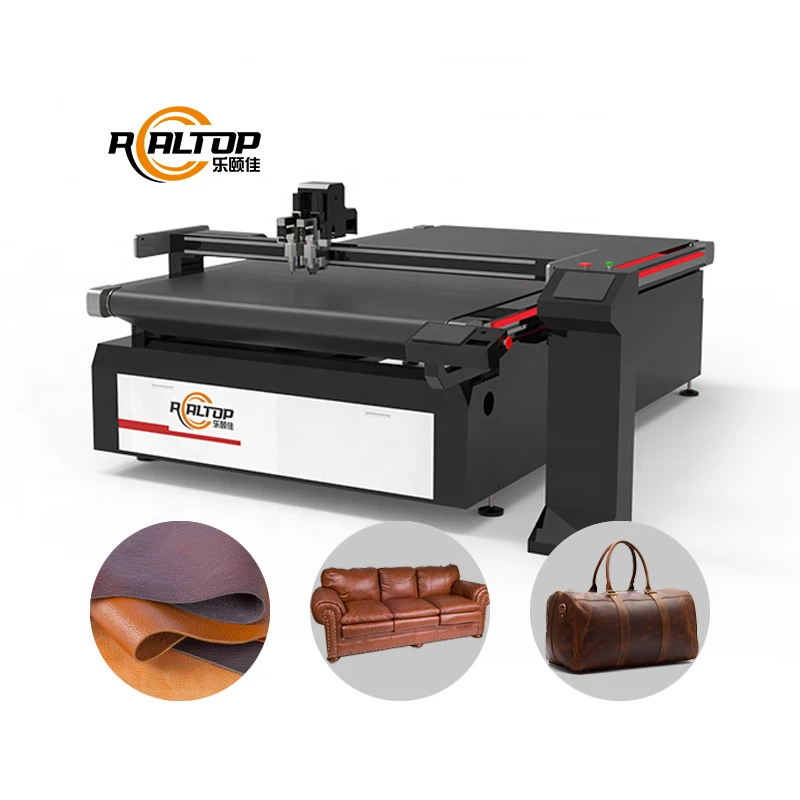
| Soft furnishings and carpet | Carpet, home textile fabric, leather, luggage material |
| Packaging and sample making | Corrugated cardboard, cardboard, plastic box, sticker, film |
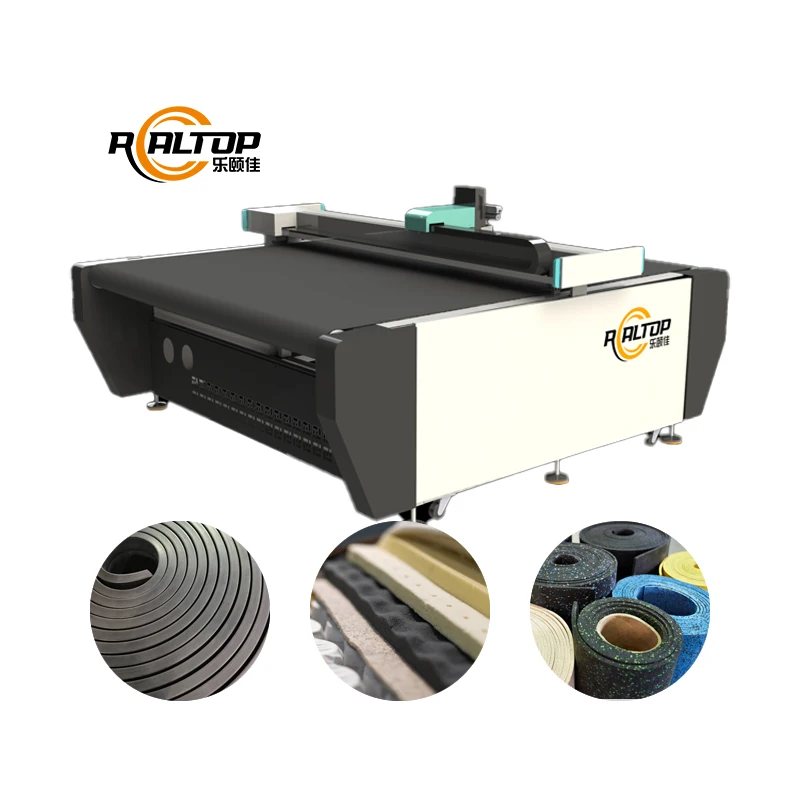
| Gasket and sealing pad | Rubber, PTFE, ETFE, fiberglass, gasket material |
Why "Cutting Thickness ≤100mm" Does Not Tell the Whole Story
Blade stroke and oscillation frequency determine real cutting capacity far more than a single thickness number.
When I commission machines across Southeast Asian textile workshops, the first mistake I see buyers make is specifying a CNC digital cutting machine for sale based on maximum thickness alone. A 100mm stack of loose cotton behaves completely differently from a 10mm sheet of dense PVC-coated composite. The knife meets resistance, the material compresses, and the bottom layers shift. Without confirming your actual fabric density and layer count, a quoted thickness figure means very little on the production floor. [NEED_CITE: material density effect on oscillating knife penetration]
Matching Tool Heads to Fabric Behaviour
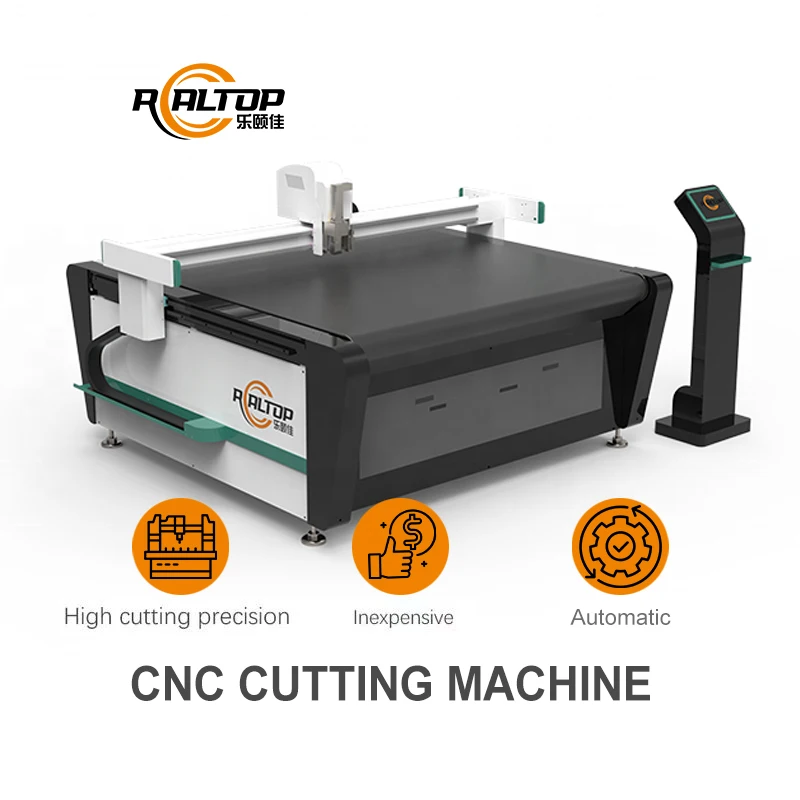
The RT-D2516/RT-S2516 platform carries ten tool head options on a single multifunctional carriage. For woven garment cloth, a high-frequency oscillating knife delivers a clean edge without fraying. For thicker sponge or EVA foam used in automotive interiors, a pneumatic knife with longer stroke handles the compression. Drag knives and creasing wheels cover cardboard packaging samples on the same table. As a CNC cutting machine manufacturer covering both knife and laser technologies, the factory lets buyers select the right cutting action rather than forcing one method across every substrate.
Vacuum Zoning and Small-Part Stability
The magnesium-aluminum alloy table undergoes PVDF powder spraying, anodic oxidation, and hard oxidation to resist abrasion from repeated vacuum cycling. A 7.5kW pump with built-in silencer sponge reduces ambient noise during long shifts. More importantly, zoned suction allows operators to isolate vacuum to the active cutting region. When small garment pattern pieces are nested across a 1600×2500mm bed, unpartitioned suction lets air leak through exposed holes and parts lift mid-cut. Confirming zone configuration against your typical nesting layout prevents scrapped panels. [NEED_CITE: vacuum table zoning requirements for small part cutting]
Reading the Specs That Matter on the Floor
The Delta servo motors carry IP67 ratings, which matters in humid Southeast Asian cutting rooms where condensation settles on exposed drives. Linear guides and ball screws handle the 800–1200mm/s translational velocity, but cutting speed drops to 200–800mm/s depending on material resistance — a dense rubber gasket demands slower passes than a single layer of non-woven fabric. The repeated accuracy of ≤0.1mm holds only when the vacuum table maintains full suction and the blade remains sharp. CCD camera mark point positioning and panoramic recognition allow printed contour work, but file format compatibility with your existing nesting software must be confirmed before the order is placed.
The Cost of Skipping a Material Trial
I once configured an oscillating knife system for an automotive seat cover producer. The sample trial ran perfectly on standard polyester cloth. When the factory switched to PVC-coated composite for actual production, small pattern pieces lifted at the corners and the blade dragged the coating. Two full rolls were ruined before we adjusted the vacuum zoning and switched to a different knife profile. A sample cutting report on your actual production material — not a convenient substitute — is the only way to confirm edge quality, cutting speed and tool head selection before commitment. [NEED_CITE: edge quality variation across coated composite fabrics]
Why Buyers Source This Range Here
The factory covers both oscillating knife and laser cutting technologies under one roof, so a distributor can match cutting method to material without being locked into a single process. Tool head and table configurations are specified per material type and production volume, not sold as a fixed package. CCD camera positioning and visual recognition options are tested against the buyer’s printed marks at production speed. Software compatibility is confirmed before the order, and voltage, plug type and control language are customized per export market. OEM branding and custom configuration are available for machinery importers building their own product line.
Documentation & Verification
- Machine specification sheet listing configured tool heads and vacuum zone layout for your material
- Sample cutting report on your own fabric or composite with measured edge quality and speed
- Electrical schematic confirming 380V±10% wiring, plug type and circuit requirements for your market
- Software licence and file format compatibility note matched to your existing CAD nesting environment
- Factory test record documenting repeated accuracy and cutting performance before dispatch
Installation, Commissioning & Support
- 3450×2300mm footprint requires level concrete floor with clearance for material loading on all sides
- 9kW rated power demands a dedicated 380V±10% circuit with correct frequency for your region
- Machine ships fully assembled on welded steel frame — no on-site structural welding required
- First-run calibration covers blade depth, oscillation frequency and vacuum zone mapping to your nesting pattern
- Operator training includes tool head changeover, CCD camera mark recognition and software nesting workflow
- Spare parts list covers oscillating blades, vacuum seals and guide rail wipers with recommended replacement intervals
What to Include in Your Inquiry
Specify the exact fabric or composite type, single-layer thickness and whether you plan to cut multi-layer stacks. Note your typical sheet size and daily cutting volume so the working area and tool head configuration can be matched. Confirm your local voltage, frequency, plug standard and preferred control language. If you use a specific nesting software, provide the file format so compatibility is verified before quotation.
Frequently Asked Questions
Q: How do I choose between oscillating knife and laser for my material?
A: Oscillating knives cut without heat, leaving no sealed edge or burn marks — suitable for natural fabrics, foam and gasket materials where edge appearance matters. Laser cutting seals synthetic edges and handles intricate contours in thin film or textile. The factory produces both technologies, so the choice depends on your material composition and edge-quality requirement rather than machine availability.
Q: What CCD positioning options are available for printed contour work?
A: The platform supports small CCD camera mark point positioning, panoramic camera recognition and projection positioning. Each option differs in recognition speed and mark format compatibility. Confirm your print mark style, contrast level and file format during the inquiry so the correct visual system is configured and tested before shipment.
Q: Can the voltage and control language be customized for my market?
A: The standard configuration runs on 380V±10%, but voltage, frequency, plug type and control panel language are confirmed and customized per destination market. Available languages include English, Russian, Italian and Chinese, with other languages configurable on request. Electrical schematics are provided with the confirmed specifications before production begins.
Q: What file formats does the nesting software accept?
A: The instruction system is compatible with HP-GL format. If your existing CAD or nesting software outputs different formats, confirm compatibility during the inquiry stage. Software licence details and a file format compatibility note are included in the documentation package to ensure your workflow runs without conversion issues after installation.
Q: Is OEM branding available for distributors?
A: Yes. OEM and ODM options are available for machinery distributors and importers who want to market the equipment under their own brand. Custom configuration, branding placement and documentation language can be arranged during the quotation stage to match your market positioning and after-sales support structure.
Tool Head Flexibility — A single CNC platform supports oscillating, drag, creasing and punching heads, letting fabric converters match the tool to each material layer instead of running separate machines.
Technical Specifications
| Parameter | Value |
|---|---|
| Model | RT-D2516/RT-S2516 |
| Working Area | 1600×2500mm |
| Machine Size | 3450×2300×1250mm |
| Rated Power | 9kW |
| Vacuum Pump Power | 7.5kW |
| Working Table | Magnesium-aluminum alloy flat vacuum adsorption table (PVDF powder spraying, anodic oxidation, hard oxidation) |
| Tool Head Options | Oscillating knife, pneumatic knife, high-power vibrating knife, circular knife, V-cutting knife, drag knife, creasing wheel, dotted line knife, punching, brush |
| Visual Positioning | Small CCD camera mark point, panoramic camera recognition, projection positioning |
| Translational Velocity | 800–1200mm/s |
| Cutting Speed | 200–800mm/s (varies with material) |
| Cutting Thickness | ≤100mm (varies with material) |
| Repeated Accuracy | ≤0.1mm |
| Transmission System | Digital servo motor, linear guide, synchronous belt, ball screw |
| Servo Motor | Delta (Panasonic optional), IP67 waterproof protection |
| Instruction System | HP-GL compatible format |
| Voltage | 380V±10% |
| Safety Device | Infrared induction blocking, anti-collision, emergency stop, intelligent infrared sensor |
| Assembly State | Fully assembled (welded thick-walled seamless steel structure, high-temperature tempering) |
Application Suitability
| Application | Material or Output |
|---|---|
| Garment and footwear production | Clothing cloth, shoe material, non-woven fabric, multi-layer textile |
| Automotive interior trimming | PU, EVA, XPE, PVC, composite materials, sponge |
| Soft furnishings and carpet | Carpet, home textile fabric, leather, luggage material |
| Packaging and sample making | Corrugated cardboard, cardboard, plastic box, sticker, film |
| Gasket and sealing pad | Rubber, PTFE, ETFE, fiberglass, gasket material |
Why "Cutting Thickness ≤100mm" Does Not Tell the Whole Story
Blade stroke and oscillation frequency determine real cutting capacity far more than a single thickness number.
When I commission machines across Southeast Asian textile workshops, the first mistake I see buyers make is specifying a CNC digital cutting machine for sale based on maximum thickness alone. A 100mm stack of loose cotton behaves completely differently from a 10mm sheet of dense PVC-coated composite. The knife meets resistance, the material compresses, and the bottom layers shift. Without confirming your actual fabric density and layer count, a quoted thickness figure means very little on the production floor. [NEED_CITE: material density effect on oscillating knife penetration]
Matching Tool Heads to Fabric Behaviour
The RT-D2516/RT-S2516 platform carries ten tool head options on a single multifunctional carriage. For woven garment cloth, a high-frequency oscillating knife delivers a clean edge without fraying. For thicker sponge or EVA foam used in automotive interiors, a pneumatic knife with longer stroke handles the compression. Drag knives and creasing wheels cover cardboard packaging samples on the same table. As a CNC cutting machine manufacturer covering both knife and laser technologies, the factory lets buyers select the right cutting action rather than forcing one method across every substrate.
Vacuum Zoning and Small-Part Stability
The magnesium-aluminum alloy table undergoes PVDF powder spraying, anodic oxidation, and hard oxidation to resist abrasion from repeated vacuum cycling. A 7.5kW pump with built-in silencer sponge reduces ambient noise during long shifts. More importantly, zoned suction allows operators to isolate vacuum to the active cutting region. When small garment pattern pieces are nested across a 1600×2500mm bed, unpartitioned suction lets air leak through exposed holes and parts lift mid-cut. Confirming zone configuration against your typical nesting layout prevents scrapped panels. [NEED_CITE: vacuum table zoning requirements for small part cutting]
Reading the Specs That Matter on the Floor
The Delta servo motors carry IP67 ratings, which matters in humid Southeast Asian cutting rooms where condensation settles on exposed drives. Linear guides and ball screws handle the 800–1200mm/s translational velocity, but cutting speed drops to 200–800mm/s depending on material resistance — a dense rubber gasket demands slower passes than a single layer of non-woven fabric. The repeated accuracy of ≤0.1mm holds only when the vacuum table maintains full suction and the blade remains sharp. CCD camera mark point positioning and panoramic recognition allow printed contour work, but file format compatibility with your existing nesting software must be confirmed before the order is placed.
The Cost of Skipping a Material Trial
I once configured an oscillating knife system for an automotive seat cover producer. The sample trial ran perfectly on standard polyester cloth. When the factory switched to PVC-coated composite for actual production, small pattern pieces lifted at the corners and the blade dragged the coating. Two full rolls were ruined before we adjusted the vacuum zoning and switched to a different knife profile. A sample cutting report on your actual production material — not a convenient substitute — is the only way to confirm edge quality, cutting speed and tool head selection before commitment. [NEED_CITE: edge quality variation across coated composite fabrics]
Why Buyers Source This Range Here
The factory covers both oscillating knife and laser cutting technologies under one roof, so a distributor can match cutting method to material without being locked into a single process. Tool head and table configurations are specified per material type and production volume, not sold as a fixed package. CCD camera positioning and visual recognition options are tested against the buyer’s printed marks at production speed. Software compatibility is confirmed before the order, and voltage, plug type and control language are customized per export market. OEM branding and custom configuration are available for machinery importers building their own product line.
Documentation & Verification
- Machine specification sheet listing configured tool heads and vacuum zone layout for your material
- Sample cutting report on your own fabric or composite with measured edge quality and speed
- Electrical schematic confirming 380V±10% wiring, plug type and circuit requirements for your market
- Software licence and file format compatibility note matched to your existing CAD nesting environment
- Factory test record documenting repeated accuracy and cutting performance before dispatch
Installation, Commissioning & Support
- 3450×2300mm footprint requires level concrete floor with clearance for material loading on all sides
- 9kW rated power demands a dedicated 380V±10% circuit with correct frequency for your region
- Machine ships fully assembled on welded steel frame — no on-site structural welding required
- First-run calibration covers blade depth, oscillation frequency and vacuum zone mapping to your nesting pattern
- Operator training includes tool head changeover, CCD camera mark recognition and software nesting workflow
- Spare parts list covers oscillating blades, vacuum seals and guide rail wipers with recommended replacement intervals
What to Include in Your Inquiry
Specify the exact fabric or composite type, single-layer thickness and whether you plan to cut multi-layer stacks. Note your typical sheet size and daily cutting volume so the working area and tool head configuration can be matched. Confirm your local voltage, frequency, plug standard and preferred control language. If you use a specific nesting software, provide the file format so compatibility is verified before quotation.
Frequently Asked Questions
Q: How do I choose between oscillating knife and laser for my material?
A: Oscillating knives cut without heat, leaving no sealed edge or burn marks — suitable for natural fabrics, foam and gasket materials where edge appearance matters. Laser cutting seals synthetic edges and handles intricate contours in thin film or textile. The factory produces both technologies, so the choice depends on your material composition and edge-quality requirement rather than machine availability.
Q: What CCD positioning options are available for printed contour work?
A: The platform supports small CCD camera mark point positioning, panoramic camera recognition and projection positioning. Each option differs in recognition speed and mark format compatibility. Confirm your print mark style, contrast level and file format during the inquiry so the correct visual system is configured and tested before shipment.
Q: Can the voltage and control language be customized for my market?
A: The standard configuration runs on 380V±10%, but voltage, frequency, plug type and control panel language are confirmed and customized per destination market. Available languages include English, Russian, Italian and Chinese, with other languages configurable on request. Electrical schematics are provided with the confirmed specifications before production begins.
Q: What file formats does the nesting software accept?
A: The instruction system is compatible with HP-GL format. If your existing CAD or nesting software outputs different formats, confirm compatibility during the inquiry stage. Software licence details and a file format compatibility note are included in the documentation package to ensure your workflow runs without conversion issues after installation.
Q: Is OEM branding available for distributors?
A: Yes. OEM and ODM options are available for machinery distributors and importers who want to market the equipment under their own brand. Custom configuration, branding placement and documentation language can be arranged during the quotation stage to match your market positioning and after-sales support structure.
商品评价
There are no reviews yet.