




Fast Delivery
Quick, reliable shipping to any location.

Free & easy returns
Return this item by mail or in store within 90 days for a full refund.
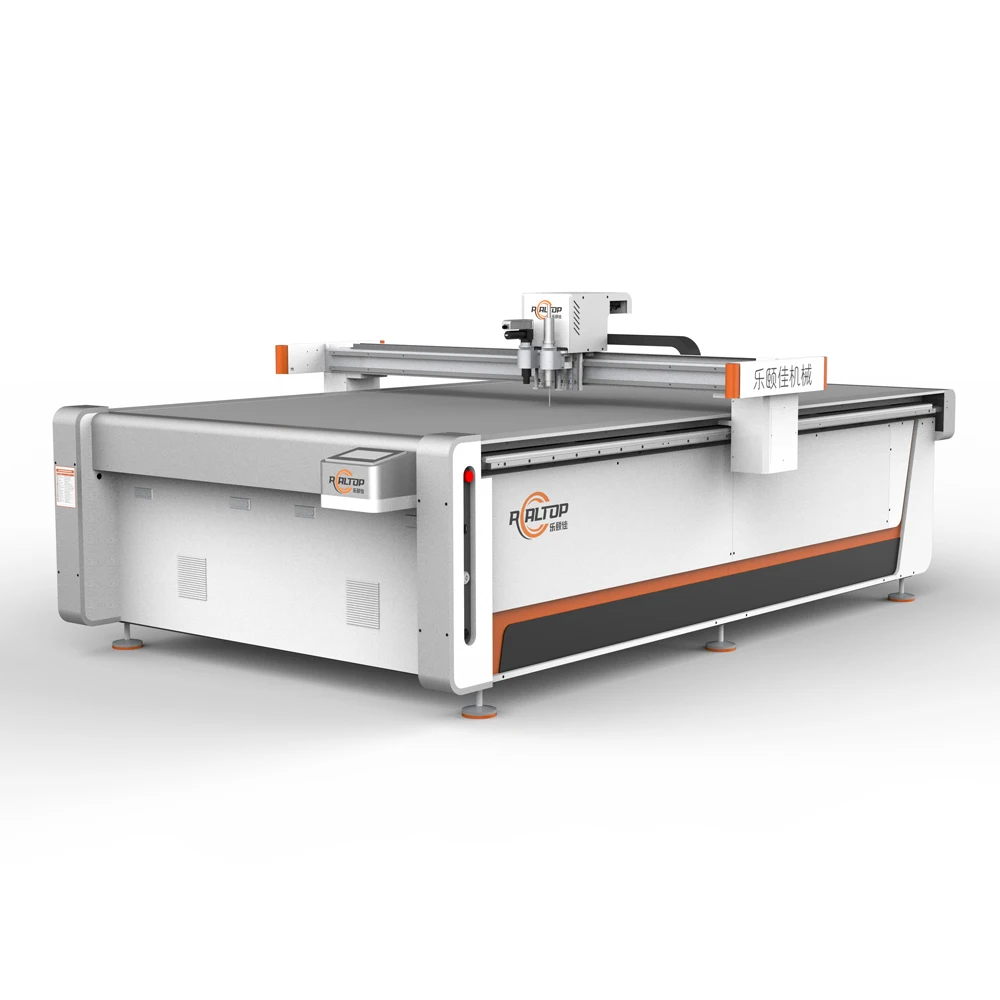
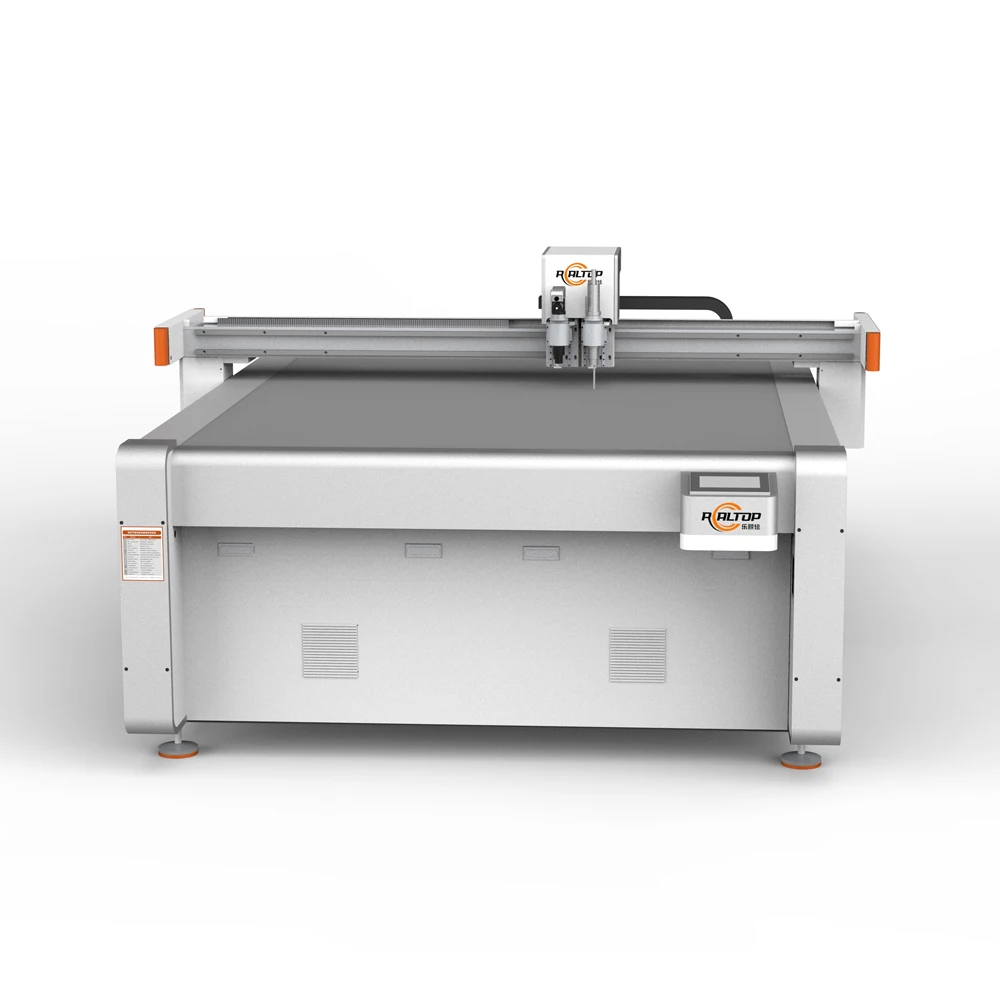
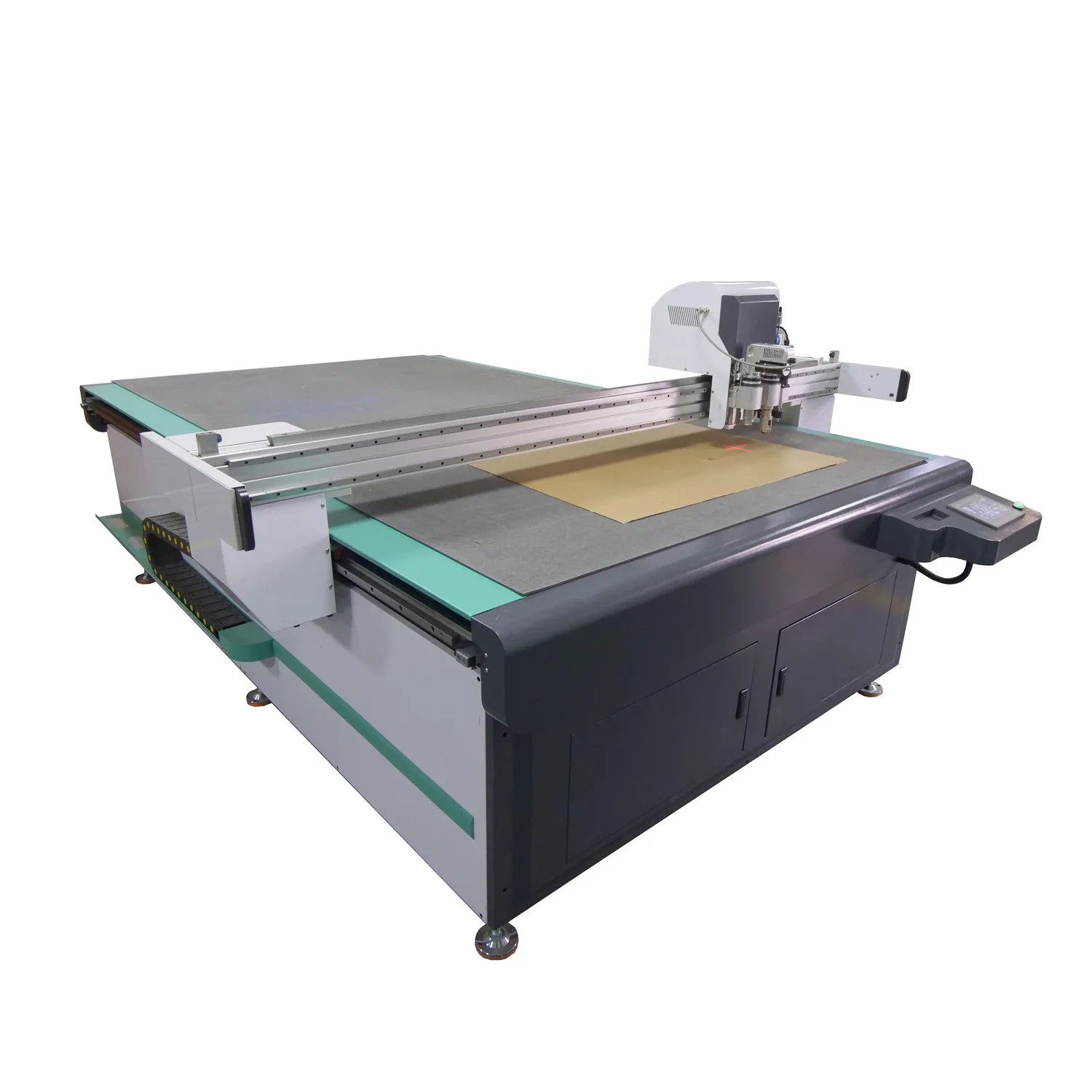
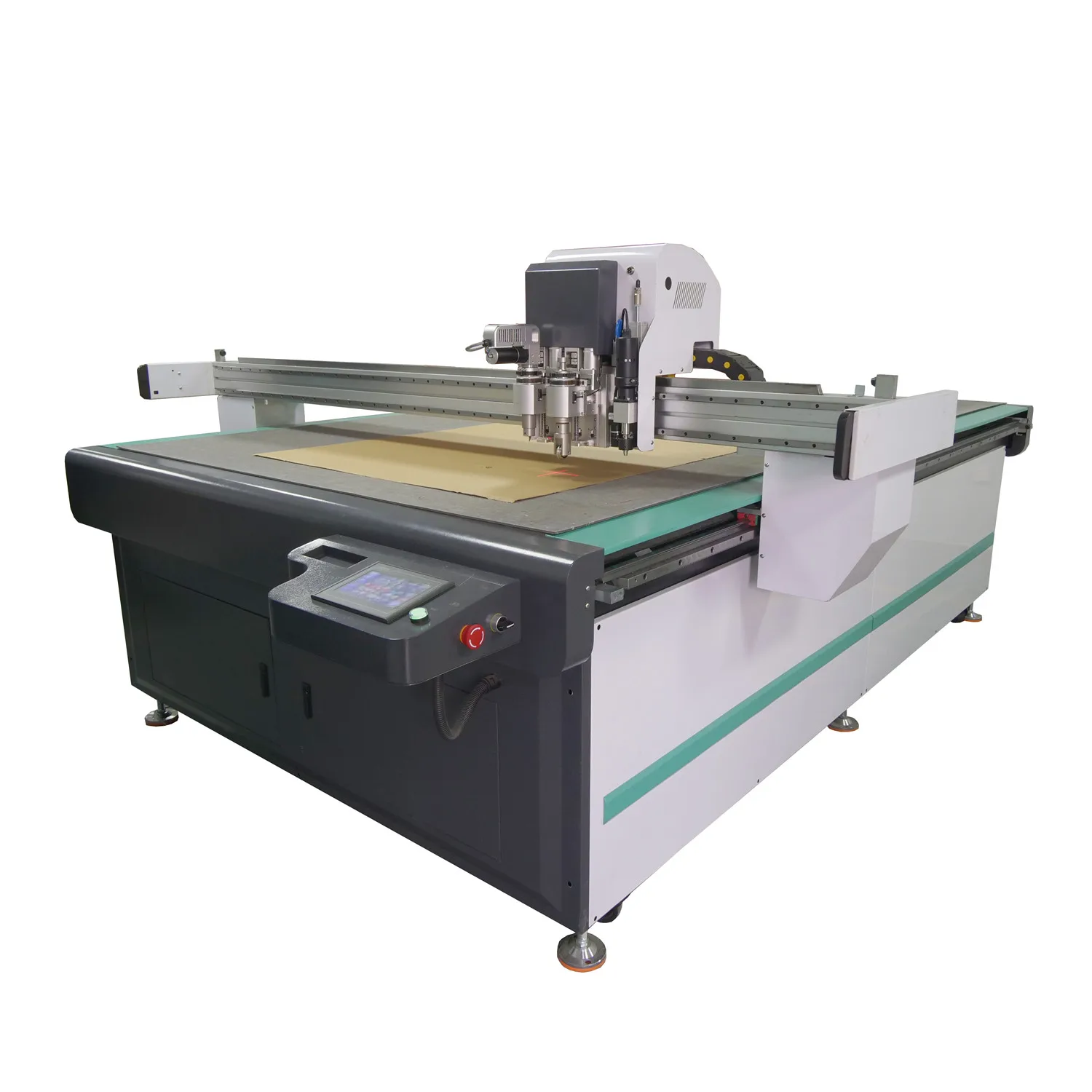
Swiss Knife Precision — A 1600×2500mm flatbed platform configured per material thickness and edge requirement, matching oscillating knife, drag knife, or creasing wheel to the specific substrate rather than forcing a single tool path across every job.
Technical Specifications
| Parameter | Value |
|---|---|
| Product Type | CNC Oscillating Knife Cutting Machine |
| Model | RT-D2516 / RT-S2516 |
| Working Area | 1600 × 2500 mm |
| Overall Dimensions (L × W × H) | 3450 × 2300 × 1250 mm |
| Rated Power | 9 kW |
| Voltage | 380 V ± 10 % (frequency to be confirmed at order) |
| Vacuum Pump | 7.5 kW |
| Table Type | Aluminum honeycomb vacuum adsorption platform |
| Tool Head | Swiss imported knife — full cut, half cut, cursor location |
| Multifunctional Head Options | Oscillating knife, drag knife, creasing wheel |
| Translational Velocity | 800 – 2000 mm/s |
| Cutting Speed | 200 – 800 mm/s (basis to be confirmed with material type and thickness) |
| Cutting Thickness | Up to 100 mm depending on material (basis not stated in source) |
| Repeated Accuracy | ≤ 0.1 mm |
| Transmission System | Digital servo motor, linear guide, synchronous belt, ball screw |
| Servo Motor | Taiwan Delta |
| Linear Rail | Taiwan Hiwin |
| Safety Device | Infrared sensors, emergency stop |
| Control / Instruction System | HP-GL compatible |
| Software | Professional carton nesting software included; multi-language UI |
| Optional Configuration | German-imported conveyor belt, auto feeding system |
Application Suitability
| Application | Material or Output |
|---|---|
| Packaging carton and corrugated board sample making | Single, double, and triple-wall corrugated; grey board; white card stock |
| Gift box and folding carton short-run production | Cardstock, art paper, laminated board |
| Sticker and label contour cutting | Self-adhesive vinyl, printed sticker sheets, reflective film |
| Billboard, business card, and hang tag cutting | PVC board, coated paper, synthetic paper |
| Flexible non-metal processing | Leather, sponge composite, PVC, soft glass, silicone, rubber |
Why Your File Format Should Be Tested Before the Order Is Signed
Software compatibility is the specification most often assumed and least often verified before a machine leaves the factory.
A CNC oscillating knife cutting machine manufacturer will quote you a working area and a pump rating, yet the software layer is where jobs actually stall. If your design team works in DXF from a CAD package but the nesting engine expects HP-GL plotter code, every file needs manual conversion — and every conversion is an opportunity to lose a bleed line or a crease mark. I have seen carton sample rooms lose entire mornings re-drawing dielines because the import filter dropped the inner cut lines. The RT-D2516 / RT-S2516 ships with a carton nesting suite that accepts HP-GL and common vector formats, but the exact version your studio runs should be sent to the factory for a live import test before the purchase order is signed [NEED_CITE: common vector file exchange standards in packaging pre-press].
How Knife and Laser Cover Different Halves of the Same Floor
The complete catalogue positions the RT-D2516 / RT-S2516 on the knife side of the matrix, where mechanical force — not thermal energy — does the work. Oscillating knife excels on fibrous, layered, or heat-sensitive substrates: corrugated board delaminates cleanly under a vibrating blade, while a CO2 beam would char the flute tips and leave soot on the printed face. Drag knife handles thin vinyl and sticker stock with a tangential pull that avoids lifting the liner. Creasing wheels score fold lines without breaking the surface coating, something no laser can replicate.
Where the CNC Digital Cutting Table for Sale Fits in Your Workflow
On the laser side of the catalogue, machines seal synthetic edges and engrave acrylic in a single pass — jobs the knife head cannot touch. A buyer surveying both families can match each SKU to the process that actually suits it, instead of stretching one technology across materials it was never meant to handle. The RT-D2516 / RT-S2516 occupies the mid-format, mid-volume slot: large enough to nest a full sheet of B1 carton, compact enough to fit beside a flatbed printer in a sample room. For higher-volume fabric ply cutting, the multi-layer knife systems in the catalogue move the same tool head over a conveyor feed, trading vacuum hold-down for continuous material flow [NEED_CITE: flatbed versus conveyor cutting throughput considerations].
Reading the Specs That Actually Decide Edge Quality
The 7.5 kW vacuum pump and aluminum honeycomb table work together to pin material flat; without enough suction, a small sticker contour lifts mid-cut and the Swiss blade catches the edge. The Taiwan Delta servo paired with Hiwin linear rail holds repeated accuracy at ≤ 0.1 mm, which matters when a crease line must land exactly on a printed fold mark. Translational velocity of up to 2000 mm/s is the rapid-travel figure between cuts; the actual cutting speed of 200 – 800 mm/s is what you should validate against your own material thickness. The Swiss oscillating knife achieves its stroke frequency through a high-frequency eccentric mechanism — higher frequency means cleaner shear on dense corrugated, but also higher bearing wear, so the maintenance schedule in the manual should match your shift pattern.
The Hidden Cost of Specifying by Working Area Alone
Choosing a flatbed only by its X-Y envelope ignores the Z-axis reality of your material stack. A CNC digital cutting table for sale that quotes "up to 100 mm cutting thickness" may achieve that figure on soft foam but stall on dense grey board at the same depth. If your typical job mixes 3 mm corrugated with 1.5 mm self-adhesive vinyl, the tool head must swap between oscillating and drag knife — and the vacuum zoning must re-assign suction to whichever region of the table the smaller sheet covers. Miss the zoning check, and the un-covered zone bleeds air, reducing hold-down exactly where precision matters most [NEED_CITE: vacuum zoning impact on small-format cutting accuracy].
Why Buyers Source This Machine from the Same Factory That Builds the Laser Line
In-house design across both knife and laser platforms means the frame welding jig, the servo tuning parameters, and the software kernel are shared knowledge — a service call on the knife unit can draw on the same engineering team that calibrates the laser gantry. The tool head and table configuration is specified per material before the order, not swapped generically after arrival. CCD camera positioning is available for printed contour work, but its tracking speed must be validated on your press sheet at full feed rate. Voltage, plug, and UI language are locked in writing before production starts, avoiding the 380 V / 50 Hz surprise that strands equipment on a 60 Hz grid. Sample cutting on your own roll or sheet stock is standard pre-shipment procedure, not an optional extra.
Documentation & Verification
- Machine specification sheet listing RT-D2516 / RT-S2516 working area, power, and vacuum rating
- Electrical schematic confirming 380 V ± 10 % wiring and breaker sizing for 9 kW total load
- Tool head and table configuration sheet showing knife type, creasing wheel, and vacuum zone map
- Sample cutting report produced on buyer-supplied corrugated or vinyl stock
- Factory test record documenting repeated accuracy and speed on agreed material
- Software licence and file format compatibility note covering HP-GL and nesting workflow
Installation, Commissioning & Support
- Floor space of roughly 3450 × 2300 mm with clearance for sheet loading on two sides
- Dedicated 3-phase 380 V circuit rated for the 9 kW machine plus 7.5 kW vacuum pump
- Machine ships fully assembled; rigging plan must account for the 1250 mm overall height
- First-power commissioning includes vacuum zone mapping and servo tuning on buyer material
- Operator training covers tool head changeover between oscillating, drag, and creasing functions
- Spare Swiss knife blades and creasing wheels listed in the delivery pack for initial run-in
What to Include in Your Inquiry
Send the exact material type, thickness, and maximum sheet size you run most often, along with the daily volume target. State your local voltage and frequency, the control language your operators need, and whether your current workflow relies on DXF, PLT, or AI files. If you want a sample cut before commitment, ship a representative roll or sheet to the factory with the file you intend to use in production.
Frequently Asked Questions
Q: Should I choose oscillating knife or laser for corrugated carton sample making?
A: Oscillating knife cuts corrugated without charring the flute tips or leaving soot on printed liners, which keeps glue-ready surfaces clean. Laser is better suited to sealing synthetic edges on acrylic or textile. Request a sample cut on your actual board grade to compare edge quality and cycle time before deciding.
Q: Is the 1600 × 2500 mm working area enough for standard packaging sheet sizes?
A: That envelope covers most B1 and full-sheet carton formats used in sample rooms and short-run production. If your typical layout nests multiple die-lines on a single oversized sheet, verify the usable area after accounting for vacuum seal strips and tool clearance at the table perimeter.
Q: Can the CCD camera track printed registration marks at full production speed?
A: CCD contour recognition is available as a configuration option, but tracking stability depends on mark contrast, lighting, and the translational speed used. Ask for a live tracking test using your own printed sheet run at your intended cutting speed before finalizing the order.
Q: How do I lock voltage, plug type, and control language before shipment?
A: State your local supply — e.g., 380 V / 50 Hz or 440 V / 60 Hz — and preferred plug standard in the purchase order. The factory confirms these in the electrical schematic and software configuration sheet, both of which are sent for sign-off before production begins.
Q: Will the included nesting software import my existing DXF and PLT files?
A: The carton nesting suite accepts HP-GL and common vector formats, but import behavior varies with layer structure and line-type definitions. Send two or three representative files to the factory for a live import test so any layer-mapping adjustments are resolved before the machine ships.
Swiss Knife Precision — A 1600×2500mm flatbed platform configured per material thickness and edge requirement, matching oscillating knife, drag knife, or creasing wheel to the specific substrate rather than forcing a single tool path across every job.
Technical Specifications
| Parameter | Value |
|---|---|
| Product Type | CNC Oscillating Knife Cutting Machine |
| Model | RT-D2516 / RT-S2516 |
| Working Area | 1600 × 2500 mm |
| Overall Dimensions (L × W × H) | 3450 × 2300 × 1250 mm |
| Rated Power | 9 kW |
| Voltage | 380 V ± 10 % (frequency to be confirmed at order) |
| Vacuum Pump | 7.5 kW |
| Table Type | Aluminum honeycomb vacuum adsorption platform |
| Tool Head | Swiss imported knife — full cut, half cut, cursor location |
| Multifunctional Head Options | Oscillating knife, drag knife, creasing wheel |
| Translational Velocity | 800 – 2000 mm/s |
| Cutting Speed | 200 – 800 mm/s (basis to be confirmed with material type and thickness) |
| Cutting Thickness | Up to 100 mm depending on material (basis not stated in source) |
| Repeated Accuracy | ≤ 0.1 mm |
| Transmission System | Digital servo motor, linear guide, synchronous belt, ball screw |
| Servo Motor | Taiwan Delta |
| Linear Rail | Taiwan Hiwin |
| Safety Device | Infrared sensors, emergency stop |
| Control / Instruction System | HP-GL compatible |
| Software | Professional carton nesting software included; multi-language UI |
| Optional Configuration | German-imported conveyor belt, auto feeding system |
Application Suitability
| Application | Material or Output |
|---|---|
| Packaging carton and corrugated board sample making | Single, double, and triple-wall corrugated; grey board; white card stock |
| Gift box and folding carton short-run production | Cardstock, art paper, laminated board |
| Sticker and label contour cutting | Self-adhesive vinyl, printed sticker sheets, reflective film |
| Billboard, business card, and hang tag cutting | PVC board, coated paper, synthetic paper |
| Flexible non-metal processing | Leather, sponge composite, PVC, soft glass, silicone, rubber |
Why Your File Format Should Be Tested Before the Order Is Signed
Software compatibility is the specification most often assumed and least often verified before a machine leaves the factory.
A CNC oscillating knife cutting machine manufacturer will quote you a working area and a pump rating, yet the software layer is where jobs actually stall. If your design team works in DXF from a CAD package but the nesting engine expects HP-GL plotter code, every file needs manual conversion — and every conversion is an opportunity to lose a bleed line or a crease mark. I have seen carton sample rooms lose entire mornings re-drawing dielines because the import filter dropped the inner cut lines. The RT-D2516 / RT-S2516 ships with a carton nesting suite that accepts HP-GL and common vector formats, but the exact version your studio runs should be sent to the factory for a live import test before the purchase order is signed [NEED_CITE: common vector file exchange standards in packaging pre-press].
How Knife and Laser Cover Different Halves of the Same Floor
The complete catalogue positions the RT-D2516 / RT-S2516 on the knife side of the matrix, where mechanical force — not thermal energy — does the work. Oscillating knife excels on fibrous, layered, or heat-sensitive substrates: corrugated board delaminates cleanly under a vibrating blade, while a CO2 beam would char the flute tips and leave soot on the printed face. Drag knife handles thin vinyl and sticker stock with a tangential pull that avoids lifting the liner. Creasing wheels score fold lines without breaking the surface coating, something no laser can replicate.
Where the CNC Digital Cutting Table for Sale Fits in Your Workflow
On the laser side of the catalogue, machines seal synthetic edges and engrave acrylic in a single pass — jobs the knife head cannot touch. A buyer surveying both families can match each SKU to the process that actually suits it, instead of stretching one technology across materials it was never meant to handle. The RT-D2516 / RT-S2516 occupies the mid-format, mid-volume slot: large enough to nest a full sheet of B1 carton, compact enough to fit beside a flatbed printer in a sample room. For higher-volume fabric ply cutting, the multi-layer knife systems in the catalogue move the same tool head over a conveyor feed, trading vacuum hold-down for continuous material flow [NEED_CITE: flatbed versus conveyor cutting throughput considerations].
Reading the Specs That Actually Decide Edge Quality
The 7.5 kW vacuum pump and aluminum honeycomb table work together to pin material flat; without enough suction, a small sticker contour lifts mid-cut and the Swiss blade catches the edge. The Taiwan Delta servo paired with Hiwin linear rail holds repeated accuracy at ≤ 0.1 mm, which matters when a crease line must land exactly on a printed fold mark. Translational velocity of up to 2000 mm/s is the rapid-travel figure between cuts; the actual cutting speed of 200 – 800 mm/s is what you should validate against your own material thickness. The Swiss oscillating knife achieves its stroke frequency through a high-frequency eccentric mechanism — higher frequency means cleaner shear on dense corrugated, but also higher bearing wear, so the maintenance schedule in the manual should match your shift pattern.
The Hidden Cost of Specifying by Working Area Alone
Choosing a flatbed only by its X-Y envelope ignores the Z-axis reality of your material stack. A CNC digital cutting table for sale that quotes "up to 100 mm cutting thickness" may achieve that figure on soft foam but stall on dense grey board at the same depth. If your typical job mixes 3 mm corrugated with 1.5 mm self-adhesive vinyl, the tool head must swap between oscillating and drag knife — and the vacuum zoning must re-assign suction to whichever region of the table the smaller sheet covers. Miss the zoning check, and the un-covered zone bleeds air, reducing hold-down exactly where precision matters most [NEED_CITE: vacuum zoning impact on small-format cutting accuracy].
Why Buyers Source This Machine from the Same Factory That Builds the Laser Line
In-house design across both knife and laser platforms means the frame welding jig, the servo tuning parameters, and the software kernel are shared knowledge — a service call on the knife unit can draw on the same engineering team that calibrates the laser gantry. The tool head and table configuration is specified per material before the order, not swapped generically after arrival. CCD camera positioning is available for printed contour work, but its tracking speed must be validated on your press sheet at full feed rate. Voltage, plug, and UI language are locked in writing before production starts, avoiding the 380 V / 50 Hz surprise that strands equipment on a 60 Hz grid. Sample cutting on your own roll or sheet stock is standard pre-shipment procedure, not an optional extra.
Documentation & Verification
- Machine specification sheet listing RT-D2516 / RT-S2516 working area, power, and vacuum rating
- Electrical schematic confirming 380 V ± 10 % wiring and breaker sizing for 9 kW total load
- Tool head and table configuration sheet showing knife type, creasing wheel, and vacuum zone map
- Sample cutting report produced on buyer-supplied corrugated or vinyl stock
- Factory test record documenting repeated accuracy and speed on agreed material
- Software licence and file format compatibility note covering HP-GL and nesting workflow
Installation, Commissioning & Support
- Floor space of roughly 3450 × 2300 mm with clearance for sheet loading on two sides
- Dedicated 3-phase 380 V circuit rated for the 9 kW machine plus 7.5 kW vacuum pump
- Machine ships fully assembled; rigging plan must account for the 1250 mm overall height
- First-power commissioning includes vacuum zone mapping and servo tuning on buyer material
- Operator training covers tool head changeover between oscillating, drag, and creasing functions
- Spare Swiss knife blades and creasing wheels listed in the delivery pack for initial run-in
What to Include in Your Inquiry
Send the exact material type, thickness, and maximum sheet size you run most often, along with the daily volume target. State your local voltage and frequency, the control language your operators need, and whether your current workflow relies on DXF, PLT, or AI files. If you want a sample cut before commitment, ship a representative roll or sheet to the factory with the file you intend to use in production.
Frequently Asked Questions
Q: Should I choose oscillating knife or laser for corrugated carton sample making?
A: Oscillating knife cuts corrugated without charring the flute tips or leaving soot on printed liners, which keeps glue-ready surfaces clean. Laser is better suited to sealing synthetic edges on acrylic or textile. Request a sample cut on your actual board grade to compare edge quality and cycle time before deciding.
Q: Is the 1600 × 2500 mm working area enough for standard packaging sheet sizes?
A: That envelope covers most B1 and full-sheet carton formats used in sample rooms and short-run production. If your typical layout nests multiple die-lines on a single oversized sheet, verify the usable area after accounting for vacuum seal strips and tool clearance at the table perimeter.
Q: Can the CCD camera track printed registration marks at full production speed?
A: CCD contour recognition is available as a configuration option, but tracking stability depends on mark contrast, lighting, and the translational speed used. Ask for a live tracking test using your own printed sheet run at your intended cutting speed before finalizing the order.
Q: How do I lock voltage, plug type, and control language before shipment?
A: State your local supply — e.g., 380 V / 50 Hz or 440 V / 60 Hz — and preferred plug standard in the purchase order. The factory confirms these in the electrical schematic and software configuration sheet, both of which are sent for sign-off before production begins.
Q: Will the included nesting software import my existing DXF and PLT files?
A: The carton nesting suite accepts HP-GL and common vector formats, but import behavior varies with layer structure and line-type definitions. Send two or three representative files to the factory for a live import test so any layer-mapping adjustments are resolved before the machine ships.










商品评价
There are no reviews yet.