

Fast Delivery
Quick, reliable shipping to any location.

Free & easy returns
Return this item by mail or in store within 90 days for a full refund.
Knife and Laser Cutting Matched to Material — Our in-house design team builds both oscillating knife and laser cutting systems, so your fabric, foam, or composite is processed with the method that actually fits the job.
Technical Specifications
| Parameter | Value |
|---|---|
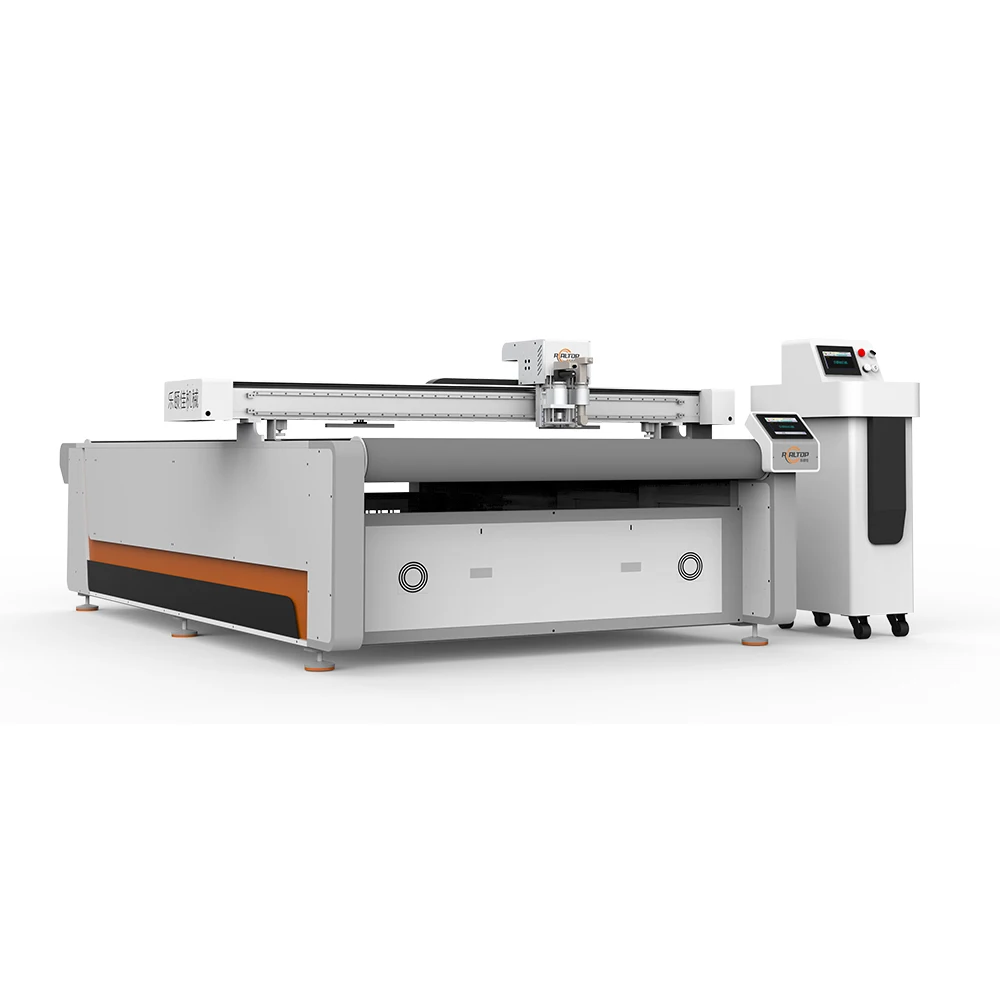
| Product Type | CNC Oscillating Knife Cutting Machine |
| Model | 1625 |
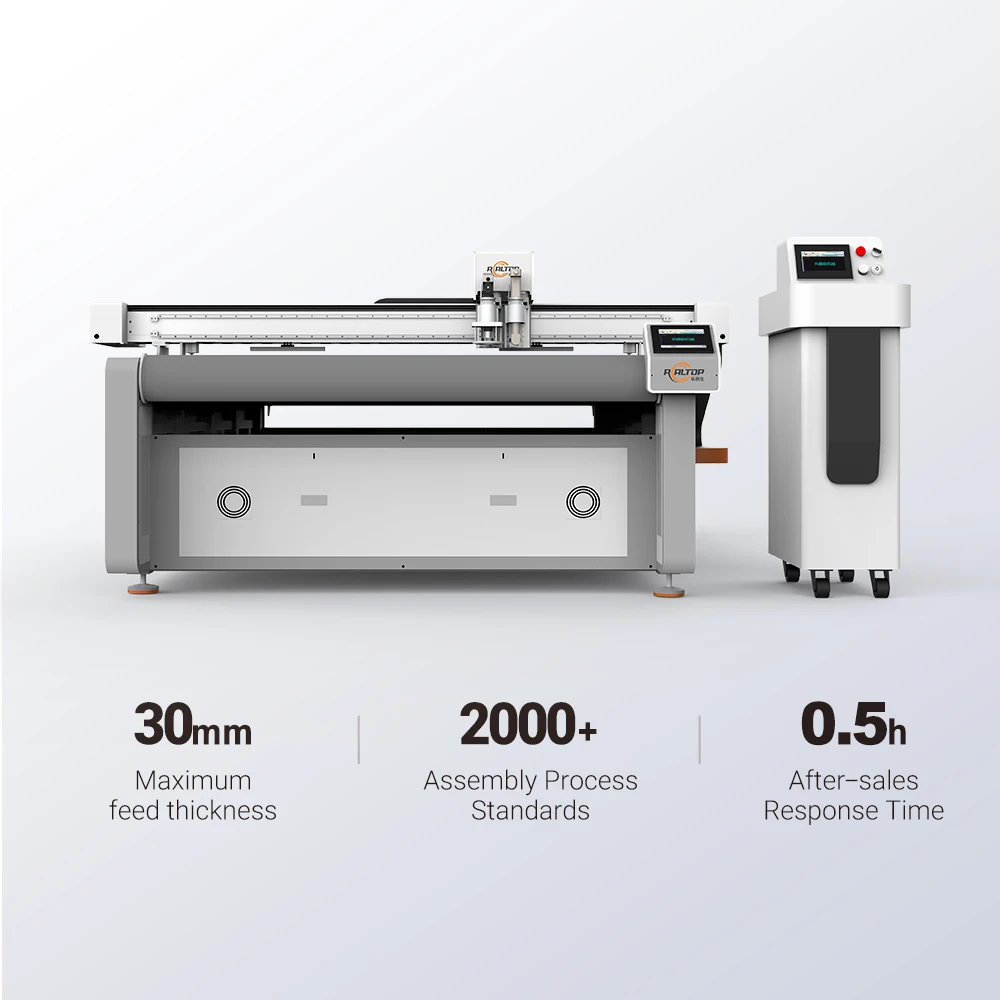
| Working Area | 1600×2500 mm |
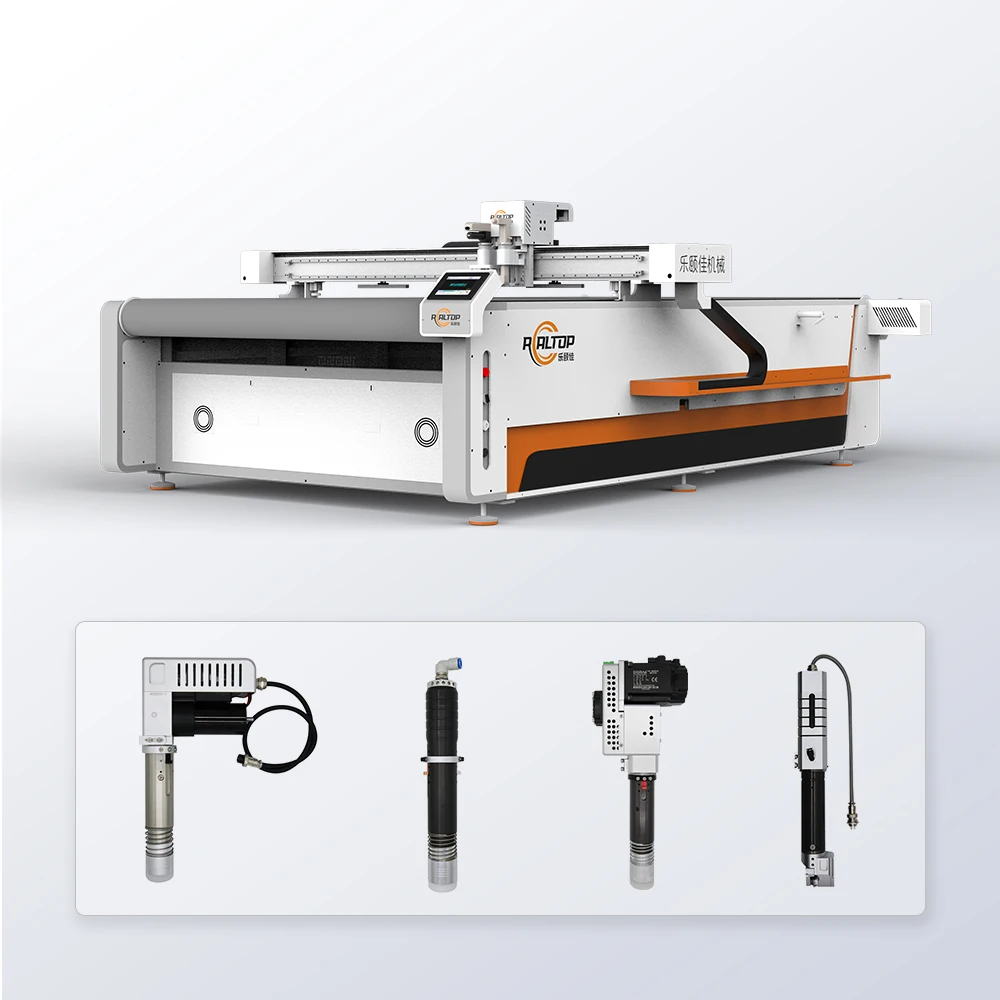
| Tool Head Options | Oscillating knife, Driven rotary knife, Creasing wheel, Kiss cutting tool, Pneumatic knife, Milling tool, V groove knife, CCD camera |
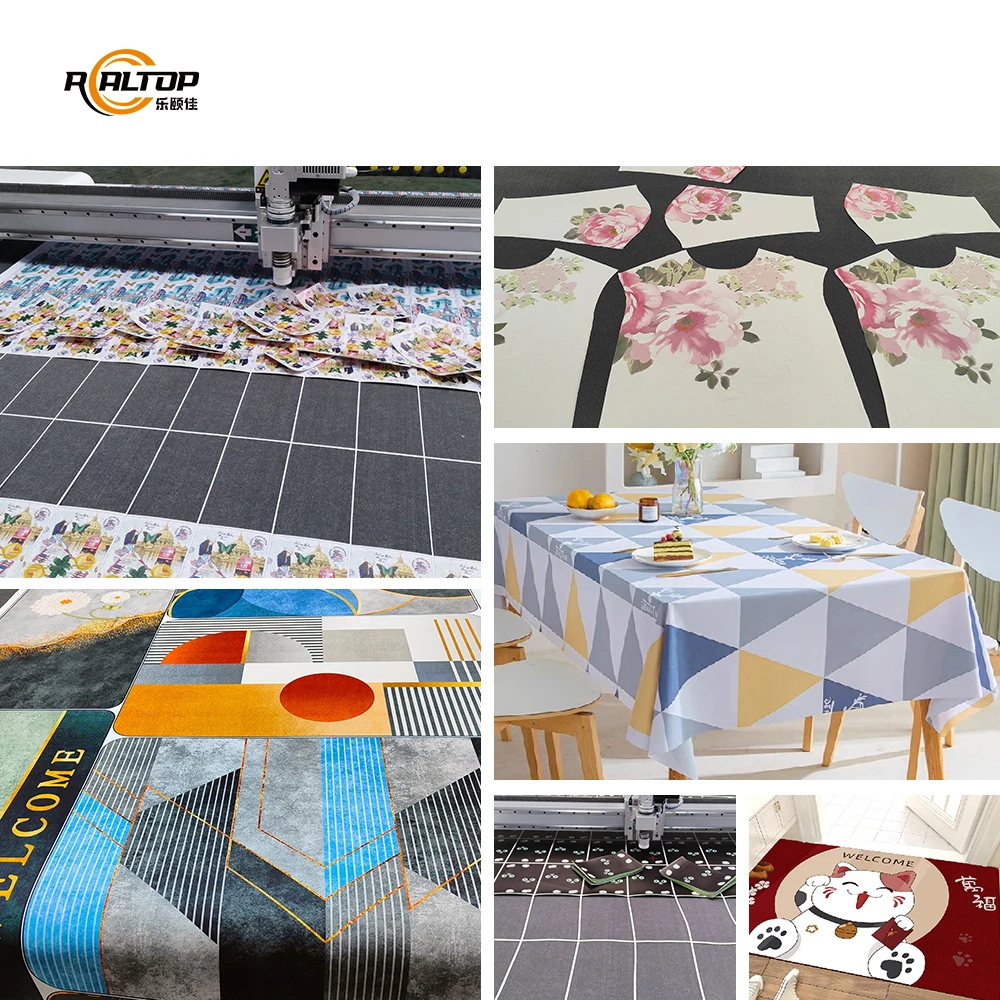
| Applicable Materials | Fabric, Cardboard, Carton, Mats, PVC, EVA, Leather, Acrylic, Foam, PTFE, Rubber |
| Cutting Speed | 0-1500 mm/s |
| Cutting Thickness | ≤ 40mm (basis to be confirmed by material density and type) |
| Cutting Accuracy | ±0.1 mm |
| Vacuum Pump Power | 9 kW |
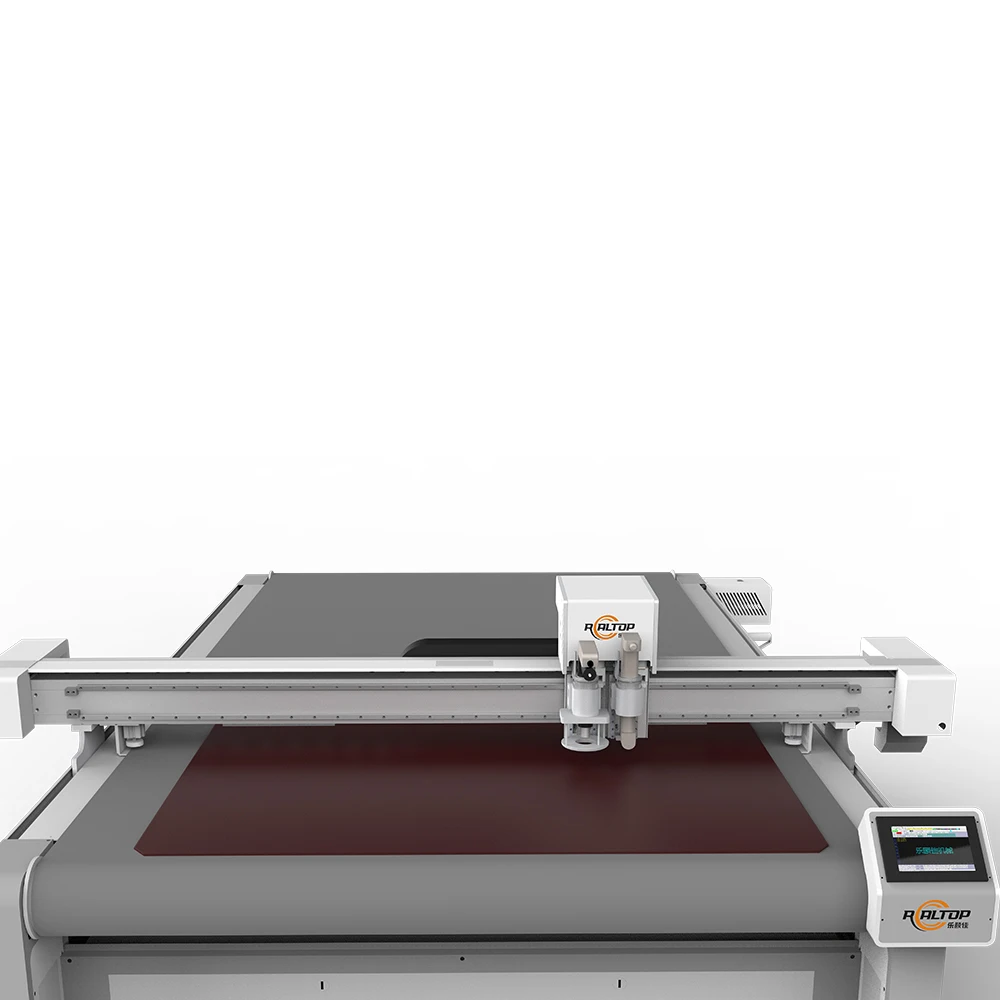
| Vacuum Table Type | Aluminum bellows vacuum table |
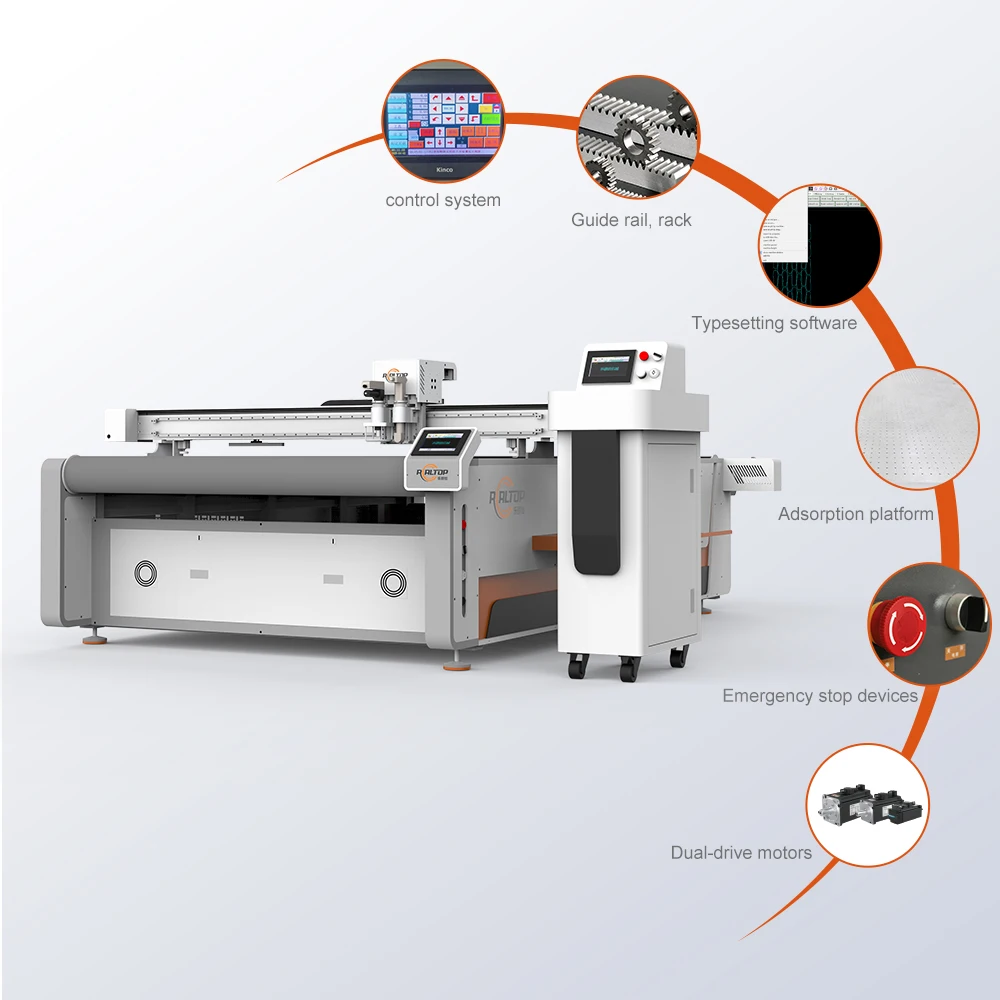
| Control System | PLC control panel with intuitive interface |
| Servo Motor Options | Panasonic, Delta, Dorna |
| Voltage Options | 110V, 220V, 380V |
| Software Language Options | English, Russian, Italian, Chinese (special languages customizable) |
| File Format Compatibility | PLT, DXF, AI, PDF |
| Safety Device | Infrared sensor device and emergency stop device |
| Machine Dimensions (L×W×H) | 3300×2100×1350 mm |
| Certification | CE |
Application Suitability
| Application | Material or Output |
|---|---|
| Garment and footwear production | Multi-layer fabric cutting for apparel and shoe components |
| Packaging and carton sample making | Corrugated cardboard and folding carton prototyping without die molds |
| Automotive interior fabrication | Synthetic leather, foam, and gasket contour cutting for dashboards and seating |
| Signage and advertising | PVC foam board, vinyl, and acrylic sheet trimming and letter cutting |
| Composite and foam processing | High-density EVA, PTFE, and rubber sheets for industrial seals and padding |
When Material Thickness Exceeds the Spec Sheet
A working area figure alone does not tell you if the machine can cut your material.
Buyers often choose a CNC oscillating knife cutting machine manufacturer based on table size, only to find that a 40mm thickness rating was measured on soft foam, not the dense, multi-layer composite they actually run. When the tool head meets unexpected resistance, the result is ragged edges, crushed core material, or incomplete cuts that ruin the entire sheet. I have seen production floors discard entire batches because the machine was specified for area but not for the specific material stack-up. [NEED_CITE: industrial cutting machine specification standards for material density and thickness]
Matching the Tool Head to the Fabric Stack
Selecting the right tool head is the first decision for any fabric producer. An oscillating knife handles woven and non-woven textiles cleanly, while a driven rotary knife is better suited for continuous long cuts on rolls. For coated or technical fabrics, a pneumatic knife provides the downward force needed to prevent layer shifting. The 1625 allows these heads to be swapped depending on the daily production mix.
Vacuum Zoning and Small Part Stability
The aluminum bellows vacuum table provides full-surface adsorption, but when cutting small garment pattern pieces, localized zoning is what keeps the material flat. Without proper vacuum distribution, lightweight fabrics lift at the edges during high-speed traverses, causing the blade to catch and distort the cut path. Confirming the table zoning layout against your typical nesting pattern is essential before the machine ships. [NEED_CITE: vacuum table zoning requirements for small part digital cutting]
Understanding the 40mm Thickness Rating
The stated cutting thickness of up to 40mm depends entirely on material density and composition. A block of soft EVA foam compresses differently under the oscillating knife than a stack of dense automotive gasket rubber. The 9 kW vacuum pump must hold the material firm while the blade penetrates; if the vacuum grip fails, the cutting accuracy of ±0.1 mm cannot be maintained. The servo motor selection — Panasonic, Delta, or Dorna — also influences the torque available at the tool head during deep cuts. Always request a sample cutting report on your specific material before confirming the order.
The Cost of Wrong Configuration Choices
Choosing a single tool head for all materials leads to compromised edge quality on at least half your production runs. A machine ordered without CCD camera contour recognition will fail to track printed registration marks on pre-printed packaging samples, forcing manual alignment and slowing throughput noticeably. Similarly, specifying 380V for a workshop wired for 220V results in a machine that cannot be powered on upon arrival, delaying installation by weeks. [NEED_CITE: common configuration errors in CNC cutting equipment procurement]
Why Source This CNC Oscillating Knife Cutting Machine Here
The design and production of both knife and laser systems happen under one roof, meaning the cutting method is matched to your material rather than forced into a single technology. Tool head and table configurations are specified per material type and production volume, not sold as a fixed package. CCD camera positioning is validated on your printed artwork before the machine leaves the factory. Software compatibility with PLT, DXF, AI, and PDF files is confirmed during the order stage. Voltage, control language, and plug type are documented and matched to your destination country before shipment.
Documentation & Verification
- Machine specification sheet listing selected tool head and vacuum table zone layout
- Electrical schematic with confirmed voltage and frequency for destination country
- Sample cutting report produced on your supplied fabric or composite material
- Software licence and file format compatibility note for PLT, DXF, AI, PDF workflows
- Factory test record showing cutting accuracy measurement before crating
- Packing photographs documenting assembly state and protective measures
Installation, Commissioning & Support
- The 3300×2100×1350 mm footprint requires a level concrete floor with clearance for material loading on both long sides.
- A dedicated circuit matching the confirmed 110V, 220V, or 380V supply must be installed before the machine arrives.
- The 9 kW vacuum pump requires separate ducting or extraction routing to manage dust from fabric and foam cutting.
- First-run commissioning includes tool head calibration and vacuum zone testing on your actual material stock.
- Operator training covers PLC interface navigation in the confirmed language and tool head changeover procedures.
- Spare parts list identifies oscillating knife blades, vacuum seals, and CCD camera lens covers as routine consumables.
What to Include in Your Inquiry
Provide the material type, exact thickness, sheet dimensions, and your typical daily cutting volume so the correct tool head and vacuum configuration can be recommended. Confirm your workshop voltage and frequency, preferred control language, and whether you need CCD contour recognition for printed materials. Sending a sample of your actual production material allows us to run a cutting test and return a sample report before you commit to an order.
Frequently Asked Questions
Q: How is the cutting method matched to a specific material?
A: The choice between oscillating knife, driven rotary, pneumatic, or laser depends on material composition, thickness, and edge finish requirements. We review your material sample and production volume to recommend the method that produces a clean cut without crushing, melting, or fraying. This recommendation is documented before the order is placed.
Q: What tool head configuration is recommended for my material thickness and edge quality?
A: For multi-layer fabric under 20mm, an oscillating knife typically provides a clean sealed edge. Thicker foam or dense gasket material may require a pneumatic knife for adequate downward force. The 1625 supports eight interchangeable tool heads, and the correct one is selected based on a sample cut on your material.
Q: How is CCD camera contour recognition validated at production speed?
A: We run your printed material through the CCD camera system at the target cutting speed to confirm that registration marks are detected and tracked accurately. The test results, including any edge deviation measurements, are recorded in the sample cutting report provided before order confirmation.
Q: What voltage, plug type, and control language are confirmed before shipment?
A: Your workshop voltage and frequency are confirmed during the order stage and documented in the electrical schematic. The PLC control panel language is set to your preference from available options including English, Russian, Italian, and Chinese. Plug type is matched to the destination country standard.
Q: Can I send my own material for sample cutting before placing the order?
A: Yes. Send a representative sample of your production material including any coatings or laminations. We run it on the 1625 with the recommended tool head and return a sample cutting report showing edge quality, cutting accuracy, and the specific machine configuration used.










商品评价
There are no reviews yet.