



Fast Delivery
Quick, reliable shipping to any location.

Free & easy returns
Return this item by mail or in store within 90 days for a full refund.
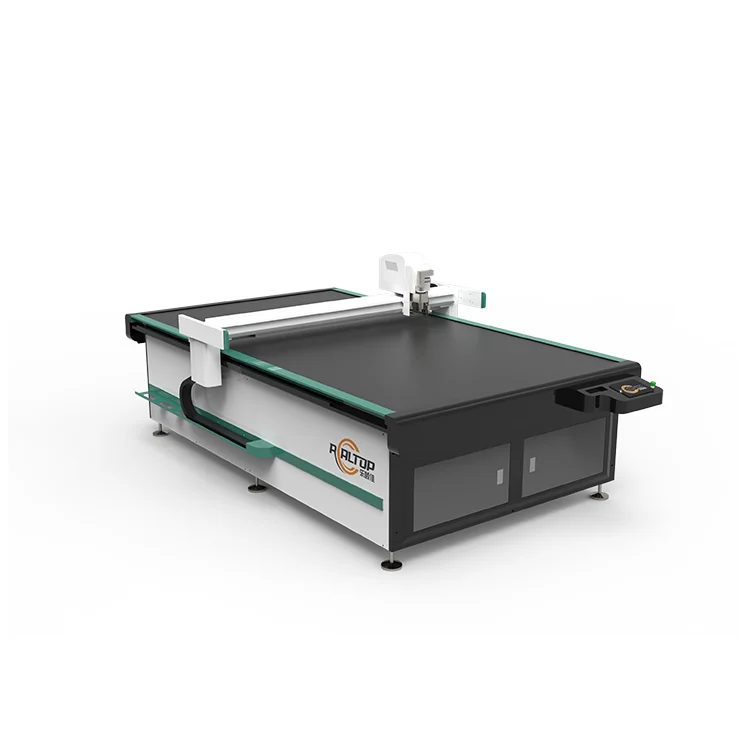
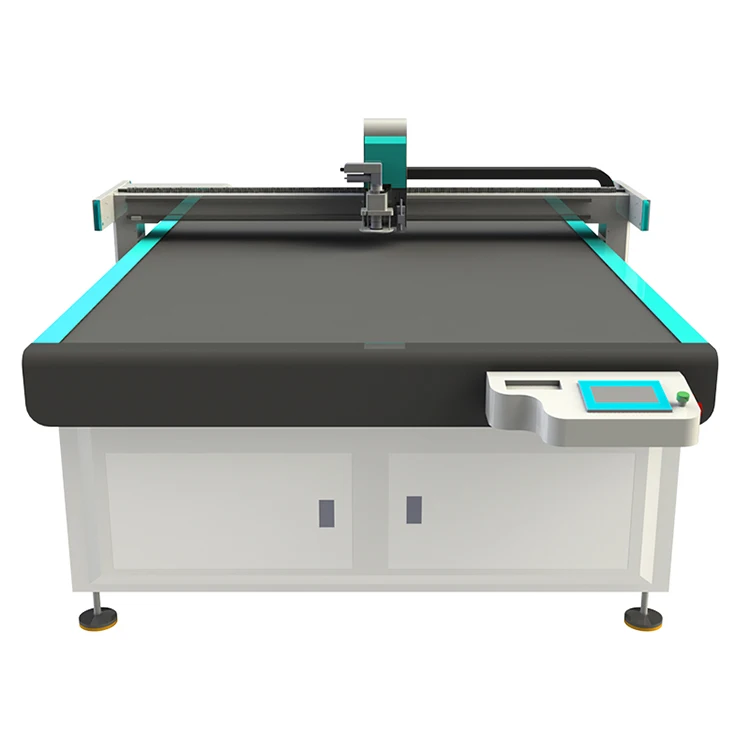
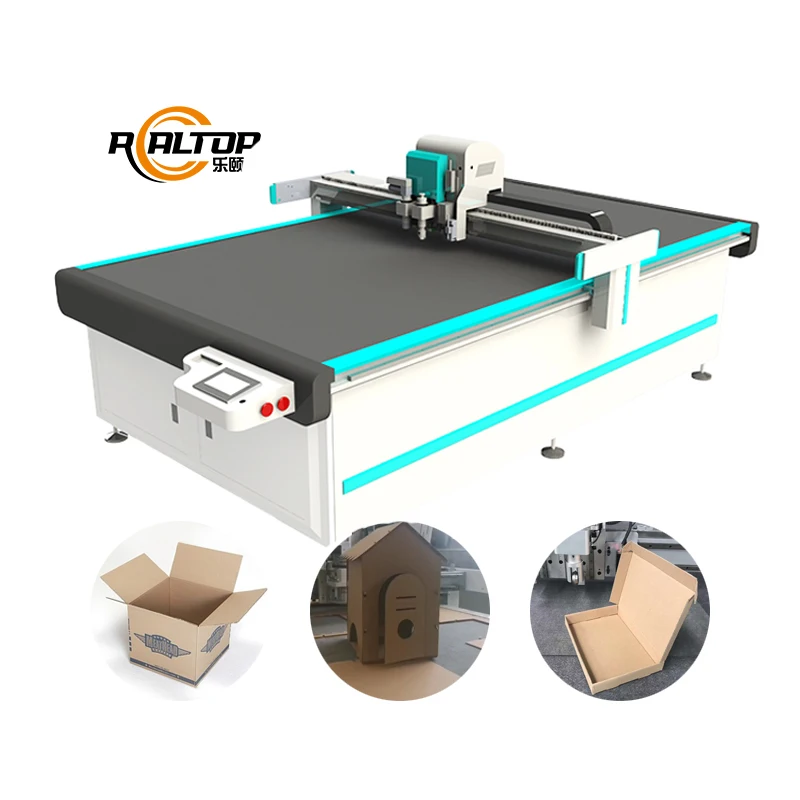
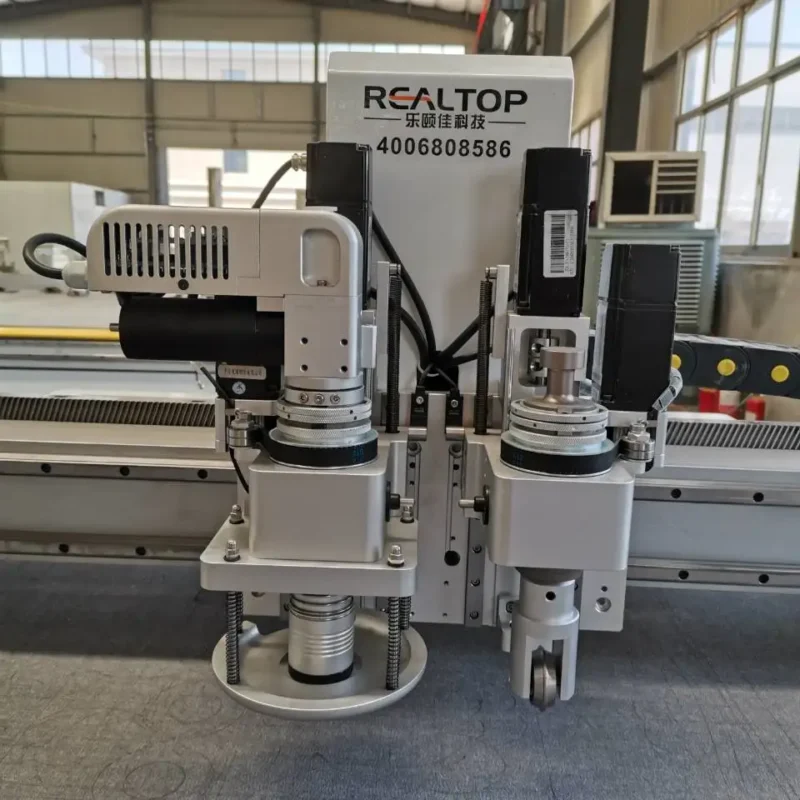
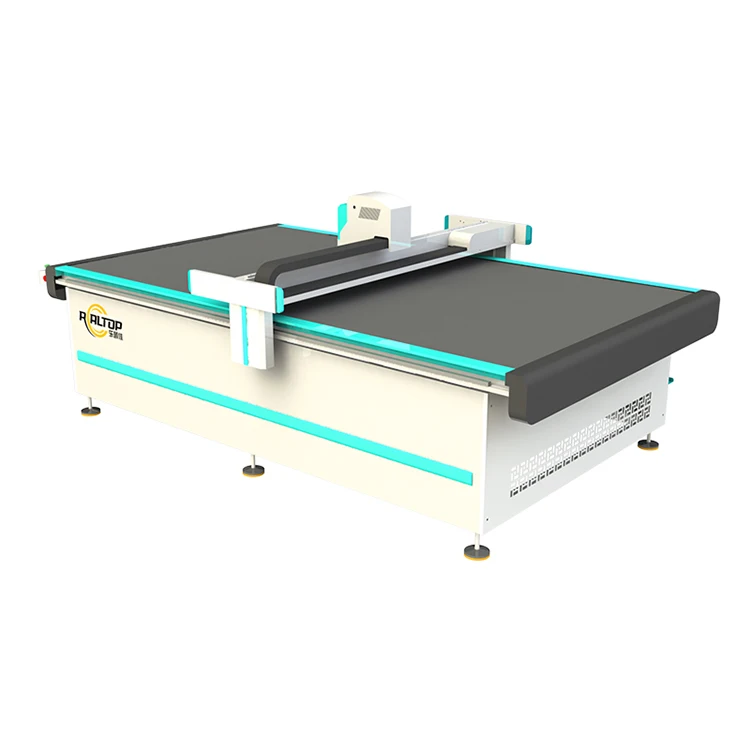
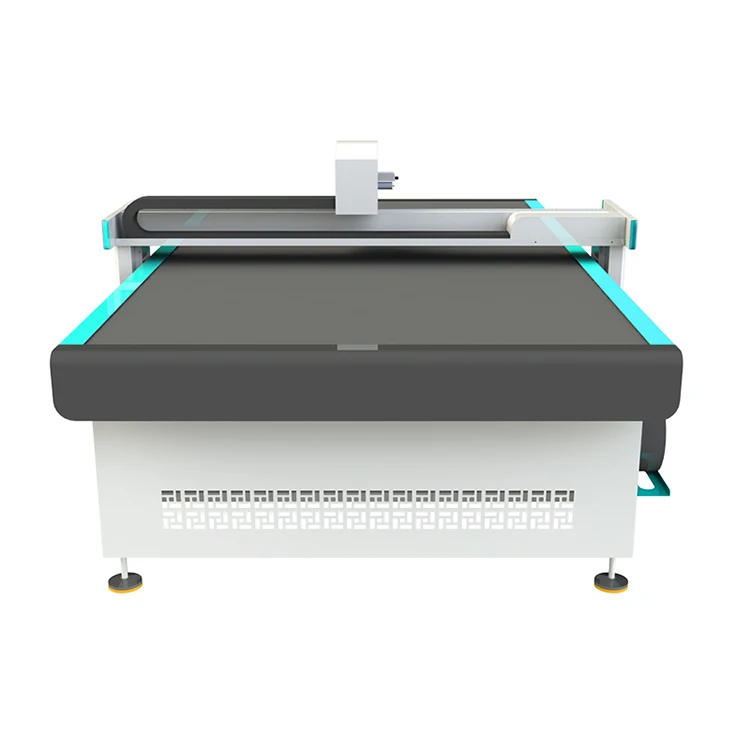
Swiss V-Knife Integration — The RT-D2516 and RT-S2516 platforms use a single multifunctional tool head that performs vibration full-cut, half-cut, and cursor location without manual swaps, letting packaging producers move from sample to short run on the same machine.
Technical Specifications
| Parameter | Value |
|---|---|
| Model | RT-D2516 / RT-S2516 |
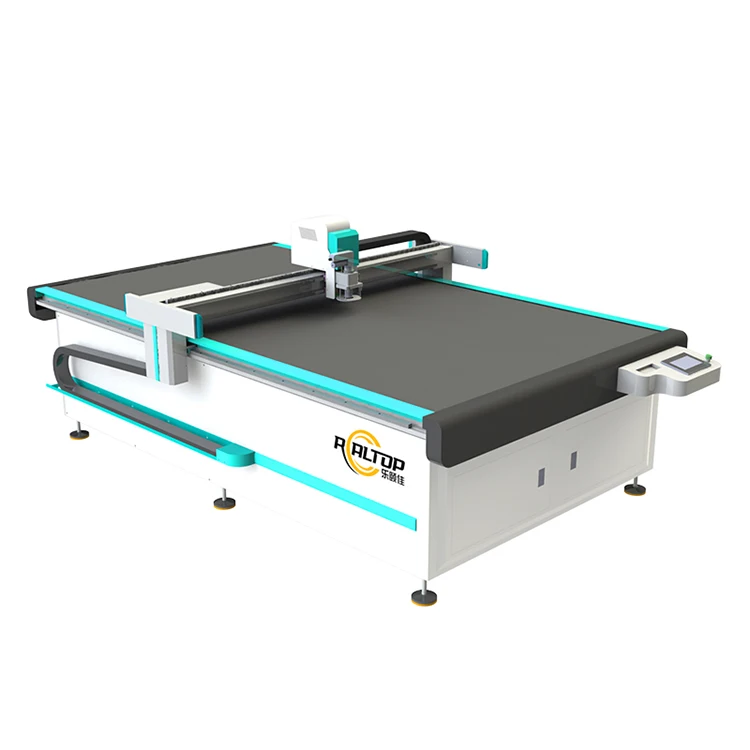
| Product Type | CNC V Knife Corrugated Paper Cutting Machine |
| Working Area | 1600×2500 mm |
| Machine Dimensions (L×W×H) | 3450×2300×1250 mm |
| Rated Power | 9 kW |
| Supply Voltage | 380V ±10% (frequency to confirm 50/60 Hz) |
| Table Surface | Aluminum alloy honeycomb vacuum adsorption platform |
| Tool Head | Swiss imported V-knife with vibration full-cut and half-cut |
| Translational Velocity | 800–2000 mm/s |
| Cutting Speed | 200–800 mm/s (varies with material and thickness) |
| Maximum Cutting Thickness | Up to 100 mm (basis to be confirmed by material density) |
| Repeated Accuracy | ≤0.1 mm |
| Drive System | Taiwan Delta digital servo motors and drivers |
| Linear Guide | Taiwan Hiwin rail with synchronous belt and ball screw |
| Vacuum Pump | 7.5 kW |
| Feeding Mechanism | Auto-feeding with Germany imported conveyor belt |
| Safety Features | Infrared sensors and emergency stop devices |
| Instruction Format | HP-GL compatible |
| Software | Professional carton nesting software (included) |
| Interface Language | English, Russian, Italian, Chinese, others customizable |
Application Suitability
| Application | Material or Output |
|---|---|
| Packaging carton sample making | Single, double, and triple-wall corrugated board |
| Express and shipping box prototyping | Kraft liner and fluted medium up to working thickness |
| High-end gift box production | Greyboard, art paper, and laminated carton stock |
| Sticker and label contour cutting | Vinyl, self-adhesive film, and synthetic label stock |
| Signage and display board cutting | Foam board, honeycomb paper panel, and PVC sheet |
| Gasket and flexible material blanking | Sponge composite leather, rubber, silicone, and soft glass |
Why the Voltage Question Must Come Before the Machine Price
Confirming local supply voltage and frequency before shipment prevents weeks of idle floor space and missed production schedules.
I once watched a packaging line in Dubai sit idle for three weeks because a corrugated cutter arrived configured for a voltage standard that did not match the facility’s transformer output. The machine was mechanically sound, but the electrical mismatch meant the servo drives would not energize. This RT-D2516/RT-S2516 platform specifies 380V ±10%, which covers a band of industrial supply common across much of Asia and Europe, yet many Middle Eastern and Latin American facilities run 220V three-phase or 440V at 60 Hz. A CNC corrugated paper cutting machine manufacturer must confirm both the voltage and the frequency against the buyer’s actual panel schedule before the electrical cabinet is wired [NEED_CITE: voltage and frequency standards by export market]. Skipping this step turns a straightforward installation into a transformer procurement project on the buyer’s dime.
Matching the Cutting Envelope to Sheet Stock
Buyers surveying the full catalogue need to see where this 1600×2500 mm working area sits relative to standard corrugated sheet sizes. Most packaging converters receive board in formats ranging from 1200×1600 mm up to full 1600×2500 mm sheets, and the RT-D2516/RT-S2516 accommodates the upper end without re-guillotining. For buyers comparing knife and laser platforms across the catalogue, the flatbed knife approach avoids the thermal edge sealing that a CO2 laser produces on board — which is desirable for acrylic but problematic when a carton needs clean, crush-free fold lines for downstream gluing.
The Full-Cut and Half-Cut Distinction in Carton Work
A V-knife performing both vibration full-cut and half-cut in the same tool head eliminates the pause that would otherwise be needed to swap tools between creasing and through-cutting passes. Half-cut scoring creates the fold lines that give a carton its structural geometry, while full-cut defines the blank perimeter. The Swiss imported knife on this CNC corrugated paper cutting machine manufacturer platform handles both operations sequentially without operator intervention, which matters when a sample room is producing dozens of different carton geometries in a single shift.
How Servo Drive and Linear Guide Define Edge Quality
The Taiwan Delta servo motors paired with Hiwin linear rails deliver repeated accuracy within ≤0.1 mm across the entire cutting envelope. In corrugated board work, this repeatability translates directly to tab-and-slot registration — if a carton blank is off by more than a fraction of a millimeter across a 2500 mm travel, the assembled box will not close squarely. The 7.5 kW vacuum pump pulls the board flat against the aluminum honeycomb platform so the knife encounters a stable surface rather than a rippled sheet that deflects under vibration [NEED_CITE: vacuum hold-down requirements for fluted board cutting]. The cutting speed range of 200–800 mm/s gives the operator latitude to slow down on dense double-wall stock and accelerate through single-wall runs without changing tooling.
The Cost of Misreading Material Thickness Against Machine Capacity
Specifying a machine on working area alone and then discovering the tool head cannot penetrate the actual board thickness is a failure mode that surfaces only after the machine is on the floor. A cutter rated for up to 100 mm may achieve that depth on soft foam, but triple-wall corrugated at high density demands both knife stroke length and vibration amplitude that must be verified against the specific stock [NEED_CITE: oscillating knife penetration limits by material density]. When the vacuum zoning is insufficient for small nesting parts, those pieces lift mid-cut and produce ragged edges that require manual trimming, converting what was supposed to be a digital workflow back into a manual one.
Why Buyers Survey the Full Range Before Committing
Realtop builds both knife and laser platforms in-house, which means a packaging converter evaluating corrugated board work can see the RT-D2516/RT-S2516 alongside CO2 laser cutters for acrylic signage and fiber laser systems for sheet metal dies. This cross-referencing lets a distributor select complementary models for a regional market rather than forcing one technology to cover materials it was never designed for. Sample cutting on the buyer’s own corrugated stock is conducted before the order is confirmed, so edge quality, crease depth, and throughput are documented against real material rather than generic test sheets. The software licence and file format compatibility note is provided before shipment, ensuring the buyer’s existing nesting files import without conversion loss. Electrical schematics and voltage confirmation documents are reviewed against the target facility’s supply specification before the cabinet is closed.
Documentation & Verification
- Machine specification sheet listing working area, V-knife tool head, and vacuum platform zoning detail
- Electrical schematic with 380V ±10% confirmation matched to buyer’s facility frequency
- Sample cutting report on buyer’s own corrugated board grade and thickness
- Software licence and HP-GL file format compatibility note for existing nesting workflows
- Factory test record documenting repeated accuracy across the 1600×2500 mm envelope
- Packing photographs showing auto-feeding conveyor and honeycomb table condition before crate closure
Installation, Commissioning & Support
- The 3450×2300 mm machine footprint requires a level concrete pad with clearance for the auto-feeding conveyor
- A dedicated 380V three-phase circuit must be confirmed for the combined 9 kW machine and 7.5 kW vacuum pump load
- Machine ships fully assembled; rigging plan must account for the 2300 mm width through facility doorways
- First-power commissioning includes servo tuning and vacuum zone calibration across the honeycomb platform
- Operator training covers V-knife depth setting, half-cut scoring parameters, and nesting software file import
- Spare knife blades and conveyor belt sections identified in the parts list for first-year maintenance
Preparing Your Inquiry
To move from catalogue review to a confirmed configuration, share your corrugated board grades and typical sheet dimensions so the working area and vacuum zoning can be matched to your nesting patterns. Confirm your facility’s supply voltage and frequency from the panel schedule rather than the nameplate on existing equipment. If your design workflow uses specific file formats beyond HP-GL, provide a sample file so software compatibility is verified before the order is placed.
Frequently Asked Questions
Q: How do I decide between a knife cutter and a laser for corrugated packaging work?
A: Knife cutting produces crush-free edges and clean crease lines on fluted board, which is what carton gluing and assembly require. Laser cutting seals edges with heat, which suits acrylic and textile but chars corrugated surfaces. The RT-D2516/RT-S2516 V-knife platform is positioned for board and flexible material work, while CO2 laser models in the catalogue handle non-metal engraving and contour cutting where thermal sealing is an advantage.
Q: Can the auto-feeding system handle different corrugated flute profiles without adjustment?
A: The Germany imported conveyor belt and vacuum-assisted feed mechanism pull sheets onto the honeycomb platform across single, double, and triple-wall profiles. However, the translational speed and knife vibration frequency should be adjusted per material density. The cutting speed range of 200–800 mm/s provides this latitude, and the nesting software stores parameter sets for repeat jobs so operators recall them rather than re-enter values each run.
Q: What happens if my facility voltage does not match the 380V ±10% specification?
A: Voltage and frequency must be confirmed before the electrical cabinet is built. If your facility runs 220V three-phase or a non-standard frequency, the servo drives and vacuum pump must be specified accordingly. Realtop provides an electrical schematic and voltage confirmation document as part of the pre-shipment documentation, and any mismatch identified at that stage is corrected before dispatch rather than on the buyer’s floor.
Q: How is software compatibility confirmed before the machine ships?
A: The carton nesting software supports multiple file format imports and is HP-GL compatible. Buyers are asked to send sample design files from their existing workflow so import and nesting performance can be verified during the factory test. A software licence and file format compatibility note is included in the documentation package, so there is no ambiguity about what the system will accept on day one.
Q: Is sample cutting available before I commit to a specific model from the catalogue?
A: Yes. Buyers send their own corrugated stock or flexible material, and a sample cutting report is generated documenting edge quality, crease depth, and cutting speed achieved on that specific material. This report accompanies the quotation so the buyer can compare the RT-D2516/RT-S2516 against other models in the range based on actual production results rather than generic specification sheets.
Swiss V-Knife Integration — The RT-D2516 and RT-S2516 platforms use a single multifunctional tool head that performs vibration full-cut, half-cut, and cursor location without manual swaps, letting packaging producers move from sample to short run on the same machine.
Technical Specifications
| Parameter | Value |
|---|---|
| Model | RT-D2516 / RT-S2516 |
| Product Type | CNC V Knife Corrugated Paper Cutting Machine |
| Working Area | 1600×2500 mm |
| Machine Dimensions (L×W×H) | 3450×2300×1250 mm |
| Rated Power | 9 kW |
| Supply Voltage | 380V ±10% (frequency to confirm 50/60 Hz) |
| Table Surface | Aluminum alloy honeycomb vacuum adsorption platform |
| Tool Head | Swiss imported V-knife with vibration full-cut and half-cut |
| Translational Velocity | 800–2000 mm/s |
| Cutting Speed | 200–800 mm/s (varies with material and thickness) |
| Maximum Cutting Thickness | Up to 100 mm (basis to be confirmed by material density) |
| Repeated Accuracy | ≤0.1 mm |
| Drive System | Taiwan Delta digital servo motors and drivers |
| Linear Guide | Taiwan Hiwin rail with synchronous belt and ball screw |
| Vacuum Pump | 7.5 kW |
| Feeding Mechanism | Auto-feeding with Germany imported conveyor belt |
| Safety Features | Infrared sensors and emergency stop devices |
| Instruction Format | HP-GL compatible |
| Software | Professional carton nesting software (included) |
| Interface Language | English, Russian, Italian, Chinese, others customizable |
Application Suitability
| Application | Material or Output |
|---|---|
| Packaging carton sample making | Single, double, and triple-wall corrugated board |
| Express and shipping box prototyping | Kraft liner and fluted medium up to working thickness |
| High-end gift box production | Greyboard, art paper, and laminated carton stock |
| Sticker and label contour cutting | Vinyl, self-adhesive film, and synthetic label stock |
| Signage and display board cutting | Foam board, honeycomb paper panel, and PVC sheet |
| Gasket and flexible material blanking | Sponge composite leather, rubber, silicone, and soft glass |
Why the Voltage Question Must Come Before the Machine Price
Confirming local supply voltage and frequency before shipment prevents weeks of idle floor space and missed production schedules.
I once watched a packaging line in Dubai sit idle for three weeks because a corrugated cutter arrived configured for a voltage standard that did not match the facility’s transformer output. The machine was mechanically sound, but the electrical mismatch meant the servo drives would not energize. This RT-D2516/RT-S2516 platform specifies 380V ±10%, which covers a band of industrial supply common across much of Asia and Europe, yet many Middle Eastern and Latin American facilities run 220V three-phase or 440V at 60 Hz. A CNC corrugated paper cutting machine manufacturer must confirm both the voltage and the frequency against the buyer’s actual panel schedule before the electrical cabinet is wired [NEED_CITE: voltage and frequency standards by export market]. Skipping this step turns a straightforward installation into a transformer procurement project on the buyer’s dime.
Matching the Cutting Envelope to Sheet Stock
Buyers surveying the full catalogue need to see where this 1600×2500 mm working area sits relative to standard corrugated sheet sizes. Most packaging converters receive board in formats ranging from 1200×1600 mm up to full 1600×2500 mm sheets, and the RT-D2516/RT-S2516 accommodates the upper end without re-guillotining. For buyers comparing knife and laser platforms across the catalogue, the flatbed knife approach avoids the thermal edge sealing that a CO2 laser produces on board — which is desirable for acrylic but problematic when a carton needs clean, crush-free fold lines for downstream gluing.
The Full-Cut and Half-Cut Distinction in Carton Work
A V-knife performing both vibration full-cut and half-cut in the same tool head eliminates the pause that would otherwise be needed to swap tools between creasing and through-cutting passes. Half-cut scoring creates the fold lines that give a carton its structural geometry, while full-cut defines the blank perimeter. The Swiss imported knife on this CNC corrugated paper cutting machine manufacturer platform handles both operations sequentially without operator intervention, which matters when a sample room is producing dozens of different carton geometries in a single shift.
How Servo Drive and Linear Guide Define Edge Quality
The Taiwan Delta servo motors paired with Hiwin linear rails deliver repeated accuracy within ≤0.1 mm across the entire cutting envelope. In corrugated board work, this repeatability translates directly to tab-and-slot registration — if a carton blank is off by more than a fraction of a millimeter across a 2500 mm travel, the assembled box will not close squarely. The 7.5 kW vacuum pump pulls the board flat against the aluminum honeycomb platform so the knife encounters a stable surface rather than a rippled sheet that deflects under vibration [NEED_CITE: vacuum hold-down requirements for fluted board cutting]. The cutting speed range of 200–800 mm/s gives the operator latitude to slow down on dense double-wall stock and accelerate through single-wall runs without changing tooling.
The Cost of Misreading Material Thickness Against Machine Capacity
Specifying a machine on working area alone and then discovering the tool head cannot penetrate the actual board thickness is a failure mode that surfaces only after the machine is on the floor. A cutter rated for up to 100 mm may achieve that depth on soft foam, but triple-wall corrugated at high density demands both knife stroke length and vibration amplitude that must be verified against the specific stock [NEED_CITE: oscillating knife penetration limits by material density]. When the vacuum zoning is insufficient for small nesting parts, those pieces lift mid-cut and produce ragged edges that require manual trimming, converting what was supposed to be a digital workflow back into a manual one.
Why Buyers Survey the Full Range Before Committing
Realtop builds both knife and laser platforms in-house, which means a packaging converter evaluating corrugated board work can see the RT-D2516/RT-S2516 alongside CO2 laser cutters for acrylic signage and fiber laser systems for sheet metal dies. This cross-referencing lets a distributor select complementary models for a regional market rather than forcing one technology to cover materials it was never designed for. Sample cutting on the buyer’s own corrugated stock is conducted before the order is confirmed, so edge quality, crease depth, and throughput are documented against real material rather than generic test sheets. The software licence and file format compatibility note is provided before shipment, ensuring the buyer’s existing nesting files import without conversion loss. Electrical schematics and voltage confirmation documents are reviewed against the target facility’s supply specification before the cabinet is closed.
Documentation & Verification
- Machine specification sheet listing working area, V-knife tool head, and vacuum platform zoning detail
- Electrical schematic with 380V ±10% confirmation matched to buyer’s facility frequency
- Sample cutting report on buyer’s own corrugated board grade and thickness
- Software licence and HP-GL file format compatibility note for existing nesting workflows
- Factory test record documenting repeated accuracy across the 1600×2500 mm envelope
- Packing photographs showing auto-feeding conveyor and honeycomb table condition before crate closure
Installation, Commissioning & Support
- The 3450×2300 mm machine footprint requires a level concrete pad with clearance for the auto-feeding conveyor
- A dedicated 380V three-phase circuit must be confirmed for the combined 9 kW machine and 7.5 kW vacuum pump load
- Machine ships fully assembled; rigging plan must account for the 2300 mm width through facility doorways
- First-power commissioning includes servo tuning and vacuum zone calibration across the honeycomb platform
- Operator training covers V-knife depth setting, half-cut scoring parameters, and nesting software file import
- Spare knife blades and conveyor belt sections identified in the parts list for first-year maintenance
Preparing Your Inquiry
To move from catalogue review to a confirmed configuration, share your corrugated board grades and typical sheet dimensions so the working area and vacuum zoning can be matched to your nesting patterns. Confirm your facility’s supply voltage and frequency from the panel schedule rather than the nameplate on existing equipment. If your design workflow uses specific file formats beyond HP-GL, provide a sample file so software compatibility is verified before the order is placed.
Frequently Asked Questions
Q: How do I decide between a knife cutter and a laser for corrugated packaging work?
A: Knife cutting produces crush-free edges and clean crease lines on fluted board, which is what carton gluing and assembly require. Laser cutting seals edges with heat, which suits acrylic and textile but chars corrugated surfaces. The RT-D2516/RT-S2516 V-knife platform is positioned for board and flexible material work, while CO2 laser models in the catalogue handle non-metal engraving and contour cutting where thermal sealing is an advantage.
Q: Can the auto-feeding system handle different corrugated flute profiles without adjustment?
A: The Germany imported conveyor belt and vacuum-assisted feed mechanism pull sheets onto the honeycomb platform across single, double, and triple-wall profiles. However, the translational speed and knife vibration frequency should be adjusted per material density. The cutting speed range of 200–800 mm/s provides this latitude, and the nesting software stores parameter sets for repeat jobs so operators recall them rather than re-enter values each run.
Q: What happens if my facility voltage does not match the 380V ±10% specification?
A: Voltage and frequency must be confirmed before the electrical cabinet is built. If your facility runs 220V three-phase or a non-standard frequency, the servo drives and vacuum pump must be specified accordingly. Realtop provides an electrical schematic and voltage confirmation document as part of the pre-shipment documentation, and any mismatch identified at that stage is corrected before dispatch rather than on the buyer’s floor.
Q: How is software compatibility confirmed before the machine ships?
A: The carton nesting software supports multiple file format imports and is HP-GL compatible. Buyers are asked to send sample design files from their existing workflow so import and nesting performance can be verified during the factory test. A software licence and file format compatibility note is included in the documentation package, so there is no ambiguity about what the system will accept on day one.
Q: Is sample cutting available before I commit to a specific model from the catalogue?
A: Yes. Buyers send their own corrugated stock or flexible material, and a sample cutting report is generated documenting edge quality, crease depth, and cutting speed achieved on that specific material. This report accompanies the quotation so the buyer can compare the RT-D2516/RT-S2516 against other models in the range based on actual production results rather than generic specification sheets.
商品评价
There are no reviews yet.