


Fast Delivery
Quick, reliable shipping to any location.

Free & easy returns
Return this item by mail or in store within 90 days for a full refund.
Precision-First Compact Cutting — We verify the actual cutting depth on your specific paper stock and board grade before confirming the tool head configuration.
Technical Specifications
| Parameter | Value |
|---|---|
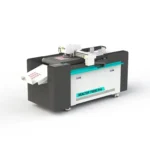
| Product Type | CNC Flatbed Cutter Plotter |
| Model | RTT6080 / RTT6080 Pro |
| Working Area | 600mm × 800mm |
| Cutting Thickness | ≤2mm (RTT6080); ≤5mm (RTT6080 Pro) |
| Tool Head Configuration | Cutting, kiss cutting, creasing, CCD camera, high speed oscillating knife (Pro model) |
| Max Cutting Speed | 1500 mm/s (basis not stated in source — confirm material / thickness) |
| Positioning Accuracy | 0.05mm |
| File Format Compatibility | DXF, PLT, PDF, AI |
| Data Transfer | Ethernet port |
| Rated Power | 3.2KW |
| Voltage Options | 220V/380V, 50Hz |
| Compliance | CE declaration where applicable |
Application Suitability
| Application | Material or Output |
|---|---|
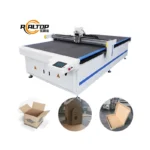
| Packaging Prototyping | Corrugated cardboard, folding carton board, grey board |
| Graphic Arts Finishing | Adhesive vinyl, self-adhesive films, magnetic sheets |
| Print Room Operations | A4 paper sheetering, digital print contour cutting |
| Short-Run Sample Making | Foam board, honeycomb paper, thin synthetic sheets |
| Signage Production | PVC foam board, acrylic sheets (thin gauge), card stock |
Why "Working Area" Is Only Half the Specification
A compact footprint means nothing if the knife pressure cannot handle your actual material stack.
Many buyers sourcing a CNC flatbed cutter plotter manufacturer focus entirely on the table dimensions, only to discover during commissioning that the machine cannot achieve a clean cut through their specific substrate. This is particularly common when moving from standard copy paper to denser packaging boards or laminated synthetics. The cutting force, blade oscillation frequency, and vacuum hold-down must all be matched to the material’s density and surface friction. I have seen production floors stall because a machine specified for general paper work was asked to process 2mm grey board with adhesive backing, resulting in crushed edges and incomplete cuts that jammed the downstream folding equipment [NEED_CITE: material density and cutting force requirements for flatbed digital plotters].
Matching Tool Head to Substrate
The RTT6080 series allows configuration with specific tool heads depending on whether you are scoring, kiss-cutting, or through-cutting. A standard drag knife works for thin vinyl and paper, but attempting the same tool on 1.5mm foam board produces ragged edges. The oscillating knife option available on the Pro model provides the vertical stroke needed for denser corrugated and composite materials, maintaining edge quality across the entire sheet. This flexibility means a single machine can handle a broader range of sample-making tasks without requiring secondary finishing operations.
CCD Positioning for Printed Contours
For signage producers and packaging sample makers working with pre-printed sheets, the integrated CCD camera tracks registration marks to align the cut path with the printed graphic. This is essential when processing digitally printed short runs where mechanical stops are insufficient for contour accuracy. The system compensates for minor sheet distortion that occurs during printing or lamination, ensuring the final cut follows the intended design line. When evaluating a CNC flatbed cutter plotter manufacturer, confirming the camera’s tracking speed against your actual production throughput is necessary to avoid bottlenecks.
Understanding the Thickness and Speed Relationship
The specification lists a maximum cutting thickness of 2mm for the standard model and 5mm for the Pro model, alongside a maximum cutting speed of 1500 mm/s. These figures do not occur simultaneously. Cutting 5mm corrugated board requires a slower feed rate to allow the oscillating knife to penetrate fully without deflection, while thin paper can be processed at higher speeds. The 0.05mm positioning accuracy ensures that creasing lines align precisely with cut edges, which is critical for folding carton prototypes where misalignment causes assembly failures. The 3.2KW rated power supports the vacuum pump and servo drives required to hold thin materials flat and move the head with precision [NEED_CITE: relationship between cutting speed, material thickness, and edge quality in CNC knife systems].
The Cost of Ignoring Vacuum Zoning
A common oversight is assuming any vacuum table will hold small parts securely. If the vacuum zone is larger than the workpiece, air leaks around the edges reduce suction, allowing the material to lift during cutting. This produces dimensional errors and can damage the blade. For operations cutting many small carton samples or gaskets from a single sheet, a table with multi-zone vacuum control ensures each segment is held independently. I have seen entire batches of packaging prototypes scrapped because the material shifted mid-cut, turning precise creasing lines into unusable scrap [NEED_CITE: vacuum table zoning requirements for small part retention on flatbed cutters].
Why Sourcing Directly Matters
Our in-house design team builds both knife and laser systems, which allows us to recommend the correct cutting method based on your material rather than forcing a single technology. Every RTT6080 series unit undergoes sample cutting on your specific material before shipment, generating a test report that verifies edge quality and dimensional accuracy. The tool head configuration is documented and matched to your production volume, so you are not left guessing which blade or creasing wheel to order as spares. We confirm software compatibility with your existing DXF or AI files and provide electrical schematics showing the voltage configuration for your market, whether that is 220V or 380V. This approach reduces the risk of receiving a machine that requires on-site modification before it can produce acceptable samples.
Documentation & Verification
- Factory test record confirming cutting accuracy on your specific board grade and paper weight.
- Tool head configuration list matching the creasing, kiss-cutting, and oscillating tools to your material stack.
- Software license and file format compatibility note verifying DXF, PLT, PDF, and AI workflow integration.
- Electrical schematic and voltage confirmation sheet for 220V or 380V, 50Hz site supply.
- Spare parts list identifying blade types, creasing wheels, and wear items with part numbers.
Installation, Commissioning & Support
- Requires a level floor capable of supporting the 3.2KW total load including vacuum pump and servo drives.
- Dedicated electrical circuit for 220V/380V supply with correct plug type confirmed prior to dispatch.
- Ethernet connection setup for data transfer from design workstation to machine controller.
- First-article inspection run using your actual paper stock and board samples to validate tool settings.
- Operator training covering CCD camera calibration, tool head changes, and vacuum zone setup.
- Maintenance schedule for blade replacement intervals and vacuum filter cleaning based on material dust levels.
Preparing Your Inquiry
To help us configure the correct system, please provide the specific material types you process, including thickness and whether they have adhesive backing or lamination. We also need to know your local voltage and frequency standards, the control language preference for your operators, and whether you require sample cutting on your own materials before committing to the purchase. Sharing your typical sheet sizes and the file formats your design team currently uses allows us to verify software compatibility upfront.
Frequently Asked Questions
Q: How do I verify the machine can actually cut my 3mm packaging board?
A: We require a sample of your actual material to conduct a cutting test before the order is finalized. The test confirms whether the standard RTT6080 or the Pro model with the oscillating knife is required to achieve a clean edge without crushing the flute structure. You receive a sample cutting report documenting the tool head used, blade type, and cutting parameters.
Q: Will the software accept my existing design files from my current plotter?
A: The system imports DXF, PLT, PDF, and AI files. Before production, we test your specific file exports to ensure layers, cut lines, and creasing paths are recognized correctly. A software compatibility note is provided with the machine documentation, listing any necessary export settings from your design application to avoid data loss.
Q: Can the CCD camera track marks on glossy laminated prints?
A: Yes, but reflective surfaces can sometimes cause glare that interferes with mark recognition. During the sample cutting phase, we test the CCD camera on your actual printed and laminated sheets to verify reliable tracking at your required production speed. If necessary, we adjust the lighting angle or recommend a specific mark color to ensure consistent registration.
Q: What happens if our factory voltage is different from the machine standard?
A: The RTT6080 series is configurable for 220V or 380V, 50Hz. You must confirm your site voltage and plug type during the inquiry stage so the correct transformer and cable are installed. We provide an electrical schematic and voltage confirmation sheet before shipment, ensuring the machine matches your local supply without requiring on-site rewiring.
Q: Which tool head should I specify for cutting thin vinyl versus corrugated board?
A: For thin vinyl and paper, a standard drag knife or kiss-cutting tool is sufficient. For corrugated board or materials up to 5mm thick, the high-speed oscillating knife on the RTT6080 Pro model provides the vertical stroke needed to penetrate the material cleanly. We configure the tool head group based on the material range you provide during the sample testing phase.










商品评价
There are no reviews yet.