



Fast Delivery
Quick, reliable shipping to any location.

Free & easy returns
Return this item by mail or in store within 90 days for a full refund.
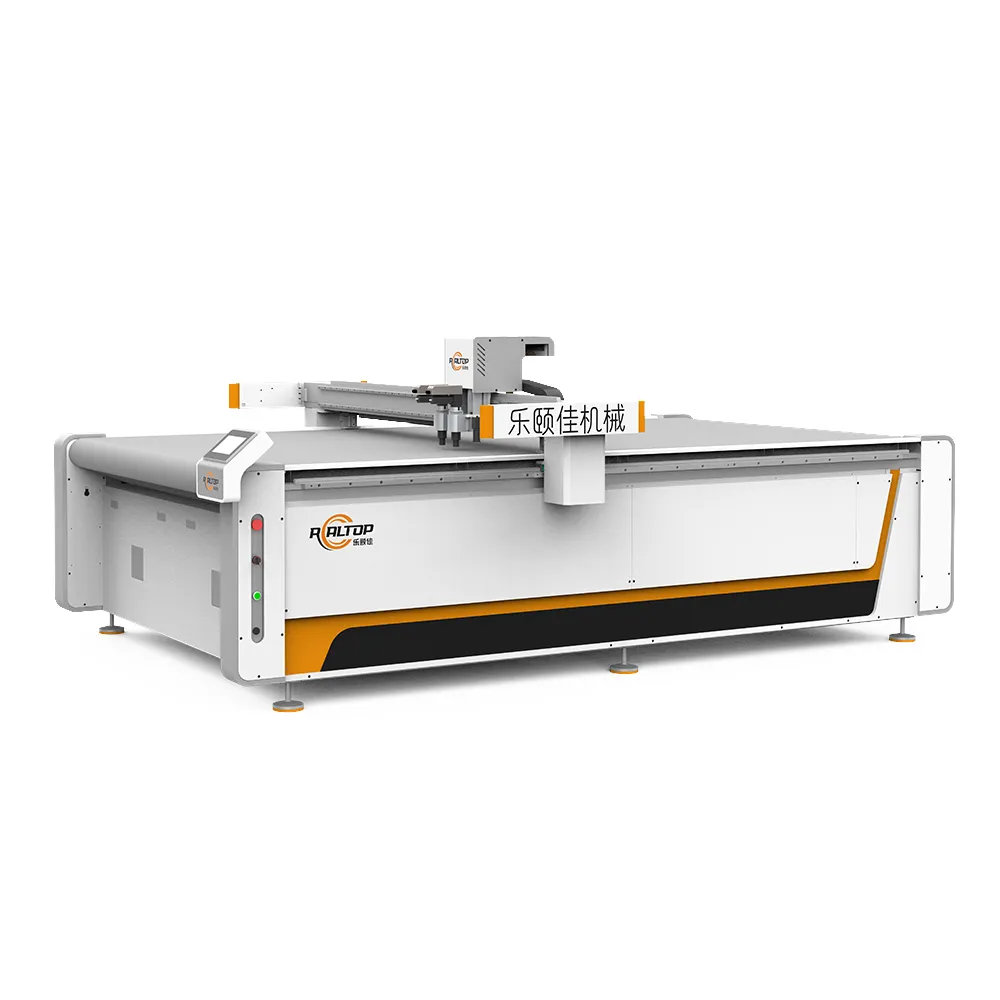
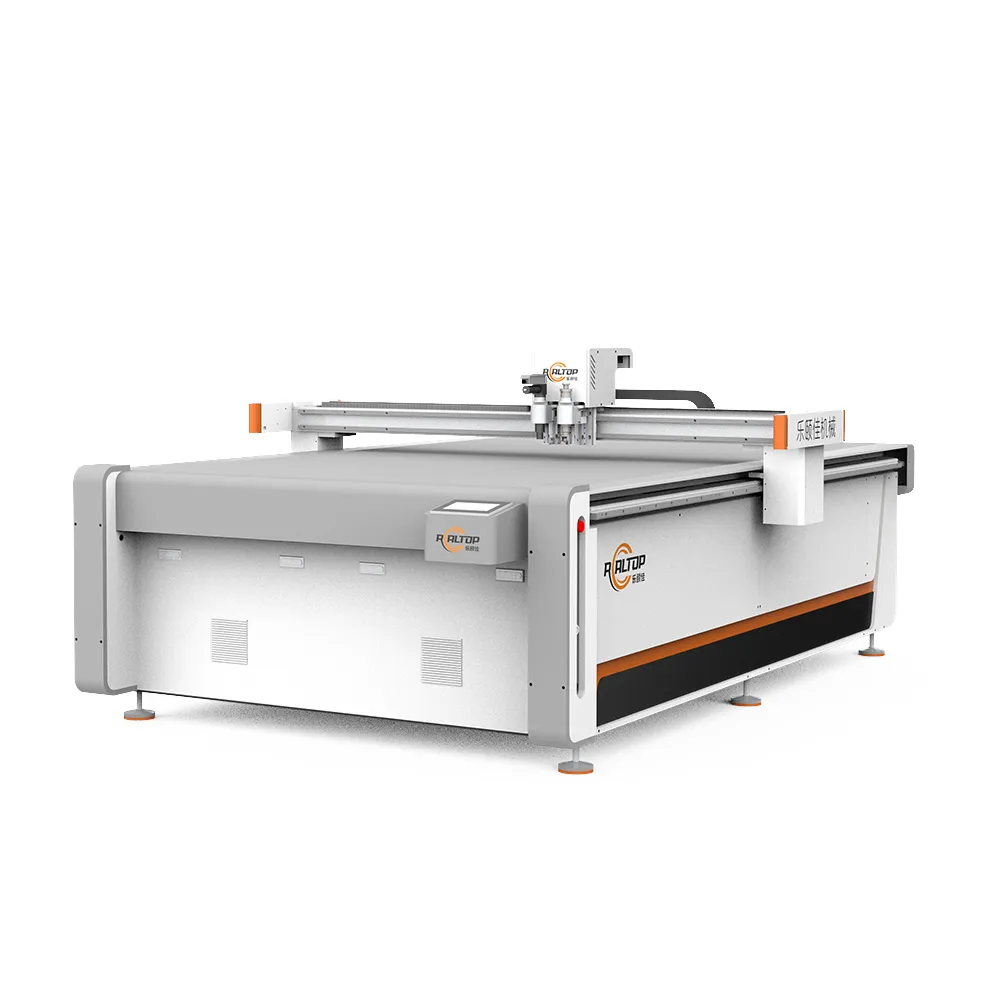
Tool Head Configurability — Oscillating, servo vibrating, pneumatic, circular, round knife and marking pen options are matched to the advertising substrate rather than forcing one blade type across every board and vinyl job.
Technical Specifications
| Parameter | Value |
|---|---|
| Product Type | CNC Oscillating Knife Cutting Machine |
| Effective Cutting Area | 2500×1600 mm (2516) / 2500×2200 mm (2522) / 3000×2200 mm (3022) |
| Maximum Speed | 2000 mm/s |
| Reset Accuracy | ±0.1 mm |
| Cutting Thickness | ≤40 mm (basis not stated in source — confirm material type and density) |
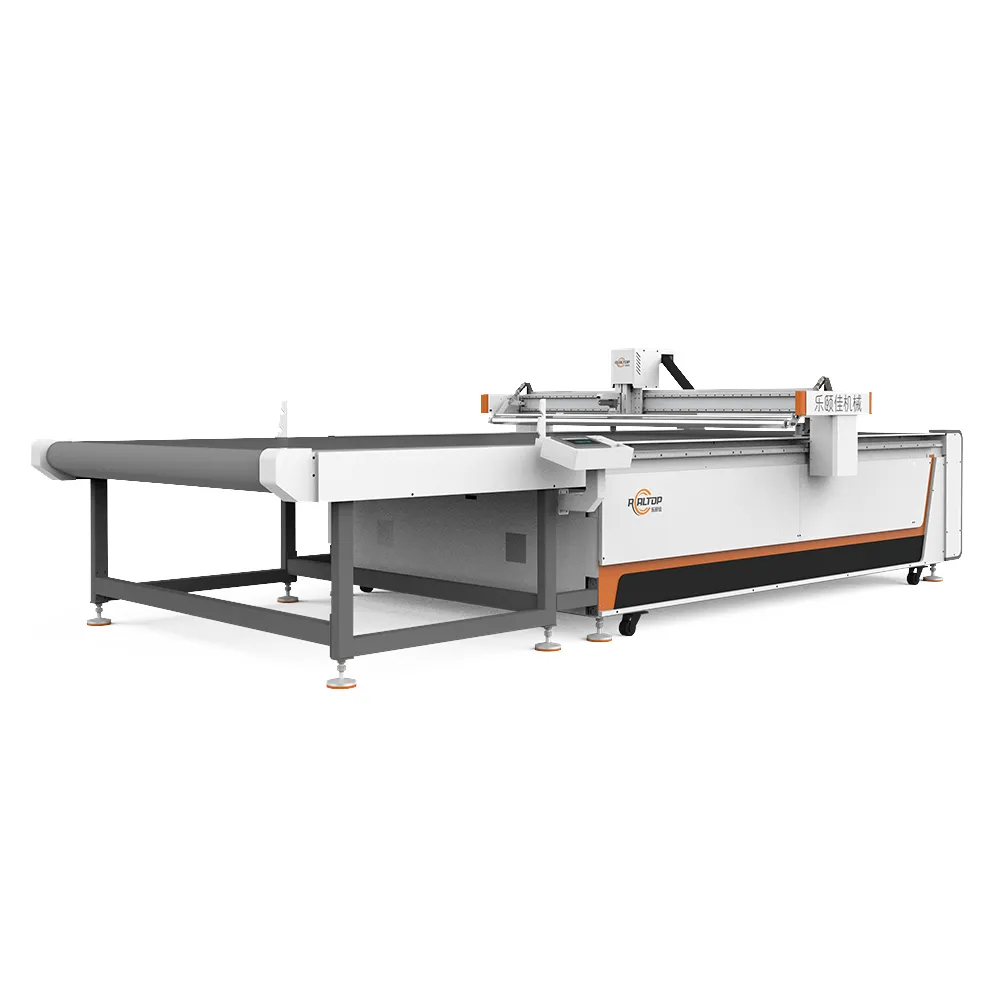
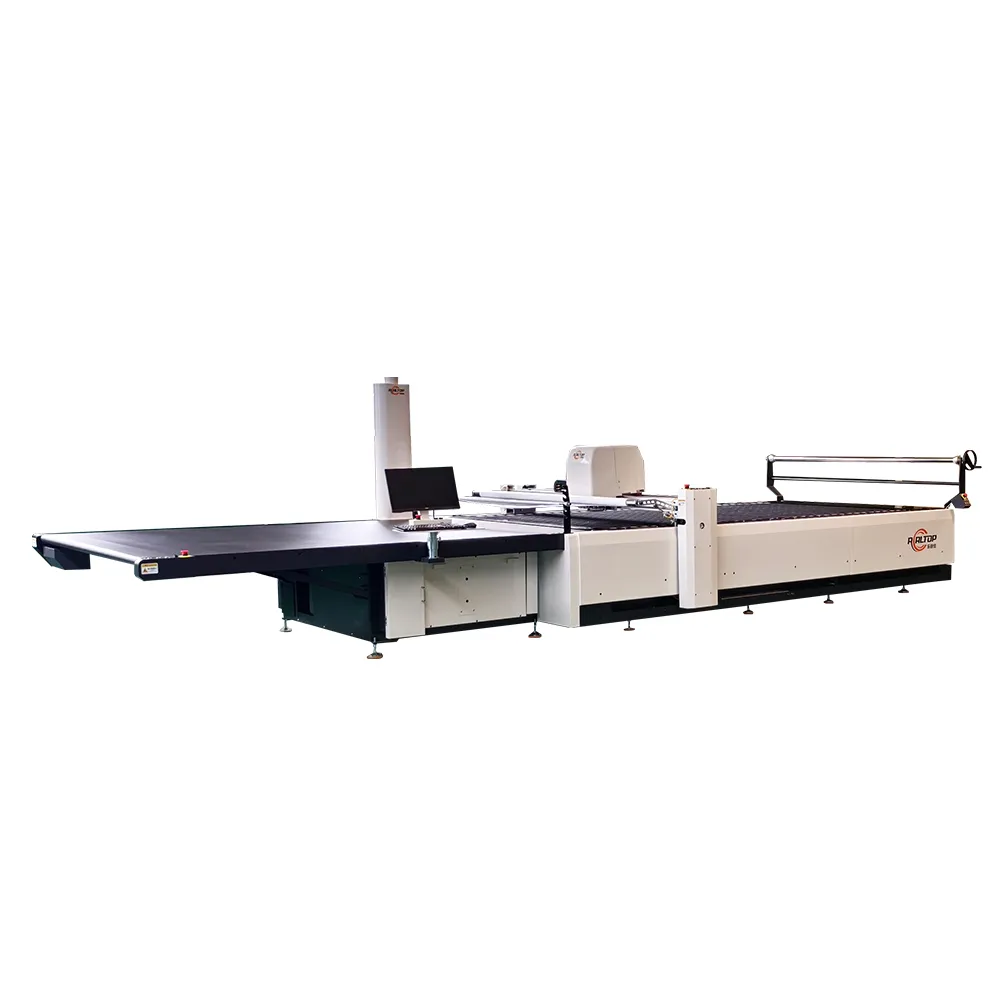
| Table Type | Automatic feeding with industrial belt |
| Optional Tool Heads | Round knife, oscillating knife, marking pen, pneumatic knife, circular knife, servo vibrating knife, conventional vibrating knife |
| Data Format | dxf, plt, ai, pdf |
| Safety Device | Infrared blocking stop and anti-collision protection |
| Voltage | 380V / 220V (frequency not specified in source) |
| Control System | REALTOP customized high-speed control system |
| Positioning | Panoramic visual positioning (automatic edge cutting and template cutting) |
| Bed Treatment | Quenched to eliminate internal stress (source value — verify against manufacturer catalog) |
| Wiring | Oxygen-free copper shielded wire |
| Noise Level | Exclusive silent design (exact dB not stated in source) |
Application Suitability
| Application | Material or Output |
|---|---|
| Signage and display board cutting | PVC foam board, KT board, corrugated plastic, honeycomb board |
| Printed contour cutting | Pre-print vinyl, backlit film, self-adhesive sheet with registration marks |
| Packaging and POP sample making | Cardboard, corrugated board, foam core, magnetic sheet |
| Vehicle wrap and fleet graphic trimming | Cast and calendered vinyl, reflective film, paint protection film |
What "Maximum Speed 2000 mm/s" Actually Means on the Shop Floor
Travel speed is not cutting speed — the real throughput depends on tool head selection, material density and contour complexity.
I have watched advertising shops invest in a CNC oscillating knife cutting machine for sale based on a headline travel speed, only to discover that cutting 10 mm PVC foam board at production quality requires a much slower feed rate than the spec sheet implies. Complex lettering contours and tight inside corners force further deceleration. The 2000 mm/s figure refers to rapid traverse between cuts, not the working feed through dense board stock [NEED_CITE: CNC motion speed definitions and cutting feed rate standards].
Matching the Blade to the Board
Advertising producers work across a wide substrate range — from soft self-adhesive vinyl to rigid PVC foam board and corrugated plastic. A single blade type cannot handle all of them cleanly. The oscillating knife cuts through foam board and corrugated stock with a high-frequency up-and-down motion that prevents the material from dragging, while the circular knife handles thin vinyl and film at higher linear speeds. Pneumatic knife options add downward force for thicker composite boards used in outdoor signage. Selecting the correct tool head before quoting the job prevents ragged edges that force operators into hand trimming after every sheet.
Visual Positioning for Printed Contour Work
Most advertising cutting jobs start with a pre-printed sheet. The panoramic visual positioning system reads registration marks on the printed surface and adjusts the cut path automatically, compensating for stretch or skew introduced during the printing process. This matters when a fleet graphic or point-of-sale display must be trimmed precisely along the printed edge. Without contour recognition, operators spend time manually aligning each sheet and still produce scrap on complex shapes. The system supports both automatic edge cutting and template-based cutting, so the CNC oscillating knife cutting machine for sale in this range fits shops running short custom jobs as well as repeat display orders [NEED_CITE: CCD visual positioning accuracy on printed flexible media].
Reading the Specs That Affect Daily Output
The effective cutting area options — 2516, 2522 and 3022 — determine the maximum sheet size you can nest in a single lay-up. A 3022 format accommodates full-size signage boards without repositioning, while a 2516 suits shops running smaller display and label jobs where floor space is limited. Reset accuracy at ±0.1 mm keeps multi-pass contour cuts aligned, which is critical when a second pass is needed on thicker foam board. The automatic feeding table with industrial belt moves material through without manual repositioning between sheets, reducing idle time in batch production. Voltage is configurable between 380V and 220V, but the frequency must be confirmed against the destination market before the control system is built — a 60 Hz motor running on a 50 Hz supply will overheat within weeks [NEED_CITE: voltage and frequency standards by export market].
The Cost of Specifying the Wrong Tool Head
When a buyer selects an oscillating knife for thin cast vinyl, the high-frequency vibration can cause the film to pucker along the cut line. Conversely, using a drag knife on 15 mm foam board produces crushed edges and delamination at the board surface. These defects are not visible on a sample cut made with the right blade — they appear only when the machine runs the buyer’s actual production file on their daily substrate mix. Replacing the tool head after delivery means downtime, a new blade procurement cycle and re-calibration of cut depth [NEED_CITE: tool head selection impact on edge quality in digital flatbed cutting].
Why Buyers Source This Range Here
In-house design and production cover both the knife cutting table and the control system, so tool head configuration is specified per material rather than pulled from a generic catalog. Sample cutting runs on the buyer’s own advertising board or vinyl before the order is confirmed, showing real edge quality on the actual substrate. File format compatibility across dxf, plt, ai and pdf is verified against the buyer’s existing design workflow before shipment. Voltage, control language and plug type are confirmed for the destination market, so the machine powers up correctly on arrival. The quenched bed treatment addresses long-term flatness, which matters when cutting thin vinyl where any table unevenness shows as a visible line.
Documentation & Verification
- Machine specification sheet listing all selected tool heads and cutting area format
- Electrical schematic with voltage and frequency matched to destination market
- Sample cutting report on buyer’s advertising board or vinyl stock
- Tool head and table configuration list matched to substrate and volume
- Software licence and file format compatibility note for dxf, plt, ai, pdf workflows
- Operation and maintenance manual in confirmed control language
Installation, Commissioning & Support
- Level concrete floor required; 3022 format needs minimum clearance for belt feed length
- Dedicated 380V or 220V circuit with correct frequency before control cabinet energization
- Table bed arrives assembled; visual positioning camera calibrated during on-site commissioning
- First production run supervised to confirm cut quality across all ordered tool heads
- Operator training covers nesting workflow and file import from buyer’s design software
- Spare blade and belt inventory defined based on daily substrate mix and shift pattern
Before You Request a Quote
Send the exact advertising substrates you cut — board type, thickness and whether sheets are pre-printed — along with your typical daily volume and maximum sheet dimensions. Confirm the voltage and frequency at your facility and the control language your operators need. If you run nesting software already, share a sample file so format compatibility can be checked before the order is placed.
Frequently Asked Questions
Q: How do I choose between knife cutting and laser for my advertising materials?
A: Knife cutting suits PVC foam board, corrugated plastic and vinyl where a clean mechanical edge is needed without heat-affected zones. Laser cutting works better on acrylic and thin film where a sealed edge is required. The choice depends on your substrate mix — if you run mostly board and vinyl, a CNC oscillating knife cutting machine for sale in this range is typically the better fit.
Q: Which cutting area format should I select?
A: Match the format to your largest regular sheet size and nesting pattern. The 3022 handles full signage boards without repositioning, while the 2516 is adequate for display and label shops running smaller formats with limited floor space.
Q: What print mark quality does the visual positioning system require?
A: Registration marks must be clearly printed with sufficient contrast against the background. Faded or partially covered marks may reduce recognition reliability at full production speed. A sample test on your printed output confirms whether mark quality is adequate for contour cutting.
Q: Can the control system run in my local language?
A: Control language is confirmed before production. The REALTOP customized high-speed control system supports language customization for the destination market, along with the correct voltage and plug type for your facility.
Q: Will my existing design files import directly?
A: The system accepts dxf, plt, ai and pdf formats. File compatibility is verified against a sample from your design workflow before the order is finalized, so nesting and cut path generation work without manual re-drawing on arrival.










商品评价
There are no reviews yet.