



Fast Delivery
Quick, reliable shipping to any location.

Free & easy returns
Return this item by mail or in store within 90 days for a full refund.
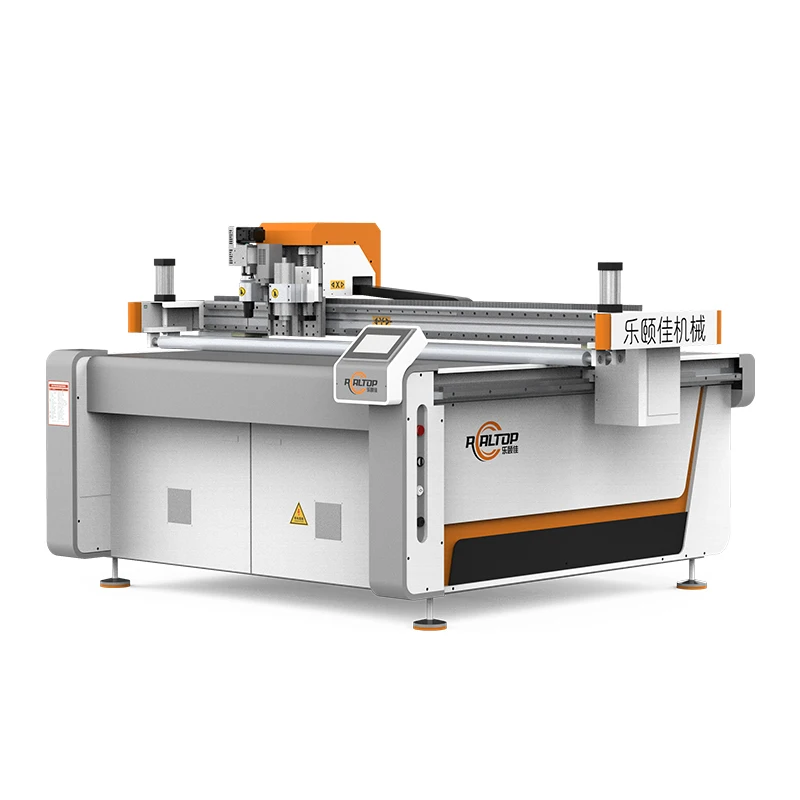
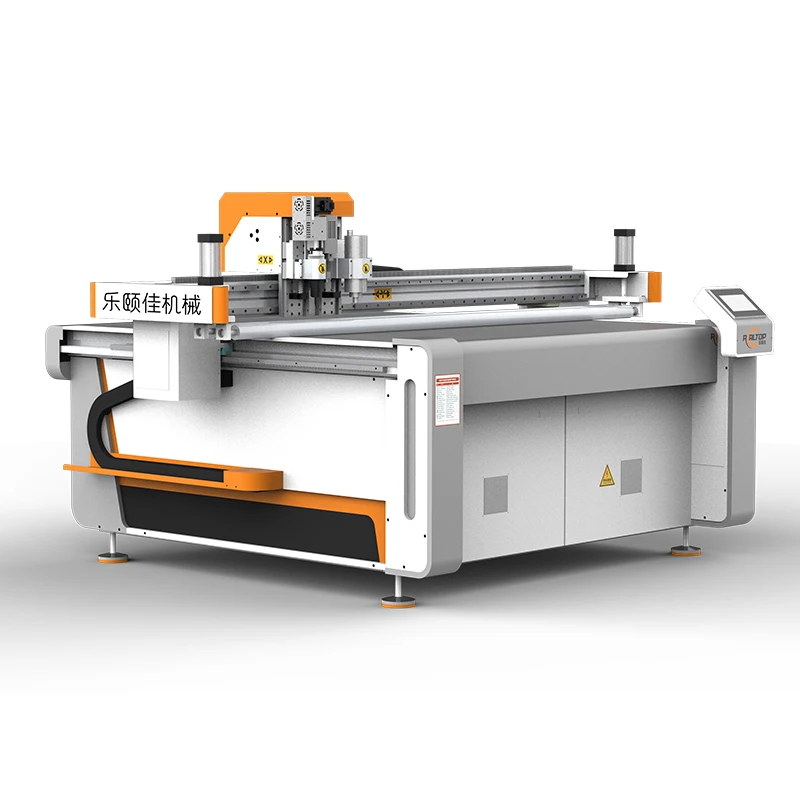
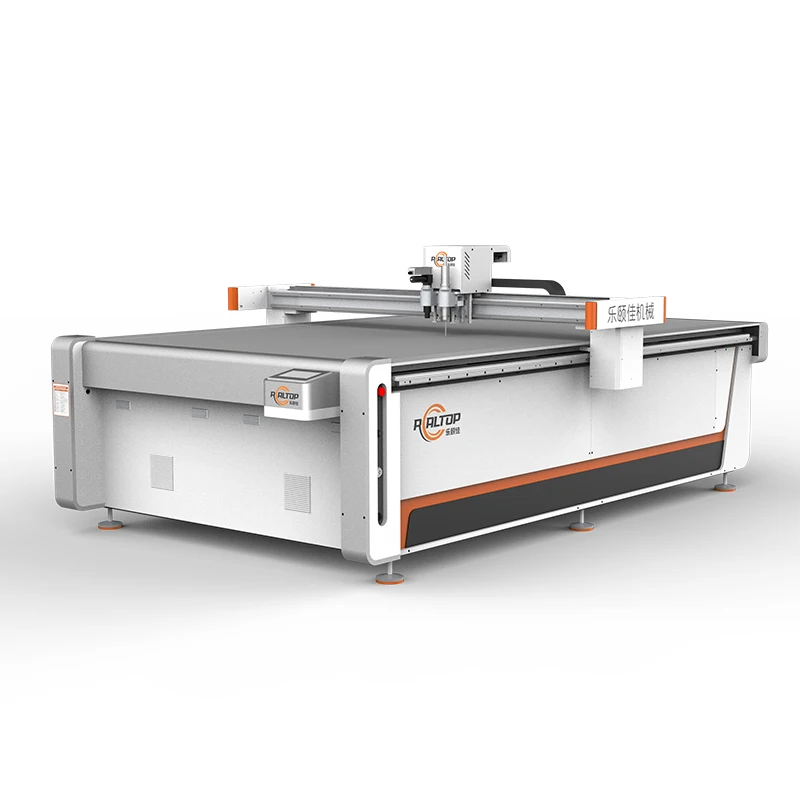
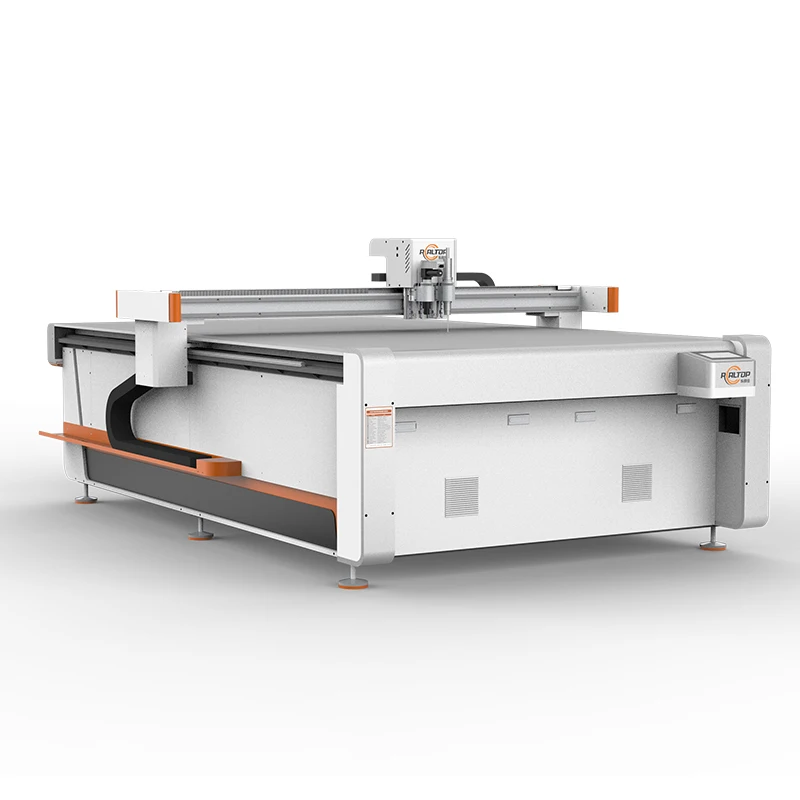
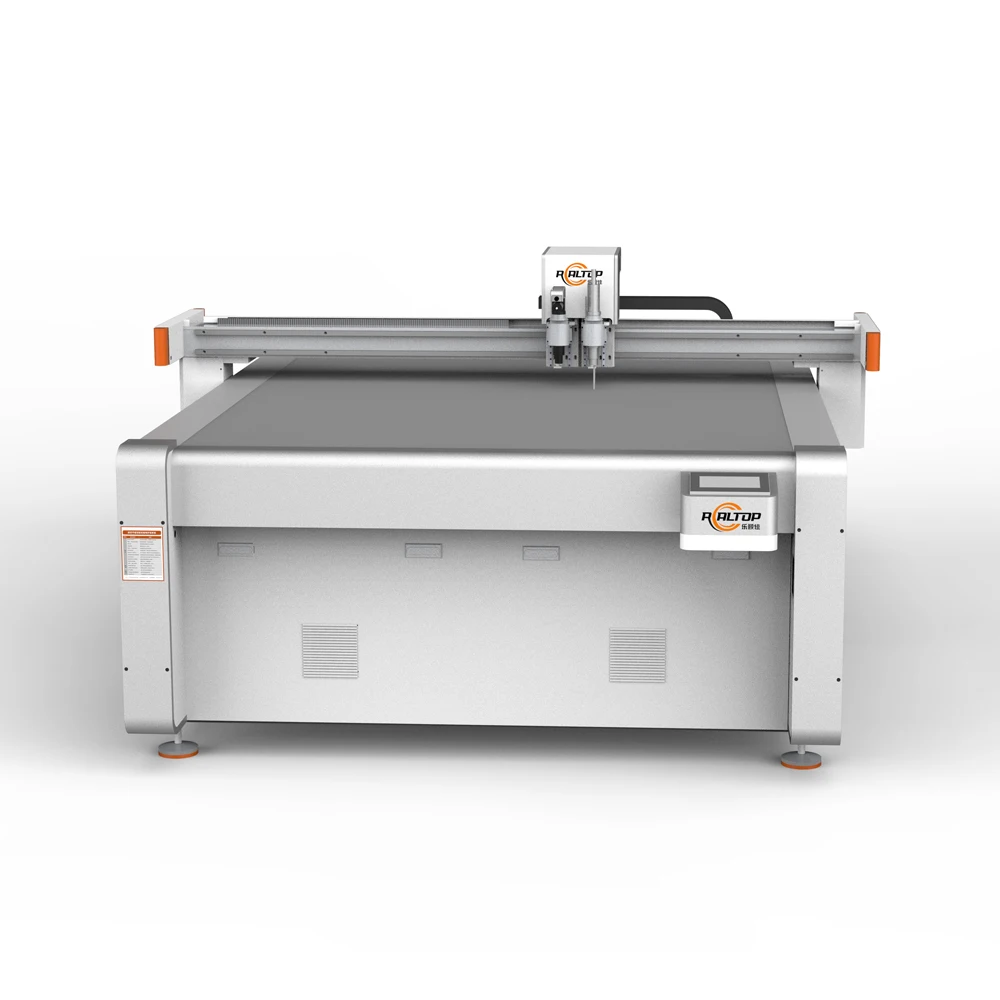
Zoned Vacuum Retention — the RT-D2516/RT-S2516 table divides suction into independent sectors, preventing thin composite offcuts from lifting under the oscillating knife.
Technical Specifications
| Parameter | Value |
|---|---|
| Model | RT-D2516/RT-S2516 |
| Product Type | CNC Oscillating Knife Cutting Machine |
| Working Area | 1600 × 2500 mm |
| Machine Size | 3450 × 2300 × 1250 mm |
| Rated Power | 9 kW |
| Table Type | Flat vacuum working table, magnesium-aluminum alloy with PVDF powder spray and anodic hard oxidation treatment |
| Vacuum Pump | 7.5 kW, aviation aluminum shell with built-in silencer sponge |
| Tool Head Options | Oscillating knife, pneumatic knife, high-power vibrating knife, circular knife, V cutting knife, drag knife, creasing wheel, dotted line knife, punching, brush |
| Visual Positioning | Small CCD camera mark point, panoramic camera recognition, projection positioning (options) |
| Translational Velocity | 800 – 2000 mm/s |
| Cutting Speed | 200 – 800 mm/s (basis to be confirmed per material and thickness) |
| Cutting Thickness | ≤100 mm (basis to be confirmed per material density and structure) |
| Repeated Accuracy | ≤0.1 mm |
| Transmission System | Digital servo motor, imported linear guide, synchronous belt, ball screw |
| Instruction System | HP-GL compatible format |
| Voltage | 380V ±10% |
| Safety Device | Infrared sensors, beam anti-collision on both sides, emergency stop with in-situ resume |
| Optional Configuration | Germany imported conveyor belt, auto feeding system |
Application Suitability
| Application | Material or Output |
|---|---|
| Acoustic panel and soundproof pad cutting | Fiber-reinforced acoustic boards, high-density soundproof foam, automotive interior insulation pads |
| Automotive interior and gasket production | Composite fiber panels, non-woven fabrics, rubber gaskets, sponge composite leather |
| Packaging and carton sample making | Corrugated board, greyboard, PVC blister sheets |
| Footwear and leather goods manufacturing | Natural and synthetic leather, PU sheets, multi-layer textile composites |
| Composite and foam fabricators | Rigid and semi-rigid foam, glass fiber reinforced panels, honeycomb core materials |
What "Working Area" Alone Fails to Tell You About Composite Cutting
A flatbed size matches your sheet, but it does not guarantee the machine will handle your material density or thickness without edge degradation.
I remember an automotive soundproof pad buyer who chose a machine purely on the 1600×2500 mm bed size, assuming the oscillating knife would handle his composite fiber board. The actual board density was nearly double what the sample suggested. The edges came out frayed, and throughput dropped well below expectation. That mismatch required reworking the tool head selection and vacuum table zoning, taking weeks to resolve. This is why the CNC Oscillating Knife Cutting Machine for sale on this page is positioned within a broader catalogue — so buyers can first determine whether oscillating knife, drag knife, or laser is the correct method for their specific composite, before narrowing to a bed size. [NEED_CITE: typical density range of automotive acoustic composite fiber panels]
Matching the Knife Method to the Composite Family
Not all composites respond to the same cutting action. Rigid glass-fiber panels require an oscillating knife with high-frequency vibration to shear through the fiber matrix cleanly, while semi-rigid foam insulation benefits from a drag knife that slices without compressing the cell structure. The multifunctional tool head on the RT-D2516/RT-S2516 supports oscillating, pneumatic, high-power vibrating, circular, and V-cutting knives, allowing the buyer to select the action that matches the material’s internal structure rather than forcing one blade type across every job.
Full Catalogue Context — Knife Versus Laser
This page sits within the complete REALTOP cutting equipment range at lyjcut.com. The RT-D2516/RT-S2516 represents the oscillating knife family, ideal for composites and flexible materials where thermal cutting would melt edges or release fumes. Buyers processing acrylic, wood, or thin textile may find the CO2 laser range more appropriate, while sheet metal and tube work belongs to the fiber laser line. The CNC Oscillating Knife Cutting Machine for sale here is one entry point; the catalogue helps you confirm which technology family suits your material before committing to a configuration. [NEED_CITE: fume and edge-sealing behavior differences between knife and CO2 laser on composite foam]
How Vacuum Zoning and Table Surface Affect Small-Part Holding
The 1600×2500 mm magnesium-aluminum alloy table uses a PVDF-coated, anodically oxidized surface that resists abrasion from fiber-laden composites. The 7.5 kW vacuum pump with an aviation aluminum shell and built-in silencer sponge maintains suction across zoned sectors. When cutting small gasket pieces or intricate acoustic panel shapes, individual zones can be sealed off so suction concentrates on the active cutting area, preventing parts from shifting or lifting mid-cut.
The Hidden Cost of Skipping the Material Trial
When a buyer orders based on catalogue specifications alone — without running a sample cut on their actual composite stock — the risk is rarely the bed size or the motor power. It is the combination of knife frequency, blade angle, vacuum hold-down, and material density that determines whether edges are clean or crushed. Frayed edges on acoustic panels mean secondary trimming; crushed foam means rejected insulation pads. These downstream rework costs accumulate quietly across production runs. [NEED_CITE: typical secondary trimming time added when composite edges are frayed by incorrect knife selection]
Why Buyers Source the RT-D2516/RT-S2516 Through This Catalogue
The REALTOP line covers both knife and laser cutting under one in-house design and production team, meaning the recommendation is based on material fit rather than pushing one technology. Tool head and table configuration are specified per material and production volume, not left to a generic default. CCD camera positioning options are available for printed contour jobs on composite signage or leather nesting. Software compatibility and file format are confirmed before order placement, preventing workflow gaps at commissioning. Sample cutting on the buyer’s own material is offered before commitment, so edge quality and throughput are verified on the actual stock, not a proxy.
Documentation & Verification
- Machine specification sheet confirming working area, tool head list, and vacuum table zoning layout
- Sample cutting report on buyer’s composite material with measured edge quality and cutting speed
- Electrical schematic and voltage confirmation for the destination market’s grid standard
- Software licence and file format compatibility note matching the buyer’s existing nesting workflow
- Factory test record documenting repeated accuracy and tool head performance before dispatch
- CE declaration where applicable for the target import jurisdiction
Installation, Commissioning & Support
- 3450×2300×1250 mm footprint requires a level concrete floor with clearance for the 1600×2500 mm bed and auto-feeding conveyor if configured
- 380V ±10% three-phase supply on a dedicated circuit rated for the 9 kW machine load plus the 7.5 kW vacuum pump
- Machine arrives with beam and gantry assembled; vacuum pump and conveyor belt are connected on-site
- First-run commissioning includes vacuum zone mapping and tool head calibration for the buyer’s composite thickness
- Operator training covers HP-GL file import, nesting workflow setup, and oscillating knife blade replacement procedure
- Spare parts list includes oscillating knife blades, drag knife tips, and vacuum table seal strips
What to Share Before Requesting a Quotation
To position the RT-D2516/RT-S2516 correctly within the broader knife-and-laser catalogue, share the composite material type, density, and maximum thickness you will cut daily. Confirm your standard sheet size and whether you need the auto-feeding conveyor for roll stock or the flat table for rigid boards. Specify the voltage and frequency at your facility, the control language your operators need, and the nesting software or file format currently in use.
Frequently Asked Questions
Q: How do I decide between oscillating knife and laser for my composite material?
A: Oscillating knife suits fiber-reinforced panels, foam, and multi-layer textiles where thermal cutting would melt edges or produce fumes. Laser works better for acrylic, wood, and thin synthetics that benefit from edge sealing. The full catalogue at lyjcut.com covers both families so you can compare method against material before selecting a machine.
Q: Where does the RT-D2516/RT-S2516 sit within the REALTOP machine range?
A: It is part of the CNC oscillating knife cutting machine family, positioned for composites, foam, leather, and PVC. The wider REALTOP range includes CO2 laser machines for non-metals, fiber laser machines for sheet metal, and multi-layer digital cutting systems for high-volume fabric production.
Q: How can I confirm the tool head and vacuum table zoning before placing an order?
A: Request the tool head and table configuration list along with a sample cutting report on your own material. This report documents which knife type, blade angle, and vacuum zone layout were used, so you can verify edge quality and holding performance before commitment.
Q: Which visual positioning option should I choose for printed contour cutting?
A: Small CCD mark-point positioning suits jobs with printed fiducial marks on each piece. Panoramic camera recognition handles larger printed sheets where multiple contours must be detected at once. Projection positioning is an option for manual alignment workflows. Specify your print format and mark style during inquiry.
Zoned Vacuum Retention — the RT-D2516/RT-S2516 table divides suction into independent sectors, preventing thin composite offcuts from lifting under the oscillating knife.
Technical Specifications
| Parameter | Value |
|---|---|
| Model | RT-D2516/RT-S2516 |
| Product Type | CNC Oscillating Knife Cutting Machine |
| Working Area | 1600 × 2500 mm |
| Machine Size | 3450 × 2300 × 1250 mm |
| Rated Power | 9 kW |
| Table Type | Flat vacuum working table, magnesium-aluminum alloy with PVDF powder spray and anodic hard oxidation treatment |
| Vacuum Pump | 7.5 kW, aviation aluminum shell with built-in silencer sponge |
| Tool Head Options | Oscillating knife, pneumatic knife, high-power vibrating knife, circular knife, V cutting knife, drag knife, creasing wheel, dotted line knife, punching, brush |
| Visual Positioning | Small CCD camera mark point, panoramic camera recognition, projection positioning (options) |
| Translational Velocity | 800 – 2000 mm/s |
| Cutting Speed | 200 – 800 mm/s (basis to be confirmed per material and thickness) |
| Cutting Thickness | ≤100 mm (basis to be confirmed per material density and structure) |
| Repeated Accuracy | ≤0.1 mm |
| Transmission System | Digital servo motor, imported linear guide, synchronous belt, ball screw |
| Instruction System | HP-GL compatible format |
| Voltage | 380V ±10% |
| Safety Device | Infrared sensors, beam anti-collision on both sides, emergency stop with in-situ resume |
| Optional Configuration | Germany imported conveyor belt, auto feeding system |
Application Suitability
| Application | Material or Output |
|---|---|
| Acoustic panel and soundproof pad cutting | Fiber-reinforced acoustic boards, high-density soundproof foam, automotive interior insulation pads |
| Automotive interior and gasket production | Composite fiber panels, non-woven fabrics, rubber gaskets, sponge composite leather |
| Packaging and carton sample making | Corrugated board, greyboard, PVC blister sheets |
| Footwear and leather goods manufacturing | Natural and synthetic leather, PU sheets, multi-layer textile composites |
| Composite and foam fabricators | Rigid and semi-rigid foam, glass fiber reinforced panels, honeycomb core materials |
What "Working Area" Alone Fails to Tell You About Composite Cutting
A flatbed size matches your sheet, but it does not guarantee the machine will handle your material density or thickness without edge degradation.
I remember an automotive soundproof pad buyer who chose a machine purely on the 1600×2500 mm bed size, assuming the oscillating knife would handle his composite fiber board. The actual board density was nearly double what the sample suggested. The edges came out frayed, and throughput dropped well below expectation. That mismatch required reworking the tool head selection and vacuum table zoning, taking weeks to resolve. This is why the CNC Oscillating Knife Cutting Machine for sale on this page is positioned within a broader catalogue — so buyers can first determine whether oscillating knife, drag knife, or laser is the correct method for their specific composite, before narrowing to a bed size. [NEED_CITE: typical density range of automotive acoustic composite fiber panels]
Matching the Knife Method to the Composite Family
Not all composites respond to the same cutting action. Rigid glass-fiber panels require an oscillating knife with high-frequency vibration to shear through the fiber matrix cleanly, while semi-rigid foam insulation benefits from a drag knife that slices without compressing the cell structure. The multifunctional tool head on the RT-D2516/RT-S2516 supports oscillating, pneumatic, high-power vibrating, circular, and V-cutting knives, allowing the buyer to select the action that matches the material’s internal structure rather than forcing one blade type across every job.
Full Catalogue Context — Knife Versus Laser
This page sits within the complete REALTOP cutting equipment range at lyjcut.com. The RT-D2516/RT-S2516 represents the oscillating knife family, ideal for composites and flexible materials where thermal cutting would melt edges or release fumes. Buyers processing acrylic, wood, or thin textile may find the CO2 laser range more appropriate, while sheet metal and tube work belongs to the fiber laser line. The CNC Oscillating Knife Cutting Machine for sale here is one entry point; the catalogue helps you confirm which technology family suits your material before committing to a configuration. [NEED_CITE: fume and edge-sealing behavior differences between knife and CO2 laser on composite foam]
How Vacuum Zoning and Table Surface Affect Small-Part Holding
The 1600×2500 mm magnesium-aluminum alloy table uses a PVDF-coated, anodically oxidized surface that resists abrasion from fiber-laden composites. The 7.5 kW vacuum pump with an aviation aluminum shell and built-in silencer sponge maintains suction across zoned sectors. When cutting small gasket pieces or intricate acoustic panel shapes, individual zones can be sealed off so suction concentrates on the active cutting area, preventing parts from shifting or lifting mid-cut.
The Hidden Cost of Skipping the Material Trial
When a buyer orders based on catalogue specifications alone — without running a sample cut on their actual composite stock — the risk is rarely the bed size or the motor power. It is the combination of knife frequency, blade angle, vacuum hold-down, and material density that determines whether edges are clean or crushed. Frayed edges on acoustic panels mean secondary trimming; crushed foam means rejected insulation pads. These downstream rework costs accumulate quietly across production runs. [NEED_CITE: typical secondary trimming time added when composite edges are frayed by incorrect knife selection]
Why Buyers Source the RT-D2516/RT-S2516 Through This Catalogue
The REALTOP line covers both knife and laser cutting under one in-house design and production team, meaning the recommendation is based on material fit rather than pushing one technology. Tool head and table configuration are specified per material and production volume, not left to a generic default. CCD camera positioning options are available for printed contour jobs on composite signage or leather nesting. Software compatibility and file format are confirmed before order placement, preventing workflow gaps at commissioning. Sample cutting on the buyer’s own material is offered before commitment, so edge quality and throughput are verified on the actual stock, not a proxy.
Documentation & Verification
- Machine specification sheet confirming working area, tool head list, and vacuum table zoning layout
- Sample cutting report on buyer’s composite material with measured edge quality and cutting speed
- Electrical schematic and voltage confirmation for the destination market’s grid standard
- Software licence and file format compatibility note matching the buyer’s existing nesting workflow
- Factory test record documenting repeated accuracy and tool head performance before dispatch
- CE declaration where applicable for the target import jurisdiction
Installation, Commissioning & Support
- 3450×2300×1250 mm footprint requires a level concrete floor with clearance for the 1600×2500 mm bed and auto-feeding conveyor if configured
- 380V ±10% three-phase supply on a dedicated circuit rated for the 9 kW machine load plus the 7.5 kW vacuum pump
- Machine arrives with beam and gantry assembled; vacuum pump and conveyor belt are connected on-site
- First-run commissioning includes vacuum zone mapping and tool head calibration for the buyer’s composite thickness
- Operator training covers HP-GL file import, nesting workflow setup, and oscillating knife blade replacement procedure
- Spare parts list includes oscillating knife blades, drag knife tips, and vacuum table seal strips
What to Share Before Requesting a Quotation
To position the RT-D2516/RT-S2516 correctly within the broader knife-and-laser catalogue, share the composite material type, density, and maximum thickness you will cut daily. Confirm your standard sheet size and whether you need the auto-feeding conveyor for roll stock or the flat table for rigid boards. Specify the voltage and frequency at your facility, the control language your operators need, and the nesting software or file format currently in use.
Frequently Asked Questions
Q: How do I decide between oscillating knife and laser for my composite material?
A: Oscillating knife suits fiber-reinforced panels, foam, and multi-layer textiles where thermal cutting would melt edges or produce fumes. Laser works better for acrylic, wood, and thin synthetics that benefit from edge sealing. The full catalogue at lyjcut.com covers both families so you can compare method against material before selecting a machine.
Q: Where does the RT-D2516/RT-S2516 sit within the REALTOP machine range?
A: It is part of the CNC oscillating knife cutting machine family, positioned for composites, foam, leather, and PVC. The wider REALTOP range includes CO2 laser machines for non-metals, fiber laser machines for sheet metal, and multi-layer digital cutting systems for high-volume fabric production.
Q: How can I confirm the tool head and vacuum table zoning before placing an order?
A: Request the tool head and table configuration list along with a sample cutting report on your own material. This report documents which knife type, blade angle, and vacuum zone layout were used, so you can verify edge quality and holding performance before commitment.
Q: Which visual positioning option should I choose for printed contour cutting?
A: Small CCD mark-point positioning suits jobs with printed fiducial marks on each piece. Panoramic camera recognition handles larger printed sheets where multiple contours must be detected at once. Projection positioning is an option for manual alignment workflows. Specify your print format and mark style during inquiry.










商品评价
There are no reviews yet.